Alabama Billboards
No Minimum Spend. No Long-Term Contracts. Just Results.
Trusted by Leading Brands


Billboard advertising
in Alabama has never been easier

How much does a billboard cost in Alabama?
Why Choose Blip for Billboard Advertising in Alabama
-
Choose Blip in Alabama to launch self-serve billboards on I-65, I-20/59, or I-85 in minutes—no agency bottlenecks.
-
Alabama's commuter traffic is steady; Blip lets you set flexible budgets and only pay for the blips you use.
-
Use no-contract Blip campaigns in Alabama to test around Tuscaloosa game days, Auburn weekends, or Gulf Coast travel peaks.
-
With Blip, Alabama advertisers get real-time analytics to shift spend fast when Birmingham or Huntsville routes outperform.
-
Blip's creative tools help you build Alabama-ready ads for beach season, SEC football, and manufacturing workforce commutes.
Frequently Asked Questions About Billboard Advertising in Alabama
How much does a billboard cost in Alabama with Blip?
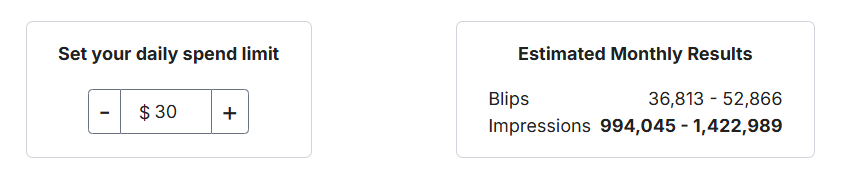
Blip makes it easy to advertise on a budget that works for you. There are no minimums and no contracts, so you can set a daily budget and let Blip keep your spend within it automatically. Each ad runs as a “blip,” a 7.5- to 10-second display on a rotating digital billboard, and the cost of each blip can vary based on time of day, location, and advertiser demand.
Where can I advertise with Blip on Alabama billboards?
With Blip, you can pick billboards in Alabama on a map, set your budget, choose your timing, and launch eye-catching digital ads. Alabama gives us a billboard market that is both statewide in scale and highly local in character. The strongest opportunities are around Birmingham, Huntsville, Montgomery, Auburn-Opelika, Mobile, and the Gulf Coast.
What makes Alabama a good market for billboard advertising with Blip?
Alabama is strongly car-oriented, with about 83% of workers driving alone to work and public transit accounting for less than 1% of commutes. That means roadside media stays in front of people during everyday travel across the state. Alabama also adds powerful visitor demand through the Gulf Coast, SEC football, motorsports, and a manufacturing economy anchored by major plants and logistics hubs.
Which Alabama highways are best for Blip digital billboards?
According to the Alabama Department of Transportation, Alabama’s top billboard corridors are concentrated around a handful of interstate and commuter routes. Prime segments of I-65 through Birmingham and Hoover commonly run in the 120,000 to 150,000+ AADT range, while I-20/59 through the core often exceeds 140,000 AADT on key stretches. I-565 in Huntsville, I-85 toward Auburn, and I-10 in Mobile are also major routes for digital billboards in Alabama.
When is the best time to run Alabama billboard ads with Blip?
Timing matters in Alabama because travel patterns change by region and by season, making billboard rental especially useful when you need short-term flexibility. Spring is strong for home services, healthcare, landscaping, roofing, pest control, and storm-related repair messaging, while summer belongs to the Gulf Coast beach corridor. Fall is one of the best billboard seasons in Alabama because college football drives visitation and local excitement.
Do I need a contract to advertise with Blip in Alabama?
No, Blip has no long-term contracts or minimum commitments. You can start, pause, or stop your campaign at any time.
How fast can I launch a billboard campaign with Blip in Alabama?
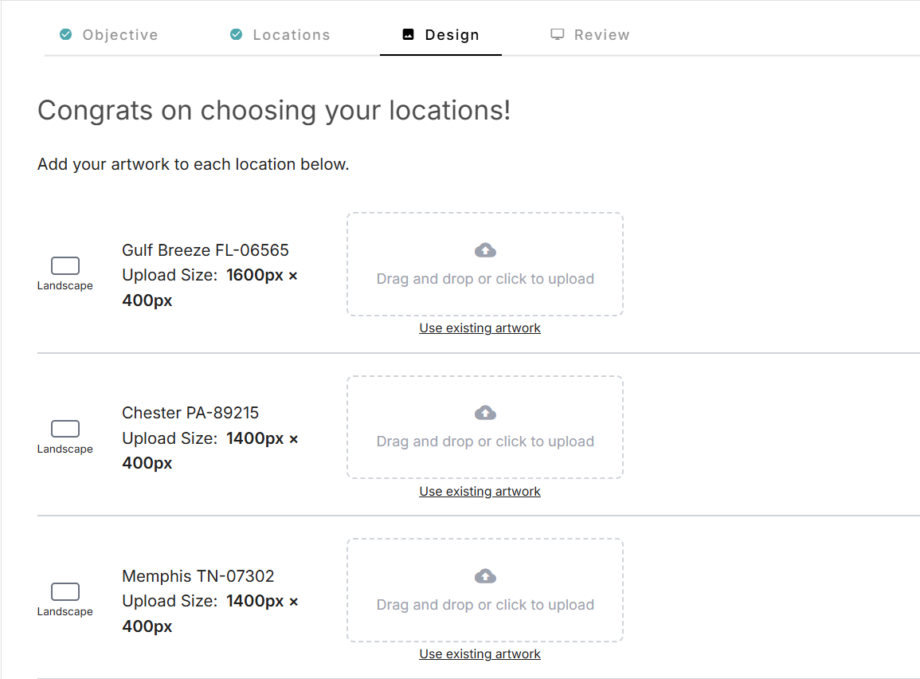
You can have your campaign live in minutes. Create a free account, select your locations, set your budget, upload your design, and start running once approved.
Where can I advertise with Blip in Alabama?
Blip has digital billboards across Alabama. You can browse available locations on a map, choose the ones that fit your audience, and start advertising right away.
Still have questions? Launch a campaign in minutes — no contracts, no commitments.
Start Your CampaignAlabama Billboard Advertising Guide
With 5,024,279 residents spread across 67 counties and covering 52,420 square miles, Alabama gives us a billboard market that is both statewide in scale and highly local in character for Alabama billboards. The state is strongly car-oriented, with about 83% of workers driving alone to work, about 9% carpooling, and public transit accounting for less than 1% of commutes, so roadside media stays in front of people during everyday travel across billboards in Alabama. Alabama also adds powerful visitor demand through the Gulf Coast, SEC football, motorsports, and a manufacturing economy anchored by major plants and logistics hubs, including the 100,077-seat Bryant-Denny Stadium, the 88,043-seat Jordan-Hare Stadium 80,000-seat Talladega Superspeedway

Alabama Billboard Advertising Market Overview
Alabama’s billboard opportunity starts with a practical truth: this is a driving state. In most communities, people rely on personal vehicles for work, school, shopping, healthcare, and entertainment, and the average commute is roughly 25 minutes. That gives outdoor advertisers repeated exposure on the same routes, which is one of the strongest conditions for billboard recall across Alabama billboard advertising.
Population is not growing evenly across the state, and Alabama added roughly 261,000 residents, or about 5.8%, from 2010 to 2020, and that is good news for advertisers who want to be strategic. Several Alabama counties posted standout growth from 2010 to 2020, including Baldwin County, up 27.2%, Limestone County, up 25.1%, Lee County, up 24.2%, Madison County 15.9%, and Shelby County 14.3%. Those numbers tell us where housing, retail, schools, and service demand have expanded most aggressively: the Gulf Coast, North Alabama, the Auburn-Opelika area, and Birmingham’s suburban ring in billboards in Alabama.
From an economic standpoint, Birmingham remains the largest business and healthcare center in the state, with the metro area at about 1.1 million residents, major support from the Birmingham Business Alliance and UAB. Huntsville continues to grow as a technology, engineering, and advanced manufacturing hub, with the metro area at about 500,000 residents, supported by the Huntsville/Madison County Chamber Mobile combines maritime logistics, aerospace, and tourism, with a metro area of about 430,000 residents, with leadership from the Mobile Chamber Alabama Port Authority Montgomery 386,000 residents, Tuscaloosa, Auburn, and Opelika add government, education, military-adjacent, and regional retail demand.
Labor conditions also support advertising confidence. The Alabama Department of Labor has reported a statewide unemployment rate hovering near 3% in recent years, which signals a relatively active consumer market. At the same time, the Alabama Department of Commerce continues to market the state as a center for auto manufacturing, aerospace, shipbuilding, healthcare, and logistics. For billboard advertisers, that means we are not limited to one audience. We can reach white-collar commuters in Birmingham and Huntsville, industrial shift workers in Mobile and Montgomery, college audiences in Tuscaloosa and Auburn, and family vacation traffic on the coast across outdoor advertising Alabama.
The key takeaway is simple. Alabama billboard advertising works best when we treat the state as a set of distinct travel economies rather than one uniform market.
Key Traffic Corridors for Alabama Digital Billboards
According to the Alabama Department of Transportation
Birmingham, Hoover
The strongest concentration of roadway volume in Alabama sits around Birmingham’s interstate web, serving a metro area of about 1.1 million residents. Prime segments of I-65 through Birmingham and Hoover 120,000 to 150,000+ AADT range, while the I-20/59 corridor through the core often exceeds 140,000 AADT on key stretches. I-459 adds another 80,000 to 100,000+ AADT depending on segment, and US 280 often falls in the 60,000 to 90,000+ AADT range in its busiest suburban sections.
These corridors are especially effective for several categories for Alabama billboard advertising, including billboards in Alabama that emphasize frequent commuter exposure. Healthcare, legal, and financial advertisers perform well here because the road network funnels drivers toward downtown Birmingham, UAB, and major suburban office clusters. Retail, restaurants, and home services benefit because commuters repeat these trips daily between Birmingham, Hoover, and fast-growing Shelby County communities. Auto dealers, entertainment, and regional events gain value because I-20/59 and I-65 also carry through-travel from Tuscaloosa, Gadsden, and points beyond.
Huntsville and North Alabama Corridors
North Alabama is one of the state’s most compelling digital billboard regions because population growth and job growth have reinforced each other. In the Huntsville market, which serves about 500,000 metro residents, I-565 regularly reaches 80,000 to 100,000+ AADT on busy segments, while Memorial Parkway, the US 231/431 spine through the city, also climbs into the 70,000 to 100,000+ AADT range. US 72 adds another major east-west commuter and retail corridor across Huntsville, Madison Decatur.
This region is a strong fit for Tech recruiting, education, and healthcare campaigns because Huntsville’s audience skews highly employed, highly mobile, and responsive to practical offers. It is also a strong fit for Home improvement, insurance, and financial services because the Madison and Limestone growth story creates steady demand from new households. Finally, it is a strong fit for B2B and industrial advertisers because the corridor ties together manufacturing, aerospace, warehousing, and regional distribution traffic.
Montgomery, Auburn, and the I-85 Billboard Corridor
I-85 is the backbone for central and east Alabama travel between Montgomery and the Auburn-Opelika market. Urban segments around Montgomery often reach 40,000 to 70,000+ AADT, with higher volumes near the city’s retail and commuter nodes. As the route heads east, it connects Montgomery Auburn, Opelika, and the broader Lee County trade area, which has more than 160,000 residents.
This corridor is especially useful for Higher education, student housing, and retail advertisers targeting Auburn and nearby campuses. It is also especially useful for Automotive, healthcare, and family services aimed at the Montgomery commuter base. Finally, it is especially useful for Game-day, hotel, and restaurant campaigns that want to intercept travelers before they reach Auburn.
Mobile, Baldwin County, and Gulf Coast Outdoor Advertising Corridors
South Alabama’s highway pattern changes by season, but the core routes stay important year-round. In and around Mobile, which serves a metro area of about 430,000 residents, I-10 and I-65 handle much of the metro’s commuter and freight traffic, with major urban sections of I-10 often running about 60,000 to 90,000+ AADT. East of Mobile Bay, traffic spreads into Baldwin County on routes serving Daphne Spanish Fort, Foley Gulf Shores, and Orange Beach
For advertisers, this region supports two very different strategies at once across outdoor advertising Alabama, including digital billboard placement near the coast. Port, industrial, and workforce campaigns perform well near Mobile’s urban interstate segments because they reach maritime, aerospace, and shipbuilding employees. Tourism, hospitality, attractions, and quick-service brands benefit farther east because beach-bound traffic rises sharply on weekends, holidays, and summer travel periods. Healthcare and regional retail advertisers can use the Mobile-to-Eastern-Shore connection to cover both local residents and destination travelers.
Audience Segments for Alabama Outdoor Advertising
Alabama is valuable for billboard advertisers because the state delivers several distinct audiences without forcing us to choose just one. We can build for reach, for niche relevance, or for both at the same time across outdoor advertising Alabama and digital billboards in Alabama.
Alabama Commuters and Household Decision Makers
Commuters are the foundation of Alabama outdoor advertising. With about 83% of workers driving alone and about 9% carpooling, the vast majority of work trips happen inside private vehicles. That matters because drivers are often the same people making household decisions about banking, healthcare, home services, auto repair, insurance, childcare, groceries, and local entertainment.
In practical terms, this means billboard repetition works. A placement on I-65 in Birmingham, I-565 in Huntsville, I-85 in Montgomery, or I-10 in Mobile can put the same message in front of the same buyer multiple times per week for Alabama billboards.
Students, Parents, and College Sports Fans in Alabama
Higher education is one of Alabama’s biggest audience multipliers. The University of Alabama enrolls about 40,000 students, Auburn University has more than 34,000, UAB has more than 21,000, the University of South Alabama serves about 14,000, and the University of Alabama in Huntsville enrolls about 10,000. Across those five campuses alone, we are looking at roughly 119,000 students before we even add faculty, staff, parents, and visitors.
Football amplifies that audience dramatically. Bryant-Denny Stadium seats 100,077, Jordan-Hare Stadium 88,043, and Protective Stadium in Birmingham seats 47,100. On home weekends, those markets become high-intent environments for restaurants, hotels, retail, healthcare, rideshare alternatives, and local attractions for Alabama billboard advertising campaigns.
Tourists, Weekend Travelers, and Event Audiences in Alabama
Alabama’s tourism audience is more diverse than many advertisers realize. The Gulf Shores & Orange Beach Tourism area alone markets 32 miles of beaches, which creates obvious summer demand for lodging, dining, attractions, retail, healthcare, and family entertainment. Gulf State Park adds 6,150 acres, 28 miles of paved trails, and 2.5 miles of beachfront, which helps extend visitation beyond just peak beach weekends.
Statewide, Alabama State Parks operates 21 parks, and the Robert Trent Jones Golf Trail spans 11 sites and 26 courses. That gives us shoulder-season tourism in spring and fall, not just summer.
Events matter too. Talladega Superspeedway 80,000, and The Wharf Amphitheater in Orange Beach is a 10,000-seat venue. Those spikes create excellent short windows for restaurants, gas stations, hotels, alcohol alternatives, local retail, and destination entertainment across billboards in Alabama.
Industrial, Manufacturing, and Logistics Workers in Alabama
Alabama also has a strong blue-collar and industrial audience base. Mercedes-Benz U.S. International 6,000 in the Tuscaloosa area, Honda Alabama has more than 4,500 associates in Lincoln, Hyundai Motor Manufacturing Alabama 4,000 in Montgomery, Mazda Toyota Manufacturing is built for up to 4,000 jobs in Huntsville, and Airbus in Alabama 2,000 jobs in Mobile. Those five facilities alone represent more than 20,500 jobs.
That concentration makes Alabama a strong market for workforce recruiting, vocational education, safety services, regional healthcare, trucks and powersports, wireless providers, and financial products aimed at working households for billboard rental in Alabama audiences.
Seasonal Opportunities for Alabama Billboard Rental
Timing matters in Alabama because travel patterns change by region and by season, making Alabama billboard rental especially useful when you need short-term flexibility. The strongest campaigns usually match the state’s event calendar, weather reality, and school rhythm.
Spring Timing for Alabama Billboard Advertising
Spring is a powerful season for home services, healthcare, landscaping, roofing, pest control, and storm-related repair messaging for Alabama billboard advertising. It is also a strong time for travel and golf campaigns thanks to the Robert Trent Jones Golf Trail and mild weather across much of the state. We also see useful windows around spring break traffic on the coast, college graduations in Tuscaloosa, Auburn, Birmingham, Huntsville, and Mobile, and spring race activity at Talladega Superspeedway
Summer Opportunities on the Gulf Coast and Family Routes
Summer belongs to the beach corridor. From Memorial Day through Labor Day, routes feeding Gulf Shores, Orange Beach
Fall Football, Festivals, and Back-to-School Demand in Alabama
Fall is one of the best billboard seasons in Alabama. College football drives visitation and local excitement from late August through November, especially around Tuscaloosa, Auburn-Opelika, and Birmingham. Because stadium capacities reach 100,077, 88,043, and 47,100 in those three markets, even a limited run around home weekends can create meaningful lift.
Back-to-school timing also matters. August and January are prime windows for apartments, storage, furniture, telecom, banking, urgent care, tutoring, and food delivery near campuses for Alabama billboard advertising.
Winter and Early-Year Outdoor Advertising in Alabama
Winter campaigns work well for tax preparation, healthcare, senior living, fitness, legal services, and post-holiday retail. On the coast, winter also brings a softer but still meaningful visitor segment that includes retirees, snowbird travelers, and event-goers. Mobile Mardi Gras
Alabama Billboard Design Tips
Creative should feel local in Alabama. The same ad can perform differently in Birmingham, Huntsville, Auburn, and Gulf Shores, so we should build around regional identity rather than assuming one message fits every route for outdoor advertising Alabama.
Use Alabama-Specific Visual Cues
In coastal markets, bright blues, white space, sand tones, and family imagery usually feel natural because they match the beach mindset. In Birmingham and Huntsville, cleaner layouts with stronger proof points tend to fit a more commuter-driven, professional audience. In manufacturing corridors, practical value cues such as pricing, financing, shift availability, certifications, and location markers often outperform lifestyle-heavy creative.
Keep the Message Short and Directional
Alabama has many high-speed interstate impressions, so concise headlines matter. We generally want one clear offer, one brand name, and one action. Exit numbers, mile counts, “next right,” “now hiring,” “open late,” and “book today” language tends to work especially well on Alabama commuter routes because many impressions happen in motion for digital billboards in Alabama.
Reflect Local Culture Without Leaning on Cliches
Football, beaches, barbecue, and Southern hospitality are real parts of the Alabama brand, but we should use them with purpose. A game-week restaurant campaign near Tuscaloosa or Auburn can absolutely nod to local enthusiasm, but it should still center the actual offer. Likewise, a Gulf Coast hotel ad should sell convenience, availability, or amenities, not just show a generic beach photo.
Design for Sun, Rain, and Contrast
Alabama creative needs to hold up in harsh summer sun, heavy rain, and evening driving conditions. High contrast, bold type, and uncluttered layouts are especially important. If we are running multiple markets, it often makes sense to produce separate art for the coast, college towns, and urban commuter corridors instead of stretching one design too far.
Regional Strategies for Alabama Outdoor Advertising
The best statewide plan is usually a network of regional strategies. Alabama’s submarkets behave differently, and our approach should reflect that for Alabama billboard advertising.
Birmingham, Tuscaloosa, and the Central Alabama Billboard Strategy
This is Alabama’s broadest everyday-reach region. We can use Birmingham for high-frequency commuter exposure, then extend west toward Tuscaloosa for university, healthcare, and auto-manufacturing audiences. This region is particularly strong for healthcare systems, law firms, banks, retailers, and auto dealers because it combines the state’s largest business center with major college and industrial demand in Alabama billboards.
Huntsville, Madison, Decatur, and the North Alabama Strategy
North Alabama is ideal for growth-oriented campaigns. Madison County 15.9% in the last census decade, and Limestone County grew 25.1%, so we are looking at expanding neighborhoods, rising service demand, and a highly mobile workforce. We should lean into recruiting, healthcare, home services, telecom, financial services, and education here, with a polished creative style that matches Huntsville’s innovation brand.
Montgomery, Auburn-Opelika, and the I-85 Billboard Strategy
This region works best when we balance commuter messaging with event messaging. Montgomery supports government, healthcare, military-adjacent, and family-service campaigns, while Auburn-Opelika adds students, parents, alumni, and football traffic. Lee County grew 24.2% from 2010 to 2020, which reinforces the case for long-term presence, not just game-day bursts for billboards in Alabama.
Mobile, Baldwin County, and Gulf Coast Outdoor Advertising
This is Alabama’s clearest split-market region. Mobile supports year-round urban, industrial, healthcare, and logistics campaigns, while Baldwin County adds one of the state’s strongest growth and tourism stories. Baldwin County grew 27.2% in the 2010s, which makes it attractive not only for tourism advertisers, but also for real estate, home improvement, healthcare, and local retail that need to reach permanent residents for outdoor advertising Alabama.
Secondary Hubs Across Alabama
Smaller markets still matter. Dothan Muscle Shoals, Gadsden Anniston-Oxford, and the wiregrass region can be highly efficient for local service brands, healthcare systems, colleges, and political or issue campaigns. In these areas, fewer boards and lower clutter can actually sharpen recall, especially when the creative is simple and the offer is immediate.
Using Blip Tools for Alabama Billboard Advertising
Blip is especially useful in Alabama because the state rewards flexibility for billboard rental in Alabama and Alabama billboard advertising. We do not always need a broad, static buy. Often, we need to move with the market.
Use Blip to Match Alabama Commute Patterns
For Birmingham, Huntsville, Montgomery, and Mobile, we can focus spending around commuter windows such as 6-9 a.m., 11 a.m.-1 p.m., and 4-7 p.m.. That approach makes sense for banks, healthcare, legal services, quick-service restaurants, and local retail that want to catch people during routine travel in digital billboards in Alabama.
Use Blip to Pulse Around Alabama Events and Seasons
Alabama’s event calendar creates strong short-run opportunities. We can increase activity on Thursday through Sunday around football weekends, race weekends, concert nights, or beach travel periods, then pull back when demand softens. That is especially useful near Tuscaloosa, Auburn, Talladega, Birmingham, and the Gulf Coast for outdoor advertising Alabama.
Use Blip to Localize Creative by Region
Because Alabama is not one-size-fits-all, we should use different artwork for different parts of the state. A coastal creative set can lean into vacation planning, a Huntsville set can emphasize precision and professionalism, and a Birmingham set can focus on everyday urban utility. Blip’s artwork tools make that kind of regional variation easier to deploy without slowing the campaign down for Alabama billboard advertising.
Use Blip Analytics to Reallocate Quickly
Real-time performance feedback matters in Alabama because traffic intent changes fast. If a coastal campaign starts outperforming during summer weekends, we can shift budget there. If a recruiting campaign gains traction near Huntsville plants or Montgomery manufacturing corridors, we can add more weight to those boards. If one creative version works better in Birmingham than in Auburn, we can adjust before the season is over.
The most effective Alabama strategy is usually iterative. We start with the right corridors, align timing to local behavior, tailor creative to each region, and let the data show us where to scale next.