Billboards near Bear, DE
No Minimum Spend. No Long-Term Contracts. Just Results.
Trusted by Leading Brands


Billboard advertising
near Bear has never been easier
How much is a billboard near Bear?
Why Choose Blip for Billboard Advertising near Bear
-
Blip lets you launch Bear, Delaware billboards fast on I-95, DE-1, and US-40 commuter routes.
-
In Bear, Delaware, set flexible budgets to reach shoppers headed to Christiana Mall without overspending.
-
Use dayparting in Bear, Delaware to hit weekday commuters, weekend families, and summer beach traffic at peak times.
-
No contracts with Blip means Bear, Delaware advertisers can test campaigns around back-to-school and holiday rushes, then adjust anytime.
-
Track real-time analytics for Bear, Delaware and shift creative as traffic changes near Newark, UD, and logistics hubs.
-
Blip’s creative tools help you build bold Bear, Delaware ads with clear directions for drivers on fast-moving corridors.
Frequently Asked Questions About Billboard Advertising near Bear
How much does a billboard cost near Bear, Delaware with Blip?
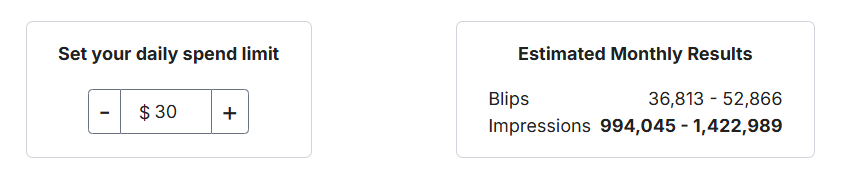
With Blip, you control exactly what you spend on Bear billboards by setting a daily budget that works for you, whether that’s a few dollars or more. Each “blip” is a brief 7.5–10 second ad on digital billboards near Bear, Delaware, and you only pay for the blips you receive. Prices per blip vary based on the time of day, location, and advertiser demand, so your total cost over time is simply the sum of those individual blips.
Where can I advertise with Blip near Bear, Delaware?
With five digital billboards serving the Bear area from nearby Newark (about 3 miles away), advertisers can put messages in front of tens of thousands of drivers and passengers every day. For advertisers specifically seeking billboards near Bear, these Newark-area structures function as a de facto Bear billboard network, covering the same daily trip patterns residents rely on. Across New Castle County, major corridors like I-95, DE-1, and US-40 collectively carry well over 400,000 vehicle trips per weekday.
What kind of audience do Bear, Delaware billboards reach?
The Bear area itself is home to around 20,000–25,000 people, with more than 150,000 additional residents within a 10–12-mile radius when you include nearby Newark, Glasgow, Christiana, and portions of Wilmington. The Bear area has a large share of households with children and multi-vehicle families, and statewide over 80% of workers commute by car. This produces tens of thousands of repeat impressions as the same drivers pass the same billboards 10 or more times per week.
When is the best time to run billboards in Bear, Delaware with Blip?
Weekday peaks include the morning commute from 6:30–9:00 a.m., mid-afternoon school and shift changes from 2:30–4:30 p.m., and the evening commute and shopping window from 4:00–7:00 p.m. Saturdays see heavy traffic to retail and big-box shopping, especially late morning and afternoon, while Sundays skew more toward dining out, grocery, and recreation. Seasonal windows like back-to-school, holiday shopping, and summer travel can also be especially effective.
What roads and areas in Bear, Delaware should I target for billboard advertising?
US-40 (Pulaski Highway) connects the Bear area to Newark and Glasgow, with many local residents making this trip multiple times per week for work, school, and shopping. I-95 and DE-1 feeder routes capture higher-income commuters and long-distance travelers, while Newark-area billboards tap into traffic headed toward downtown Newark, the University of Delaware, and major employment centers. A dual-corridor strategy can increase effective frequency without dramatically increasing budget.
Do I need a contract to advertise with Blip near Bear?
No, Blip has no long-term contracts or minimum commitments. You can start, pause, or stop your campaign at any time.
How fast can I launch a billboard campaign with Blip near Bear?
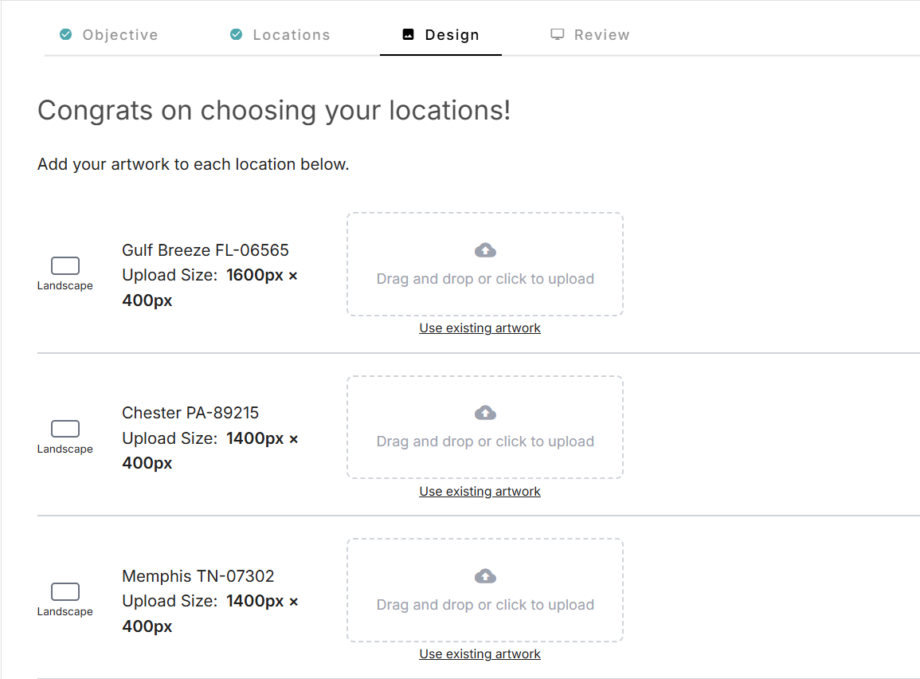
You can have your campaign live in minutes. Create a free account, select your locations, set your budget, upload your design, and start running once approved.
Where can I advertise with Blip near Bear?
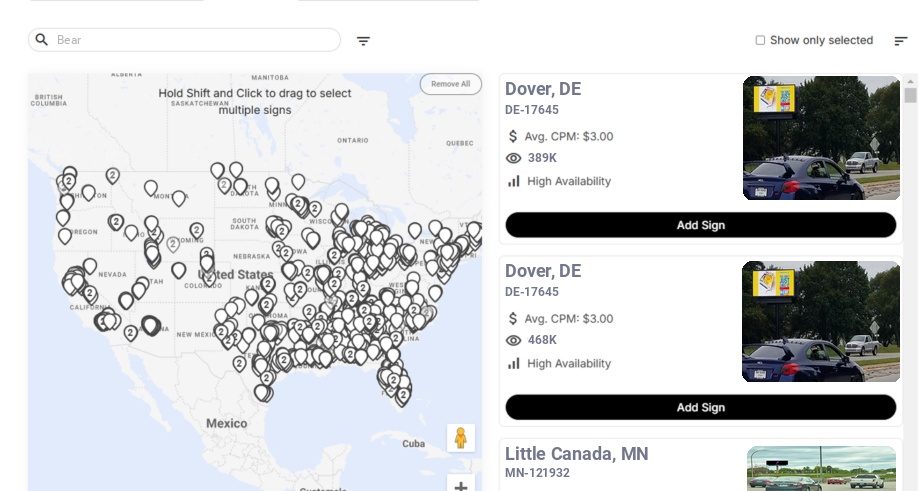
Blip has digital billboards near Bear. You can browse available locations on a map, choose the ones that fit your audience, and start advertising right away.
Still have questions? Launch a campaign in minutes — no contracts, no commitments.
Start Your CampaignBear Billboard Advertising Guide
The Bear, Delaware area sits at a powerful crossroads of suburban neighborhoods, regional shopping, and heavy commuter traffic moving between Baltimore, Philadelphia, and the rest of the Mid‑Atlantic. With five digital billboards serving the Bear area from nearby Newark (about 3 miles away), we can put messages in front of tens of thousands of drivers and passengers every day, precisely when and where it matters most. For advertisers specifically seeking billboards near Bear, these Newark‑area structures function as a de facto Bear billboard network, covering the same daily trip patterns residents rely on. Across New Castle County, major corridors like I‑95, DE‑1, and US‑40 collectively carry well over 400,000 vehicle trips per weekday, according to traffic counts from Delaware Department of Transportation (DelDOT), giving local advertisers a sizable and repeatable audience.

Understanding the Bear, Delaware Area Market
Bear is an unincorporated community in New Castle County, one of Delaware’s fastest‑growing and most economically significant counties. New Castle County reports a population of roughly 571,000–575,000 residents, accounting for about 58–60% of Delaware’s total population. The Bear area itself is home to around 20,000–25,000 people, with more than 150,000 additional residents within a 10–12‑mile radius when you include nearby Newark, Glasgow, Christiana, and portions of Wilmington. You can explore broader county demographics and planning insights via New Castle County Government. For brands exploring billboard advertising near Bear, this compact but dense population base supports efficient reach and high message frequency.
A few characteristics that matter for billboard advertisers near Bear:
-
Suburban, family‑oriented audience
The Bear area has a large share of households with children and multi‑vehicle families. In surrounding New Castle County, over 60% of housing units are owner‑occupied (county planning estimates typically place this around 62–65%), reflecting long‑term, stable residents who repeatedly travel the same corridors. The average household size in the Bear–Newark vicinity is close to 2.6–2.8 people, and many subdivisions report two or more vehicles per household, which translates into multiple daily trips past key roadways and frequent exposure to Bear billboards along their regular routes. -
Commuter‑heavy region
The Bear area is just:- ~8–10 miles from Wilmington
- ~40–45 miles from downtown Philadelphia
I‑95, DE‑1, US‑40 (Pulaski Highway), and DE‑7 connect Bear‑area residents to major employment centers. Statewide, over 80% of workers (typically 83–86% in most New Castle County communities) commute by car, and average commute times hover around 25–30 minutes. This produces tens of thousands of repeat impressions as the same drivers pass the same billboards 10 or more times per week. The State of Delaware and county transportation plans consistently highlight Bear and Newark as high‑volume commuter nodes.
-
Strong spending power
New Castle County’s median household income has climbed into the $75,000–$80,000 range in recent years, with several Bear‑area ZIP codes often registering above $85,000. Roughly one‑third of households in many nearby tracts earn $100,000+ annually. This supports higher discretionary spending on retail, dining, healthcare, home services, and automotive — ideal categories for high‑impact billboard campaigns and cost‑effective billboard rental near Bear. -
Regional draw for shopping and services
The nearby Christiana Mall and surrounding retail (5–8 miles from Bear) is one of the most visited shopping destinations in the state, attracting shoppers from all over Delaware, northeast Maryland, southeast Pennsylvania, and southern New Jersey. Various regional retail reports have estimated that the mall and adjacent power centers can attract 15–20 million visits per year during strong retail cycles. Learn more about this regional hub at the Christiana Mall website.
These demographics mean a Bear‑area digital billboard campaign can efficiently reach stable, mid‑ to upper‑income households and daily commuters who repeatedly see your message along the same routes.
Who You Reach with Digital Billboards near Bear
Our five digital billboards serving the Bear area near Newark give access to several high‑value audience segments and make it easy to tap into billboard advertising near Bear without having to manage a sprawling regional media buy:
-
Daily Commuters
- Thousands travel between Bear, Newark, Wilmington, and the I‑95 corridor every day. In typical weekday patterns, the Bear–Newark–Wilmington axis supports well over 150,000 commuter trips in each direction.
-
According to traffic count data from the Delaware Department of Transportation (DelDOT), average daily traffic on:
- I‑95 near Newark often exceeds 150,000–180,000 vehicles per day, with peak summer holiday Fridays pushing volumes even higher.
- US‑40 (Pulaski Highway) near Bear typically sees on the order of 45,000–65,000 vehicles per day, depending on the segment, with truck traffic accounting for roughly 8–12% of vehicles on some stretches.
- These corridors capture both weekday workers and weekend shoppers/recreation travelers. Because many residents work within 10–20 miles of home, it’s common for a single commuter to pass the same digital display 2–4 times per day, creating high‑frequency exposure.
-
Students and University Community
- The University of Delaware in Newark enrolls about 24,000 students (around 18,000 undergraduates and 6,000 graduate students), plus thousands of faculty and staff. See more on campus size at the University of Delaware.
- University reporting has estimated that more than 70% of undergraduates live off‑campus after their first year, spreading into neighborhoods across Newark and nearby communities like Bear and Glasgow.
- This audience is ideal for campaigns related to dining, nightlife, fitness, banking, technology, and entry‑level employment. With the university’s total annual economic impact estimated in the billions of dollars statewide, the student and staff population drives significant local spending on food, entertainment, housing, and services.
-
Retail and Service Shoppers
- The Bear–Newark–Christiana triangle is dense with big‑box retail, auto dealers, grocery stores, and healthcare providers. Within a 5–7‑mile radius you’ll find dozens of national retailers, more than 10 major grocery locations, multiple auto rows, and large healthcare complexes such as ChristianaCare.
- Regional shoppers routinely travel 15–30 miles to reach this cluster for back‑to‑school, Black Friday, and major household purchases. During peak holiday weekends, some Christiana‑area intersections can see 20–30% higher traffic volumes than off‑peak weeks.
- This segment is particularly responsive to limited‑time offers, store openings, and “only 3 exits away” style directional messages.
-
Logistics, Industrial, and Warehouse Workers
- The I‑95 and DE‑1 corridors host numerous warehouses and distribution facilities, including large operations for national e‑commerce and logistics brands concentrated in industrial parks near Newark and along US‑40. New Castle County employment data shows thousands of jobs in transportation, warehousing, and logistics — often growing faster than the overall job base.
-
This creates a steady flow of commercial drivers and shift workers, a prime audience for:
- Hiring and recruitment messages
- Fuel, truck service, and quick‑serve food
- Financial services and insurance
- With many facilities operating 2–3 shifts per day, billboard exposure for this audience is spread from early morning (5:00–7:00 a.m.) through late night.
-
Recreation and Day‑Trip Travelers
-
The Bear area is close to Lums Pond State Park—Delaware’s largest freshwater pond—and family‑oriented attractions at Glasgow Park and the Christiana area.
- Lums Pond, managed by Delaware State Parks
- Nearby Glasgow Park, operated by New Castle County Parks, spans more than 250 acres and hosts regular community events, farmers markets, and sports leagues that draw local families.
- Delaware’s beach and coastal tourism generates over 10 million visitors per year statewide, many of whom pass through New Castle County using I‑95 and DE‑1, according to statewide tourism reports from Visit Delaware. Recent Visit Delaware reports have estimated total visitor spending in the state at roughly $5–6 billion annually, with New Castle County capturing a sizable share as the northern gateway.
- A portion of these visitors stop in Bear, Newark, and Christiana for fuel, food, and shopping en route to the beaches, making travel‑oriented billboard messages especially effective from late spring through early fall.
-
The Bear area is close to Lums Pond State Park—Delaware’s largest freshwater pond—and family‑oriented attractions at Glasgow Park and the Christiana area.
With creative targeting and scheduling, we can configure Blip campaigns to reach the precise mix of commuters, students, families, shoppers, or workers that aligns with your goals and make the most of digital billboards near Bear.
Key Corridors and Placement Strategy
While the structures themselves sit near Newark, each of our five digital billboards serves traffic patterns that originate from or flow through the Bear area. When selecting locations in Blip’s dashboard, think about how drivers move and how each location functions as part of a Bear billboards network:
-
US‑40 (Pulaski Highway) Corridor
- Connects the Bear area to Newark and Glasgow, with many local residents making this trip multiple times per week for work, school, and shopping.
- DelDOT counts on US‑40 often show 45,000–60,000 vehicles per day, with speeds in the 35–45 mph range through many commercial stretches—ideal conditions for legible digital creative.
- Heavy local traffic from subdivisions, shopping centers, schools, and churches.
-
Ideal for:
- Local retail and restaurants
- Service businesses (auto repair, HVAC, home improvement)
- Schools, healthcare clinics, dentists, and urgent care
-
I‑95 and DE‑1 Feeder Routes
- Many Bear‑area residents use local roads to access I‑95 and DE‑1 toward Wilmington, Philadelphia, and the cities to the south. In New Castle County, I‑95 alone carries roughly 50–60 million vehicle trips per year on some segments.
- These routes capture higher‑income commuters and long‑distance travelers, including business travelers heading to and from regional airports and corporate campuses.
-
Ideal for:
- Brand‑building campaigns
- Tourism and attractions
- Financial, legal, and professional services
-
Newark City Approaches
- The Newark‑area billboards tap into traffic headed toward downtown Newark, the University of Delaware, and major employment centers, including research and technology parks highlighted by the City of Newark.
- Peak traffic into Newark typically aligns with university class times, office hours, and event schedules, creating multiple daily impression windows.
-
Perfect for:
- Student‑focused campaigns
- Hospitality (restaurants, bars, hotels)
- Events and live entertainment
When building your campaign, we recommend:
- Mapping your customer journey
Where do your Bear‑area customers likely live, work, shop, and play? Choose boards that overlap with those patterns (e.g., home to work, home to school, or home to shopping). For example, a family leaving a subdivision near Bear, dropping children at school, and then driving to work in Newark might encounter your message 2–3 times in a single round trip. - Pairing corridors
For example, run one set of blips on US‑40 to catch local Bear‑area trips and another near Newark to reinforce your message closer to a destination like Christiana Mall or downtown Newark. A dual‑corridor strategy can increase effective frequency—seeing the same brand 5–7 times per week—without dramatically increasing budget. - Using directional messaging
If your business is north of Bear, use copy like “Just 5 minutes ahead in Newark” or “Next right at Route 7” so the location feels immediate and relevant. DelDOT research and national traffic safety data consistently show that clear, distance‑based cues (“2 miles ahead”) improve wayfinding and response rates.
Timing Your Campaign in the Bear Area
The Bear area has clear temporal patterns that we can exploit using Blip’s flexible dayparting:
Weekday vs. Weekend
-
Weekday peaks (Mon–Fri)
- Morning commute: 6:30–9:00 a.m.
- Mid‑afternoon school and shift changes: 2:30–4:30 p.m.
- Evening commute and shopping: 4:00–7:00 p.m.
- On many New Castle County arterials, these windows account for 50–60% of total weekday traffic volume.
-
Use these for:
- B2B and professional services
- Employment and hiring
- Healthcare and appointments (“Call today, be seen this week”)
- Quick‑serve and coffee offers
-
Weekend patterns
- Saturdays see heavy traffic to retail and big‑box shopping, especially late morning (10:00 a.m.–1:00 p.m.) and afternoon (2:00–5:00 p.m.). Retail centers in the Christiana/Bear area often report weekend foot traffic 20–40% higher than typical weekdays.
- Sundays skew more toward dining out, grocery, and recreation. After‑church and early‑evening periods (11:00 a.m.–2:00 p.m., 4:00–7:00 p.m.) are particularly strong for food and family activities.
-
Use weekends for:
- Retail sales and limited‑time promotions
- Restaurants and entertainment
- Events, sports, and local attractions
Seasonal Considerations
-
Back‑to‑School (August–September)
- University of Delaware students return, and local families gear up for the school year. The combined enrollment of area public high schools and the university adds tens of thousands of students moving through the Bear–Newark network.
-
Great window for:
- School supplies, apparel, and electronics
- Fitness centers and extracurriculars
- Banking and student‑oriented services
-
Holiday Shopping (November–December)
- The Christiana/Newark corridor experiences heavy regional traffic for Black Friday and holiday shopping. Retailers routinely see November–December account for 20–30% of annual sales.
- DelDOT data often shows noticeable bumps in daily traffic counts (10–20% above fall averages) on key shopping days such as Black Friday and the two Saturdays before Christmas.
-
Consider increasing your daily budget and impressions during:
- The week of Thanksgiving
- First two weekends of December
- Last‑minute shopping week before Christmas
-
Summer Travel (May–August)
- More movement on DE‑1/I‑95 as travelers head toward Delaware’s beaches or pass through to Maryland and New Jersey. State tourism reports from Visit Delaware show that summer months consistently deliver the highest visitor volumes, with some weekends drawing hundreds of thousands of trips statewide.
- Tourism, attractions, lodging, and roadside services (restaurants, fuel, auto) particularly benefit from elevated summer impressions.
- Outdoor recreation spots like Lums Pond State Park
Blip lets us test different dayparts and seasons by starting small—then reallocating budget toward the times that deliver noticeable engagement.
Creative Strategies That Resonate Locally
To stand out near the Bear area, billboard creative should be simple, bold, and locally relevant.
Keep It Clear and High‑Impact
- Word count: Aim for 6–10 words of primary copy. Drivers on US‑40 or I‑95 only have 5–7 seconds to absorb a message at typical speeds of 45–65 mph.
- Font size: Use large, sans‑serif fonts and avoid thin, script typefaces. As a rule of thumb, letters should be at least 12–18 inches tall on the physical display to ensure readability at highway speeds.
- Contrast: High contrast color pairings (e.g., dark background with bright yellow or white text) are critical, especially during early morning and evening when glare and low‑angle sunlight can reduce legibility.
Use Local Landmarks and Directions
Referencing familiar destinations helps the Bear‑area audience instantly orient around your business:
- “Minutes from the Bear area at Christiana Mall”
- “Next to Glasgow Park”
- “5 miles north near the University of Delaware campus”
- “Between Bear and Newark on Route 40”
These cues tap into mental maps residents already use and can improve recall and navigation compared to generic location descriptions.
Lean Into Community Identity
The Bear–Newark region sits in the orbit of:
- Local schools and sports (e.g., Newark High School, Glasgow High School Appoquinimink School District to the south)
- Regional sports fandom for Philadelphia‑area teams that regularly draws TV audiences in the hundreds of thousands across the broader media market
- Community events often highlighted by outlets like Delaware Online / The News Journal and WDEL News
We can reference seasonal themes:
- “Game‑day catering for the big game this Sunday”
- “Beat the back‑to‑school rush—book your check‑up now”
- “Beach‑bound? Stop in on your way south”
These locally tuned references help your creative feel “for us,” not generic.
Use Rotating Creative with Blip
Because Blip allows multiple creatives in a single campaign, we can:
-
Test two to four versions of your ad:
- Different headlines
- Different offers (e.g., “10% off this weekend” vs. “Free consultation”)
-
Run hyper‑local messages:
- One creative tailored to Bear‑area residents
- Another focused on Newark/University of Delaware audiences
-
Swap seasonal creatives:
- Summer vs. holiday vs. back‑to‑school versions
Even basic A/B tests—splitting impressions 50/50 between two concepts for 2–4 weeks—can quickly reveal a 20–50% difference in response metrics like calls, web visits, or coupon redemptions.
Tracking web visits, promo code redemptions, or call volume while rotating creative gives real feedback on what resonates in the Bear market and helps refine your approach to billboard advertising near Bear over time.
Industry‑Specific Tips for Bear‑Area Advertisers
Retail and E‑Commerce
- Highlight proximity to major hubs like Christiana Mall or local Bear‑area shopping centers, which can see thousands of parking lot entries per weekend day.
-
Use urgency:
- “This weekend only”
- “Sale ends Sunday”
-
Tie into peak shopping windows:
- Weekday evenings 4:00–7:00 p.m.
- Saturdays 10:00 a.m.–5:00 p.m.
- For e‑commerce brands that ship to Delaware, emphasize tax‑free shopping, which can save buyers 4–7% compared with neighboring states.
Restaurants, Coffee Shops, and QSR
-
Focus on simple, crave‑inducing visuals and one call‑to‑action:
- “Exit now at Route 40”
- “5 minutes ahead, next to [well‑known anchor store]”
-
Promote lunch and dinner separately:
- Lunch specials from 10:30 a.m.–2:00 p.m.
- Dinner and takeout from 4:00–8:00 p.m.
- Many quick‑serve and casual restaurants see 60–70% of daily sales compressed into these windows; aligning your billboard dayparts with these peaks increases the chance of immediate response.
- Consider game‑day or seasonal sports tie‑ins, especially during NFL and college football seasons when gatherings and catering orders spike on weekends.
Home Services and Healthcare
-
The Bear area has a high density of homeowners and families, ideal for:
- HVAC, roofing, plumbing, landscaping
- Pediatric care, family medicine, dental, urgent care
-
Emphasize:
- “Serving the Bear and Newark area since [year]”
- Guarantee or differentiator (“Same‑day service”, “Walk‑ins welcome”)
-
Run campaigns during:
- Weather transitions (spring/fall for HVAC, winter for heating and plumbing)
- Back‑to‑school for medical and dental checkups
- Large regional providers such as ChristianaCare demonstrate how consistently visible branding across corridors like I‑95 and US‑40 can build trust for healthcare decisions that involve high lifetime value.
Education and Training
- With the University of Delaware and local high schools nearby, there’s an ongoing audience of students and parents. Combined enrollment in area public schools and UD easily exceeds 35,000–40,000 students.
-
Promote:
- Tutoring
- Career training and trade schools
- Adult education and certification programs
-
Daypart around:
- After‑school (3:00–6:00 p.m.)
- Evening (6:00–9:00 p.m.) for working adults
- Consider aligning bursts of activity with school calendar milestones posted by local districts and universities, which you can often find via the City of Newark or individual district sites.
Hiring and Recruitment
- Warehousing, logistics, healthcare, and service industries around the Bear area often compete for talent. State labor statistics from agencies such as the Delaware Department of Labor regularly show hundreds of open positions in transportation, warehousing, healthcare support, and hospitality within New Castle County alone.
-
Use bulletproof, benefit‑oriented messaging:
- “Now hiring: up to $20/hr + benefits”
- “Immediate openings in the Bear–Newark area”
-
Direct prospects to:
- Short URLs
- QR codes (large and high‑contrast)
- Simple phone numbers or text shortcodes
- Because many applicants live within 10–15 miles of their workplace, geotargeted billboard messages near Bear and Newark can be more efficient than broad regional campaigns.
Using Blip Tools to Optimize Your Bear‑Area Buy
Blip’s flexibility is particularly powerful in a compact geography like the Bear area, where trips are short but frequent.
We can:
-
Start with a focused footprint
Launch on a subset of the five boards serving the Bear area that best align with your target:- Heavy US‑40 exposure for local retail and dining
- Boards closer to Newark for student and university messaging
- Boards near I‑95/DE‑1 access points for regional travelers and higher‑income commuters
This approach gives you the benefits of billboards near Bear without overextending your initial test budget.
-
Layer Dayparting and Days of Week
-
For example, run:
- Commuter‑focused ads Mon–Fri 6:30–9:00 a.m. and 4:00–7:00 p.m.
- Shopper‑oriented ads Sat–Sun 10:00 a.m.–5:00 p.m.
- Pause or reduce spend during historically slow periods for your business (for many local retailers, mid‑day midweek can account for less than 15–20% of weekly sales).
-
For example, run:
-
Adjust Budget Dynamically
-
Increase budget during:
- Holiday shopping weeks
- Big local events, university homecoming, or graduation periods
- Summer tourism peaks and long holiday weekends (Memorial Day, July 4th, Labor Day)
- Scale back during slower months while maintaining a presence for brand recall. Even a modest “always‑on” presence of a few hundred impressions per day can maintain awareness between major pushes.
-
Increase budget during:
-
Test and Iterate Quickly
- Launch multiple creatives simultaneously.
-
After 2–4 weeks, evaluate:
- Which messages coincided with noticeable lifts in traffic or inquiries?
- Which days or times correlated with more conversions?
- Shift more of your impressions toward the top‑performing combinations.
- Many advertisers find that a data‑driven optimization cycle every 30–60 days improves cost‑per‑response by 20% or more over a “set it and forget it” approach.
Measuring and Improving Performance
To get the most from your Bear‑area digital billboard campaign, connect the dots between impressions and real‑world results.
We recommend:
-
Using Geo‑Specific Tracking
- Create landing pages or UTM‑tagged URLs that you only promote on billboards serving the Bear area.
- Monitor traffic analytics in platforms like Google Analytics to see spikes in visits from New Castle County ZIP codes and cities like Bear, Newark, and Glasgow.
- Look for patterns such as 10–30% increases in direct or branded search traffic during your campaign windows.
-
Aligning Offers with Creative
-
Use simple, billboard‑specific offers:
- “Mention BEAR10 for 10% off”
- “Show this code: 40BEAR”
- Track redemption numbers to compare creative effectiveness. For higher‑volume local businesses, even a redemption rate of 0.2–0.5% of total impressions can translate into a strong return on ad spend.
-
Use simple, billboard‑specific offers:
-
Correlating with Internal Metrics
-
Compare:
- Call volume
- Online appointment bookings
- Store visits or sales
- Before vs. during your Blip campaign, especially in the ZIP codes nearest Bear and Newark. If you typically average 100 weekly calls and see that rise to 120–130 during a focused billboard push, that 20–30% lift can often be tied back to your outdoor visibility when other marketing remains steady.
-
Compare:
-
Watching Local News and Event Calendars
-
Keep an eye on:
- City of Newark announcements
- County updates from New Castle County
- State and tourism event calendars via Visit Delaware
- Increase your presence ahead of local festivals, university events, and high‑traffic weekends that drive more people through the corridors where we display your ads. For major events, traffic and footfall can surge 20–50% above a typical weekend, giving your message additional reach without raising your cost per impression.
-
Keep an eye on:
By combining localized insight about the Bear, Delaware area with Blip’s flexible tools—multiple creatives, precise dayparting, dynamic budgeting, and quick iteration—we can build digital billboard campaigns that reliably reach the right drivers, at the right time, on the right roads near Bear. Whether you are testing your first Bear billboards campaign or scaling ongoing billboard rental near Bear, every decision can be grounded in real traffic, demographic, and economic data.