Billboards in Oxford, MS
No Minimum Spend. No Long-Term Contracts. Just Results.
Trusted by Leading Brands


Billboard advertising
in Oxford has never been easier
How much is a billboard in Oxford?
Why Choose Blip for Billboard Advertising in Oxford
-
Choose Blip in Oxford to launch fast on Highway 6 and 7—self-serve control fits the city’s car-based traffic and busy shopping runs.
-
Blip’s dayparting helps Oxford brands catch Ole Miss students at move-in, game days, and campus rush hours when timing matters most.
-
In Oxford, no contracts mean you can test campus, Square, or west-side routes, then shift budget as football weekends heat up.
-
Real-time Blip analytics let Oxford advertisers track lifts during Double Decker, graduation, and SEC weekends, then optimize on the fly.
-
Use Blip’s creative tools to build Oxford ads that speak to locals, visitors, and healthcare or retail traffic along Highway 6 and 7.
Frequently Asked Questions About Billboard Advertising in Oxford
How much does a billboard cost in Oxford, Mississippi with Blip?
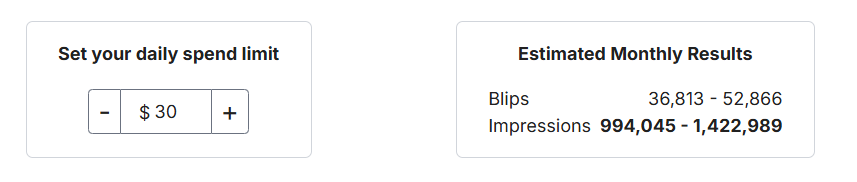
You only pay when your ad actually appears, with each 7.5-to-10-second display, or “blip,” starting at just $0.01 per display. Because pricing changes based on time of day, location, and advertiser demand, Blip works to get you the most visibility for your spend. There are no minimums or contracts, so you can start small, adjust your budget whenever you want, or pause anytime.
Where can I place a billboard in Oxford, Mississippi with Blip?
The Highway 6 and U.S. 278 corridor is Oxford’s main east-west commercial spine and one of the strongest billboard routes in the market. Highway 7 functions as a north-south gateway, and city streets like Jackson Avenue, University Avenue, and South Lamar Boulevard connect the university, the Square, residential neighborhoods, and west-side retail. If your goal is precision rather than mass reach, these interior routes often outperform broader regional boards.
Why is Oxford, Mississippi a strong market for Blip billboard advertising?
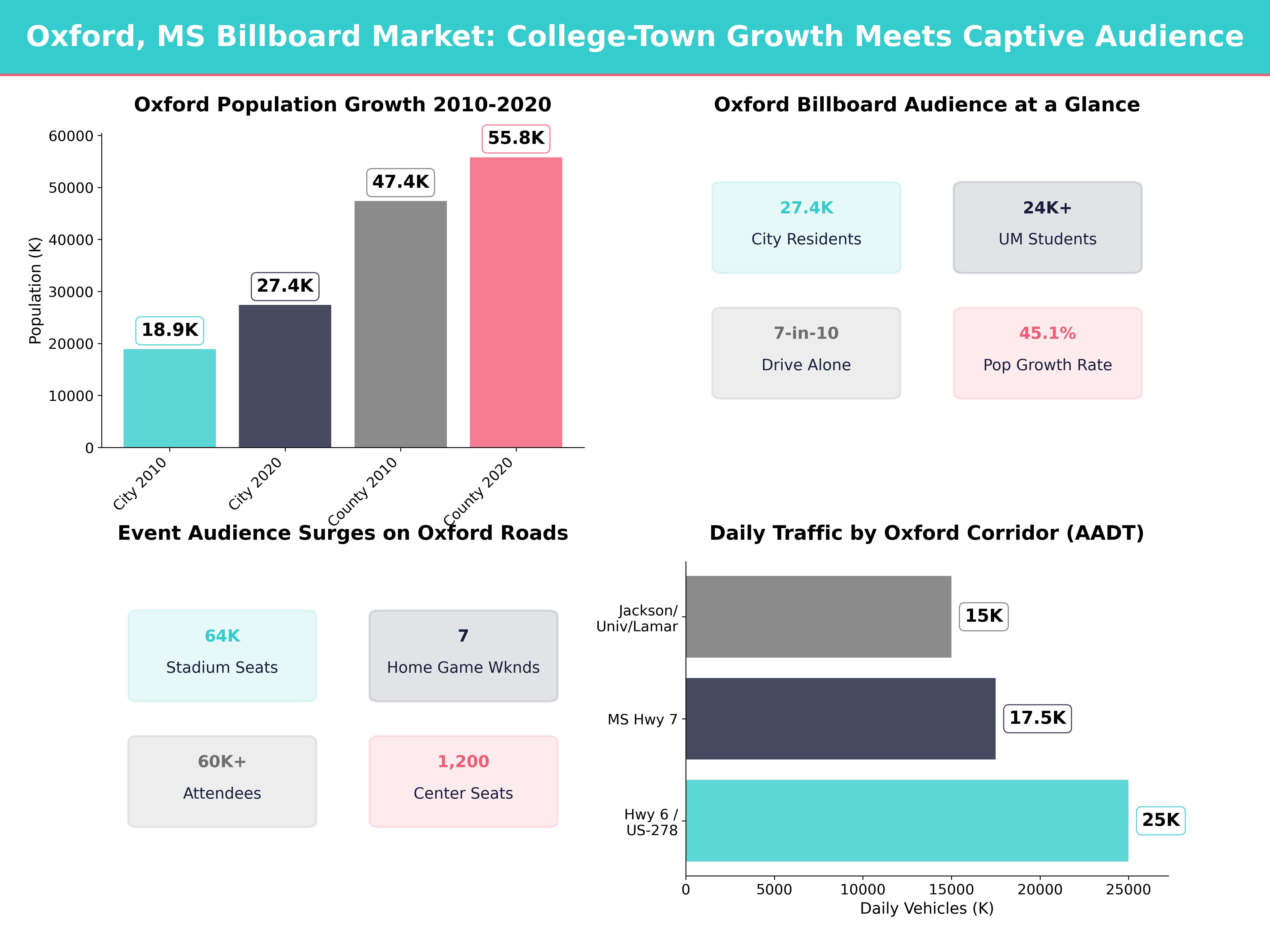
Oxford gives us an unusually efficient billboard market because it combines a fast-growing permanent population with one of the South’s most visible college brands. The city grew from 18,916 residents in 2010 to 27,444 in 2020, while Lafayette County grew from 47,351 to 55,813 over the same period. The University of Mississippi adds a student population of more than 24,000 to the local mix.
When is the best time to run Blip ads in Oxford, Mississippi?
Fall is Oxford’s highest-profile billboard season, and Ole Miss football typically gives us about 7 home weekends. Spring is Oxford’s second major surge period, with college baseball, better foot traffic, and the Double Decker Arts Festival drawing more than 60,000 attendees. Summer is often a smart time to advertise apartments, furniture, storage, internet, gyms, and local hiring because competition can be lighter before the August rush.
Who should advertise on billboards in Oxford, Mississippi with Blip?
Oxford rewards advertisers that think in layers, because the same billboard can touch a professor on Tuesday, a parent on Friday, and a football visitor on Saturday. The city also has strong audience segments including students and university employees, local households and commuters, sports fans and festivalgoers, and healthcare users and regional workers. That mix makes Oxford a good fit for restaurants, apartments, healthcare, retail, banking, insurance, and event-driven promotions.
Do I need a contract to advertise with Blip in Oxford?
No, Blip has no long-term contracts or minimum commitments. You can start, pause, or stop your campaign at any time.
How fast can I launch a billboard campaign with Blip in Oxford?
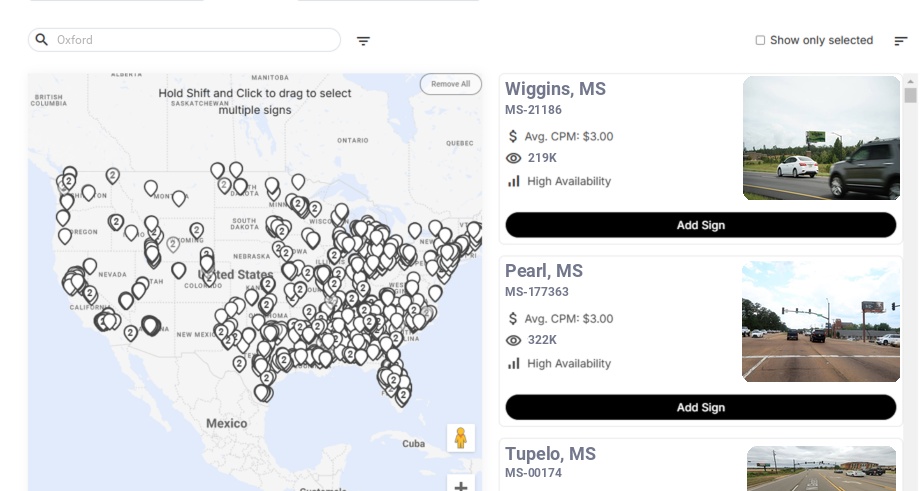
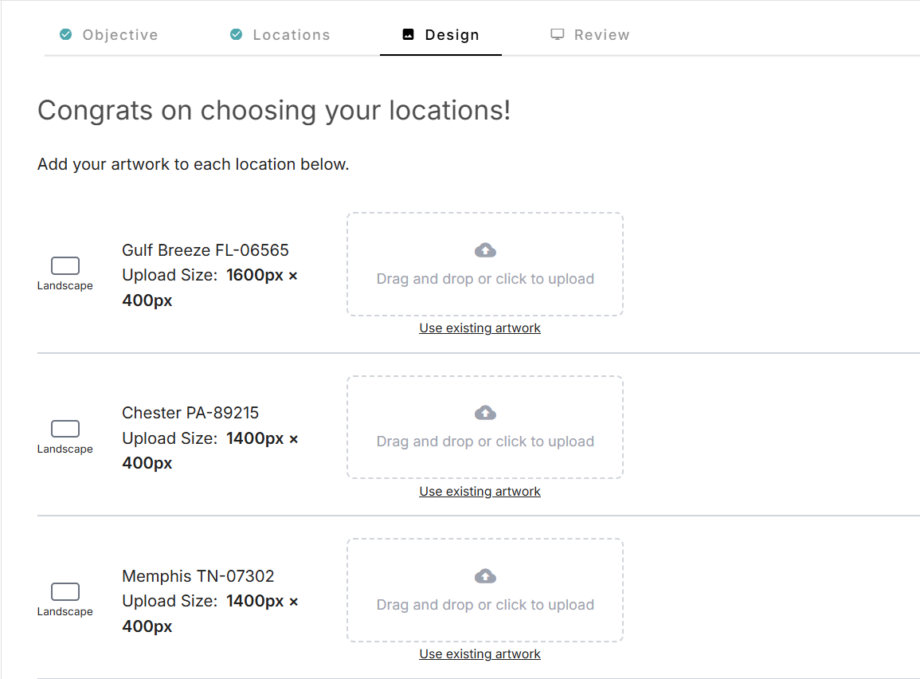
You can have your campaign live in minutes. Create a free account, select your locations, set your budget, upload your design, and start running once approved.
Where can I advertise with Blip in Oxford?
Blip has digital billboards in Oxford. You can browse available locations on a map, choose the ones that fit your audience, and start advertising right away.
Still have questions? Launch a campaign in minutes — no contracts, no commitments.
Start Your CampaignOxford Billboard Advertising Guide
Oxford, Mississippi gives us an unusually efficient billboard market because it combines a fast-growing permanent population with one of the South’s most visible college brands, including 64,038 football seats and 9,500 basketball seats on campus. The City of Oxford counted 27,444 residents in 2020, up from 18,916 in 2010, which was a striking 45.1% increase in just one decade. Lafayette County reached 55,813 residents in 2020, up from 47,351 in 2010, for growth of 17.9%, and the University of Mississippi adds a student population of more than 24,000 to the local mix. Outside the walkable blocks around the Square and campus, most everyday shopping, dining, medical, and service trips still happen by car, in a market where roughly 7 in 10 workers drive alone, so a well-placed digital billboard can build frequency fast with both locals and visitors.
Oxford, Mississippi Market Overview
Oxford is not just a small college town. We are working in a regional commercial hub, anchored by a 55,813-person county and a 24,000+ student campus, that draws daily traffic from across North Mississippi while also pulling in students, alumni, faculty, sports fans, and leisure travelers.
Population growth, demographics, and why Oxford keeps expanding
Oxford’s population story matters because billboard performance improves when a market has both stable year-round demand and recurring visitor surges. The city grew from 18,916 residents in 2010 to 27,444 in 2020, while Lafayette County grew from 47,351 to 55,813 over the same period. That means advertisers are not buying exposure in a stagnant place. We are advertising in one of Mississippi’s faster-growing local markets.
A major reason is the University of Mississippi, which was founded in 1848 and remains the area’s best-known institution. The university anchors the local economy, supports a large renter population, and keeps Oxford unusually young compared with many Mississippi communities. For billboard advertisers, that combination creates two useful audience layers at the same time:
- We can reach long-term local households that make repeat trips for groceries, healthcare, banking, home improvement, and family dining.
- We can also reach students and university employees who respond to seasonal offers, move-in campaigns, event promotions, apartments, mobile services, and nightlife.
Oxford also benefits from a brand identity that travels well beyond city limits. Visit Oxford promotes the city nationally for football, literature, food, and events, which gives outdoor ads extra value during peak travel weekends.
Economic drivers, household spending, and vehicle-based mobility
Oxford’s economy is diversified enough to support many billboard categories. Higher education is the obvious anchor, but it is not the only one. Baptist Memorial Hospital-North Mississippi is a 217-bed hospital, which creates a steady flow of medical workers, patients, caregivers, and vendor traffic. Regional manufacturing also matters. Toyota Mississippi 2,400 team members, and Oxford benefits from the broader North Mississippi workforce circulation that comes with that industrial base.
Retail and hospitality are also unusually strong for a city of Oxford’s size because the trade area extends well beyond the city line. The Oxford-Lafayette County Chamber of Commerce regularly markets the area as a regional center for shopping, dining, professional services, and entrepreneurship. That is good news for billboard advertisers because it means a board in Oxford can influence not only city residents, but also households driving in from surrounding communities for errands, healthcare, entertainment, and university events.
Mobility reinforces that advantage. Even though Oxford has a walkable core around the Square and campus, the larger market remains road-driven. County commuting profiles generally show roughly 7 in 10 workers driving alone, and the total share traveling by personal vehicle rises further once carpools are added. Public transit plays only a small role in the broader market. For us, that means roadside visibility is not a niche tactic. It is one of the most reliable ways to build repeated reach.
Key Traffic Corridors for Oxford, Mississippi
Oxford’s traffic is concentrated on a short list of routes, which is exactly what we want in a billboard market. According to traffic mapping from the Mississippi Department of Transportation 10,000-to-30,000-plus AADT range depending on the segment and the year of the count. That gives us clear choices based on whether we want commuter repetition, student exposure, regional arrivals, or event-weekend impact.
Mississippi Highway 6 and U.S. 278 around Oxford
The Highway 6 and U.S. 278 corridor is Oxford’s main east-west commercial spine and one of the strongest billboard routes in the market. MDOT counts commonly place the busiest Oxford segments in the roughly 20,000-to-30,000-plus vehicles per day range, especially near major retail nodes and key intersections.
This corridor works especially well for advertisers that need broad local reach. We usually prioritize it for:
- Retailers, because Highway 6 captures routine shopping traffic headed toward large commercial centers.
- Healthcare brands, because the route connects multiple residential areas with major service destinations.
- Financial services, insurance, home improvement, and automotive advertisers, because repeated weekday exposure matters more than one-time event traffic for those categories.
Highway 6 is also valuable for regional visitors entering Oxford for sports weekends or festival trips. When we want scale first, this is often the first corridor to evaluate.
Mississippi Highway 7 in Oxford
Highway 7 is the other essential Oxford route. It functions as a north-south gateway, linking Oxford to nearby communities and feeding drivers into the city’s busiest retail and service areas. MDOT segment counts near Oxford’s commercial zones often fall in the 15,000-to-20,000-plus AADT band.
This route is especially effective when we want to capture people before they choose where to stop, shop, eat, or fill up. We like Highway 7 for:
- Quick-service restaurants, convenience retail, fuel-adjacent offers, and urgent care messaging.
- Apartment communities and real estate brands that want visibility with both local movers and incoming renters.
- Regional employers and staffing campaigns that need to reach workers traveling between Oxford and other North Mississippi job centers.
Because Highway 7 also intersects with Highway 6, boards near that cluster can produce strong crossover exposure. In practical terms, that means one buy can influence both routine local traffic and outside-in arrivals.
Jackson Avenue, University Avenue, and South Lamar Boulevard in Oxford
Oxford’s city streets matter because they connect the university, the Square, residential neighborhoods, and west-side retail. Depending on the specific segment, local planning and MDOT counts typically place these roads in the 10,000-to-20,000 AADT range, with the most commercial stretches running higher.
We use these corridors when we want a more targeted audience than the Highway 6 or Highway 7 routes alone can provide. Jackson Avenue is ideal for restaurants, student services, furniture, apartments, grocery-adjacent brands, and mobile-first consumer offers. University Avenue is valuable for campus-facing businesses, event promotions, healthcare, and hospitality that benefits from university traffic. South Lamar Boulevard can work well for local services, banking, legal, healthcare, and destination retail because it serves both residents and visitors moving between central Oxford and southern growth areas.
If our goal is precision rather than mass reach, these interior routes often outperform broader regional boards.
Audience Segments in Oxford, Mississippi
Oxford rewards advertisers that think in layers. The same billboard can touch a professor on Tuesday, a parent on Friday, and a football visitor on Saturday.
Students, faculty, and staff at the University of Mississippi
The University of Mississippi brings more than 24,000 students into the market, plus faculty, staff, graduate assistants, contractors, visiting families, and alumni. That audience is large enough to shape the city’s retail calendar, rental cycle, and dining peaks.
We see especially strong billboard relevance here for:
- Apartments, storage, internet, furniture, and moving services during summer and late-summer leasing pushes.
- Restaurants, entertainment, delivery, healthcare, and personal services during the academic year.
- Recruiting, graduate programs, continuing education, and event promotions aimed at campus-adjacent professionals.
Because Oxford’s student population is seasonal, timing matters almost as much as placement. A board that looks average in June can become extremely efficient in August, September, and January.
Local households, commuters, and family decision-makers
Oxford is not only a student market. The city and county together represent a meaningful family and homeowner base, and that audience keeps spending patterns stable even when school is out. Population growth of 45.1% in the city and 17.9% in the county over the last census decade shows why year-round household advertising works here.
This segment is the best fit for:
- Healthcare, dental, and specialist practices.
- Banks, insurance agencies, legal services, and tax firms.
- Grocery, discount retail, home improvement, automotive repair, and family dining.
We generally reach these audiences best on Highway 6, Highway 7, and west Oxford commercial routes, where daily errands stack up over time.
Sports fans, festivalgoers, and leisure visitors
Oxford’s event audience is one of its biggest outdoor advantages. Ole Miss football typically gives us about 7 home weekends, and each one brings a surge of alumni, students, tailgaters, hotel guests, restaurant traffic, and retail spending. If we want to reach visitors with hospitality, dining, shopping, or event messaging, the period from late August through November is usually the best window.
The basketball arena on the Ole Miss Athletics campus seats 9,500, and baseball, concerts, and special events add even more visitor movement throughout the year.
The city’s signature spring festival is another major draw. The Double Decker Arts Festival began in 1996 and now draws more than 60,000 attendees, according to festival organizers. Add in live performances at the 1,200-seat Gertrude C. Ford Center for the Performing Arts, literary tourism around Square Books Yoknapatawpha Arts Council
This audience is excellent for hotels, restaurants, boutiques, bars, parking, event shuttles, and premium local experiences.
Healthcare users, service professionals, and regional workers
A 217-bed hospital creates more than patient traffic. It creates shift changes, physician recruiting opportunities, visiting specialists, vendor activity, and support-service demand. Oxford also attracts legal, financial, and educational professionals because it is the county seat and a regional service center.
We should also think beyond the city line. Oxford sits within a broader North Mississippi economy that includes manufacturing, distribution, education, and healthcare corridors. That wider labor shed makes Oxford boards useful for recruiting, B2B services, trade schools, and regional consumer brands that need North Mississippi coverage without buying every town one by one.
Seasonal and Timing Opportunities in Oxford, Mississippi
Oxford is one of those markets where the calendar can change the value of a board almost overnight. We should plan creative and budget by season, not just by location.
Fall in Oxford means football, alumni travel, and packed weekends
Fall is Oxford’s highest-profile billboard season. Ole Miss football typically gives us about 7 home weekends, and each one brings a surge of alumni, students, tailgaters, hotel guests, restaurant traffic, and retail spending. If we want to reach visitors with hospitality, dining, shopping, or event messaging, the period from late August through November is usually the best window.
This is also when campus life is most intense. Students return in August, classes settle in by September, and local routines become predictable again. We often see the best fit for:
- Restaurants and bars.
- Apparel, boutiques, and game-day retail.
- Apartments, storage, and moving services in the early part of the term.
- Medical, banking, and service brands that want sustained local frequency before the holiday season.
Spring in Oxford brings festivals, baseball, and commencements
Spring is Oxford’s second major surge period. College baseball runs from February through May, spring weather improves foot traffic and patio traffic, and the Double Decker Arts Festival creates one of the biggest single-day audience spikes of the year with more than 60,000 attendees.
Commencement is also a major advertising opportunity. The university has 2 primary graduation seasons, one in May and one in December, and the spring ceremonies create especially strong demand for restaurants, gifts, lodging, salons, transportation, and photography-related services. Spring campaigns also work well for home services, real estate, and healthcare because local households are more active after winter.
Summer and winter timing in Oxford
Summer is quieter than football season, but it is not empty. New student orientation, summer classes, camps, conferences, and leisure visitors keep Oxford active. Summer is often a smart time to advertise apartments, furniture, storage, internet, gyms, and local hiring because competition can be lighter before the August rush.
Weather helps shape creative timing too. Oxford’s average July high is around 90°F, average January low is near 30°F, and annual precipitation is about 56 inches. Hot-weather creative for drinks, pools, cooling services, and indoor entertainment tends to fit well in summer, while winter boards can emphasize convenience, healthcare, comfort foods, and holiday retail.
Billboard Design Tips for Oxford, Mississippi
Oxford responds best when our creative feels native to the market. We do not need generic highway artwork here. We need creative that understands campus energy, Southern hospitality, and the city’s upscale-casual identity.
Creative cues that fit Oxford’s personality
Oxford balances SEC intensity with literary and arts credibility. That means a billboard can feel local without being loud. We often see stronger creative when it uses:
- Clean navy, red, and white palettes that feel Ole Miss-adjacent, while avoiding any suggestion of official affiliation unless we actually have permission.
- Imagery that nods to tailgating, the Square, porch dining, live music, bookstores, or weekend hospitality.
- Type styles that feel polished and Southern rather than purely industrial or discount-oriented, especially for restaurants, real estate, boutique retail, and professional services.
A student-facing billboard can be more direct and price-driven, while a visitor-facing billboard usually benefits from a more experience-driven tone.
Messaging that works for locals versus visitors
Oxford has at least two very different response modes. Locals need usefulness. Visitors need orientation and urgency.
For locals, we usually want the message to answer one practical question quickly. Good Oxford examples include same-day care, tax help, move-in specials, family dining, or home-service scheduling. For visitors, we want location cues and immediate reasons to stop now, such as brunch before kickoff, parking near the Square, late-night food, or a boutique worth visiting before checkout.
Because Oxford roads carry both audiences at once, we should keep copy tight. We generally recommend 6 words or fewer in the main line, one clear brand cue, and one obvious next step.
Category-specific ideas for the Oxford market
Certain visual approaches are especially well matched to Oxford. Apartment and student-housing brands should lean into lease dates, roommate language, move-in timing, and proximity to campus. Medical and healthcare brands should emphasize trust, speed, and access, especially near major commuter corridors and hospital approaches. Restaurants should use daypart-specific visuals, such as coffee in the morning, lunch offers before noon, or game-day dining on Thursdays through Saturdays. Boutique retail and hospitality brands should feature atmosphere, not just products, because Oxford sells experience as much as inventory.
Regional Strategies Across Oxford, Mississippi
A smart Oxford campaign usually performs better when we divide the market into sub-areas instead of treating every board the same.
The Square and campus core in Oxford
The Square and campus-adjacent routes are where we go for student visibility, alumni recognition, event attendance, and premium local branding. This zone works especially well for restaurants, nightlife, cultural programming, healthcare near campus, and short-term calls to action tied to events at the university, the University Museum, the Gertrude C. Ford Center for the Performing Arts, or downtown businesses.
Creative here should feel current, polished, and culturally aware. We are speaking to people who know Oxford well or want to feel like they do.
West Oxford and the Highway 6 retail corridor
West Oxford is often the most practical buy for broad commercial reach. This area captures shopping trips, grocery runs, routine errands, and cross-town movement. If we want families, homeowners, commuters, or high-frequency local exposure, this is usually our most dependable zone.
This is where categories like banking, automotive, furniture, discount retail, healthcare, home improvement, and quick-service dining often fit best. We should use straightforward copy and clear offers because many drivers here are in task mode.
South Oxford and the Highway 7 growth corridor
South Oxford has become increasingly important because it ties together commuter traffic, newer housing, medical activity, and regional arrivals. Boards here can be effective for apartment communities, healthcare, legal services, insurance, education, and recruiting.
We also like this area for brands that need to catch people before they reach their final stop. That is especially true when our goal is to pull traffic toward a specific retail node, medical office, or dining destination.
Oxford’s regional approaches and county-to-city movement
Some campaigns need more than city residents. They need people entering Oxford from surrounding communities for work, appointments, sports, and weekend plans. In those cases, we focus on gateway boards along Highway 6 and Highway 7 rather than only on downtown-adjacent placements.
This strategy is especially strong for hospitals, auto dealers, regional colleges, staffing firms, and tourism-related brands because many of those decisions are made before the driver reaches the Square.
Using Blip Tools in Oxford, Mississippi
Oxford is a great market for flexible digital execution because demand changes sharply by weekday, season, and event calendar. We do not need to buy the market the same way in July that we buy it on an SEC Saturday in October.
Budgeting, dayparting, and event-based adjustments
We can use Blip’s map-based buying to separate commuter boards from campus boards and then adjust budgets around the times Oxford actually moves. Weekday drive windows around 7 to 9 a.m. and 4 to 6 p.m. are useful for local services and healthcare, while late morning and early afternoon often work better for restaurants, retail, and campus-adjacent offers.
We can also scale up around football weekends, Double Decker Arts Festival, graduation, and move-in without committing to a long fixed buy. That flexibility matters in Oxford because the difference between a quiet week and a major event week can be dramatic.
Creative testing and real-time optimization in Oxford
Oxford’s audience mix makes creative testing unusually valuable. We can run one message that targets students, another that targets parents or homeowners, and a third that targets visitors, then watch performance and rotate toward the version that best fits the corridor.
Blip’s fast artwork workflow also helps when timing changes. If weather shifts, kickoff times move, or a promotion needs a last-minute update, we can adapt without rebuilding a whole traditional campaign cycle.
Getting Started with Billboard Rental in Oxford, Mississippi
Oxford is easy to overbuy emotionally because the city has so much buzz. We get better results when we start with the audience and route first, then choose boards that match the goal.
How we should evaluate Oxford billboard locations
We usually begin by answering three questions. Are we trying to reach everyday locals, university audiences, or event visitors? Do we need broad repetition on Highway 6 or Highway 7, or do we need tighter relevance near campus and downtown? Is our campaign tied to a season, such as football, move-in, graduation, or spring festival traffic?
If we answer those questions first, the right locations become much clearer. A medical clinic, for example, may value commuter consistency more than campus proximity. A boutique hotel or restaurant may benefit more from visitor-facing routes and pre-arrival messaging.
Why Blip simplifies Oxford billboard rental
Traditional billboard buying often pushes advertisers into long terms, fixed schedules, and limited flexibility. Oxford does not always reward that approach because the market is so event-sensitive. With Blip, we can start small, test a corridor, shift timing, pause after a peak weekend, and re-enter when the next strong season arrives.
That matters especially for Oxford businesses with irregular demand patterns, such as apartments, restaurants, seasonal retail, healthcare specialties, event venues, and local service brands.
A practical Oxford launch plan
For many advertisers, a smart starting point is a 2-to-4-week test built around one clear objective. We can choose 2 or 3 boards in different Oxford sub-areas, run 2 creative versions, and watch which route produces the strongest lift in traffic, calls, or search activity.
Our basic Oxford checklist usually looks like this:
- We identify whether the campaign is local, campus-focused, or visitor-focused.
- We match the message to the season, such as football, graduation, leasing, or routine family demand.
- We choose boards based on the actual route the audience travels, not just on the lowest price.
- We keep creative simple enough to read at speed and specific enough to feel local.
- We review results quickly and reallocate toward the boards and times that best match Oxford’s rhythms.
When we approach Oxford this way, billboard advertising becomes far more than a branding gesture. It becomes a flexible, route-based tool for owning the moments when locals are commuting, students are returning, and visitors are deciding where to go next.