Billboards in Norman, OK
No Minimum Spend. No Long-Term Contracts. Just Results.
Trusted by Leading Brands


Billboard advertising
in Norman has never been easier
How much is a billboard in Norman?
Why Choose Blip for Billboard Advertising in Norman
-
Blip lets you launch in Norman fast and self-serve, so you can reach I-35 commuters and OU game-day traffic without calling on contracts.
-
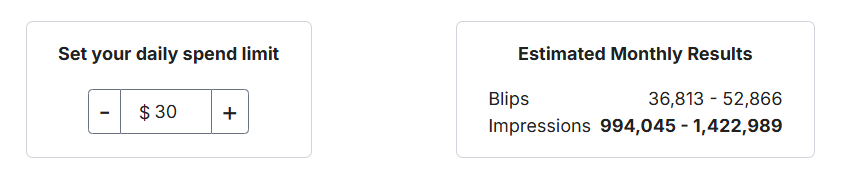
Set a flexible budget in Norman and Blip will stretch it across peak windows on SH-9, Lindsey, and west Norman retail runs.
-
Use dayparting in Norman to hit morning I-35 commuters, noon campus traffic, or late Riverwind visitors at the right time.
-
Track Norman campaigns in real time, then shift spend toward the corridors that perform best near OU, Sooner Mall, and downtown.
-
No long-term contracts means you can test Norman's football weekends, spring festivals, and school-year traffic, then pause anytime.
-
Blip's creative tools help you build bold, local ads for Norman's college crowd, family shoppers, and regional travelers in minutes.
Frequently Asked Questions About Billboard Advertising in Norman
How much does a billboard cost in Norman with Blip?
With Blip, billboard advertising in Norman is designed to fit a wide range of budgets. You set a daily budget, and Blip’s algorithm uses it to bid on open ad slots, so you only pay when your ad actually appears. Pricing starts at just $0.01 per display, and cost per blip changes based on time of day, location, and advertiser demand.
Where can I advertise with Blip in Norman to reach the most traffic?
I-35 through Norman generally carries about 80,000 to 110,000+ vehicles per day, depending on the segment and count year. The busiest sections around major interchanges, especially near State Highway 9 and the west-side retail district, top 100,000 AADT. State Highway 9, US-77, Lindsey Street, Main Street, and Robinson Street also offer strong local reach.
When is the best time to run a billboard campaign in Norman?
Late summer and fall are premium billboard seasons in Norman because student move-in begins in August and OU football usually brings 6 to 7 home games between late summer and late fall. Spring also brings major event traffic from the Norman Music Festival and the Medieval Fair of Norman, while severe-weather season typically peaks from March through June. Summer and winter each have their own opportunities tied to recreation, travel, shopping, and indoor services.
What kind of people does Norman billboard advertising reach?
Norman’s audience is younger than many similarly sized cities because the University of Oklahoma anchors the market, with a median age of about 31 and a median household income of roughly $66,000. The city also has a strongly car-oriented market, with about 80% of local workers driving alone to work and another 7% carpooling. That mix gives advertisers access to commuters, students, families, tourists, and eventgoers.
Where should I place a billboard in Norman for Blip if I want campus and game-day traffic?
Lindsey Street is one of the most important campus and event routes in Norman, and regular-day traffic near major intersections often lands in the 25,000 to 35,000 AADT range. Game days amplify movement dramatically as people approach the University of Oklahoma campus and Sooner Sports venues. Robinson Street, Main Street, and nearby west-side arterials also support strong daily traffic and campus-influenced visibility.
Do I need a contract to advertise with Blip in Norman?
No, Blip has no long-term contracts or minimum commitments. You can start, pause, or stop your campaign at any time.
How fast can I launch a billboard campaign with Blip in Norman?
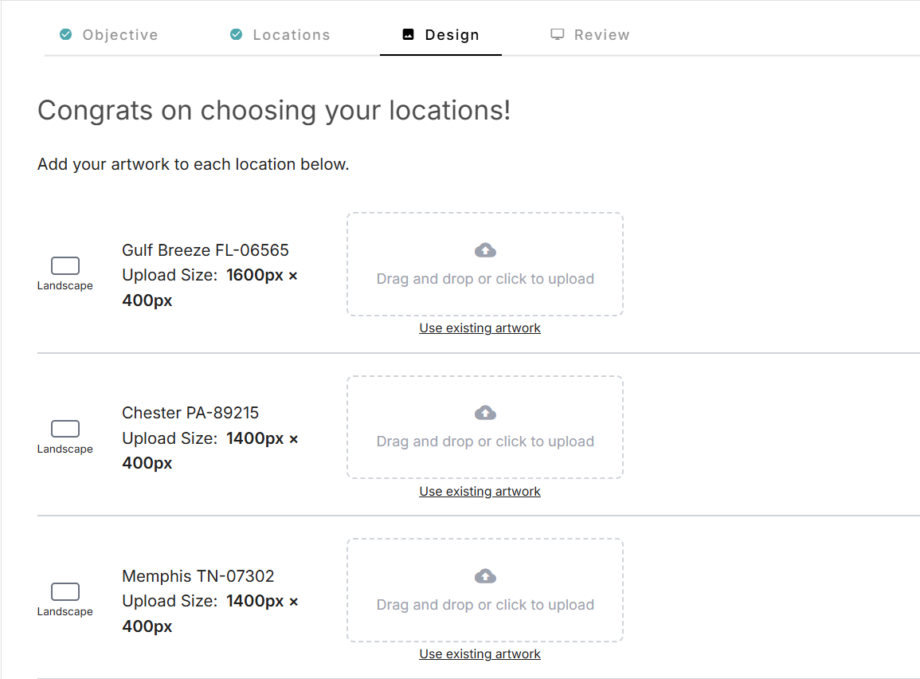
You can have your campaign live in minutes. Create a free account, select your locations, set your budget, upload your design, and start running once approved.
Where can I advertise with Blip in Norman?
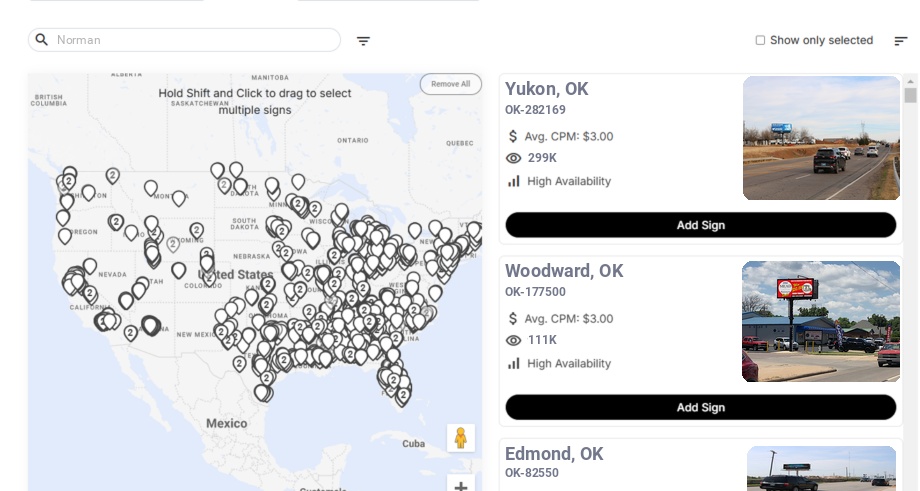
Blip has digital billboards in Norman. You can browse available locations on a map, choose the ones that fit your audience, and start advertising right away.
Still have questions? Launch a campaign in minutes — no contracts, no commitments.
Start Your CampaignNorman Billboard Advertising Guide
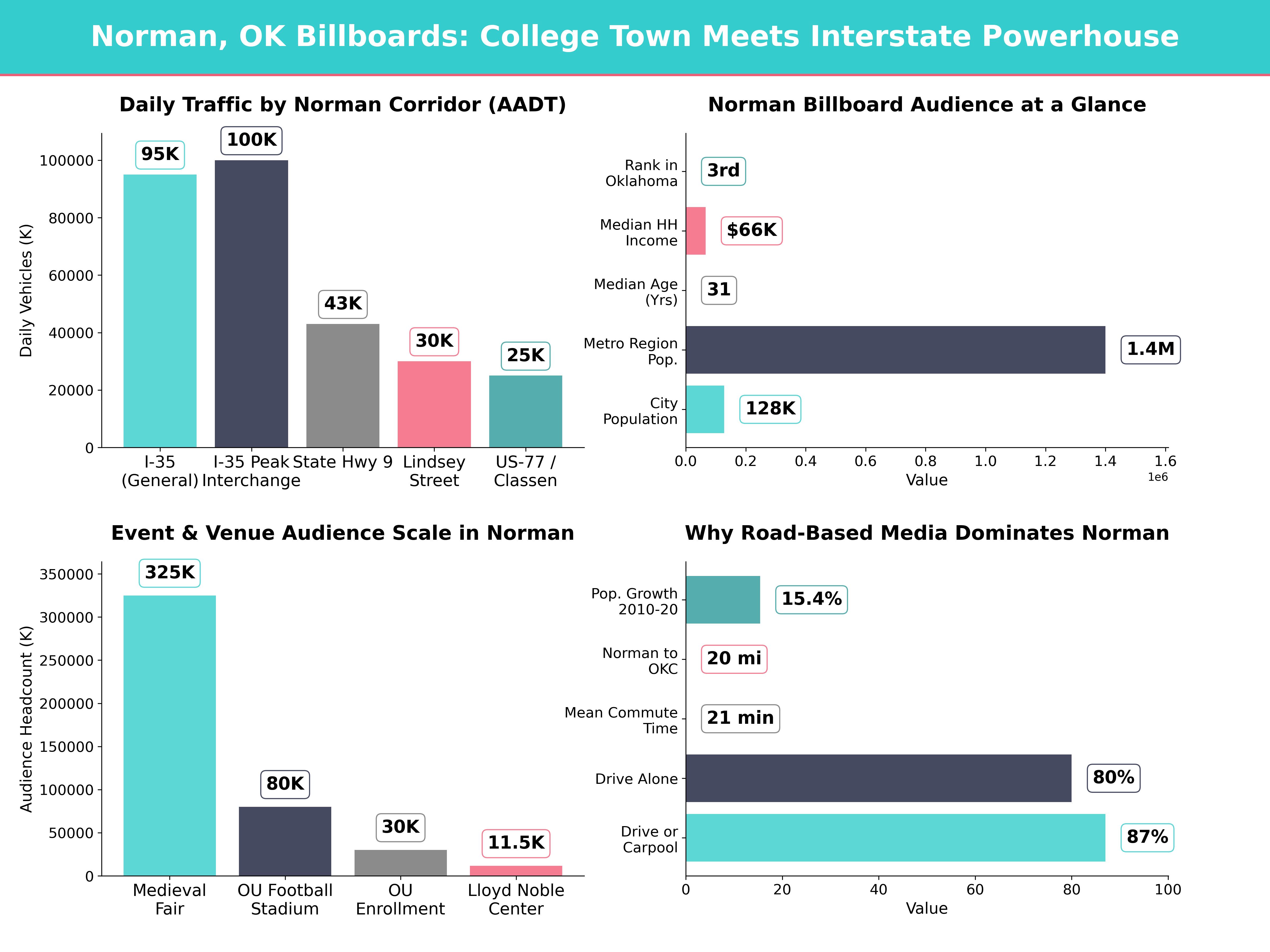
Norman gives us a rare combination of dependable local reach and high-intensity event traffic, supported by 128,026 city residents, a metro of more than 1.4 million people, and I-35 segments that carry 80,000 to 110,000+ vehicles per day. The City of Norman counted 128,026 residents in 2020, and the city sits inside the greater Oklahoma City region 1.4 million people, which keeps regional commuting active all week. Norman is also a strongly car-oriented market, with most workers driving to work and thousands more traveling in for the University of Oklahoma, retail, healthcare, gaming, and recreation, especially on football weekends at the 80,126-seat stadium. That mix makes digital billboards especially effective when we want repeated commuter frequency, sharp event timing, or broad awareness across a fast-growing college-centered city.
Market Overview of Norman
Norman is the third-largest city in Oklahoma, and it has been growing at a healthy pace for more than a decade. The city grew from 110,925 residents in 2010 to 128,026 in 2020, which equals 15.4% growth. Cleveland County 255,755 residents in 2010 to 295,528 in 2020, which equals 15.6% growth. For billboard advertisers, that matters because growth creates more households, more daily trips, more retail demand, and more competition for attention.
Norman’s Demographics and Economic Base
Norman’s audience is younger than many similarly sized cities because the University of Oklahoma anchors the market. Recent community estimates compiled by Data USA place Norman’s median age at about 31, and median household income at roughly $66,000. That combination gives us a market with both student energy and established household spending power.
The local economy is more diversified than many college towns, with 940 guestrooms at the NCED Conference Center & Hotel 800,000 square feet of retail at Sooner Mall Norman Regional Health System, the National Weather Center, the Norman Economic Development Coalition Riverwind Casino, the NCED Conference Center & Hotel Sooner Mall 940 guestrooms, which helps sustain year-round business travel, meetings, training activity, and hospitality demand. Sooner Mall adds roughly 800,000 square feet of retail presence to the west side, which reinforces Norman’s role as a shopping hub for surrounding communities.
Mobility and What It Means for Billboards
Norman works well for billboard advertising because people spend meaningful time in their vehicles. With about 87% of workers driving alone or carpooling, road-based media fits how the city actually moves. Data USA reports that about 80% of local workers drive alone to work, another 7% carpool, and the mean travel time is about 21 minutes. Those are useful conditions for out-of-home media because they create repeated impressions on the same roads, at similar times, across predictable weekday and weekend patterns.
We also benefit from Norman’s regional position. The city sits about 20 miles south of downtown Oklahoma City, and Interstate 35 ties Norman directly to Moore, Oklahoma City, and points south such as Purcell
Key Traffic Corridors for Norman Billboard Campaigns
Norman’s travel patterns are shaped by a handful of high-volume corridors. When we match our message to the right roadway, we can decide whether we want broad regional reach, local conversion, or event-specific visibility.
Interstate 35 Through Norman
According to traffic maps from the Oklahoma Department of Transportation, I-35 through Norman generally carries about 80,000 to 110,000+ vehicles per day, depending on the segment and count year. The busiest sections around major interchanges, especially near State Highway 9 and the west-side retail district, top 100,000 AADT. This is Norman’s most important billboard corridor because it captures both local traffic and regional pass-through traffic.
This corridor is ideal for several advertiser groups.
- Retail, dining, and entertainment brands benefit because drivers can act quickly at exits near west Norman shopping and hospitality areas.
- Healthcare providers, urgent care clinics, and specialty practices benefit because commuters often need repeated brand exposure before making an appointment decision.
- Auto dealers, home services, and legal services benefit because I-35 delivers scale and frequency across Norman, Moore, Oklahoma City, and southern Cleveland County.
- Tourism, gaming, and hospitality advertisers benefit because southbound and northbound travelers heading to Riverwind Casino, OU events, or overnight stays see the same corridor.
State Highway 9 in Norman
State Highway 9 is one of Norman’s most valuable east-west routes. ODOT counts commonly place key Norman segments in the 35,000 to 50,000 AADT range near the I-35 interchange and west Norman commercial areas. SH-9 connects west-side retail, south Norman, east Norman neighborhoods, and routes toward Lake Thunderbird State Park.
This route is especially effective for:
- Family retail, grocery, and restaurant brands, because it serves neighborhood trips as well as cross-town movement.
- Healthcare, dental, vision, and wellness services, because east-west travel often includes appointment-oriented errands.
- Recreation and destination advertisers, because SH-9 is a practical approach route for lake traffic, sports traffic, and regional visitors.
- Casino and event advertisers, because the south Norman and I-35 connection creates strong visitor flow.
US-77, Classen Boulevard, and Porter Avenue
US-77 and related city routes such as Classen Boulevard and Porter Avenue carry lower speeds than I-35, but they often deliver stronger local relevance. ODOT traffic counts on central Norman segments commonly fall in the 20,000 to 30,000 AADT range. These routes run through the urban fabric of Norman, connecting older neighborhoods, campus-adjacent areas, downtown activity, and local service businesses.
We usually like these roads for advertisers that need recall, trust, or neighborhood proximity. That includes medical offices, banks, insurance agencies, trades, schools, community events, and restaurants with a local customer base. Because drivers are moving slower than on the interstate, concise but slightly more detailed messaging can work here.
Lindsey Street, Main Street, Robinson Street, and the West Retail Spine
Lindsey Street is one of the most important campus and event routes in Norman. Regular-day traffic near major intersections often lands in the 25,000 to 35,000 AADT range, and game days amplify movement dramatically as people approach the University of Oklahoma campus and Sooner Sports venues. Robinson Street, Main Street, and nearby west-side arterials also support strong daily traffic, with several commercial segments exceeding 20,000 vehicles per day.
This cluster is especially strong for:
- Game-day offers, including tailgate supplies, food, apparel, parking, and hospitality.
- Retail and quick-service dining, because west Norman shopping trips are frequent and often planned around those corridors.
- Local attractions and museums, including the Sam Noble Oklahoma Museum of Natural History.
- Apartment communities, student services, and recruiting messages, because campus influence is strongest here.
Audience Segments We Can Reach in Norman
The best Norman campaigns recognize that this is not a single-audience market. We can use different corridors, creative, and timing to speak to distinct groups without wasting spend.
Daily Commuters and Regional Workers
Norman’s commuter base is the foundation of billboard performance. With about 80% of workers driving alone, and another 7% carpooling, road-based media fits how the city actually moves. Many residents commute internally, while others move between Norman, Moore, Oklahoma City, Noble, Newcastle, and Purcell. That means billboards can support both city-level awareness and broader regional reach.
For this segment, we usually focus on convenience, trust, and proximity. Messages about same-day appointments, short drive times, open-late hours, and easy exits work well because they align with real travel behavior.
University of Oklahoma Students, Faculty, and Fans
The University of Oklahoma is Norman’s defining audience engine. The Norman campus enrolls more than 30,000 students, and that population is supplemented by faculty, staff, alumni, visiting families, and athletics audiences. On football Saturdays, Sooner Sports fills an 80,126-seat stadium, and major basketball and event nights at the Lloyd Noble Center add another 11,528-seat venue to the local demand picture.
This audience responds well to urgency, relevance, and event timing. Restaurants, entertainment venues, student housing, apparel, financial services, tutoring, healthcare, and rideshare-adjacent businesses all benefit from strong billboard placement near campus approaches and west Norman retail zones.
Families and Household Decision-Makers
Norman is also a substantial family market. Norman Public Schools serves more than 15,000 students, and the city’s growth over the last decade has added households across east and west Norman. Family-oriented audiences are important for grocery, healthcare, dental, home improvement, furniture, childcare, after-school programs, family entertainment, and auto repair campaigns.
For this segment, neighborhood relevance matters more than hype. We usually emphasize reliability, value, and local credibility, especially on SH-9, US-77, and major retail arterials where household errands happen.
Tourists, Eventgoers, and Recreation Visitors
Norman’s visitor economy is stronger than many advertisers assume. Visit Norman promotes a year-round mix of sports, culture, conferences, gaming, and outdoor recreation. The Medieval Fair of Norman draws more than 325,000 attendees each year during its 3-day run, and the Norman Music Festival 3 days each spring. Lake Thunderbird State Park adds a 6,070-acre lake with 86 miles of shoreline, which supports boating, camping, fishing, and warm-weather visitation.
We also have destination assets such as Riverwind Casino, Sam Noble Oklahoma Museum of Natural History, and the 198,000-square-foot Sam Noble museum campus. These audiences are useful for hotels, restaurants, fuel, convenience retail, attractions, healthcare, and same-day entertainment messaging.
Seasonal and Timing Opportunities in Norman
Norman is highly seasonal in ways that billboard advertisers can use to their advantage. We can plan around the academic calendar, athletics, festivals, weather shifts, and tourism spikes rather than staying flat all year.
Fall in Norman: Football, Move-In, and Back-to-School
Late summer and fall are premium billboard seasons in Norman. Student move-in begins in August, the academic year restarts, and OU football usually brings 6 to 7 home games between late summer and late fall. Every home weekend increases traffic on I-35, Lindsey Street, west Norman retail roads, and hotel corridors.
This is the right time for campaigns tied to apartments, storage, furniture, telecom, food delivery, bars, brunch, tailgating supplies, urgent care, and local attractions. It is also a strong window for service businesses that want to recruit workers, because the student and alumni audience is highly visible.
Spring in Norman: Festivals and Storm Season
Spring gives us two of Norman’s biggest event opportunities. The Norman Music Festival 3 days, and the Medieval Fair of Norman delivers more than 325,000 visits over its own 3-day event. Businesses near downtown, Reaves Park
Spring is also severe-weather season in Oklahoma, typically peaking from March through June. Because Norman is home to the National Weather Center, weather awareness is part of the local culture. Campaigns for roofing, restoration, insurance, HVAC, urgent care, indoor entertainment, and home improvement can perform especially well when we align creative with storm readiness, fast service, or indoor comfort.
Summer in Norman: Recreation, Road Trips, and Heat
Summer traffic in Norman shifts toward recreation, family outings, and road travel. Lake Thunderbird State Park, Riverwind Casino, and regional travel on I-35 all help maintain billboard value even when campus activity softens. July average highs in Norman are about 94°F, so heat-sensitive offers such as cold drinks, pools, indoor entertainment, air conditioning, and same-day HVAC service have clear local relevance.
Summer is also useful for tourism, museums, camps, sports clinics, and healthcare reminders. As we approach late July and early August, back-to-school and move-in campaigns can begin again, which creates a natural handoff from summer recreation to fall student demand.
Holiday and Winter Opportunities in Norman
Winter is quieter than football season, but it still offers strong billboard moments. Holiday shopping concentrates around Sooner Mall University North Park 28°F, which supports messaging around winter driving, healthcare, heating services, and indoor experiences.
Winter also works well for event-based campaigns tied to Lloyd Noble Center, conference traffic at NCED Conference Center & Hotel
Billboard Design Tips for the Norman Market
Norman responds best to creative that feels locally aware rather than generic. We can absolutely keep designs simple, but the strongest campaigns usually reflect the city’s college identity, Oklahoma driving habits, and event culture.
Use Norman-Specific Visual Cues
Norman is a place where collegiate energy is visible everywhere. Crimson, cream, black, and other high-contrast combinations often feel native to the market, especially during football season and school-year campaigns. We do not want to imply official affiliation with the University of Oklahoma unless we are licensed to do so, but we can still borrow the city’s bold, spirited visual language.
Outdoor and regional imagery also works well here. Lake scenes, stadium-adjacent excitement, western motifs, and clean family-oriented visuals can all fit naturally depending on the audience. Campaigns that look like they belong in Norman usually outperform campaigns that look like they were dropped in from a generic national template.
Match the Message to the Route
Route context matters in Norman. On I-35, we usually keep copy extremely short and directional, because traffic speed is high and decision windows are brief. Phrases such as “Next Exit,” “2 Miles Ahead,” “Open Late,” and “Game Day Parking” are practical because they align with how drivers make choices on that corridor.
On campus-adjacent roads and slower urban routes, we can be a little more expressive. Downtown offers, student discounts, local event messaging, and memorable taglines make more sense on Classen, Porter, Lindsey, and Main than on the interstate. Family-oriented ads on SH-9 and neighborhood arterials should emphasize trust, ease, and outcomes rather than trying to feel edgy.
Design for Oklahoma Light and Weather
Norman’s weather is not gentle on weak creative. Strong sun, stormy spring skies, and winter gray days all reward high contrast and simple composition. We usually prefer bold typography, clear logos, and a single visual focal point rather than busy layouts.
This market also rewards season-aware creative. Storm-season ads should look stable and legible in low-visibility conditions. Summer ads should feel bright and cooling. Fall ads can lean into school spirit and weekend energy. When we adapt the artwork to the season, the board feels timely rather than static.
Regional Strategies Across Norman
Even within a single city, different parts of Norman support different goals. We get better results when we treat Norman as a set of micro-markets rather than one uniform buy.
West Norman and the I-35 Retail Belt
West Norman is our broad-reach commercial zone. This area includes the I-35 frontage, major interchanges, Sooner Mall 800,000 square feet of retail, big-box retail, hotels, and high-frequency restaurant traffic. If we want to reach the largest mix of commuters, shoppers, and visitors, this is often the first place we look.
This zone works best for retail launches, healthcare awareness, food and beverage, auto, legal, and regional service brands. It is also the most logical area for game-day and holiday bursts because so much visitor traffic passes through it.
Campus and Downtown Norman
Campus and downtown are the personality core of Norman. Near Downtown Norman, the university, and the Lindsey-Classen-Main network, we can speak directly to students, faculty, local professionals, and eventgoers. This is the right zone for restaurants, nightlife, coffee, entertainment, apartments, student services, cultural institutions, and recruiting.
Campaigns here should feel current, concise, and local. We usually lean into timing, social proof, and immediate relevance rather than broad corporate branding.
East Norman and the Lake Thunderbird Side
East Norman has a more residential and recreation-oriented feel. SH-9 eastbound traffic, neighborhood trips, and Lake Thunderbird State Park visitation create a useful mix of families and outdoor travelers. This zone is a good fit for home services, healthcare, schools, churches, youth activities, and recreational brands.
When we advertise here, we usually focus on trust, convenience, and weekend utility. The message should feel helpful rather than noisy.
South Norman and Regional Draw Traffic
South Norman benefits from I-35 through traffic, SH-9 movement, and the pull of Riverwind Casino. It also catches travelers coming from or heading toward Purcell Noble, and surrounding southern communities. This area works particularly well for entertainment, hospitality, travel services, auto-related brands, and region-serving healthcare providers.
If our offer depends on visitors or pass-through traffic, south Norman can be more efficient than campus-centric placements. It is also a smart place for directional creative because exit-based action is common.
Using Blip Tools for Norman Campaigns
Norman is an excellent market for flexible digital billboard execution because demand changes so much by corridor, event, and season. We can use Blip’s tools to match that variability instead of locking ourselves into one flat approach.
Use Flexible Budgets Around Norman’s High-Value Windows
Norman has clear burst periods, including student move-in, football weekends, spring festivals, and holiday retail. Instead of buying a long static run, we can put more budget behind the exact 3-day festival weekend, the 6 to 7 football Saturdays that matter most, or the final 2 to 3 weeks before a seasonal deadline. That approach usually fits Norman better than a one-size-fits-all schedule.
Daypart Norman by Driver Behavior
Dayparting is especially useful here. We can emphasize northbound I-35 in the 6 a.m. to 9 a.m. commute, southbound return traffic in the 4 p.m. to 7 p.m. window, lunchtime exposure near campus from 11 a.m. to 2 p.m., and late-evening entertainment messaging near downtown or Riverwind after 8 p.m. Those timing shifts let us speak differently to commuters, students, families, and night-out visitors.
Rotate Creative and Watch the Data
Norman supports multiple creative angles at once. We can rotate one design for students, another for families, and another for regional travelers without rebuilding the whole campaign. Real-time performance data then helps us compare which boards, times, and messages are doing the most work.
That matters in a city where a 7.5-to-10-second digital display may need to serve very different audiences depending on the hour. If a west Norman retail board is outperforming a downtown placement, or if fall game-day creative is beating general branding, we can adjust quickly. If we need help producing local-looking creative, Blip’s artwork tools also make it easier to test Norman-specific messaging without slowing down the launch.
Getting Started with Billboard Rental in Norman
Renting a billboard in Norman is most effective when we start with the business goal, then match that goal to the right roadway and season. Norman has enough variety that the best board for a student housing push is often different from the best board for a hospital service line, restaurant grand opening, or family entertainment offer.
Start with the Goal, Not the Map
We usually begin by deciding whether we want one of three things: broad awareness, local conversion, or event-timed traffic. Broad awareness usually points us toward I-35 and high-volume west Norman. Local conversion often points us toward SH-9, US-77, Lindsey, Main, or Robinson. Event-timed traffic often points us toward campus approaches, festival routes, and south Norman visitor corridors.
A simple starting framework helps.
- If we want reach, we prioritize I-35 and high-volume west Norman locations.
- If we want neighborhood response, we prioritize slower urban and cross-town routes.
- If we want visitors, we prioritize campus, hotel, casino, and lake approach roads.
Expect Inventory and Pricing to Shift with Demand
Norman billboard demand is not static. Premium inventory gets more competitive during football season, major spring events, holiday shopping periods, and commuter-heavy weekday windows. In practical terms, that means premium interstate plays may clear faster and cost more per display than lower-demand time periods or more neighborhood-oriented boards.
We often recommend testing 3 to 5 locations for 2 to 4 weeks, then shifting budget toward the strongest performers. That lets us learn which corridor, direction of travel, and time block produces the best results before we scale up.
Use Blip to Simplify the Norman Buying Process
Traditional billboard rental often involves long negotiations, fixed terms, and slower creative changes. Blip simplifies the process because we can choose boards on a map, start with almost any budget, and pay only when the ad actually runs, with pricing that can start at $0.01 per display. In a market like Norman, that flexibility is valuable because event traffic, commuting, and seasonality all change quickly.
As we evaluate Norman locations, we usually ask four questions: Are we reaching the right audience for our offer? Are we positioned close enough to the action point or decision point? Are we buying the right time of day? Are we using creative that feels native to Norman? When we can answer yes to those four questions, Norman becomes one of the most efficient and adaptable billboard markets in Oklahoma.