Quick Answer: Billboard impressions are calculated by multiplying the number of people who pass a board by the share likely to see it, based on traffic counts, travel speed, distance from the road, and viewing angle. Blip uses modeled estimates from Geopath to calculate impressions for its digital billboard locations. Each ad play is tracked in real time, so you can see updated impression estimates and actual play counts for each location.
Billboard impressions estimate how many people see an ad as they pass by. This helps businesses measure ad performance and optimize campaigns. The number sits behind almost every billboard decision you make, from which board to book to how you judge cost against reach.
Here’s a quick breakdown:
- What Are Impressions? The estimated number of viewers exposed to an ad.
- Why They Matter: They guide ad placement, budget, and timing for better ROI.
- How They’re Tracked: Digital tools provide real-time data on views, costs, and engagement.
- Key Metrics: Cost Per 1,000 Views (CPM), daily impressions, and traffic patterns.
- Factors That Influence Impressions: Time of day, seasons, local events, billboard size, and placement.
Digital billboards offer more precise tracking and flexibility compared to static ones. Use impression data to refine your campaigns, focus on high-traffic periods, and allocate budgets effectively.
Key Takeaways
- Billboard impressions are an estimate of how many people are likely to see your ad, built from traffic counts and how visible the board is.
- Static billboards rely on modeled projections, while digital billboards log every play so you can count real exposure by location.
- CPM (cost per thousand impressions) is the number that lets you compare boards fairly, and out-of-home CPMs usually land in an efficient range next to TV, radio, and paid social.
- Impression counts shift with time of day, season, local events, board size, and placement, so where and when you run matters as much as the design.
- Big metros like New York City and busy highways in states like New Jersey deliver very different impression volumes, which is why you check each location before you book.
- You can buy digital billboard impressions yourself on Blip with pay per play pricing and no contracts. Get started and see live impression estimates for boards near you.
What Are Billboard Impressions?
Billboard impressions count the estimated number of people who have a reasonable chance to see your ad. It is not a headcount of everyone who drives past. It is the share of that traffic positioned to actually notice the board, based on things like distance from the road, viewing angle, and how fast people are moving.
Traditional out-of-home leans on modeled data to reach that number. Digital billboards go further by recording each time your creative plays, which turns a projection into a live count you can watch by location.
Impressions sit alongside a handful of other numbers worth tracking. For a wider view, see our guide to billboard cost-efficiency metrics.
Core Impression Metrics
A few core metrics can help you understand how efficiently your billboard campaign is building visibility and driving audience response.
Cost Per 1,000 Views
Cost Per 1,000 Views (CPM) reflects the price of reaching 1,000 viewers. It’s a straightforward way to compare costs across different locations and ad formats. A lower CPM means you’re getting more exposure for your budget.
But exposure alone isn’t the whole story. Understanding how viewers respond to your ads is just as important.
Digital Response Tracking
Digital billboards go a step further by tracking engagement. Metrics like QR code scans and click-throughs help connect impressions to actual audience actions, giving you a clearer picture of how your ad is performing.
How impressions are measured in OOH
How to Calculate Billboard Impressions
There are three main ways to calculate impressions. The underlying math is simple: multiply the traffic passing a location by the share likely to see the board, then track how many times your ad actually runs.
Basic Counting
Blip’s pay-per-play model ensures you’re charged only when your ad is displayed. There’s no minimum spend, and you’re not tied to long-term commitments.
Digital Tracking
Blip uses real-time auctions, updating bids and impression forecasts every ten minutes. Each ad play is logged in the analytics dashboard, offering detailed and accurate reporting.
Display Factors
In the interactive marketplace, you can set schedules and budgets. Adjust these settings based on impressions and CPM to target high-traffic periods for better ad visibility.
What Affects Impression Numbers
Understanding what influences impression numbers is key after you’ve calculated them.
Timing and Seasons
- Time of Day: Visibility increases during peak commute hours when traffic is heaviest.
- Seasonal Trends: Traffic patterns can shift with the seasons, impacting how often your ad is seen.
- Local Events: Events like festivals or sports games can lead to sudden traffic spikes in specific areas.
Physical Features
- Size and Boldness: Bigger, bolder billboards naturally attract more attention.
- Height and Angle: The height and angle of a billboard can impact how easily people notice and read it.
These elements help shape decisions about where to place ads, how to design them, and when to display them for the best results. For practical placement guidance, see our guide to the top digital billboard locations for local marketing.
Billboard Impressions by Location
The same board size can deliver very different numbers depending on where it stands. Traffic volume, dwell time, and how many people share the road all move the count. A few common questions come up when advertisers compare markets.
Billboard Impressions in New York City
New York City sits at the top end of the scale. Dense foot traffic, heavy vehicle volume, and landmark Routes mean a single board can reach large numbers each day. That reach comes with higher demand, so billboard impressions in New York City usually carry a higher price than boards in smaller markets. The upside is scale. Fewer boards can build the repeat exposure that helps people remember you.
Average Weekly Impressions for a Metro Billboard
The average weekly impressions for a metro billboard depend on the exact location, the road, and the time slots you run. A board on a busy commuter route in a major metro reaches far more people in a week than one on a quiet side street.
Rather than guess, check the live estimate for each board before you book. On Blip, every location shows its own projected impressions so you can compare metro boards side by side and pick the ones that fit your plan.
Highway Billboard Impressions Per Day in New Jersey
Highways change the math. Speed is higher and dwell time is shorter, but volume is huge, so highway billboard impressions per day in New Jersey can climb quickly on routes that feed into the New York metro.
The count depends on the specific stretch of road, the direction of travel, and the hours you choose to run. Checking the projected daily impressions for each board keeps your budget aimed at the highest traffic spots.
Reaching the right drivers matters as much as reaching a lot of them. For more on matching boards to the people you want, read how to segment audiences for OOH campaigns.
How to Use Impression Data
Use your impression calculations to make informed, data-driven decisions for your campaigns.
Reading Data Reports
Digital billboard analytics focus on key metrics such as:
- Daily Impressions
- Peak Traffic Windows
Blip’s interactive dashboard provides real-time updates on daily impressions and CPM for each location. These metrics build on the earlier discussions about impressions, CPM, and response tracking, giving you the tools to monitor and refine your advertising efforts.
Static vs. Digital Comparison
Digital billboards come with several advantages over static ones:
- Real-time tracking instead of relying on projections
- Multiple ads per screen, compared to a single static display
- Detailed performance metrics, offering deeper insights
- Scheduled targeting, allowing for time-specific exposure
These features make digital billboards more flexible and insightful, helping you optimize your campaign strategy.
Improving Campaign Results
- Adjust display schedules to align with peak traffic times.
- Focus your budget on locations delivering the highest impressions.
- Compare CPMs across different sites and allocate funds to the most cost-effective options.
Stretching a smaller budget across the right boards takes a bit of planning. These budget-friendly billboard campaign strategies show how to get more exposure from every dollar.
How to Buy Digital Billboard Impressions
Knowing how to buy digital billboard impressions used to mean calling a broker and signing a contract. With Blip you do it yourself, online, in a few steps.
- Pick your boards. Browse the marketplace and check the projected impressions for each location.
- Set your budget. Choose what you spend, and only pay when your ad runs.
- Choose your schedule. Run your campaign long enough for people to see you more than once.
- Upload your design and go. After a quick review, your campaign gets ready to run within the week.
New to the process? Our digital billboard campaign checklist for beginners covers every step before you launch.
See Your Impression Estimates on Blip
Grasping how billboard impressions are calculated helps you get the most out of your advertising efforts. Here are the key highlights:
- Accurate Measurement: Digital tracking now offers precise data on views and engagement, moving beyond outdated estimation methods.
- Location Matters: Where you place your billboard greatly influences impressions. Factors like traffic flow and visibility are critical.
- Data-Driven Adjustments: With real-time analytics, advertisers can tweak campaigns based on actual performance metrics instead of guesswork.
Blip’s Tracking Tools
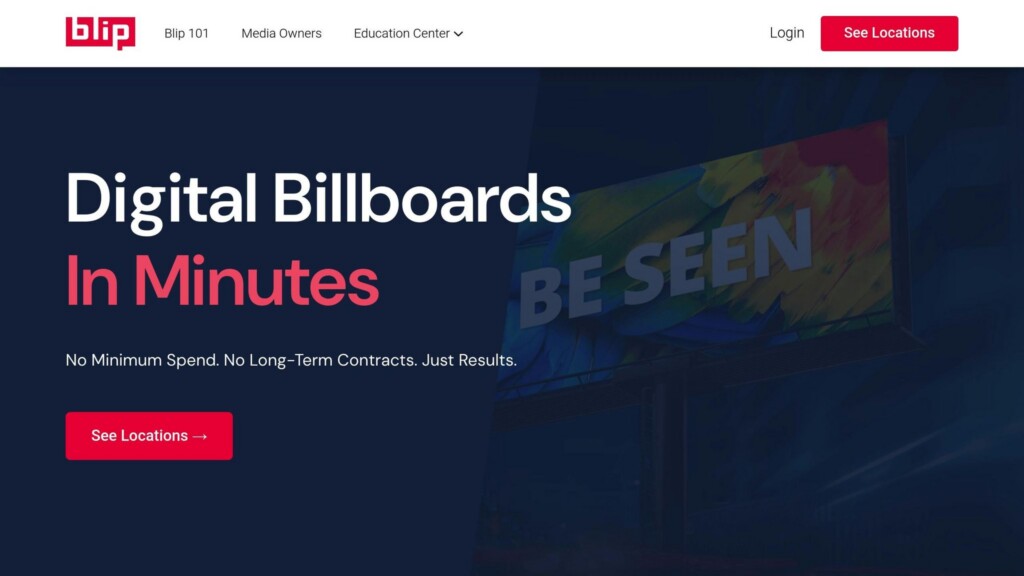
Blip provides advertisers with tools to turn these insights into action:
- Real-Time Bidding & Analytics: Update bids every ten minutes and instantly track impressions to keep campaigns performing at their best.
- Detailed Performance Reports: Access in-depth metrics to evaluate viewer engagement and overall campaign reach.
“Working with Blip has given Mr. Charlie’s the momentum to get our new location on the map while accelerating growth for our original location”
Pick your boards, check the projected impressions for each one, and set a budget that fits your business. No contracts. No minimums. Get started and build your campaign today.
Frequently Asked Questions About Billboard Impressions
What is the 3-second rule for billboards?
The 3-second rule is the idea that a driver only has about three seconds to take in a billboard as they pass. That short window shapes good design. Keep the headline to a few words, use bold visuals, and make the main message readable at a glance. If people cannot grasp it in three seconds, they will miss it.
What is a good CPM for billboards?
A good billboard CPM usually falls in a low range compared with other media, often single digits per thousand impressions for standard out-of-home placements. Premium boards in top markets run higher. Because out of home reaches real people in the physical world, its CPM tends to stay efficient next to channels like paid social or TV. The right number for you depends on the market, the board, and your goals.
What is CPM per 1000 impressions?
CPM stands for cost per mille, which means cost per one thousand impressions. It tells you what you pay to reach 1,000 people with your ad. The formula is total cost divided by total impressions, multiplied by 1,000. CPM lets you compare two boards fairly, even when their prices and audiences differ.
How do you measure impressions?
For traditional billboards, impressions are modeled from traffic counts, distance from the road, and how visible the board is. Digital billboards measure them differently. Each time your ad plays, the system logs it, so you get a real count of exposure rather than a projection. On Blip, those play counts and impression estimates update in your dashboard as your campaign runs.
How accurate are Blip’s impression estimates?
Blip bases its estimates on traffic data for each location, then logs every play of your ad in real time. You see projected impressions before you book and actual play counts once your campaign is live, with reporting that updates as the numbers come in. That mix of forecast and live tracking gives you a clear read on reach by location.
Can I choose which billboards my ad appears on with Blip?
Yes. You pick the boards, the budget, and the schedule yourself. Browse the marketplace, compare the projected impressions for each location, and choose the ones that fit your plan. You stay in control and can adjust anytime. Get started to see the boards available near you.