How consistency helps customers recognize you before they are ready to choose.
There is always another marketing channel to try.
Search slows down, so you try social. Social gets expensive, so you test email. A few months later, direct mail looks interesting. Before long, you have tried a little bit of everything without giving any one thing much time to build.
Trying new ideas is part of good marketing. The challenge is knowing the difference between learning from a test and moving on before the marketing has had time to do its job.
That matters even more when the goal is recognition.
New 2026 YouGov data shows that 68% of Americans notice billboards, and 35% say they have researched a product or service on their phone after seeing an out-of-home ad.
That journey does not always happen in one moment. Someone can see your business today, recognize it again next week, then search for you months later when they finally need what you sell.
Mark Watson, Senior Account Executive at Blip, has helped plan hundreds of billboard campaigns for businesses across the U.S. One thing he has learned is that advertisers sometimes expect every channel to prove itself on the same timeline.
His advice is simpler: know what job your marketing is doing before you decide whether it has had enough time to work.
Key Takeaways
- Not every marketing channel should be judged on the same timeline. Some capture people who are ready to act; others help people become familiar with you before that moment arrives.
- Consistency does not mean running the same ad forever. Keep recognizable parts of your marketing steady while refreshing the message when it makes sense.
- Choose a budget you can sustain.
- Decide how you will evaluate a campaign before it launches.
- Use billboards to support the rest of your marketing, not replace it.
First, Know What Job You Are Asking Your Marketing to Do
A search ad and a billboard can both be useful, but they usually do different jobs.
Someone searching “plumber near me” may need help right away. Search can help you show up at that exact moment.
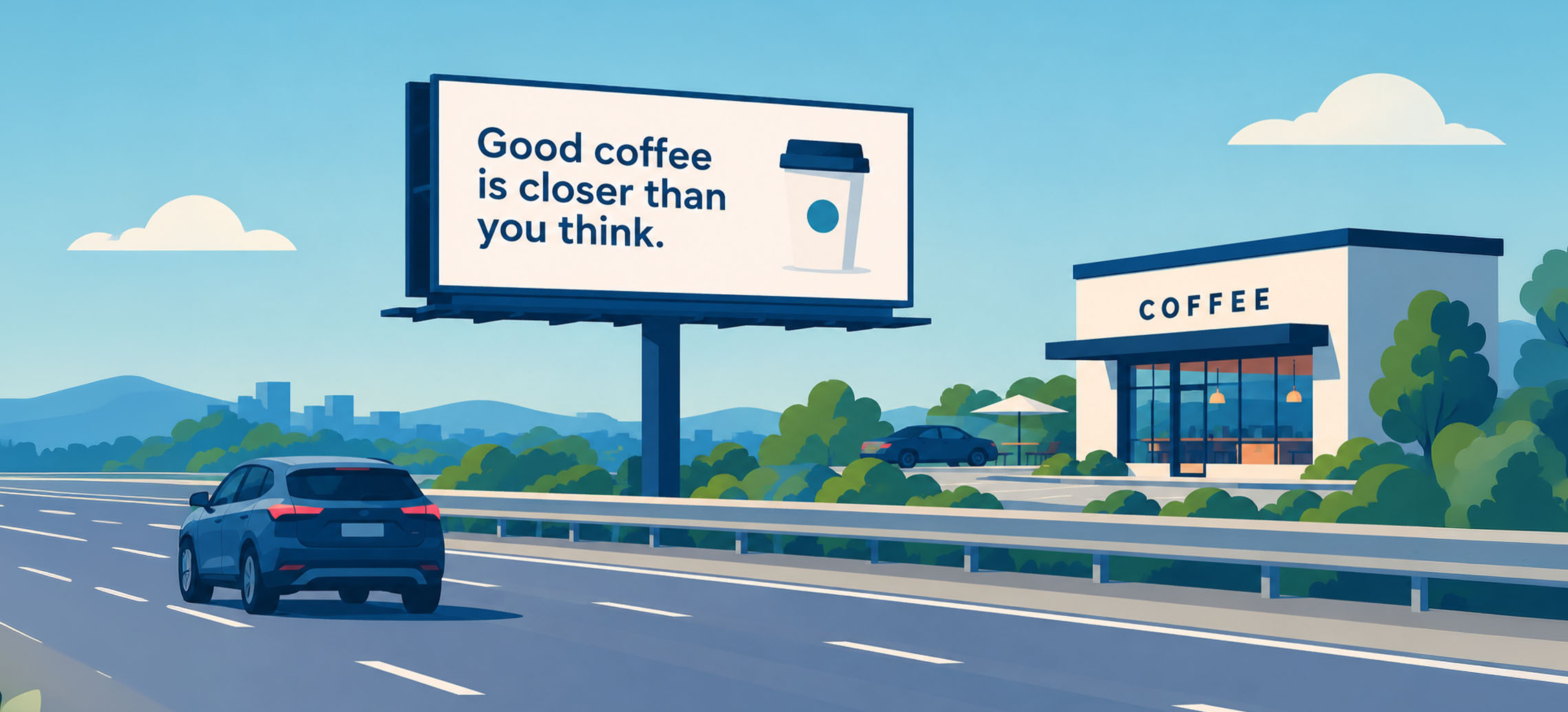
A billboard can reach the same person weeks or months earlier while they are driving to work, running errands, or heading home. They may not need a plumber yet, but they can start learning your name.
Neither job is better. They are simply different.
A useful way to think about it is this: some channels capture demand. Others build familiarity before demand exists.
Most businesses need a mix of both.
Problems show up when awareness-building marketing is judged on the same timeline as a click or a form fill. If recognition is the goal, the first few weeks may simply be introducing your business.
Why Constantly Starting Over Can Make Recognition Harder
Think about how you learn a new name. You hear it once, then hear it again, and eventually it starts to feel familiar.
Brands work the same way.
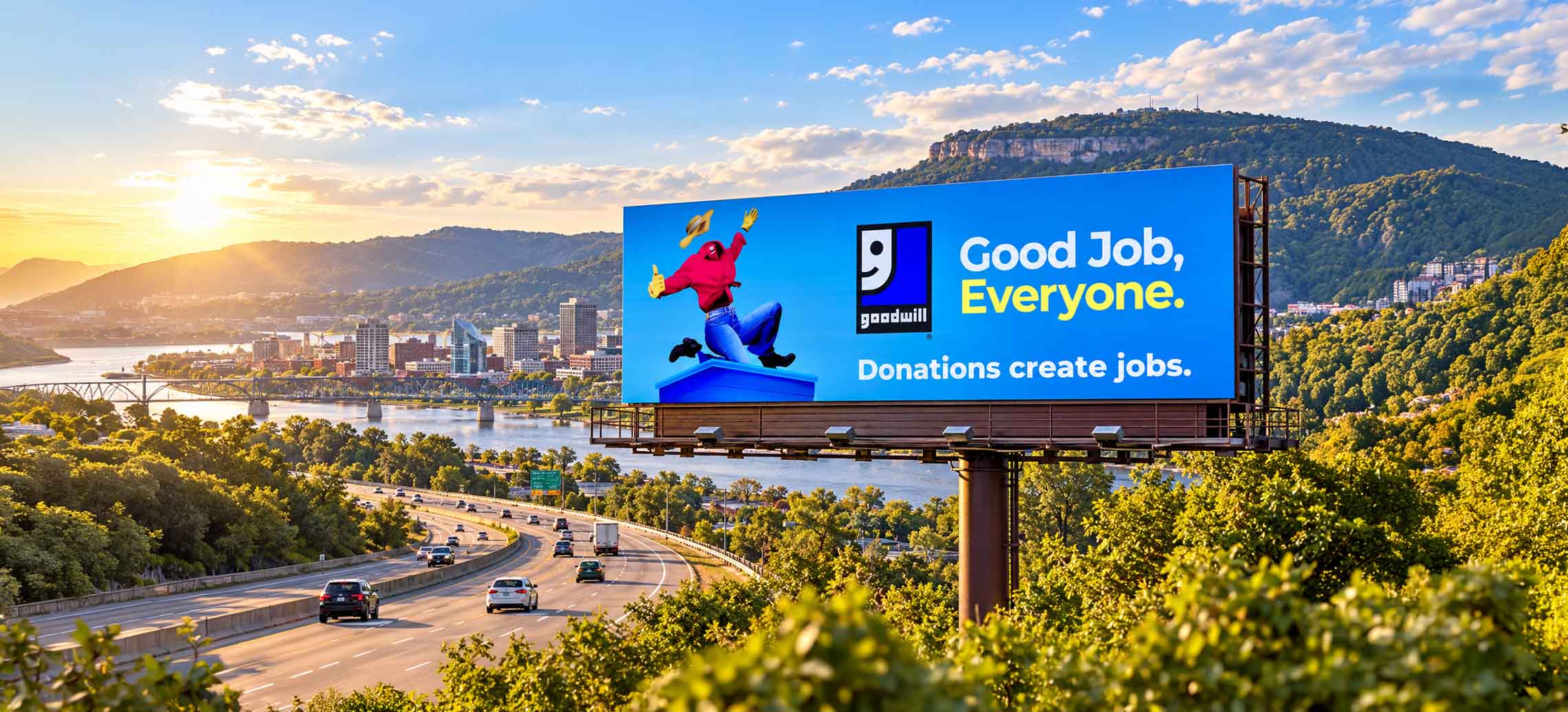
When marketing keeps a recognizable thread over time, customers can begin to connect the pieces. Your name, colors, visual style, message, or a familiar character all become easier to remember because they show up again.
Over time, a customer can move from “I have never heard of them” to “I think I have seen that name” and eventually, “Oh, I know them.”
If every campaign starts from scratch, that memory has less chance to build.
Consistency Does Not Mean Running the Same Ad Forever
Consistency is not the same as never changing.
The goal is to keep the familiar anchors steady:
- Your logo
- Your brand colors
- Your name
- Your overall visual style
- A recognizable image or character
- Your core benefit
Then you can refresh the supporting message.
A restaurant can promote different menu items each month while keeping the same recognizable look. A home services company can shift from cooling to heating as the seasons change. A retailer can rotate promotions without changing who it is.
Think of it as refreshing the message without resetting the memory.
Give Your Campaign Enough Time to Teach You Something
Mark often sees early signs of recognition around months two and three, with more action building around months five and six.
Not every business or campaign will follow that exact pattern. A grand opening, an event, or a limited-time offer has a different timeline from an ongoing awareness campaign.
Before you launch, ask yourself:
- What am I hoping this campaign will accomplish?
- How quickly does a customer typically make a decision?
- How long can I sustainably run this campaign?
- What signals will I look for along the way?
- When will I evaluate whether to change something?
The point is not to keep a campaign running without thought. It is to give it enough time to show you what is working before you move on.
Staying Consistent Does Not Mean Ignoring What You Learn
Consistency and flexibility can work together.
Maybe people remember your brand, but the headline is unclear. Maybe the creative is clear, but the locations are not reaching the right routes. Maybe the locations are strong, but the budget is spread across too many boards to build enough frequency.
Maybe the campaign simply needs more time.
The goal is not to leave everything unchanged just because consistency matters. It is to change the right thing.
Adjust one variable at a time when you can. Digital billboards make that easier because you can update creative, timing, locations, and spend without reprinting a static ad or starting over entirely.
Stay recognizable. Keep learning. Adjust with purpose.
Familiarity Can Help the Rest of Your Marketing
Billboards do not have to work alone.
When someone recognizes your name from a billboard, they may be more likely to notice your search ad, click your social post, or remember you when a friend mentions your business.
That connection is especially useful because billboard advertising often reaches people before they are actively shopping. YouGov’s 2026 U.S. data found that 35% of people researched a product or service on their phone after seeing an out-of-home ad.
A separate 2026 OAAA and Kochava analysis of hundreds of campaigns found a median 20% lift in in-person outcomes and a 14% lift in digital outcomes from out-of-home advertising.
The billboard can help people recognize the name they click later.
Give People Something to Recognize
Mark worked with an insurance advertiser that consistently used a dog in its billboard creative.
After about a year, the company increased its spending. When Mark’s team asked why, the answer was simple:
“People tell us about the dog.”
The creative had become recognizable. Customers remembered it, which gave the business confidence to invest more over time.
The lesson is not that every billboard needs a dog. It is that consistency gives people something to recognize.
Your version might be a distinctive logo, a simple headline, a recognizable image, or the same benefit repeated over time.
Build a Campaign You Can Comfortably Keep Running
Consistency is difficult if the budget feels uncomfortable from the start.
That does not mean you need a huge budget. It means you should choose a plan that fits your business well enough to keep running while recognition has time to build.
Blip gives you flexibility here because there are no long-term contracts or minimum spend requirements. You can choose a budget that feels comfortable for your business and adjust as you learn.
Being Known Before Someone Needs You Is the Advantage
People do not always need what you sell when they first see your marketing. That does not make the impression unimportant.
If they recognize your name later, when the need appears, you have already done some of the hardest work: becoming familiar.
Out-of-home advertising continues to grow because it can build that familiarity at scale. OAAA reported that out-of-home revenue grew 10.7% in the second quarter of 2026, while digital out-of-home grew 18.5%.
The next marketing move is not always a new channel, a new message, or a new idea.
Sometimes it is staying put long enough for people to remember you.
Ready to Build Recognition?
Blip gives businesses a flexible way to run digital billboard campaigns without long-term contracts or minimums.
Choose your budget, build your campaign, and adjust as you learn.
Frequently Asked Questions
How long should I give a billboard campaign before deciding whether it works?
Billboards usually build recognition through repeated exposure, so results may take time. Mark often sees early signs of recognition around months two and three, with more action building around months five and six. Your timeline will depend on your business, audience, goal, budget, and how quickly customers typically make a decision.
A short-term event campaign may work on a much shorter timeline. An ongoing awareness campaign usually benefits from more consistency.
Does consistency mean I should never change my advertising?
No. Keep the recognizable parts of your marketing steady, such as your name, logo, colors, or visual style, while changing the message when it makes sense. Adjust one variable at a time when possible so you can learn what is improving the campaign.
What if I cannot afford a large ongoing billboard budget?
Start with a budget you can comfortably maintain. A focused group of relevant boards can help you build frequency without spreading your spend too thin. Blip has no long-term contracts or minimum spend requirements, so you can adjust as you learn.
Should I stop testing other marketing channels?
No. Different channels do different jobs. Search can capture people who are ready to act, while billboards can help people become familiar with your business before they are ready. The strongest marketing plans often use both.
Is billboard advertising only useful for awareness?
Billboards are especially effective for building awareness and recognition, but they can also support action. A customer may see your billboard, then search for your business, visit your website, or respond to another marketing channel later.