Quick Answer: Franchise billboard advertising on digital screens helps franchises keep campaigns consistent across locations while giving local teams room to adjust their message. With Blip, teams can choose locations, control spend, and build repeat exposure without long-term contracts or minimums.
Franchise billboard advertising used to mean long contracts, fixed creative, and limited control once the deal was signed. Digital billboards changed that. Now franchises can run consistent campaigns across locations, add local messaging, and control budgets without the long commitments that often come with traditional out-of-home buys.
Key Takeaways
- Digital billboards help keep brand standards consistent across franchise locations with centralized creative control
- Campaign updates can be managed from one place and rolled out consistently across selected locations
- Franchise co-op marketing gets easier when corporate and local budgets run through one platform with account-level spend tracking
- You control what you spend and only pay when your ad runs. Give each campaign enough time and frequency to build recognition
- Reporting shows plays, spend, locations, and schedules so teams can understand where and when their ads ran
- Local franchisees can layer market-specific messaging on top of corporate creative without breaking brand consistency
Table of Contents
- Digital Billboards: Features for Franchise Branding
- Static Billboards: Features for Franchise Branding
- Key Differences Between Digital and Static Billboards
- Franchise-Specific Advantages
- Conclusion
- Frequently Asked Questions
Digital Billboard Features
Franchise billboard advertising works because digital displays help locations speak with one brand voice while still adapting to the market around them. Here is what that looks like in practice.
Manage Campaign Updates From One Place
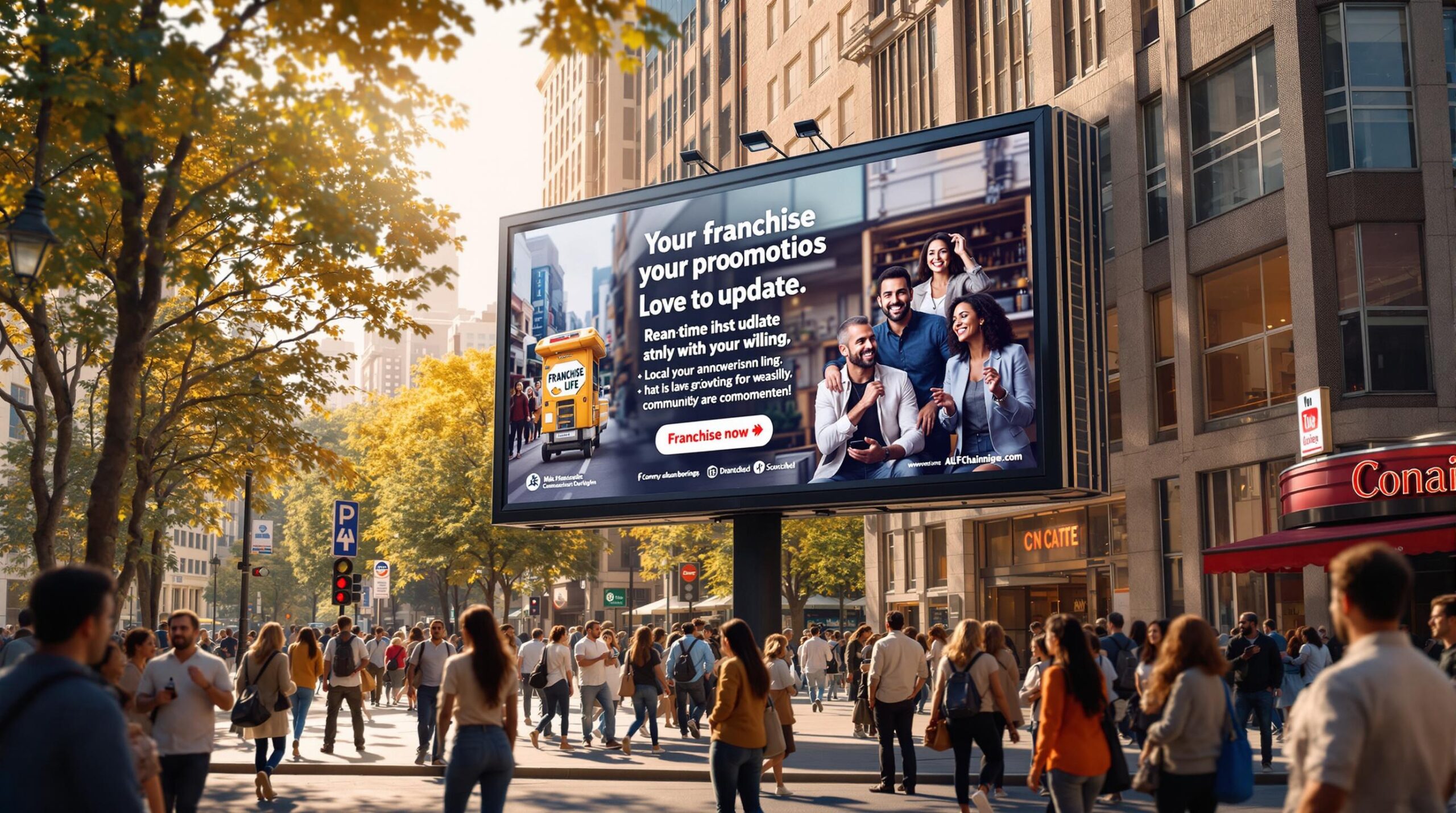
With digital displays, franchise teams can manage campaign updates from one place. Seasonal messages, brand refreshes, and local updates can stay consistent across selected locations without separate print production for every board.
Local Messaging With Brand Standards
Franchises can adjust messages for local markets while keeping their logo, colors, fonts, and overall brand look consistent. Mr. Charlie’s Chicken Fingers used four digital billboards to promote two restaurant locations near I-15 exits.
Over four months, the campaign generated more than three million estimated impressions on a $12,000 budget. In the final month, the restaurant attributed a $20,000 revenue increase to the campaign, along with a 22% increase in website traffic and a 57% increase in phone calls.
Control Over Design Standards
Digital billboards help hold brand standards in place. Locations can work from the same templates, with the same contrast, approved fonts, colors, and logo placement. That helps a franchise look like itself whether the board is in Tampa or Tulsa. See Blip’s billboard design guidelines for specs.
Performance Insights
Reporting shows plays, spend, locations, and schedules across campaigns. Franchise marketing teams can use that context to adjust budget, timing, or locations while keeping brand standards in place.
Flexible Budgeting Options
Pay-per-display pricing means a franchise pays only when an ad runs. HQ can set the budget at the corporate level, individual locations can add local spend, and the network can scale visibility over time without rewriting contracts. See current rates on Blip’s pricing page.
Franchise Co-Op Marketing Made Easier
Franchise co-op marketing usually breaks down somewhere between the spreadsheet and the agency. HQ wants brand consistency. Local owners want flexibility to react to their own market. Digital billboards can help both sides.
On Blip, a corporate marketing team can fund a national-level campaign, and individual franchisees can support it with local boards in their territory. Same approved creative. Different local markets.
Reporting gives corporate and local teams a clearer view of campaign spend, which can make co-op reviews easier. It is franchise billboard advertising that fits how franchise budgets work.
| ## Build Your Digital Billboard Campaign With Blip Create and manage franchise billboard campaigns with Blip. Choose locations, set your budget, track plays and spend, and build consistent exposure without long-term contracts or minimums. Get Started Now |
|---|
Static Billboard Features
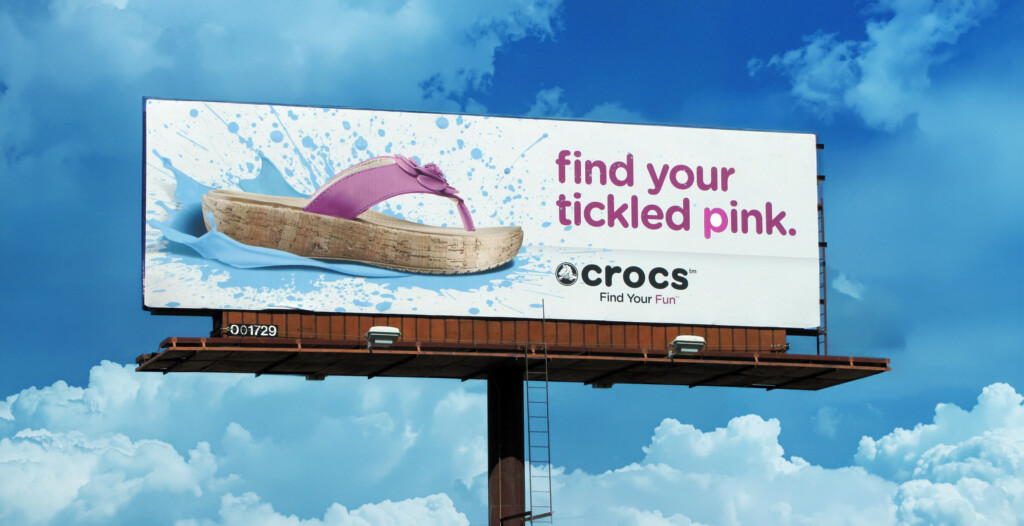
Static billboards offer a constant visual presence, which can work well for one fixed brand message.
Physical Presence and Impact
These billboards are hard to miss. Their large placement can help people notice and remember a franchise brand over time.
Design Constraints and Messaging
Research shows that drivers typically only have time to read about five words as they pass a billboard. This means your message needs to be short, clear, and straight to the point to leave an impression.
Brand Consistency Challenges
Static billboards work, but multi-location franchises hit four predictable walls. Here’s where they show up:
| Aspect | Challenge |
|---|---|
| Updates | Physical materials need manual replacement for each update. |
| Cost | Updating billboards across locations can be expensive. |
| Timeline | Rolling out new artwork takes longer due to production and installation. |
| Quality Control | Exposure to weather can impact the appearance and durability of materials. |
Even with these hurdles, following professional design practices can help maintain brand integrity.
Professional Design Requirements
A well-designed static billboard still pulls weight when the elements are right:
- High-contrast colors that are easy to see.
- Brand fonts sized for quick reading.
- Consistent logo placement that builds recognition.
- Durable materials that hold up in weather.
Fixed Message Advantages
One strength of static billboards is that they display the same message 24/7. That can help keep core branding visible and consistent.
Maintenance Considerations
Static billboards need upkeep. Sunlight and weather can fade or damage the material, so teams need to check boards regularly and fix issues before they hurt the brand’s appearance.
Digital vs. Static Billboards: What Are the Key Differences?
For franchise teams, the choice comes down to control, cost, updates, and consistency. Static boards can keep one message visible. Digital billboards give teams more control over locations, schedules, reporting, and local updates.
| Feature | Digital Billboards | Static Billboards |
|---|---|---|
| Content Updates | Campaign updates managed online | Manual replacement required |
| Cost | Pay-per-display, as low as $0.01 per blip | Higher upfront costs |
| Customization | Easy to localize | One design per board |
| Performance Tracking | Daily analytics available | Limited tracking options |
| Contract Terms | No long-term commitment | Fixed, extended contracts |
For franchises managing five locations or fifty, digital billboards make it easier to manage creative from one place, adapt to local markets, and keep brand standards consistent without the slow, expensive rollouts static media often requires.
Content Management and Updates
Digital billboards let franchise teams update campaigns from one place, while static billboards require printed replacements. That makes it easier to keep campaigns consistent across locations.
| Aspect | Digital Billboards | Static Billboards |
|---|---|---|
| Content Updates | Instant, remote changes | Requires manual replacement |
| Update Costs | Minimal or none | Printing and installation expenses |
| Campaign Duration | Flexible, even daily terms | Fixed 4–12 week terms |
| Location Flexibility | One upload for all sites | Separate installations needed |
| Time-of-Day Control | Programmable schedules | Fixed display, 24/7 |
Investment and Campaign Reporting
Digital billboards have made advertising more accessible and measurable. Ray Bowens, founder of Hashtag-Vape, highlights the cost benefits:
“Billboards are one of the most impactful ways to advertise, and with Blip, you spend a fraction of what you would end up paying elsewhere”.
| Financial Aspect | Digital Billboards | Static Billboards |
|---|---|---|
| Initial Investment | Starting at $20/day | Higher upfront costs |
| Contract Terms | No long-term commitment | Requires extended contracts |
| Performance Tracking | Reporting on plays, spend, locations, and schedules | Limited tracking options |
| Budget Flexibility | Real-time adjustments | Fixed costs throughout contract |
This flexibility in cost and tracking makes digital billboards a great option for maintaining consistent messaging across multiple locations.
Brand Impact and Market Presence
Both formats build visibility. Digital displays add control and measurement that static can’t match. Chris Leslie, founder of Leslie Lightcraft Co, describes the public impact of billboards:
“It’s not a social media thing that you see on your phone. It’s not word-of-mouth. It’s big and bold and out there in public. I would say this is the first step of looking big and public”.
Franchise-Specific Advantages
Franchise billboard advertising on a self-serve platform like Blip is built around multi-location needs. Centralized control, consistent rollouts, and local-market flexibility are part of how the platform works.
| Feature | Digital Advantage | Static Limitation |
|---|---|---|
| Multi-Location Management | Centralized control | Managed individually |
| Campaign Coordination | Updates can be synchronized | Rollouts happen in stages |
| Local Market Adaptation | Customization is simple | One design per board |
| Brand Standards | Automated consistency | Quality requires manual checks |
Kimberly Pinkson, owner of Pretty In Pinkston, shares her experience:
“Blip works for us. It’s a different medium, and it brings a lot of exposure. It sets us apart from the rest of the [competition], and that’s what I like”.
Conclusion
Franchise billboard advertising used to feel limited to brands with large budgets and long contracts. Digital billboards on a self-serve platform make it easier to build visibility across locations with more control. Franchise teams can keep brand standards in place, give local owners room to adapt, and use reporting to understand plays, spend, schedules, and locations.
“Working with Blip has given Mr. Charlie’s the momentum to get our new location on the map while accelerating growth for our original location”.
Three things franchises gain from digital billboards on Blip:
| Benefit | How It Helps Franchise Operations |
|---|---|
| Centralized Control | Manage creative from one place and keep brand messaging consistent across selected locations |
| Cost Efficiency | Pay-per-display pricing gives teams control over spend while they build visibility across markets over time |
| Performance Tracking | Reporting shows plays, spend, schedules, and locations across campaigns |
These features make digital billboards a stronger choice compared to static ones. As Ray Bowens, Founder of Hashtag-Vape, puts it:
“Billboards are one of the most impactful ways to advertise, and with Blip, you spend a fraction of what you would end up paying elsewhere”.
With centralized control, campaign reporting, and local flexibility, digital billboards can help franchises build consistent visibility across locations.
Ready to Roll Out Franchise Billboards?
Get every location on a digital billboard, on the same brand standards, in the same week. No contracts. No minimums. Full control from one dashboard.
Launch Your Franchise Campaign →
Frequently Asked Questions About Franchise Billboard Advertising
How do franchises maintain brand consistency across locations?
Franchises maintain brand consistency by setting approved creative templates, color palettes, fonts, and logo placements at the corporate level. Digital billboards make this easier than static media because teams can manage creative from one place and apply it across selected screens. Local franchisees can layer market-specific messaging on top without changing the underlying brand standards.
What is an example of brand consistency in franchise marketing?
A coffee franchise running the same fall menu campaign on digital billboards in twelve cities. Same logo placement, same color treatment, same headline, but with each board pointing to the nearest store address. This is brand consistency in action. The customer sees the same brand identity whether they’re driving through Denver or Dallas, and the local store still benefits from a relevant call to action.
How does franchise billboard advertising work on Blip?
A franchise sets up an account on Blip’s self-serve platform, uploads approved creative, picks billboard locations, sets a daily budget, and submits the campaign for review. Corporate teams can manage larger campaigns from one account, and individual franchisees can run local campaigns under the same brand standards. Every ad is reviewed before it runs, and campaigns can be live within the week.
Is franchise billboard advertising affordable for smaller chains?
Yes. Blip uses a pay-per-display pricing model, with displays starting as low as $0.01 each. There are no contracts and no minimum spend, so a regional franchise can choose a budget that fits the business. The campaign should still run with enough time and frequency to build recognition in each market.
How does franchise co-op marketing work with digital billboards?
Franchise co-op marketing on digital billboards splits spend between corporate and the local operator. Corporate often funds the national-level brand campaign, and the franchisee adds budget for boards in their own territory. Because spend is tracked at the account level, co-op reimbursement can stay cleaner and easier to review.
Can each franchise location run its own billboard campaign?
Yes. Individual franchisees can run local campaigns with brand-approved creative, choose boards in their market, and set budgets that fit their plan. Corporations can maintain creative approval and brand standards at the account level, so local flexibility does not have to weaken brand consistency. This is how franchises balance corporate brand control with local market knowledge.