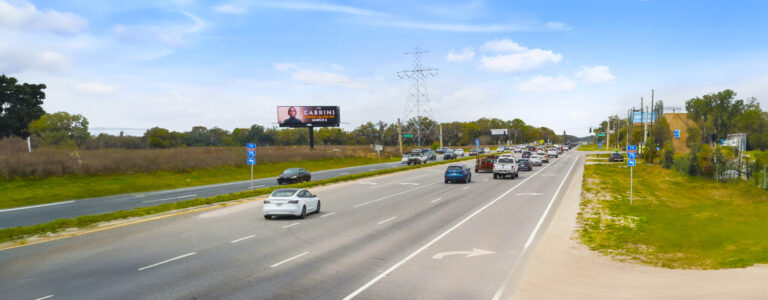
Quick Answer: Choosing between different types of billboards comes down to three things: how it displays your ad, how big it is, and where people see it. Digital billboards are the most flexible because you can change creative, choose when your ads run, and launch without a contract. With Blip, you can set up a digital billboard in minutes.
Most people picture a giant sign beside a highway. That is one type of billboard, but it is not the only one. Today, billboards include printed boards, digital screens, wallscapes, mobile trucks, and more.
Not every billboard works the same way. Some are printed. Some are digital. Some sit above busy roads, while others move through the streets on trucks.
Each format reaches people in a different place, at a different pace, and at a different cost. The right choice helps your campaign get seen by the people you actually want to reach. The wrong one can stretch your budget in the wrong direction.
This guide sorts the formats by how they actually differ, then shows you which type fits which goal so you can decide fast.
Key Takeaways
- Billboard types split along three lines: technology (static print vs digital LED), standardized size (bulletins, 30-sheet posters, 8-sheet junior posters, spectaculars), and structure or placement (tri-vision, wallscapes, building wraps, mobile trucks). Most real-world choices come down to a combination of all three rather than one label.
- Static billboards give you a single message and 100% of the screen, which suits always-on brand presence. Digital billboards share a rotation but let you change creative remotely, run different ads by time of day, skip printing lead times entirely, and are far more affordable.
- The right format depends less on budget and more on who you’re reaching. Highway drivers need a bulletin built for a two-second glance, pedestrians in a transit hub can absorb more detail, and venue audiences reward context over raw reach.
- Blip gives businesses of all sizes self-serve access to +3500 of digital screens nationwide with no contracts and no minimum spend. Create an account to launch your own billboard campaign within minutes.
Types of Billboards at a Glance
Before going into detail, here’s a glance at the different types of billboards. Most of the different types of billboards you’ll encounter fit into one of the categories below, sorted by the job they do best.
| Billboard type | What it is | Best for |
| Bulletin | The classic large highway board, typically 14′ x 48′ | Mass awareness along highways and major roads |
| Digital billboard with Blip | An LED screen rotating multiple advertisers in a loop | Promotions that change often, ads by time of day, fast launches |
| Poster (30-sheet) | A mid-size board, around 12′ x 25′ | City and neighborhood coverage on busier streets |
| Junior poster (8-sheet) | A small board, around 6′ x 12′ | Hyper-local, walkable retail corridors |
| Spectacular | An oversized board in a landmark location | Brand moments and product launches |
| Tri-vision | A slatted board that rotates three printed messages | Sequencing or running three variations on one face |
| Wallscape | Advertising painted or mounted on a building exterior | High-impact presence in dense urban areas |
| Mobile billboard | An ad mounted on a truck driven along a route | Events, pop-ups, and short local campaigns |
The rest of this guide walks through each grouping and where it earns its place.
Billboard Types by Technology
The first and biggest split is how the billboard displays its message. This is where most of the different types of advertising billboards diverge, and it shapes everything from cost to how often you can change your creative.
Static Billboards
A static billboard shows one printed image until someone physically replaces it. The creative is printed on vinyl, mounted on the structure, and left up for the length of the booking.
Static boards have one clear advantage: you rent the entire space. Your ad is the only message on that surface, all day and night, which can build strong repetition for people who pass it regularly.
The tradeoff is that static campaigns often come with larger upfront commitments and higher minimums. Changing the message also means reprinting and reinstalling the artwork, so static boards are usually a better fit for long-running campaigns with one consistent message.
Use static when you want an always-on presence, a steady brand reminder on a commuter route, or a single offer that stays put for weeks.
Digital Billboards
A digital billboard uses an LED screen to rotate several advertisers in a loop, with each ad showing for a set number of seconds before the next appears. Content is updated remotely, so you can change your creative in hours instead of days.
This format gives marketers more control over when and where their message appears. You can schedule different creative by daypart, adjust your budget, and refine your campaign as you learn which locations and times support stronger visibility.
Digital billboards build recognition through repeat exposure, and most advertisers see stronger results after running consistently for around 90 days. A well-planned campaign gives your message enough time and frequency to become familiar to the people who pass those locations regularly.
Digital is often an easier place to begin for local businesses, growing brands, and companies advertising across multiple markets because Blip removes the long contracts, large minimums, and slow setup.
You upload a design, pick your screens, set a daily budget, and your campaign can be live within the week. For a deeper breakdown of how the formats compare, see this guide to the different types of OOH advertising.
Billboard Types by Size and Format
Within static and digital, boards come in standardized sizes. These names show up constantly in media kits and planning decks, so it helps to know what each one means in plain terms.
- Bulletins are the largest standard billboard format, usually 14 feet by 48 feet. This is the highway billboard most people picture, built for distance and speed. If you need maximum reach along a major road, this is the format.
- Posters (30-sheet) run around 12 by 25 feet. They sit on urban streets and secondary roads, reaching a mix of drivers and pedestrians at a lower cost than a bulletin.
- Junior posters (8-sheet) are roughly 6 by 12 feet. Their smaller size suits neighborhood retail and walkable corridors where people pass closer and slower.
- Spectaculars are oversized billboard placements in major, high-traffic locations, often with custom lighting or extensions. Think Times Square. They cost the most and are reserved for big brand moments.
Digital screens don’t always follow these exact dimensions, since LED canvases vary by location. The size logic still holds, though: bigger and higher-traffic means more visibility and a higher rate. Before you design anything, check the exact specs of the screen you choose, which Blip lists on every listing alongside the billboard design guidelines.
Specialty and Structural Billboard Types
Some billboards stand apart because of how they’re built rather than their size or screen technology.
Tri-Vision and Mechanical Billboards
A tri-vision billboard has a face made of rotating triangular slats. As they turn, the board cycles through three separate printed messages on the same structure.
It’s a clever way to get three ads for one footprint, and it works well for sequencing a story: teaser, reveal, then call to action. The tradeoff is that it’s less common than static or digital in many markets, and the creative has to be designed around the slat system.
Wallscapes and Building Wraps
A wallscape is advertising painted or mounted directly onto the side of a building. Building wraps take it further, covering large portions of an exterior, often on scaffolding during construction.
These formats may reach fewer people than a major highway board, but they can stand out more in the right location.
A well-placed wallscape in a busy downtown area can be hard to miss, especially when people walk or drive past it every day. The downside is limited inventory and stricter permitting, since you’re working with a specific building rather than standardized billboard space.
Mobile and Other Outdoor Billboard Types
Not every billboard stays in one place, and not every outdoor ad sits on a traditional billboard structure. This last group rounds out the types of outdoor billboards people commonly search for.
Mobile billboards mount an ad on a truck that drives a planned route or parks near a venue. The big advantage is location control: you choose exactly where and when your ad appears, which makes mobile a strong fit for events, product launches, street teams, and pop-ups. The limitation is view time, which stays short unless the truck is parked somewhere with steady foot traffic.
You may also see other outdoor ad formats grouped with billboards:
- Transit advertising covers ads on buses, trains, taxis, and inside stations.
- Street furniture includes bus shelters, kiosks, and sidewalk panels positioned at eye level for pedestrians.
- Place-based screens are digital displays inside venues like gyms, bars, and retail stores.
These aren’t billboards in the strict sense, but they belong to the same out-of-home family and often appear in the same campaign. If you’re weighing the whole landscape, this overview of highway billboards and their costs is a useful companion for the roadside end of the spectrum.
How to Choose the Right Type of Billboard
The format matters less than the match between the board and your audience. Three questions get you to the right answer fast.
- Who are you trying to reach? This is the biggest filter. Highway drivers need a bulletin or a roadside digital board with a message they can read in two seconds. Pedestrians and people waiting in transit hubs move slower and can absorb a little more detail, which opens up posters, junior posters, and vertical urban screens. Venue audiences reward context, so place-based screens and street furniture fit there.
- Do you need to make timely adjustments? Static works well for one steady message. Digital gives you more control to adjust small details by time, location, season, or event while keeping the same core brand message and CTA. That consistency helps people recognize and remember you over time.
- Are you optimizing for reach or precision? Bulletins and spectaculars buy scale. Posters, mobile, and place-based formats buy relevance and tighter targeting.
Here’s the short decision guide:
- Choose a digital billboard if you want reach, frequency, and prime locations without paying for a full-time billboard buy.
- Choose a bulletin if you want one full-time placement on a major road.
- Choose posters or junior posters if you want city or neighbourhood coverage.
- Choose a spectacular or wallscape if you want a landmark brand moment.
- Choose a mobile billboard if you want your message to move through a route or event area.
For most small businesses testing out-of-home for the first time, a digital billboard wins on flexibility and cost. You skip the printing, skip the contract, and can adjust as you learn what works.
Blip’s self-serve marketplace is built around exactly that: real screens, real-time control, and a budget you set yourself.
Launch Your Billboard Campaign With Blip
Once you know which type of billboard fits your goal, the next step is getting it live. Traditional out-of-home can take time, but Blip keeps the process simple. Pick your screens, upload your design, set your budget, and go live without contracts or minimums.
Pick from thousands of digital screens nationwide, upload your design, set a daily budget, and your campaign can run within the week. Browse billboard locations near your customers and launch whenever you’re ready.
Frequently Asked Questions
How many types of billboards are there?
There’s no single fixed number, because billboards are grouped by different criteria. By technology there are two main types: static and digital. By standardized size there are four common formats: bulletins, posters, junior posters, and spectaculars. Add structural and placement types like tri-vision, wallscapes, and mobile billboards, and most guides land somewhere between eight and twelve categories.
What’s the difference between a bulletin and a poster billboard?
A bulletin is the largest standardized format, commonly 14 by 48 feet, and is typically placed along highways and major roads for maximum reach. A poster, formally a 30-sheet, is smaller at around 12 by 25 feet and appears more often on urban and secondary roads, making it better for city and neighborhood coverage.
Is a digital billboard the same as DOOH?
A digital billboard is one type of DOOH (digital out-of-home), but DOOH is broader. The term also covers other digital screens outside the home, including place-based displays in gyms, bars, and retail stores. Every digital billboard is DOOH, but not every piece of DOOH is a roadside digital billboard.