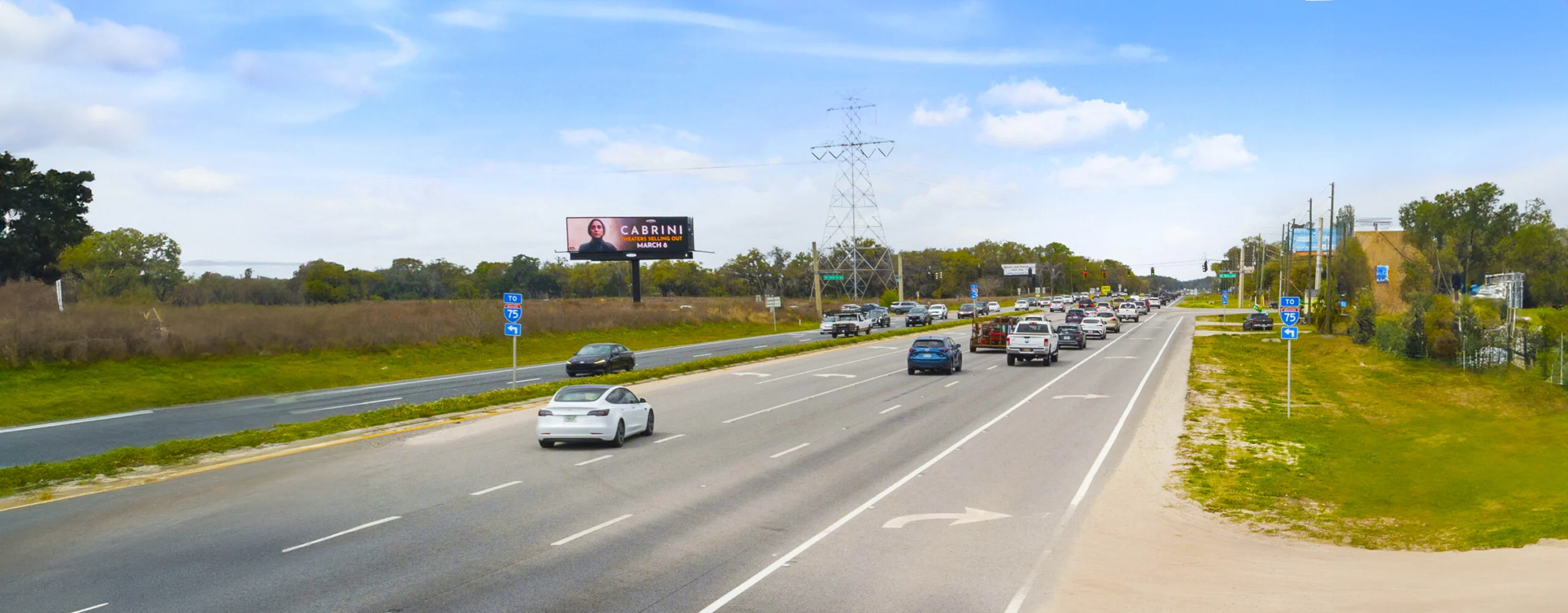
Quick Answer: Getting a billboard means renting ad space on an existing structure, not buying the structure itself. You have three routes: contact a vendor directly, hire an agency, or use a self-serve platform. The simplest, most flexible path is a self-serve platform like Blip, where you pick your screens, upload a design, set a budget, and get your campaign ready to run within the week with no contract.
Most people picture a billboard as something only national brands can afford. That belief keeps many small businesses from using a channel that can help people recognize and remember them. Blip makes billboard advertising easier to plan, with control over your boards, budget, and schedule. Your campaign can be built, reviewed, and ready to run within the week.
The hard part is not getting on a billboard. It is knowing which type of billboard fits your budget, your timeline, and the level of control you want. Some billboard options come with longer commitments than others, so it helps to understand how each one works before you choose. Here is what different billboards can cost, how they compare, and the six steps that take you from idea to a campaign that is ready to run.
Key Takeaways
- Getting a billboard means renting display time on a structure someone else owns. Almost nobody buys the physical sign. When people ask whether a big outdoor company sells billboards, they are usually asking how to rent ad space, which is exactly what a self-serve platform lets you do directly.
- Three routes exist: buying directly from a billboard vendor, hiring an agency to manage it, or booking through a self-serve platform. Each differs sharply on setup speed, contract length, and minimum spend, which is what most first-time advertisers get wrong.
- Cost depends on format, market, frequency, and how you buy. A static board in a small town may cost a few hundred dollars per four-week cycle, while a premium digital screen in a major metro can exceed $20,000 per month. On a self serve platform like Blip, many advertisers plan around $2,000 to $5,000 per month, depending on location, schedule, and frequency.
- Blip gives you self-serve access to over 3,500 digital screens nationwide, with no contracts or minimums.
- Choose your locations, upload your creative, and set a budget that fits your business. Your campaign can be live within the week, then build recognition over time through consistent frequency.
What “Getting a Billboard” Actually Means
The billboard itself is owned by a vendor. You pay to display your ad on it for a set period.
This can be confusing for many business owners. People assume the city or state owns the boards along the highway. In fact, most are privately owned by traditional outdoor advertising companies or by smaller regional operators.
So when someone asks whether a major billboard company sells billboards, the answer is that these vendors sell ad space on their boards, not the boards themselves.
When people ask how to purchase a billboard, they are usually asking how to get their ad on one. In most cases, that means renting display space for a set period, not buying the physical structure. Owning a billboard is a separate business with land leases, permits, construction, and ongoing management.
For most advertisers, the better question is how to book the right billboard space for your budget, timeline, and goals.
The Three Ways to Get a Billboard
There are three ways to get a billboard ad in front of people, and they are not equally fast or affordable. The right one depends on how much you want to spend, how quickly you need to launch, and whether you want to handle it yourself.
| Route | Setup speed | Contract | Minimum spend | Control | Best for |
|---|---|---|---|---|---|
| Direct from vendor | Days to weeks | Usually 4 weeks+ | Higher | You manage everything | Single board in one market |
| Agency | Weeks | Varies | Higher, plus fees | Agency manages it | Large multi-market campaigns |
| Blip self-serve platform | Build in one sitting, live within the week | None | No minimum | Full, real-time – update locations, creative, budget, and schedule any time | Businesses that want premium access without the full-time commitment or headache. |
Going direct means finding the board’s owner, requesting a media kit, negotiating a rate, and submitting print-ready artwork on your own. An agency takes that work off your plate and often has the relationships to land better rates on big buys, but it adds management fees and is built for scale, not for a single board.
A self-serve platform puts the whole setup process in one place. You browse real inventory, pick your screens, set a budget, and submit your campaign for review. Campaigns can be live within the week.
For many local businesses, that is the difference between a clear path to billboard visibility and getting stuck in the old buying process. For a broader look at your choices, our guide to billboard advertising for local businesses breaks down how each format fits.
How to Get a Billboard in 6 Steps
Once you know how to get a billboard, the actual process is the same whether you go direct, through an agency, or self-serve. What changes is how long each step takes. On a self-serve platform, the six steps below can happen in a single sitting.
1.) Define Your Campaign Goal
Start with what you want the billboard to support. Digital billboards are strongest for awareness, recall, and repeat exposure over time. You can use Blip for timely messages, but your campaign should still have enough frequency for people to see your brand more than once.
2.) Choose Your Location
Location decides who sees your ad. Look at traffic volume, the direction people travel, and how close the board sits to your business. A board on the inbound side of a commute reaches people heading toward you, while proximity to your storefront drives action. Browse available billboard locations to see what is near your target audience.
3.) Pick a Billboard Format
Static boards hold one printed message. Digital screens rotate ads and give you more control over your schedule, budget, and campaign updates. Size and orientation depend on the placement. If you are deciding between screen types, our digital billboard guide covers the tradeoffs.
4.) Set Your Budget
Budget drives where you can run and for how long. Traditional boards often require a four-week commitment, which front-loads your spend. Self-serve digital changes that. You set a daily budget, adjust it anytime, and choose a campaign plan that fits your goals. The key is giving your billboard enough time and frequency to build recognition instead of treating it like a one-day test.
5.) Submit Your Creative
Figuring out how to get on a billboard comes down to meeting each screen’s specs: file format, pixel dimensions, and a moderation step before the ad runs. Static boards need print-ready vinyl at high resolution; digital screens accept JPEG or PNG files. Keep the message short and the contrast high. Our billboard design tips walk through what reads well at a distance.
6.) Run and Track Your Campaign
Once your creative clears review, your campaign can run on the boards you selected. On digital platforms like Blip, you can track plays, estimated impressions, spend, locations, and schedule. Use those metrics to adjust your campaign over time and build stronger visibility.
How Much Does It Cost to Get a Billboard?
Getting a billboard can cost anywhere from a few hundred dollars to tens of thousands per month, depending on format, market, and how you buy. How much it costs to get a billboard comes down to three levers: whether the board is static or digital, how big and busy the market is, and whether you rent it directly, through an agency, or on a self-serve platform.
Here is what each route typically runs:
| Route | Typical cost | Commitment |
|---|---|---|
| Static board, small market | $250 to $4,000 per 4 weeks | 4-week minimum |
| Static board, major metro | $8,000 to $25,000+ per 4 weeks | 4-week minimum |
| Digital board (traditional network) | $1,200 to $15,000+ per month | 4-week minimum, often more |
| Agency-managed | Media cost plus management fees | Varies |
| Self-serve digital (Blip) | From $50 to $80 per day | No commitment required- you choose campaign length. |
Traditional figures above reflect 2026 planning ranges, with static billboards commonly falling in the $250 to $4,000 per month band for typical inventory and digital billboards running anywhere from about $1,200 up to $15,000 or more per month. With most traditional routes you also pay for production. Beyond the media rate itself, the cost of getting a billboard usually depends on:
- Market Size. Major metros command far higher rates than rural or secondary markets.
- Format. Digital screens typically cost more than comparable static boards in the same market.
- Duration. Traditional boards are sold in four-week cycles, so a longer run means a larger commitment.
- Production. Static boards add printing and installation; digital skips both.
Self-serve digital changes the math by removing the four-week minimum. On Blip, you pay per play, set your own daily budget, and adjust anytime. Choose a budget that fits your business, scale up as you go, then give your campaign enough time and frequency to build recognition.
For a full breakdown of what drives the number, see our guide to highway billboard costs.
How to Get a Billboard Advertisement Without a Contract
You do not need a contract, an agency, or a sales call to build a billboard campaign. A self-serve platform handles the setup in one place, so you can choose your boards, upload your creative, set your budget, and get your campaign ready to run within the week.
On Blip, it works like this:
- Create a free account and browse screens by location.
- Pick your screens and check each one’s required dimensions and file format.
- Set your daily budget and schedule, including time of day and days of the week.
- upload your creative as a JPEG or PNG. If you are starting from scratch, you can use Blip’s design tools or choose Blip Optimized to get help preparing creative that is built for digital billboards.
- Launch. Once your ad clears review, it can enter the rotation.
There are no minimums and no long-term commitment. You can adjust your campaign as you go, which gives you more flexibility than a traditional four-week buy. Blip can support timely messages, grand openings, and ongoing brand-awareness campaigns, but digital billboards are strongest when your audience sees your brand consistently over time. To see what other businesses have done, browse real billboard examples across industries.
Get Your First Billboard Campaign Ready With Blip
Running a billboard no longer means contracts, sales calls, or five-figure budgets. With Blip, you choose your screens, set your budget, and upload your design. Once your campaign is built, reviewed, and approved, it can be ready to run within the week on digital screens near your customers.
Whether you are building local recognition for the first time or scaling a campaign across markets, Blip lets you control your budget, locations, and schedule. Start with a campaign plan that fits your goals, then scale your reach as you learn what supports stronger visibility. Get Started.
Frequently Asked Questions
How much does it cost to get your ad on a billboard?
Getting your ad on a billboard ranges from a few hundred dollars to tens of thousands per month. A static board in a small market can run $250 to $4,000 per four-week cycle, while digital boards on traditional networks often run $1,200 to $15,000 or more per month. On a self-serve platform like Blip, you can start for as little as $50 to $80 per day with no minimum spend.
What is the 3-second rule for billboards?
The 3-second rule is the idea that a driver has roughly three seconds to read a billboard as they pass. Your message has to land in that window, which is why effective boards use six words or fewer, one clear visual, and high contrast. If it takes longer than three seconds to read, most people will miss it.
What four states ban billboards?
Four U.S. states prohibit most off-premise billboards: Alaska, Hawaii, Maine, and Vermont. These bans apply to traditional roadside billboards. Digital screens on private commercial property in those states may be subject to different local rules.
Do billboard companies sell billboards?
Major outdoor vendors sell advertising space on their billboards, not the physical structures. They rent you display time on boards they own and operate. If you want to get a billboard, you are renting ad space either way, and a self-serve platform like Blip lets you book that space directly, with no contract and no sales call.