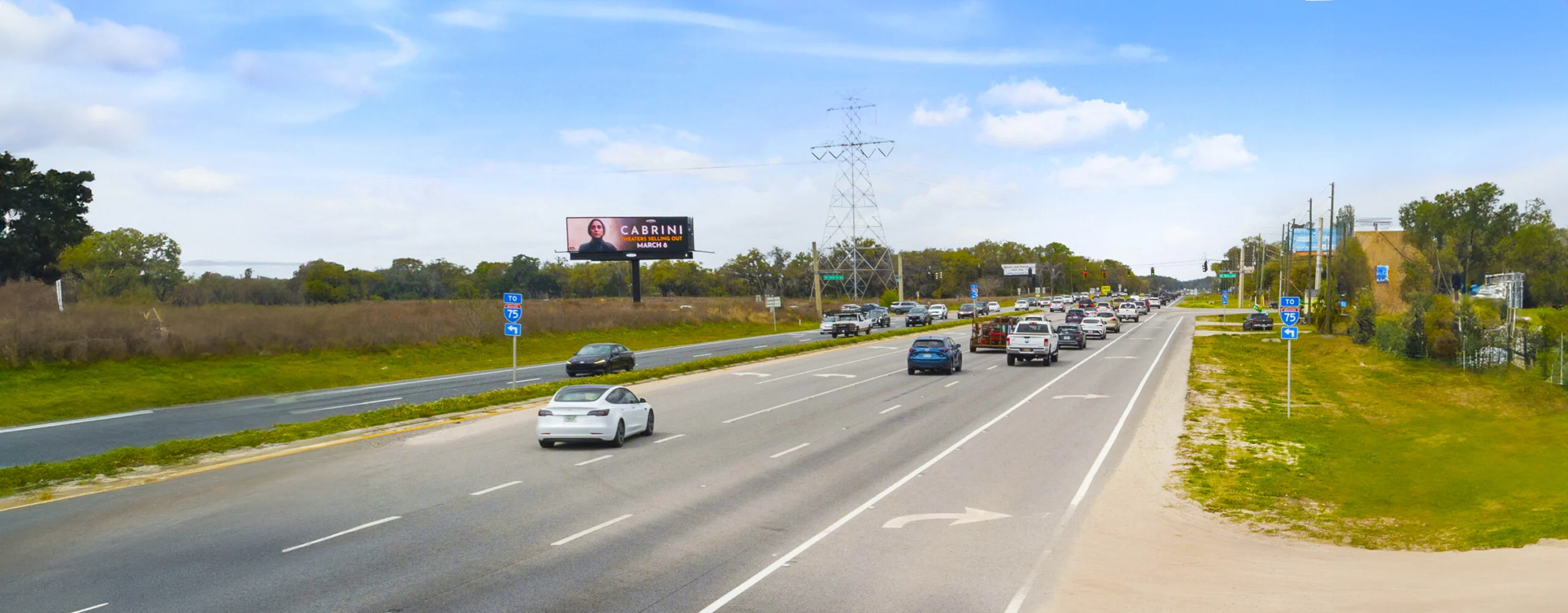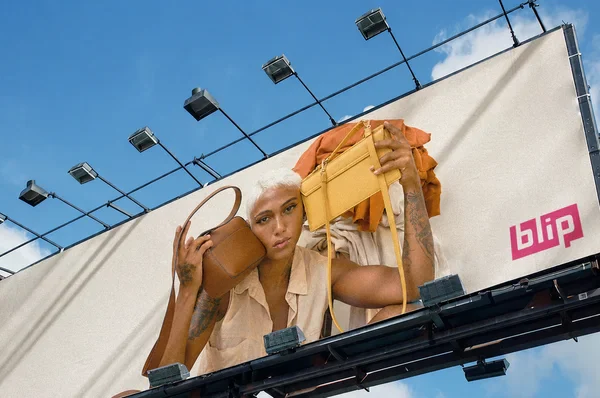
Quick Answer: Quick Answer: Fashion billboard advertising puts your brand on large outdoor screens or print panels where people see it at full scale. You may only feature a few products, but the bigger value is getting your name seen, remembered, and recognized over time. With a self-serve platform like Blip, you choose your locations, upload your creative, set a budget that fits your plan, and get your campaign ready to run within the week. No contracts. No minimums. Just a flexible way to build awareness and brand recognition through repeated exposure.
Your best campaign photos look incredible on a phone for about half a second before someone scrolls past. On a billboard, that same image can run 14 feet tall and be seen by people as they move through the city.
That difference matters for fashion because people may not remember every product they see for a few seconds, but they can remember your name, your style, and the feeling of your brand. A billboard gives your look room to stand out at full scale, so people are more likely to notice you, search for you later, and connect your brand with the kind of clothing they want.
It builds the repeated exposure that helps a fashion label feel more familiar and established. That matters in a crowded online market where shoppers scroll past dozens of brands in seconds. A billboard gives your name and style a physical presence, which can make people more likely to remember you, search for you later, and trust the brand when they see it again.
The challenge has always been access. Billboards looked expensive, slow, and locked behind agency contracts. That part has changed. Here is how fashion billboard advertising works, what an effective one looks like, and how to get your campaign ready without a sales call.
Key Takeaways
- Fashion billboard advertising works because apparel is a visual product. A large outdoor canvas shows off color and texture in a way small digital screens cannot match.
- The main benefit is that it builds the repeated exposure that turns a new label into a name people recognize and trust over time.
- The strongest fashion billboards commit to one idea. A single hero look, a model-free product shot, or a clear seasonal message usually works better than a cluttered board that tries to show an entire collection at once.
- You do not need a famous brand budget to run one. Self-serve digital billboards let boutiques and streetwear labels choose specific screens, control daily spend, and build local visibility over time. A brand can build its campaign, submit it for review, and be ready to run within the week.
- Blip offers a free Artwork Generator during campaign setup and thousands of screens nationwide, so you can turn your idea into a campaign plan that fits your goals. Start your fashion campaign, build repeat exposure, and put your collection in front of people where they already spend time.
Why Fashion Brands Belong on Billboards
The first reason is memory. Fashion brands compete in a crowded online market where people scroll past dozens of labels in seconds. Repeated exposure helps your name and style feel more familiar over time. When people see your brand again, they are more likely to recognize it, search for it, and trust it.
The second reason is scale. Fashion is visual, and a billboard gives your brand more room than a small feed placement. People may not remember every item they see, but they can remember the look, the name, and the feeling of the brand.
For a younger or independent label, that recognition is the groundwork for everything else. Our guide to building brand recognition covers why that visibility compounds.
There is also a credibility effect that fashion brands feel sharply. A label on a billboard reads as a real, arrived brand, which matters for direct-to-consumer names trying to prove they are more than an Instagram storefront. The medium itself can make a newer brand feel more established.
Fashion Billboard Examples That Work, and Why
The best fashion billboards share one trait: they pick a single idea and commit to it completely. A driver gives a board roughly three seconds of attention, so anything competing for the eye gets lost. Below are the approaches that consistently land, and the kind of brand each suits best.
| Approach | Best for | Why it works |
|---|---|---|
| Single hero look | Seasonal launches, lookbook drops | One styled outfit on a clean background reads instantly and shows the product as the star |
| Product only, no model | Accessories, footwear, jewelry | Removing the model forces all attention onto the item’s detail and craftsmanship |
| Seasonal or timely message | Seasonal collections, store events, product drops | A short, clear message can support a timely moment, especially when it is part of a longer visibility plan. |
| Lifestyle scene | DTC and premium labels building a story | A staged moment sells a feeling and an aspiration, not just a garment |
| Celebrity or recognizable face | Brands with budget for talent | A known face borrows instant trust and stops attention through familiarity |
For most fashion brands, the clearest billboard starts with one strong look, one simple background, and one easy-to-read logo. That gives people something they can understand quickly and remember later.
If the product is the main draw, like a shoe, bag, or accessory, a product-only billboard can also work well. The goal is not to show everything you sell. It is to make your brand easy to notice, remember, and search for later.
The lifestyle approach is where smaller brands can punch above their budget. You do not need a celebrity to stage an aspirational scene. You need a strong concept and a consistent mood, the same instinct behind lifestyle targeting with digital billboards. A streetwear label can shoot a gritty, street-level moment for the cost of hiring a local photographer and still own its corner of the city.
The lesson across every strong example is restraint. The weaker boards are the ones that try to fit in six products, three taglines, and a phone number all at once.
How to Design a Fashion Billboard
Fashion billboard design should start with the image, then let everything else get out of its way. The strongest fashion billboard ads give roughly 80 percent of the space to photography and hold the text to a brand name plus a few words at most. Here is what to lock in before you produce the creative:
- One Message, One Look. Pick your single strongest image and resist adding a second. If a viewer has to choose what to look at, the board has already lost them.
- **Make the Logo Legible From Distance.**Your brand name should be readable at a glance from across a road. This is what builds recognition trip after trip, so do not shrink it to fit more product in.
- Use Large, High-Contrast Text. Large text wins on a billboard because people only have a few seconds to read it. Thin, delicate fonts may look good up close, but they can disappear from the road. Make your brand name big, clear, and easy to read against the background.
- Respect the Three-Second Rule. Assume three seconds of attention. Read your own design from across the room: if you cannot absorb it that fast, simplify until you can.
- **Design for the Format.**A digital screen and a printed bulletin have different dimensions and resolution needs. Build your file to the specifications of the placement you are buying.
If creativity is the part holding you back, you do not have to start from a blank canvas. Our full walkthrough on how to design a billboard covers the fundamentals.
How to Get Your Fashion Billboard Campaign Ready
This is where fashion billboard advertising used to feel out of reach. Traditional outdoor media often meant a sales rep, a four-week minimum, and a contract before a single ad ran. A self-serve platform gives you more control over setup, budget, locations, and schedule. The process looks like this:
- **Create an Account.**Sign up on the Blip platform with no commitment and no call required.
- Browse Available Screens. Search billboard locations and pick screens near your store, a shopping district, or an event where your audience gathers.
- Set Your Budget and Schedule. Choose how much you want to spend per day, where your ad runs, and when people see it. For fashion brands, shopping districts, retail areas, and event timing can support stronger visibility, but the campaign should still run long enough for people to see your brand more than once. If you choose Blip Optimized, Blip can also help you prepare billboard-ready creative before your campaign is submitted for review.
- Upload Your Creative. Add a screen-ready image, follow Blip’s design guidelines, or use the free Artwork Generator during campaign setup.
- **Submit for Review.**Once your creative clears review, your campaign can be live within the week.
The control continues once your campaign is running. You can adjust your budget, schedule, locations, or creative over time while keeping the focus on consistent exposure. For a closer look at the entire workflow, the get-started guide walks through each step.
What Fashion Billboard Advertising Costs
Cost is the reason most brands don’t try. The honest answer is that it depends on a few factors rather than a single price tag.
On a self-serve digital platform, you control your daily budget, with some campaigns starting from roughly $5 day depending on the screen. The goal is not to run the smallest possible campaign. It is to choose a budget that fits your business and gives your audience enough time and frequency to remember you.
A handful of factors drive what you actually pay:
- Location. A screen in a dense, high-traffic area in a major market costs more than one on a quieter suburban road. The premium tracks the number of people who pass it.
- Screen Demand. Some screens and times cost more because more advertisers want them. With Blip, you control your daily budget, locations, and schedule, so you can focus your spend where your brand has the best chance to be seen more than once.
- Schedule. Running all day, every day costs more than choosing specific dayparts, like evenings and weekends for retail. Just make sure the schedule still gives your campaign enough repeat exposure to build recognition.
- Season. Demand for prime placements climbs during shopping peaks such as the holidays, so timing affects price.
This is why the famous Times Square figures are misleading as a benchmark. Those screens are in one of the busiest and most expensive ad locations in the country, so they do not reflect what it costs to reach people in your own market. To plan your spend, our guide on prioritizing budget for local billboard ads can help you focus on the screens and schedules that matter most.
Get Your Collection Seen
Your collection deserves to be seen at full scale by people who are out in the world ready to shop, not just by the followers who already know you. Blip gives fashion brands of any size a way to get there.
Use the free Artwork Generator during campaign setup to make the creative, then choose the screens that fit your audience, location, and budget. Get your fashion billboard campaign ready to run within the week and turn your best images into something people can see again and again.
Frequently Asked Questions
What is the 3-second rule for billboards?
The three-second rule holds that a billboard has about three seconds to land its message, since that is roughly how long a passing driver looks at it. In practice, your design needs to read almost instantly. That means one clear image, a legible brand name, and very few words. If a viewer cannot absorb the board in three seconds, it is too complex.
What is the 3-3-3 rule in fashion?
The 3-3-3 rule is a wardrobe styling concept in which you take three tops, three bottoms, and three layers or accessories, and mix them into multiple outfits. It is a guide for building a versatile capsule wardrobe rather than a billboard advertising rule. The underlying lesson of doing more with fewer, stronger pieces does apply neatly to billboard creative.
How much does a billboard in Times Square cost?
Times Square billboards are among the most expensive in the world. Short placements can run into the tens or even hundreds of thousands of dollars because of the location’s traffic and prestige. They are not a useful benchmark for most brands. Screens in your own market can reach local shoppers for a small fraction of that. With self-serve digital campaigns, you control your daily budget, then give the campaign enough time and frequency to build recognition.
Do I need a designer to run a fashion billboard?
No. A strong image matters, but you do not need an in-house design team to get started. You can upload your own campaign photography, use the free Artwork Generator during campaign setup, or choose Blip Optimized for help creating billboard-ready artwork. Most fashion brands only need one high-quality image, a legible logo, and minimal text.