Billboards near Mount Pleasant, SC
No Minimum Spend. No Long-Term Contracts. Just Results.
Trusted by Leading Brands


Billboard advertising
near Mount Pleasant has never been easier
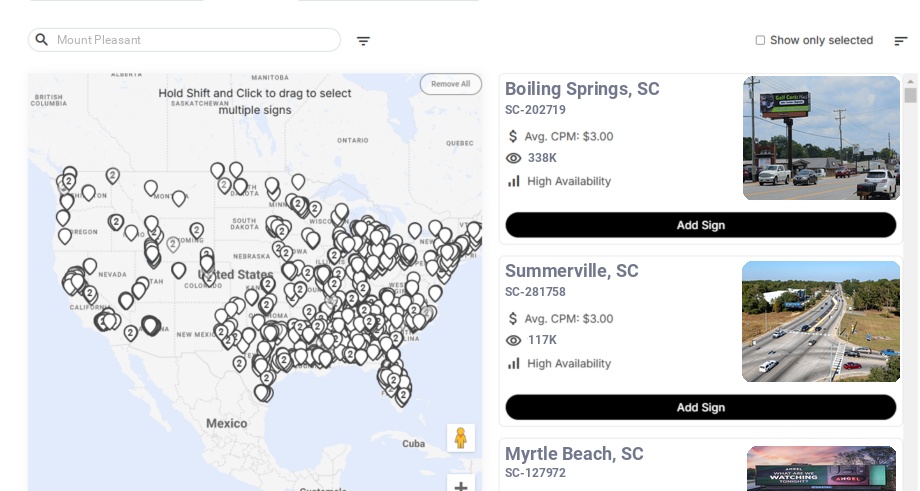
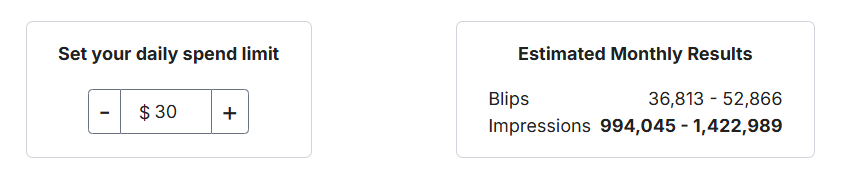
How much is a billboard near Mount Pleasant?
Why Choose Blip for Billboard Advertising near Mount Pleasant
-
Blip lets you launch Mount Pleasant billboards in minutes, reaching Ravenel Bridge commuters and US-17 drivers without traditional buying hurdles.
-
Set a flexible budget for Mount Pleasant and scale up for Bridge Run, beach weekends, or tourism peaks — no contracts needed.
-
Daypart Mount Pleasant ads for weekday rush hour or weekend midday, so your message hits Charleston-bound commuters and shoppers when they’re moving.
-
Track Mount Pleasant campaign performance in real time and adjust as traffic shifts across I-26, I-526, and the Cooper River bridge.
-
Use Blip’s creative tools to test polished, Lowcountry-ready ads for Mount Pleasant’s affluent families, professionals, and visitors.
Frequently Asked Questions About Billboard Advertising near Mount Pleasant
How much does a billboard cost near Mount Pleasant, South Carolina with Blip?
With Blip, you control exactly what you spend on Mount Pleasant billboards by setting a daily budget that can be adjusted anytime, so you only pay for the digital ad displays you receive. Each 7.5–10 second “blip” runs on a rotating digital screen serving the Mount Pleasant area, and the price of each blip changes based on the time of day, location, and advertiser demand. That means you can start small, test your message, and scale up as you see results on billboards near Mount Pleasant, South Carolina.
Where can I advertise with Blip near Mount Pleasant, South Carolina?
Our digital billboards in nearby Charleston are strategically positioned to capture the main travel flows that serve the Mount Pleasant area. Key routes include the Arthur Ravenel Jr. Bridge, US-17, I-26, and I-526, which connect commuters, shoppers, tourists, and beach traffic moving between Mount Pleasant and downtown Charleston. Because the boards are in nearby Charleston, they can intercept traffic crossing the Cooper River and moving along the main corridors that serve the Mount Pleasant area.
What kind of people do Mount Pleasant, South Carolina billboards reach?
Mount Pleasant is one of South Carolina’s most affluent and highly educated communities, with a median household income over $110,000 and more than 60% of adults 25 and older holding a bachelor’s degree or higher. The area has a balanced mix of young families, mid-career professionals, and retirees, and over 30% of households include children under 18. Owner-occupied housing rates are commonly reported above 70%, and many neighborhoods have median home values well above $500,000.
When is the best time to run a billboard campaign near Mount Pleasant, South Carolina with Blip?
The Mount Pleasant area and greater Charleston market are highly seasonal, with spring and fall especially strong. Spring brings the Cooper River Bridge Run, weddings, and outdoor festivals, while summer draws heavy beach and family travel; winter is slower but still active thanks to mild weather and holiday traffic. With Blip’s flexible budgeting, you can scale up during spring and fall peaks and stay present at a lower level in slower months.
What roads get the most traffic for Mount Pleasant, South Carolina billboard ads?
The Arthur Ravenel Jr. Bridge is one of the busiest spans in the state, with average daily traffic in the 90,000–100,000 vehicles per day range. US-17 near the Cooper River commonly exceeds 60,000 vehicles per day, and I-26 and I-526 funnel commuters toward the Ravenel Bridge and downtown Charleston. These corridors create strong reach for advertisers targeting the Mount Pleasant area.
Do I need a contract to advertise with Blip near Mount Pleasant?
No, Blip has no long-term contracts or minimum commitments. You can start, pause, or stop your campaign at any time.
How fast can I launch a billboard campaign with Blip near Mount Pleasant?
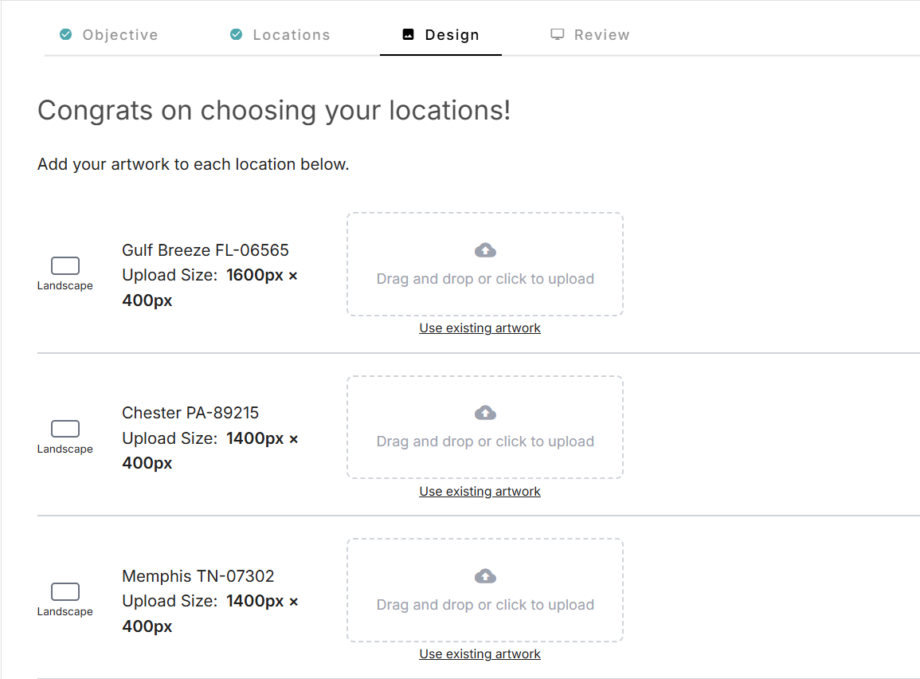
You can have your campaign live in minutes. Create a free account, select your locations, set your budget, upload your design, and start running once approved.
Where can I advertise with Blip near Mount Pleasant?
Blip has digital billboards near Mount Pleasant. You can browse available locations on a map, choose the ones that fit your audience, and start advertising right away.
Still have questions? Launch a campaign in minutes — no contracts, no commitments.
Start Your CampaignMount Pleasant Billboard Advertising Guide
Mount Pleasant, South Carolina sits at the heart of one of the fastest‑growing and most affluent coastal markets in the Southeast. With our digital billboards nearby in Charleston serving the Mount Pleasant area, advertisers can tap into steady commuter flows, high‑spending households, and a powerful tourism engine that brings millions of visitors through the region each year. Below, we outline how to use this local context—plus Blip’s flexible tools—to build smarter, more effective digital billboard campaigns near Mount Pleasant, whether you’re exploring billboard rental near Mount Pleasant for the first time or expanding an existing media mix.
Understanding the Mount Pleasant Area Market
The Mount Pleasant area is part of the Charleston–North Charleston metropolitan region, one of the nation’s most dynamic mid‑sized markets.
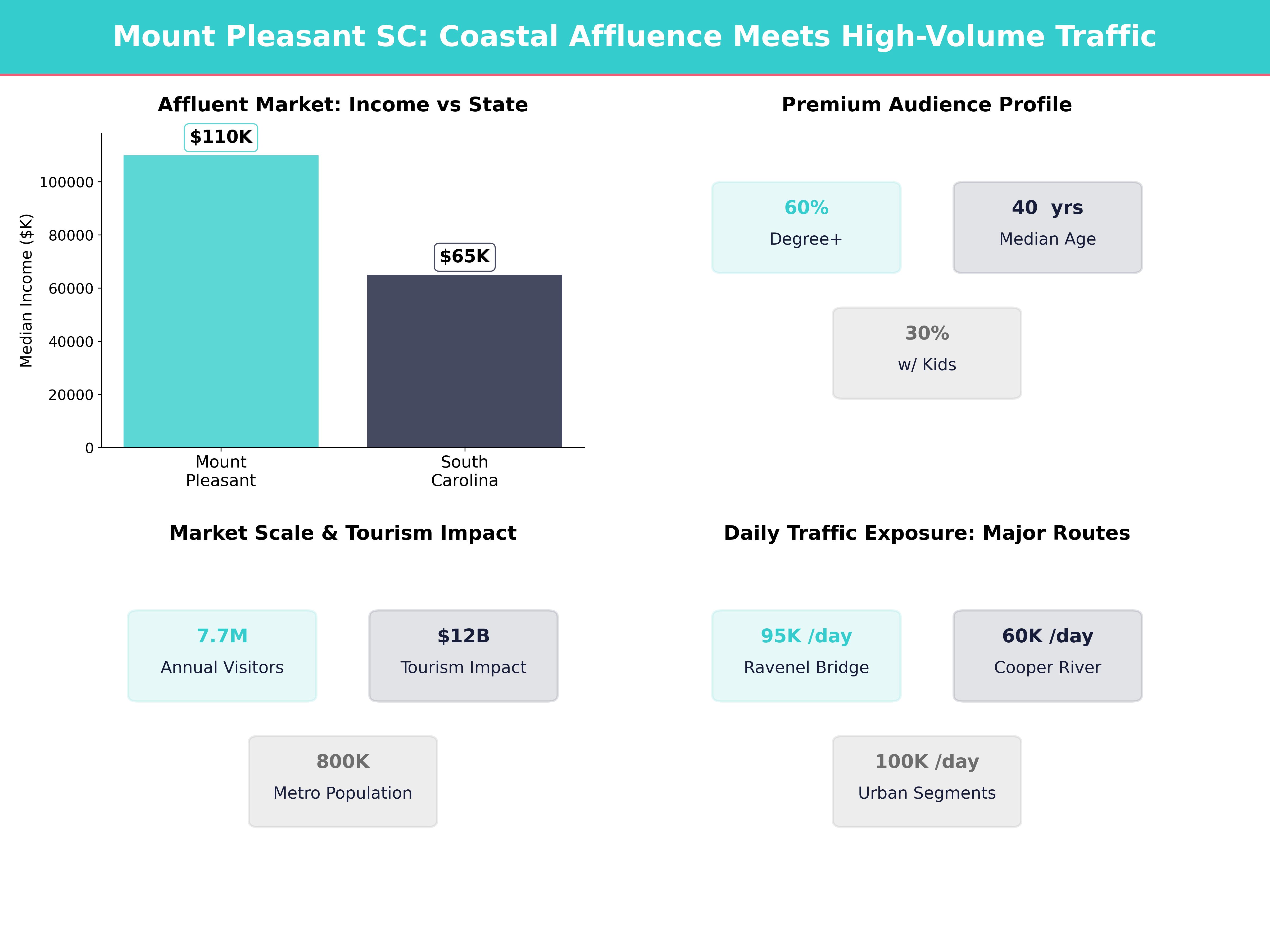
- The Town of Mount Pleasant reports a population of around 94,000 residents as of the early 2020s, having more than doubled from roughly 38,000 residents in 2000 according to town demographic summaries on the official Mount Pleasant website.
- Charleston County, which includes Mount Pleasant and Charleston, has grown to more than 420,000 residents, per summaries on the Charleston County government site, and the larger Charleston–North Charleston metro area now tops 800,000 residents across Berkeley, Charleston, and Dorchester Counties.
- The Charleston region welcomed approximately 7.7 million visitors in 2023, according to tourism figures frequently highlighted by Explore Charleston $12–13 billion in total economic impact and supporting over 50,000 tourism‑related jobs across the region.
- Hotel performance data shared by local tourism and hospitality groups regularly show annual hotel occupancy rates in the mid‑70% range and average daily room rates above $200, indicating a strong visitor spending profile.
This mix of fast local growth and a strong tourism base makes digital billboards near Charleston that serve the Mount Pleasant area especially powerful. We can reach:
- Daily commuters traveling between Mount Pleasant and Charleston for work and school—thousands of whom cross the Cooper River twice a day
- Affluent local households shopping, dining, and using professional services in hubs like Mount Pleasant Towne Centre, the Coleman Boulevard corridor, and downtown Charleston
- Year‑round tourists heading to historic downtown Charleston, the beaches, and nearby attractions such as Patriots Point Naval & Maritime Museum, Boone Hall Plantation & Gardens, and waterfront parks promoted by Visit Mount Pleasant
Because our boards are in nearby Charleston, we’re able to intercept traffic crossing the Cooper River and moving along the main corridors that serve the Mount Pleasant area. For advertisers specifically seeking billboards near Mount Pleasant, this positioning delivers many of the same audiences you’d expect from Mount Pleasant billboards themselves, with the added benefit of downtown and regional reach.
Who You Reach: Demographics and Spending Power
Mount Pleasant is one of South Carolina’s most affluent and highly educated communities, which directly shapes what messages and offers work best.
According to demographic summaries the town publishes, drawing from American Community Survey data on the Town of Mount Pleasant site:
- Median household income in the Mount Pleasant area is over $110,000, compared with roughly $65,000 for South Carolina overall, putting Mount Pleasant roughly 70% above the state median.
- More than 60% of adults 25 and older hold a bachelor’s degree or higher, nearly double the statewide share, reflecting a concentration of professionals, managers, and technical workers.
- The median age is around 40, with a balanced mix of young families, mid‑career professionals, and retirees; roughly one‑third of residents are 25–44, and another one‑quarter are 45–64.
- Over 30% of households include children under 18, supporting strong demand for family‑oriented goods, services, and activities, and contributing to consistently strong enrollment in area schools highlighted by the Charleston County School District.
- Owner‑occupied housing rates are commonly reported above 70%, and local news outlets such as The Post and Courier regularly note median home values well above $500,000 in many Mount Pleasant neighborhoods, signaling substantial homeowner equity and purchasing power.
Implications for your billboard campaign:
- Premium positioning works. Upscale branding, higher price points, and quality‑driven messaging resonate strongly here, where discretionary spending on dining, travel, and home improvement is significantly above state averages. This makes billboard advertising near Mount Pleasant especially attractive for premium and specialty brands.
- Family and lifestyle themes perform well. Education, youth sports, healthcare, dining, and recreation are central to daily life in the Mount Pleasant area, which supports active youth sports leagues, robust parks programming tracked by Mount Pleasant Recreation
- Callouts to professional services are effective. Financial planners, real estate agents, home builders, and medical practices can use billboards near Charleston to put their brand in front of high‑value local audiences who routinely travel between Mount Pleasant and downtown Charleston’s business, medical, and legal districts.
Traffic Patterns: Where and When People Travel
Our digital billboards in nearby Charleston are strategically positioned to capture the main travel flows that serve the Mount Pleasant area:
-
Arthur Ravenel Jr. Bridge (US‑17 over the Cooper River)
- The South Carolina Department of Transportation reports average daily traffic on the Ravenel Bridge in the 90,000–100,000 vehicles per day range, making it one of the busiest spans in the state.
- This is the primary commuter route between Mount Pleasant and downtown Charleston, carrying office workers, college students heading to campuses like the College of Charleston and The Citadel, hospitality employees, and tourists.
- With two directions of heavy flow, a single well‑placed digital face can generate hundreds of thousands of weekly impressions among Mount Pleasant–Charleston commuters.
-
US‑17 (Johnnie Dodds Blvd toward Mount Pleasant & King/Meeting Streets in Charleston)
- US‑17 acts as the spine of the region, connecting Mount Pleasant to Charleston and northward toward Awendaw and Georgetown.
- Daily traffic counts on US‑17 near the Cooper River commonly exceed 60,000 vehicles per day, feeding major commercial areas like Mount Pleasant Towne Centre and the Coleman Boulevard corridor.
- This route also channels beach‑bound traffic toward Isle of Palms and Sullivan’s Island, especially on spring and summer weekends when local authorities often report heavy congestion.
-
I‑26 & I‑526 Corridors
- I‑26 moves people between Charleston, North Charleston, and inland communities, with several urban segments carrying 100,000+ vehicles per day according to SCDOT traffic count data.
- I‑526 serves as the beltway, connecting to US‑17 and feeding traffic toward Mount Pleasant, Daniel Island, and the Charleston International Airport 5 million passengers annually in recent years.
- These interstates aggregate commuters from suburban areas before funneling them toward the Ravenel Bridge and downtown Charleston, increasing the reach of boards along these corridors.
By focusing impressions during peak travel times on these corridors, we can reliably reach residents of the Mount Pleasant area even though the physical billboards are in Charleston. For advertisers comparing Mount Pleasant billboards with nearby Charleston inventory, these traffic patterns show how a well‑chosen mix can effectively cover both sides of the Cooper River.
Suggested dayparts to prioritize:
-
Weekday morning commute (6:30–9:30 a.m.)
- Targets office workers and students traveling from Mount Pleasant toward Charleston; commuter counts across the Ravenel and US‑17 corridors typically spike during this window.
-
Weekday evening commute (3:30–7:00 p.m.)
- Captures return traffic plus service workers heading to evening shifts; traffic often remains elevated until after 6:30 p.m., especially on Thursdays and Fridays.
-
Weekend mid‑day (10:00 a.m.–3:00 p.m.)
- Ideal for retail, dining, attractions, and events as locals and tourists move between beaches, shopping centers like Mount Pleasant Towne Centre
With Blip’s flexible scheduling, we can buy only the hours and days that match these patterns instead of paying for 24/7 coverage, which is especially helpful if you’re testing billboard rental near Mount Pleasant for specific time‑bound promotions.
Seasonality: Timing Campaigns to Local Rhythms
The Mount Pleasant area and greater Charleston market are highly seasonal, with distinct peaks that advertisers can exploit by adjusting their schedules and budgets.
Based on tourism patterns reported by Explore Charleston The Post and Courier and Live 5 News:
-
Spring (March–May)
- One of the busiest seasons: events such as the Cooper River Bridge Run, which often draws 35,000–40,000 runners and tens of thousands of additional spectators, plus weddings and outdoor festivals, drive tourism. See the official Cooper River Bridge Run site for annual details.
- Daytime temperatures in the mid‑60s to upper‑70s°F make this prime time for outdoor dining, tours, and beach visits.
- Hotel and short‑term rental occupancy rates are commonly among the highest of the year, boosting in‑market visitor volume.
- Strategy: Increase blips 2–3x over winter baselines to promote events, attractions, hospitality, and seasonal retail, especially on Thursday–Sunday.
-
Summer (June–August)
- Strong family travel period; beaches like Isle of Palms and Sullivan’s Island are major draws, with local tourism officials reporting summer as one of the most visitation‑heavy quarters.
- High heat and humidity—average highs often in the upper‑80s to low‑90s°F with high dew points—mean more demand for indoor activities, cooling services, and seasonal home maintenance.
- Traffic counts over bridges and on beach access routes routinely swell on Fridays, Saturdays, and holidays like Memorial Day and July 4, as covered by traffic reports on ABC News 4 (WCIV).
- Strategy: Focus on weekend and late‑afternoon impressions when people are going out to dine, shop, or seek evening entertainment and cooling indoor activities.
-
Fall (September–November)
- Another sweet spot for tourism and local events; weather is often ideal with average highs sliding into the 70s°F and lower humidity.
- Back‑to‑school and football season drive demand for education services, youth programs, sports bars, and college‑related travel.
- Major festivals and maritime events keep downtown and waterfront areas busy; local calendars on Visit Mount Pleasant Explore Charleston
- Strategy: Rotate creatives—back‑to‑school offers in August–September, then shift to fall events, real estate, and home improvement as homeowners tackle seasonal projects.
-
Winter (December–February)
- Visitor volume dips but does not disappear; mild winters (average highs in the upper‑50s to low‑60s°F) keep Charleston active compared with many markets, sustaining off‑season weddings, holiday trips, and conferences.
- Holiday shopping and New Year’s fitness/financial resolutions are key themes, with local shopping districts often reporting sales spikes of 20–30% around key December weekends.
- Strategy: Use lower CPM opportunities to maintain brand presence and push strong calls‑to‑action (holiday sales, year‑end tax and financial planning, gym memberships, elective medical procedures).
Blip’s ability to alter budgets daily or weekly lets us scale up during spring and fall peaks and stay present at a lower level in slower months without long‑term commitments, making billboard advertising near Mount Pleasant more agile and cost‑efficient.
Crafting Creative That Works for the Mount Pleasant Area
To stand out on digital billboards near Charleston that serve the Mount Pleasant area, we need creative tailored to the way drivers actually experience the region.
1. Visual style and imagery
-
Reflect the Lowcountry environment.
- Use imagery of marshes, live oaks, the Ravenel Bridge, waterfronts, harbor scenes, and beaches featured across local tourism photography from Explore Charleston Visit Mount Pleasant
- Subtle nods to local culture—like shrimp boats, pastel Charleston houses, or palmetto trees—help your message feel local and authentic and can increase recall among both residents and repeat visitors.
-
Emphasize clean, premium design.
- Given the high income and education levels, polished visuals, minimalist layouts, and strong photography convey trust and quality.
- Avoid clutter and overly busy graphics; aim for 7–10 words maximum and leave at least 40–50% of the canvas “open” (uncluttered) for legibility.
2. Messaging strategies
-
Highlight convenience and proximity.
- Phrases like “Minutes from the Ravenel Bridge,” “Just over the bridge,” or “Serving the Mount Pleasant area” help drivers place you geographically in a region where many trips cross the Cooper River.
- If your business is actually based in Mount Pleasant, say so clearly: “Mount Pleasant’s trusted orthodontist,” “Mount Pleasant’s newest boutique,” etc.—this aligns your brand with the town’s strong identity reinforced on the Town of Mount Pleasant site, and makes it obvious your ad belongs on billboards near Mount Pleasant.
-
Use value propositions that match local priorities.
- For affluent, educated audiences: quality, expertise, and service are more persuasive than rock‑bottom prices. Highlight credentials (“board‑certified,” “award‑winning,” “locally owned for 25+ years”).
- For family‑focused products: safety, reliability, and community ties matter—reference participation in local schools, youth sports, or events promoted on the Town of Mount Pleasant events calendar.
-
Include a crisp call‑to‑action (CTA).
- “Book today at [ShortURL]”
- “Call for a free quote: 843‑XXX‑XXXX”
- “This weekend only – Visit [Shopping Center Name]”
- Aim for a CTA that can be understood in under 2 seconds of viewing time.
3. Readability for highway speeds
On high‑speed approaches near Charleston, drivers typically have 6–8 seconds to absorb a message:
- Use one main idea per creative (e.g., “New luxury condos,” “Urgent care open late”).
- Limit to one logo, one image, and one CTA.
- Choose bold fonts with strong contrast (light text on dark background or vice versa), and ensure key text is at least 18–24 inches high on the physical board so it reads at highway distances.
- Make phone numbers short and URLs simple (ideally a .com that’s easy to remember), avoiding special characters or long paths.
Because Blip supports multiple creatives in rotation, we can test variations—different CTAs, images, or offers—and see which combination drives better online traffic and conversions. This kind of creative testing can be especially valuable when you’re refining long‑term billboard rental near Mount Pleasant and want to identify messages that perform best with local drivers.
Aligning with Local News, Events, and Culture
Digital billboards near Charleston serving the Mount Pleasant area are ideal for timely, event‑driven campaigns. Use local media and civic sources to inspire relevant, real‑time messaging:
- Monitor The Post and Courier, Live 5 News (WCSC), and ABC News 4 (WCIV) to tie offers to major local stories, festivals, traffic advisories, and sports events.
- Check the Town of Mount Pleasant events calendar for local parades, farmers markets, and town festivals where residents are out and about, such as the Blessing of the Fleet and seasonal waterfront concerts.
- Review seasonal highlights on Visit Mount Pleasant Explore Charleston
Examples:
- Before the Cooper River Bridge Run, promote fitness‑related offers, brunch spots, or wellness products to the tens of thousands of participants and spectators as they move between Mount Pleasant and downtown Charleston.
- During peak beach weekends, highlight parking, shuttles, restaurants, and retail that serve beachgoers from the Mount Pleasant area and tourists staying downtown; traffic updates from local stations like Live 5 News can help you pinpoint the heaviest travel windows.
- Around hurricane season (June–November), home service providers can gently emphasize preparedness—roofing, insurance reviews, tree services—without fear‑mongering, tying messaging to guidance from local emergency management resources on Charleston County’s website.
Because we can update digital billboard artwork quickly, Blip allows you to react to these local triggers with fresh creatives instead of waiting weeks or months for traditional print changes. This agility is a key advantage of digital Mount Pleasant billboards and nearby Charleston boards compared with static placements.
Tactics by Business Type
Different industries should lean into specific strengths of the Mount Pleasant area market.
Local Retail and Restaurants
- The Mount Pleasant area features major retail hubs like Mount Pleasant Towne Centre The Post and Courier.
- With regional tourism bringing millions of visitors annually and local households posting incomes well above state averages, per‑customer spend at higher‑end retail and dining concepts can be substantial.
- Use billboards near Charleston to catch drivers from Mount Pleasant heading into town or back home, and consider reinforcing those messages with additional billboards near Mount Pleasant for hyper‑local visibility.
Tactics:
- Promote limited‑time specials, brunch, and happy hours on weekend and evening dayparts; restaurants that align billboards with peak meal windows (for example, 11 a.m.–2 p.m. and 4–7 p.m.) can reach hungry commuters and visitors as they decide where to eat.
- Include exit cues (“Next exit toward Mount Pleasant”) when relevant, especially along I‑26, I‑526, and US‑17.
- Swap creatives for holidays (Mother’s Day, Memorial Day, Black Friday, etc.) to ride surges in shopping and dining; local retail reports often show double‑digit percentage sales lifts on these key weekends.
Real Estate and Home Services
- Charleston County and Mount Pleasant have seen strong residential growth and rising home values, reported regularly by local outlets like The Post and Courier. In many Mount Pleasant neighborhoods, median sale prices have climbed hundreds of thousands of dollars over the past decade, with some areas now averaging well above $700,000 per home.
- This growth feeds consistent demand for mortgage services, home improvement, landscaping, pools, roofing, and insurance.
Tactics:
- Use aspirational imagery (marsh views, modern kitchens, porches) and taglines like “Upgrade your Lowcountry lifestyle” to appeal to buyers trading up.
- Geo‑target dayparts when homeowners commute—weekday rush hours—to reach decision‑makers likely to be in higher‑income brackets.
- Rotate creatives by segment: “New construction,” “Waterfront properties,” or “Renovation financing,” and emphasize metrics like “Sold in 7 days” or “$X million in local transactions” to build credibility.
Healthcare and Professional Services
- With a large base of families and older adults, the Mount Pleasant area strongly supports healthcare, dentistry, orthopedics, and specialist practices, complemented by major regional medical centers in Charleston spotlighted by local health systems and news coverage.
- High insurance coverage rates and above‑average incomes tend to support utilization of elective and specialty services.
Tactics:
- Emphasize trust and expertise: “Board‑certified specialists,” “5‑star patient satisfaction,” “Serving Lowcountry families for 20+ years.”
- Align creatives with health seasons (flu shots in fall, sports physicals in late summer, allergy care in spring) and local school calendars from the Charleston County School District.
- Include simple location cues like “Just over the bridge from Mount Pleasant” or “5 minutes from the Ravenel Bridge” to convert commuters into patients.
Tourism, Attractions, and Events
- Attractions like Patriots Point, Boone Hall, historic downtown Charleston, and local beaches draw a wide range of visitors each year, contributing to the region’s 7.7 million annual visitors and billions in visitor spending.
- Many attractions rely heavily on in‑market decision‑making, where travelers choose activities within 24–48 hours of arrival.
Tactics:
- Use tourism‑friendly imagery: harbor views, historic streets, beach scenes, and recognizable icons like the Ravenel Bridge or Rainbow Row.
- Focus weekend and mid‑day impressions when visitors are exploring, coordinating with cruise ship arrival days and major event weekends listed by Explore Charleston
- Promote online ticketing, reservations, or “Use code BRIDGE for 10% off” to track redemptions from billboard views, and highlight proof points like “Rated #1 on local tours lists” or “Voted Best Attraction by local readers.”
Using Blip’s Flexibility to Target the Mount Pleasant Area
Blip’s platform is built for precision and control, which is especially useful in a market with distinct commuter corridors and strong seasonality like the Mount Pleasant area.
Key ways to leverage our tools:
-
Location selection:
- Choose digital boards in Charleston that directly serve the main approach routes for Mount Pleasant area traffic (feeders to the Ravenel Bridge, US‑17, and key downtown arteries).
- Favor boards that sit on segments with tens of thousands of daily vehicles according to SCDOT traffic counts
- Combine a small set of high‑impact boards rather than spreading a limited budget too thin, especially if you’re layering these with other billboards near Mount Pleasant.
-
Dayparting:
- Concentrate your budget on rush hours, lunch, or weekends depending on your objective and the behavior of your target audience.
- For example, a B2B firm targeting professionals might run mostly 7–9 a.m. and 4–6 p.m. on weekdays, while a family attraction might emphasize Saturday and Sunday mid‑day plus early evenings.
-
Dynamic budgeting:
- Increase your daily budget before big weekends, events, or seasonal peaks such as spring festivals, the Cooper River Bridge Run, or back‑to‑school shopping.
- Scale down but stay present during shoulder periods to maintain brand awareness affordably, aiming for a consistent weekly impression baseline so your brand never fully disappears.
-
Creative rotation and testing:
- Upload multiple creatives and let them rotate, then align performance with your website analytics, call volume spikes, or store traffic patterns.
- Once you see what resonates—perhaps a particular image or CTA—shift more impressions toward that winning creative while phasing out weaker variants.
Measuring Impact and Improving Over Time
While billboards are primarily an upper‑funnel medium, we can still connect them to measurable business outcomes in the Mount Pleasant area:
-
Track web traffic and search patterns
- Watch for spikes in direct traffic or branded search terms from the Charleston area during your campaign windows using analytics tools.
- Compare days and times when your Blip schedule is most active with analytics from your website and phone logs to identify correlations.
-
Use short, memorable URLs or promo codes
- Create a simple landing page like
YourBrand.com/MPor a promo code like “RAVENEL10” or “MTP10” to attribute redemptions to your campaign. - Track how many online form fills, calls, or bookings use these unique paths or codes over a 4–8 week flight.
- Create a simple landing page like
-
Ask customers how they heard about you
- Train staff to log “billboard” responses at the point of sale or intake; over several weeks, you’ll form a clearer picture of attribution and can benchmark what percentage of new customers cite outdoor ads.
-
Coordinate with other channels
- Run social, radio, or local news digital ads targeting the Mount Pleasant area while your Blip campaign is live, using similar visuals and messaging.
- When multiple touchpoints share a unified look, overall campaign lift is greater and easier to detect, and you can often see higher click‑through and engagement rates on digital channels when outdoor is in market.
Over successive campaigns, this data helps us refine your board selection, dayparts, and creatives to maximize return on ad spend, and to decide how much of your budget to dedicate to billboard advertising near Mount Pleasant versus other channels.
By aligning billboard strategy with the Mount Pleasant area’s commuter flows, affluent and family‑oriented demographics, and strong tourism and event calendar, we can unlock the full potential of digital billboards near Charleston. With flexible budgeting, precise scheduling, and fast creative updates, Blip gives advertisers everything needed to build smart, locally tuned campaigns that capture attention on the way into and out of Mount Pleasant—and convert that attention into real business results from both Mount Pleasant billboards and complementary placements across the Charleston metro.