Billboards in Appomattox, VA
No Minimum Spend. No Long-Term Contracts. Just Results.
Trusted by Leading Brands


Billboard advertising
in Appomattox has never been easier
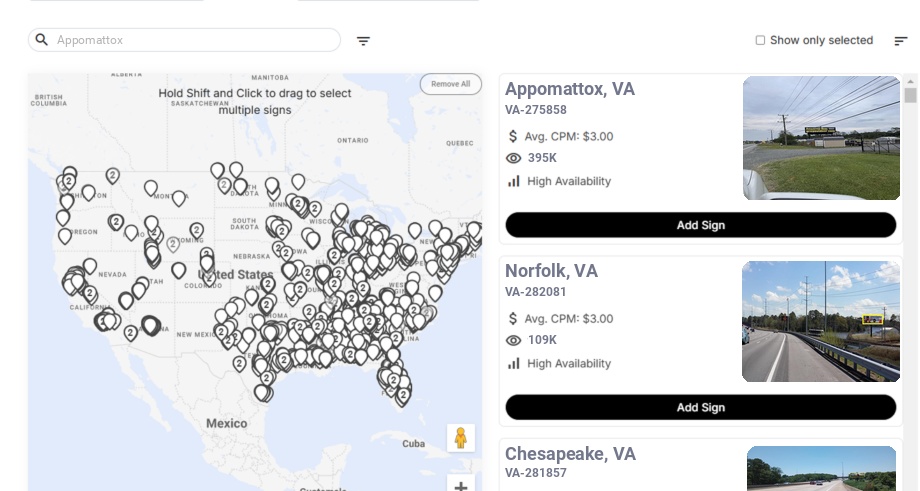
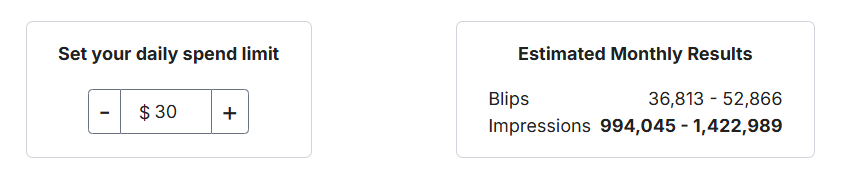
How much is a billboard in Appomattox?
Why Choose Blip for Billboard Advertising in Appomattox
-
Blip lets you self-serve on Appomattox's U.S. 460, Route 24, and Main Street—launch fast without broker delays.
-
Set a flexible budget in Appomattox and reach commuters, tourists, and school families on the roads they already use.
-
Daypart your ads in Appomattox for 6-9am commutes, 4-7pm returns, or October Railroad Festival traffic.
-
No contracts with Blip means Appomattox businesses can test heritage or local-service campaigns, then pause anytime.
-
Use real-time analytics in Appomattox to see which corridor drives results and shift spend toward 460 or Route 24.
-
Blip's creative tools help Appomattox ads read fast on 45-55 mph roads with clear, local calls to action.
Frequently Asked Questions About Billboard Advertising in Appomattox
How much does a billboard cost in Appomattox with Blip?
With Blip, billboard advertising in Appomattox is flexible and affordable because you only pay when your ad actually appears. Each “blip” is a 7.5-to-10-second display on a rotating digital billboard, with pricing starting at just $0.01 per display. Costs can vary by time of day, location, and advertiser demand, but there are no minimums or contracts, so you can adjust or pause anytime.
Where can I advertise with Blip in Appomattox?
Appomattox traffic is concentrated onto a handful of corridors, including U.S. 460, U.S. 460 Business/Main Street, Route 24, and Route 26. U.S. 460 is the backbone of billboard visibility in Appomattox, while U.S. 460 Business and Main Street are better for local action. Route 24 is especially effective for tourism and heritage travelers, and Route 26 and other feeder roads can be efficient for nearby residents and school families.
When is the best time to run billboard ads in Appomattox with Blip?
Spring is one of the best windows because Appomattox’s heritage identity becomes especially visible around Civil War travel and anniversary coverage tied to April 9. From Memorial Day through Labor Day, Appomattox benefits from family road trips and general leisure driving across Central Virginia. Back-to-school campaigns should begin in late July and intensify in August, and fall is strong for the October Appomattox Railroad Festival season.
Who sees billboard advertising in Appomattox?
Appomattox is a small Virginia market, but it gives outsized billboard value because so much daily life and regional travel compress onto a few dependable roadways. More than 80% of workers drive alone to work, public transit use sits below 1%, and average travel time is roughly 30 minutes. That means repeated roadway exposure is part of everyday life for commuters, shoppers, students, and heritage travelers.
Why does Blip work well for billboard advertising in Appomattox?
Blip simplifies the process because you can choose boards on a map, align spend with your real goals, adjust timing, update artwork, and watch results without locking yourself into a long-term commitment. That is especially useful in a market like Appomattox, where smart local timing often matters more than brute-force budget. We can start with one or two high-fit placements, watch which route and message produce the best response, and then scale into adjacent boards or additional dayparts.
Do I need a contract to advertise with Blip in Appomattox?
No, Blip has no long-term contracts or minimum commitments. You can start, pause, or stop your campaign at any time.
How fast can I launch a billboard campaign with Blip in Appomattox?
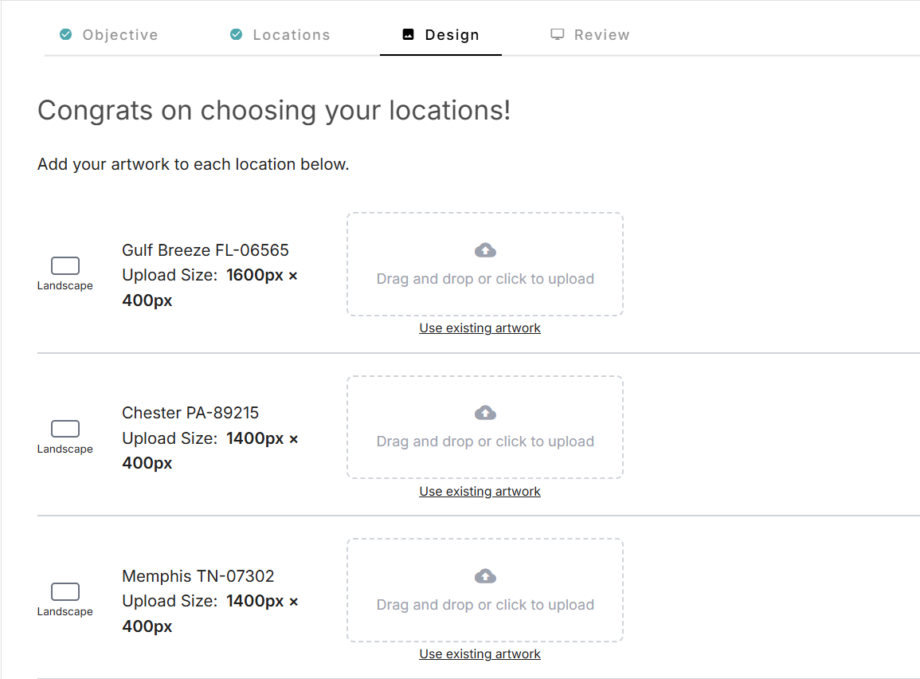
You can have your campaign live in minutes. Create a free account, select your locations, set your budget, upload your design, and start running once approved.
Where can I advertise with Blip in Appomattox?
Blip has digital billboards in Appomattox. You can browse available locations on a map, choose the ones that fit your audience, and start advertising right away.
Still have questions? Launch a campaign in minutes — no contracts, no commitments.
Start Your CampaignAppomattox Billboard Advertising Guide
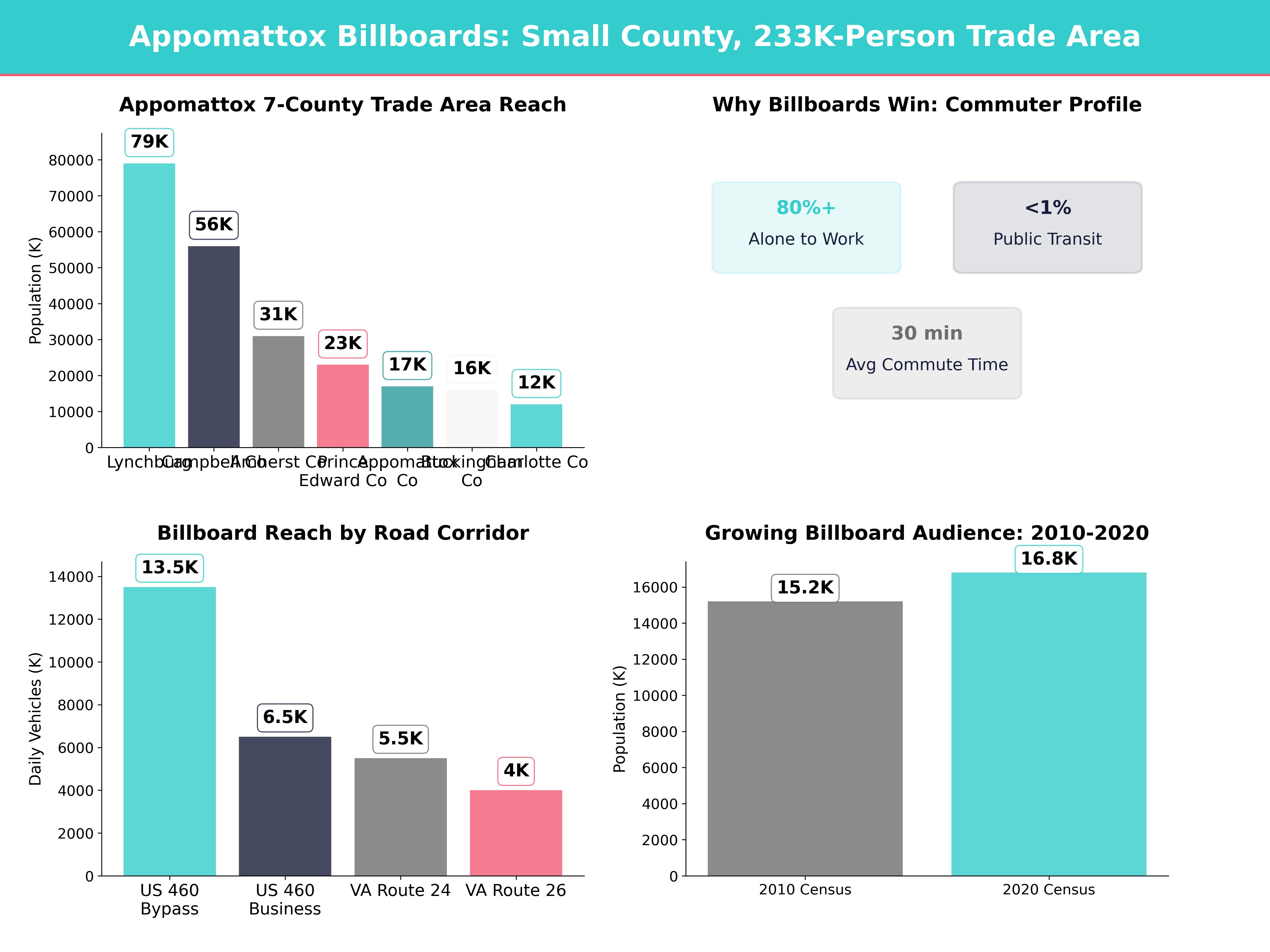
Appomattox Weldon Cooper Center for Public Service show 16,805 residents in Appomattox County 1,733 residents in the Town of Appomattox 18,538 residents, which is modest on paper but highly reachable in practice. The county also sits on U.S. 460, roughly 25 miles east of Lynchburg
Appomattox Market Overview
Appomattox’s population base and regional reach
When we evaluate Appomattox, we should think beyond the town limits. Weldon Cooper Center counts show that Appomattox County 15,223 residents in 2010 to 16,805 in 2020, which is a gain of 1,582 people, or about 10.4%. Over the same decade, the Town of Appomattox 1,761 residents to 1,733, which is a slight decline of about 1.6%, but that small-town stability can still be attractive for advertisers because the commercial core remains concentrated and familiar.
The county covers about 334 square miles of land, so population density is only about 50 residents per square mile. That low density actually helps billboard strategy, because local trips are less diffused than they look. In rural markets, we often rely on the fact that shoppers, workers, students, and patients still share the same main routes over and over.
The larger trade area matters even more. Appomattox sits between Lynchburg Campbell County Prince Edward County, Buckingham County, and Charlotte County. Using 2020 counts, that nearby city-and-county group includes 79,009 people in Lynchburg, 55,696 in Campbell County, 31,307 in Amherst County, 22,802 in Prince Edward County, 16,176 in Buckingham County, and 11,626 in Charlotte County. Together with Appomattox County, that is a surrounding population base of 233,421 people, or about 14 times the county’s own population.
What Appomattox’s economy means for advertisers
Appomattox is not a one-industry county, and that is useful for us. Employers and spending are spread across manufacturing, construction, agriculture, forestry, retail, healthcare, education, and local government, with additional economic pull coming from the broader Lynchburg Region. That mix tends to favor billboard categories that solve everyday needs, including medical care, legal services, home services, auto repair, banks, colleges, restaurants, farm supply, and event promotion.
We should also remember that rural Central Virginia consumers are accustomed to driving for value. A business in Appomattox can realistically pull customers from Lynchburg Campbell County Prince Edward County, and nearby Buckingham County if our message is clear about the destination and benefit.
Why car-centered travel matters in Appomattox
For billboard advertising, mobility matters as much as population. American Community Survey commuting patterns for the county show an overwhelmingly auto-based market, with more than 80% of workers driving alone to work, public transit use sitting below 1%, and average travel time landing at roughly 30 minutes. Those numbers tell us that repeated roadway exposure is not optional here. It is part of everyday life.
That pattern is exactly why outdoor advertising works in Appomattox. Local residents are not browsing dense transit networks or walking past storefront clusters all day. They are driving between home, work, school, shopping, medical appointments, and neighboring communities. When we place messages on the roads they already use, we meet them in the middle of those routines.
Key Traffic Corridors for Appomattox Billboard Campaigns
Appomattox traffic is not spread evenly across dozens of roads. It is concentrated onto a handful of corridors tracked by the Virginia Department of Transportation, including U.S. 460, U.S. 460 Business/Main Street, Route 24, and Route 26, which makes location strategy especially important.
U.S. 460 through Appomattox
U.S. 460 is the backbone of billboard visibility in Appomattox. Recent VDOT traffic-count maps typically place key segments around town in roughly the 10,000 to 17,000 AADT range, depending on the exact count station and whether we are looking at the bypass approach or a business-route segment. For a county of Appomattox’s size, that is strong, reliable daily volume.
This corridor does several jobs at once. It carries local shopping traffic, county-to-county commuting, freight movement, and through-travel between the Lynchburg Farmville
- Healthcare providers can use U.S. 460 to stay visible to patients who already travel regionally for appointments, imaging, urgent care, and specialty services.
- Restaurants, convenience stores, and fuel brands can use the corridor to catch immediate-decision drivers who need the next stop.
- Home services and auto businesses can use it for repeated frequency, because local drivers often pass the same boards multiple times each week.
- Colleges and training programs can use it to target students and adult learners moving between Appomattox, Lynchburg, and Prince Edward County.
U.S. 460 Business and Main Street in Appomattox
Inside town, U.S. 460 Business and Main Street function more like an errand corridor than a pass-through highway. VDOT counts on these in-town stretches are commonly closer to 5,000 to 8,000 AADT, which is smaller than the bypass but often more valuable for advertisers that need local action instead of broad awareness.
We should favor this area when our goal is to drive visits to banks, dentists, attorneys, pharmacies, quick-service restaurants, grocery-adjacent retail, and community events. Drivers on Main Street are already in decision mode. They are closer to turning, parking, and spending.
Virginia Route 24 and the courthouse-side approach
Virginia Route 24 is important because it serves both local travel and historic tourism. Recent counts around Appomattox commonly fall in the 4,000 to 7,000 AADT range, again depending on proximity to town and the courthouse area. Route 24 connects Appomattox with surrounding rural areas and channels visitors headed toward the historic village associated with the events of April 9, 1865.
That makes Route 24 especially effective for:
- Tourism and hospitality advertisers that want to reach heritage travelers, weekend drivers, and event visitors.
- Attractions, museums, and local retailers that benefit from curiosity and impulse stops.
- Insurance, legal, and financial services that want a trusted presence on a well-known local road rather than a pure pass-through corridor.
Virginia Route 26 and local feeder roads
Route 26 and other feeder roads around town generally carry lighter traffic, often around 3,000 to 5,000 AADT on notable segments. We should not ignore them simply because the raw numbers are smaller. These routes can be highly efficient for campaigns aimed at nearby residents, school families, churchgoers, agricultural buyers, and tradespeople.
Local corridors like these are useful when we want relevance over reach. They work especially well for HVAC companies, farm and garden retailers, propane suppliers, funeral homes, insurance agents, local political campaigns, and community announcements.
Audience Segments We Can Reach in Appomattox
Commuters and everyday drivers in Appomattox
Our first core audience is the daily driver. Because so many residents rely on personal vehicles, we can repeatedly reach workers headed toward Lynchburg 30 minutes, billboard repetition can build familiarity quickly.
Morning and afternoon directionality matters. Eastbound and westbound boards can perform differently depending on whether we are targeting work trips, return-home traffic, or weekend travel. We should think in terms of route behavior, not just geography.
Heritage tourists and weekend travelers near Appomattox
Appomattox has one audience many small towns would love to have: built-in heritage recognition. The Appomattox name is nationally known because of the Civil War surrender site, and that keeps the area present in leisure itineraries promoted by Virginia is for Lovers and nearby tourism partners like Discover Lynchburg
Tourism here is not a beach-market surge, but it is meaningful and durable. Spring history travel, summer road trips, and fall scenic driving all bring visitors who may not know the local business mix until a billboard points them in the right direction.
Students, school households, and education audiences in the Appomattox area
Education is another valuable segment. Appomattox County Public Schools operates 4 core campuses, which creates predictable family travel patterns tied to school start and dismissal, sports, and parent events. Those rhythms matter for restaurants, healthcare, tutoring, youth services, local retailers, and seasonal promotions.
The regional education audience extends beyond the county. Liberty University reports more than 140,000 students across all modalities, while Longwood University enrolls roughly 4,300 students in nearby Farmville. University of Lynchburg Central Virginia Community College Hampden-Sydney College add thousands more students and faculty to the broader travel shed. We should not treat every one of those students as an Appomattox driver, but those institutions absolutely increase regional movement, event traffic, and brand familiarity.
Homeowners, rural families, and trade-oriented buyers in Appomattox
Because Appomattox County is rural and spread out, homeowners and family decision-makers are a major billboard audience. They are regularly buying tires, groceries, hardware, feed, insurance, banking, propane, pest control, childcare, and healthcare. They also tend to respond well to brands that feel local, practical, and trustworthy.
This is where Appomattox billboards can outperform expectations. A local service business does not need millions of impressions. It needs repeated exposure among the households most likely to need a roof repair, septic service, tractor part, or dental appointment in the next 30 to 90 days.
Seasonal and Timing Opportunities in Appomattox
Spring opportunities in Appomattox
Spring is one of our best windows because Appomattox’s heritage identity becomes especially visible around Civil War travel and anniversary coverage tied to April 9. This is a good time for hotels, restaurants, gift-oriented retail, museums, local attractions, and destination businesses.
Spring also lines up with tax refunds, outdoor cleanup, landscaping, and home improvement spending. HVAC companies, roofers, lawn-and-garden retailers, banks, and auto dealers can all benefit from March-through-May visibility.
Summer travel season in Appomattox
From Memorial Day through Labor Day, Appomattox benefits from family road trips and general leisure driving across Central Virginia. Summer boards should feel simple and directional. Gas, food, cold drinks, entertainment, camp promotions, and church vacation programs all fit naturally during this period.
Summer is also useful for healthcare and education advertisers. Parents are scheduling checkups, sports physicals, dental visits, and fall planning while routines are more flexible.
Back-to-school and fall events in Appomattox
Back-to-school campaigns should begin in late July and intensify in August, when school families return to regular travel patterns. This is the moment for tutoring, after-school programs, healthcare, family dining, wireless services, and value retail.
Fall also gives us one of Appomattox’s best local event hooks: the October Appomattox Railroad Festival
Holiday and early-year timing in Appomattox
November and December are strong for gift retail, grocery-adjacent businesses, churches, family dining, and regional shopping reminders. In January and February, we can pivot toward healthcare, tax services, legal services, and New Year planning. Because Appomattox is a year-round driving market rather than a highly weather-dependent resort area, we do not need to disappear in winter. We simply need to shift the message.
Billboard Design Tips for the Appomattox Market
Design for Appomattox’s rural road speeds
Many of the most important approaches into Appomattox involve speeds in the 45 to 55 mph range. That means we should design for fast reading, not for close-up inspection. Our best boards in this market usually use very few words, one dominant idea, and a destination cue that helps the driver act later.
We should favor short lines such as “Urgent Care Next Exit,” “Feed, Seed, and Supply,” or “Roof Repair Call Today,” rather than dense explanations. In Appomattox, clarity beats cleverness almost every time.
Use visual cues that feel native to Appomattox
Local resonance matters here. Colors and imagery that fit Appomattox often include heritage reds, navy, cream, forest green, fields, hardwoods, courthouse-style brick, and simple rural landscapes. That does not mean every ad should look historic. It means our creative should feel comfortable in Central Virginia rather than imported from a dense urban market.
For local businesses, even small details can help. A 434 phone number, a recognizable route reference, or language such as “right off 460” can make a board feel immediately relevant.
Keep Appomattox messaging practical and trustworthy
Appomattox audiences often respond best to practical offers, direct benefits, and trustworthy tone. We should emphasize convenience, value, reliability, family usefulness, and geographic clarity. “Three miles ahead,” “Open Saturday,” “Free estimate,” and “Serving Appomattox and Lynchburg” are often stronger than abstract brand statements.
That is especially true for healthcare, finance, legal, education, and home services. In a smaller market, trust compounds over time. A clean board that repeats for several weeks can do more than a flashy concept that never explains what we actually offer.
Regional Strategies Across Appomattox and Nearby Central Virginia
The Appomattox town core and immediate trade area
If our goal is local visitation, we should stay close to the town core and the roads that feed Main Street. These placements work best for restaurants, medical offices, local retail, government-related services, and community events. We are reaching people who are already in or near Appomattox and can act quickly.
Eastbound Appomattox strategies toward Lynchburg
When we face traffic moving toward Lynchburg Campbell County 79,009 residents, and Campbell County adds 55,696 more. This direction is especially strong for healthcare systems, colleges, financial services, regional retail, and employers recruiting from a wider labor pool.
We should also think about the return trip. A message aimed at “stop on your way home” can work very well for dining, grocery, pharmacy, and convenience categories.
Westbound Appomattox strategies toward Prince Edward County and Farmville
Westbound campaigns help us capture drivers moving toward Farmville Prince Edward County, and university-oriented traffic. Prince Edward County’s population of 22,802 may be smaller than Lynchburg’s, but it brings important educational, legal, healthcare, and retail activity. This side of the market is a strong fit for colleges, apartments, restaurants, banks, and service businesses that draw from both directions along U.S. 460.
Route 24 and courthouse-side Appomattox messaging
For heritage-facing campaigns, we should treat Route 24 differently from commuter-heavy U.S. 460. This is where tourism, history, lodging, specialty shopping, and local storytelling can shine. A board on this route can be slightly more destination-oriented because the audience is often in discovery mode rather than pure commute mode.
Using Blip Tools Effectively in Appomattox
Daypart around real Appomattox travel behavior
In Appomattox, dayparting should follow roadway behavior. We often get the best commuter impact by emphasizing weekday mornings from about 6:00 to 9:00 a.m. and late afternoons from about 4:00 to 7:00 p.m. We can then shift more budget to midday and weekends when we want to reach tourists, retirees, and local errand traffic.
That flexibility matters in a market where one corridor can serve completely different audiences at different times of day. We do not need to buy every hour equally if our customer does not travel every hour equally.
Rotate creative by audience and season in Appomattox
Appomattox is a strong market for creative rotation. We can run a heritage-oriented message in spring, a family travel message in summer, a school-focused message in August, and a service or holiday message in the fourth quarter. If we want to test two offers, such as “free estimate” versus “financing available,” Blip makes that easier than a traditional fixed campaign.
This is also a great market for directional creative testing. We can compare a local-action board near town with a broader brand-awareness board on U.S. 460 and see which message actually drives better results.
Use analytics to refine our Appomattox assumptions
Because Appomattox is smaller, analytics can be especially useful. We can watch how delivery changes by board, time, and spend level, then shift budget toward the placements that line up with our real audience. If we discover that our strongest performance comes from Friday afternoon and Saturday midday traffic, we can lean into that instead of overspending on weak hours.
Getting Started with Billboard Rental in Appomattox
Start with one clear Appomattox objective
Before we rent anything, we should decide what success looks like. In Appomattox, the most common goals are local store visits, regional awareness, event attendance, recruiting, lead generation for services, and tourism capture. A business that wants immediate traffic should choose a different location strategy than a brand that wants countywide recognition.
Evaluate Appomattox boards by route, direction, and decision distance
When we compare boards, we should ask a few practical questions.
- Is the board on U.S. 460, Main Street, Route 24, or another feeder with a clear audience purpose?
- Is the traffic direction aligned with our customer’s likely trip, such as morning commute, afternoon return, or weekend leisure travel?
- Is the business close enough to the board for the call to action to feel realistic?
- Is the road speed closer to 55 mph or in-town speed, which affects how much copy we can safely use?
- Is our brand trying to win immediate action, or are we building memory over a 2- to 4-week test window?
Those questions help us avoid the most common mistake in rural markets, which is choosing a board only because it exists rather than because it matches the trip we want to influence.
Use Blip to simplify Appomattox billboard rental
Traditional billboard buying can be slow, contract-heavy, and awkward for smaller local advertisers. In Appomattox, where we may want to test one corridor, one event period, or one directional strategy before scaling, that approach is often more rigid than we need.
Blip simplifies the process because we can choose boards on a map, align spend with our real goals, adjust timing, update artwork, and watch results without locking ourselves into a long-term commitment. That is especially useful in a market like Appomattox, where smart local timing often matters more than brute-force budget.
Build, learn, and expand in Appomattox
Our best approach in Appomattox is usually to start focused, learn quickly, and expand intentionally. We can begin with one or two high-fit placements, watch which route and message produce the best response, and then scale into adjacent boards or additional dayparts. If our audience is broader than we expected, we can extend the campaign toward Lynchburg Farmville
Appomattox rewards disciplined billboard strategy. When we match the right road, the right season, and the right message, we can turn a small market into a very efficient one.