Billboards in Dora, AL
No Minimum Spend. No Long-Term Contracts. Just Results.
Trusted by Leading Brands


Billboard advertising
in Dora has never been easier
How much is a billboard in Dora?
Why Choose Blip for Billboard Advertising in Dora
Blip lets you launch Dora billboard ads in minutes, reaching I-22 and U.S. 78 commuters without contracts or minimums.
Use Blip to auto-pick Dora billboards and timing for your goal, whether it's Birmingham-bound traffic or Walker County locals.
Dora campaigns stay flexible with Blip—set a budget, pause anytime, and adapt to storm season, football, or lake travel.
Daypart your Dora ads for 5-9 a.m. commuters or 3-7 p.m. returns, matching Blip to the city's drive-alone traffic.
Track Dora performance in real time and shift spend toward the U.S. 78 or I-22 route that drives more response.
Blip's creative tools make it easy to swap Dora ads for summer heat, back-to-school, or holiday shopping in Birmingham.
Frequently Asked Questions About Billboard Advertising in Dora
How much does a billboard cost in Dora, Alabama with Blip?
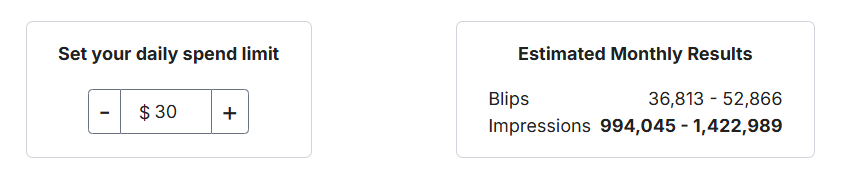
With Blip, the cost of billboard advertising in Dora can be surprisingly accessible because you only pay when your ad actually appears. Each “blip” is a 7.5-to-10-second display on a rotating digital billboard, with pricing starting at just $0.01 per display. Since pricing is dynamic, the cost per blip can change based on time of day, location, and advertiser demand, but you stay in control the whole time.
Where can I advertise with Blip in Dora, Alabama?
Dora’s billboard value is concentrated along a handful of roads, with the best strategy usually pairing one or two high-speed commuter corridors with one slower local route. I-22 is the backbone of the Dora market, and U.S. 78 through Dora and Sumiton is still essential for slower local trips and better read time. AL-269 and other connector roads can also reach local customers heading between Dora, Graysville, Mt. Olive, and the broader Jefferson County side.
Who can a Dora, Alabama Blip billboard campaign reach?
Dora is a small city of about 2,300 residents, but billboard strategy here works on a much larger map. We can reach people moving across Walker County’s 65,342 residents, the western edge of Jefferson County’s 674,721 residents, and the broader Birmingham-Hoover metro of roughly 1.1 million people. Because Dora sits directly on the I-22 and U.S. 78 travel shed, the market is driven by vehicle traffic far more than foot traffic.
When is the best time to run billboard ads in Dora, Alabama with Blip?
Spring is one of the strongest windows for home-service advertisers because the region is well known for spring storms. Summer also supports strong demand for HVAC, auto A/C service, beverages, convenience retail, and lake-oriented travel, while back-to-school and fall football create dependable late-summer and fall opportunities. The holiday window and winter are also useful for retail, heating service, and tax preparation campaigns.
What kind of people do Dora, Alabama billboards reach?
The most obvious audience is the commuter, since many residents head east for work, health care, education, and larger retail destinations. Dora’s local market is also deeply practical, with trips revolving around school schedules, home maintenance, groceries, church activity, and family recreation. That makes the area strong for advertisers in home services, health care, auto repair, insurance, grocery, and quick-service dining.
Do I need a contract to advertise with Blip in Dora?
No, Blip has no long-term contracts or minimum commitments. You can start, pause, or stop your campaign at any time.
How fast can I launch a billboard campaign with Blip in Dora?
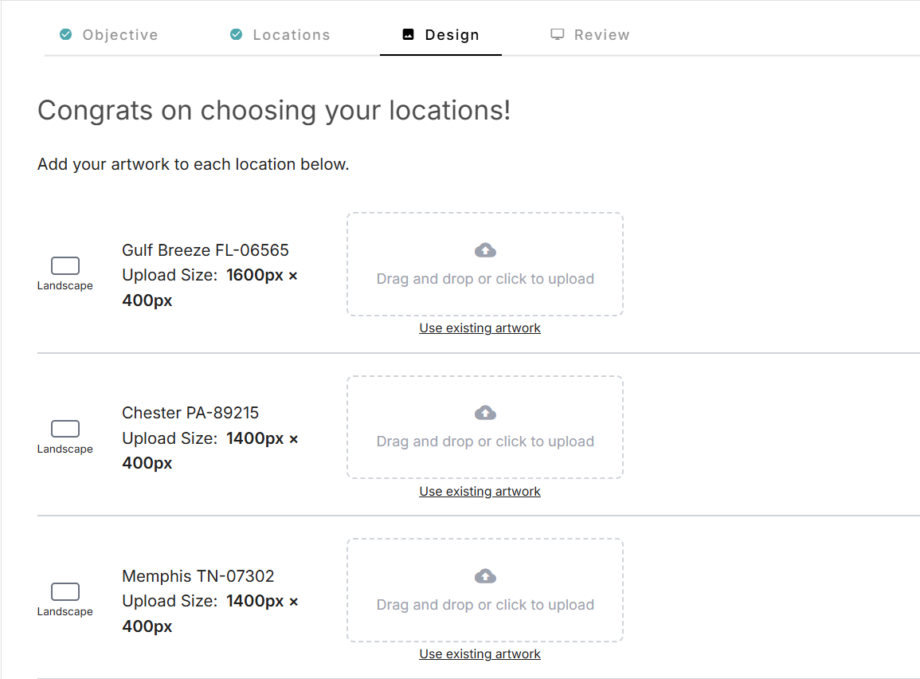
You can have your campaign live in minutes. Create a free account, select your locations, set your budget, upload your design, and start running once approved.
Where can I advertise with Blip in Dora?
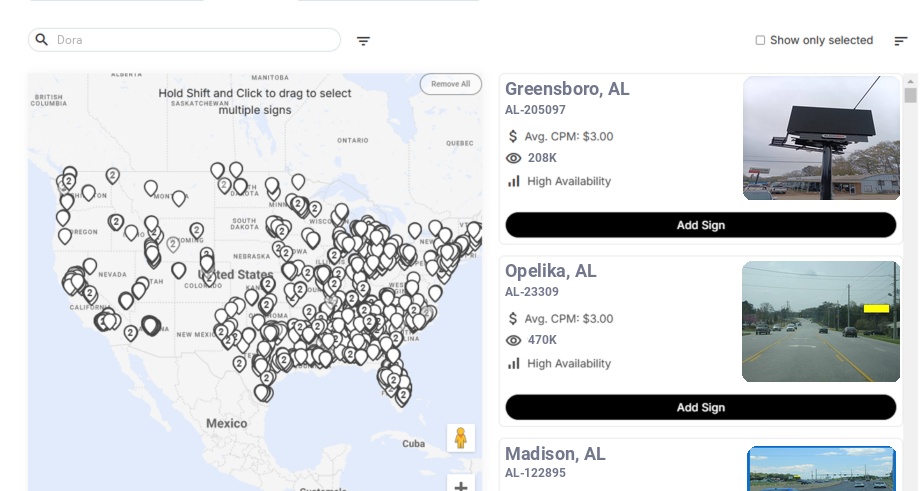
Blip has digital billboards in Dora. You can browse available locations on a map, choose the ones that fit your audience, and start advertising right away.
Still have questions? Launch a campaign in minutes — no contracts, no commitments.
Start Your CampaignDora Billboard Advertising Guide
Dora, Alabama, is a small city of about 2,300 residents, but billboard strategy here works on a much larger map. We can reach people moving across Walker County Jefferson County’s 674,721 residents, and the broader Birmingham-Hoover metro of roughly 1.1 million people. Because Dora sits about 30 miles northwest of downtown Birmingham and directly on the I-22 and U.S. 78 travel shed, the market is driven by vehicle traffic far more than foot traffic. That mix of commuters, industrial traffic, local families, and weekend travelers makes Dora a strong place for digital billboard advertising.
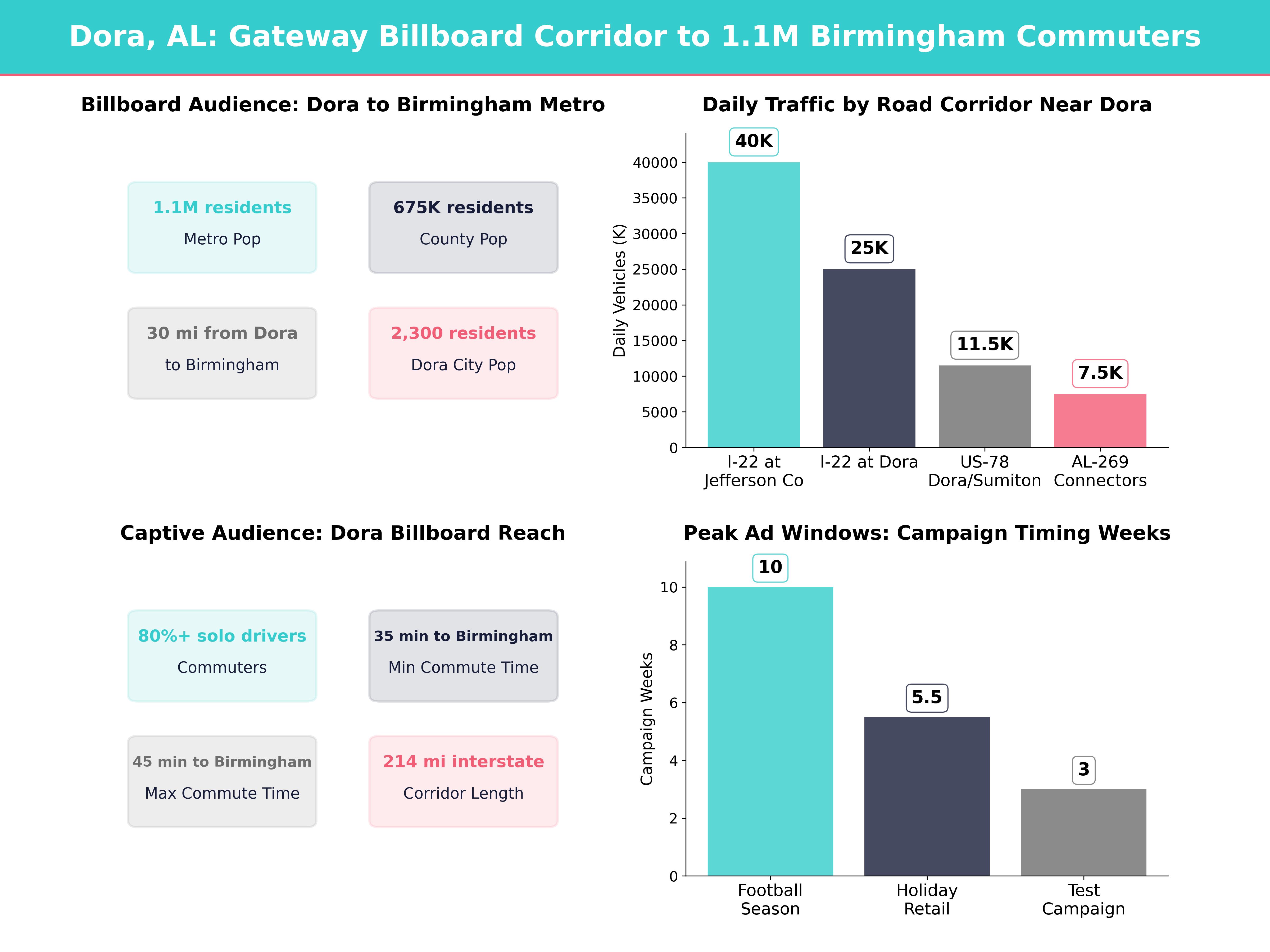
Dora, Alabama Market Overview
When we advertise in Dora, we should think beyond city limits. Dora sits near the Walker-Jefferson county line, roughly 20 miles from the Jasper Area Chamber of Commerce 30 miles from Birmingham’s urban core. That means even a local campaign can capture residents from multiple communities, including Sumiton Graysville Adamsville Gardendale Jasper, and western Birmingham.
The scale matters. The Birmingham-Hoover metro reached 1,115,289 residents in 2020, Jefferson County had 674,721 residents, and the City of Birmingham itself had 200,733 residents. Dora and nearby Walker County add a smaller but highly drive-oriented customer base, which is valuable for home services, health care, retail, legal services, education, and auto-related advertisers.
Economically, Dora benefits from being tied to two different patterns at once. On one side, we have the small-town and exurban spending habits of Walker County communities. On the other side, we have access to the state’s largest employment center, where the Birmingham Business Alliance, the Alabama Department of Commerce, and major institutions such as UAB highlight health care, higher education, logistics, construction, and advanced industry as key regional drivers.
For billboard planning, car dependence is one of the most important facts. Recent commuting estimates consistently put the drive-alone share above 80% in both Walker County and Jefferson County, and Dora has very limited alternatives to personal vehicle travel. Unlike the denser parts of Birmingham served by MAX Transit, daily life in Dora depends on getting into a car for work, school, shopping, and entertainment. That makes out-of-home media especially reliable because we can meet people on the same roads they use every day.
Commute patterns also favor repetition. A drive from Dora to central Birmingham often runs about 35 to 45 minutes depending on traffic and destination, which means many residents spend meaningful time in front of roadside media. For advertisers, that creates a useful balance of reach and frequency. We do not need Manhattan-style density when drivers pass the same screens multiple times per week.
Key Traffic Corridors for Dora, Alabama Billboards
Dora’s billboard value is concentrated along a handful of roads. The best strategy is usually to pair one or two high-speed commuter corridors with one slower local route, so that we build both awareness and action.
I-22 / Corridor X
I-22 214 miles from Birmingham toward Memphis and functions as both a commuter route and a freight corridor. For Dora, it is the most important east-west roadway because it carries travelers toward western Jefferson County, Birmingham employment centers, and Jasper-area retail.
According to traffic count maps from the Alabama Department of Transportation 20,000 to 30,000 AADT range, and volumes climb into the 40,000-plus AADT range as the route approaches the more urbanized Jefferson County side. Even when exact counts vary by segment and year, the pattern is consistent: eastbound traffic gets denser as we move toward Birmingham.
This corridor works especially well for the following advertisers:
- Health care providers can reach patients heading toward hospitals, specialists, imaging centers, and urgent care in Birmingham.
- Colleges and training programs can reach students traveling toward UAB, Samford University, and Bevill State Community College.
- Retail and entertainment brands can capture weekend and evening traffic heading toward the BJCC, Protective Stadium, and the Birmingham CrossPlex.
- B2B and industrial advertisers can benefit from freight and contractor traffic moving across the corridor.
U.S. 78 Through Dora and Sumiton
U.S. 78 is still essential even after I-22 took the long-haul traffic. In towns like Dora and Sumiton 8,000 to 15,000 vehicles per day range, depending on the exact section.
That slower local environment is especially useful for response-driven campaigns. We can do more with offers like “next right,” “free estimate,” “walk-ins welcome,” or “open late” on U.S. 78 than we usually can on the interstate. Restaurants, auto repair shops, convenience stores, pharmacies, and family-oriented services often perform well on this corridor because drivers are already in local errand mode.
AL-269 and Other Connector Roads
The roads connecting Dora to Graysville Mt. Olive 5,000 to 10,000-plus vehicles per day, which is far below interstate traffic but highly relevant for local service businesses.
These roads are useful when we want to reach the following kinds of customers:
- Homeowners looking for HVAC, roofing, plumbing, pest control, and remodeling.
- Parents and families making school, grocery, and after-work trips.
- Churches, schools, and community organizations promoting recurring local events.
Because these are habitual local routes, even moderate traffic can generate strong message retention when the same drivers see the same screen repeatedly.
Birmingham Continuation Corridors
If we want Dora campaigns to scale into the metro, we should also think about where Dora traffic goes after it leaves I-22. Core Birmingham segments of I-65 regularly exceed 100,000 AADT, and central I-20/59 segments exceed 140,000 AADT. Those are not “Dora roads” in a literal sense, but they are part of the same customer journey for people commuting, shopping, or attending events in Birmingham.
For regional campaigns, this means we can sequence messaging. We can use a Dora-area board to introduce the brand, then use a Birmingham board to reinforce a location, event date, or call to action closer to the destination.
Audience Segments We Can Reach Around Dora, Alabama
Dora’s audience is not a single demographic block. We get better results when we plan around actual movement patterns rather than just ZIP codes.
Daily Commuters Between Walker County and Birmingham
The most obvious audience is the commuter. Dora sits in a corridor where many residents head east for work, health care, education, and larger retail destinations. With drive-alone commuting above 80%, this audience is highly exposed to roadside media and sees it repeatedly across weekday routines.
For this group, billboard categories that usually fit well include financial services, legal services, staffing, health care, insurance, and destination retail. Morning messages should emphasize awareness and appointments. Afternoon messages should emphasize convenience, dinner decisions, events, and store hours.
Local Families and Homeowners
Dora’s local market is deeply practical. Many trips revolve around school schedules, home maintenance, groceries, church activity, and family recreation. That makes the area strong for advertisers that solve everyday needs rather than purely discretionary wants.
This is where boards can work especially well for:
- Roofing, siding, gutters, and storm repair.
- HVAC, plumbing, electrical, and pest control.
- Dental, primary care, urgent care, and vision services.
- Auto repair, tire shops, used vehicles, and insurance.
- Grocery, pharmacy, and quick-service dining.
In a small-city environment, trust signals matter. We usually do better with plainspoken language, recognizable local place names, and a clear service promise than with abstract branding alone.
Students, Parents, and Education Buyers
Even though Dora itself is small, it sits within reach of several meaningful education audiences. Bevill State Community College operates 4 campuses across northwest Alabama, UAB enrolls more than 21,000 students, and Samford University enrolls more than 5,700 students. Add in Walker County Schools, and we have a steady market for tutoring, trade programs, apartments, technology, restaurants, and student services.
Education-related advertising often works best in two windows. The first window is late summer, when students are returning and parents are spending on supplies, housing, and transportation. The second window is January, when spring enrollment and new-year career plans pick up.
Eventgoers and Metro Visitors
Dora residents do not stay only in Dora for leisure. Many drive into Birmingham for concerts, sports, expos, and conventions. The Birmingham-Jefferson Convention Complex and Protective Stadium are major draws, and Protective Stadium seats about 47,100 people. We can also reach travelers using Birmingham-Shuttlesworth International Airport, which handled more than 3 million passengers in 2023.
This audience matters for hotels, attractions, restaurants, ticketed events, and transportation services. It also matters for hospitals and specialty medical providers, because many residents combine metro appointments with shopping or entertainment trips.
Outdoor and Weekend Recreation Travelers
Dora is also positioned near Alabama’s recreation traffic. Lewis Smith Lake 21,000 acres of water and more than 500 miles of shoreline, making it one of north Alabama’s best-known summer destinations. Nearby Rickwood Caverns State Park, operated by Alabama State Parks, adds family and weekend visitation in the warmer months.
For advertisers, this opens opportunities for marinas, lodging, restaurants, hardware stores, convenience retail, outdoor gear, and medical or legal services tied to seasonal travel. We can tailor creative for “on the way” behavior rather than only local household behavior.
Seasonal and Timing Opportunities in Dora, Alabama
Dora advertising is seasonal in a very practical Alabama way. Weather, school schedules, football, lake travel, and holiday shopping all change what people buy and when they drive.
Spring in Dora, Alabama
Spring is one of the strongest windows for home-service advertisers. In the Birmingham-Dora climate zone, annual rainfall is around 56 inches, and the region is well known for spring storms. That makes March through May a natural period for roofing, gutters, tree service, generators, insurance, and storm restoration messaging.
Spring is also when we should elevate outdoor living offers. Lawn care, pressure washing, decks, fencing, pools, and patio businesses all benefit once temperatures rise and people start preparing homes for summer.
Summer Travel and Heat
Summer is a major outdoor and automotive season. Average July highs in the area run near 91°F, which supports strong demand for HVAC, auto A/C service, beverages, convenience retail, and lake-oriented travel. The prime summer recreation window usually runs from May through August, especially for routes connected to Smith Lake and other weekend destinations.
This is also a productive time for family entertainment campaigns. We can promote water parks, state parks, casual dining, travel stops, and back-to-school offers as July turns into August.
Back-to-School and Fall Football
In Walker County Schools, the school year typically starts in August and runs through May, which gives us a dependable late-summer reset in spending and traffic patterns. Parents shift back to weekday routines, and afternoon route frequency increases around schools, groceries, and local services.
Fall also brings one of the strongest emotional hooks in small-town Alabama: football. High school football alone gives us about 10 regular-season weeks of recurring Friday-night excitement, and college football extends the pattern deep into the fall. Campaigns for restaurants, sports bars, retail, telecom, automotive, and local events can all lean into this rhythm.
Holiday and Winter Planning
The holiday window usually gives us 5 to 6 weeks of heavy retail intent between Thanksgiving and late December. This is the right time for jewelry, furniture, auto dealers, toy retailers, health care gift cards, and destination shopping in Birmingham and Jasper.
Winter is also useful for service-based campaigns. Average January lows near 34°F create relevance for heating service, pipes, insulation, generators, and winter vehicle maintenance. January through April is also a strong period for tax preparation, legal services, debt relief, and workforce recruiting.
Dora, Alabama Billboard Design Tips
Creative that works in Dora should feel local, legible, and useful. We are speaking to people on familiar roads, often at speed, and often during routine trips.
Design for Speed and Road Conditions
On I-22, vehicles move fast, with posted speeds commonly around 70 mph. That means our best-performing creative is usually blunt and immediate. We should use large typography, a single idea, and high-contrast color combinations that stay visible against tree lines, cloudy skies, and wet-road conditions.
Because the area gets substantial rain and many roads are bordered by woods or darker backgrounds, bright whites, yellows, reds, and deep blues often stand out better than muted palettes. If the ad is on a slower surface road, we can add one more piece of information, but we still should not overload the screen.
Use Local Language and Familiar Geography
Dora-area audiences respond well to geographic specificity. Copy such as “In Jasper,” “Minutes from I-22,” “Serving Walker County,” or “Easy drive to Birmingham” often feels more believable than generic metro branding. Local place names signal that we understand the market.
We should also emphasize practical outcomes. In Dora, “Free Estimate,” “Same-Day Service,” “Now Hiring,” “Open Late,” and “Family Care” usually feel more relevant than vague lifestyle slogans. That does not mean branding is unimportant. It means branding works better when paired with a concrete reason to act.
Match Imagery to the Local Economy and Lifestyle
Dora sits in a market shaped by trades, transportation, construction, health care, and family life. Imagery featuring homes, trucks, tools, work uniforms, families, outdoor recreation, and community moments usually feels more natural than highly stylized luxury imagery.
Seasonal creative should also match what people are doing. In summer, lake visuals, cold drinks, shaded patios, and A/C relief can work. In fall, football energy, warm food, and local pride resonate. In storm season, clean before-and-after home imagery can outperform stock visuals that feel distant from north Alabama reality.
Regional Strategies Around Dora, Alabama
The smartest Dora campaigns rarely use one-size-fits-all messaging. Different sub-areas deserve different goals.
Dora and Sumiton for Frequency
In Dora and nearby Sumiton
For these boards, neighborhood credibility matters. We should mention service areas, hours, and local relevance. If the campaign needs immediate action, slower routes such as U.S. 78 are especially helpful.
East Toward Jefferson County and Birmingham
As we move east toward Graysville Mt. Olive Gardendale Birmingham, the market shifts toward commuter utility. These placements are ideal for employers, colleges, legal services, hospitals, destination retail, entertainment, and major events.
This is where eastbound morning and westbound evening scheduling can be especially effective. People on these routes are often making decisions about where they will go later that day or later that week. We should use concise copy and a strong destination cue.
West Toward Jasper and the Walker County Retail Pull
Westbound strategy should not be overlooked. The Jasper side is important for regional shopping, education, and services, and the Jasper Area Chamber of Commerce
That makes westbound placements useful for furniture, automotive, farm and outdoor supply, health care, grocery, and recruiting. If a business serves both Jasper and Dora, the creative should acknowledge that two-way movement rather than assuming all travel goes only toward Birmingham.
Recreation Corridors and Weekend Messaging
When we want to reach warm-weather leisure traffic, we should shift strategy on Thursdays, Fridays, and summer weekends. Routes connected to Lewis Smith Lake Rickwood Caverns State Park, and Birmingham entertainment venues deserve different creative from weekday commuter boards.
This is a good place for food, fuel, marinas, tourism, apparel, beverages, and destination events. The tone can be more upbeat and impulse-friendly because weekend travelers are less task-focused than weekday commuters.
Using Blip Tools in Dora, Alabama
Blip’s tools fit Dora well because this is a market where timing and route mix matter as much as raw geography. We can run a broad optimized campaign when we want the platform to find the best combination of Dora-area, Walker County, and Birmingham-facing inventory. We can also run a manual campaign when we already know we want specific boards on I-22, U.S. 78, or a Birmingham continuation corridor.
Dayparting is especially useful here. We can emphasize 5-9 a.m. eastbound commuter hours, 3-7 p.m. westbound return traffic, Friday afternoon recreation movement, or late-afternoon school and errand windows on local roads. That helps us spend more of our budget when Dora audiences are most predictable.
Real-time analytics are also practical in this market. If we see that I-22 eastbound boards are generating stronger lift than slower local routes, we can lean into commuter exposure. If local U.S. 78 boards are driving stronger response for a service business, we can shift weight there instead. Dora is exactly the kind of market where testing beats assumption.
Creative flexibility matters too. Because the local calendar changes so clearly, we may want one version of the ad for storm season, another for lake season, and another for football or holiday shopping. With quick artwork swaps, we can keep the campaign timely without rebuilding the whole plan.
Getting Started with Billboard Rental in Dora, Alabama
When we get started with billboard rental in Dora, we should begin with the destination, not the display. In other words, we should first decide whether we want local frequency in Dora, commuter reach toward Birmingham, retail pull toward Jasper, or some combination of all three.
Start with the Customer Route
The best Dora billboard plans usually follow a simple routing question: where do our customers start, where do they drive, and where do they decide? If we sell a local service such as HVAC, dentistry, or pest control, we should favor Dora, Sumiton, and connector roads where repetition is strongest. If we sell surgery, events, higher education, or destination retail, we should add eastbound commuter inventory toward Birmingham.
A good starting test is often 2 to 3 complementary locations, rather than a single isolated board. One board can create awareness, but a small network is more likely to create recall.
Evaluate Each Billboard Like a Local
We should judge each location by a few Dora-specific filters:
- We should check whether the board faces the right direction for morning or evening traffic.
- We should note whether the nearby road is a high-speed decision point or a slower local route.
- We should consider whether the audience is commuting, running errands, or traveling for recreation.
- We should look for clear geographic relevance, such as proximity to I-22, U.S. 78, Birmingham-bound travel, or Jasper-bound travel.
This matters because a great Dora board is not just “busy.” It is aligned with what the driver is trying to do at that moment.
Expect Flexibility, Not the Traditional Lock-In
Traditional billboard buying often pushes us toward long negotiations, fixed packages, and multi-month commitments that can be hard to justify in a smaller market. With Blip, we can launch faster, test multiple routes, and adjust based on what the Dora audience actually responds to. Since pricing starts at $0.01 per display, we can learn the market without building an oversized commitment on day one.
That flexibility is especially valuable in Dora because conditions shift. Storm season, school calendars, football, and summer travel all change audience behavior. A campaign that works best in April may not be the same campaign we want in July or November.
Launch, Measure, and Refine
A practical Dora launch plan often looks like this:
- We start with a 2- to 4-week test window so that we can gather enough data across both weekdays and weekends.
- We compare commuter-facing boards against local-action boards instead of assuming one strategy is automatically better.
- We rotate creative when the season changes, rather than running the same message year-round.
- We keep the copy short enough to fit the 7.5- to 10-second digital billboard viewing environment.
If we follow that process, Dora can be more than a small-town add-on. It can be a very efficient entry point into a wider north Alabama and western Birmingham travel market, with the kind of repeated, car-based exposure that digital billboards handle exceptionally well.