Quick Answer: An interactive billboard is a digital billboard that gives people a clear next step. That might be scanning a QR code, visiting a short URL, tapping a screen, responding to a live prompt, or seeing a message that changes based on weather, time, or location. For most businesses, the practical version is simple: use the billboard to build recognition, then give interested people an easy way to take action. On Blip, you can book a billboard online and launch a QR-driven digital billboard campaign in minutes with no contract.
Interactive billboards do not have to mean custom screens, motion sensors, or big-brand budgets. The goal is to make a billboard easier to act on and easier to track. A clear QR code, a simple landing page, and consistent exposure over time can help turn billboard visibility into measurable visits, signups, bookings, or store traffic.
National brand campaigns can make interactive billboards feel out of reach for smaller businesses. They are not. A QR code or short URL can make a digital billboard interactive without custom hardware, extra production, or a large campaign budget.
This guide explains what interactive billboards are, how they work, what they cost, and how a business can run a simple version without a large budget.
Key Takeaways
- An interactive billboard gives people a way to respond. That could mean scanning a QR code, tapping a screen, triggering motion sensors, or seeing a message change based on live data.
- Interactivity spans a wide cost range. Full motion-tracking installs and custom 3D builds usually cost more and are built for large campaigns. A QR code or short URL is much easier for most businesses to use.
- The strongest interactive campaigns commit to one idea and make the medium part of the message, whether that is a speed camera, a real-time alert feed, or a code that unlocks a reward, instead of adding technology just for the sake of it.
- Blip gives you self-serve access to digital billboards nationwide with no contracts or minimums, so you can run a QR-driven campaign and adjust it in real time. Get started and launch your first board in minutes.
What Is an Interactive Billboard?
An interactive billboard is a digital out-of-home (DOOH) display designed for the audience to engage with, not just glance at. Where a standard billboard delivers one message in one direction, an interactive board reacts to a scan, a touch, a movement, a tweet, or a change in the weather.
It gives someone a clear next step in the moment, which can make the ad easier to remember and easier to measure.
The category is broad. At one end sit elaborate physical installations with built-in cameras and sensors. At the other sits a QR code on a digital screen, which is technically interactive because it hands the viewer a next step they can act on immediately.
Blip’s own coverage of interactive digital signage gets into how that engagement layer changes what a screen can do. That range matters because the cost can change a lot. A custom installation can be expensive, while a QR code can be added to a standard digital billboard.
How Do Interactive Billboards Work?
Every interactive billboard works by adding an input the screen can respond to. The mechanism is what defines the format, and each one carries a different price tag and level of effort. These run on digital out-of-home infrastructure, so the screen can change content on demand rather than displaying one fixed print.
QR Codes and Short URLs
The most accessible form of interaction. A code or memorable URL on the board gives viewers a direct path to a landing page, offer, signup form, or game. It costs nothing extra to add, works on any digital screen, and is the only format on this list that produces clean, trackable results: you can see scans and the traffic they drive.
Touchscreens
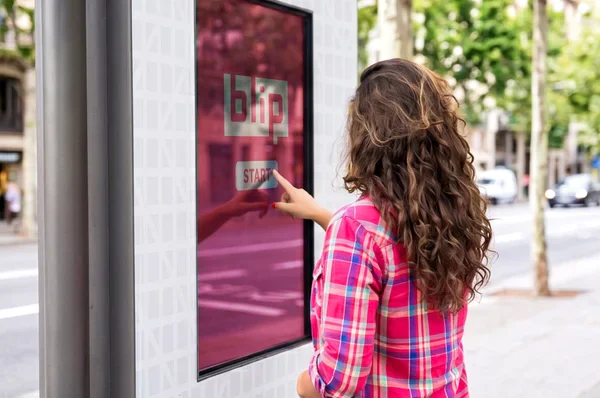
Street-level screens that let people tap, scroll, browse products, or play. These pull crowds in pedestrian zones, but they require specialized hardware, durable installation, and a fixed high-traffic location, which puts them well outside a typical local budget.
Motion and Gesture Sensors
Cameras and sensors that track movement and react to it. Reebok’s Stockholm board used a speed camera to clock how fast people ran past. These installs are custom-built, one-location stunts, impressive and expensive in equal measure.
Augmented Reality
AR overlays content onto the real world through a smartphone or the screen itself, letting people trigger animations or virtual try-ons. It generates strong novelty and shareability, but it needs custom development and usually an app or web experience to support it.
Real-Time Data Triggers
The board pulls live data, weather, social posts, sports scores, even emergency alerts, and updates automatically. UNICEF Finland streamed live air-raid sirens from Ukraine onto Helsinki screens. This sits in the middle on cost: no physical build, but it requires a data feed and dynamic creative setup.
Here is how the formats compare on what matters most for a buying decision:
| Interactivity type | Typical use | Relative cost | Realistic for SMBs |
|---|---|---|---|
| QR code / short URL | Drive scans to a site, offer, or signup | Low | Yes |
| Touchscreen | Games, product browsing at street level | High | No |
| Motion / gesture sensors | Speed tests, body tracking, reactive visuals | High | No |
| Augmented reality | Smartphone overlays, virtual try-ons | High | Rarely |
| Real-time data triggers | Weather, social, or live-event reactive ads | Medium | Sometimes |
The pattern is clear. Most interactive formats require custom hardware, higher budgets, or fixed locations. QR codes are the simplest option for most businesses, and they are also easy to measure.
The QR Code: Interactive Advertising Any Business Can Run
If the examples above feel out of reach, the QR code is where interactive billboard marketing becomes practical. It is the one interaction that needs no special screen, no sensors, and no agency, just a code and a destination worth scanning.
The biggest benefit is measurement. Billboards are great for reach and repeat exposure, but smaller advertisers often want to know what happened after someone saw the ad. A QR code helps connect the billboard to a scan, a site visit, or a form fill. It converts a roadside impression into a click you can count, a landing page you can test, and a conversion path you can optimize, the same way you would treat a paid social ad.
To make a scan worth it, the destination has to earn the effort:
- Offer a clear reason to scan. A discount, a giveaway entry, a menu, an exclusive drop. “Scan to learn more” is not a reason.
- Send the scan somewhere built for phones. A fast-loading mobile page that delivers on the board’s promise, not a generic homepage.
- Use a short vanity URL as backup. Drivers can’t always scan safely. A memorable URL gives them a second way in, a tactic Blip explores in its guide to low-cost first impressions.
- Track every code separately. Use a unique link per board or campaign so you know which screen and location actually drove action.
This is the rung on the ladder where a local restaurant, law firm, or retailer gets real interactivity without a brand-stunt budget, and gets data the big spectacle campaigns often can’t capture.
What Does an Interactive Billboard Cost?
Blip uses pay-as-you-go pricing, starting at $0.01 per display. You choose your locations, set your daily budget, control the schedule, and start or stop anytime, so you can test a QR-driven board without committing to a long campaign upfront.
Cost depends entirely on which type of interaction you choose. A custom motion-tracking or AR installation is a bespoke project: fabrication, hardware, software development, and a single premium location can push it into tens or hundreds of thousands of dollars. These are the campaigns that win awards, and they are priced like it.
A QR-driven campaign on a standard digital billboard works differently. You are paying for screen time, not custom hardware or software. The code itself is free, and the interactivity rides on top of a normal DOOH buy.
The variables that move your spend are the familiar ones:
- Location and screen demand. Premium urban screens cost more than suburban or highway boards.
- Time of day and day of week. Prime commuting windows carry higher rates.
- Duration and frequency. How long your campaign runs and how often your ad appears.
- Number of screens. A single neighborhood board versus a multi-market push.
The bigger divide is the buying model itself. Traditional DOOH still leans on contracts and minimum spends that lock you in before you’ve tested anything. A self-serve platform removes that barrier:
| Traditional interactive OOH | Self-serve DOOH (Blip) | |
|---|---|---|
| Contract | Often required | None |
| Minimum spend | High, fixed | Set your own daily budget |
| Setup time | Weeks to months | Minutes |
| Custom hardware | Frequently | Not for QR campaigns |
| Measurement | Varies | Scan and traffic tracking via your own links |
For more detail on what drives outdoor pricing, Blip’s guide on billboard advertising for local businesses is a useful next read, and you can browse live billboard locations to see current screens near you.
Run Your Own Interactive Campaign With Blip
You don’t need a creative agency or a six-figure budget to make a billboard interactive. Add a QR code or short URL to your design, point it somewhere worth visiting, and you have the same core mechanic behind some of the year’s most talked-about campaigns, on a screen you can book yourself.
Blip’s self-serve platform lets you pick your screens, set a daily budget, and launch in minutes, then track what each board drives and adjust in real time. Create an account and get your first interactive campaign live today, then use the free Artwork Generator during campaign setup if you want help building the creative.
Get Started and Build Your Interactive Billboard Campaign
Frequently Asked Questions
What is the 3-second rule for billboards?
The 3-second rule means a billboard should communicate its full message in roughly three seconds, the time a passing viewer actually has. In practice that means six words or fewer, one clear focal point, and bold contrast. For interactive boards, the rule still applies first: the message has to register before anyone chooses to engage with a QR code or other feature.
What is an electronic billboard called?
An electronic billboard is usually called a digital billboard, and it belongs to the wider category of digital out-of-home (DOOH) advertising. Unlike printed boards, these LED screens update creative instantly, rotate several advertisers in a loop, and can host interactive elements like QR codes and real-time data feeds.
How much does it cost to run an interactive billboard on Blip?
On Blip you pay per play and set your own daily budget, with no contracts or minimum spend. Adding interactivity through a QR code costs nothing extra, since the code rides on top of a standard digital billboard buy. Your total spend depends on screen location, time of day, campaign duration, and how many screens you run.
Can I add a QR code to a Blip billboard campaign?
Yes. A QR code is the most accessible way to make a Blip campaign interactive. Include it in your uploaded design, link it to a mobile-friendly destination with a clear reason to scan, and use a unique tracking link per board so you can measure which screens drive the most action.
Can I book a billboard online?
Yes. With Blip, you can book a billboard online without contracts, minimum spend, or long setup timelines. Pick your screens, upload your design, set your daily budget, and launch a QR-driven digital billboard campaign in minutes.
What Are Some Interactive Billboard Examples Worth Studying?
Strong interactive billboard examples include KitKat’s “Phone Break,” Reebok’s speed test billboard, Carvel’s soft-serve billboard, Spotify’s QR code treasure hunt, and UNICEF Finland’s real-time alert campaign. Each used one clear idea and made the interaction match the message.