Small businesses drown in performance metrics and miss the marketing channels that build lasting customer relationships.
Cedric Bernard has managed millions in advertising spend across both digital and traditional channels. His perspective from the agency side and now as CEO of Blip and Adkom is that for most small businesses, the easiest marketing to measure often delivers the worst long-term value.
You see five Facebook ads during your morning scroll. Do you remember any of them?
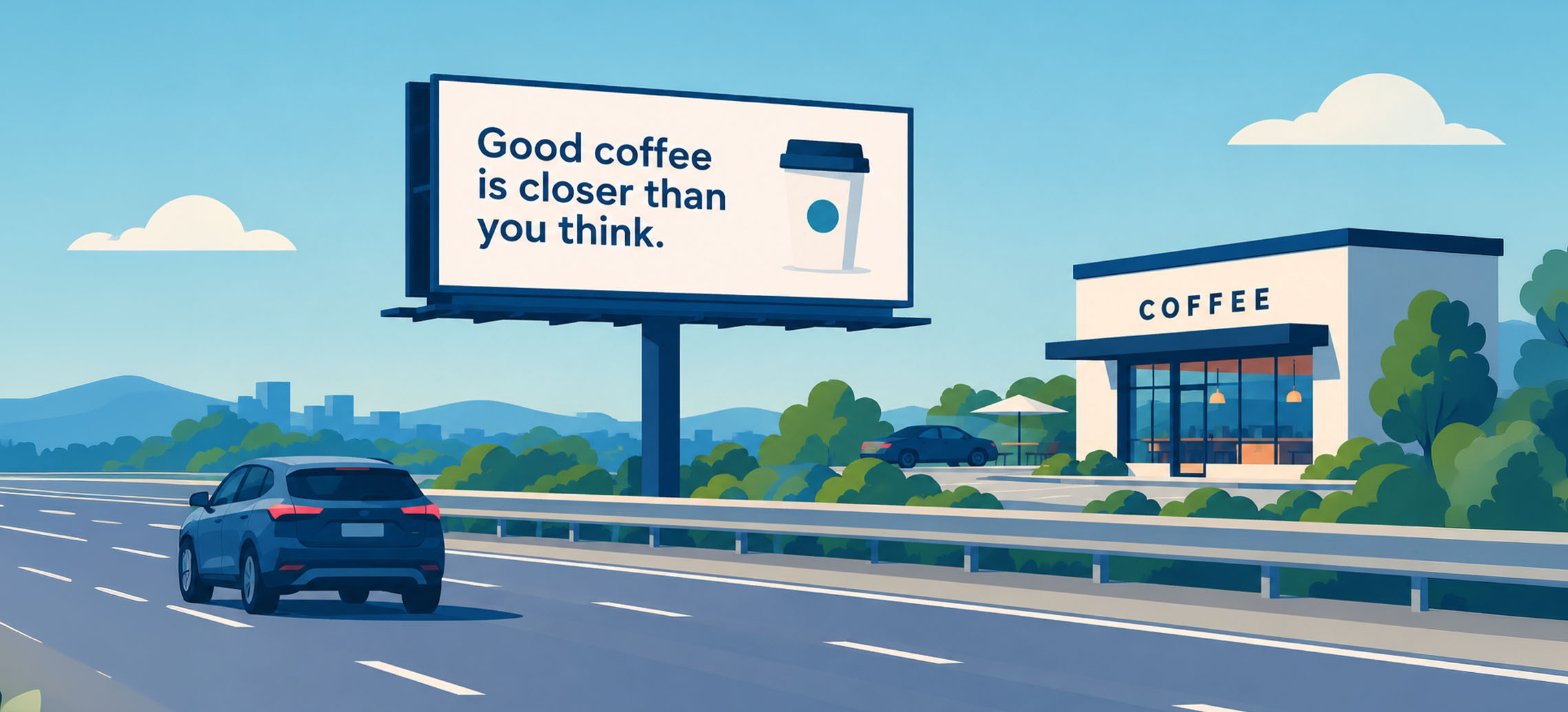
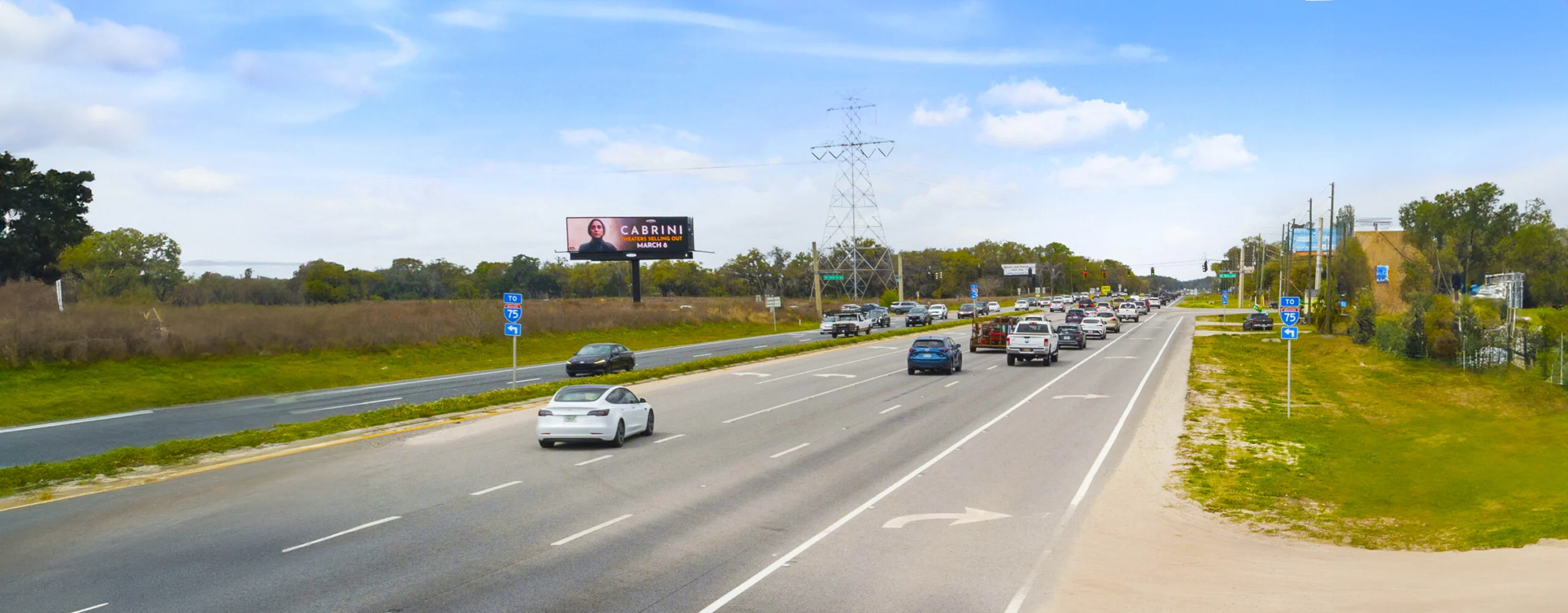
Now think about the last billboard you saw. Chances are you can picture it.
The gap between what is tracked and what actually works costs small businesses thousands every month.
Key Takeaways:
- Click-through rates measure engagement, not memory or trust. Customers remember the billboard they see five times more than the 50 digital ads they scroll past. When they’re ready to buy, they think of the business they remember, not the one with the best CTR.
- Perfect attribution creates false confidence in underperforming channels. Digital platforms show you exactly how well your ads perform—inside their ecosystem. This keeps you spending on what might be your most expensive customer acquisition source, not your most effective.
- Physical advertising builds the trust that makes digital perform better. Customers inherently trust what they see on billboards more than what appears on their phones. Adding billboards to your marketing mix reaches new people and makes your existing digital campaigns work harder.
Reconsider What You’re Asking
Small business owners show Cedric detailed reports from Google and Meta. They know their cost per click, their conversion rates, their return on ad spend down to the decimal. Bet you can guess their next question:
“How do I measure billboard results the same way?”
Wrong question.
“How many ads are you clicking on? How many are you interacting with? Probably very few,” Cedric points out.
Digital platforms trained businesses to worship at the altar of attribution. If you can’t track it, don’t buy it. But this obsession ignores how customers actually make purchase decisions.
Most people don’t click an ad, visit a website, and buy immediately. They see your name multiple times, build familiarity, develop trust, then buy when they actually need what you sell.
That entire middle section, the part where customers go from “never heard of them” to “I’ll give them a try,” happens in the spaces digital analytics can’t measure.
Digital Attribution Fails Small Businesses
Privacy regulations fundamentally changed how digital advertising works. GDPR in Europe, CCPA in California, Apple’s iOS privacy updates—each one chips away at the tracking capabilities digital platforms promised.
The perfect attribution you relied on three years ago is gone. And it’s not coming back.
Physical advertising operates differently. Billboards generate measurement through store visit data, sales lift analysis, changes in branded search patterns. You’re not dependent on tracking cookies or platform-provided dashboards that might disappear with the next privacy update.
“There’s no fraud on the billboard, because the fake ads won’t make it, there are enough guardrails to block that,” Cedric explains. Compare that to digital, where businesses and customers alike regularly get burned by fake clicks, bot traffic, and ads promising products that never ship.
Physical presence signals something digital advertising struggles to convey: legitimacy. When customers see your business on a billboard, they make an automatic assumption—you’re established enough to maintain physical visibility in their community. You’re real.
Marketing Beyond Perfect Measurement
Small businesses keep asking Cedric how to measure billboards like digital ads. That’s the wrong approach. Digital platforms created measurement systems that make their channels look effective while hiding what actually drives purchase decisions. These four principles help businesses escape that trap and build marketing that works in the real world, not just in analytics dashboards.
Memory Beats Metrics
A memorable impression that can’t be measured perfectly is worth more than 100 forgettable clicks you can track down to the second.
Engagement doesn’t equal effectiveness. Customers scroll past hundreds of ads every day.
When someone needs what you sell, they think of the business they remember. Not the business with the best click-through rate.
Trust Is Your Ultimate Conversion
Customers buy from businesses they trust. Trust comes from consistency, visibility, and perceived permanence. Digital ads can’t build that foundation the same way physical presence can.
“The message that you receive is probably more true on a billboard than what you receive on your phone,” says Cedric. Your customers have been burned by online scams, fake reviews, dropshipping schemes. They’re more skeptical of digital by default.
Billboard advertising carries inherent credibility. If you can maintain a physical presence, you’re probably legitimate. That perceived trustworthiness reduces friction in the purchase decision.
Purchase Decisions Happen in the Unmeasurable Middle
You can track the click. You can track the purchase. Everything between those two points—the mental availability, the brand familiarity, the slow build of trust—happens in spaces your analytics tools can’t see.
“It’s repeat exposure, and the more you’re exposed to a message, the more you will eventually act on what you’ve seen,” Cedric explains. That repeated exposure doesn’t always generate measurable interactions. Customers see your billboard daily for weeks, then one day they need what you sell and you’re the obvious choice.
The absence of a click doesn’t mean the absence of influence. The most powerful influence often leaves no digital trace.
Different Channels Serve Different Purposes
Billboards and digital ads do different jobs. Trying to measure them identically misses the point entirely.
“You can’t compare it because there’s a one-to-one and a one-to-many interaction,” says Cedric. Digital ads target individuals based on their browsing history. Billboards speak simultaneously to diverse groups with the same message.
Social reach isn’t something you can track with a pixel, but it’s how brands actually spread.
Are You Measuring What Matters?
Performance marketing taught businesses to track everything.
→ Click-through rates
→ Cost per acquisition
→ Conversion pixels
But when every metric points toward the same expensive channels, you’re only measuring what those platforms want you to see.
“Google and Meta built these walled gardens that suggest to brands: spend your money here, it works! Let me show you how well it works!” explains Cedric. “They don’t allow you to easily take that data outside of those ecosystems.”
Those platforms profit when you stay inside their measurement systems, giving them financial incentives to ensure you never seriously test alternative channels.
Billboards, however, deliver something digital can’t fake: unmissable visibility in the physical world. “We’re not skippable,” says Cedric. “If you drive and there’s a billboard, you’re not going to close your eyes while you’re driving.”
That exposure creates memory, and it’s memory, not clicks, that drives purchase decisions when customers are ready to buy.
Frequently Asked Questions
Can you really measure billboard advertising ROI without click-through rates?
Yes, through store visit tracking, sales lift analysis during campaign periods, branded search volume changes, and phone call tracking. These metrics show business impact rather than just engagement.
The question isn’t whether you can measure billboards—it’s whether the metrics you’re currently tracking actually correlate with business growth.
Won’t privacy regulations make all advertising measurement harder?
Not necessarily. Privacy regulations primarily restrict third-party data collection and cross-site tracking—the foundation of digital ad targeting and attribution. Billboard measurement relies on aggregated, anonymized location data and first-party business metrics you already track.
As digital attribution becomes less reliable, physical advertising measurement becomes relatively more dependable.
How do you know if billboard advertising is working if customers don’t click anything?
The same way businesses knew advertising worked for 100 years before the internet: sales increasing during campaigns, new customers mentioning your ads, foot traffic rising, phone inquiries growing.
Digital platforms convinced businesses that only clickable interactions matter, but customers rarely click their way to purchase decisions in the real world.