Quick Answer: Outdoor billboard advertising places your message on large roadside or urban displays that reach people as they drive, walk, and commute. It comes in two main forms, static printed boards and digital screens that rotate ads. Traditional buys lock you into contracts and minimum campaign lengths. Blip lets you launch an outdoor billboard campaign on real digital screens in minutes, with no contract and a budget you set.
Most guides to outdoor billboard advertising are written by agencies that want you to call them. So the answer to every question ends the same way: request a quote.
This one doesn’t. Below is how outdoor billboards actually work, what drives the price, and how the format has changed enough that a local business can now run a board without a sales rep, a contract, or a five-figure budget. By the end you’ll know which type fits your goal and how to get a campaign live.
Key Takeaways
- Outdoor billboard advertising reaches people in the physical world, where there is no skip button and no ad blocker. A single well-placed board delivers thousands of daily impressions to everyone who passes it. That is one reason businesses still use billboards to build local awareness.
- Static and digital billboards are useful for different campaign plans. Static boards hold one message in one place for the length of the buy. Digital billboards give you more control over locations, timing, budget, and frequency while keeping your core message consistent. You can make small updates for season, daypart, or location, but the goal is still repeat exposure over weeks, not one-off short campaigns.
- Cost depends on location, format, demand, and how long you run, not a single sticker price. Traditional vendors sell in four-week blocks with production fees on top, while pay-per-play platforms let you spend as little as a few dollars a day.
- Blip gives you self-serve access to digital outdoor billboards on 3,500+ screens nationwide, with no contracts or minimums and campaigns that launch in minutes. Get started and put your business on a real screen today.
What Is Outdoor Billboard Advertising?
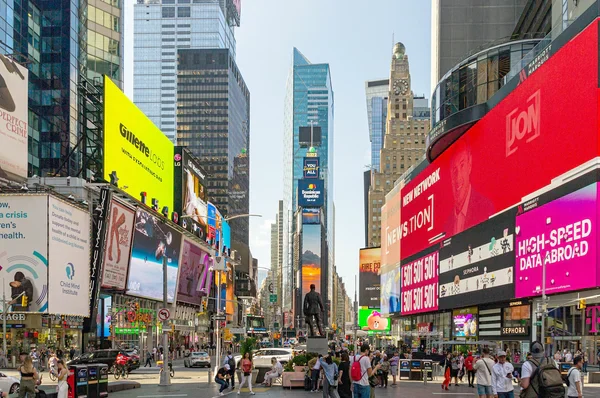
Outdoor billboard advertising is the use of large-format displays in public space to put a brand message in front of people who are out in the world. It is the most recognized slice of out-of-home advertising, the broad category marketers shorten to OOH.
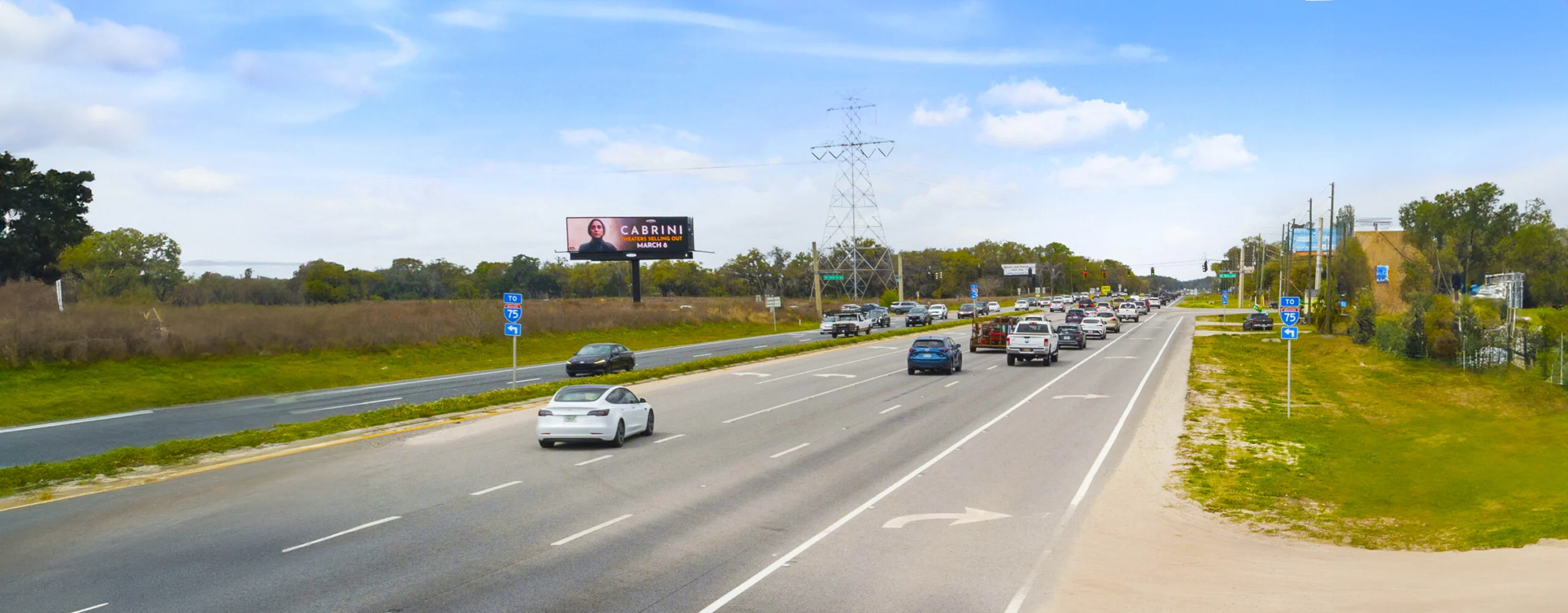
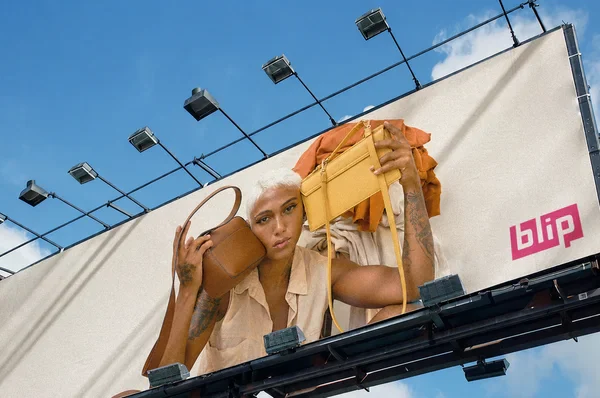
OOH advertising covers anything you see outside the home: transit ads, bus shelters, street furniture, and billboards. Within that, OOH billboards are the large roadside and urban boards most people picture when they hear the word. An outdoor billboard can be a printed vinyl sheet or a digital LED screen, and that single distinction shapes everything about how you buy, design, and run it.
The shift toward digital is the biggest change in the category. An outdoor digital billboard rotates several advertisers through one screen on a loop, which means shorter commitments, schedule control by time of day, and the ability to swap creative without reprinting anything. That flexibility is what opened the format to small businesses that could never justify a traditional billboard lease.
Blip’s own platform sits on this shift, partnering with screen owners to make digital inventory available without the old contract model. You can see the full picture of the category in this guide to the different types of OOH advertising.
Types of Outdoor Billboards
OOH billboards are not one product. The format you pick should follow your goal, your timeline, and where your customers actually are.
| Format | What it is | Best for |
|---|---|---|
| Bulletins | The largest standard boards, often placed along highways and busy main roads | Mass awareness aimed at high-speed traffic |
| Digital billboards | LED screens that rotate ads and update in real time | Building reach and frequency in prime locations with control over budget, timing, and campaign schedule |
| Posters (30-sheet) | Smaller boards in urban and neighborhood settings | Local, pedestrian, and slower-moving traffic |
| Wallscapes | Custom building-scale displays in premium locations | High-impact brand moments where inventory is limited |
Bulletins and posters are usually static: one printed message that stays up for the length of the buy. Outdoor digital billboards are where most new small-business activity happens, because the cost of entry drops when you are sharing a screen rather than leasing it outright. If you are weighing a board against highway placement specifically, the tradeoffs in highway billboard costs and effectiveness are worth a read before you commit.
How Much Does Outdoor Billboard Advertising Cost?
There is no single price for outdoor billboard advertising. Cost is set by four things: where the board sits, whether it is static or digital, how much demand there is for that location, and how long you run.
Traditional vendors sell most inventory in four-week blocks and add production and installation fees for static boards. Premium bulletins in major metros run into five figures a month, while posters in smaller markets cost far less. Some traditional billboard companies still require contracts and minimum spends for digital placements, even though the screen itself is shared.
Pay-per-play platforms work differently. On Blip, you pay per display, starting as low as $0.01 per blip, which is a single eight-second play of your ad.
You set a daily budget and adjust it whenever you want, with no contract and no minimum. A small business can launch an outdoor billboard campaign in one city for under $20 a day. For a deeper breakdown of what moves the number, see how much digital billboard advertising costs, and check Blip’s pricing for current rates.
Why Outdoor Billboards Build Awareness
Outdoor billboards have outlasted every forecast of their decline for one structural reason: you cannot block them. There is no skip button on a highway and no ad blocker on a city street. People who pass during your scheduled times can see your message as part of their normal drive, walk, or commute. Over time, that repeat exposure helps build recognition.
The recall is unusually high. According to the Out of Home Advertising Association of America, most Americans consciously look at billboard messages while driving, and a meaningful share report mentioning an ad they saw to someone else.
Billboards can also support your other marketing. When people see your name on a billboard and later see your search ad, social post, or website, your business feels more familiar. That familiarity helps build trust before someone clicks, calls, or visits. There is also a credibility effect: a billboard signals that a business is established in a way a banner ad cannot, a dynamic covered in this look at why your best marketing can’t be clicked.
Static vs Digital Billboards: Which to Choose
The static-versus-digital decision comes down to how often your message changes and how long you want to run. Use this to sort it quickly.
- Choose static if you have one message to hold for months, you want guaranteed sole occupancy of a board, and long-run brand presence matters more than flexibility.
- Choose digital if you want reach and frequency in prime locations, with more control over budget, timing, and schedule. You can adjust details like daypart or location, but keep your core message consistent so people see it more than once and remember your brand.
- Choose digital if you are a small business or first-time advertiser, because shared screens and pay-per-play pricing remove the contract and the five-figure entry cost.
- Choose static if the specific high-value location you want is only sold as a printed board, which still happens for some premium bulletins and wallscapes.
For most small and mid-sized advertisers, digital wins on flexibility and cost.
How to Launch an Outdoor Billboard Campaign
The old way to buy a billboard meant calling a vendor, waiting on availability, negotiating a rate, and signing a multi-week contract. A self-serve platform compresses that into a few steps you control yourself.
- **Pick Your Screens.**Browse available billboard locations and choose screens near where your customers drive, shop, or commute.
- Set Your Budget. Choose what you are comfortable spending each day. You can adjust anytime as your goals, locations, or schedule change.
- Upload Your Design. Add a high-contrast image with six words or fewer. If you need help, use the free Artwork Generator during campaign setup, and follow these billboard design tips for the fundamentals.
- Schedule and Launch. Set the days and times you want to run, then go live, often the same day.
- Track and Adjust. Watch your plays and estimated impressions, then shift budget toward the screens and times that perform.
This is the workflow that makes outdoor advertising viable for a business that does not have an agency. You can run the whole thing from the Blip platform without a single phone call. For the strategic side of getting noticed against bigger competitors, mastering billboard strategy is a useful companion piece.
Launch Your Outdoor Billboard Campaign With Blip
You don’t need a contract, an agency, or a big budget to put your business on an outdoor billboard. Blip gives you self-serve access to digital screens across the country, so you can pick a location, set your spend, and go live this week.
Create your account and launch your first outdoor billboard campaign today.
Frequently Asked Questions
Do you need a contract to advertise on a billboard?
Not anymore. Traditional outdoor advertising is sold on contracts with four-week minimums, but self-serve digital platforms have removed that barrier. With Blip there are no contracts and no minimum spends, so you can start, pause, or adjust a campaign whenever you want.
Are outdoor billboards effective?
Outdoor billboards can help build awareness, recognition, and repeat exposure in a local market. People see them as they drive, walk, and commute, which makes them hard to ignore. When billboards run alongside search, social, or other digital ads, they can help make your business feel more familiar when someone sees you again.
What is the difference between a static and a digital outdoor billboard?
A static billboard holds one printed message for the full length of the campaign and gives you sole occupancy of the board. A digital billboard is an LED screen that rotates several advertisers, lets you change creative and scheduling in real time, and usually costs less to enter because the screen is shared.