Billboards in Cottonwood, AZ
No Minimum Spend. No Long-Term Contracts. Just Results.
Trusted by Leading Brands


Billboard advertising
in Cottonwood has never been easier
How much is a billboard in Cottonwood?
Why Choose Blip for Billboard Advertising in Cottonwood
Blip lets you launch fast in Cottonwood on SR 89A and SR 260, reaching car-heavy traffic without waiting on contracts.
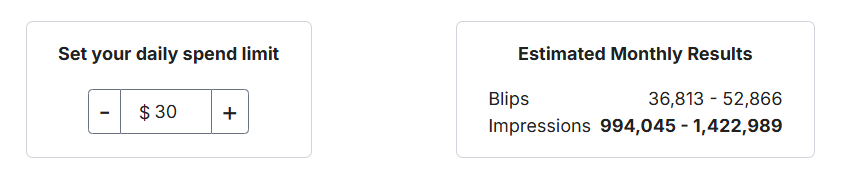
Set flexible budgets in Cottonwood and only pay when ads play—ideal for testing local shoppers, retirees, and Sedona spillover.
Daypart your Cottonwood ads for weekday medical traffic or Fri-Sun wine travelers near Old Town and the Verde Valley.
Blip's real-time analytics help Cottonwood campaigns shift from SR 89A commuters to I-17 gateway visitors as demand changes.
Use Blip creative tools to build bold Cottonwood boards for the Verde Valley, Dead Horse Ranch, and 35-45 mph drive-by reads.
Frequently Asked Questions About Billboard Advertising in Cottonwood
How much does a billboard cost in Cottonwood with Blip?
With Blip, billboard advertising in Cottonwood can be surprisingly affordable because you only pay when your ad actually appears. Each “blip” is a 7.5-to-10-second display on a rotating digital billboard, and pricing starts at just $0.01 per display. Since costs can change based on time of day, location, and advertiser demand, you stay in control of what you spend while still getting real visibility.
Where can I advertise with Blip in Cottonwood, Arizona?
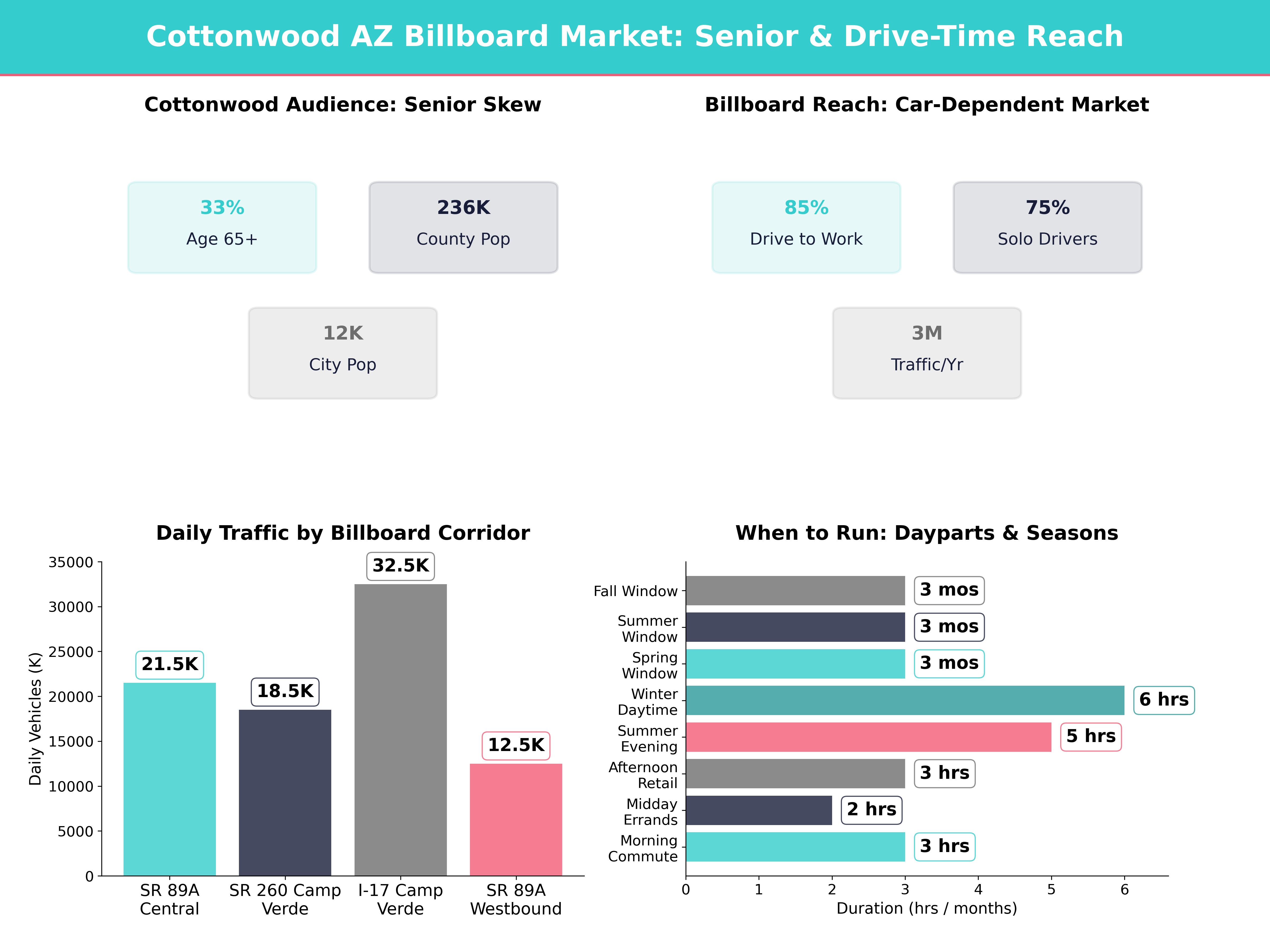
Cottonwood travel patterns are concentrated on a few roads, which is great news for digital billboard planning. According to traffic data from the Arizona Department of Transportation, the most valuable routes are SR 89A, SR 260, and the I-17 gateway through Camp Verde. SR 89A is Cottonwood’s primary commercial spine and the core reach corridor for campaigns that need repeated exposure among local residents.
What kind of audience can Blip reach in Cottonwood, Arizona?
Demographically, Cottonwood and the broader county skew older than Arizona’s major metros. Recent survey data indicate that roughly 1 in 3 Yavapai County residents is 65 or older, which is one reason healthcare, hearing and vision care, insurance, retirement services, legal help, and home improvement often perform well on local boards. At the same time, Cottonwood is not only a retirement market. It also supports working families, service employees, tourism workers, contractors, and students moving around the Verde Valley every day.
When is the best time to run Cottonwood, Arizona billboard ads with Blip?
Spring is one of the most advertiser-friendly periods in the Verde Valley, and we usually like to increase visibility from March through May. Summer often performs well with evening dining, drinks, entertainment, and lodging messages from 3:00 p.m. to 8:00 p.m., while fall is a standout season from September through November for hospitality, events, tasting rooms, and destination dining. Winter can be effective for daytime campaigns, especially from 10:00 a.m. to 4:00 p.m. for healthcare, financial, retail, and local-services advertising.
Why is Cottonwood, Arizona a good market for billboard advertising with Blip?
Cottonwood gives us a rare combination of local frequency and regional pass-through reach. The City of Cottonwood counted 12,029 residents in 2020, and it sits at the center of the Verde Valley, where the message can extend well beyond the city limit. Tourism strengthens that base, because Cottonwood is about 20 miles from Sedona, roughly 55 miles south of Flagstaff, and around 100 miles north of Phoenix.
Do I need a contract to advertise with Blip in Cottonwood?
No, Blip has no long-term contracts or minimum commitments. You can start, pause, or stop your campaign at any time.
How fast can I launch a billboard campaign with Blip in Cottonwood?
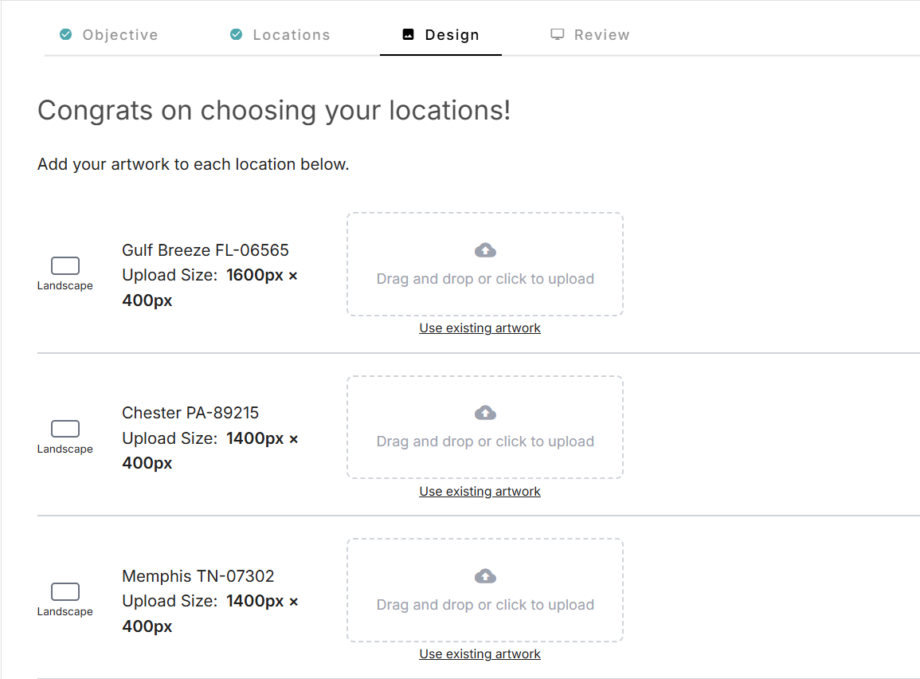
You can have your campaign live in minutes. Create a free account, select your locations, set your budget, upload your design, and start running once approved.
Where can I advertise with Blip in Cottonwood?
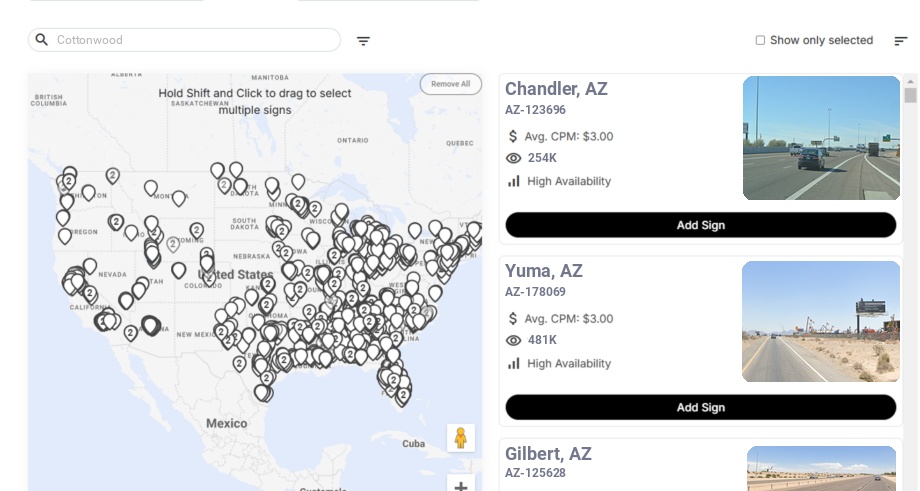
Blip has digital billboards in Cottonwood. You can browse available locations on a map, choose the ones that fit your audience, and start advertising right away.
Still have questions? Launch a campaign in minutes — no contracts, no commitments.
Start Your CampaignCottonwood Billboard Advertising Guide
Cottonwood City of Cottonwood 12,029 residents in 2020, up from 11,265 in 2010, but it sits at the center of the Verde Valley and inside Yavapai County, which had 236,209 residents in 2020, up from 211,033 in 2010, so our message can extend well beyond the city limit. The market is highly vehicle-oriented, with recent commuting data showing that more than 85% of county workers travel by car, truck, or van, which keeps roadside media relevant all day. Tourism strengthens that base, because Cottonwood is about 20 miles from Sedona 55 miles south of Flagstaff 100 miles north of Phoenix.
Cottonwood Market Overview for Billboard Advertisers
When we plan a billboard campaign in Cottonwood, we are really planning for a small city that functions like a regional service hub. Cottonwood incorporated in 1960, sits at 3,356 feet above sea level, and serves shoppers, patients, students, and visitors moving between Camp Verde, Clarkdale Jerome, and Sedona.
Cottonwood’s long-term growth story matters because it shows a durable local customer base. The city grew from fewer than 10,000 residents in 2000 to 12,029 in 2020, while Yavapai County added 25,176 residents between 2010 and 2020. That kind of steady expansion supports ongoing demand for healthcare, home services, finance, retail, dining, and automotive categories.
Demographically, Cottonwood and the broader county skew older than Arizona’s major metros. Recent survey data indicate that roughly 1 in 3 Yavapai County residents is 65 or older, which is one reason healthcare, hearing and vision care, insurance, retirement services, legal help, and home improvement often perform well on local boards. At the same time, Cottonwood is not only a retirement market. It also supports working families, service employees, tourism workers, contractors, and students moving around the Verde Valley every day.
The local economy is diverse enough to support several billboard strategies at once. Northern Arizona Healthcare Verde Valley Medical Center 99-bed hospital in Cottonwood, which helps anchor professional traffic and healthcare demand. Yavapai College serves the region from its Verde Valley presence in Clarkdale, and local schools keep family routines moving through Cottonwood from August to May. Tourism adds another layer. The Verde Valley Wine Trail 25+ wineries, tasting rooms, and vineyards, while Arizona State Parks & Trails operates Dead Horse Ranch State Park, a 423-acre park that brings outdoor visitors close to town.
For billboard advertisers, the practical takeaway is simple. Cottonwood is large enough to support repeated local exposure, but small enough that the right corridor can dominate attention. We do not need dozens of scattered placements to matter here. We need strategic coverage on the roads that locals and visitors already use.
Key Traffic Corridors for Digital Billboards in Cottonwood
Cottonwood travel patterns are concentrated on a few roads, which is great news for digital billboard planning. According to traffic data from the Arizona Department of Transportation, the most valuable routes are SR 89A, SR 260, and the I-17 gateway through Camp Verde.
State Route 89A Through Cottonwood
SR 89A is Cottonwood’s primary commercial spine. ADOT traffic counts place the busiest Cottonwood segments broadly in the 18,000 to 25,000 vehicles per day range, especially near major retail and service nodes. That makes SR 89A the core reach corridor for campaigns that need repeated exposure among local residents.
This route is especially strong for several advertiser types.
- Retail, grocery, and restaurants perform well here because SR 89A captures routine errands, not just one-time visitor trips.
- Healthcare and wellness brands benefit because patients, caregivers, and older residents use this corridor repeatedly during the week.
- Auto dealers, repair shops, tire stores, and insurance agencies benefit from the road’s high daily frequency and strong household coverage.
- Banks, legal services, and home services gain from the trust-building effect of repeated exposure on a familiar route.
Creative should usually be direct on SR 89A. Posted speeds often sit in the 35 to 45 mph range on Cottonwood arterials, so we can use simple offers, a location cue, and one clear next step.
State Route 260 Between Camp Verde and Cottonwood
SR 260 is the key east-west connector feeding Cottonwood from I-17. ADOT count maps generally place this route in the 15,000 to 22,000 AADT range depending on the segment, with the heaviest traffic nearer the I-17 interchange in Camp Verde.
This corridor is valuable because it captures intent. People on SR 260 are often already committed to a regional trip, whether they are heading to Cottonwood for shopping, Clarkdale for an excursion, Jerome for leisure, or west Sedona approaches for lodging and dining.
We often like SR 260 for these categories.
- Hotels, vacation rentals, and resorts can intercept travelers before they make a last-minute stay decision.
- Attractions and entertainment can use SR 260 to turn pass-through traffic into destination traffic.
- Fuel, convenience, and quick-service food advertisers can win immediate stops from travelers entering the Verde Valley.
- Regional medical providers and colleges can reach patients, families, and students coming from outside Cottonwood itself.
Interstate 17 and the Camp Verde Gateway
Even though I-17 does not run through Cottonwood, it is a major feeder for Cottonwood demand. ADOT counts near Camp Verde generally sit above 30,000 vehicles per day and often push into the mid-30,000s, which is why the I-17 to SR 260 approach is so important for brands with a larger trade area.
This gateway is where we can reach Phoenix-area drivers before they disperse. It is especially useful for longer-consideration or higher-ticket offers.
- Destination dining and hospitality campaigns can introduce Cottonwood as a stop before travelers continue north or west.
- Casinos, attractions, rail excursions, and wine experiences can convert day-trippers who are still open to itinerary changes.
- Healthcare systems and specialty clinics can build regional awareness with audiences who may travel for appointments.
- Event marketing works well here because drivers are often planning their day or weekend while still on the approach.
Messages on this corridor should stress distance, time, and payoff. In this market, “Next exit,” “20 minutes away,” and “Stay in Cottonwood, visit Sedona,” are stronger than abstract branding alone.
SR 89A Toward Clarkdale, Jerome, and Sedona
The western and northern branches of SR 89A matter because Cottonwood acts as a crossroads. Westbound segments toward Clarkdale and Jerome generally carry lighter traffic than central Cottonwood, often around 10,000 to 15,000 vehicles per day, but trip intent is higher. Drivers on these roads are frequently headed to specific leisure destinations.
This is where specialized brands can do very well.
- Wineries, tasting rooms, galleries, and boutique retail benefit from travelers who are already in discovery mode.
- Wedding venues, event spaces, and lodging can use these routes to reinforce the area’s experience-driven identity.
- Outdoor recreation brands can reach visitors heading for hiking, biking, river access, and sightseeing.
For northbound or Sedona-oriented traffic, we can also position Cottonwood as the practical alternative. That approach works well for lodging, dining, grocery, and service brands that want Sedona visitors without Sedona pricing.
Cottonwood Audience Segments We Can Reach with Billboards
The best Cottonwood campaigns succeed because they match the corridor to the audience. In this market, we are rarely speaking to just one group.
Everyday Commuters and Errand Traffic in Cottonwood
Recent commuting data show that roughly 3 in 4 Yavapai County workers drive alone to work, and more than 85% commute by car, truck, or van when carpooling is included. That keeps roadside impressions relevant for banks, grocery stores, urgent care, dental offices, hardware, home services, and restaurants.
Cottonwood also has meaningful daytime movement outside the classic commuter peaks. Because the market includes retirees, medical appointments, school pickups, and flexible-schedule workers, midday visibility can be almost as important as morning drive time for some categories.
Sedona Spillover Visitors Near Cottonwood
Visit Sedona notes that Sedona welcomes more than 3 million visitors annually. Cottonwood sits close enough to benefit from that volume, especially when visitors want easier parking, lower lodging costs, tasting rooms, or a less crowded dining option.
This audience is ideal for:
- Hotels and inns that want to market Cottonwood as a practical base camp.
- Restaurants and breweries that can pull visitors off the main Sedona path.
- Retail and grocery brands that benefit from visitor restocking and impulse stops.
- Attractions and guided tours that can complement a Sedona itinerary.
Wine, Dining, and Leisure Travelers in the Cottonwood Area
The Verde Valley Wine Trail 25+ wineries, vineyards, and tasting rooms across the region, and Cottonwood is one of the area’s most accessible wine hubs. That creates a premium audience for hospitality, events, transportation, dining, and local shopping.
We should think about these travelers as experience buyers. They are usually responsive to atmosphere, proximity, and social proof. A strong billboard in this context does not just say what we sell. It says why our stop improves the day.
Outdoor and Heritage Tourism Around Cottonwood
The region’s outdoor draw is substantial. Dead Horse Ranch State Park spans 423 acres, and the Verde Canyon Railroad 4-hour, 40-mile round-trip excursion from Clarkdale. Those assets bring campers, hikers, rail travelers, photographers, and families into the area.
This segment responds well to:
- Adventure gear, bike shops, and outfitters that can capture visitors before or after an activity.
- Family attractions and casual dining that fit multi-stop recreation days.
- Convenience retail and fuel that can convert practical needs into immediate store visits.
Healthcare, Education, and Family Audiences in Cottonwood
Cottonwood is also a services market. Verde Valley Medical Center 99-bed hospital, and Yavapai College adds students, faculty, staff, and visiting families to the local mix. Schools in Cottonwood, Clarkdale, and Camp Verde generate steady weekday circulation, especially in the morning, after school, and during activity seasons.
For these audiences, billboard messaging works best when it feels useful. Healthcare, education, legal, childcare, tutoring, and home repair campaigns all benefit from clarity, reassurance, and route-specific placement.
Seasonal and Timing Opportunities in Cottonwood Billboard Campaigns
Cottonwood is not a one-season market. We can keep campaigns active year-round, but we should shift our emphasis by season, event pattern, and daypart.
Spring in Cottonwood
Spring is one of the most advertiser-friendly periods in the Verde Valley. Outdoor recreation improves, tasting-room traffic rises, and regional weekend trips pick up. We usually like to increase visibility from March through May, especially for wineries, patios, lodging, guided tours, and garden or home categories.
Thursday through Sunday often deserves extra weight in spring. Many travelers build long weekends around the region, and Cottonwood benefits from that flexible planning window.
Summer in Cottonwood
Summer requires a different angle. Cottonwood’s elevation of 3,356 feet does not make it cold, but it does make it a more comfortable getaway than Phoenix for many travelers. We often see stronger results with evening dining, drinks, entertainment, and lodging messages from 3:00 p.m. to 8:00 p.m., when people are deciding where to stop.
Family-focused categories also gain in summer.
- Attractions and restaurants can target school-break traffic from June through early August.
- Hotels and vacation rentals can position Cottonwood as a quieter alternative to more crowded destinations.
- Healthcare and local services can keep steady weekday schedules because local demand does not disappear when school is out.
Fall in Cottonwood
Fall is a standout season for Cottonwood because wine travel, scenic drives, motorcycle tourism, and event activity all tend to rise. We often recommend stronger weekend and Friday-afternoon budgets from September through November, especially for hospitality, events, tasting rooms, and destination dining.
This is also a great time for local service brands to stay visible. Residents are active, visitors are in town, and the weather supports more day trips and outdoor errands.
Winter and Holiday Timing in Cottonwood
Winter in Cottonwood can be especially effective for daytime campaigns. The area remains accessible even when higher elevations are colder, and the region still attracts visitors for holiday shopping, dining, and seasonal travel. Older audiences also tend to be active during daylight hours, so 10:00 a.m. to 4:00 p.m. can be highly efficient for healthcare, financial, retail, and local-services advertising.
Holiday campaigns should lean into convenience. In Cottonwood, “easy parking,” “minutes away,” and “shop local” are not filler phrases. They are practical value propositions.
School and Weekly Rhythm in Cottonwood
The school calendar matters here. Back-to-school campaigns should ramp in late July and early August, while family entertainment, tutoring, youth sports, and healthcare reminders often perform well again in January and March. On a weekly basis, we usually separate weekday local traffic from weekend visitor traffic.
Useful default dayparts often include:
- 6:00 a.m. to 9:00 a.m. for commuter and school-related messaging.
- 11:00 a.m. to 1:00 p.m. for dining, errands, and appointment-driven categories.
- 3:00 p.m. to 6:00 p.m. for after-school, retail, and dinner decisions.
- Friday afternoon through Sunday evening for tourism and leisure campaigns.
Billboard Design Tips for the Cottonwood Market
Cottonwood creative should feel local, directional, and easy to process. We are speaking to a mix of residents, retirees, and visitors, so our design has to work across different trip purposes.
Use Cottonwood-Specific Visual Cues
Creative that references the local landscape tends to feel more native to the market. Colors pulled from red rock, desert tan, river green, vineyard burgundy, and Arizona sky blue fit the region well. Imagery that suggests Old Town charm, Verde Valley vineyards, the Verde River, or Mingus Mountain often feels more relevant than stock metropolitan visuals.
Write for Drivers, Not Browsers
On Cottonwood’s core roads, especially SR 89A, clarity matters more than cleverness. We usually recommend one headline, one location cue, and one action. At local roadway speeds in the 35 to 45 mph range, that structure is easier to read and remember than a text-heavy layout.
Strong Cottonwood examples often use practical language such as:
- “Tasting Room in Old Town.”
- “Urgent Care on 89A.”
- “Stay in Cottonwood, Visit Sedona.”
- “Next Right for Patio Dining.”
Each message is short, place-based, and actionable.
Adjust Tone for Locals Versus Visitors
A local-services billboard should feel dependable. A tourism billboard should feel inviting. In Cottonwood, that distinction matters because we often target both groups on nearby roads.
For local audiences, we should prioritize:
- Trust and legibility, especially for healthcare, finance, and legal ads.
- Large type and strong contrast, which help in an older-skewing market.
- Familiar landmarks or route names, which make the message feel immediately useful.
For visitor audiences, we should prioritize:
- Experience language, such as wine, patio, trails, railroad, or views.
- Distance cues, such as minutes, exits, or “near Old Town.”
- Simple branding that photographs well, because visitors often continue researching on their phones after seeing the board.
Consider Spanish-Language or Bilingual Variations
Cottonwood has a meaningful Hispanic and Latino population, and many local categories can benefit from bilingual creative. We do not need to make every ad bilingual, but for healthcare, retail, restaurants, and community services, it can improve accessibility and local connection.
Regional Strategies Around Cottonwood and the Verde Valley
A strong Cottonwood billboard strategy usually works best when we think in submarkets instead of treating the whole area as one audience.
Central Cottonwood and the SR 89A Retail Core
This is our frequency zone. We should use it for everyday needs, strong brand recall, and categories that win through repetition. Grocery, automotive, insurance, medical, dental, furniture, and home services are natural fits here.
If our goal is local market share, this is usually where we start.
Old Town Cottonwood and the Leisure District
Old Town works best for hospitality, tasting rooms, boutiques, live music, and dining. Our creative should feel experiential here, and our timing should usually favor Thursday through Sunday and key tourism seasons.
This is also a smart area for event promotion. If we are marketing a festival, tasting event, seasonal menu, or gallery night, Old Town-adjacent messaging can support intent well.
Camp Verde and the I-17 Intercept Strategy
Camp Verde is the intercept zone. We use it to reach people before they fully commit to another stop. That is why this area is valuable for destination restaurants, hotels, attractions, casinos, and major healthcare providers.
This strategy is especially useful when we want to reach Phoenix-origin traffic or broad Arizona road-trip traffic.
Clarkdale and Jerome Approaches
The roads toward Clarkdale and Jerome are ideal for boutique and experience categories. The traffic is smaller than central Cottonwood, but the mindset is different. People are often in exploration mode, and that makes them more receptive to wineries, arts, heritage attractions, scenic dining, and local retail.
Sedona Spillover Positioning from Cottonwood
Cottonwood can sell convenience without giving up character. If our business benefits from Sedona visitor overflow, we should say so directly. Cottonwood is close enough to be useful, but distinct enough to feel like a discovery.
Messages that emphasize easier parking, shorter waits, local wine, better value, or a quieter stay often perform well in this regional strategy.
Using Blip Tools in Cottonwood
Blip works especially well in a market like Cottonwood because traffic patterns are concentrated and advertiser goals vary by route. We can build a practical campaign without overcommitting.
Use Separate Campaigns for Separate Cottonwood Audiences
We should not lump SR 89A local traffic together with I-17 gateway traffic if the message is different. Instead, we can create one campaign for locals, another for visitors, and a third for weekend leisure traffic. That approach makes creative, dayparting, and budget decisions much cleaner.
Let Timing Do Some of the Heavy Lifting
In Cottonwood, timing often matters as much as location. We can weight local-service ads toward weekday mornings and middays, then shift hospitality and event budgets toward Friday afternoon and weekends. That schedule usually matches how people actually use the market.
Refresh Creative for Seasons and Events
Because Cottonwood has clear spring, summer, fall, and holiday rhythms, we should update artwork more often than we would in a purely commuter market. A winery can shift from spring patio messaging to fall harvest messaging. A hotel can switch from summer escape language to winter base-camp language. A healthcare provider can rotate seasonal reminders tied to open enrollment, school physicals, or flu season.
Use Analytics to Compare Corridors
Cottonwood is compact enough that we can learn quickly. If SR 89A drives stronger local response than the Camp Verde gateway, we can reallocate budget. If weekend tourism boards outperform weekday-heavy boards, we can increase leisure timing. The key is to let route-level performance guide the next move.
Getting Started with Billboard Rental in Cottonwood
Renting a billboard in Cottonwood is easiest when we begin with a specific objective. We should decide whether we want local awareness, weekend visitation, immediate store traffic, appointment bookings, or regional brand recognition. Once we know that, location choice becomes much simpler.
Start with the Right Cottonwood Goal
If we want repeated local exposure, we should start on SR 89A. If we want to intercept regional travelers, we should look toward the Camp Verde and SR 260 approach. If we want leisure and wine traffic, we should prioritize Cottonwood’s tourism-facing routes and Old Town-adjacent inventory.
Evaluate Billboard Fit the Practical Way
In this market, we should ask a few clear questions before choosing a board.
- Is the board reaching locals, visitors, or both?
- Is the driver moving fast, or do we have time for a directional message?
- How close is the board to our location, exit, or turn decision?
- Does the audience match our category, such as healthcare, dining, wine, or retail?
Those questions are often more important than simply buying the board with the biggest traffic number.
Test Before We Scale in Cottonwood
A smart starting plan is often a 2-week pilot on 2 or 3 billboards with 2 or 3 creative versions. That lets us compare local versus regional reach, weekday versus weekend timing, and resident versus visitor messaging without locking ourselves into an oversized campaign.
This is where Blip is simpler than traditional billboard buying. We can launch, pause, revise, and retarget without the long commitments that often make small-market outdoor feel inflexible. In a place like Cottonwood, that flexibility matters because seasonality, events, and route intent can change quickly.
Build from What Cottonwood Actually Does Well
The best Cottonwood billboard campaigns usually do one of three things well. They dominate daily local frequency on SR 89A. They intercept visitors before they choose another stop. Or they turn Verde Valley leisure traffic into a specific action.
If we choose boards based on those real behaviors, Cottonwood becomes a highly efficient market. It is not a giant metro, and that is exactly the advantage. With the right routes, timing, and creative, we can make a small number of billboards work very hard here.