Billboards near Happy Valley, OR
No Minimum Spend. No Long-Term Contracts. Just Results.
Trusted by Leading Brands


Billboard advertising
near Happy Valley has never been easier
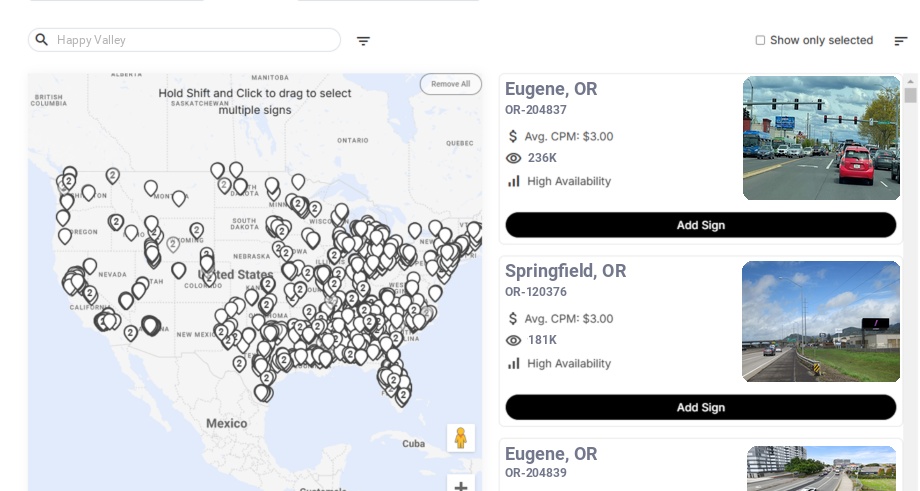
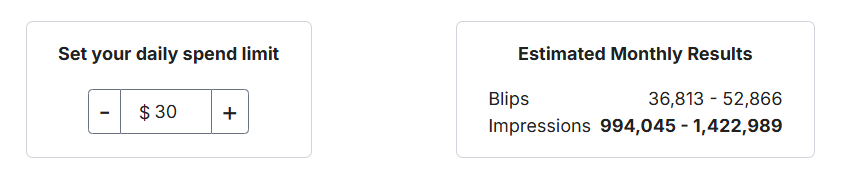
How much is a billboard near Happy Valley?
Why Choose Blip for Billboard Advertising near Happy Valley
-
Blip lets you launch in Happy Valley fast, reaching I-205 and OR-224 commuters without a long-term commitment.
-
Use Happy Valley billboards to target morning and evening rush hours; Blip’s dayparting matches 6–9 a.m. and 3–7 p.m. traffic.
-
Happy Valley’s growing, high-income families are easy to test with Blip’s flexible budgets and no contracts.
-
Track Happy Valley performance in real time and shift spend toward Sunnyside, 82nd, or Clackamas Town Center traffic that converts.
-
Blip’s creative tools help Happy Valley ads stand out with simple, local messages for shoppers, parents, and commuters on the move.
Frequently Asked Questions About Billboard Advertising near Happy Valley
How much does a billboard cost near Happy Valley, Oregon with Blip?
With Blip, you set your own daily budget, and our pay-per-blip model means you only pay for the individual 7.5–10-second ad displays you receive on Happy Valley billboards. Costs per blip vary based on time of day, location, and advertiser demand, so your total spend is simply the sum of those blips over time. You can adjust your budget anytime, making billboards near Happy Valley, Oregon accessible for both small experiments and ongoing campaigns.
Where can I advertise with Blip near Happy Valley, Oregon?
With four nearby digital billboards in Milwaukie and Portland serving the Happy Valley area, your campaigns can reach suburban families, health-conscious professionals, and retail decision-makers as they move between home, work, and major shopping districts. Boards intercepting I-205 and OR-224 reach commuters traveling between the Happy Valley area and Portland or Oregon City. Boards closer to 82nd Avenue, Johnson Creek, or inner SE Portland capture both Happy Valley-area residents and broader SE Portland shoppers.
What kind of people does billboard advertising near Happy Valley, Oregon reach?
The Happy Valley area combines fast residential growth, high household incomes, and heavy commuter traffic. The city is heavily family-oriented, with local demographic summaries frequently showing 35–38% of residents under age 18, an average household size around 2.9–3.1 persons, and more than 80% of housing units owner-occupied. This means advertisers can reach growing master-planned neighborhoods, high-income commuters, and shoppers headed to major retail clusters.
When is the best time to run Blip ads near Happy Valley, Oregon?
Digital billboards near the Happy Valley area allow precise scheduling, and local traffic counts typically show morning peaks around 6–9 a.m., midday steady flows 10 a.m.–3 p.m., and evening peaks 3–7 p.m. Weekend retail peaks and seasonal periods like back-to-school, the holiday season, and spring/summer outdoor season can also be especially valuable. With Blip, you can quickly ramp up or dial down spending around these seasonal peaks rather than committing to a static, months-long traditional buy.
Why is Happy Valley, Oregon a strong market for billboard advertising with Blip?
Happy Valley has transformed from a small suburb into one of Oregon’s most affluent and fastest-growing communities. Local and regional planning sources consistently place median household income in the $130,000–145,000 range, often 40–60% higher than the Portland metro median. Regional planning data also indicate that more than 70% of employed residents travel to jobs outside Happy Valley city limits, creating repeated daily exposure windows for OOH messages.
Do I need a contract to advertise with Blip near Happy Valley?
No, Blip has no long-term contracts or minimum commitments. You can start, pause, or stop your campaign at any time.
How fast can I launch a billboard campaign with Blip near Happy Valley?
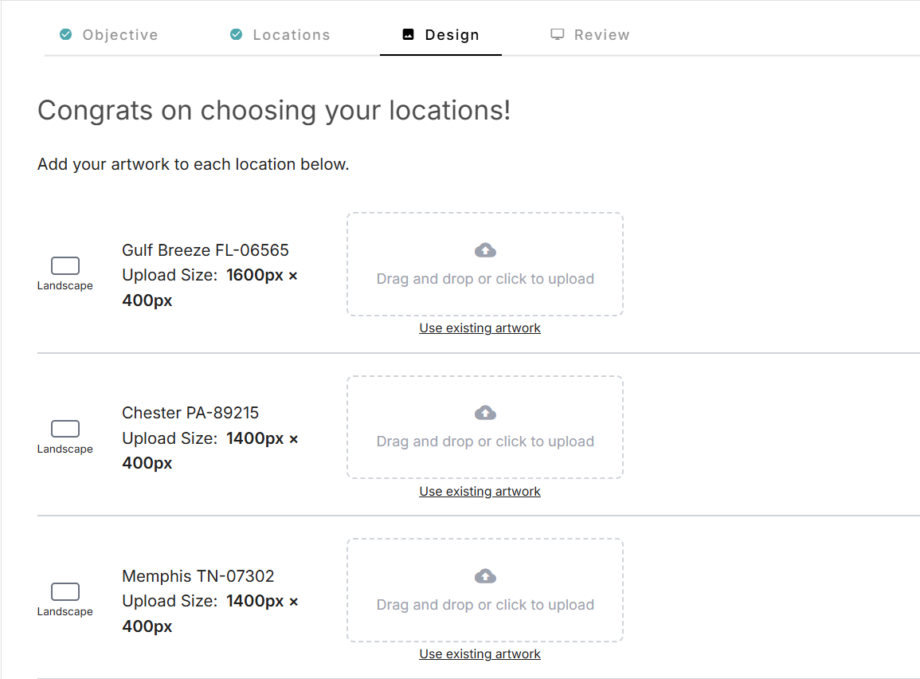
You can have your campaign live in minutes. Create a free account, select your locations, set your budget, upload your design, and start running once approved.
Where can I advertise with Blip near Happy Valley?
Blip has digital billboards near Happy Valley. You can browse available locations on a map, choose the ones that fit your audience, and start advertising right away.
Still have questions? Launch a campaign in minutes — no contracts, no commitments.
Start Your CampaignHappy Valley Billboard Advertising Guide
Located on the southeastern edge of the Portland metro, the Happy Valley area combines fast residential growth, high household incomes, and heavy commuter traffic. With four nearby digital billboards in Milwaukie and Portland serving the Happy Valley area, our billboards near Happy Valley can help advertisers reach suburban families, health-conscious professionals, and retail decision-makers as they move between home, work, and major shopping districts.

Why the Happy Valley Area Is a High-Value OOH Market
Happy Valley has transformed from a small suburb into one of Oregon’s most affluent and fastest-growing communities:
- The City of Happy Valley 26,000–28,000 range as new subdivisions continue to open.
- Local and regional planning sources consistently place median household income in Happy Valley in the $130,000–145,000 range, often 40–60% higher than the Portland metro median, making it one of the highest-income cities in Oregon.
- The city is heavily family-oriented, with local demographic summaries frequently showing 35–38% of residents under age 18, an average household size around 2.9–3.1 persons, and more than 80% of housing units owner-occupied, indicating strong neighborhood stability and long-term purchasing power.
Sources such as the City of Happy Valley Clackamas County highlight ongoing residential development around SE Sunnyside Road, SE 172nd Avenue, and along the I-205 corridor. City planning documents regularly note hundreds of new housing permits per year in recent cycles, with multiple master-planned communities adding several thousand new units to the pipeline. This means a constant influx of new residents making decisions about where to shop, which services to use, and which brands to trust—exactly the kind of audience that responds well to high-visibility Happy Valley billboards and other OOH placements.
By placing flexible, targeted campaigns on digital billboards in nearby Milwaukie and Portland, we can help you reach:
- Growing master-planned neighborhoods and new homebuyers, many with annual household spending power over $100,000
- High-income commuters traveling to Portland and Clackamas employment centers that collectively support hundreds of thousands of jobs
- Shoppers headed to major retail clusters such as Clackamas Town Center and surrounding big-box corridors, where weekend foot traffic can swell into the tens of thousands of visitors
For advertisers looking for billboard advertising near Happy Valley that puts their message in front of these specific audiences, this combination of growth, income, and daily travel patterns makes the area especially attractive.
Understanding Local Audiences & Travel Patterns
To design effective campaigns near the Happy Valley area, it’s crucial to understand how residents move through the region.
Commuting and regional flows
- A large share of employed residents in the Happy Valley area commute toward Portland, Milwaukie, and central Clackamas each weekday. Regional planning data from Metro and local transportation studies indicate that more than 70% of employed residents travel to jobs outside Happy Valley city limits, with a significant portion heading toward Portland’s eastside, downtown, and Clackamas industrial districts.
- Typical one-way commute times in this part of the metro often fall in the 25–35 minute range, with many corridor segments experiencing over 60 minutes per day of total round-trip travel—creating long, repeated daily exposure windows for OOH messages.
-
Key commute routes serving the Happy Valley area include:
- I-205 (north–south) connecting to Portland, Oregon City, and Vancouver, WA
- OR-224 / SE Milwaukie Expressway connecting to Milwaukie and SE Portland
- SE Sunnyside Road / SE 82nd Avenue / OR-213 feeding into retail and employment corridors
Based on Oregon Department of Transportation traffic count data, I-205 at Sunnyside and nearby segments frequently carry well over 120,000–140,000 vehicles per day (AADT), while major arterials such as SE 82nd Avenue and OR-224 see 30,000–45,000 vehicles per day on many stretches. That equates to potential weekly exposure opportunities in the hundreds of thousands to over 1 million vehicle trips across these corridors. Our four digital billboards near Milwaukie and Portland tap into these flows, giving campaigns repeated impressions among the very drivers who live, shop, and work near Happy Valley.
Transit and park-and-ride facilities managed by agencies like TriMet and Clackamas County further concentrate commuters at key nodes along I-205 and near Clackamas Town Center, where strategically placed billboards can reach riders heading to light rail and bus connections.
Local lifestyle segments
Using regional planning, consumer research, and tourism insights from sources like Travel Portland Oregon’s Mt. Hood Territory, we can segment the Happy Valley–area audience into key groups:
-
Affluent family households
- In high-income suburbs around Portland, discretionary spending on retail, dining, and services can reach $40,000–50,000 per household per year.
- High participation in youth sports, extracurriculars, and family recreation—local parks and school facilities frequently host dozens of events per week during peak seasons.
- Strong demand for healthcare, dental, financial, and education services, with many families carrying comprehensive insurance and actively investing in enrichment activities.
-
Health and outdoors-oriented residents
- Frequent trips toward Mt. Hood and Clackamas River recreation areas; Oregon’s Mt. Hood Territory reports millions of annual visits to regional outdoor destinations.
- Heavy usage of trails, parks, and fitness facilities; the City of Happy Valley Parks & Recreation dozens of parks and open spaces and miles of trails that support daily active lifestyles.
-
Suburban professionals and entrepreneurs
- Many work in healthcare, technology, logistics, construction, and professional services across the Portland metro. The nearby I-205 and OR-224 corridors connect to employment clusters with tens of thousands of jobs in these sectors.
- High propensity to respond to time-saving, convenience-driven offers, especially services that reduce commute friction or simplify family logistics.
When we choose boards that intercept traffic between Happy Valley neighborhoods and these key lifestyle destinations, we maximize relevance and response. National OOH research often shows up to 55–65% of drivers noticing roadside billboards on their regular commute; coupled with the repeated local travel patterns described above, this creates strong frequency and recall potential for any campaign using Happy Valley billboards as part of its media mix.
Timing Your Campaign Around Daily & Seasonal Rhythms
Digital billboards near the Happy Valley area allow precise scheduling, which we can align with daily and seasonal patterns.
Weekday dayparts
Local traffic counts from ODOT and corridor studies typically show:
- Morning peaks around 6–9 a.m.,
- Midday steady flows 10 a.m.–3 p.m., and
- Evening peaks 3–7 p.m.,
with each peak window often capturing 20–30% of the day’s total traffic volume.
-
Morning commute (6–9 a.m.)
- Heavy outbound traffic toward Portland and Milwaukie employment hubs, with certain I-205 segments carrying 6,000–7,000 vehicles per hour.
-
Ideal for:
- Coffee shops, breakfast concepts, and drive-thrus seeking to capture the 40–50% of commuters who purchase food or beverages on the way to work at least occasionally.
- Service businesses that want to stay “top of mind” all day (finance, insurance, real estate).
- Healthcare and education reminders (appointments, enrollment deadlines).
-
Midday (10 a.m.–3 p.m.)
- Strong presence of retirees, stay-at-home parents, remote workers, and service vehicles; these groups often account for 25–30% of total daily roadway users.
-
Great for:
- Retail sales, grocery, and midday restaurant promos that align with lunch and errand trips.
- Home services, contractors, and delivery businesses when decision-makers are available to schedule work.
-
Evening commute (3–7 p.m.)
- High volumes as residents return toward the Happy Valley area and Clackamas Town Center, with many arterials maintaining 3,000–5,000 vehicles per hour during the peak.
-
Effective for:
- Restaurants, entertainment, and youth activities; family dining and quick-service visits tend to spike in the 5–8 p.m. window.
- Retail promotions tied to “tonight” or “this weekend.”
- Political, nonprofit, and community messages, as research often shows higher recall for messages viewed on the homeward commute.
Weekends and retail peaks
Clackamas Town Center and the 82nd Avenue/Johnson Creek retail corridors draw shoppers from across the region, including Happy Valley–area residents. According to regional retail and tourism insights shared by Clackamas County Tourism, major shopping centers in the area can see:
- Double-digit percentage increases in visitors on peak weekends versus typical weekdays, and
- Holiday-season foot traffic surges of 20–40% over off-season norms.
Weekend traffic volumes at nearby interchanges often rival or exceed weekday off-peak levels. Scheduling heavier Blip activity on:
- Friday afternoons and evenings, when many households make decisions about weekend dining, entertainment, and shopping
- Saturday retail peaks (10 a.m.–6 p.m.), which can represent 30–40% of weekly in-store sales for some retailers
- Sunday midday, when restaurant and big-box traffic often spikes
can significantly increase impressions among shoppers and families making discretionary spending decisions. For brands using billboard advertising near Happy Valley to drive store visits, carefully weighting these weekend windows can improve conversion.
Seasonal considerations
-
Back-to-school (late August–September)
- Families in the Happy Valley area converge on retail and service providers for school supplies, apparel, tutoring, and health visits. Regional school calendars from entities like North Clackamas Schools show concentrated activity over 4–6 weeks, during which family spending on school-related goods and services can climb by 20–30%.
-
Holiday retail season (mid-November–December)
- Clackamas-area malls and big-box centers experience dramatic traffic spikes; for many retailers, this period can account for 20–30% of annual sales. Timely billboard reminders “near Happy Valley” can support both e-commerce and in-store sales and reinforce local gift-buying and dining decisions.
-
Spring/summer outdoor season (April–September)
- Visitor counts to outdoor sites in Oregon’s Mt. Hood Territory and local parks often rise by 30–50% compared with winter months.
- Strong opportunities for outdoor recreation brands, landscaping and home improvement, patio dining, festivals, and events promoted by entities such as Clackamas County Tourism.
With Blip, we can quickly ramp up or dial down spending around these seasonal peaks rather than committing to a static, months-long traditional buy. Dynamic scheduling makes it easier to match your spend to the highest-traffic and highest-revenue weeks in your calendar, and to time your billboard rental near Happy Valley for the moments when your audience is most active.
Creative Strategies That Resonate Near Happy Valley
The Happy Valley area has distinct visual and cultural cues we can leverage in your artwork.
Design for fast-moving suburban traffic
On corridors where speeds frequently run 35–55 mph, and average viewing times are often just 6–8 seconds, simplicity and clarity are critical:
- Use 5–8 words maximum of primary copy, plus your logo and a clear call to action.
- Emphasize high-contrast color combinations that stand out against Oregon’s frequent overcast skies (e.g., bright yellows, oranges, or cyans against dark backgrounds).
- Prioritize large, simple icons (a house, tooth, car, mountains, fork & knife) that communicate category at a glance. Studies of digital billboard effectiveness often find that iconic imagery can boost recall by 10–20 percentage points over text-heavy designs.
Local references that build trust
Consider subtle nods to:
- Local landmarks and corridors: references to Sunnyside Road, Clackamas Town Center, 82nd Avenue, I-205, or “minutes from Happy Valley.” Including a local locator can help prospects process “this is for me” within a couple of seconds, especially when they are already familiar with prominent Happy Valley billboards they pass daily.
- The outdoors: Mt. Hood silhouettes, evergreen trees, or trail imagery align with regional identity and help your ad feel “native” to the area, aligning with the outdoor-forward branding widely used by Travel Portland Oregon’s Mt. Hood Territory.
- Family and community: imagery of families, youth sports, and school-related life resonates strongly in a city known for its focus on schools and parks, as highlighted by the City of Happy Valley Parks & Recreation
Concrete creative angles:
- “5 Minutes from Happy Valley – Tonight’s Dinner Solved.” (Restaurant)
- “New to the Happy Valley Area? Ask Your Neighbors About Us.” (Local service)
- “Skip the I-205 Stress – Schedule Online in 60 Seconds.” (Healthcare or professional service)
Aligning copy with daypart
When we use Blip’s scheduling tools, we can rotate creatives based on time of day to better match intent:
- Morning: “Beat traffic. Schedule before 9 a.m. and save 10%.” Targets the high-attention commute window when many people mentally plan their day.
- Midday: “Lunch near Sunnyside? Exit now.” Speaks to the millions of annual lunch and errand trips that pass through nearby arterials.
- Evening: “Tired commute? Let us handle your home project.” Aligns with the time when homeowners are most aware of household stressors and to-do lists.
This type of daypart-specific creative can significantly increase relevance; industry studies often show double-digit lifts in response rates when OOH messaging matches time-of-day needs. When combined with smart placement on billboards near Happy Valley, this approach helps turn routine drives into reliable response opportunities.
Using Blip Tools to Target the Happy Valley Area
With four digital billboards in Milwaukie and Portland serving the Happy Valley area, we can build a coverage plan that balances reach and efficiency for any advertiser exploring billboard advertising near Happy Valley.
Board selection strategy
-
Boards intercepting I-205 and OR-224
- Reach commuters traveling between the Happy Valley area and Portland or Oregon City, tapping into corridors with combined daily volumes exceeding 150,000–180,000 vehicles.
- Ideal for regional brands, recruitment, healthcare, and financial services that benefit from broad geographic reach.
-
Boards closer to 82nd Avenue, Johnson Creek, or inner SE Portland
- Capture both Happy Valley–area residents and broader SE Portland shoppers, connecting to dense commercial districts featured by the City of Portland.
- Strong fit for retail, restaurants, auto services, and gyms that draw from multiple nearby neighborhoods.
By weighting impressions across these boards, we can prioritize:
- Directional messaging: “Next Exit,” “Just Off Sunnyside,” “Near Clackamas Town Center.” Directional cues have been shown in OOH research to increase navigation-related actions (like map searches or spontaneous stops).
- Neighborhood-specific offers: rotate Happy Valley–focused creatives on boards most likely to be seen by returning commuters while using more general Portland/Clackamas creatives on boards with broader catchment areas.
This allows advertisers to treat Happy Valley billboards and adjacent Portland/Milwaukie locations as a coordinated network rather than isolated placements.
Budget flexibility and testing
Blip allows buys to start with small budgets—sometimes just a few dollars per day—so we can:
- Test 2–3 creatives against each other and watch which one generates more web traffic, calls, or store visits. Even small tests of 500–1,000 impressions per creative can surface clear winners.
- Increase bids during peak commute windows and reduce them during lower-value times, keeping your effective cost per thousand impressions (CPM) efficient and closer to what you see in high-performing digital channels.
- Add or remove boards in Milwaukie and Portland based on performance, instead of staying locked into underperforming locations for months at a time.
For marketers exploring billboard rental near Happy Valley for the first time, this test-and-learn approach helps local advertisers match or exceed the performance benchmarks they see in search and social, while benefiting from OOH’s broad reach and typically high ad viewability (often above 90%).
Ideas & Use Cases for Local Industries
Here are specific ways different sectors can leverage billboards near the Happy Valley area.
Retail & shopping centers
- Promote weekend sales, new store openings, or limited-time offers for shoppers heading toward Clackamas Town Center and nearby corridors. For many brick-and-mortar stores, up to 50% of weekly in-store revenue can be concentrated between Friday and Sunday—exactly when shoppers flood these corridors.
- Use distance-based messages (“2 Lights from Sunnyside”) to prompt immediate stops; shoppers deciding within a mile or less of the interchange are highly responsive to clear exit cues.
- Time higher frequency on Fridays–Sundays during known retail surges, as regional tourism and retail data from Clackamas County Tourism show consistent weekend traffic spikes in the major commercial districts.
Healthcare, dental, and wellness
The Happy Valley area has high insurance coverage and above-average healthcare utilization, driven by high incomes and a large share of families and older adults who regularly schedule preventive care.
-
Use billboards serving the area to promote:
- New clinic openings or relocations, particularly within 2–5 miles of major arterials.
- Seasonal care (sports physicals, flu shots, wellness checks), which can represent 20–25% of annual visit volume for many family practices.
- High-margin specialties (orthodontics, dermatology, elective procedures) that benefit from reaching households with annual incomes of $100,000+.
- Pair strong visuals (smiling families, active seniors) with clear next steps: “Book in 30 Seconds – [YourSite].com.” Healthcare campaigns that feature an easy digital action often see higher appointment conversion rates versus using phone-only calls to action.
Real estate and home services
Rapid housing growth continues to reshape the Happy Valley area, with city and county planning materials highlighting hundreds of new units delivered annually and more in the pipeline.
-
For real estate teams:
- “Just Listed Near Happy Valley – Scan to Tour Tonight.”
- Rotate listings or success stats (“27 homes sold this year near Happy Valley”), updating monthly or quarterly to reflect current performance. Agents in fast-growing suburbs frequently see 10–20% of their client base coming from just a few key commuter corridors—exactly where billboards are placed.
-
For home services (roofing, HVAC, landscaping, remodeling):
- Focus on seasonal pain points: rain (roofing and gutters), summer heat (HVAC), and curb appeal before spring.
- Target drive times when homeowners are thinking about projects—early mornings and evenings; many service businesses report higher call volumes during these windows.
With well-timed billboard advertising near Happy Valley, both real estate and home service providers can stay top of mind as residents make ongoing decisions about where to live and how to upgrade their homes.
Restaurants, cafes, and entertainment
- Promote family dining, take-out specials, and events aligned with sports seasons, school calendars, and holidays. Local media such as The Oregonian/OregonLive
- Use countdown or urgency copy: “Kids Eat Free Tonight – Exit at Sunnyside.” Time-limited offers often drive higher same-day response, especially on Fridays and Saturdays.
- Highlight proximity to major intersections to capture on-the-way-home decisions, given that 40–60% of restaurant visits in suburban areas are made on the way to or from another destination.
Schools, colleges, and training programs
- Charter schools, private schools, and nearby colleges can use billboards serving the Happy Valley area to drive open house attendance and application volume. Many institutions see significant enrollment spikes in response to well-timed awareness campaigns during the 60–90 days before application deadlines.
-
Focus campaigns around:
- Enrollment deadlines
- Back-to-school months
- Evening and weekend exposure for parents, typically when decision-making about school choices happens at home.
Community organizations & events
- Local nonprofits, faith communities, and events promoted by Clackamas County or Oregon’s Mt. Hood Territory can use short runs to drive awareness for festivals, fundraisers, and holiday events. Many community events derive 30–50% of attendance from residents within a 10–15 minute drive, making nearby commuter corridors crucial.
- Emphasize date, location, and a simple URL—repetition on commuting routes will handle the rest. Even a 2–3 week flight leading into an event can substantially lift turnout when combined with social media and local news coverage.
Measuring, Testing, and Improving Your Campaign
To make digital billboards near the Happy Valley area accountable and data-driven, we recommend:
-
Define a clear success metric.
- Web sessions from the Happy Valley area (use location filters in analytics tools). For many local campaigns, 10–30% of website traffic can be traced to the primary service area.
- Promo code redemptions tied to billboard-only offers. Even a 1–3% redemption rate on a highly visible offer can translate into strong ROI.
- In-store mentions: “Saw you on the billboard.” Track these at the register or via simple checkboxes on intake forms.
-
Coordinate with digital channels.
- Sync billboard flights with paid search, social, and local news placements on outlets like The Oregonian/OregonLive higher brand search volume and stronger click-through rates.
- Use similar visuals and slogans to strengthen recall; consistent creative across channels can improve brand recognition by 20% or more.
-
Run A/B tests with Blip.
- Test different headlines (“Near Happy Valley” vs. “By Clackamas Town Center”) or offers (percentage-off vs. dollar-off).
- After 2–4 weeks of data and at least several thousand impressions per variant, shift budget to the best-performing creative based on web analytics, call volume, or sales.
-
Adjust timing based on performance.
- If evenings drive more conversions, increase bids and frequency between 3–7 p.m., when many households make final decisions about dining, shopping, and appointments.
- If weekend traffic is your key driver, concentrate spend Friday–Sunday, particularly in the midday and afternoon windows that align with peak retail and family activities.
By combining location insight, flexible scheduling, and constant creative testing, we can help you turn digital billboards near the Happy Valley area into a reliable, measurable driver of growth—whether you are launching a new brand, expanding a local business, or scaling a regional presence across the Portland metro with targeted billboard advertising near Happy Valley.