Billboards near Oatfield, OR
No Minimum Spend. No Long-Term Contracts. Just Results.
Trusted by Leading Brands


Billboard advertising
near Oatfield has never been easier
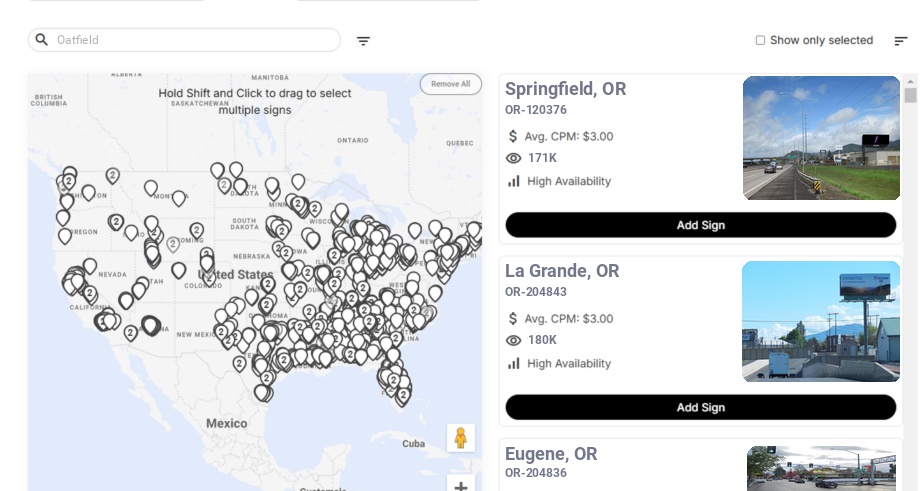



How much is a billboard near Oatfield?
Why Choose Blip for Billboard Advertising near Oatfield
-
Blip lets you launch Oatfield billboards fast, reaching commuters on OR-99E and I-205 without a sales rep or long lead time.
-
Set a budget for Oatfield and Blip keeps you on pace, so you can test ads on Milwaukie and Portland commuter routes with low risk.
-
Daypart your Oatfield campaign for the 6:30-9 a.m. and 3:30-7 p.m. rush, when ODOT says corridor traffic is heaviest.
-
No contracts mean Oatfield advertisers can scale up for Clackamas Town Center shopping, then pause or pivot anytime.
-
Blip's real-time analytics help you see what works in Oatfield, from family-focused messaging to rainy-day home service offers.
-
Use Blip's creative tools to build bold Oatfield ads that pop in Portland's overcast weather and speak to commuters, families, and homeowners.
Frequently Asked Questions About Billboard Advertising near Oatfield
How much does a billboard cost near Oatfield, Oregon with Blip?
With Blip, you control exactly what you spend on Oatfield billboards by setting a daily budget that can be as small or as large as you’d like, and Blip automatically keeps your campaign within that amount. Each ad play, or “blip,” is a 7.5–10 second spot on digital billboards near Oatfield, Oregon, and you only pay for the blips you receive, based on when and where you choose to run and current advertiser demand. Because you pay-per-blip, you can start small, adjust your budget anytime, and gradually increase your presence on digital billboards serving the Oatfield area as you see results, making it easy and low-risk to try Blip.
Where can I advertise with Blip near Oatfield, Oregon?
Our four digital billboards serving the Oatfield area are located in Milwaukie, Oregon, about 3.9 miles from Oatfield, and Portland, Oregon, about 6.5 miles from Oatfield. These nearby boards reach drivers traveling between Oatfield, Milwaukie, and central Portland. For advertisers looking for billboards near Oatfield without paying downtown Portland premiums, these locations offer an efficient mix of local and regional exposure.
What kind of audience do Oatfield, Oregon billboards reach?
The Oatfield area is an unincorporated community in northern Clackamas County, sandwiched between Milwaukie and Gladstone. It is a relatively affluent, commuter-heavy, family-oriented audience that responds well to messages about convenience, local services, financial products, healthcare, home improvement, education, and recreation. High incomes and high car usage make out-of-home a particularly efficient way to reach decision-makers on the move.
When is the best time to run Blip ads near Oatfield, Oregon?
Weekday morning peaks from 6:30–9:00 a.m. are ideal for coffee shops, QSRs, transit parking, commuter services, financial services, recruiting, and professional services. The evening peak from 3:30–7:00 p.m. is often the single busiest period on many corridors and is strong for family dining, grocery, takeout, gyms, and entertainment. Late evening can be effective for campaigns needing extended frequency on limited budgets, particularly entertainment, streaming, nightlife, and late-hours services.
Why are Oatfield, Oregon billboards a good fit for local businesses with Blip?
The Oatfield area offers a powerful mix of suburban stability and urban access, making it an excellent target for digital billboard campaigns. Key roadway context includes OR-99E / McLoughlin Blvd, I-205, and local arterials that funnel neighborhood traffic toward commercial centers and freeway access. With flexible control, playful creative options, and real-time campaign insights, Blip makes it easy to launch eye-catching billboards near Oatfield, Oregon.
Do I need a contract to advertise with Blip near Oatfield?
No, Blip has no long-term contracts or minimum commitments. You can start, pause, or stop your campaign at any time.
How fast can I launch a billboard campaign with Blip near Oatfield?
You can have your campaign live in minutes. Create a free account, select your locations, set your budget, upload your design, and start running once approved.
Where can I advertise with Blip near Oatfield?
Blip has digital billboards near Oatfield. You can browse available locations on a map, choose the ones that fit your audience, and start advertising right away.
Still have questions? Launch a campaign in minutes — no contracts, no commitments.
Start Your CampaignOatfield Billboard Advertising Guide
The Oatfield, Oregon area offers a powerful mix of suburban stability and urban access, making it an excellent target for digital billboard campaigns. With four nearby digital billboards in Milwaukie and Portland serving the Oatfield area, we can deliver highly focused, budget-controlled exposure to commuters, families, and professionals moving between Clackamas County and Portland’s urban core. For brands specifically searching for billboards near Oatfield or flexible billboard advertising near Oatfield, these placements provide metro‑level reach while staying close to your local customer base. Recent counts from the Oregon Department of Transportation (ODOT) show that key corridors serving this area carry tens of thousands of vehicles per day, giving even modest campaigns substantial reach.
Understanding the Oatfield Area Audience
The Oatfield area is an unincorporated community in northern Clackamas County, sandwiched between Milwaukie and Gladstone
Key demographic and economic indicators from recent regional and county estimates:
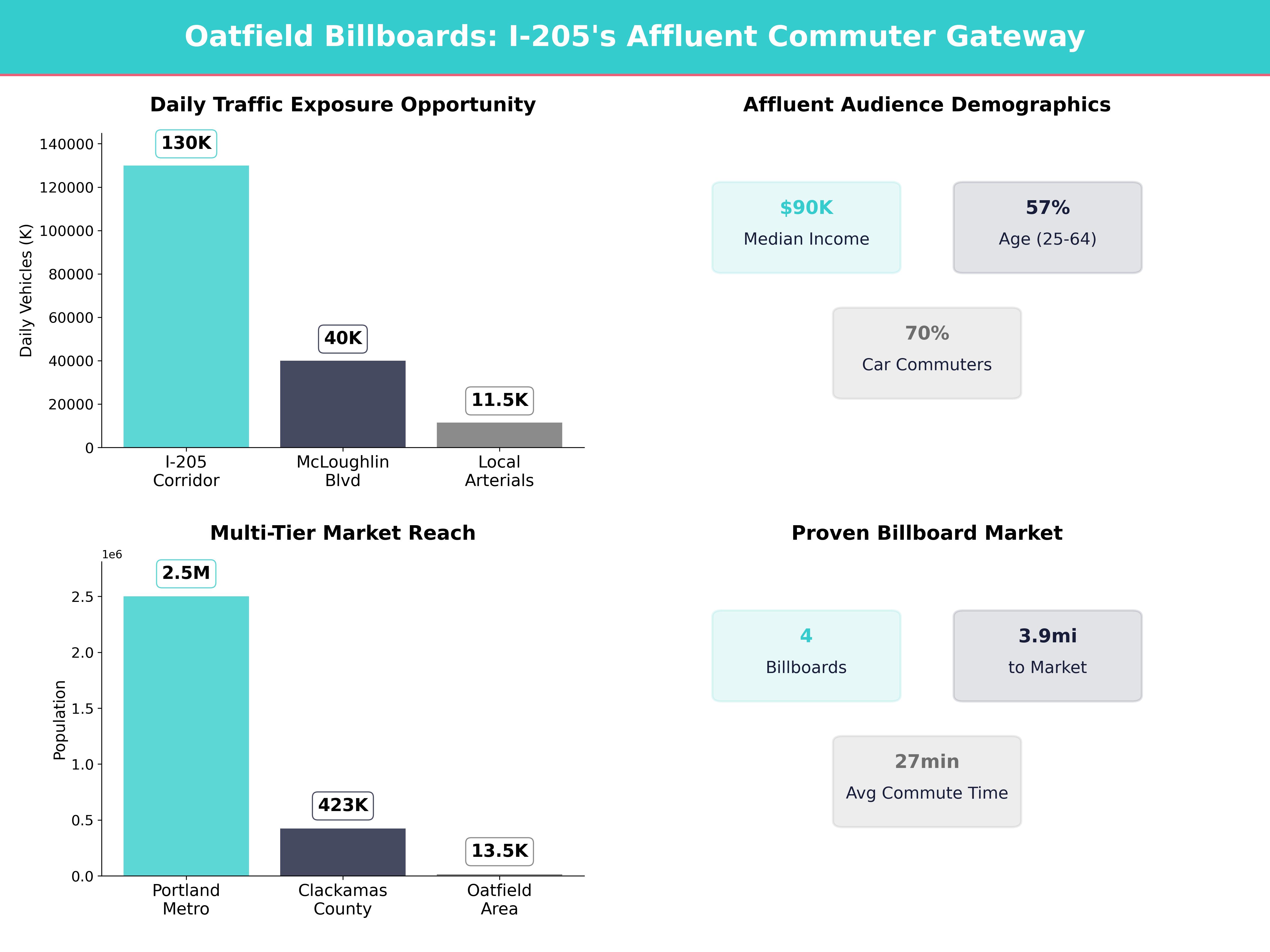
- Population: Approximately 13,000–14,000 residents in the Oatfield area, contributing to the roughly 423,000 residents in Clackamas County overall (per Clackamas County). The county has grown by roughly 10–12% over the past decade, outpacing many other Oregon counties.
-
Households and housing:
- Around 2.6–2.8 persons per household in nearby census tracts.
- Homeownership in northern Clackamas County commonly runs 65–70%, well above many urban Portland neighborhoods.
- Median home values in the broader Clackamas County market are in the $500,000–$550,000 range, signaling a solid middle‑ to upper‑middle‑income base.
-
Age profile: A strong family and homeowner base:
- Around 22–24% under age 18
- Roughly 55–60% between 25 and 64
- About 16–18% age 65+
This mix supports both family-focused and senior-focused campaigns, as well as messaging aimed at working-age professionals.
- Income: Median household income in the Oatfield area is estimated in the $85,000–$95,000 range, compared with a Clackamas County median around $90,000 and a Portland metro median in the low‑ to mid‑$80,000s. This places much of the audience above the state and national medians, with a sizable segment in the $100,000+ bracket.
-
Education and occupations:
- In northern Clackamas County, roughly 35–40% of adults hold a bachelor’s degree or higher.
- Major occupation groups include management, business, and professional services; healthcare; education; construction and trades; and retail/service employment tied to nearby commercial hubs like Milwaukie, Oregon City
-
Commuting patterns:
- Over 70% of workers commute by car (alone or carpool).
- Average one-way commute times range 25–30 minutes, often via OR‑99E (McLoughlin Blvd), I‑205, and local arterials.
- A meaningful share uses TriMet bus and MAX lines connecting Milwaukie and Portland; TriMet reports roughly 250,000–260,000 average weekday rides systemwide in recent years, indicating substantial transit visibility for boards near key park‑and‑ride and transfer points.
- Regional draw: The broader Portland metropolitan area has over 2.5 million residents, with Oatfield positioned directly along commuter corridors feeding into Portland and Milwaukie business districts. Clackamas County alone supports an estimated 190,000–200,000 jobs, with many residents commuting into neighboring Multnomah and Washington counties.
Implication for advertisers: This is a relatively affluent, commuter-heavy, family-oriented audience that responds well to messages about convenience, local services, financial products, healthcare, home improvement, education, and recreation. High incomes and high car usage make out‑of‑home a particularly efficient way to reach decision‑makers on the move, and makes strategically placed Oatfield billboards especially valuable.
Where Our Billboards Are and How They Serve the Oatfield Area
Our four digital billboards serving the Oatfield area are located in:
- Milwaukie, Oregon – about 3.9 miles from Oatfield
- Portland, Oregon – about 6.5 miles from Oatfield
These nearby boards reach drivers traveling between Oatfield, Milwaukie, and central Portland. For advertisers looking for billboards near Oatfield without paying downtown Portland premiums, these locations offer an efficient mix of local and regional exposure.
Key roadway context:
- OR‑99E / McLoughlin Blvd: A primary north–south route for Oatfield residents heading to Milwaukie and downtown Portland. According to ODOT traffic volume maps, daily traffic volumes on key segments in Milwaukie commonly exceed 35,000–45,000 vehicles per day, with some intersections near downtown Milwaukie and Sellwood approaching or surpassing 50,000 vehicles per day when both directions are combined.
- I‑205: A major regional freeway just east of the Oatfield area. ODOT counts show 120,000–140,000 vehicles per day on busy stretches between Oregon City and Portland, making it one of the highest‑volume corridors in the region. Many Oatfield-area commuters use I‑205 to access jobs in Clackamas, Portland, the Columbia Corridor, and the airport.
- Local arterials: Roadways like SE Oatfield Rd, SE River Rd, and connections into Milwaukie funnel neighborhood traffic toward commercial centers and freeway access. These streets support steady daily volumes in the 8,000–15,000 vehicles per day range, feeding into the higher‑volume state routes.
Because our boards are in Milwaukie and Portland, we can intercept:
- Morning commuters leaving the Oatfield area for downtown Portland, industrial areas, and office corridors in places like the City of Portland Central City, South Waterfront, and the City of Milwaukie downtown.
- Evening traffic returning to neighborhoods in and near Oatfield and nearby communities such as Gladstone and Oak Grove.
- Shopping and errand traffic heading to Milwaukie, Oregon City, and major retail destinations like Clackamas Town Center, which alone attracts millions of visits annually.
When creating your Blip schedule, we’ll want to favor boards and directions that align with the specific flows your customers are most likely to travel, leveraging ODOT traffic counts and local knowledge of chokepoints and queueing patterns. This ensures your billboard advertising near Oatfield is centered on the corridors your best prospects actually use.
Timing Your Campaign: Dayparts, Days, and Seasons
The Oatfield area follows classic commuter patterns with notable local twists. With Blip’s ability to schedule specific hours and days, we can plan around real traffic behavior.
Daily patterns
Approximate traffic and behavior patterns relevant to the Oatfield area, based on typical urban corridor studies and ODOT count profiles:
-
Weekday morning peaks (6:30–9:00 a.m.):
- Many Portland-area freeways see 30–40% of daily traffic compressed into the a.m. and p.m. peak windows; McLoughlin and I‑205 are no exception.
- High volumes headed north and west toward Milwaukie and Portland.
-
Ideal for:
- Coffee shops, QSRs, and breakfast spots
- Transit parking, park-and-ride, and commuter services tied to TriMet hubs
- Financial services, recruiting, and professional services (“on your way to work” messaging)
-
Midday (11:00 a.m.–2:00 p.m.):
- Volumes typically dip 10–20% below peak but remain strong, with a mix of remote workers, retirees, and service trips.
-
Good for:
- Medical clinics, dentists, and optometrists
- Home services (roofing, landscaping, HVAC)
- Local retail and lunch-oriented restaurants
-
Evening peak (3:30–7:00 p.m.):
- Often the single busiest period on many corridors, matching or exceeding morning volumes.
- Strong return traffic toward the Oatfield area and neighboring communities.
-
Ideal for:
- Family dining, grocery, and takeout
- Gyms, fitness studios, and extracurriculars for kids
- Entertainment, events, and weekend planning
-
Late evening (after 8:30 p.m.):
- Lower volumes—often 30–50% below daytime peaks—but cheaper inventory and less visual clutter.
- Effective for campaigns needing extended frequency on limited budgets, particularly entertainment, streaming, nightlife, and late‑hours services.
Weekday vs. weekend
- Weekdays:
Commuter-heavy; focus on work-related convenience, services, and routine errands. Regionally, weekday traffic can be 10–25% higher than weekend traffic on commuter corridors such as I‑205. -
Weekends:
Residents travel to Portland, Milwaukie, Oregon City, and Clackamas for shopping, recreation, and events. Weekend trips are more discretionary and often higher‑value. This is prime time for:- Retail sales and promotions
- Tourism, attractions, and outdoor recreation
- Real estate open houses and new developments
Local open‑house activity and showings in the Portland metro often spike on Saturdays and Sundays; aligning real‑estate messaging with these windows can materially lift lead volume and make your billboard rental near Oatfield more productive during key selling weekends.
Seasonal considerations
Oregon’s weather and lifestyle strongly influence attention and demand:
-
The Portland region averages around 36–40 inches of rain per year and roughly 150–160 rainy days, according to climatological summaries from the City of Portland and regional partners. This gives illuminated digital displays extra contrast and visibility for much of the year.
-
Fall (Sept–Nov):
- Back-to-school and college campaigns as local districts like the North Clackamas School District and Gladstone School District return to session, serving more than 19,000 students combined.
- Increased focus on home improvement before winter; many home‑services firms see inquiry volumes climb 15–30% in early fall.
- Strong opportunities for local sports, fitness, and education providers.
-
Winter (Dec–Feb):
- Short daylight and frequent rain mean digital billboards stand out more; evening impressions become especially valuable. Sunset can be before 4:30 p.m. in December, so the p.m. commute is almost entirely in the dark.
-
Good for:
- Healthcare, urgent care, and flu/RSV messaging as respiratory illness visits typically spike 20–40% versus summer baselines.
- Retail holidays, New Year’s promos, and fitness resolutions.
-
Spring (Mar–May):
- Home services peak; roofing, landscaping, exterior painting, and remodeling often see their highest lead volumes of the year as weather improves.
- Many families plan summer camps and activities; local providers in Clackamas County and Portland often open registration as early as February and fill programs by late spring.
-
Summer (Jun–Aug):
- Tourism to Portland and nearby destinations like Mt. Hood and the Clackamas River grows. Travel Portland
- Clackamas County’s tourism brand, Oregon’s Mt. Hood Territory, highlights strong summer demand for hiking, paddling, and festivals.
- Great for events, festivals, recreation, and travel-related offers, including trips to Mt. Hood ski and recreation areas such as Timberline Lodge & Ski Area.
We can use Blip’s scheduling tools to ramp up your impressions during your industry’s prime months while maintaining lower-level “always-on” support the rest of the year, optimizing cost per thousand impressions (CPM) against seasonal demand curves and getting more value from your billboard advertising near Oatfield.
Crafting Creative That Works Near Oatfield
The Oatfield area audience is visually sophisticated, influenced by Portland’s design-forward culture and outdoor-oriented lifestyle. Effective billboard creative here should be:
1. Simple and bold
- Aim for 6–8 words of main copy; studies of out‑of‑home recall show readability drops sharply beyond 7–10 words at highway speeds.
- Use high-contrast color palettes to cut through frequent overcast skies—deep blues, dark greens, bold oranges, and whites tend to perform well.
- Design for readability at 45–60 mph; large text and clear focal points are essential. At 55 mph, drivers have roughly 5–7 seconds to absorb your message.
2. Locally grounded
People in the Oatfield area are highly community-oriented and respond well to local cues:
- Reference nearby landmarks or routes: “Just off McLoughlin,” “5 minutes from the Oatfield area,” or “Exit for Clackamas Town Center.”
- Use phrases like “serving Clackamas County” or “near Milwaukie” to establish local relevance.
- If you operate in or near the Oatfield area, consider using neighborhood names or proximity-based calls to action (e.g., “Oak Grove,” “Jennings Lodge,” “Gladstone”).
3. Weather-appropriate
The Portland region experiences around 150+ rainy days per year and many overcast days beyond that:
- Avoid low-contrast pastel-on-gray palettes that wash out under clouds.
- Use strong, saturated colors and simple imagery that still reads in low light or rain.
- Consider creative variants that highlight “rainy day” offers for key months (e.g., indoor activities, comfort food, vehicle maintenance, tire and brake checks).
4. Tailored for digital flexibility
Because our boards are digital, we can rotate multiple creatives:
-
Use versioning:
- One creative for weekday commuters
- Another for weekend shoppers
- A third for special offers or events
- Incorporate countdowns (e.g., “3 days left,” “Sale ends Sunday”) by updating creatives over time. Time‑sensitive messaging has been shown in out‑of‑home studies to lift response rates by 10–20% compared with static branding alone.
- Test variations: headline A vs. headline B, different images, or different offers, and correlate them with web, call, or store-visit data.
Key Audiences and Verticals in the Oatfield Area
The Oatfield area is influenced by both Clackamas County character and Portland metropolitan trends. Several high-potential advertiser categories stand out:
1. Local retail and services
- Residents regularly travel to Milwaukie, Happy Valley Clackamas Town Center for shopping. Clackamas Town Center alone hosts over 150 stores and restaurants, pulling shoppers from across the metro.
-
With median household incomes in the $85,000–$95,000 range, spending potential is strong:
- Specialty retail (outdoor gear, home decor, boutique shops)
- Professional services (law, accounting, financial planning)
- Health and wellness (chiropractic, PT, dental, vision)
Well-placed Oatfield billboards along these shopping routes can keep local businesses top of mind as residents make purchase decisions.
2. Home improvement and trades
High homeownership and mature neighborhoods create strong demand for:
- Roofing, siding, windows, and solar
- Landscaping and tree services
- Plumbing, electrical, and remodeling
Clackamas County’s housing stock includes many homes built between the 1960s and 1990s, a sweet spot for replacement and upgrade work. Position these services as local, reliable, and responsive to Oregon’s weather (rain, wind, occasional ice), and consider using weather-triggered offers during stormy weeks.
3. Healthcare and family services
With over 20% of residents under 18 and a growing senior population:
- Pediatric clinics, family doctors, dentists, and orthodontists
- Senior living facilities, in‑home care, and rehabilitation services
- Behavioral health and counseling
Health care is one of Clackamas County’s major employment sectors, supported by hospitals and clinics throughout the region. Highlight convenience (easy access from major roads), insurance acceptance, and new patient availability. Many clinics see 30–40% of new patients originate from within a 5–10 mile radius, matching the coverage radius of our boards and making billboard advertising near Oatfield a natural fit for local practices.
4. Education and enrichment
The Oatfield area is served by nearby school districts and close to higher ed options in the Portland region. Strong fits:
- Private schools, charter academies, and tutoring services
- Music, arts, STEM programs, and sports training for kids
- Community colleges and continuing education programs such as Clackamas Community College, which serves more than 18,000 students annually across credit and noncredit programs.
Enrollment cycles—especially late winter and spring for fall start dates—are prime times for awareness campaigns that use billboards near Oatfield to reach parents on their regular commute.
5. Events, recreation, and tourism
Residents and visitors look to nearby hubs like Portland and Clackamas County attractions for entertainment:
-
Promote cultural institutions and events through resources like Travel Portland
- Leverage regional tourism draws highlighted by Oregon’s Mt. Hood Territory (Clackamas County’s tourism brand), which promotes attractions from the Clackamas River to Mt. Hood villages.
- Outdoor recreation (hiking, river sports, ski trips) and local festivals are highly relevant. Regional tourism partners report millions of annual visitor nights and visitor spending in the hundreds of millions of dollars within Clackamas County alone.
Event organizers can use short-term billboard rental near Oatfield to build buzz in the critical weeks leading up to major weekends and festivals.
Leveraging Local Media and Civic Context
Connecting your billboard messaging to the broader information ecosystem increases credibility and recall.
Useful local references:
-
Government & civic resources
- City of Milwaukie – for business licensing, planning updates, and community events near the Oatfield area. Milwaukie’s population is over 21,000, with active downtown revitalization efforts.
- City of Portland – for regulations, downtown events, and transportation initiatives, including Vision Zero and major corridor projects that can impact traffic patterns.
- Clackamas County – for economic development data, demographics, and community priorities; the county’s Economic Development office regularly publishes business and employment statistics.
- North Clackamas Parks and Recreation District – for regional park, trail, and community-center programming that drives family travel patterns around Oatfield.
-
Local news outlets
- OregonLive / The Oregonian
- Clackamas Review
- Portland Tribune – additional metro news and commentary.
Monitoring these sources helps us align campaign timing and creative with community conversations, events, and concerns—such as local bond measures, transportation projects, or major festivals that may temporarily spike traffic volumes and increase the visibility of Oatfield billboards.
Using Blip’s Flexibility for the Oatfield Area
Digital billboards near the Oatfield area are most effective when we fully exploit Blip’s flexible tools.
1. Budget control and pacing
-
Start with a daily budget that matches your goals—for example:
- Local shops and services: $10–$30/day to build consistent neighborhood presence and reach thousands of local impressions per day on high‑volume corridors.
- Multi-location or regional advertisers: $50–$150/day to dominate key commuter windows and rack up tens of thousands of impressions weekly.
-
Adjust frequency based on response:
- If web traffic, calls, or in‑store visits spike during certain hours, shift more budget into those dayparts.
- Use off-peak hours for inexpensive frequency once your brand is familiar—CPMs in late evening and mid‑day slots can be substantially lower than prime commuter peaks.
Blip’s model lets you scale billboard rental near Oatfield up or down in near real time as you learn which dayparts and creatives work best.
2. Geographic prioritization
Even within Milwaukie and Portland, not all boards are equal for the Oatfield area:
- Favor boards located on routes a typical Oatfield-area commuter or shopper uses, especially along McLoughlin Blvd, the approaches to I‑205, and main connections toward downtown Portland.
- If your location is closer to Milwaukie, Gladstone, or Oregon City, emphasize boards that best align directionally with those travel patterns and local retail hubs like Clackamas Town Center or historic downtown Milwaukie.
- Consider layering in boards near large employment centers, hospital campuses, or industrial districts where Oatfield residents are likely to work.
3. Message rotation and testing
-
Run at least 2–3 ad variants simultaneously:
- Variant A: Strong branding + simple offer
- Variant B: More urgent CTA (“Book today,” “Sale ends Sunday”)
- Variant C: Location-focused message (“5 min from the Oatfield area”)
-
Track performance through:
- Unique URLs or promo codes (“OATFIELD” for a discount)
- Dedicated phone numbers or landing pages
- Time-based correlation between blip schedules and inquiry spikes in your CRM or point‑of‑sale system
Refine your campaign every 2–4 weeks based on what’s working, replacing underperforming creative and shifting budget to top‑converting boards and dayparts near Oatfield.
Example Strategies for Common Advertisers
To make this concrete, here are sample approaches for typical advertisers near the Oatfield area.
Local restaurant or coffee shop near McLoughlin Blvd
- Goal: Drive weekday breakfast and weekend family visits.
-
Schedule:
- Heavier rotation 6:30–9:00 a.m. weekdays, 8:00–11:00 a.m. weekends, when ODOT data shows substantial flows toward Portland and Milwaukie.
- Lighter support around 4:00–7:00 p.m. for dinner and takeout.
-
Creative:
- Image of a signature item with bold headline: “Breakfast 5 minutes from the Oatfield area.”
- Weekend variant: “Kids eat free Saturdays” or “Brunch this weekend.”
- Include a simple, trackable CTA like “Show this ad for 10% off” to measure billboard-driven visits.
Home services company (roofing, HVAC, or landscaping)
- Goal: Steady lead flow from homeowners in the Oatfield area and broader Clackamas County.
-
Schedule:
- Year-round presence with increased budget in spring and fall, when inquiry volumes can be 20–40% higher than winter baselines.
- Daytime-heavy rotation (7:00 a.m.–7:00 p.m.), including weekends, to reach both commuters and at‑home decision‑makers.
-
Creative:
- Simple benefit-focused message: “Protect your home from Oregon rain. Free estimates.”
- Emphasize local: “Serving the Oatfield and Milwaukie areas since 2005.”
- Use a memorable phone number or URL (e.g., /roof‑oatfield) to track campaign performance and attribute leads to your billboard advertising near Oatfield.
Healthcare clinic or dentist
- Goal: New patient acquisition from families and professionals.
-
Schedule:
- Consistent presence during commute hours and lunchtime, Mon–Sat.
- Extra emphasis in late summer and early fall for back‑to‑school checkups, and in winter for urgent care and flu/RSV season.
-
Creative:
- Highlight short wait times, same-day appointments, or insurance acceptance.
- Example: “Family dental care near the Oatfield area. New patients welcome.”
- Consider a child‑focused variant during peak pediatric periods and an adult/senior-focused variant for Medicare enrollment and annual wellness campaigns.
Measuring and Refining Success
To get full value from billboard advertising near the Oatfield area, we should tie your campaign to measurable outcomes:
-
Online metrics:
- Use vanity URLs (e.g., yoursite.com/oatfield) and track visits in analytics tools.
- Monitor traffic spikes during your active blip windows and by device type; out‑of‑home often drives mobile searches within 30 minutes of exposure.
-
Call and text tracking:
- Dedicated phone numbers on your billboards can reveal which creatives and schedules perform best. Call‑tracking studies frequently show 10–30% more calls when a clear, urgent CTA is used.
-
In-person feedback:
- Train staff to ask, “How did you hear about us?” and log “billboard” mentions.
- Track redemption of billboard-specific offers or codes, and compare redemption rates by week or season to refine your media plan.
By combining these observations with Oatfield-area traffic patterns and Blip’s flexibility, we can continuously optimize your campaign—shifting budget, refining creative, and adjusting schedules—to keep you top of mind for residents traveling near Oatfield, Milwaukie, and southeast Portland.
With four strategically placed digital billboards serving the Oatfield area and granular control over budget, timing, and creative, advertisers of any size can use Blip to build sustained, measurable visibility in one of the Portland region’s most desirable suburban markets. Whether you’re exploring Oatfield billboards for the first time or scaling up existing billboard rental near Oatfield, this approach lets you reach the right drivers, on the right roads, at the right moments.