Billboards in Oregon City, OR
No Minimum Spend. No Long-Term Contracts. Just Results.
Trusted by Leading Brands


Billboard advertising
in Oregon City has never been easier
How much is a billboard in Oregon City?
Why Choose Blip for Billboard Advertising in Oregon City
-
Blip lets you self-serve Oregon City boards fast, reaching I-205 and OR 99E commuters without a sales process.
-
With no contracts, Oregon City advertisers can test Blip on school-year and holiday traffic, then adjust anytime.
-
Set flexible budgets in Oregon City and only pay when ads play, ideal for commuter peaks on Abernethy Bridge routes.
-
Use dayparting to hit Oregon City families on weekday drives and weekend Clackamas Town Center shoppers.
-
Real-time analytics help Oregon City brands shift spend as traffic changes between county services, retail, and seasonal travel.
-
Blip's creative tools make it easy to tailor Oregon City ads for rainy-day commuting, river trips, or Mt. Hood getaway traffic.
Frequently Asked Questions About Billboard Advertising in Oregon City
How much does a billboard cost in Oregon City with Blip?
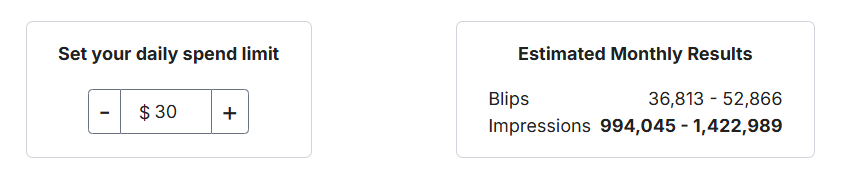
Blip makes billboard advertising in the Oregon City area straightforward and budget-friendly. You set a daily budget, and Blip’s algorithm uses it to bid on open ad slots on digital billboards serving the Oregon City area, so you only pay when your ad actually plays. Each “blip” is a 7.5-to-10-second display, with pricing that can start at $0.01 per play.
Where can I advertise with Blip near Oregon City?
With our 2 digital billboards in nearby Milwaukie, just 8.4 miles from Oregon City and within 10.0 miles of the market, we can reach drivers serving the Oregon City area without relying on a long traditional contract. Oregon City sits at one of the strongest suburban crossroads in the south Portland region, where county services, family neighborhoods, schools, retail destinations, and Portland-bound commuting all overlap. That makes the area especially attractive for flexible visibility.
What kind of traffic drives billboard ads in Oregon City?
If we want reach serving the Oregon City area, I-205 is the first corridor we study. ODOT traffic counts near the Abernethy Bridge and surrounding interchanges commonly place I-205 in the 130,000 to 150,000 vehicles per day range, or roughly 140,000 vehicles per day on the busiest nearby segments. OR 99E through Milwaukie is also important, with counts often in the 35,000 to 45,000 vehicles per day range.
Who do billboards reach in Oregon City?
The biggest audience near Oregon City is the daily commuter, and drive-alone commuting is above 70% in the area, often around 75%. The Oregon City area is also a classic suburban household market, with families, homeowners, local shoppers, students, educators, and civic audiences all contributing to traffic. That mix creates strong opportunities for healthcare, home services, retail, schools, and local restaurants.
When is the best time to run a billboard campaign in Oregon City?
Spring is one of the best billboard seasons near Oregon City because several categories activate at once, and we usually like spring campaigns to begin in March or April and build into May and June. Late summer is another high-opportunity window, with August and September especially good for back-to-school and routine-setting campaigns. The holiday season also works well, with the weeks from Black Friday through late December ideal for retail, dining, events, and family entertainment.
Do I need a contract to advertise with Blip in Oregon City?
No, Blip has no long-term contracts or minimum commitments. You can start, pause, or stop your campaign at any time.
How fast can I launch a billboard campaign with Blip in Oregon City?
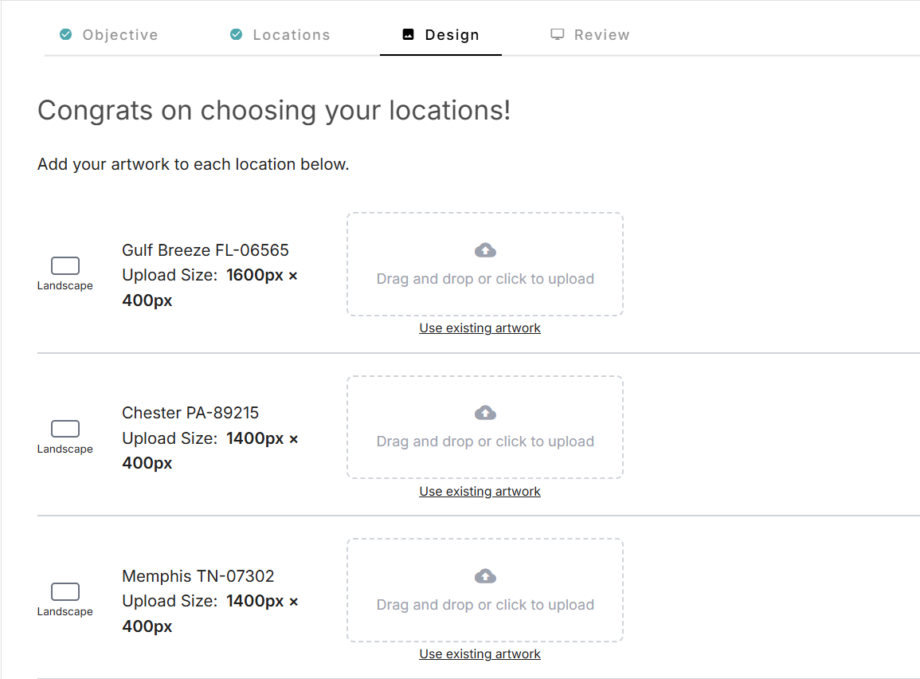
You can have your campaign live in minutes. Create a free account, select your locations, set your budget, upload your design, and start running once approved.
Where can I advertise with Blip in Oregon City?
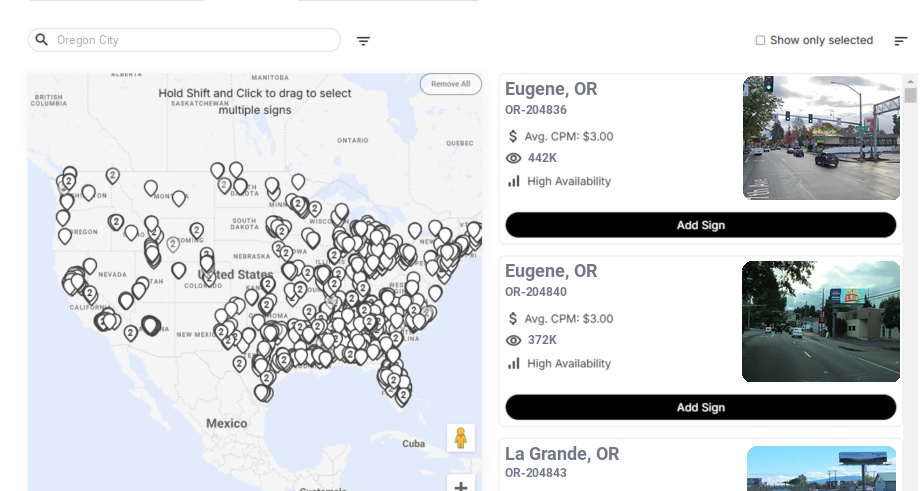
Blip has digital billboards in Oregon City. You can browse available locations on a map, choose the ones that fit your audience, and start advertising right away.
Still have questions? Launch a campaign in minutes — no contracts, no commitments.
Start Your CampaignOregon City Billboard Advertising Guide
Oregon City Portland region, where county services, family neighborhoods, schools, retail destinations, and Portland-bound commuting all overlap. The city has 37,572 residents, and Clackamas County has 421,401, giving the area a meaningful base before we even widen the lens. With our 2 digital billboards in nearby Milwaukie, just 8.4 miles from Oregon City and within 10.0 miles of the market, we can reach drivers serving the Oregon City area without relying on a long traditional contract. The local audience is large enough for broad awareness, but specific enough for targeted offers tied to commuting patterns, shopping trips, school calendars, and seasonal travel. For brands that want flexible visibility near Oregon City, that combination makes this area especially attractive.
Oregon City Area Market Overview
Population, trade area, and regional scale near Oregon City
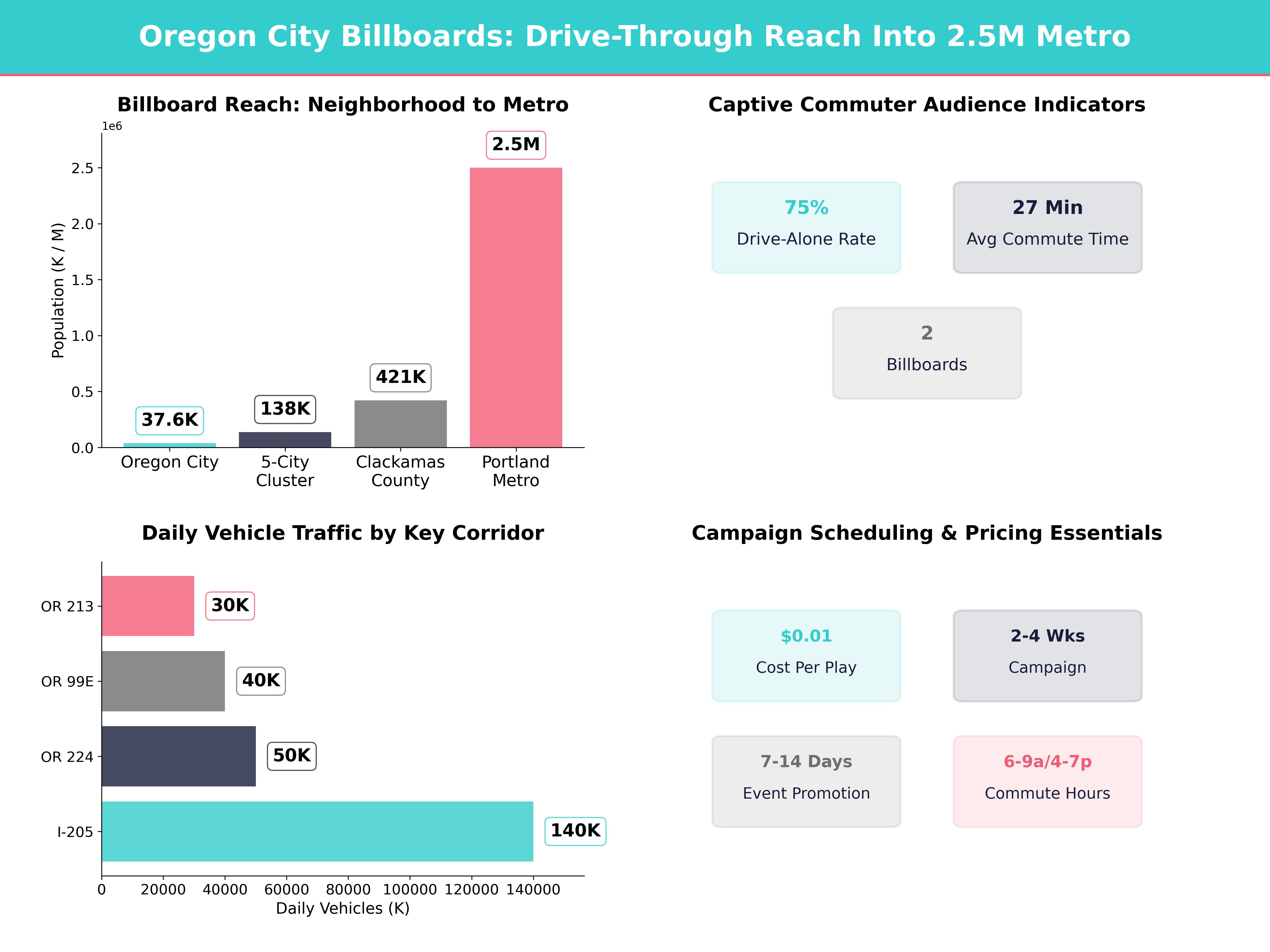
We start with the size of the market. Oregon City 37,572 residents, and Clackamas County has 421,401 residents, which gives the Oregon City area a substantial local base before we even widen the lens. Nearby Milwaukie has 21,119 residents, West Linn 26,693, Gladstone 12,017, and Lake Oswego has 40,731. Those five cities alone total 138,132 residents, and they all contribute to the same south-metro travel shed serving the Oregon City area.
When we zoom out further, the broader Portland metropolitan area is roughly 2.5 million people. That matters because businesses near Oregon City often sell to more than one audience at the same time. We can use billboard campaigns near Oregon City to speak to local households, county employees, students, and south-metro commuters, while also catching regional shoppers moving between suburban communities and Portland.
Economy, household spending, and commuting behavior serving Oregon City
The Oregon City area benefits from a diverse local economy. As the county seat, Oregon City draws public-sector traffic from Clackamas County, and the broader trade area also includes healthcare, retail, education, construction, logistics, and professional services. Anchors such as Providence Willamette Falls Medical Center Clackamas Community College, and the regional shopping draw of Clackamas Town Center help create steady year-round movement.
Retail advertisers also benefit from a simple Oregon advantage: the state has 0% sales tax. That fact supports value-oriented messaging for stores, restaurants, entertainment venues, and seasonal promotions serving the Oregon City area. It also encourages shoppers to compare options across city lines, which is exactly the kind of behavior billboard advertising can influence.
Most importantly for out-of-home media, the Oregon City area is car-first. In community profile data for the area, drive-alone commuting is typically above 70%, often around 75%, and average one-way commutes are about 27 minutes. That is long enough for repeated billboard exposure to build recognition over time, especially for healthcare providers, home services, legal firms, auto dealerships, schools, retail chains, and local restaurants.
Traffic Corridors Serving the Oregon City Area
I-205 and the Abernethy Bridge approach near Oregon City
If we want reach serving the Oregon City area, I-205 is the first corridor we study. ODOT traffic counts near the Abernethy Bridge and surrounding interchanges commonly place I-205 in the 130,000 to 150,000 vehicles per day range, or roughly 140,000 vehicles per day on the busiest nearby segments. That volume makes it one of the strongest commuter channels for reaching drivers moving between the Oregon City area, West Linn Clackamas employment corridor, and Portland.
For advertisers, this corridor is ideal for broad-reach categories. We see it work especially well for:
- Regional healthcare systems that want awareness near Oregon City.
- Home improvement and repair companies that serve multiple south-metro ZIP codes.
- Auto dealers, tire shops, and service centers that depend on commuter traffic.
- Colleges, financial services, legal firms, and insurance brands that want frequency over time.
OR 99E through Milwaukie serving the Oregon City area
Our nearby digital billboards are in Milwaukie, which makes OR 99E, also known as McLoughlin Boulevard, especially important. ODOT counts on key segments of OR 99E through the Milwaukie and Oak Grove corridor are often in the 35,000 to 45,000 vehicles per day range, or roughly 40,000 vehicles per day. That is a very useful traffic band because it captures a blend of commuters, local shoppers, service calls, school trips, and regional errands rather than only long-distance freeway traffic.
For brands serving the Oregon City area, OR 99E is valuable because it connects several highly relevant communities in one continuous flow. Drivers moving between the Oregon City area, Gladstone Milwaukie, and southeast Portland use this route heavily throughout the day. That makes it a strong option for businesses that want both weekday commuter visibility and all-day local repetition.
OR 224, OR 213, and feeder traffic near Oregon City
The Oregon City market also depends on arterial feeders that channel traffic toward I-205 and OR 99E. On busy segments, OR 224 near Milwaukie and Clackamas commonly runs around 45,000 to 55,000 vehicles per day, while OR 213 and related approaches serving the Oregon City area often fall in the 25,000 to 35,000 vehicles per day range. Those routes matter because they carry local intent. They are full of shoppers, school traffic, medical visits, county business, and home-service needs.
Transit adds another layer, even though drivers remain the primary audience. TriMet’s MAX Orange Line 7.3 miles long and links south-metro communities to downtown Portland. We should still build most Oregon City area campaigns around auto traffic, but the transit network reinforces the same daily movement patterns and helps confirm when demand spikes.
Audience Segments Near Oregon City
Commuters serving the Oregon City area
The biggest audience near Oregon City is the daily commuter. Because drive-alone commuting is above 70% in the area, billboard campaigns can build frequency quickly during morning and evening travel windows. Our nearby Milwaukie boards are especially useful for intercepting Oregon City area residents heading north toward jobs, appointments, retail, and services, and then reaching them again when they return south.
This audience responds well to practical, immediate messages. We usually see strong relevance for:
- Healthcare appointments.
- Auto maintenance and collision repair.
- Home services, including HVAC, roofing, plumbing, and remodeling.
- Banking, legal, tax, and insurance offers.
- Quick-service dining and takeout timed to the drive home.
Families, homeowners, and local shoppers near Oregon City
The Oregon City area is also a classic suburban household market. The combined population of Oregon City Milwaukie, West Linn Gladstone Lake Oswego is 138,132, and those communities produce constant traffic for grocery, medical, retail, education, childcare, and home-related spending.
Family-focused campaigns can also lean on the strength of Clackamas Town Center, which features 180+ stores, restaurants, and entertainment options. Even if a business is not inside that retail node, the shopping behavior it creates benefits the whole corridor serving the Oregon City area. Weekend dining, kids’ activities, urgent care, furniture, seasonal décor, and home improvement messaging all fit well here.
Students, educators, and civic audiences in the Oregon City area
Education is another meaningful segment. Clackamas Community College draws students from throughout the county, and both Oregon City School District and North Clackamas School District shape the annual rhythm of family spending near Oregon City. The school year creates highly predictable demand for tutoring, childcare, youth programs, sports, food, apparel, technology, and healthcare.
The civic audience matters too. Because Oregon City is the county seat, the area generates steady traffic related to courts, public services, permits, healthcare visits, and county business. That makes billboard advertising near Oregon City especially practical for attorneys, tax preparers, nonprofit campaigns, public notices, trade schools, and service providers that want broad recognition rather than impulse purchases alone.
Visitors and recreation travelers near Oregon City
Tourism near Oregon City is not as flashy as a pure resort market, but it is dependable. Mt. Hood Territory and Travel Oregon promote Clackamas County as a gateway to outdoor recreation, heritage tourism, river access, and mountain travel. In warmer months, we see more weekend movement tied to the Willamette River Clackamas River, parks, trails, and local festivals.
In colder months, the travel pattern shifts toward mountain recreation, with Mt. Hood Meadows and Timberline Lodge helping drive winter awareness from roughly November through March. That mix creates good conditions for breweries, restaurants, events, outdoor brands, lodging, retail, and attractions serving the Oregon City area. Even when the final destination is somewhere else, the audience often passes through south-metro corridors where billboard exposure can influence the decision.
Seasonal Opportunities for the Oregon City Area
Spring and early summer timing near Oregon City
Spring is one of the best billboard seasons near Oregon City because several categories activate at once. Homeowners start booking landscaping, remodeling, roofing, deck work, painting, and HVAC service. Families plan graduations, camps, and summer activities. Retailers promote garden, patio, and outdoor inventory. Healthcare providers can also use this period for preventive care, dental, vision, and elective scheduling.
We usually like spring campaigns near Oregon City when they begin in March or April and build into May and June. That schedule captures improving weather, tax-refund spending, graduation planning, and heavier weekend movement across south metro.
Late summer and back-to-school opportunities serving the Oregon City area
Late summer is another high-opportunity window. Clackamas County Fair & Event Center August and September, parents are making decisions about apparel, school supplies, tutoring, pediatric care, orthodontics, after-school programs, and quick dinner options.
This is also a smart time for colleges, trade programs, gyms, youth sports, and healthcare providers to advertise. The local audience is resetting routines, which means people are unusually responsive to new brands and new offers.
Holiday and winter planning near Oregon City
The holiday season works well near Oregon City because shopping is distributed across the whole south-metro network rather than limited to one downtown core. The weeks from Black Friday through late December are ideal for retail, dining, events, family entertainment, gift cards, and service reminders. Businesses that want January appointments can also start early and shift creative after Christmas to “book now” messaging.
Winter weather changes how we design and time campaigns. Western Oregon’s darker days make high-contrast creative more important, and seasonal categories such as tires, urgent care, plumbing, heating, legal services, and tax preparation often perform better from December through February. We also like short bursts tied to winter recreation weekends, especially when local businesses want to reach residents near Oregon City before they head toward the mountain.
Billboard Design Tips for the Oregon City Area
Creative choices that fit the Oregon City market
The Oregon City area tends to respond well to practical, trustworthy creative rather than abstract branding alone. We recommend strong contrast, simple offers, and imagery that feels regionally familiar. Evergreen tones, river blues, slate grays, bright whites, and one vivid accent color often work well because they stay readable in cloudy or rainy conditions.
We also like creative that feels geographically grounded. Visual cues tied to the Pacific Northwest, such as tree lines, river imagery, bridge silhouettes, mountain outlines, or clean outdoor lifestyle photography, can help a message feel more relevant near Oregon City. We do not need to overdo local symbolism, but even subtle regional cues can increase recognition.
For readability, we keep copy disciplined. A digital billboard blip lasts about 7.5 to 10 seconds, so the best creative usually includes:
- One clear headline.
- One brand name.
- One offer or value proposition.
- One action, such as “Book Today,” “Free Estimate,” or “Open Late.”
We usually avoid QR codes for these placements because drivers serving the Oregon City area are moving quickly and need immediate comprehension, not extra scanning steps.
Messaging angles that resonate near Oregon City
Message style should match the audience flow. For weekday commuters, we lean into convenience, speed, trust, and location. For families, we emphasize value, reliability, and easy access. For professional services, we focus on confidence and recall.
Examples of local-market-friendly approaches include:
- “South Metro HVAC. Free Estimates.”
- “Minutes from I-205. Book Today.”
- “Serving Oregon City Area Families.”
- “Dinner on the Way Home.”
- “Open Weekends Near Clackamas.”
- “Trusted Care for Busy Parents.”
We also like directionally useful wording for businesses that depend on drivers already moving through the corridor. Phrases such as “near I-205,” “off 99E,” “on your way home,” or “serving Clackamas County” often perform better than generic branding because they match how people make real driving decisions.
Regional Strategies Near Oregon City
Using nearby Milwaukie boards to reach the Oregon City area
Because our digital billboards serving the Oregon City area are in nearby Milwaukie, we recommend thinking in terms of flow rather than strict city limits. Milwaukie is only 8.4 miles away, and that proximity matters. Drivers commuting between Oregon City area neighborhoods and job centers farther north often pass through the same regional corridor every weekday.
That makes our nearby Milwaukie inventory especially useful for businesses that want to reach:
- Northbound morning commuters.
- Southbound evening return traffic.
- Shoppers circulating between Oregon City area neighborhoods and regional retail nodes.
- Service customers who live near Oregon City but buy across multiple south-metro cities.
Matching strategy to suburban corridors near Oregon City
Different advertiser types should use different tactics near Oregon City:
- Home services should prioritize weekday morning and late afternoon visibility, because repeated exposure builds trust before a homeowner needs to call.
- Healthcare providers should run consistently across weekdays, then increase pressure before seasonal care windows, enrollment periods, or clinic openings.
- Retailers and restaurants should emphasize Thursday through Sunday, when families and shoppers make more discretionary trips.
- Schools, colleges, and training programs should concentrate around enrollment windows in late summer, early fall, and early January.
- Event promoters should use shorter, higher-intensity bursts 7 to 14 days before the event date.
Extending beyond one neighborhood while staying focused on Oregon City
A common mistake is narrowing too much. The Oregon City area does not behave like an isolated small town. It behaves like a connected south-metro market with overlapping daily routes among Oregon City Milwaukie, West Linn Happy Valley Lake Oswego, and the broader Clackamas County corridor.
We therefore recommend that many advertisers speak to the shared regional identity rather than one single municipality. “Serving the Oregon City area,” “South Metro,” and “Clackamas County” often provide broader relevance without losing local credibility.
Blip Tools for Oregon City Area Campaigns
Using timing and budget controls near Oregon City
Blip’s tools are especially useful when we want to match the Oregon City area’s traffic rhythms. We can select the nearby boards on a map, build around commute-heavy windows like 6:00 to 9:00 a.m. and 4:00 to 7:00 p.m., and then shift spend toward weekends or event periods when needed. That flexibility matters in a market where school schedules, shopping patterns, weather, and recreation all affect traffic.
Because pricing is pay-per-play, with ads starting at $0.01 per display, we can test ideas without committing to a large fixed buy. That works well for businesses near Oregon City that want to start with a modest budget, confirm which time windows respond best, and then scale up selectively.
Optimizing creative and scheduling for the Oregon City area
We also like Blip for testing local strategy. We can run one creative for weekday commuters, another for weekend shoppers, and compare performance over time. We can pause, swap artwork, or adjust dayparting without waiting through a rigid contract cycle.
For example, a business serving the Oregon City area might run:
- A convenience-focused message on weekday mornings.
- A family-offer message from Thursday through Sunday.
- A short enrollment or event creative for 7 to 10 days before a deadline.
That kind of agile scheduling is difficult with traditional billboard buying, but it fits the Oregon City market very well because local demand shifts by season, school calendar, and commuting pattern.
Getting Started With Billboard Rental Near Oregon City
How we evaluate the right billboard fit for the Oregon City area
When we rent a billboard serving the Oregon City area, we start with route relevance rather than simple distance. The best location is not always the closest one on a map. It is the one that sits on the path your customer already drives.
We recommend evaluating nearby boards using these questions:
- Does this location reach commuters traveling between the Oregon City area and major work or shopping destinations?
- Does the traffic mix match our goal, such as weekday business, weekend retail, or year-round awareness?
- Is our offer understandable in 7.5 to 10 seconds?
- Are we targeting a route people use repeatedly each week?
- Are we choosing creative that fits the likely reason for travel on that corridor?
For many brands, the right answer near Oregon City will be a nearby Milwaukie board because it captures cross-city flow rather than only one neighborhood.
What to expect from the rental process near Oregon City
Traditional billboard companies often sell fixed periods of 4 weeks or longer, require back-and-forth sales conversations, and limit how easily we can adjust timing or artwork. Blip simplifies that process. We can choose the nearby billboard locations ourselves, set a daily budget, upload creative, choose days and hours, and launch when we are ready.
That matters for businesses serving the Oregon City area because many local campaigns are not static. A restaurant may want a 3- to 5-day push around a promotion. A healthcare clinic may want a longer awareness run. A school may need a burst before an application deadline. A home-service company may want to increase spend during weather-driven demand. Flexible digital buying lets us match those goals more closely than a one-size-fits-all contract.
A practical launch plan for billboard advertising near Oregon City
If we were launching a first campaign near Oregon City, we would usually keep it simple:
- We would choose one clear goal, such as awareness, lead generation, event attendance, or store traffic.
- We would select the nearby Milwaukie billboards that best serve Oregon City area travel patterns.
- We would run a focused schedule for 2 to 4 weeks if we want awareness, or 7 to 14 days if we want to support a promotion or event.
- We would build one bold creative version first, then test a second variation only after the first one has delivered enough exposure to judge.
- We would review performance and adjust time-of-day targeting, budget, or messaging based on what the audience is actually doing.
For businesses serving the Oregon City area, that process is usually faster, simpler, and lower-risk than traditional billboard rental. We can start small, learn quickly, and expand only when the nearby locations prove they fit our goals.