Quick Answer: Billboard frequency is how often the same person sees your ad during a campaign. Too little, and the message may not stick. Too much, and attention can start to fade. The goal is to show up often enough to build recognition without spending more than you need to. Digital billboards give you more control over that balance. You can adjust where, when, and how often your ads run, so your brand stays visible and memorable at a pace that fits your budget.
Billboard ad frequency measures how often people are likely to see your message during a campaign. Consistent exposure helps your brand stay familiar and easier to remember. Here’s what you need to know:
- High Frequency: Boosts brand recognition and message retention but risks audience fatigue.
- Low Frequency: Saves money but often fails to make an impact.
- Key Metrics to Track: Daily impressions, peak hours, and viewing time.
- Best Practices:
- Add timely offers to keep it fresh.
- Schedule ads during peak traffic or local events.
- Use data to adjust frequency in real time.
Pro Tip: Choose Blip Optimized to help balance location, timing, and budget, so your campaign can reach the right people more efficiently.
Key Takeaways
- Billboard ad frequency is the number of times a person sees your ad, and it is the lever that turns a glance into a memory.
- Sales rarely come from a single impression. They come from showing up again and again until your brand feels familiar when it’s time to choose.
- Watch daily billboard impressions, peak hours, and viewing time to understand whether your frequency is landing.
- Digital boards let you rotate creative and adjust the schedule as you go, so you stay visible while keeping offers timely and seasonal.
- Ready to dial in your frequency? Get started with Blip and adjust your campaign in real time.
Why Billboard Ad Frequency Matters for Recall and Sales
One billboard view can introduce your brand. Repeated exposure helps people recognize and remember it. Guymon Law has run its campaign across 12 strategically placed billboards since January 2023, averaging 2,300 estimated impressions per month. Over that time, the firm reported stronger brand recognition, along with more website visits and phone inquiries from local residents.
That familiarity can also influence what people do next. Award.co generated 113,874 estimated impressions across eight Utah billboards. During the campaign, direct search traffic increased by 29.56%, overall site traffic rose by 14.06%, and total site users grew by 16.16%. The goal is consistent exposure that helps people remember your name when they are ready to act.
This is exactly why consistent visibility beats a short burst. For more on building recognition that pays off later, see brand awareness 101: why you can’t ignore tomorrow’s customers.
What are the differences between digital billboards and traditional static billboards?
How Frequency Changes Ad Results
Grasping how frequency affects your advertising outcomes can make a big difference in campaign success. Let’s look at how high and low display frequencies influence results.
Effects of High Display Frequency
Running ads at a high frequency can offer clear benefits. It helps your message stick, boosts brand awareness, and encourages more engagement. Once your message is showing up often enough, the next opportunity is reach. Adding another location can help you stay familiar with one audience while getting in front of new customers, too.
Why High Frequency Works:
- Better message retention: Repetition helps people remember your message.
- Improved brand recognition: Seeing your ad often makes your brand more familiar.
- Higher engagement: Frequent exposure increases the chances of interaction.
Take Mr. Charlie’s Chicken Fingers as an example. The restaurant ran one campaign across four billboards for four months, delivering 37,552 Blips and more than three million estimated impressions. In the final month, Mr. Charlie’s reported a $20,000 increase in revenue, a 13% month-over-month sales increase at its original location, and an 11% increase at its new location.
“Working with Blip has given Mr. Charlie’s the momentum to get our new location on the map while accelerating growth for our original location”.
But what happens when your display frequency is too low? That’s where challenges arise.
Problems with Low Display Frequency
Low-frequency campaigns often fail to make an impact. With fewer displays, your brand gets less exposure, your message becomes forgettable, and your return on investment (ROI) takes a hit.
Chris Leslie, Founder of Leslie Lightcraft Co, highlights the importance of visibility:
“It’s not a social media thing that you see on your phone. It’s not word-of-mouth. It’s big and bold and out there in public. I would say this is the first step of looking big and public”.
In short, finding the right balance in display frequency is key to maximizing your ad campaign’s effectiveness. Too much or too little can make or break your efforts.
Measuring and Setting the Right Frequency
To get the most out of your billboard campaigns, it’s important to measure and fine-tune your ad frequency. By keeping an eye on key metrics and adjusting your approach, you can help make sure your message resonates with your audience. Let’s break down how to calculate frequency and tailor it to different campaign needs and locations.
Basic Frequency Calculation
The formula for frequency is simple: Frequency = Total Impressions ÷ Reach.
Digital billboards provide real-time tracking, offering accurate insights into your campaign’s performance. Here are some key metrics to monitor:
| Metric | Definition | Importance |
|---|---|---|
| Daily Impressions | Number of people viewing your ad each day | Helps gauge your campaign’s daily reach |
| Average Viewing Time | How long viewers engage with your ad | Indicates how well your message is absorbed |
| Peak Hours Performance | Times when your ad gets the most views | Helps you schedule ads for maximum visibility |
Short-Term vs. Long-Term Campaign Frequency
Campaign length changes how you should think about frequency.
For short-term or event-based campaigns, you may want higher frequency quickly so your message gets noticed before the moment passes.
For longer campaigns, the goal is steady visibility. Repeated exposure over time helps people recognize your name, remember your message, and think of you when they’re ready to act.
Most successful advertisers run billboard campaigns for at least 90 days because that gives your audience enough time to see your message, build familiarity, and respond.
Ray Bowens, Founder of Hashtag-Vape, highlights the value of frequency management in billboard advertising:
“Billboards are one of the most impactful ways to advertise, and with Blip, you spend a fraction of what you would end up paying elsewhere”.
How Location Affects Frequency
Where your billboard is placed is just as important as how often it runs. Here’s how to tailor frequency by location:
- High-Traffic Urban Areas: These spots provide short viewing windows but frequent exposure. Consider factors like vehicle speed, traffic flow, and pedestrian activity when setting frequency.
- Highway Locations: With faster-moving traffic and longer viewing distances, especially during peak commute times, you’ll need to adjust frequency to help your message is seen clearly.
- Commercial Districts: Focus on business hours and adapt your schedule for weekends or local events. As Kimberly Pinkson, Owner of Pretty In Pinkston, shares:
“Blip works for us. It’s a different medium, and it brings a lot of exposure. It sets us apart from the rest of the [competition], and that’s what I like”.
How Often Do Billboards Change, and How Long Do They Stay Up?
These two questions come up a lot when people plan frequency, because the answers shape how many times a person actually sees your ad.
On a digital board, your ad shares the screen with other messages. It appears for a set time, cycles out, and returns several times a day based on your budget and campaign delivery. With Blip Optimized, you choose your goal, target area, budget, and creative. Blip then selects where and when your ad runs and paces your spend across available boards to help you get more value from your budget.
How long billboards stay up depends on the format. A traditional printed billboard is usually booked in four-week cycles and holds one design for the full run.
Digital campaigns do not require printing, so you can adjust your budget, schedule, or creative as needed. However, billboard results build through consistent exposure, not a few days of visibility. We recommend running your digital campaign for at least 90 days to give people enough time to see your brand, remember it, and choose you when they are ready.
4 Ways to Control Billboard Frequency
Finding the right balance for your billboard frequency can make or break your ad’s success. Here’s how you can fine-tune your approach to get the most out of your campaigns.
Changing Ad Content Regularly
Keeping your ads fresh is key to holding your audience’s attention and avoiding ad fatigue. A well-planned content rotation can keep your message working.
| Timeframe | Content Strategy | Goal |
|---|---|---|
| Daily | Alternate between 2–3 ad variations | Keep things fresh for daily commuters |
| Weekly | Roll out new designs | Highlight current promotions or events |
| Monthly | Overhaul creative themes | Keep messaging relevant and engaging |
Time and Place Scheduling
Timing and location are everything when it comes to billboard effectiveness. Strategically scheduling when and where your ads appear can significantly boost visibility. Paul Willey, the owner of Mr. Charlie’s Chicken Fingers, shares his experience:
“Working with Blip has given Mr. Charlie’s the momentum to get our new location on the map while accelerating growth for our original location”.
Here are some important scheduling considerations:
- Peak Traffic Hours: Focus on high-traffic windows like morning commutes (6:00 AM–9:00 AM) and evening rush hours (4:00 PM–7:00 PM).
- Local Events: Ramp up ad frequency during conventions, sports games, or festivals to catch larger audiences.
- Business Hours: Sync your displays with your operating hours to drive immediate customer action.
Using Data to Adjust Frequency
Your campaign data helps you make smarter decisions as you go.
With Blip, you can see how your billboard campaign is running, spot what’s working, and make adjustments without waiting until the campaign is over.
Key metrics to watch include:
- Daily Impression Goals: Compare actual views to your targets and adjust as needed.
- Engagement Patterns: Identify when your ads perform best and optimize for those times.
- Cost Efficiency: Monitor your cost per thousand impressions (CPM) to get the most value from your budget.
These insights, combined with Blip’s frequency management tools, give you the flexibility to adapt and maximize your campaign’s impact. For a deeper look at reading the numbers, see our guide to billboard cost-efficiency metrics.
Blip’s Frequency Management Tools
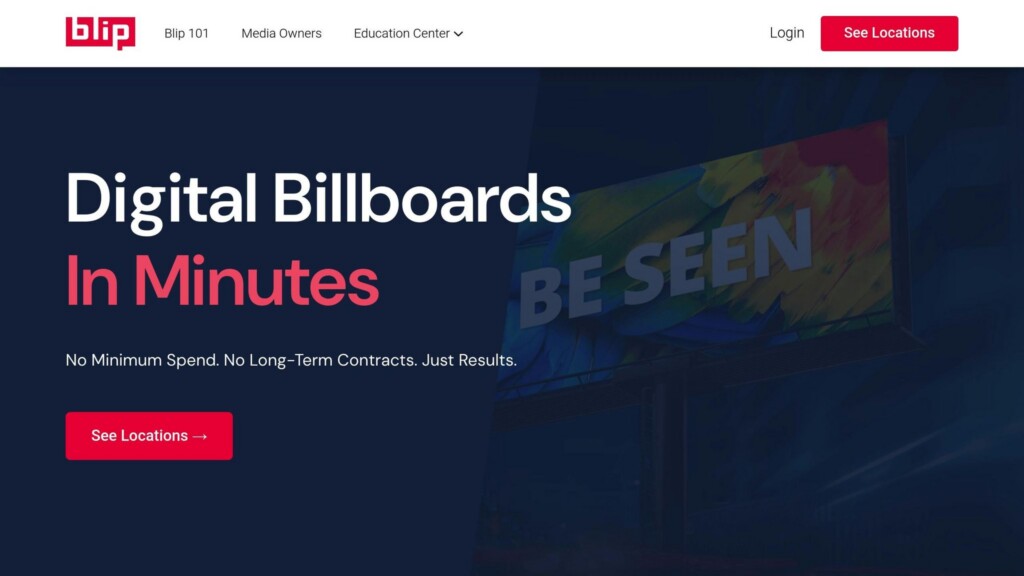
Effectively managing billboard frequency requires tools that offer precise control over your campaigns. Building on the earlier discussion of frequency metrics, Blip provides a set of tools designed to simplify and refine this process.
Flexible Bidding
Blip’s marketplace gives you control over your bids, so you can adjust your campaign as your needs change. With flexible bidding, you can:
- Increase or decrease your bid to compete for more or fewer ad plays.
- Update your bids, budget, and schedule at any time.
- Adjust your campaign based on performance, time of day, or changing marketing goals.
This flexibility helps you improve your campaign over time without being locked into a fixed contract or long-term commitment.
Performance Tracking Tools
Blip’s analytics dashboard delivers real-time insights into how your campaign is performing. Here are some key metrics you can monitor:
| Metric | What It Measures | How It Helps |
|---|---|---|
| Daily Impressions | Number of people who see your ad | Helps you gauge reach and refine frequency targets. |
| Average CPM | Cost per thousand views | Allows you to track and manage budget efficiency. |
| Peak Hours | Times with the highest engagement | Helps you optimize scheduling for maximum impact. |
“Billboards are one of the most impactful ways to advertise, and with Blip, you spend a fraction of what you would end up paying elsewhere”.
Easy Schedule Management
Armed with performance data, you can fine-tune your ad schedule with ease. Blip’s user-friendly interface allows you to:
- Create custom display windows tailored to traffic trends.
- Develop location-specific schedules to target key areas.
- Adjust frequency in real time, so your ads are always optimized.
“Blip works for us. It’s a different medium, and it brings a lot of exposure. It sets us apart from the rest of the [competition], and that’s what I like.”
With pay per play billing, you choose what you spend and only pay when your ad runs, so you keep full control over both your campaign’s frequency and spending. That mix of flexibility and control makes it a strong fit for advertisers who want to get the most from every dollar.
Conclusion: Keys to Successful Frequency Management
Effectively managing billboard frequency is all about finding the right balance and using the best tools to achieve your goals.
Here are three guiding principles to keep in mind:
| Principle | Key Action | Expected Outcome |
|---|---|---|
| Dynamic Control | Adjust display frequency with real-time bidding | Optimized ad exposure based on traffic patterns |
| Data-Driven Decisions | Track performance metrics to guide scheduling | Better ROI by targeting the best display times |
| Budget Optimization | Pay per play and scale spend as needed | Manage campaigns cost-effectively |
The benefit of real-time control is simple: your campaign does not have to stay locked in place.
As you learn what is working, you can adjust your timing, budget, and reach to help your ads show up where they have the most opportunity. That means less wasted spend and more confidence that your campaign is doing its job.
Blip Optimized can also help with setup by finding the right mix of locations, timing, and budget based on your campaign goals. Regardless of your setup, you can fine-tune as your campaign runs.
To make the most of your campaign:
Focus on high-opportunity hours Show up when your audience is more likely to be on the road.
Adjust as you learn Use campaign activity to shift budget, timing, or locations as needed.
Stay visible without overspending Build the repetition people need to remember you, while keeping spend efficient.
Scale with more confidence Add locations, increase spend, or expand reach when the data supports it.
These approaches help keep your campaigns remain effective, efficient, and impactful. For the wider view, our guide on reach and frequency in OOH best practices and these behavioral targeting case studies both go deeper.
Ready to see what billboard advertising can do for you?
Pick your boards, set your budget, and get your campaign ready to run within the week. No contracts. No minimums. Want to go deeper on pacing your message? Read message frequency for billboard ads.
Get started and build your campaign.
Billboard Ad Frequency FAQs
What is the impact of billboard frequency on purchase intent?
Frequency and purchase intent move together. The more often people see a billboard, the more familiar the brand becomes, and familiar brands are the ones people choose when they are ready to buy. Industry studies tie repeated out of home exposure to a measurable lift in purchase intent, not just awareness. The takeaway is simple: a few extra exposures can be the difference between being noticed and being chosen.
How does OOH ad frequency impact brand recall?
Recall is built through repetition. Seeing an ad once rarely sticks, but seeing it several times in the same spot ties the brand to a place and a routine, which is exactly how memory forms. Out of home consistently ranks among the highest media for recall, and that strength grows with frequency. Run long enough and often enough, and people remember you without having to think about it.
What is the 3 second rule for billboards?
The 3 second rule says a driver has only about three seconds to take in a billboard. That short window shapes the design more than the schedule. Keep the headline to a few words, use one bold visual, and make the brand clear at a glance. Frequency then does the rest, since each quick look adds up over repeated passes.
How much is a 30 second ad in Times Square?
It varies a lot by screen and time slot. A shared digital slot on a smaller Times Square screen can start in the low hundreds of dollars per day, while a 30 second spot on a premium high-traffic board can run many thousands, and marquee takeovers reach far higher. The wide range is why most local advertisers get better value from targeted boards in their own market. That is the model Blip is built around.
What is the frequency of an ad?
Ad frequency is the average number of times one person sees your ad over a set period. It is different from reach, which counts how many different people saw it at least once. In billboards, you find frequency by dividing total impressions by reach. A higher number means more repeat exposure per person, which usually helps recall up to a point.
Do we really see 4,000 ads a day?
You will see that figure thrown around a lot, and estimates range widely, from a few hundred to several thousand depending on how you count. The exact number matters less than the point behind it: people are surrounded by ads and tune most of them out. That is why a clear billboard, seen repeatedly in the real world, cuts through in a way a skippable online ad often cannot.
What metrics should I track to optimize my billboard ad frequency in real time?
Watch your play count, estimated impressions, CPM, spend, locations, and schedule. Together, these show how often your ad runs and how efficiently your budget is building exposure. Blip puts these metrics in one dashboard so you can adjust your campaign as needed.
How does billboard location impact ad frequency, and what should I consider when scheduling ads in different areas?
Location shapes who sees your ad and how often they may pass it. Choose boards along routes your audience regularly travels, then give the campaign enough time to build repeat exposure. With Blip, you can adjust locations, schedules, and budgets as your campaign runs.