How Much Revenue Does a Billboard Generate? Real Numbers from the Industry

November 27, 2025
Advertising, Cost

Quick Answer: A billboard can generate anywhere from $500 to more than $50,000 per month depending on location, format, traffic volume, and audience quality. Profit comes from smart placement, strong ROI tracking, and using modern digital platforms like Blip to optimize spending.


If you’re comparing billboard advertising to digital ads, radio spots, or social campaigns, you need real numbers – not sales pitches. Billboards can generate anywhere from $500 to over $50,000 per month, depending on location, traffic volume, format, and demand in the area.

But raw revenue means nothing unless it translates into profit for your business.

The real question is how billboard advertising performs for your industry, your audience, and your offer. Modern platforms like Blip now provide real-time analytics and flexible campaign control so you can track performance and optimize instead of guessing.

So, how much revenue does a billboard generate?

Table of contents

Key Takeaways

  • Billboard revenue ranges from $500 to $50,000+ monthly depending on location, format, and traffic quality.
  • Digital billboards generate 4-6x more revenue than static displays by serving multiple advertisers and enabling precise targeting.
  • Times Square is the peak of billboard pricing, reaching $150,000 weekly, but high ROI also exists in suburban and small-city markets.
  • Billboard ROI is strongest when impressions link to measurable actions like store traffic, web visits, or conversions.
  • Cost per thousand impressions (CPM) on billboards is often lower than Facebook, Google, or local TV.
  • Programmatic platforms like Blip allow advertisers to test locations, track analytics, and scale what works.
  • Test your own billboard ROI with flexible campaigns on Blip and launch a data-driven campaign in minutes.

Are Billboards Still Profitable in 2026?

Despite predictions that digital advertising would kill billboards, the outdoor advertising industry is experiencing its strongest growth in decades. Digital out-of-home (DOOH) advertising revenue is projected to grow 10.7% annually through 2030 – reaching nearly $40 billion.

Why billboards remain profitable:

  • You can’t skip, block, or scroll past a billboard
  • Cost per thousand impressions (CPM) remains lower than most digital channels
  • Local advertising spending continues shifting to outdoor media
  • Digital billboards enable dynamic pricing and multiple revenue streams

For advertisers, the profitability question is finding the right approach. Traditional billboard contracts requiring $3,000 to $10,000 monthly commitments make ROI difficult for smaller businesses. That’s where Blip’s flexible pricing model, starting at just a few dollars per day, changes the equation completely.

How Much Profit Does a Billboard Actually Make?

This is the million-dollar question every advertiser and potential billboard investor asks. The answer depends on whether you’re looking at gross revenue or actual profit after expenses. Let’s break down real numbers from the industry.

Billboard Revenue by Location and Traffic

Location determines everything in billboard economics. Here’s what different markets actually generate:

Rural and Highway Locations

  • Monthly Revenue: $250 to $1,500
  • Operating Costs: $200 to $400
  • Net Profit Margin: 60-70%
  • Best for: Local businesses, tourist destinations, roadside services

Suburban and Small City Markets

  • Monthly Revenue: $2,500 to $15,000
  • Operating Costs: $800 to $2,000
  • Net Profit Margin: 65-75%
  • Best for: Retail chains, restaurants, professional services

Major Metro Areas

  • Monthly Revenue: $10,000 to $50,000+
  • Operating Costs: $3,000 to $10,000
  • Net Profit Margin: 70-80%
  • Best for: National brands, entertainment venues, tech companies

The key insight? Billboard profitability increases with location value because operational costs don’t scale proportionally with revenue. A Times Square billboard earning $100,000 monthly doesn’t cost 100 times more to operate than a rural billboard earning $1,000.

Launch a billboard campaign today – find out exactly how much revenue your business can generate with real-time analytics.

Static Billboard Revenue vs Digital Billboard Revenue

The revenue gap between static and digital billboards continues widening:

Billboard TypeAverage Monthly RevenueNumber of AdvertisersTypical ROI for Advertisers
Static Billboard$2,500 – $10,00012-5x
Digital Billboard$10,000 – $50,0006-103-8x
Programmatic Digital$15,000 – $75,00020+4-10x

Digital billboards generate 4-6 times more revenue than static displays because they serve multiple advertisers. However, digital also delivers better ROI for advertisers because they can target specific times, adjust creative instantly, and measure actual impressions rather than estimates.

What Makes One Billboard Worth $500 and Another $50,000?

The massive price variations in billboard advertising often shock newcomers to the industry. Understanding these factors helps you identify undervalued opportunities and avoid overpriced inventory.

How Much Is a Times Square Billboard? (And Why It Matters)

Times Square billboards represent the absolute peak of outdoor advertising costs. A prime digital billboard in Times Square costs $10,000 to $50,000 per day. The massive Nasdaq screen runs $150,000+ weekly. Even “smaller” Times Square displays cost $5,000 to $25,000 daily.

Why these astronomical prices? Times Square sees 450,000 pedestrians daily, plus millions more via social media shares. Brands pay for prestige as much as impressions. However, you don’t need Times Square to get results. Smart advertisers achieve better ROI with strategic placement in less glamorous but highly targeted locations.

The Traffic and Demographics Formula

State DOT data reveals the math behind billboard pricing. Every 10,000 vehicles of Average Daily Traffic (ADT) typically adds $1,000 to $2,000 to monthly billboard value. 

A highway with 50,000 ADT justifies rates 5x higher than one with 10,000 ADT.

But raw traffic isn’t everything. Demographics multiply or divide that base value:

  • Household Income Over $75,000: 1.5x to 2x multiplier
  • Business Decision-makers During Commute Hours: 2x to 3x multiplier
  • Tourist Traffic: 1.2x to 1.5x multiplier
  • Students or Lower-income Areas: 0.5x to 0.8x multiplier

This explains why a billboard reaching 30,000 affluent suburban commuters often costs more than one reaching 50,000 vehicles on a rural interstate. With Blip, you can access premium demographics without premium prices by targeting specific dayparts when your audience is most likely to see your message.

Billboard Size, Format, and Technology Impact

Physical characteristics create dramatic price differences even at identical locations:

Size and Visibility Factors

  • Standard Bulletins (14×48 feet): Baseline pricing
  • Digital LED Displays: 3x to 5x premium over static
  • Spectacular Units (Custom/Oversized): 5x to 10x premium
  • Clear Sightlines with 8+ Second Read Time: 30-50% premium
  • Obstructed or Cluttered Locations: 20-40% discount

Technology Advantages

  • Static Vinyl: Single advertiser, fixed message, lowest cost
  • Digital Rotation: Multiple advertisers share costs, flexible messaging
  • Programmatic Digital: Real-time optimization, weather/traffic triggers
  • Interactive Displays: QR codes, mobile integration, highest engagement

Digital technology doesn’t just increase billboard revenue – it fundamentally changes how advertisers buy and measure outdoor advertising. Instead of hoping people see your billboard, you know exactly when it is displayed and can estimate precise impression counts.

Digital Billboards: Why They Generate 4-6x More Revenue

Digital billboards are revenue multiplication machines that fundamentally changed outdoor advertising economics. Understanding how helps you maximize your advertising investment.

Multiple Advertisers, Multiplied Revenue

The math is simple but powerful. A static billboard with one advertiser at $5,000 monthly becomes a digital billboard with eight advertisers, each paying $2,000 for their rotation slots. That’s $16,000 per month from the same physical space, which is about a 3.2x increase in revenue.

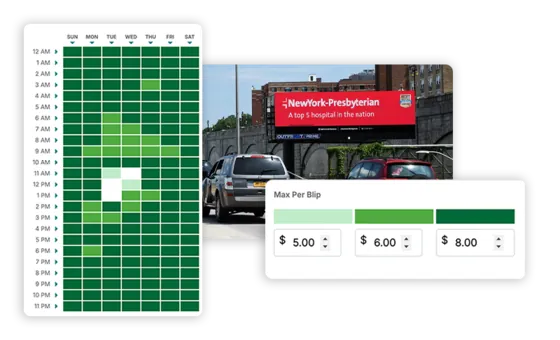
But the real advantage for advertisers is its targeting precision. A coffee shop can dominate morning rush hour while a restaurant focuses on lunch and dinner times. A tax preparer can increase presence in March and April, then scale back the rest of the year. This flexibility means you’re not paying for wasted impressions during off-peak times.

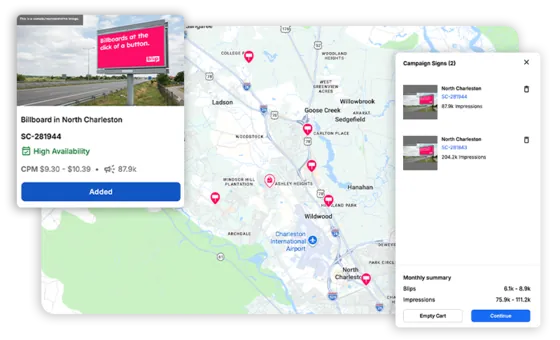
Blip’s platform takes this concept further with pay-per-play pricing. Instead of buying time slots, you pay only when your ad actually displays. Set a daily budget, and Blip’s algorithm optimizes when and where your ads appear for maximum impact within your spend limits.

Programmatic Advertising: The Game Changer

Programmatic billboard buying brings Google Ads-style efficiency to outdoor advertising. Real-time bidding means billboard inventory gets allocated based on advertiser demand, weather conditions, traffic patterns, and dozens of other variables.

How programmatic multiplies revenue:

  • Fills unsold inventory automatically
  • Adjusts pricing based on real-time demand
  • Enables trigger-based campaigns (weather, events, traffic)
  • Allows instant creative changes across multiple locations
  • Provides detailed performance analytics

For advertisers, programmatic means you can launch a billboard campaign in minutes, not weeks. Test different locations, adjust budgets based on performance, and scale successful campaigns instantly. This accessibility brings new advertisers into outdoor advertising, increasing competition and billboard revenue.

Your competitors are already on the highway. Put your message beside theirs and track every impression with Blip.

What Is the ROI of Billboard Ownership?

Whether you’re considering buying a billboard as an investment or evaluating advertising ROI, understanding the returns is crucial.

Let’s examine both perspectives with real numbers.

Billboard Ownership as an Investment

Building a new billboard costs $50,000 to $200,000 for static displays and $250,000+ for digital. But established billboards in good locations deliver impressive returns:

Typical Billboard Investment Returns

  • Annual Gross Revenue: $30,000 to $120,000
  • Operating Expenses: 30-40% of gross revenue
  • Net Operating Income: $20,000 to $75,000
  • ROI: 15-30% annually
  • Payback Period: 3-7 years

The best returns come from billboards with these characteristics:

  • Located on owned land (no lease payments)
  • Highway or major arterial placement
  • Limited nearby competition
  • Digital capability or conversion potential
  • Multiple long-term advertising contracts

Studies show that every $1 spent on billboard advertising produces an average of $5.97 in returns – that’s nearly 600% ROI! 

ROI for Billboard Advertisers

From an advertiser’s perspective, billboard ROI depends on tracking the right metrics and choosing the right platform. Traditional billboard advertising makes ROI measurement challenging, but modern platforms provide detailed analytics.

Average advertiser ROI by business type:

  • Restaurants and Retail: 3-5x return
  • Professional Services: 4-7x return
  • Entertainment Venues: 5-10x return
  • E-commerce with Local Presence: 3-6x return

Blip’s model improves these returns by eliminating waste. Instead of paying $3,000 monthly, whether you need that exposure or not, you can scale spending up during busy seasons and down during slow periods. Track actual impressions delivered, measure website traffic increases, and calculate precise cost per customer acquisition.

How to Calculate Your Billboard Revenue Potential

Smart advertisers don’t guess at billboard ROI. Here’s exactly how to determine whether billboard advertising will generate profitable returns for your business.

The CPM Calculator 

Cost Per Thousand Impressions (CPM) provides your baseline for comparing billboard value against other advertising channels. Here’s the formula:

CPM = (Monthly Cost ÷ Monthly Impressions) × 1,000

Real example:

  • Billboard Cost: $2,000/month
  • Daily Traffic: 30,000 vehicles
  • Monthly Impressions: 900,000
  • CPM: $2.22

Compare that to:

  • Facebook Ads: $14 CPM average
  • Google Display: $3 CPM average
  • Local TV: $35 CPM average

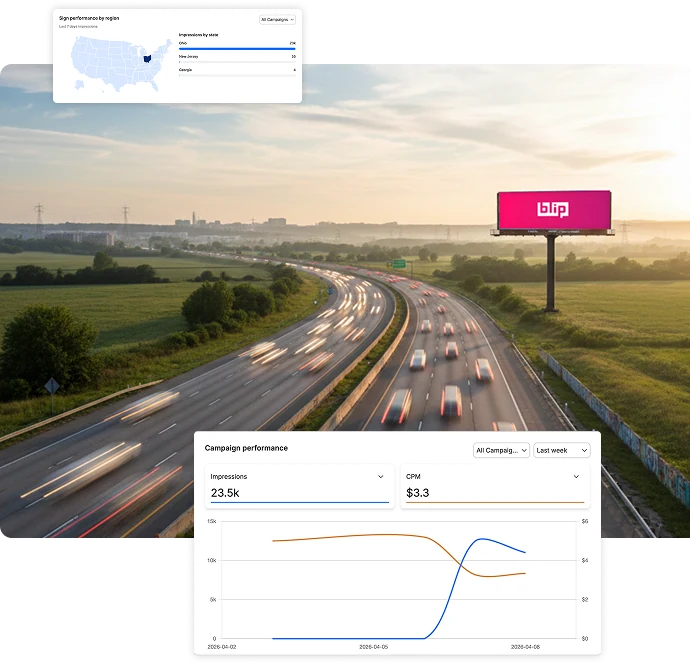
Billboards consistently deliver the lowest CPM in advertising, but impressions alone don’t generate revenue. You need to track conversion metrics. With Blip’s detailed analytics dashboard, you can see exactly when your ads ran and correlate that with website traffic, store visits, or sales data.

Revenue Attribution Methods  

Traditional billboards make tracking nearly impossible, but modern approaches provide clear attribution:

Direct Response Tracking

  • Unique promo codes shown only on billboards
  • Custom landing pages with billboard-specific URLs
  • QR codes for instant mobile engagement
  • Call tracking numbers exclusive to billboard campaigns

Indirect Attribution

  • Website traffic lifts during campaign periods
  • Brand search increases in billboard markets
  • Store visit data from mobile location tracking
  • Sales pattern analysis in billboard coverage areas

Blip advertisers regularly see 20-40% increases in web traffic and 15-25% lifts in store visits during billboard campaigns. The key is establishing baseline metrics before launching, then measuring the delta.

Smart Billboard Strategies for Small Business Revenue

Traditional billboard advertising excluded small businesses with $5,000+ monthly minimums and year-long contracts. Blip changed that equation entirely, making billboard advertising accessible to businesses with any budget.

1. Start Small, Scale What Works

The biggest advantage of Blip’s platform is risk reduction. Instead of committing thousands upfront, you can:

  • Start with rock-bottom daily budgets
  • Test multiple locations simultaneously
  • Adjust spending based on results
  • Pause campaigns during slow periods
  • Scale successful campaigns instantly

This approach means you can find profitable billboard locations through testing rather than guessing. A pizza shop might discover that billboards near office parks outperform those near residential areas. A law firm could find that highway billboards generate more calls than downtown locations.

2. Location Strategy for Maximum Revenue Impact

Successful billboard campaigns target customers at decision moments. Consider where your customers are when they’re most likely to need your service:

Business TypeOptimal LocationsWhy It Works
Restaurants2-3 miles from location, major intersectionsCaptures dinner decision moment
Auto ServicesHighway exits, commuter routesReaches drivers when cars need service
HealthcareNear competing facilities, residential areasBuilds awareness for provider choice
Home ServicesSuburban arterials, hardware storesTargets homeowners during errands
EntertainmentDowntown, evening commute routesInfluences weekend planning

With Blip, you can test all these locations without separate contracts. Find what works, double down on winners, and eliminate underperformers. That’s exactly how successful digital campaigns operate.

Measuring Billboard Performance and Revenue Impact

You can’t improve what you don’t measure. Modern billboard advertising provides detailed metrics that connect ad exposure to revenue generation.

Metrics for Revenue-Focused Campaigns

Forget vanity metrics and focus on numbers that tie directly to revenue:

Primary KPIs

  • Cost per acquisition (CPA)
  • Customer lifetime value to CPA ratio
  • Revenue per thousand impressions
  • Conversion rate from billboard exposure
  • Incremental revenue over baseline

Supporting Metrics

Blip provides real-time access to these metrics through its platform. See exactly when your ads are displayed, calculate precise CPMs, and adjust campaigns based on performance data rather than intuition.

Connecting Billboard Exposure to Sales

The most sophisticated advertisers use multi-touch attribution to understand the billboard’s role in the customer journey:

  1. Pre-Campaign Baseline: Establish normal sales patterns
  2. Campaign Launch: Track daily changes in key metrics
  3. Geographic Analysis: Compare sales in billboard markets vs. control markets
  4. Time-Based Correlation: Match ad display times to customer activity
  5. Post-Campaign Retention: Measure lasting brand impact

Restaurant chains using this approach typically see 15-30% sales lifts in billboard markets. Professional services report 25-50% increases in qualified leads. E-commerce businesses with local presence experience 20-35% jumps in regional web traffic.

Maximizing Revenue with Modern Billboard Platforms

The billboard industry is experiencing massive transformation. Smart advertisers are capitalizing on new technologies and platforms that deliver better ROI than ever before.

Why Programmatic Buying Beats Traditional Contracts

Traditional billboard buying is like purchasing TV ads in the 1980s. It’s inefficient, opaque, and expensive. Programmatic platforms like Blip bring digital advertising sophistication to billboards:

Traditional Model ProblemsProgrammatic Advantages
– Multi-month commitments required
– No performance guarantees
– Fixed pricing regardless of value
– Difficult to measure results
– Slow creative changes
– Day-to-day flexibility
– Pay only for actual impressions
– Dynamic pricing based on demand
– Real-time performance tracking
– Instant creative updates

This shift particularly benefits small and medium businesses. Instead of competing against national brands for premium inventory, you can find undervalued slots that reach your specific audience at a fraction of traditional costs.

Campaign Optimization for Revenue Growth

The most successful Blip advertisers treat billboard campaigns like performance marketing:

Week 1-2: Testing Phase

  • Launch with 3-5 locations
  • Run 2-3 creative variants
  • Set modest daily budgets ($30-50)
  • Track all response metrics

Week 3-4: Optimization

  • Cut underperforming locations
  • Increase the budget on winners
  • Refine creative based on response
  • Test new daypart strategies

Month 2+: Scaling

  • Expand to similar high-performing locations
  • Increase daily budgets based on ROI
  • Test seasonal messaging
  • Build sustained brand presence

This iterative approach consistently delivers better results than traditional “launch and hope” billboard campaigns.

Your Next Move: Test Billboard ROI Without the Risk

Billboard advertising can be one of the most powerful revenue drivers when backed by data and strategy. Location value, traffic demographics, billboard format, and technology determine profit potential – especially when comparing static displays to digital or programmatic formats. 

Digital billboards consistently generate 4-6 times more revenue by serving multiple advertisers and enabling real-time targeting. Programmatic buying and analytics now allow businesses to scale campaigns, track ROI, and connect impressions directly to store visits and sales. 

Instead of guessing, advertisers can test, refine, and grow billboard revenue with precision. If your business wants measurable returns and advertising that reaches customers at decision moments, billboards remain one of the strongest opportunities in 2025 and beyond.

Ready to see what billboard advertising can generate for your business? Create your free Blip account today and launch your first campaign in minutes.

Frequently Asked Questions

How Do I Know If My Business Is Ready for Billboard Advertising?

Start when you have a clear offer, a defined audience, and the ability to track results. If you know your customer lifetime value and conversion rate, you can test billboard ROI with small budgets before committing to larger campaigns.

What Is the Best Type of Billboard for High ROI?

Digital billboards typically provide the best ROI because they allow time-based targeting, instant creative updates, and serve multiple advertisers. Programmatic buying lets you pay only when your ad plays, reducing wasted impressions.

How Can Small Businesses Compete With Big Brands on Billboards?

Use data-driven targeting instead of trying to win premium locations. Platforms like Blip let small businesses access daypart targeting – appearing only during valuable hours, such as commute times or weekends, when buying intent is highest.

Can Billboard Revenue Be Accurately Tracked?

Yes. Use unique promo codes, billboard-specific URLs, QR codes, and call tracking numbers to measure direct traffic. You can also compare sales trends in billboard regions versus control markets to measure indirect impact.

How Fast Can a Billboard Campaign Start Generating Revenue?

Digital and programmatic campaigns can produce measurable lift within days if tracking is set up correctly. Restaurants, retail, and service businesses often see immediate traffic increases when ads run near high-traffic decision points.

What Budget Should I Start With for Billboard Advertising?

Start with small test budgets across multiple locations. Run different creatives and track responses. Once you find high-performing areas, scale your spending gradually. This ‘test, measure, scale’ approach protects ROI and reduces guesswork.

Sources