Step One
Choose Your Locations
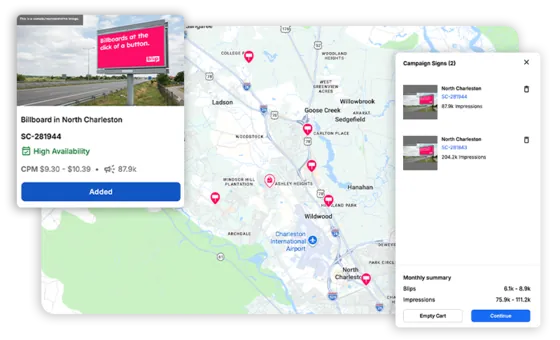
Go local or nationwide with digital billboards. Pick screens in the markets you care about and reach your audience on the routes they take every day.
The easiest way to launch digital billboard ads and outdoor advertising campaigns in minutes. No contracts, no minimums, just real results for your business.
Get Started




No contracts. Full flexibility. Built for growth.
Go local or nationwide with digital billboards. Pick screens in the markets you care about and reach your audience on the routes they take every day.
Spend what you want, when you want - with no contracts and the flexibility to scale as your business grows. Spend $10 a day or $50 a day, Blip Billboards puts your billboard advertising budget in your hands.
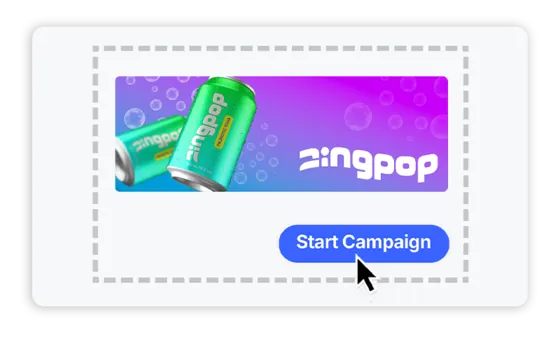
Stand out with creative digital billboard ads, plus change and update creative instantly. Explore our billboard design guidelines.
Turn everyday routes into brand visibility using advertising billboards and out-of-home (OOH) screens across the U.S. Launch and manage billboard advertising campaigns with full flexibility, control spend in real time, swap creative anytime, and optimize for performance. With Blip, billboard advertising is flexible by design. No long-term contracts, no minimum spend, just the freedom to work with billboard companies on your terms.
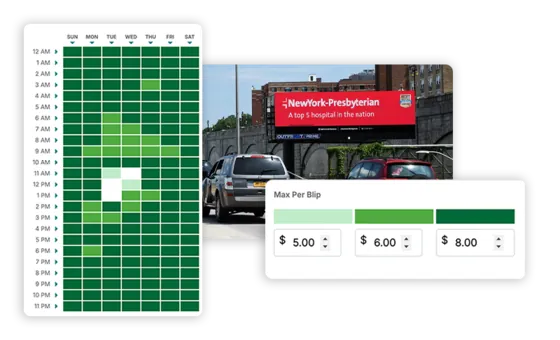
Launch Your Ad in MinutesDisplay your digital billboard ads at specific times of day to maximize impact.
No need to sign contracts or meet minimum payments. Just flexible, affordable billboard advertising.
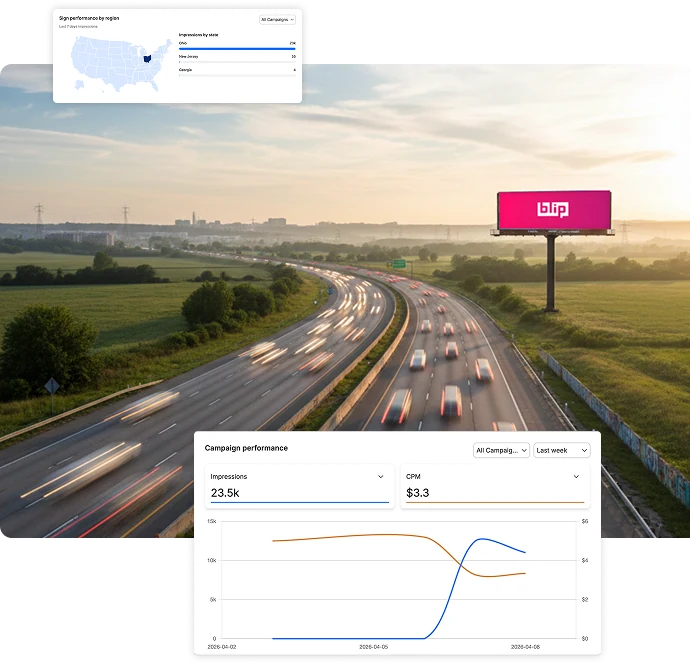
Make changes and adjust your campaign's budget and schedule at any time to optimize performance.
Pay per blip with our unique 8-second billboard sign display model.
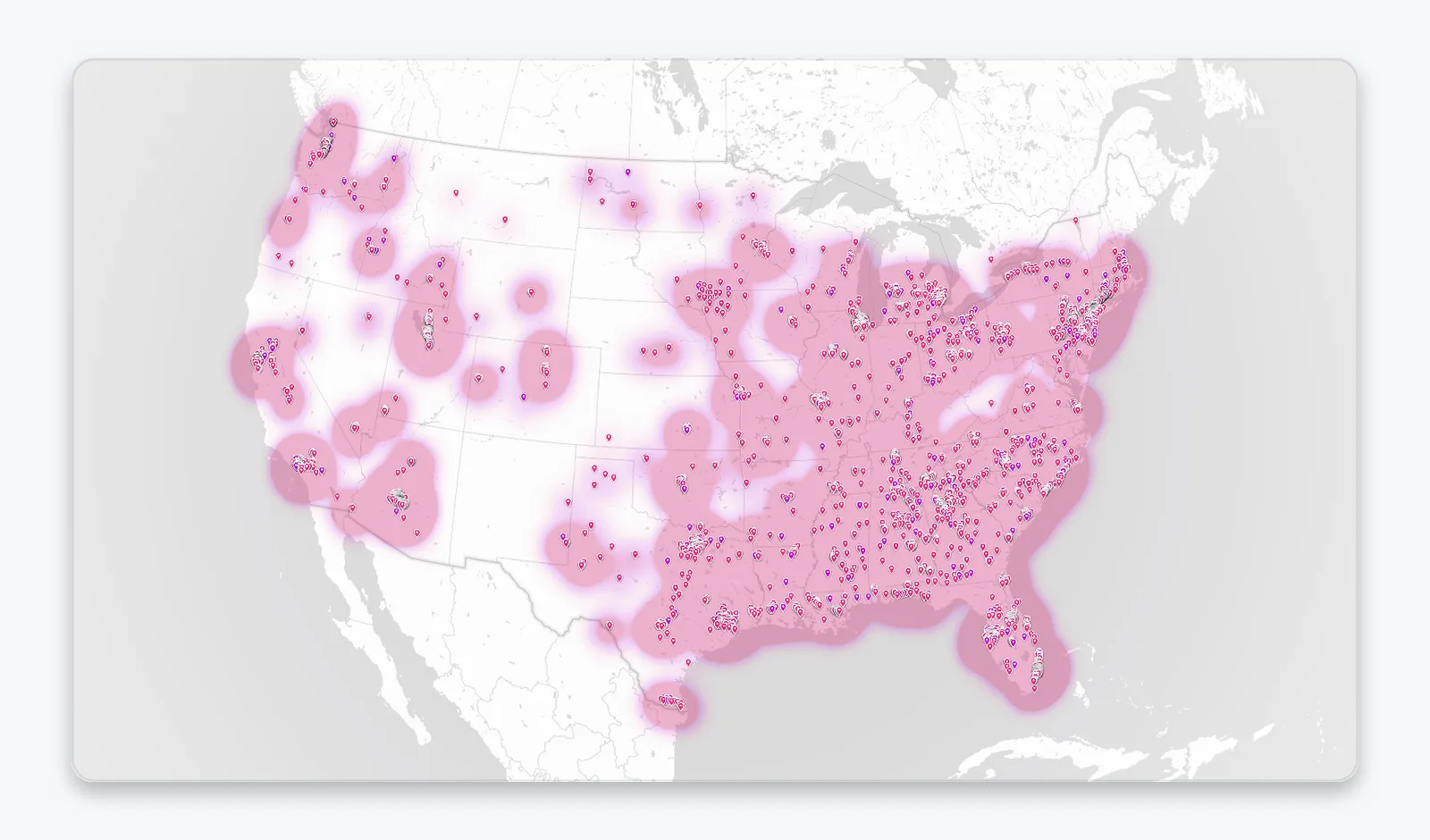
Target any location across the USA with Blip's extensive network of digital billboards in prime markets nationwide.
Unlike traditional billboard advertising companies that require long contracts and fixed placements, Blip lets you launch, pause, and optimize campaigns instantly. Because we get it. Things change. We give you the flexibility to adjust as you go.
Blip partners with billboard companies nationwide to bring you access to premium digital billboard locations coast to coast. Whether you're targeting local neighborhoods or major metro areas, our platform gives you outdoor billboard advertising opportunities across 2,700+ high-traffic locations in 46 states. Reach your audience wherever they are, from busy city streets to local neighborhoods, with digital billboards across the country. Run billboard advertising in multiple markets and manage everything in one place, with full control over how much you spend.
Launch your campaign in a few clicks.
Billboards are one of the most impactful ways to advertise, and with Blip, you spend a fraction of what you would end up paying elsewhere.Ray Bowens Founder, Hashtag-Vape

Blip works for us. It's a different medium, and it brings a lot of exposure. It sets us apart from the rest of the competition, and that's what I like.Kimberly Pinkston Owner, Pretty in Pinkston

It's not a social media thing that you see on your phone. It's not word-of-mouth. It's big and bold and out there in public. I would say this is the first step of becoming well-known.Chris Leslie Leslie Lightcraft Co

Working with Blip has given Mr. Charlie's the momentum to get our new location on the map while accelerating growth for our original location.Paul Willey Mr. Charlie's Chicken Fingers
Digital billboard advertising is a form of out-of-home (OOH) advertising that displays billboard advertisements on LED screens placed in high-traffic locations such as highways, city centers, and shopping areas.
Digital billboards provide far greater flexibility and control compared to traditional static billboards. With Blip's digital billboard advertising platform, you can launch campaigns in minutes instead of weeks and change your creative instantly without additional production costs. You can also schedule your digital billboard ads to display at specific times of day or days of the week. You also get real-time performance tracking through detailed campaign analytics, pay-per-play pricing so you only pay when your ad displays, and the ability to test multiple designs quickly to see what resonates with your audience.
Start by identifying your target audience and understanding where they spend their time. Blip's platform makes it easy to browse and select from over 2,700 digital billboards across 46 states. You can search by city, state, or specific market to find high-traffic locations that align with your business goals. The platform shows you traffic data and pricing for each location to help you make informed decisions.
Blip offers transparent billboard advertising prices that fit any budget. Unlike traditional billboard advertising companies that require high upfront costs and long contracts, Blip has no minimum spend and daily budgets starting as low as $20 in some locations. You pay per blip, an 8-second display of your ad, with pricing as low as $0.01 per display. The cost varies based on location, time of day, and demand, but our platform shows you the exact cost before you commit. You only pay when your digital billboard ads actually display, and there are no long-term contracts required.
Absolutely. Whether you want to advertise on billboards in one city or dozens, Blip's network includes digital billboards in 46 states across the United States, putting thousands of locations within your reach nationwide. You can run campaigns in multiple cities simultaneously and manage them all from a single self-serve platform.
With Blip's self-serve platform, you can build a digital billboard advertising campaign in minutes. Create your free account, select your target locations, set your budget and schedule, and upload your creative. Once your design is approved, your ads can start running on your specified start date.
Blip removes the traditional barriers that make billboard advertising hard to access. We offer affordable billboard advertising with no contracts, no minimum spend, and complete flexibility to change your budget, schedule, or creative at any time. Our pay-per-blip model means you only pay for actual ad plays, and our self-serve platform gives you instant control with access to over 2,700 digital billboards across 46 states.
Start your first campaign with Blip.