Billboards in SeaTac, WA
No Minimum Spend. No Long-Term Contracts. Just Results.
Trusted by Leading Brands


Billboard advertising
in SeaTac has never been easier
How much is a billboard in SeaTac?
Why Choose Blip for Billboard Advertising in SeaTac
Blip lets you launch SeaTac billboards in minutes on a self-serve platform, perfect for I-5, SR 99, and airport-bound traffic.
Use Blip’s auto-optimized campaigns in SeaTac to match airport arrivals, hotel shuttles, and I-5 commuter peaks within your budget.
No contracts mean SeaTac advertisers can test multilingual creatives for a diverse, working-age audience and scale what works.
Daypart your SeaTac ads for 4-7 a.m. shift workers or 9 a.m.-7 p.m. traveler flow near SEA and International Blvd.
Track real-time results in SeaTac and shift spend fast as summer travel, holidays, and cruise traffic change the road ahead.
Blip’s creative tools help SeaTac brands make sharp, readable ads for fast glances on I-5 and airport access roads.
Frequently Asked Questions About Billboard Advertising in SeaTac
How much does a billboard cost in Seatac, Washington with Blip?
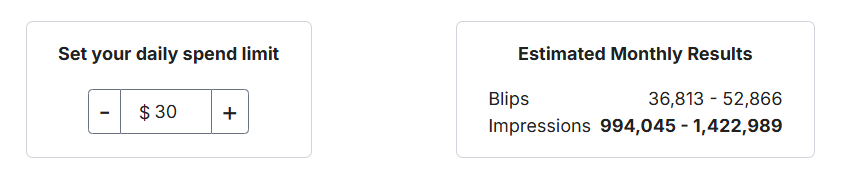
With Blip, you control exactly what you spend on Seatac billboards by setting a daily budget that can be as small or as large as you’d like. Your ad appears in short 7.5 to 10-second “blips” on rotating digital billboards in Seatac, Washington, and you only pay for the blips you receive. Costs for each blip vary based on when and where your ad runs and overall advertiser demand, but Blip automatically keeps your campaign within your chosen budget.
Where can I advertise with Blip in Seatac, Washington?
SeaTac sits at one of the most valuable crossroads in the Pacific Northwest, at the junction of Seattle–Tacoma International Airport, Interstate 5, and State Route 99. Best corridors include airport approaches like SR 518 and Airport Expressway, I-5 northbound and southbound, and Highway 99 / International Boulevard. The corridor includes a dense cluster of hotels that collectively supply thousands of rooms, making it a prime area for focused Seatac billboard advertising.
What kind of audience do Seatac, Washington billboards reach?
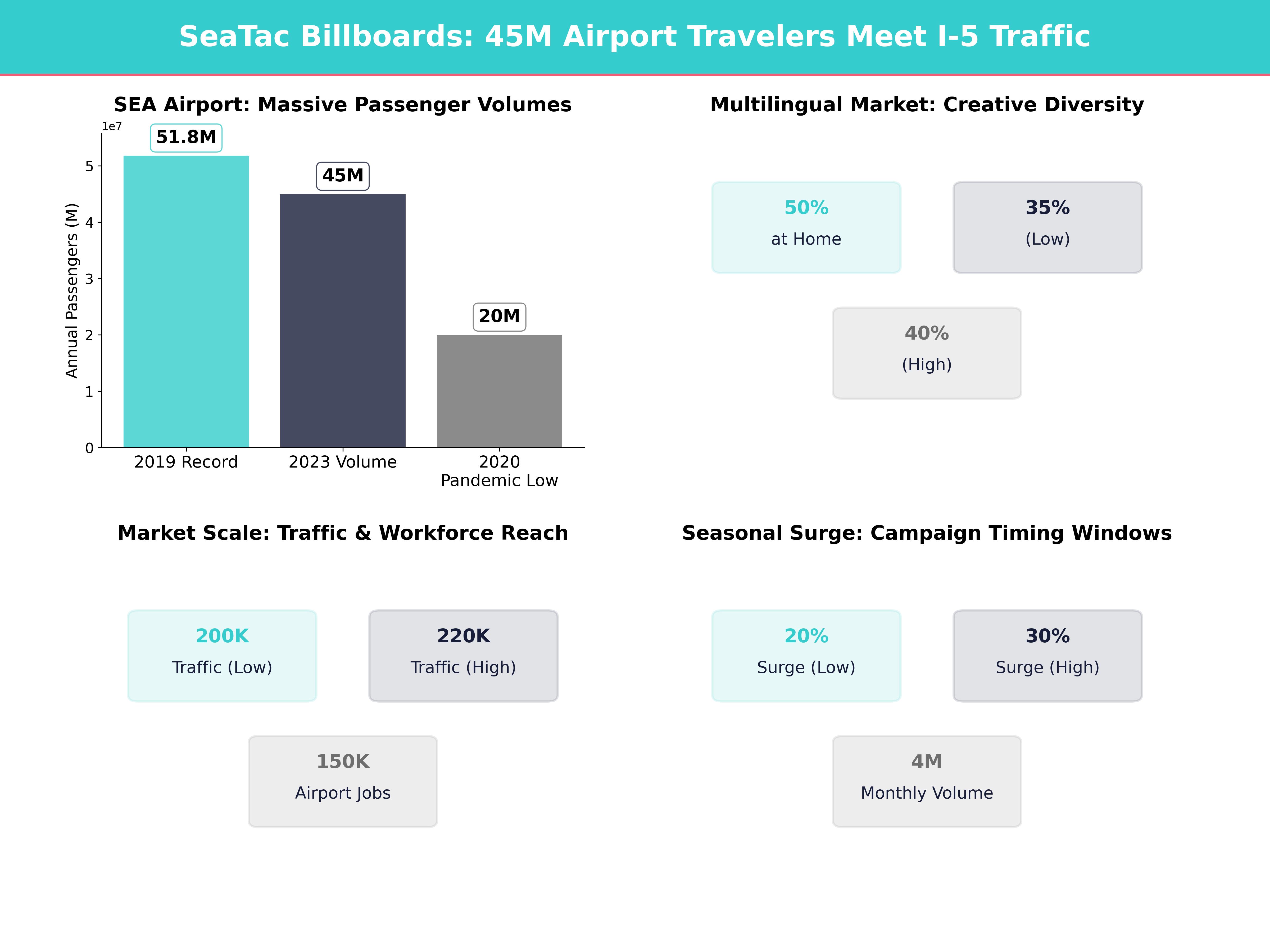
SeaTac is compact but influential, with a population of about 31,000–32,000 residents and a strong working-age and family audience. More than 50% of residents speak a language other than English at home, and the community has a large foreign-born population. Median household income is in the low- to mid-$70,000s, which confirms a more value-conscious local market.
When is the best time to run Blip billboards in Seatac, Washington?
Typical flow patterns in SeaTac include weekday morning peak from 6:30–9:30 a.m. and weekday evening peak from 3:30–7:00 p.m. Midday activity is also strong from about 11:00 a.m.–2:00 p.m., and weekend traffic shifts toward leisure and travel, especially Friday afternoon through Sunday evening. For tourism and hospitality campaigns, the page recommends ramping up impressions in peak travel months from roughly Memorial Day through Labor Day.
Why is Seatac, Washington a strong market for Blip billboard advertising?
SeaTac’s value as a billboard market rests on its transportation network and its role as an employment hub for the airport and hospitality sector. Interstate 5 near SeaTac often carries 200,000–220,000 vehicles per day, and Seattle–Tacoma International Airport handled about 45–46 million passengers in 2023. The city’s mix of local residents, commuters, and travelers creates conditions for both broad awareness and targeted impact.
Do I need a contract to advertise with Blip in SeaTac?
No, Blip has no long-term contracts or minimum commitments. You can start, pause, or stop your campaign at any time.
How fast can I launch a billboard campaign with Blip in SeaTac?
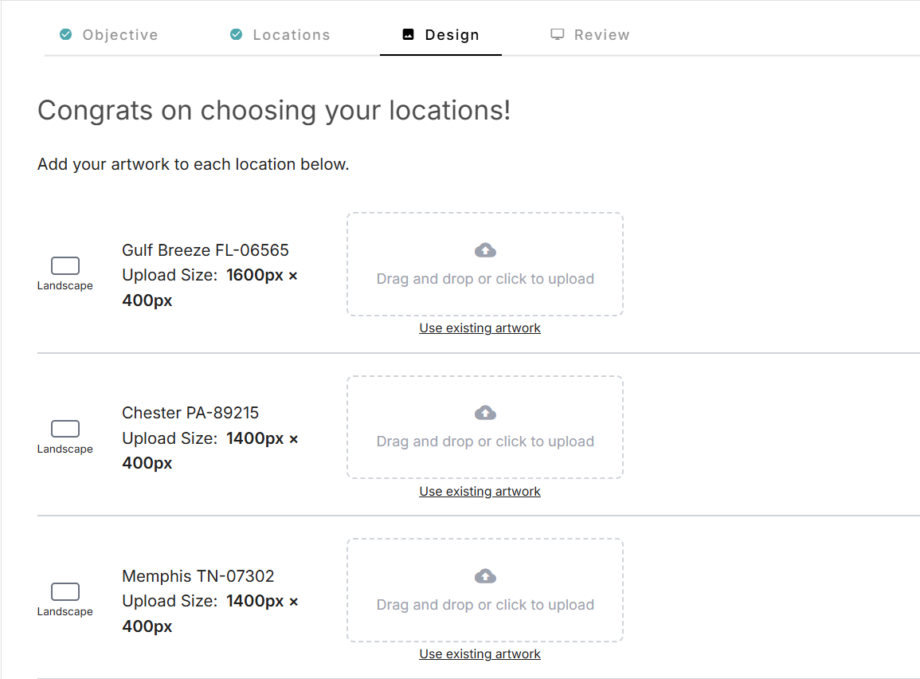
You can have your campaign live in minutes. Create a free account, select your locations, set your budget, upload your design, and start running once approved.
Where can I advertise with Blip in SeaTac?
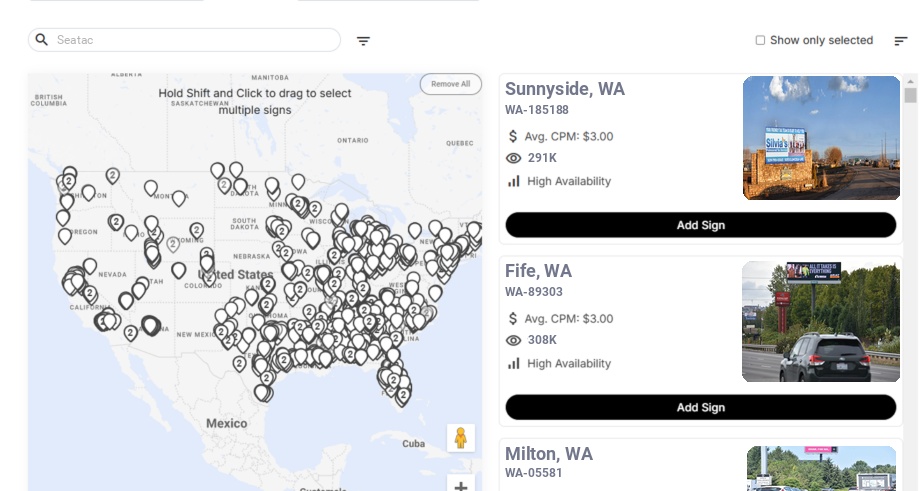
Blip has digital billboards in SeaTac. You can browse available locations on a map, choose the ones that fit your audience, and start advertising right away.
Still have questions? Launch a campaign in minutes — no contracts, no commitments.
Start Your CampaignSeaTac Billboard Advertising Guide
SeaTac, Washington sits at one of the most valuable crossroads in the Pacific Northwest: the junction of Seattle–Tacoma International Airport, Interstate 5 State Route 99
Understand the SeaTac Market at a Glance
SeaTac is compact but influential:
- Population: The City of SeaTac 31,000–32,000 residents (about 31,500 in 2020, with modest but steady growth since).
- Age: Median age is around 36–37 years, slightly below Washington State’s median (about 38–39), which means a strong working-age and family audience.
-
Diversity: SeaTac is routinely cited by the City of SeaTac King County
- Around 45% White (non-Hispanic)
- About 15% Black or African American
- About 14% Asian
- Roughly 17% Hispanic or Latino (of any race)
- A large foreign-born population of roughly 35–40% of residents
- Languages: Community profiles from the city and regional partners note that more than 50% of residents speak a language other than English at home, with Spanish, Somali, Punjabi, Vietnamese, and several other languages widely used.
Local government and tourism sources like the City of SeaTac Seattle Southside Regional Tourism Authority emphasize this cultural mix when promoting the community, and King County Metro Sound Transit regularly publish transit materials in multiple languages to serve SeaTac riders.
From an economic standpoint:
- Median household income in SeaTac is in the low- to mid-$70,000s, compared with Washington State’s median in the high-$80,000s to low-$90,000s, confirming a more value-conscious local market.
- Housing mix: In many recent estimates, more than half of households are renters, significantly above the statewide rental share (around the mid-30% range).
- Commuting: A substantial share of workers commute to jobs tied to the airport, hospitality, logistics, and retail; thousands rely on the Link light rail SeaTac/Airport Station, which serves well over 1 million boardings per year according to Sound Transit.
Implications for billboard strategy:
- Multilingual or multicultural creative can perform very well. Consider testing Spanish or other-language taglines for businesses that serve local communities (grocery, financial services, healthcare, wireless, education).
- Inclusive imagery matters. Use diverse faces and scenarios in visuals to build trust with SeaTac’s wide-ranging audience.
- Service-based and everyday-needs advertising is powerful. With many working families and renters, campaigns for transit, groceries, retail, dining, and quick services (e.g., tax prep, urgent care, mobile phone repair) map well to local needs and respond especially well to high-frequency Seatac billboard advertising.
Median household income in SeaTac is lower than the statewide median (Washington’s is around the high-$80,000s to low-$90,000s), but the city’s role as an employment hub for the airport and hospitality sector means there is a large and steady working audience in motion all day long. Regional labor studies from the Port of Seattle show that tens of thousands of jobs in aviation, logistics, food service, and hotels are concentrated within a few square miles of SeaTac, creating ideal conditions for billboards in Seatac to reach workers on every shift.
Traffic Patterns and High-Impact Billboard Timing
SeaTac’s value as a billboard market rests on its transportation network. The Port of Seattle and Washington State Department of Transportation report consistently heavy volumes:
- Interstate 5 near SeaTac: WSDOT traffic counts for I-5 through South King County often show 200,000–220,000 vehicles per day in both directions combined, connecting Tacoma, SeaTac, and Seattle.
- State Route 518 (to the airport): Depending on the segment, WSDOT records generally 80,000–100,000 vehicles per day, with peaks aligned to airport activity.
- State Route 99/International Boulevard: A critical commercial and lodging corridor through SeaTac, carrying tens of thousands of vehicles daily and lined with dozens of hotels and restaurants.
- Airport drives and access roads: The Port reports hundreds of thousands of vehicle trips per week on airport roadways once you include private cars, TNCs (Uber/Lyft), taxis, hotel shuttles, delivery services, and employee traffic.
Transit adds another layer of exposure:
- The SeaTac/Airport Link light rail station, served by Sound Transit, registers thousands of boardings per weekday, with ridership spikes during peak flight and commute times.
- King County Metro
Typical flow patterns to consider:
- Weekday morning peak: 6:30–9:30 a.m. (commuters heading north toward Seattle and south toward Tacoma, plus early flights).
- Weekday evening peak: 3:30–7:00 p.m. (airport staff shift changes, returning commuters).
- Midday activity: Strong from about 11:00 a.m.–2:00 p.m. with airport drop-offs/pickups, hotel check-outs, and business lunches.
- Weekend fluctuations: Slightly lighter commuting, but stronger leisure and travel activity, especially Friday afternoon through Sunday evening. In heavy travel months, SEA can process 150,000–170,000 passengers per day, which feeds continuous road traffic.
How to use Blip’s scheduling tools with this:
- Target commuters: Emphasize 6–9 a.m. and 3–7 p.m. on weekdays for local services (auto repair, banking, healthcare, legal, education).
- Target travelers: Focus more on mid-morning to early evening when airport arrivals and hotel shuttles peak (9 a.m.–7 p.m.), especially Thursday–Monday.
- Control costs with off-peak buys: If your goal is broad awareness rather than urgent offers, consider more impressions during mid-mornings and later evenings when CPMs can be more efficient and when flexible billboard rental in Seatac can stretch your budget further.
Tapping into the Power of Seattle–Tacoma International Airport
Seattle–Tacoma International Airport (SEA) is the dominant economic engine in the area. According to the Port of Seattle’s statistics:
- In 2023, SEA handled about 45–46 million passengers, up sharply from the 2020 low of around 20 million and moving back toward the 2019 record of 51.8 million.
- International passenger volumes have been in the 6–7 million per year range, serving key routes to Asia, Europe, and beyond.
- SEA operates more than 380 average daily departures in peak periods, with nonstop service to over 90 domestic and 25+ international destinations.
- SEA is consistently among the top 10–15 busiest U.S. airports by passenger volume.
The airport also drives huge employment and spending:
- The Port estimates more than 150,000 jobs regionally are tied to the airport and related businesses (airlines, cargo, hotels, ground transportation, catering, maintenance, etc.).
- Economic impact studies from the Port peg SEA’s total annual economic contribution to the region in the tens of billions of dollars through direct, indirect, and induced activity.
- Within the city itself, the daytime population swells as tens of thousands of workers come into SeaTac each day, many using I-5, SR 518, SR 99, or Link light rail.
What this means for your billboards:
-
You’re speaking to a global audience. Travelers from Europe, Asia, and Latin America encounter Seatac billboards on their way to and from the airport. This is ideal for:
- Destination marketing (tourism boards, attractions, scenic tours) from groups like Visit Seattle and Seattle Southside
- National or international brands seeking a Pacific Northwest touchpoint
- Higher-end travel services (airport parking, lounges, premium ride services)
-
Hotel, parking, and shuttle ads are especially effective. With hundreds of flights daily and tens of thousands of daily passengers, even a 1–2% lift in conversion from billboard-driven traffic can mean dozens of extra room nights or parking bookings per day. Promote:
- Park, Stay & Fly packages
- Same-day deals (“Tonight only: 15% off walk-ins”)
- “5 minutes from SEA, free shuttle every 15 minutes”–style copy
-
Business travel remains a strong segment. SEA serves corporate travelers for tech, aerospace, and logistics, including major employers across Seattle, Tukwila, and Renton. Highlight:
- Meeting spaces, co-working, and business hotels
- B2B logistics, freight, and technology services
- Corporate dining, client entertainment, and premium transportation
We can schedule distinct creatives at different times—business travel creatives during weekday mornings and late evenings, leisure or tourism creatives on weekends and during peak vacation months—so that billboards in Seatac always feel tailored to who is on the road.
Audience Segments and Message Strategy
SeaTac billboards can speak to several overlapping audiences:
-
Local Residents
- Many residents work in hospitality, transportation, or service roles anchored around SEA, Westfield Southcenter in nearby Tukwila, and logistics facilities in South King County.
- Renters make up a substantial share of households, often 50% or more, which typically correlates with higher residential mobility and responsiveness to local offers.
- Practical, price-sensitive offers perform well: groceries, discount retail, dental and medical clinics, transit services, and local schools/training programs.
-
Messaging tips:
- Emphasize value (“Save $50 this week,” “Free consultation,” “Kids eat free”).
- Use clear, direct calls to action (CTA): “Exit 154B – 2 minutes ahead,” or “Book at [ShortURL].”
-
Airport and Hospitality Workers
- Thousands of people commute daily to the airport, hotels, restaurants, and logistics facilities in and around SeaTac. Port and city estimates put employment directly on airport grounds in the tens of thousands, with additional thousands in adjacent hotels and services.
- Shift work means many see billboards at nontraditional rush hours (very early mornings and late nights).
- Good fits: banking, payday alternatives, workforce training, quick service restaurants, fitness centers, and healthcare.
- Consider scheduling more impressions early morning (4–7 a.m.) and late night (9 p.m.–midnight) to reach off-shift employees and make your Seatac billboard advertising visible when other media is quiet.
-
Regional Commuters (Tacoma–Seattle Corridor)
- A large share of drivers on I-5 and SR 99 are simply passing through between Pierce, South King, and downtown Seattle. WSDOT data show that I-5 through this corridor moves over 70–80 million vehicle trips per year.
-
Best-suited campaigns:
- Regional brands (credit unions, hospitals, telecom, auto dealerships)
- E-commerce and apps (rideshare, delivery, financial apps)
- These commuters may see your billboard multiple times a week, so consistency and repetition matter.
-
Domestic and International Tourists
- Tourists often stay in SeaTac-area hotels but spend money throughout the region. Seattle Southside Regional Tourism Authority reports millions of visitor nights annually across SeaTac, Tukwila, and Des Moines, with hotel occupancy frequently peaking in summer months.
- Visitor spending in the broader Seattle area routinely reaches into the billions of dollars per year, according to Visit Seattle, much of it tied to activities that can be promoted from SeaTac billboards.
-
Great verticals:
- Attractions (museums, zoos, observation decks, tours) such as the Museum of Flight just south of Seattle
- Casinos and entertainment venues
- Shopping districts and outlet malls
- Use creative that features iconic images of the Seattle skyline, Mount Rainier, or the Puget Sound to catch the eye of new arrivals.
Seasonal Opportunities and Local Events
Travel to and through SeaTac is highly seasonal:
- Summer (June–September): Typically the busiest period at SEA, with elevated passenger counts, cruise season traffic to and from the Port of Seattle’s cruise terminals, and peak tourism. The Port of Seattle has reported over 1.5 million cruise passengers per season in recent pre-pandemic years, many of whom pass through SeaTac before or after sailings and are exposed to billboards in Seatac along airport routes.
- Holiday periods (Thanksgiving, Christmas/New Year’s): The Port and airlines regularly report holiday peaks where daily passenger volumes can run 20–30% higher than off-peak weeks, creating strong opportunity for last-minute offers, gift-related advertising, and hospitality.
- Spring break and long weekends: Smaller but notable bumps in leisure travel, especially to sun destinations; some spring periods see weekly passenger counts at or above 1 million.
Locally, the City of SeaTac Burien Des Moines, WA Tukwila hold farmers markets, arts events, and parades that increase traffic across the Southside area.
Regional events in Seattle and Tacoma—Seahawks games at Lumen Field, Mariners games at T-Mobile Park, large concerts, conventions at the Seattle Convention Center, and university events at UW or Seattle University—also push more traffic past SeaTac, especially along I-5 and Link light rail.
How to leverage this seasonality with Blip:
- Ramp up impressions in peak travel months. For tourism and hospitality campaigns, aim to increase your share-of-voice from roughly Memorial Day through Labor Day, when monthly passenger volumes can exceed 4 million at SEA.
- Align creative to event calendars. Use copy like “Game Day Special,” “Cruise & Stay,” or “Holiday Rate” around major events and holidays.
- Use countdown or urgency messaging. “2 days only,” “This weekend,” or “Tonight” works well when you can adjust creative quickly.
Local news outlets such as The Seattle Times KOMO News and KIRO 7 are useful references for staying aware of big events or disruptions that may change traffic patterns. For transportation-specific updates that can influence billboard exposure, WSDOT and Sound Transit post real-time alerts and construction notices.
Geographic Targeting: Where Your Blips Work Hardest
Even within a compact area like SeaTac, different corridors serve different purposes. When choosing boards, it helps to think in micro-markets:
-
Airport Approaches (SR 518, Airport Expressway, International Blvd near terminals)
- Best for: hotels, parking, restaurants, rideshare, shuttle services, tourism, and attractions.
- Messaging: “Next Exit,” “5 Minutes from SEA,” “Free Airport Shuttle,” “Park 7 Days for $X.”
- Audience: air passengers, greeters, shuttle drivers, and employees. During peak days, these approaches can see tens of thousands of vehicles and shuttles over a 24-hour period, per Port operations data.
-
I-5 Northbound (from Tacoma toward Seattle)
- Best for: regional brands, Seattle-based attractions, events at downtown arenas, B2B campaigns, higher-education.
- Messaging: broad awareness, brand-building, directional ads pointing to Seattle or greater King County.
- Traffic volumes on this stretch can exceed 100,000 vehicles per day northbound, making it ideal for repeated impressions among Pierce and South King County commuters.
-
I-5 Southbound (from Seattle toward Tacoma)
- Best for: South King County and Pierce County destinations—car dealerships, casinos, malls, family attractions, and Tacoma-area services.
- Messaging: “Just 15 minutes ahead,” “Exit at [Number] for [Business].”
- This side of the corridor reaches residents returning to communities like Federal Way and Tacoma, which together account for hundreds of thousands of residents.
-
Highway 99 / International Boulevard
- Best for: local SeaTac businesses—restaurants, lounges, hotels, rental car agencies, ethnic grocery stores, and service providers.
- Traffic is slower and often stop-and-go, which allows for slightly more detailed creative, short URLs, or QR codes (as long as boards are near intersections or slower segments).
- The corridor includes a dense cluster of hotels that collectively supply thousands of rooms, many marketed by Seattle Southside as airport lodging, making it a prime corridor for focused Seatac billboard advertising.
Nearby jurisdictions like Tukwila, Burien Des Moines, WA
Creative Best Practices for SeaTac Billboards
To stand out in a fast-moving, travel-heavy environment, SeaTac creatives should be:
-
Instantly legible.
- Limit copy to 7–10 words. Travelers and commuters glance quickly while merging or looking for exits; WSDOT safety guidance emphasizes minimizing driver distraction, which aligns with concise billboard copy.
- Use large, high-contrast fonts (white or bright colors on dark backgrounds, or vice versa).
-
Location-specific.
- Add simple directional lines: “Exit 152,” “Right on International Blvd,” or “Across from [Hotel].”
- For airport services: “5 min from SEA,” “Across from Arrivals,” or “North of the Terminal.”
-
Visually aligned with the destination.
- Tourism and attractions: showcase Mount Rainier, the Seattle skyline, ferries from Washington State Ferries, or evergreen forests.
- Services: show simple, recognizable icons (car, plate of food, bed, airplane, dollar sign) to convey offers at a glance.
-
Culturally attuned.
- Reflect SeaTac’s diversity with inclusive imagery and, when relevant, bilingual headlines.
- If you target a specific community (for example, East African restaurants or specialty stores), test creatives that use community-specific language or symbols.
For campaigns along slower roads like segments of International Boulevard, you can push a bit further:
- Prominent short URLs or memorable domains (e.g., “SeatacParkingDeal.com”).
- Branded QR codes placed on the right-hand side of the design for easy scanning when vehicles are stopped at lights.
- Consider rotating creative that mentions specific nearby landmarks such as the “SeaTac/Airport Station” or “Angle Lake Station,” both listed on Sound Transit’s station map, to reinforce proximity.
Budgeting, Testing, and Measurement in a Gateway City
SeaTac’s mix of local, regional, and global audiences makes it an ideal market for agile, test-and-learn billboard campaigns, and for advertisers exploring flexible billboard rental in Seatac without long-term commitments.
We can use Blip’s flexibility in several ways:
-
Start small, then scale.
- Begin with a limited daily budget focused on your top 1–2 locations and most important dayparts.
- Track changes in website visits, call volume, promo code redemptions, or walk-in traffic before and after going live. Even a 5–10% lift in these metrics during your test window can justify additional spend.
-
Run A/B creative tests.
- Test different headlines: value-focused (“Save 20% on Airport Parking”) vs. convenience-focused (“5 Minutes from SEA, Free Shuttle”).
- Test languages (English vs. bilingual) for businesses that serve specific communities; in highly multilingual neighborhoods like SeaTac, bilingual signage can reach 10–20% more households than English-only creative.
- After 2–4 weeks, allocate more budget to the creative that aligns with higher conversions or inquiries.
-
Adapt to performance and seasonality.
- Increase your spend during known peak periods (summer travel, holidays, big events).
- Reduce or re-focus your budget in slower months but maintain a baseline presence for brand continuity; frequency and repetition are especially important on commuter corridors like I-5, which drivers may use 20+ days per month.
For more precise measurement:
- Use vanity URLs or landing pages dedicated to your billboard campaign.
- Use unique promo codes (“SEATAC20”) only shown on the billboard.
- Ask “How did you hear about us?” in forms and at point-of-sale; track the share that mentions “billboard” or “sign by the airport.”
- Where appropriate, line up your website analytics timelines with known peaks from the Port of Seattle’s monthly passenger reports to understand how travel surges interact with your campaign and to pinpoint which billboards in Seatac are driving the strongest response.
Putting It All Together in SeaTac
SeaTac offers a rare combination: a small city footprint with an outsized global reach. With around 45–46 million annual airport passengers, 200,000+ daily vehicles on I-5 near the city, and one of Washington’s most diverse local communities, the right digital billboard strategy here can deliver both broad awareness and targeted impact.
By:
- Understanding who is on the road and when,
- Aligning messaging with peak travel and event windows,
- Choosing locations that match your audience’s journey, and
- Testing and optimizing your creative and schedules,
we can make Blip’s digital Seatac billboards a core driver of measurable growth for your brand—whether your customers live down the street, across the Puget Sound, or on the other side of the world.