Billboards near University Place, WA
No Minimum Spend. No Long-Term Contracts. Just Results.
Trusted by Leading Brands


Billboard advertising
near University Place has never been easier
How much is a billboard near University Place?
Why Choose Blip for Billboard Advertising near University Place
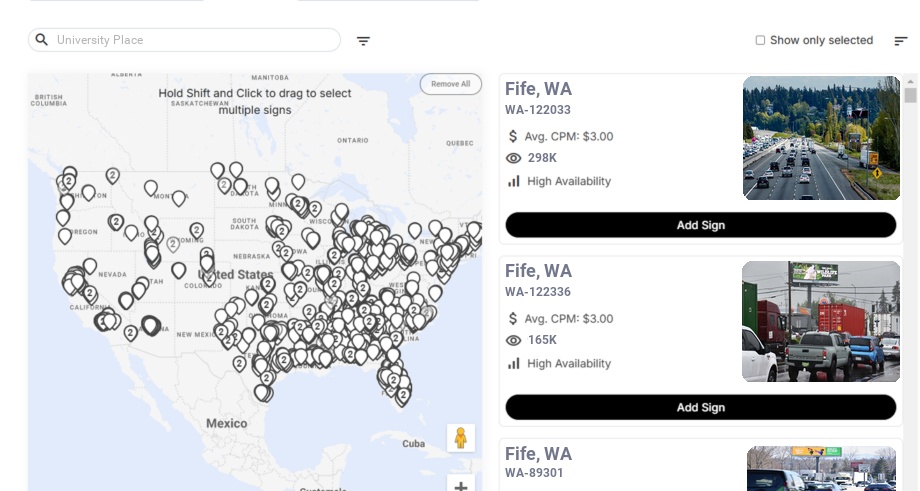
Blip lets you launch University Place billboards fast and self-serve, reaching I-5 and SR-16 commuters without traditional buy-in delays.
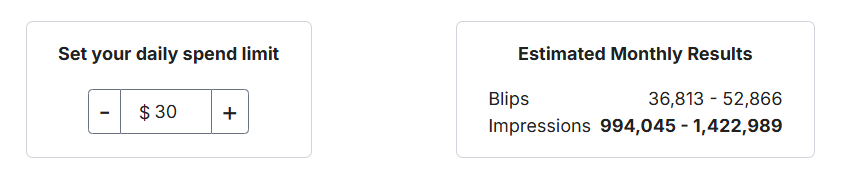
Set a flexible budget for University Place and Blip will keep spend in check while you test Tacoma and Fife traffic corridors.
Use dayparting in University Place to hit the 6:00-9:00 a.m. and 3:30-7:30 p.m. commuter peaks on I-5 and SR-16.
No contracts means University Place advertisers can pause for winter rain or scale up for summer Chambers Bay and Tacoma visitor traffic.
Track University Place campaign results in real time and shift ads toward the corridors and times driving the best response.
Blip's creative tools help you build bold, rain-ready University Place ads for families, JBLM commuters, and high-income homeowners.
Frequently Asked Questions About Billboard Advertising near University Place
How much does a billboard cost near University Place, Washington with Blip?
With Blip, you control exactly what you spend on University Place billboards by setting a daily budget that can be as small or as large as you’d like, and Blip will automatically keep your campaign within that limit. Each “blip” is a brief 7.5 to 10-second ad on digital billboards near University Place, Washington, and you only pay for the individual blips you receive. Pricing varies based on when your ads run, where they appear in the University Place area, and current advertiser demand, so your total cost is simply the sum of all those blips over time.
Where can I advertise with Blip near University Place, Washington?
Our seven digital billboards serving the University Place area are located in Tacoma and Fife, approximately 9.0 miles and 8.9 miles from University Place. These locations tap into some of the busiest roads in Pierce County, including I-5 and SR-16 near the Tacoma Narrows approach. Because many University Place residents drive off the bluff toward I-5 or Tacoma for work, shopping, and entertainment, boards in Tacoma and Fife are ideal for reaching local residents repeatedly during their daily commute.
What kind of people do University Place billboards reach?
University Place is a relatively compact, affluent, and family-oriented suburb on the west side of Pierce County, with a population of roughly 35,000–36,000 residents. More than 40% of adults in University Place have a bachelor’s degree or higher, and the labor force is heavily concentrated in education, healthcare, government, retail, and professional services. Roughly 80–85% of employed University Place residents commute by car, making roadside media a dominant channel.
When is the best time to run Blip ads near University Place, Washington?
Weekday morning drive from 6:00–9:00 a.m. and evening commute from 3:30–7:30 p.m. are especially strong around University Place because many commuters are on I-5 and SR-16 during those windows. Midday can also be effective for retail, healthcare, auto service, and B2B messaging, and it can deliver lower CPMs since competition for impressions is often lighter than during rush hours. You can daypart your buy so your ads run only during the hours that align with your audience.
Why are Tacoma and Fife boards effective for University Place advertisers?
Tacoma and Fife tap into some of the busiest roads in Pierce County, with I-5 through Fife and Tacoma typically seeing 160,000–180,000 vehicles per day and some segments closer to 190,000. SR-16 near the Tacoma Narrows area carries 85,000–100,000 vehicles per day, and many of those trips are repeated commuter impressions. These placements repeatedly reach residents, commuters, and visitors who live, work, shop, and play near University Place.
Do I need a contract to advertise with Blip near University Place?
No, Blip has no long-term contracts or minimum commitments. You can start, pause, or stop your campaign at any time.
How fast can I launch a billboard campaign with Blip near University Place?
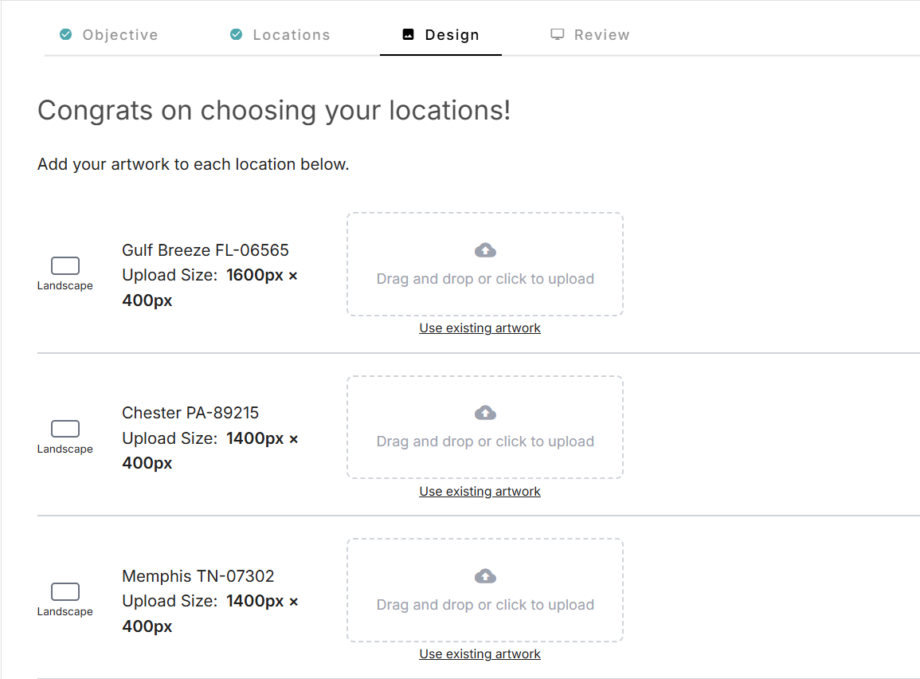
You can have your campaign live in minutes. Create a free account, select your locations, set your budget, upload your design, and start running once approved.
Where can I advertise with Blip near University Place?
Blip has digital billboards near University Place. You can browse available locations on a map, choose the ones that fit your audience, and start advertising right away.
Still have questions? Launch a campaign in minutes — no contracts, no commitments.
Start Your CampaignUniversity Place Billboard Advertising Guide
University Place, Washington sits on a scenic bluff above Puget Sound, but its customers are constantly moving along busy regional corridors that run through nearby Tacoma and Fife. With seven digital billboards serving the University Place area, we can use these high-traffic routes to repeatedly reach residents, commuters, and visitors who live, work, shop, and play near University Place. For advertisers searching for billboards near University Place that still capture regional flow, these placements offer an efficient, commuter-focused solution.
Understanding the University Place Area Market
University Place is a relatively compact, affluent, and family-oriented suburb on the west side of Pierce County
Key facts that matter for billboard advertisers:
-
Population density and size
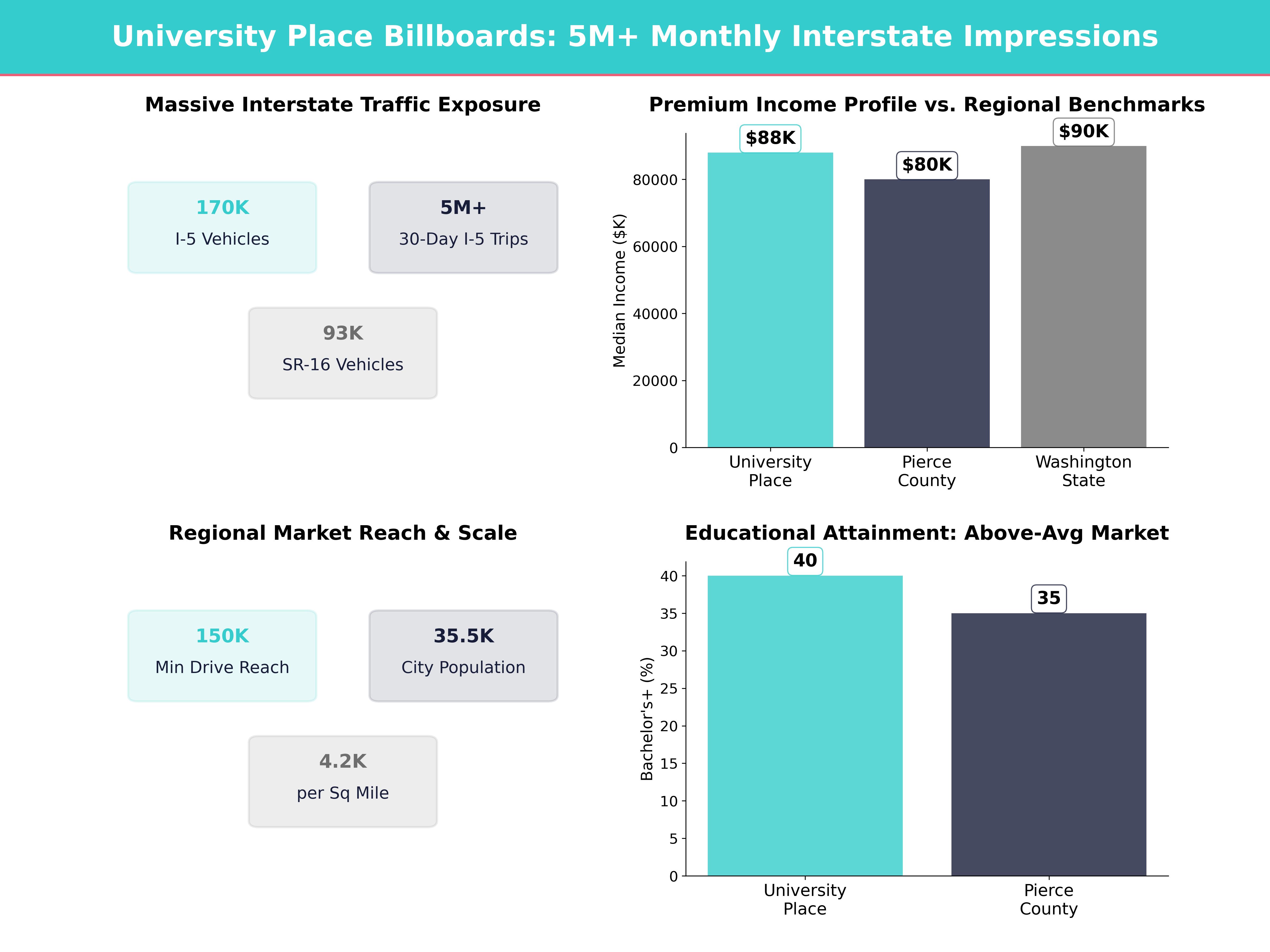
- Recent estimates put University Place’s population at roughly 35,000–36,000 residents, packed into about 8.5 square miles.
- That’s about 4,100–4,300 residents per square mile, making it one of the more densely populated cities in Pierce County (more than double Tacoma’s countywide average density).
- Within a 10–15 minute drive of central University Place, you can reach over 150,000 residents when you factor in nearby Tacoma, Fircrest, and Lakewood—most of whom travel through the same limited set of regional corridors that our digital University Place billboards tap into.
-
Income and spending power
- Median household income in University Place is approximately $85,000–$90,000, compared with Pierce County’s overall median closer to the mid‑$80,000s and the Washington State median in the low‑$90,000s.
- An estimated 30–35% of households earn more than $100,000 per year, giving advertisers a strong base for premium and discretionary offers.
- Homeownership sits near 60–65%, with a typical owner-occupied home value in the $550,000–$650,000 range in recent years—supporting strong demand for home services, remodeling, real estate, and financial products.
-
Education & professions
- More than 40% of adults in University Place have a bachelor’s degree or higher, compared with around 35% for Pierce County overall.
- The labor force is heavily concentrated in education, healthcare, government, retail, and professional services.
- Major nearby employment centers include downtown Tacoma, the Tacoma hospital district, Port of Tacoma, and Joint Base Lewis–McChord (JBLM) tens of thousands of jobs and drive consistent commuter flows ideally suited to billboard advertising near University Place.
For local context, development trends, and city initiatives that can inspire campaign themes, we recommend browsing the official City of University Place website, Pierce County resources, and regional business updates from the Tacoma‑Pierce County Chamber.
For billboard advertisers, this combination of density, income, and educational attainment means:
-
High potential for premium products and services (home improvement, legal, financial, healthcare, education, fitness, and travel).
- Local and regional brands can use billboards near University Place to introduce higher-ticket offerings and membership-based services.
- Strong response to informational, benefit-oriented, and community-minded messaging, not just price-based messaging.
- A good environment for brand-building campaigns that can run for weeks or months to establish local presence and leverage word-of-mouth in a close-knit community.
Where Our Boards Are and Why They Work for University Place
Our seven digital billboards serving the University Place area are located in:
- Tacoma – approximately 9.0 miles from University Place
- Fife – approximately 8.9 miles from University Place
These locations tap into some of the busiest roads in Pierce County, effectively functioning as billboards near University Place for daily commuters and visitors:
-
I‑5 near Fife and Tacoma
- Washington State Department of Transportation (WSDOT) counts show annual average daily traffic (AADT) on I‑5 through Fife and Tacoma typically in the 160,000–180,000 vehicles per day range, with some segments closer to 190,000 during peak construction and growth years.
- Over a 30‑day campaign, that translates to 4.8–5.4 million vehicle trips passing key stretches of I‑5 where digital boards are visible, even before you factor in multiple occupants per vehicle.
- This corridor captures University Place residents commuting to and from Seattle, Federal Way, Fife, Sumner, and JBLM, plus a substantial volume of through-traffic and freight headed to the Port of Tacoma.
-
SR‑16 & Tacoma Narrows approach
- SR‑16 85,000–100,000 vehicles per day near the Tacoma Narrows area, depending on segment and season.
- Over a full year, that amounts to 31–36 million vehicle trips along this single corridor, many of which are repeat impressions from regular commuters traveling between Gig Harbor, University Place, Fircrest, and Tacoma.
- Many people who live near University Place or Gig Harbor use SR‑16 daily, then transition to I‑5 or into downtown Tacoma, where our digital boards are visible.
-
Port of Tacoma & Fife commercial zones
- The Port of Tacoma and associated industrial zones support roughly 42,000 direct and indirect jobs in the region, generating steady traffic from freight, logistics, and service workers across multiple shifts.
- Fife’s commercial strips along I‑5 and Pacific Highway also attract shoppers from across Pierce County; the city’s retail sales routinely exceed $1 billion annually, spreading impressions across early mornings, mid-days, and late evenings.
Because many University Place residents drive off the bluff toward I‑5 or Tacoma for work, shopping, and entertainment, boards in Tacoma and Fife are ideal for:
- Reaching local residents repeatedly during their daily commute (a typical Pierce County commuter spends 25–30 minutes each way on the road).
- Capturing regional visitors who are passing by but may be persuaded to stop, dine, or shop near University Place.
- Sustaining brand recall for service-area businesses (plumbers, roofers, medical groups, realtors, etc.) whose service radius includes University Place and surrounding neighborhoods through ongoing billboard advertising near University Place.
You can review regional transportation information and improvement plans via WSDOT’s Tacoma-area projects pages, which can inform when and where traffic is heaviest, and via the City of Tacoma and City of Fife transportation updates.
Audience Segments in the University Place Area
To use our digital billboards effectively, it helps to think in terms of specific audiences:
-
Commuting Professionals
- Roughly 80–85% of employed University Place residents commute by car, and only a small fraction use transit—meaning roadside media is a dominant channel.
- A significant share commute to Tacoma, JBLM, the Seattle/Tacoma corridor, and other Pierce/King County job centers along I‑5 and SR‑16.
- Many leave between 6:00–8:30 a.m. and return 3:30–6:30 p.m. on weekdays, aligning well with typical billboard peak-view windows.
- They’re responsive to messages about time savings, convenience, prestige, and expertise (e.g., “Skip the Seattle traffic—see your specialist closer to home near University Place”).
-
Families & Students
- The University Place School District (UPSD), highlighted on the UPSD site, is one of the area’s standout institutions; Curtis Senior High School over 5,500 students across the district.
- Family composition is strong: roughly 30–35% of households include children under 18, and average household size is around 2.5–2.7 people.
- Families routinely travel to Tacoma Mall Sixth Avenue Point Defiance Point Defiance Zoo & Aquarium
- Ideal prospects for after‑school programs, healthcare, kids’ activities, local dining, and events promoted on billboards near University Place that parents pass every day.
-
Affluent Empty Nesters & Retirees
- Pierce County’s population age 55+ has been growing faster than the overall population, and University Place is no exception.
- Proximity to Chambers Bay—the links-style course and public park that hosted the 2015 U.S. Open—brings in a more affluent leisure audience. Chambers Bay and its park complex see hundreds of thousands of visits per year for golf, walking, and events; see Chambers Bay Golf Course for event and visitor information.
- They value leisure, travel, financial services, and home upgrades, and typically have higher discretionary income and more flexible daytime schedules.
-
Regional Visitors & Day‑Trippers
- Tacoma and Pierce County attract millions of visitors annually, with tourism supporting more than 10,000 local jobs and generating hundreds of millions of dollars in direct spending.
- Tourists visiting Tacoma’s museums, waterfront, Point Defiance Zoo & Aquarium, and events often drive right past our boards. Explore Travel Tacoma – Mt. Rainier Tourism for visitor data and events.
- They’re strong prospects for hospitality, attractions, restaurants, and shopping within a short drive of University Place, especially along the SR‑16 and I‑5 corridors.
By mapping which of these segments you care most about, you can decide:
- Which boards (Tacoma vs. Fife) you emphasize.
- Which time windows you buy (family-oriented afternoons vs. commuter-heavy rush hours).
- What tone and imagery you use (family, lifestyle, aspirational, value-driven).
Timing Your Campaign: Daily and Seasonal Patterns
The University Place area follows South Sound’s broader traffic and activity rhythms, with a few local twists.
Daily Patterns
-
Weekday morning drive (6:00–9:00 a.m.)
- WSDOT data consistently shows morning peaks on SR‑16 and I‑5, with speeds dropping and volumes rising sharply after 6:30 a.m. toward Tacoma, JBLM, and King County.
- Roughly 60–65% of daily traffic on these corridors occurs during a combined morning/evening commute window, making rush hour targeting especially efficient.
- Strong for coffee, quick-service dining, medical reminders (“Schedule before work”), and branding for professional services.
- Messaging should be simple, bold, and legible at a glance.
-
Midday (10:00 a.m.–2:00 p.m.)
- Mix of service workers, retirees, at‑home professionals, and errand runs. Many healthcare and retail businesses report midday peaks in appointments and foot traffic.
- Good for retail, healthcare, auto service, and B2B messaging (especially near Fife’s industrial and logistics hubs).
- This period can deliver lower CPMs since competition for impressions is often lighter than during rush hours.
-
Evening commute (3:30–7:30 p.m.)
- Residents flowing back toward the University Place area from Tacoma and the broader I‑5 corridor.
- Evening trips frequently include stops for dining, groceries, and fitness, with regional spending on food services and drinking places in Pierce County exceeding $1 billion annually.
- Ideal for dining, entertainment, family activities, gyms, and “stop on your way home” offers.
-
Late evening (after 8:00 p.m.)
- Lower volume but higher frequency of impressions among regular late‑shift workers and nightlife-goers.
- Works well for brand reinforcement and short, memorable messages, particularly for 24‑hour or late‑night businesses (urgent care, pharmacies, QSR, casinos).
With Blip’s tools, we can daypart your buy so your ads run only during the hours that align with your audience, improving efficiency.
Weekly and Seasonal Patterns
-
Weekends
- Weekend traffic to shopping centers, parks, restaurants, waterfront, and Chambers Bay tends to spike late morning through early evening.
- Regional tourism reports show higher hotel occupancy and attraction attendance on Fridays and Saturdays, especially in summer months.
- Excellent for events, recreation, and hospitality campaigns.
- Consider ramping up impressions on Fridays and Saturdays near Tacoma’s commercial corridors to catch weekend planners.
-
Spring & Summer (April–September)
- Pierce County’s tourism season peaks in summer; many attractions, including Point Defiance Zoo & Aquarium and Chambers Bay, see attendance gains of 20–40% compared to winter months.
- Longer daylight and more outdoor recreation at Chambers Bay, Titlow Beach
- Use bright, outdoor imagery and promote seasonal services: landscaping, real estate listings, festivals, patios, golf, and travel.
- Major events in Tacoma—tracked via Travel Tacoma’s events calendar and local news like The News Tribune
-
Fall (September–November)
- Back-to-school season drives heightened spending on clothing, supplies, tutoring, and kids’ activities, with national retailers often seeing 10–15% sales bumps during August–September.
- Great moment to run campaigns near University Place that reference the Curtis High School community and local sports or arts seasons.
- Healthcare providers often push flu shots and wellness visits in this period; billboard reminders can help capture the wave of preventive-care demand.
-
Winter (November–February)
- Shorter days mean more drive-time in darkness, making digital billboards stand out relative to static signage. In the Puget Sound region, sunset can fall before 4:30 p.m. in December, placing much of the evening commute in the dark.
- The South Sound averages over 150 rainy days per year, which increases the visual impact of bright, digital creative against darker skies.
- High-impact for holiday retail, end-of-year financial, healthcare enrollment, and New Year’s resolutions (fitness, wellness, home projects).
Strategically using Blip’s flexible budgeting and on/off scheduling, we can dial campaigns up for key weeks and down during slower windows, maximizing ROI.
Crafting Creative That Resonates Near University Place
Digital billboards only give you a few seconds to communicate. In a market like the University Place area—where many drivers are educated, time-pressed professionals—clarity and relevance are critical.
Design Principles for the South Sound Driver
-
Large, high-contrast text
- Aim for 7 words or fewer on the main line and keep total on-screen reading time under 3–5 seconds.
- Use strong contrasts (white/yellow on dark, or dark on light) to maintain legibility in rain and twilight, which are common in the Puget Sound climate.
-
One clear call to action (CTA)
- “Exit in Tacoma for…”
- “Call or text: 253‑XXX‑XXXX”
- “Search: ‘[Brand] University Place’”
- Avoid clutter: one CTA per creative, and consider displaying phone numbers or URLs in large, high-contrast type so they can be read at highway speeds.
-
Local anchoring
- Reference “near University Place”, “serving the University Place area”, or landmark phrases like “Minutes from Chambers Bay” or “Just off SR‑16.”
- Consider nods to local icons like Titlow Beach, Point Defiance, or the Tacoma Narrows Bridge
- This increases trust and relevance for local viewers and reinforces that your creative is part of a University Place billboard strategy, not a generic regional ad.
-
Weather-aware visuals
- The South Sound sees over 150 rainy days per year and around 37–40 inches of annual precipitation.
- Use bold colors and simple imagery that remain visible against gray skies and wet roads. Avoid low-contrast color combinations that can wash out in fog or heavy rain.
Message Angles That Work Well Here
-
Community and quality of life
- Residents care about safety, schools, and the environment; University Place’s community surveys and city planning documents emphasize livability and neighborhood pride.
- For example: “Protect your University Place home—trusted roofing nearby” or “Local orthodontics trusted by University Place families.”
-
Time and convenience
- Pierce County commuters can lose 200+ hours per year in traffic; highlighting time savings directly addresses a major pain point.
- “Save 30 minutes each visit—specialist care closer to home.”
- “Same‑day auto service along your commute.”
-
Events and limited-time offers
- “This weekend only—Tacoma waterfront dining special.”
- “Chambers Bay sunset special—book tee times now.”
- Use countdowns or date‑specific creatives to create urgency, especially around local events listed on Travel Tacoma or promoted through The News Tribune.
With Blip, you can easily rotate multiple creatives—for example, one design tailored to commuters, another themed around family weekends, and a third tied to a specific event or promotion. This kind of rotation makes billboard advertising near University Place feel timely and relevant instead of static.
Using Blip’s Flexibility to Target the University Place Area
Blip’s platform lets us shape campaigns around location, budget, and timing, which is especially powerful in a suburban-urban mix like the University Place–Tacoma–Fife corridor.
Location Strategy
-
Tacoma‑oriented boards
- Emphasize commuters from the University Place area headed to downtown Tacoma, the hospital district, or Tacoma Mall.
- Ideal for professional services, healthcare, retail, and dining that serve both Tacoma and University Place customers.
- Downtown Tacoma alone houses tens of thousands of jobs across government, education, and healthcare; advertising along these routes puts your brand in front of a large share of the region’s decision-makers.
- For development and event context, reference the Downtown Tacoma Partnership
-
Fife‑oriented boards
- Capture drivers headed to and from I‑5, Port of Tacoma, industrial areas, and casino/resort properties.
- Strong for automotive, logistics, B2B services, recruitment, and hospitality.
- Fife’s location at the crossroads of Pierce and King Counties means a large share of traffic is regional, not just local, boosting reach for brands with wider service areas.
Many local businesses near University Place will benefit from a blend of Tacoma and Fife inventory to blanket both commute directions. This blended approach effectively creates a ring of University Place billboards on the main routes residents use every day.
Budgeting and Buying
-
Because ads are sold by “blip” (a single play), we can:
- Start with a small daily budget to test messaging and placements (e.g., $10–$20/day), which can still generate dozens to hundreds of daily impressions depending on bid and competition.
- Increase impressions during high-value windows like rush hours, end-of-month promotional pushes, or major local events highlighted in outlets like The News Tribune or on Travel Tacoma.
- Pause or reallocate spend at any time if we see stronger performance at certain hours or on specific boards.
-
Consider a campaign structure such as:
- Always-on brand layer: low, steady daily spend during core drive times to build familiarity over 8–12 weeks.
- Pulsed promotions: higher spend 2–3 days before key sales, openings, or events.
- Seasonal bursts: larger spends during back-to-school, holidays, or spring/summer recreation season when consumer spending historically spikes.
This structure makes billboard rental near University Place more efficient, allowing you to scale up or down without long-term commitments.
Local Use Cases: How Different Advertisers Can Win
Billboard campaigns serving the University Place area can work for many verticals. Here are tailored examples:
Local Retail & Dining
- Goal: Increase traffic from residents who routinely drive past Tacoma boards.
-
Tactics:
- Show simple offers (“Kids eat free Tuesdays”, “20% off this weekend”).
- Run heavier on Thursday–Sunday and during evening commute hours, when household decision-makers are together in the car.
- Reference “Minutes from University Place off SR‑16” or similar location cues.
- Align promotions with local event calendars on Travel Tacoma’s events page or community listings from the City of University Place.
Healthcare & Wellness
- Goal: Build trust and appointment volume from families and professionals.
-
Tactics:
- Use provider faces plus short copy: “Pediatric care trusted by University Place families.”
- Time messages around open enrollment, flu season (when local clinics may see 20–30% increases in visits), or new location openings.
- Direct drivers to a short, memorable URL or “Search: [Clinic Name] University Place.”
- For health trends and public health campaigns, coordinate with information from the Tacoma‑Pierce County Health Department.
Home Services (Contractors, Roofers, Landscapers)
- Goal: Dominate mindshare within a service radius covering the University Place area.
-
Tactics:
- Keep messaging benefit-focused: “Roof leaks? Serving the University Place area today.”
- Run consistently over 4–8 weeks to build recognition, especially through rainy seasons when demand for roofing, drainage, and repairs rises.
- Emphasize phone number and “Free estimate” or “Same‑week service.”
- Use imagery that resonates with the local housing stock—single-family homes typical of University Place’s 60–65% homeowner base.
Education, Camps, and Activities
- Goal: Reach parents of students in the University Place area.
-
Tactics:
- Align with school calendars and major registration windows published by UPSD.
- Use creatives with clear age ranges and seasons: “Summer STEM camps for grades 3–8.”
- Run heavier during afternoon and early evening when parents are driving with kids to and from practices, lessons, and events.
- Coordinate timing with local sports seasons, concerts, or performances at Curtis High School and district facilities.
Real Estate & Financial Services
- Goal: Position as the go-to expert for University Place area homeowners.
-
Tactics:
- Showcase local stats (“University Place median sale prices up X% year over year”) to demonstrate market knowledge. In recent years, many Pierce County submarkets have seen high single-digit to low double-digit annual appreciation at different times.
- Use agent photos and strong proof-based lines (“#1 in University Place area listings*”).
- Sustain campaigns over multiple months to build recognition and perceived authority, especially during peak listing seasons in spring and early summer.
- For context on development and zoning that may affect value messaging, consult Pierce County Planning & Public Works
Measuring and Optimizing Your Campaign
Digital billboards don’t provide individual-level tracking, but we can still use data and local signals to refine your strategy.
Practical Ways to Track Impact
-
Promo codes or custom URLs
- Use a URL like
BrandNameUP.comor codes like “UP16” that are only used on your billboard creative. - Monitor visits, conversions, and redemptions; look for spikes aligned with campaign start dates.
- Use a URL like
-
Call tracking numbers
- Assign a dedicated phone number to your billboard campaign to count calls driven primarily by out-of-home exposure.
- Compare inbound call volume before vs. during your campaign to estimate lift.
-
Traffic and sales lift
- Track week-over-week or month-over-month changes in website visits, in-store traffic, and sales when your campaign is live vs. paused.
- If a typical store day sees 100 walk-ins, a sustained lift to 120–130 during a billboard flight—a 20–30% increase—is a strong indicator of impact when other variables are stable.
-
Customer surveys
- Ask “How did you hear about us?” and include “Billboard” as an option.
- Even if only 10–20% of customers answer the question, you can still build a directional picture of billboard contribution.
Ongoing Optimization
- Shift budget toward the boards and time slots that show the best correlation with increased activity. For example, if evening-only impressions coincide with higher restaurant covers, reallocate spend from midday.
-
Test two or three different creatives:
- One focused on a strong offer.
- One focused on brand and trust.
- One referencing community or location (“near University Place”).
- Refresh creative every 4–8 weeks to prevent fatigue, especially for residents who drive the same route daily.
- Keep an eye on local news and development via The News Tribune and official city channels so you can reference timely topics, new openings, or community milestones when appropriate.
Staying Aligned with Local Regulations and Community Norms
Digital billboards serving the University Place area operate under local and state regulations regarding brightness, content, and safety. We handle compliance on the inventory side, but advertisers should:
- Avoid overly distracting animations; keep transitions smooth and readable.
- Refrain from misleading or offensive content, maintaining good standing in a close-knit community that closely follows local issues through outlets like The News Tribune and city newsletters.
- Factor in any legal requirements for industries such as healthcare, real estate, and legal services, including required disclosures or disclaimers.
Resources like the City of University Place and Pierce County websites can provide broader context on community standards, growth plans, and development trends that might influence your messaging. For additional context on signage and transportation safety, the City of Tacoma and City of Fife also publish planning and code information relevant to regional corridors.
By understanding how residents and visitors move through the Tacoma and Fife corridors that serve the University Place area—and by using Blip’s flexible tools to match that movement with the right timing, boards, and creative—we can build campaigns that are both efficient and deeply connected to local life. Whether you’re introducing a new brand, promoting a time-sensitive event, or solidifying your position as a trusted local institution, digital billboards near University Place can become a powerful, data-informed pillar of your marketing strategy. And because billboard rental near University Place is managed play by play, you stay in control of when, where, and how often your message appears.