Billboards near White Center, WA
No Minimum Spend. No Long-Term Contracts. Just Results.
Trusted by Leading Brands


Billboard advertising
near White Center has never been easier

How much is a billboard near White Center?
Why Choose Blip for Billboard Advertising near White Center
Blip lets you launch fast in White Center and target I-5, SR 518, and SR 99 commuters without long-term commitments.
Use Blip-optimized campaigns in White Center to auto-place ads across SeaTac, Seattle, Renton, and Kent as traffic shifts.
Set a flexible budget in White Center and pay only for your blips, perfect for testing airport, stadium, and Southcenter reach.
Daypart your White Center ads for 6-9 a.m. commuters or 3-7 p.m. shoppers, then pause anytime with no contracts.
Blip's real-time analytics help White Center advertisers see what performs on rainy winter drives and summer travel peaks.
Create clean, high-contrast creative with Blip for White Center's fast-moving roads, diverse families, and multilingual audience.
Frequently Asked Questions About Billboard Advertising near White Center
How much does a billboard cost in White Center with Blip?
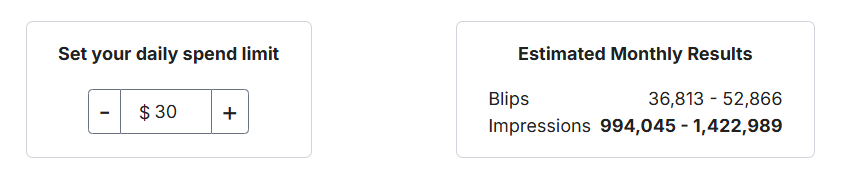
Blip makes billboard advertising in the White Center area flexible and affordable. You only pay when your ad actually appears, with each 7.5-to-10-second display called a “blip,” starting at just $0.01 per display. Because pricing changes based on time of day, location, and advertiser demand, Blip helps stretch your budget while maximizing reach.
Where can I advertise with Blip near White Center, Washington?
We can reach customers in the White Center area through 49 digital billboards located within 10.0 miles in nearby SeaTac, Renton, Seattle, Des Moines, and Kent. That network lets us approach the market from several directions instead of depending on one street or one suburb. For brands that want local awareness, regional reach, or both, the roads near White Center create repeated visibility where people already drive every day.
What kinds of people can I reach around White Center with Blip?
White Center is also one of the most culturally diverse communities in unincorporated King County. The surrounding market is large enough to support both hyperlocal and regional campaigns, and the reachable population rises quickly when we include nearby cities that feed the same roads, shopping areas, schools, and job centers. Campaigns for pediatric care, urgent care, dental services, grocery, QSR, wireless, banking, auto repair, tutoring, after-school programs, and community events can all work well when we build creative around value, trust, convenience, and proximity.
What traffic routes make White Center a strong billboard market?
White Center’s value comes from how efficiently it connects to the south-end freeway network. Recent traffic patterns show that I-5 through south Seattle and toward SeaTac commonly carries roughly 150,000 to 230,000 vehicles per day, and SR 518 typically handles about 100,000 to 120,000 vehicles per day. These routes matter because they are the main channels that bring the White Center area into contact with downtown Seattle jobs, airport traffic, Southcenter retail, and suburban workforces.
When is the best time to run billboard ads in White Center with Blip?
For the White Center area, we often recommend 6:00 a.m. to 9:00 a.m. for job recruitment, healthcare, and commuter services, and 3:00 p.m. to 7:00 p.m. for retail, food, auto, and family services. Friday evening and Saturday blocks can work well for restaurants, entertainment, and shopping. Back-to-school bursts in August and September and holiday flights and shopping runs in November and December can also be strong timing windows.
Do I need a contract to advertise with Blip near White Center?
No, Blip has no long-term contracts or minimum commitments. You can start, pause, or stop your campaign at any time.
How fast can I launch a billboard campaign with Blip near White Center?
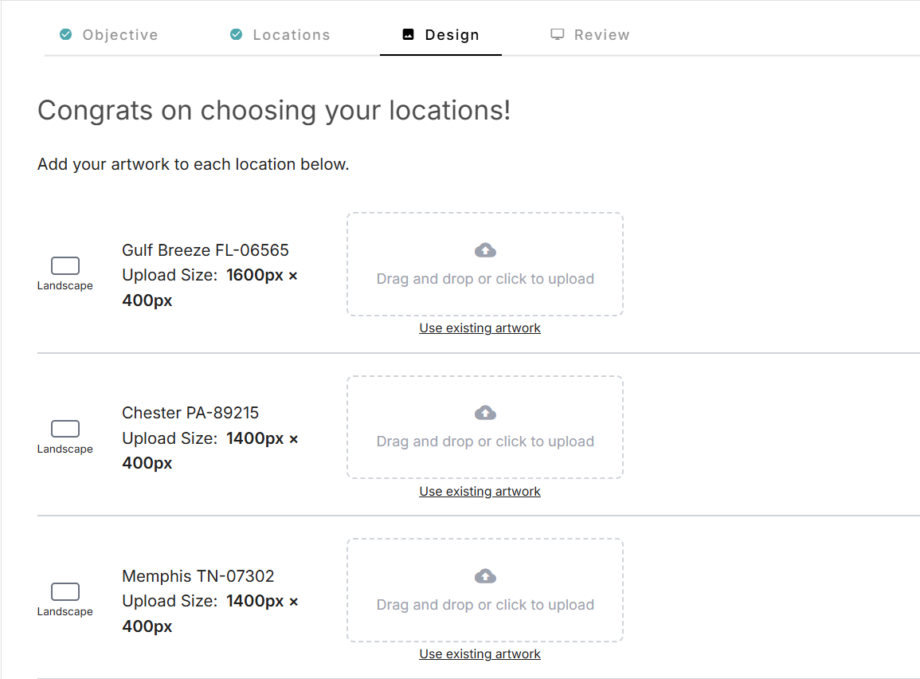
You can have your campaign live in minutes. Create a free account, select your locations, set your budget, upload your design, and start running once approved.
Where can I advertise with Blip near White Center?
Blip has digital billboards near White Center. You can browse available locations on a map, choose the ones that fit your audience, and start advertising right away.
Still have questions? Launch a campaign in minutes — no contracts, no commitments.
Start Your CampaignWhite Center Billboard Advertising Guide
White Center sits in one of the strongest out-of-home positions in south King County Seattle-Tacoma International Airport), Seattle-bound commuters, and dense residential neighborhoods in a county of more than 2.2 million residents. We can reach customers in the White Center area through 49 digital billboards located within 10.0 miles in nearby SeaTac Renton, Seattle, Des Moines Kent
White Center area market overview
Market scale near White Center
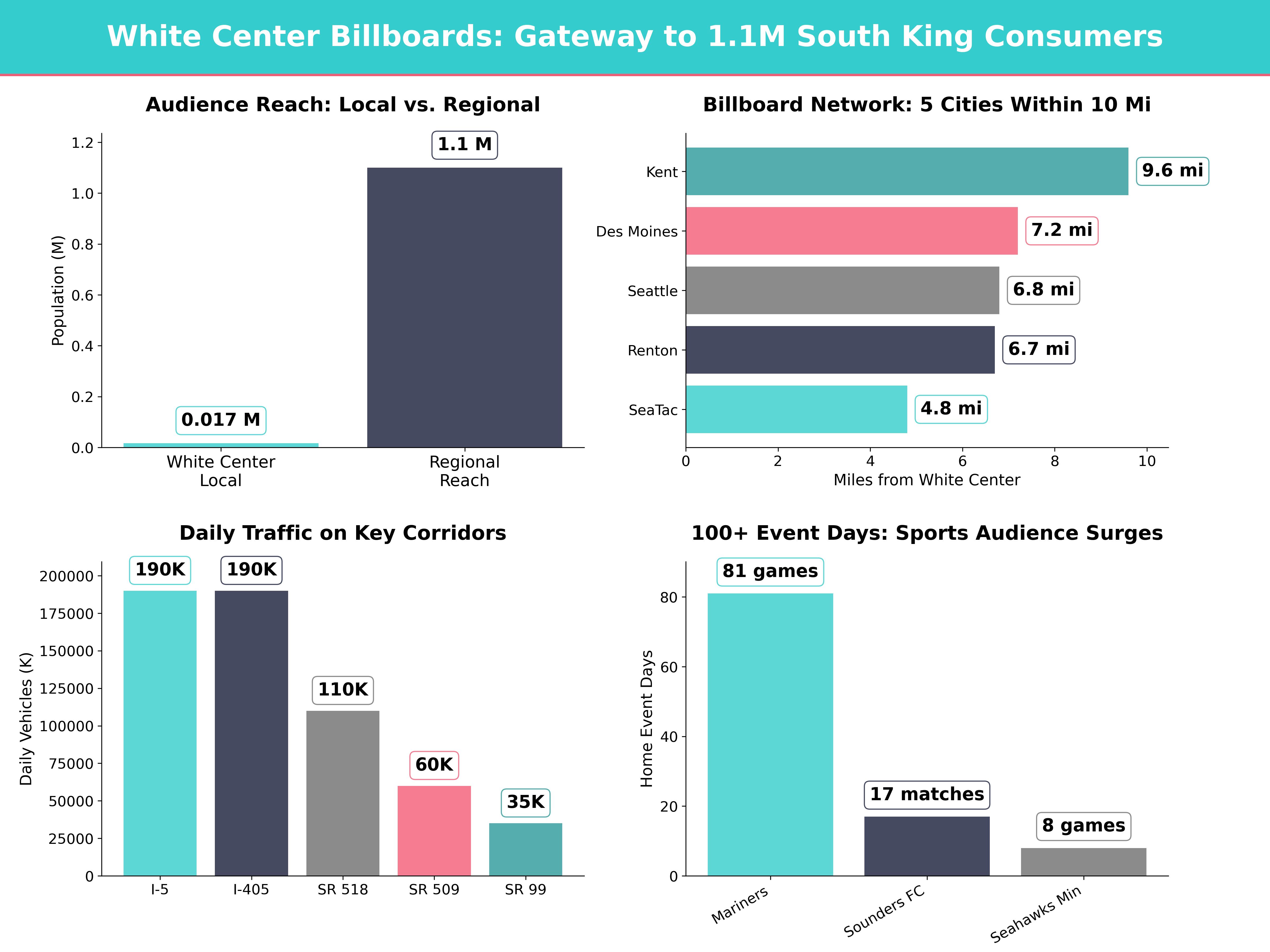
White Center is an unincorporated community in King County 17,000 residents, but the reachable population rises quickly when we include the nearby cities that feed the same roads, shopping areas, schools, and job centers, representing more than 1.1 million residents combined.
A practical way to think about the White Center area is this:
- We currently have 49 digital billboards serving the White Center area.
- Those boards are positioned within 10.0 miles of White Center.
- The closest cluster is in SeaTac 4.8 miles away.
- Additional coverage sits in Renton, at 6.7 miles away.
- Our Seattle inventory is 6.8 miles away.
- Our Des Moines 7.2 miles away.
- Our Kent 9.6 miles away.
That matters because White Center is not isolated. It is tied closely to nearby Burien
Population, demographics, and economic context
The surrounding market is large enough to support both hyperlocal and regional campaigns.
- King County 2.2 million people.
- Seattle has roughly 755,000 residents.
- Kent 136,500 residents.
- Renton has more than 106,000 residents.
- Burien 52,000 residents.
- Des Moines 33,000 residents.
- SeaTac 32,000 residents.
White Center is also one of the most culturally diverse communities in unincorporated King County. That diversity shows up in local restaurants, neighborhood retail, family services, and community organizations such as the White Center Community Development Association. For advertisers, that means campaigns often perform best when they feel inclusive, practical, and neighborhood-aware rather than overly polished or generic.
Economically, the White Center area benefits from being near several major demand engines at once. Those include Seattle-Tacoma International Airport, the downtown Seattle Convention Center, the SoDo industrial district, the Westfield Southcenter retail corridor, and employment centers in Renton and Kent
Commuting patterns that support billboard reach
Car travel still anchors this market. In nearby south King County communities, car, truck, and van commuting generally falls in the 60% to 80% range, depending on the city, which is one reason roadside media remains so effective for the White Center area. White Center is served by King County Metro Sound Transit rail stations in the airport corridor, but the local customer journey still depends heavily on road connections.
That pattern works in our favor because White Center residents and customers routinely move between home, work, school, shopping, and entertainment across municipal boundaries. A campaign near White Center can therefore reach the same audience on weekday commutes, weekend errands, airport runs, and stadium trips.
Key traffic corridors serving the White Center area
Freeways that carry the White Center market
White Center’s value comes from how efficiently it connects to the south-end freeway network. Recent traffic patterns tracked by the Washington State Department of Transportation show why these nearby corridors are so important:
- I-5 through south Seattle and toward SeaTac commonly carries roughly 150,000 to 230,000 vehicles per day, depending on segment.
- SR 518, the key airport connector between I-5 and Seattle-Tacoma International Airport, typically handles about 100,000 to 120,000 vehicles per day.
- I-405 around Renton can approach 180,000 to 200,000 vehicles per day.
- SR 509 near the airport and south-end industrial corridor often carries about 50,000 to 70,000 vehicles per day.
- SR 99 through the south-end corridor commonly serves 30,000 to 40,000+ vehicles per day, depending on segment.
These routes matter because they are not just pass-through roads. They are the main channels that bring the White Center area into contact with downtown Seattle jobs, airport traffic, Southcenter retail, and suburban workforces.
Local connectors and cross-town movement near White Center
On the local side, White Center traffic often funnels through corridors such as SW Roxbury Street, 16th Avenue SW, Olson Place SW, 1st Avenue South, and Ambaum Boulevard SW before joining the larger network. Those local-to-regional transitions are exactly where nearby billboard inventory becomes useful.
A White Center campaign gains reach when we think in terms of feeder patterns:
- Northbound movement pushes toward Seattle job centers, sports venues, and entertainment districts.
- Southbound movement pushes toward Burien SeaTac
- Eastbound movement connects to the Duwamish corridor, Tukwila, Renton, and Kent
- West and southwest movement supports neighborhood retail, schools, family errands, and service-based spending.
Because our boards are placed in nearby cities rather than inside White Center itself, we use those corridors to intercept the audience before, during, and after their primary trips.
Audience segments advertisers can reach near White Center
Commuters and workforce audiences
Commuters are the first major audience for the White Center area. The market pulls workers toward downtown Seattle, the airport, south-end industrial sites, logistics hubs, healthcare campuses, and suburban office locations. That creates a strong fit for employers, staffing firms, trade schools, healthcare groups, and service brands that need broad frequency.
Several nearby employment anchors shape this audience:
- Seattle-Tacoma International Airport handled about 50.9 million passengers in 2023, which supports a huge ecosystem of airlines, concessions, hotels, ride-share activity, parking, and support services.
- Westfield Southcenter features 200+ stores, spanning about 1.5 million square feet, giving the nearby Tukwila retail district a strong daily draw.
- Major healthcare and employment nodes in Renton and the Kent Valley add substantial weekday commute volume for shift workers, office workers, and delivery traffic.
For recruiting campaigns, we usually get the best results by focusing on weekday morning and afternoon drive times, then adding midday visibility for second-shift, logistics, retail, and airport-related workers.
Travelers, shoppers, and eventgoers
The White Center area also benefits from being close to some of the Pacific Northwest’s busiest visitor generators. That makes nearby billboards useful for restaurants, attractions, hospitality brands, retail, insurance, telecom, and app-based services.
Key demand drivers include:
- Lumen Field has a listed capacity of about 68,740.
- T-Mobile Park has a seating capacity of 47,929.
- The Seattle Mariners play 81 home games in the regular season.
- The Seattle Sounders FC typically host 17 regular-season home matches.
- The Seattle Seahawks host at least 8 regular-season home games most years, with some seasons bringing 9.
When those fans travel through the south end, they create valuable spillover traffic for the White Center area. The same is true for convention attendees, concertgoers, and airport travelers moving between SeaTac Seattle, Seattle Center, Climate Pledge Arena, and the stadium district.
Students, families, and multicultural households
White Center is a strong family market, and educational institutions widen the audience further.
- Highline Public Schools serves about 17,500 students.
- The district reports that its students speak 100+ languages.
- The University of Washington enrolls more than 60,000 students across its campuses.
Those figures reinforce something local advertisers already know. The White Center area is multilingual, family-oriented, and highly practical in how people make buying decisions. Campaigns for pediatric care, urgent care, dental services, grocery, QSR, wireless, banking, auto repair, tutoring, after-school programs, and community events can all work well when we build creative around value, trust, convenience, and proximity.
We can also reach students and staff commuting to South Seattle College, Highline College, and the broader Seattle Colleges network. That is especially useful for education, transit-adjacent retail, and entry-level recruiting.
Seasonal and timing opportunities for the White Center area
Summer travel, sports, and visitor peaks near White Center
Summer is one of the best billboard seasons near White Center because several demand cycles stack together at once. Airport travel rises, stadium schedules stay active, and longer daylight hours keep people on the road later into the evening.
A few timing realities stand out:
- Near the summer solstice, the Seattle area gets close to 17 hours of daylight (about 16 hours and 22 minutes).
- Sunset in midsummer is after 9:00 p.m..
- Baseball alone creates 81 regular-season home dates for the Mariners.
For many advertisers, that means we should consider broader daily schedules in summer rather than limiting campaigns to commute-only windows. Restaurant promotions, events, family attractions, real estate, and recreation brands often benefit from afternoon, evening, and weekend delivery.
Back-to-school, holiday retail, and winter visibility
Fall and winter bring a different set of opportunities. School resumes, football crowds return, holiday shopping accelerates, and earlier darkness makes illuminated digital boards more visually dominant.
- Near the winter solstice, the Seattle area has only about 8.5 hours of daylight (about 8 hours and 25 minutes).
- Sunset arrives before 4:30 p.m. in December.
- The Seattle Seahawks, Seattle Kraken, college calendars, and holiday retail all add seasonal demand between September and December.
For the White Center area, we often recommend these timing windows:
- 6:00 a.m. to 9:00 a.m. for job recruitment, healthcare, and commuter services.
- 3:00 p.m. to 7:00 p.m. for retail, food, auto, and family services.
- Friday evening and Saturday blocks for restaurants, entertainment, and shopping.
- Back-to-school bursts in August and September for education, healthcare, and retail.
- Holiday flights and shopping runs in November and December for airport, gifting, and service brands.
Rainy, dark conditions also reward clean, high-contrast creative. In winter, simple messages can stand out even more strongly near White Center than they do in brighter markets.
Billboard design tips for campaigns serving White Center
Creative choices that fit the White Center area
The roads serving White Center include fast freeway segments, complicated merges, and dense commercial corridors. That means our creative has to work in short viewing windows and in inconsistent weather.
We usually recommend these local design principles:
- We keep copy short enough to read in a few seconds, ideally with one message, one brand name, and one action.
- We use strong contrast because gray skies, wet pavement, and winter darkness can flatten lower-contrast designs.
- We favor large type and one dominant image because airport connectors and freeway ramps create quick glances rather than long reads.
- We avoid cluttered maps or long URLs because many viewers are moving between White Center, Seattle, and the airport at speed.
Colors that perform well near White Center usually include bright whites, yellows, oranges, and saturated greens or blues against darker backgrounds. Those palettes hold up well in the Pacific Northwest’s cloudy conditions.
Messaging that resonates near White Center
The White Center area responds well to authenticity. A message that feels practical, local, and inclusive usually outperforms one that sounds too corporate or detached from neighborhood life.
We often see stronger local-market fit when advertisers do the following:
- Reference convenience clearly, such as “minutes away,” “open late,” or “south Seattle area,” when that claim is accurate.
- Show real use cases, such as family meals, job opportunities, home repair, healthcare access, or affordable value.
- Use multicultural casting and inclusive imagery that reflects the diversity supported by Highline Public Schools and the broader south King County population.
- Build campaigns around food, family, mobility, and trust, because those are central themes in everyday White Center area spending.
If a business serves the White Center area from a nearby suburb, we should make that geography easy to understand. A board in SeaTac Renton can still sell to White Center customers, but the message works best when it quickly tells viewers why the offer is relevant to their route.
Regional billboard strategies near White Center
SeaTac and Des Moines strategies for the White Center area
Our SeaTac Des Moines
These boards work well for:
- Travel services.
- Restaurants and QSR.
- Hospitality.
- Auto services.
- Recruiting.
- Healthcare with extended hours.
- Bilingual or multicultural campaigns aimed at broad south-end households.
This approach is powerful because the SeaTac cluster is only 4.8 miles from White Center, and the Des Moines cluster is only 7.2 miles away. We can use those locations to catch travelers, employees, and local residents who move through the airport corridor several times a week.
Seattle strategies for advertisers serving White Center
Our Seattle boards, about 6.8 miles from White Center, are ideal when we want access to downtown-bound commuters, stadium crowds, SoDo traffic, and northbound shoppers.
We often prioritize Seattle-area placements for:
- Entertainment.
- Live events.
- Restaurants.
- Legal services.
- Political and community awareness.
- Retail promotions tied to game days or downtown activity.
If the advertiser wants to build broad familiarity with the White Center area audience, Seattle boards help us reach people on the “big trip” days that shape spending, such as commuting, concerts, ballgames, or airport runs.
Renton and Kent strategies for suburban and workday reach
Our Renton and Kent
- Renton is 6.7 miles from White Center.
- Kent is 9.6 miles from White Center.
We tend to use these boards for:
- Hiring campaigns.
- Trade schools.
- Healthcare.
- Home improvement.
- Auto dealers and repair.
- Regional retail.
- Financial services.
- B2C brands that want broad south King County frequency.
This strategy is especially effective when a business draws from multiple south-end communities rather than only one neighborhood.
Blip tools and capabilities for the White Center area
When Blip optimization helps near White Center
The White Center area is a good fit for Blip optimization because the audience does not travel in just one pattern. Some people move toward the airport, some toward Seattle, and others toward Renton, Kent, Burien, or Southcenter. When we want broad awareness across those paths, Blip’s optimization can automatically distribute budget across the nearby network and emphasize the strongest times.
That matters in a market with 49 boards near White Center. Instead of guessing which single corridor will do all the work, we can let the platform spread delivery where open inventory and audience conditions are strongest.
When manual selection makes sense
Manual selection is valuable when the goal is narrower. If we only want airport traffic, event traffic, or suburban commuter traffic, we can choose the exact boards and timing windows that match that audience.
For example, we might manually focus on:
Blip also helps because we can start with modest budgets, pay only when ads run, and adjust based on real-time performance. Pricing starts at $0.01 per display, and each blip lasts about 7.5 to 10 seconds, which is well suited to short, repeatable message delivery in a drive-by market like White Center.
Getting started with billboard rental near White Center
How we evaluate billboard locations for the White Center market
The simplest way to start is to define what success looks like before choosing boards. A billboard plan near White Center should reflect the advertiser’s geography, not just the closest available face.
We recommend asking these questions first:
- Are we trying to reach residents in the White Center area, workers passing through the area, or regional audiences that include White Center?
- Does the business draw more from the airport corridor, downtown Seattle, suburban south King County, or a mix of all three?
- Is the campaign about awareness, foot traffic, hiring, event attendance, or repeated brand reminders?
- Do we need weekday commute coverage, weekend family coverage, or both?
- Does the creative make sense to someone seeing it on a fast road for only a few seconds?
To answer those questions well, we often compare local business goals with route data from WSDOT, transit context from King County Metro Sound Transit, and the business’s actual customer draw area.
What to expect from Blip versus traditional billboard buying
Traditional billboard buying often pushes advertisers toward longer commitments, less flexibility, and a smaller number of fixed placements. Blip simplifies the process for the White Center area because we can launch quickly, test nearby cities, pause when needed, and shift budget toward the boards and times that actually perform.
That creates a practical workflow:
- We can start with a small test around SeaTac Seattle if airport and commuter traffic matter most.
- We can add Renton and Kent
- We can tighten scheduling around school pickup, evening dining, or game-day traffic if those are the moments that matter most.
- We can refresh creative seasonally without rebuilding an entire contract.
For advertisers serving the White Center area, that flexibility is important because the market is multi-directional. Customers do not move in a single loop, and the best campaign usually combines several nearby corridors rather than one billboard and one guess. With Blip, we can test, learn, and refine until the mix of SeaTac Seattle, Renton, Des Moines Kent