Billboards near Commerce City, CO
No Minimum Spend. No Long-Term Contracts. Just Results.
Trusted by Leading Brands


Billboard advertising
near Commerce City has never been easier
How much is a billboard near Commerce City?
Why Choose Blip for Billboard Advertising near Commerce City
-
Blip lets Commerce City advertisers launch fast on I-25, I-76, and I-270 traffic with self-serve control.
-
Set flexible budgets for Commerce City and reach shift workers near refineries, warehouses, and logistics hubs.
-
Daypart your Commerce City campaign for 4-7 a.m. commutes, 3:30-7 p.m. returns, or Rapids game nights.
-
No contracts mean Commerce City brands can test ads, then scale on what works for local families and commuters.
-
Track real-time results in Commerce City and tune creatives for Arsenal Refuge visitors, shoppers, and sports crowds.
Frequently Asked Questions About Billboard Advertising near Commerce City
How much does a billboard cost near Commerce City, Colorado with Blip?
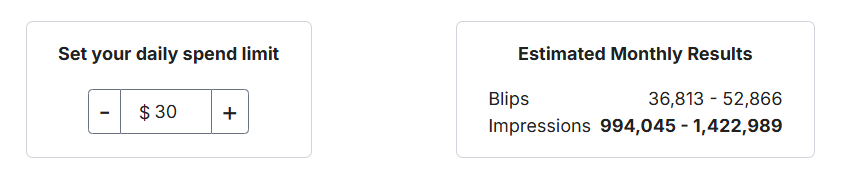
With Blip, you control exactly how much you spend on Commerce City billboards by setting a daily budget that can be changed anytime. Each ad “blip” is a brief 7.5 to 10-second display, and you only pay for the blips you receive, so even a modest budget can put your message on billboards near Commerce City, Colorado. Pricing for each blip varies based on the time of day, location, and advertiser demand in the Commerce City area, and your total cost is simply the sum of your individual blips.
Where can I advertise on billboards near Commerce City, Colorado with Blip?
With 7 Blip digital billboards in nearby Northglenn, about 7.8 miles away, you can reach commuters, residents, and visitors moving through the north Denver metro and serving the Commerce City area. Our Northglenn signs sit in a strategic position along the north I-25 corridor and surrounding arterials that naturally serve the Commerce City area. These nearby placements offer a smart, efficient way to get on the road quickly without paying downtown Denver prices.
What kind of audience can I reach on Commerce City, Colorado billboards?
Commerce City is one of Colorado’s fastest-growing communities, with a population of more than 66,000 residents and a median age around 31–32. The area has a diverse population, with Hispanic/Latino residents making up roughly 70–75% of the community, supporting bilingual and culturally tailored messaging. The broader Adams County area also reports median household incomes in the mid-$80,000s, indicating a solid middle-income base with discretionary spending power.
When is the best time to run Blip ads in the Commerce City, Colorado area?
One of the biggest advantages of Blip is the ability to schedule your ads by time and day, so you only pay when impressions are most valuable. In the Commerce City area, weekday rush hours, weekends, and event-driven peaks can all be strong opportunities. For example, Colorado Rapids home games and large concerts at Dick’s Sporting Goods Park can create surges in traffic 60–90 minutes before and after events.
What roads and traffic patterns matter for billboard advertising near Commerce City, Colorado?
Major routes affecting the Commerce City area include I-25, I-76, I-270, US-85, and E-470. Near Northglenn, I-25 carries on the order of 180,000–200,000 vehicles per day through the north Denver metro, while I-270 carries roughly 90,000–100,000 vehicles per day and I-76 segments near Commerce City typically see 60,000–80,000 vehicles per day. These corridors connect Commerce City to Denver, DIA, industrial districts, and nearby suburbs, making them valuable for billboard reach.
Do I need a contract to advertise with Blip near Commerce City?
No, Blip has no long-term contracts or minimum commitments. You can start, pause, or stop your campaign at any time.
How fast can I launch a billboard campaign with Blip near Commerce City?
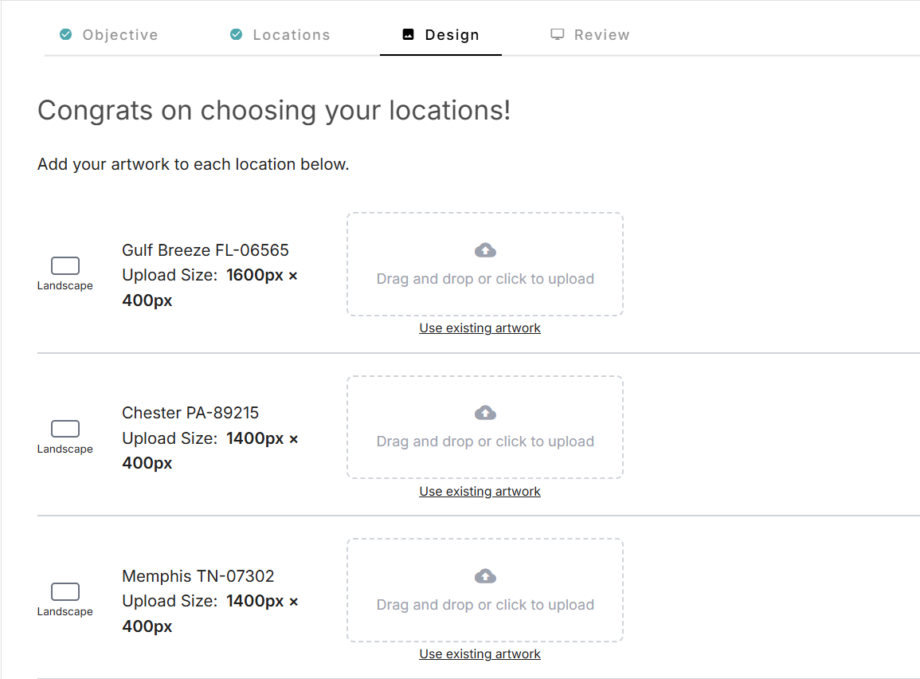
You can have your campaign live in minutes. Create a free account, select your locations, set your budget, upload your design, and start running once approved.
Where can I advertise with Blip near Commerce City?
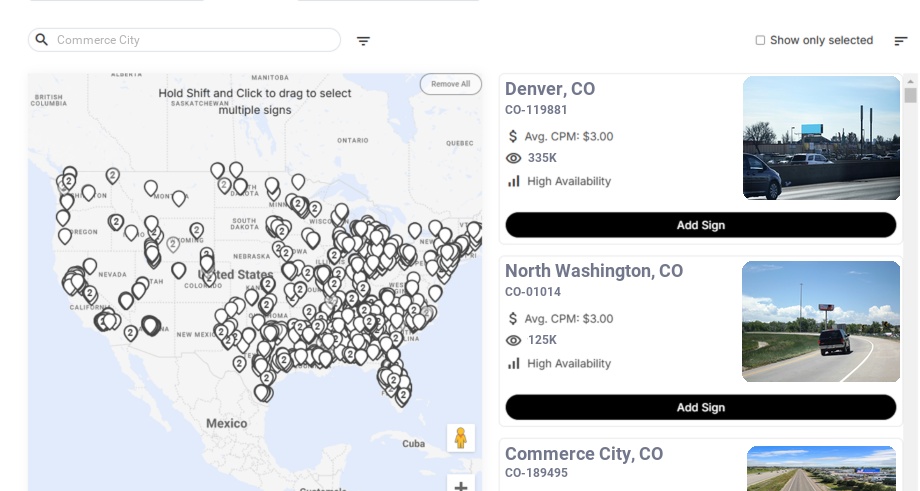
Blip has digital billboards near Commerce City. You can browse available locations on a map, choose the ones that fit your audience, and start advertising right away.
Still have questions? Launch a campaign in minutes — no contracts, no commitments.
Start Your CampaignCommerce City Billboard Advertising Guide
The Commerce City, Colorado area sits at the crossroads of industry, logistics, outdoor recreation, and major-league sports—making it a powerful, high-traffic market for digital billboard advertising. With 7 Blip digital billboards in nearby Northglenn (about 7.8 miles away), we can help you reach commuters, residents, and visitors moving through the north Denver metro and serving the Commerce City area with flexible, data-driven campaigns. If you are looking for billboards near Commerce City without paying downtown Denver prices, these nearby placements offer a smart, efficient way to get on the road quickly.
Understanding the Commerce City Area Market
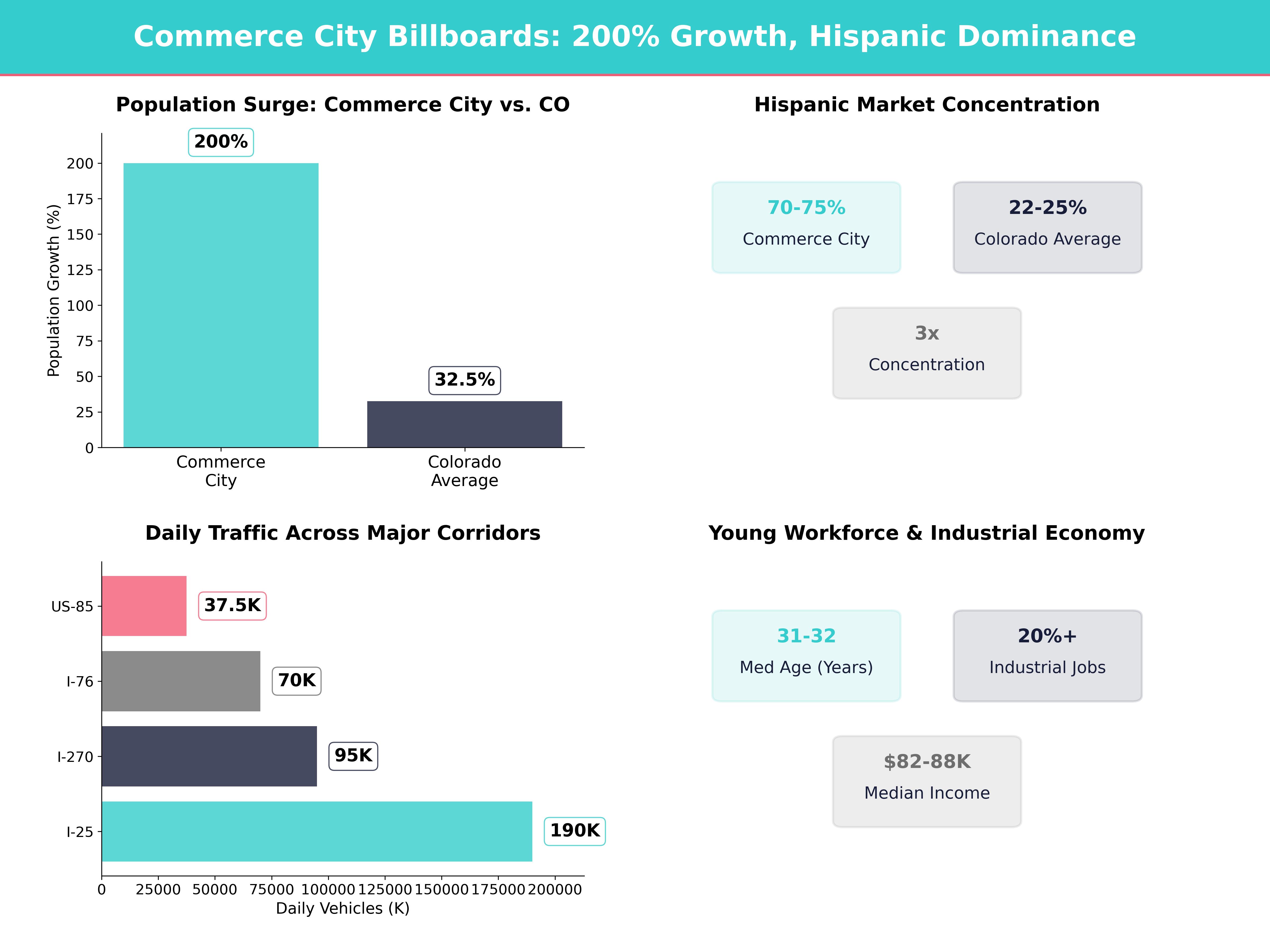
Commerce City is one of Colorado’s fastest-growing communities. According to recent city reports from Commerce City government, the Commerce City area has:
- A population of more than 66,000 residents, up from about 21,000 in 2000—an increase of over 200% in roughly two decades, compared with statewide population growth of roughly 30–35% over the same period.
- A median age around 31–32, younger than the Colorado median (about 37–38), signifying a strong base of families and working-age adults.
- A diverse population, with Hispanic/Latino residents making up roughly 70–75% of the community—well above the statewide share of about 22–25%—supporting bilingual and culturally tailored messaging.
The broader Adams County area, of which Commerce City is a part, reports median household incomes in the mid–$80,000s, with county figures in recent years hovering around $82,000–$88,000. That’s slightly above the national median and indicates:
- A solid middle-income base with discretionary spending power.
- Homeownership rates near 65–70%, creating strong demand for home services, auto, healthcare, and financial products.
Additional local context that matters for advertisers considering Commerce City billboards:
- Industrial and logistics hub: Commerce City is anchored by energy, manufacturing, and distribution, including the Suncor refinery and multiple large industrial parks. Local economic development data from Adams County Commerce City economic development
- Proximity to Denver: Commerce City borders Denver to the north and northeast, with fast access to downtown and to Denver International Airport (DEN)
- Recreation and open space: The nearby Rocky Mountain Arsenal National Wildlife Refuge covers over 15,000 acres, features more than 10 miles of trails, and hosts hundreds of thousands of visitors annually for wildlife viewing, environmental education, and events, according to refuge and U.S. Fish & Wildlife Service figures.
This unique mix—fast-growing residential neighborhoods, heavy industry, and proximity to Denver and DIA—means your billboard messaging near the Commerce City area can effectively target both local households and transient, work-related traffic.
Key Travel Corridors Serving the Commerce City Area
Our 7 digital billboards in nearby Northglenn sit in a strategic position along the north I‑25 corridor and surrounding arterials that naturally serve the Commerce City area. Understanding how people move is critical to deciding where and when to show your Blips and how to structure billboard rental near Commerce City so you capture your best audiences.
Major routes affecting the Commerce City area include:
- I‑25 (north–south spine of the Front Range):
Near Northglenn, I‑25 carries on the order of 180,000–200,000 vehicles per day through the north Denver metro, based on Colorado Department of Transportation (CDOT) traffic counts at key segments between 104th Avenue and 120th Avenue. Annual average daily traffic (AADT) on these sections has grown by roughly 10–15% over the past decade, reflecting continued suburban expansion and making this corridor one of the highest-value locations for billboards near Commerce City. - I‑76 and I‑270 (east–west freight and commuter routes):
These highways connect Commerce City to I‑25, I‑70, and Denver. CDOT data show I‑270 carrying roughly 90,000–100,000 vehicles per day, with truck traffic accounting for about 8–12% of total volume—a high share that underscores the corridor’s freight role. I‑76 segments near Commerce City typically see 60,000–80,000 vehicles per day, with strong morning and afternoon peaks as commuters move between suburbs and central Denver. - US‑85 and E‑470:
US‑85 serves industrial and warehouse districts near Commerce City with AADT commonly in the 30,000–45,000 range across key segments. The E‑470 toll corridor, operated by the E‑470 Public Highway Authority, provides a semi-loop around the east side of the metro area connecting to DIA. In recent reports, E‑470 has handled over 60 million tolled trips annually, with growth rates in some years exceeding 5–7%, feeding commerce and commuting patterns that intersect the I‑25 corridor.
When you run digital billboard campaigns on our Northglenn signs, you tap into:
- Commuters who live in the Commerce City area and work in downtown Denver, the Denver Tech Center, or northern job centers like Broomfield, Thornton, and Westminster.
- Workers commuting to refineries, distribution centers, and industrial corridors around Commerce City, where industrial parks contain millions of square feet of warehouse and manufacturing space.
- Shoppers traveling between retail hubs in Thornton, Northglenn, Denver, and Brighton, including major centers along 120th Avenue and 104th Avenue.
Because Blip lets you adjust bids and scheduling by board, we can help you prioritize specific signs that align most closely with your customers’ likely routes near the Commerce City area, turning nearby Northglenn placements into highly effective Commerce City billboards in practice.
Audience Segments to Target Near Commerce City
The Commerce City area audience is not monolithic. Different segments pass our Northglenn billboards at different times of day and for different reasons. Aligning creatives and schedules with these groups will make your campaign far more effective and help you get more from your billboard advertising near Commerce City.
1. Commuter Families and Young Professionals
- A substantial share of Commerce City area residents commute out of the city for work; regional transportation reports from DRCOG (Denver Regional Council of Governments) indicate that in many north metro suburbs, 60–70% of employed residents work outside their home city.
- Commerce City’s population growth of over 200% since 2000 has been accompanied by robust school enrollment growth in districts such as Adams 14 and neighboring School District 27J, signaling a strong family presence.
-
Products and services that resonate:
- Quick-service restaurants, coffee, and convenience stores—especially along major exits such as 104th, 120th, and 136th.
- Childcare, after-school programs, and youth sports organizations tapping into thousands of local students.
- Financial services, insurance, and real estate focused on first-time and move-up homebuyers in rapidly expanding subdivisions.
- Gyms, medical clinics, and dental practices serving households with both parents working full-time.
2. Industrial and Shift Workers
Given the industrial base near Commerce City, thousands of employees work non‑traditional hours in refineries, warehouses, construction, and logistics.
- Adams County employment data show transportation, warehousing, and utilities jobs numbering in the tens of thousands, with a high concentration around Commerce City’s industrial corridors.
- Major industrial parks regularly advertise for CDL drivers, equipment operators, and warehouse staff at hourly wages often ranging from the mid‑$20s to low‑$30s plus benefits.
-
Focus on:
- 24‑hour services (urgent care, towing, truck wash, late-night dining).
- Safety gear, workwear, and tools.
- Workforce recruiting and staffing agencies.
- Consider targeting early-morning (4–7 a.m.) and late-night (9 p.m.–2 a.m.) slots to capture shift changes, when roadways remain active even as general commuter volume declines.
3. Sports and Event Attendees
Commerce City hosts Dick’s Sporting Goods Park, home of the Colorado Rapids and a major concert and tournament venue, operated in partnership with Commerce City
- The stadium seats around 18,000–19,000 for soccer; MLS attendance records show the Rapids averaging roughly 15,000–18,000 fans per home game in recent seasons.
- Outdoor concerts and special events can push total attendance above 20,000 for certain shows.
- Regional youth tournaments at the surrounding complex—with more than 20 regulation-size fields—can bring thousands of players, parents, and coaches on peak weekends.
These fans and families often travel I‑25, I‑270, and I‑76, intersecting with our Northglenn billboards before or after events. Ideal advertisers include:
- Restaurants, breweries, and bars in Commerce City, Northglenn, Thornton, and Denver’s RiNo area.
- Merchandise and apparel brands, especially Rapids partners or soccer-related retailers.
- Rideshare promotions and parking services capitalizing on event-night demand.
- Local attractions and entertainment such as escape rooms, family fun centers, and movie theaters.
You can use Blip’s scheduling controls to ramp up impressions on event days and taper off on off-days, turning these Northglenn placements into high-impact event-night billboards near Commerce City.
4. Regional Shoppers and Suburban Households
Northglenn and Thornton host major retail centers that draw residents from the Commerce City area:
- Regional shopping centers like the Westminster Promenade and Orchard Town Center corridor to the west and retail clusters along Washington Street, Huron Street, and 120th Avenue attract tens of thousands of visits weekly.
- Big-box stores, malls, auto dealerships, and home improvement retailers generate strong weekend and evening traffic, with parking lots often near capacity on peak Saturdays and holiday periods.
- The north Denver metro’s consumer base numbers in the hundreds of thousands when you include Commerce City area residents plus neighboring communities such as Thornton (approx. 145,000 residents), Northglenn (approx. 38,000), Brighton (approx. 42,000), and parts of Denver and Westminster.
Billboards near Northglenn are ideal for:
- Retail promotions and seasonal sales (back-to-school, holiday, tax refund season).
- Auto dealers and service centers promoting special financing or service discounts.
- Home services (roofing, landscaping, HVAC, solar) for a housing stock where large shares of homes are less than 25 years old and entering prime maintenance and upgrade cycles.
- Healthcare providers and specialty clinics targeting growing young families and aging populations alike.
Timing Your Blip Campaign Around Local Patterns
One of the biggest advantages of Blip is the ability to schedule your ads by time and day, so you only pay when impressions are most valuable. In the Commerce City area, consider these timing strategies:
Weekday Rush Hours
Traffic pattern analyses from CDOT and DRCOG show distinct AM and PM peaks on I‑25 and connecting routes:
-
Morning (6–9 a.m.): High volume of commuters heading south on I‑25 toward Denver or industrial jobs near Commerce City.
- Promote coffee, breakfast, quick-service food, and commuter-focused products.
- B2B messages (“Need same-day freight?” “Staffing solutions today.”) also perform well when decision-makers are in “work mode.”
-
Evening (3:30–7 p.m.): Return traffic heading north and northeast toward Commerce City area neighborhoods and other north metro suburbs.
- Emphasize family dining, activities, gyms, and retail.
- Use drive-time messaging like “Dinner in 10 minutes off exit ___” or “Walk-in clinic open until 8 p.m.”
Weekends
-
Saturdays bring heavy traffic to retail corridors, youth sports complexes, and outdoor recreation spots like the Rocky Mountain Arsenal Refuge and nearby trail systems. Retail market reports for the Denver metro often show weekend sales accounting for 35–45% of weekly in-store volume.
- Great for retailers, entertainment venues, DIY and home improvement, and tourist attractions.
- Sundays may be slightly lighter but more relaxed; messages about banking, real estate, and big-ticket planning (home upgrades, auto purchases) can resonate, particularly late morning and early evening.
Event-Driven Peaks
- Colorado Rapids home games and large concerts at Dick’s Sporting Goods Park can create surges in traffic 60–90 minutes before and after events.
- Major regional events promoted by Visit Denver and the City of Commerce City events page
-
Use local event calendars from:
- Visit Denver
- City of Commerce City
- Denver 365 events
to: - Increase your Blip budget and bids 1–2 hours before start time.
- Run “welcome” or “after-game special” creative during and after the event.
- Test event‑only campaigns for bars, restaurants, and entertainment.
Creative Best Practices for the Commerce City Area
Digital billboard viewers near the Commerce City area typically have only 6–8 seconds to absorb your message. We recommend:
1. Bold, High-Contrast Design
- Use large, legible fonts (sans serif) and high-contrast colors; avoid thin scripts or small body copy.
- Keep to more than 7–10 words of main copy only when absolutely necessary; many successful campaigns use 5–7 words.
- Place your logo and primary call-to-action (CTA) big and clear, with at least 15–20% of the canvas dedicated to branding.
2. Localized Messaging
Tie your creative to local identity:
-
Reference nearby roads and landmarks:
- “Just off I‑76 – Minutes from the Commerce City area”
- “Exit at 120th for your closest location”
-
Use nods to local culture and activities:
- Rapids match days (“Score big after the match—kids eat free tonight!”)
- Outdoor themes referencing the wildlife refuge or mountain views.
- Call out local neighborhoods or cities when appropriate (e.g., “Serving Commerce City, Northglenn, and Thornton”). Simple phrases like “Proud to serve the Commerce City area” help reinforce that your billboard advertising near Commerce City is truly local and relevant.
3. Bilingual and Multicultural Creative
With a strong Hispanic/Latino community in the Commerce City area (around 70–75% of residents):
- Consider bilingual creative (English + Spanish).
Example: “Seguro de Auto / Auto Insurance – 10 Minutos de la Commerce City Area.” - Keep translations short and focus on one primary message to maintain readability; 2–3 short lines per language is typically the upper limit for a 6–8 second read.
- Use culturally relevant imagery that resonates with local families while remaining inclusive.
4. Clear, Actionable Offers
-
Use simple CTAs:
- “Call today,” “Book online,” “Visit this weekend,” “Apply now.”
-
Highlight concrete benefits:
- “Free estimate,” “0% financing for 12 months,” “$5 off with code BLIP.”
-
Short URLs or memorable brand names outperform complex web addresses. Consider:
- Vanity URLs with 10 characters or fewer where possible.
- QR codes as a visual element (high contrast and large enough to be scannable from stopped or slow-moving traffic near surface streets, less critical on highway boards).
5. Dynamic Testing with Multiple Creatives
Blip makes it easy to upload multiple designs and see which performs best.
-
Test:
- Different headlines for the same offer.
- English-only vs. bilingual layouts.
- Price-focused vs. benefit-focused messages.
-
Rotate creatives based on time of day:
- Breakfast vs. dinner messaging for restaurants.
- Recruitment vs. safety messages for industrial employers depending on shift-change times.
- Monitor which creatives correlate with stronger response (calls, form fills, coupon redemptions) over 2–4 week windows.
Strategies for Local, Regional, and National Advertisers
Whether you are based in the Commerce City area or marketing into it from elsewhere, our Northglenn billboards can be tailored to your goals and function as flexible Commerce City billboards for a wide variety of brands.
Local Businesses Near the Commerce City Area
- Objective: Drive in-store visits, calls, or local awareness.
-
Tactics:
- Focus on boards with heavy commuter or retail traffic to capture both morning and evening flows.
- Use radius-based phrasing: “10 minutes from the Commerce City area” rather than specific street addresses, which reduces cognitive load.
- Add time-sensitive promotions (weekend sales, event-night specials) and ramp up your Blip schedule accordingly.
- Highlight local credentials: “Serving Commerce City for 20+ years,” “Locally owned—Adams County proud.” These details reassure viewers that your billboard rental near Commerce City is supporting a nearby, trusted business.
Regional Brands (Front Range and Colorado-wide)
- Objective: Build brand preference and support multiple locations.
-
Tactics:
- Run consistent branding across Northglenn and potentially other Blip boards in the Denver metro, from Aurora Lakewood, for corridor-wide visibility.
- Highlight convenience for the Commerce City area: “Now serving the Commerce City area,” “3 locations within 15 minutes.”
- Coordinate with regional campaigns in TV, radio, and digital; use billboards to reinforce key slogans or offers and time them to coincide with broadcast or digital pushes.
- Feature region-wide promotions (e.g., “Front Range-wide sale ends Sunday”) to create urgency across multiple markets.
National Advertisers and Recruiters
- Objective: Reach a diverse, working-age audience with strong logistics and industrial employment.
-
Tactics:
- Use performance-focused recruiting creatives: “Hiring CDL drivers – up to $32/hr + benefits,” “Now hiring refinery technicians, $5,000 sign-on bonus,” etc.
- Align with shift-change windows and weekday commuting times to reach workers when they’re thinking about job changes.
- Run short, intense “bursts” (1–3 weeks) to support job fairs or national campaigns, adjusting Blip budgets as needed.
- For consumer brands, leverage high airport passenger counts and visitor traffic by timing campaigns to peak tourism seasons highlighted on Visit Denver.
Using News and Local Context to Stay Relevant
Local news and trends can provide hooks for your creative and timing strategy:
- Follow coverage from outlets like The Denver Post, 9NEWS (KUSA), Denver7, and CBS Colorado for major infrastructure projects, business expansions, and traffic changes affecting the Commerce City area.
- Check hyperlocal channels like the Commerce City Sentinel (via Colorado Community Media
- Monitor city announcements from Commerce City, Adams County Northglenn, and Thornton for new developments, park openings, and public works projects.
Examples of responsive strategies:
- If a new housing development opens near the Commerce City area—many recent projects have added hundreds of units at a time—real estate agents and home services can run targeted “Now selling” or “Welcome new neighbors” campaigns to capture early movers.
- Major roadway construction on I‑270 or I‑76 could shift commute patterns temporarily; we can help you redirect spend to certain boards during those periods and adjust dayparting based on detour routes published by CDOT.
- Local school milestones (back-to-school weeks, graduations, tournament runs) can be opportunities for education, childcare, and youth activity advertisers to run timely messages.
Measuring and Optimizing Performance
While billboard impressions are primarily an upper-funnel channel, the flexibility of Blip and the digital-savvy profile of Commerce City area residents allow for effective measurement:
1. Track Website and Search Lift
- Monitor direct traffic and branded search volume during your campaign compared to the prior 4–8 weeks.
- Use UTM tags in any URLs you feature to differentiate billboard-influenced visits from other channels.
- For many local advertisers, seeing even a 5–15% lift in branded search or direct traffic during an active flight is a strong indicator of billboard impact.
2. Match Timing Windows
- Compare sales, calls, or web form fills during the times your Blips are scheduled vs. when they are not. For example, compare call volume between 4–7 p.m. on days with active billboards vs. similar days without activity.
- For time-bound offers (“this weekend only”), see if there is a noticeable lift during the campaign window; even a 3–7% incremental bump in weekend revenue can make a well-targeted billboard buy highly efficient.
3. Use Location-Based Offers
- Create promos tied to the Commerce City area (“Mention ‘Commerce City’ and save 10%”) and see how often they are used.
- Use different promo codes on different flights or time windows (e.g., “CITY10” weekdays, “CITYWEEKEND” weekends) to gauge which schedule drives more redemptions.
- For recruiters, track the number of applicants selecting “Billboard” as their referral source on forms; if 5–10% of applicants cite billboards, that can justify sustained or expanded spend.
4. Iterate Frequently
Because you control spend with Blip, you can:
- Start with a modest daily budget to learn which times and boards deliver the most engagement, then scale up winners by 20–50% as results come in.
- Pause underperforming creatives and double down on top performers; for instance, keep creatives with higher promo redemption rates 2–3x longer than others.
- Shift spend between weekdays and weekends or morning vs. evening as data accumulates, especially as seasonal patterns change (e.g., heavier evening traffic during summer events).
Example Campaign Ideas for the Commerce City Area
To spark ideas, here are a few campaign concepts tailored to the Commerce City area and our Northglenn billboards:
Local Restaurant or Brewery
- Target: Commuters heading home toward the Commerce City area.
- Timing: Weekdays 3:30–7 p.m., plus Rapids/major event nights at Dick’s Sporting Goods Park.
- Creative:
“Hungry on your way back to the Commerce City area?
Exit 120th – Kids Eat Free Tonight.” - Follow-Up: Track redemption of the “Kids Eat Free” offer and adjust schedule based on busiest nights. If you see even 20–30 extra parties per week tied to the billboard promo, consider expanding your campaign or adding lunch-hour messaging.
Industrial Employer or Staffing Agency
- Target: Shift workers and CDL drivers.
- Timing: Early morning (4–7 a.m.) and late night (9 p.m.–1 a.m.).
- Creative:
“Now Hiring in the Commerce City Area – Up to $32/hr + Benefits
Apply at [ShortURL].” - Follow-Up: Monitor applicant volume by time of day and add more budget to the most productive time slots. If 25–30% of applicants arrive during billboard-active hours and cite outdoor ads, you can justify keeping those slots long term.
Home Services Company (HVAC, Roofing, Solar)
- Target: Homeowners in fast-growing neighborhoods near the Commerce City area.
- Timing: Weekday evenings and weekends, when homeowners are more likely to discuss projects.
- Creative:
“Commerce City Area Homeowners:
Free A/C Check – Call Today.” - Follow-Up: Ask callers how they heard about you; track “billboard” mentions. Compare average ticket sizes for billboard-responsive customers vs. others to measure ROI.
Regional Healthcare Provider or Clinic
- Target: Families and workers seeking convenient care.
- Timing: Weekdays 7 a.m.–9 a.m. and 4–8 p.m., aligning with commuting and after-school hours.
- Creative:
“Walk‑In Clinic Near the Commerce City Area
Open Until 8 p.m. – No Appointment.” - Follow-Up: Compare evening patient volume during active billboard weeks vs. baseline weeks. Even 1–2 additional visits per evening can cover a modest Blip budget for many clinics.
By understanding the Commerce City area’s rapid growth, commuter flows, industrial base, and event-driven surges—and combining that insight with Blip’s flexible scheduling and budgeting—we can help you build billboard campaigns that reach the right people at the right moments. With 7 strategically placed digital billboards in nearby Northglenn serving the Commerce City area, you can test, learn, and scale your presence across one of the most dynamic corridors in the north Denver metro and secure cost-effective billboard advertising near Commerce City without sacrificing reach or impact.