Billboards near Dakota Ridge, CO
No Minimum Spend. No Long-Term Contracts. Just Results.
Trusted by Leading Brands


Billboard advertising
near Dakota Ridge has never been easier
How much is a billboard near Dakota Ridge?
Why Choose Blip for Billboard Advertising near Dakota Ridge
-
Blip lets Dakota Ridge brands launch fast on C-470 and US-285 traffic, reaching commuters without a long buy-in.
-
In Dakota Ridge, set flexible budgets for Red Rocks and ski-season surges, then shift spend anytime as traffic changes.
-
Use Blip’s dayparting to hit Dakota Ridge school runs, evening commutes, and weekend mountain traffic at the right time.
-
No contracts means Dakota Ridge advertisers can test Lakewood-facing billboards, then scale what works.
-
Track real-time results with Blip in Dakota Ridge and optimize creative for families, outdoor fans, and west Denver commuters.
Frequently Asked Questions About Billboard Advertising near Dakota Ridge
How much does a billboard cost near Dakota Ridge, Colorado with Blip?
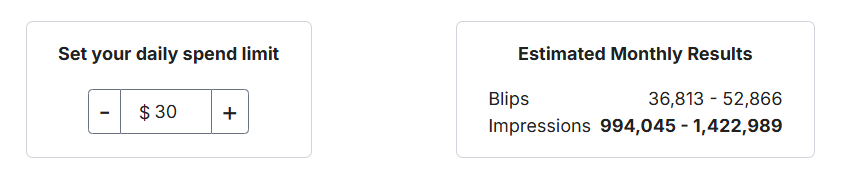
With Blip, you choose a daily budget that works for you, and your ad appears in quick, 7.5–10 second “blips” on Dakota Ridge billboards serving the Dakota Ridge area. Because you only pay per blip, you’re always in control of how much you spend, and you can adjust your budget any time to match your goals or the season. The price of billboards near Dakota Ridge, Colorado changes based on advertiser demand, time of day, and location, so your total cost is simply the sum of the blips you receive.
Where can I advertise with Blip near Dakota Ridge, Colorado?
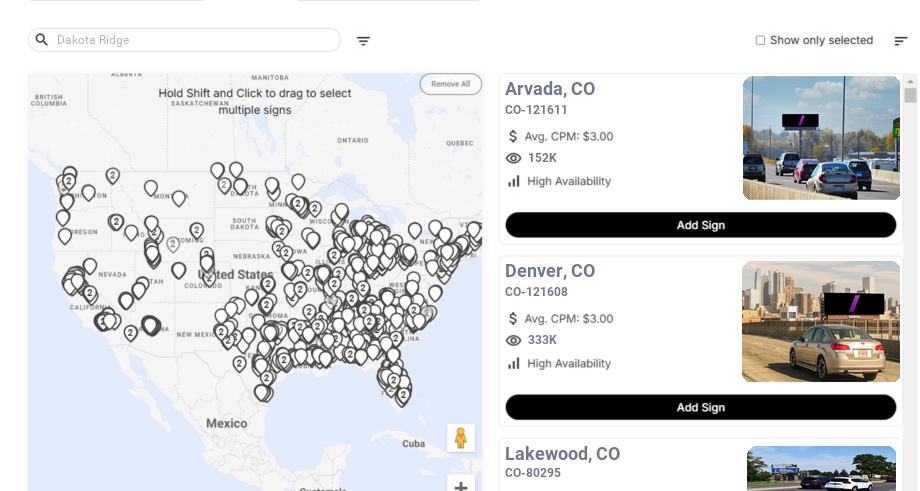
We have 2 digital billboards serving the Dakota Ridge area, located in nearby Lakewood — about 7.5 miles away. These placements function as convenient billboards near Dakota Ridge for brands that want to capture local drivers along their regular routes. Lakewood itself is a substantial market, with more than 155,000 residents and tens of thousands of additional daily workers and visitors.
Who can I reach with Dakota Ridge billboards in Colorado?
The Dakota Ridge area is part of unincorporated Jefferson County, directly west of Littleton and south of Lakewood, and the surrounding community has grown quickly over the past decade. Jefferson County as a whole is home to roughly 583,000 people, and the Dakota Ridge census-designated place alone counted about 33,700 residents in 2020. The area is especially attractive for advertisers because it includes affluent, family-oriented households, commuter-heavy travel patterns, and outdoor and recreation orientation.
When is the best time to run Blip ads near Dakota Ridge, Colorado?
Weekday mornings bring heavy outbound commuter traffic heading from the Dakota Ridge area toward Lakewood, downtown Denver, and the Tech Center, with many corridors reaching 80–100% of daily peak volume during these hours. Evening commute hours, weekends, and seasonal travel periods like ski season and Red Rocks concert season also create strong opportunities for visibility. With Blip, you can allocate a larger share of your budget to the windows that matter most, down to specific hours.
What roads near Dakota Ridge, Colorado have the most billboard traffic?
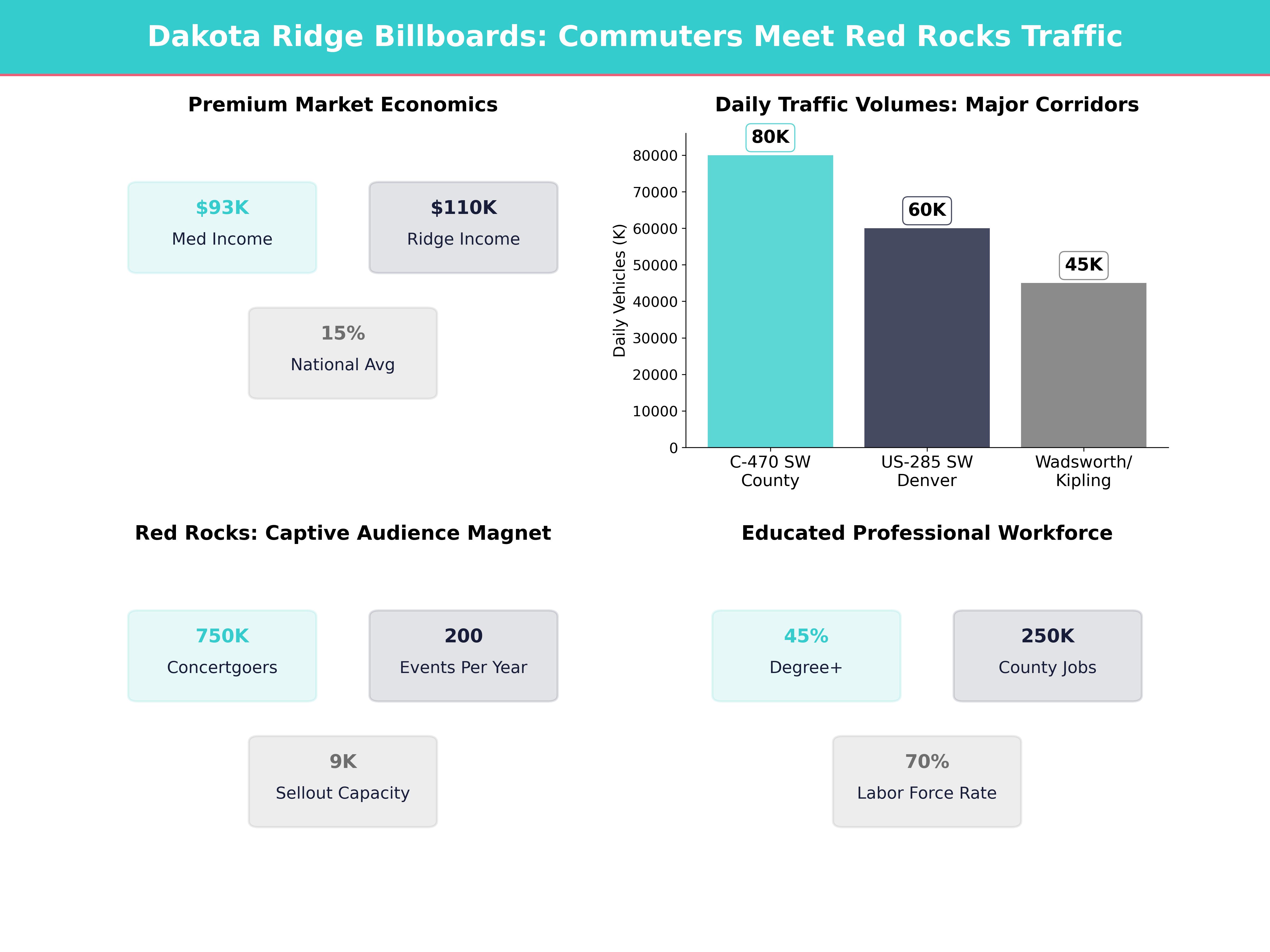
Several key routes feed traffic past the nearby boards, including C‑470, US‑285 (Hampden Ave), Wadsworth Blvd (CO‑121), and Kipling Pkwy. Sections of C‑470 in southwest Jefferson County carry 80,000+ vehicles per day, while many segments of US‑285 in southwest Denver and Lakewood see 50,000–60,000 vehicles per day. Wadsworth Blvd and Kipling Pkwy commonly record 35,000–45,000 vehicles per day on key stretches.
Do I need a contract to advertise with Blip near Dakota Ridge?
No, Blip has no long-term contracts or minimum commitments. You can start, pause, or stop your campaign at any time.
How fast can I launch a billboard campaign with Blip near Dakota Ridge?
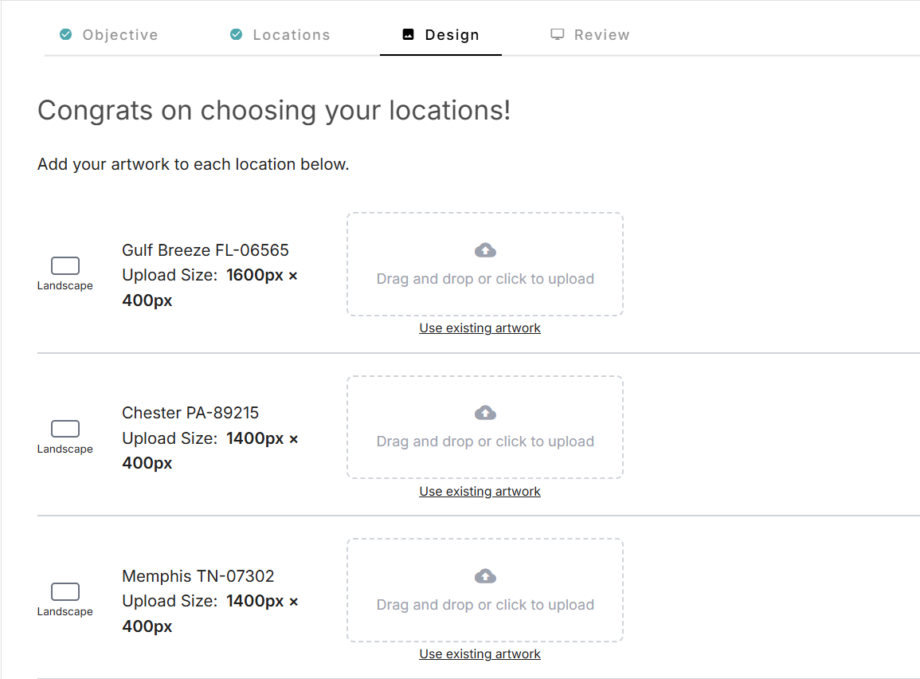
You can have your campaign live in minutes. Create a free account, select your locations, set your budget, upload your design, and start running once approved.
Where can I advertise with Blip near Dakota Ridge?
Blip has digital billboards near Dakota Ridge. You can browse available locations on a map, choose the ones that fit your audience, and start advertising right away.
Still have questions? Launch a campaign in minutes — no contracts, no commitments.
Start Your CampaignDakota Ridge Billboard Advertising Guide
The Dakota Ridge, Colorado area sits at the busy crossroads of west Denver suburban living and Rocky Mountain recreation, making it a powerful — yet often underappreciated — out-of-home advertising market. With digital billboards nearby in Lakewood serving the Dakota Ridge area, we can precisely target commuters, families, and outdoor enthusiasts who move through this corridor every day. For brands looking for billboards near Dakota Ridge without paying downtown Denver prices, this stretch of the metro offers efficient reach and strong visibility. In the southwest Denver suburbs, daily traffic volumes on key highways often exceed 70,000–100,000 vehicles per day, creating repeated exposure opportunities for brands along just a few well-chosen boards.
Understanding the Dakota Ridge Area Market
The Dakota Ridge area is part of unincorporated Jefferson County, directly west of Littleton and south of Lakewood. The broader community surrounding Dakota Ridge has grown quickly over the past decade, and the Dakota Ridge census-designated place alone counted about 33,700 residents in 2020. Jefferson County as a whole is home to roughly 583,000 people, making it Colorado’s fourth‑most populous county, according to Jefferson County. Between 2010 and 2020, Jefferson County added more than 40,000 residents, and local projections anticipate the county will surpass 600,000 residents before 2030, keeping traffic volumes strong on key commuting routes and reinforcing the value of sustained billboard advertising near Dakota Ridge.
Several characteristics make the Dakota Ridge area attractive for billboard advertisers:
-
Affluent, family-oriented households
- Jefferson County’s median household income is just over $93,000, roughly 15–20% higher than the national median, and many Dakota Ridge–area zip codes exceed $110,000, indicating substantial discretionary spending on dining, travel, health, and home services.
- Owner-occupancy in many west-suburban neighborhoods near Dakota Ridge often exceeds 70–75%, with some subdivisions above 80%, reflecting long-term residents and stable buying power.
- Roughly 40–45% of adults in Jefferson County hold at least a bachelor’s degree, supporting demand for professional services, financial products, and education-related offerings.
- Nearby high-performing schools like Dakota Ridge High School 85–90% across its high schools, per Jeffco Public Schools.
-
Commuter-heavy travel patterns
Many residents commute toward Lakewood, downtown Denver, or the Denver Tech Center. Average one-way commute times for Jefferson County residents hover around 27–29 minutes, slightly above the national average, which means more time in vehicles and more billboard impressions. For advertisers, this translates into more chances for Dakota Ridge billboards and nearby Lakewood units to reinforce brand messages multiple times per week. Key routes that feed traffic past our nearby boards include:- C‑470: A major beltway connecting the southwest suburbs with I‑70 and the Tech Center. Sections of C‑470 in southwest Jefferson County carry 80,000+ vehicles per day, according to the Colorado Department of Transportation.
- US‑285 (Hampden Ave): A primary east–west arterial serving commuters heading toward Denver, with many segments in southwest Denver and Lakewood seeing 50,000–60,000 vehicles per day.
- Wadsworth Blvd (CO‑121) and Kipling Pkwy: High-volume north–south arteries into Lakewood that commonly record 35,000–45,000 vehicles per day on key stretches.
-
Outdoor and recreation orientation
With quick access to the foothills, Red Rocks, and places like Jeffco Open Space parks, the Dakota Ridge area population spends heavily on outdoor gear, recreation, and travel. Jeffco Open Space manages more than 57,000 acres of land and over 270 miles of trails, drawing millions of visits annually. Nearby Red Rocks Park & Amphitheatre 150–200 events per year and attracts 750,000+ concertgoers each season, many of whom travel along C‑470 and US‑285 past local billboards.
By placing digital billboards in Lakewood serving the Dakota Ridge area, we can intercept this audience as they drive between home, school, shopping, and the mountains, often multiple times per day and more than 250–300 commuting days per year. This makes billboard advertising near Dakota Ridge an effective way to stay visible to high-value local consumers without relying solely on digital or in-home channels.
Where Our Billboards Reach Drivers Near Dakota Ridge
We have 2 digital billboards serving the Dakota Ridge area, located in nearby Lakewood — about 7.5 miles away. These placements function as convenient billboards near Dakota Ridge for brands that want to capture local drivers along their regular routes. Lakewood itself is a substantial market, with more than 155,000 residents and tens of thousands of additional daily workers and visitors, according to the City of Lakewood. Lakewood is the fifth‑largest city in Colorado, and daytime population swells significantly as commuters from surrounding suburbs arrive for work, education, and shopping.
Lakewood’s major corridors typically carry:
- Tens of thousands of vehicles per day on arterials like Colfax Ave, Wadsworth Blvd, Kipling Pkwy, and 6th Ave, with many segments near our placements recording 40,000–70,000 average daily vehicles in recent Colorado Department of Transportation counts.
- Strong two-way commuter flows, with Dakota Ridge area residents driving north into Lakewood for jobs, shopping, and dining, and Lakewood residents traveling south and west toward C‑470, US‑285, and the foothills. Jefferson County employment data show more than 250,000 jobs in the county, and a large share of workers cross city and county lines daily, intensifying traffic volumes.
Digital billboards along these paths allow us to:
- Catch morning commuting traffic outbound from the Dakota Ridge area, when 60–70% of workers typically travel between 6–9 a.m.
- Influence afternoon and evening shopping and dining decisions as residents return to their neighborhoods; consumer studies show up to 40% of weekday dining decisions are made within an hour of eating, making drive-time messaging particularly powerful.
- Reach weekend leisure traffic heading west to the mountains or north to Denver attractions, when volumes on C‑470 and US‑285 can spike 20–30% above weekday mids, particularly during ski and summer concert seasons.
When planning your Blip campaigns, think less about city limits and more about the real-world travel behavior tying Dakota Ridge, Lakewood, Littleton, and the west Denver suburbs together. Residents routinely move among these communities for work, school, and recreation, creating a combined trade area of well over 300,000–350,000 people who regularly pass through the same corridors. Strategically chosen Dakota Ridge billboards and Lakewood faces can work together to blanket this shared trade area with consistent messaging.
Who You Can Reach: Key Audience Segments
Understanding who lives and drives near the Dakota Ridge area helps us fine-tune creative and scheduling. The surrounding Jefferson County and southwest metro corridor skew toward:
-
Families with school-age kids
- Jefferson County’s school system serves over 80,000 students across more than 150 schools and programs, per Jeffco Public Schools.
- Roughly 25–28% of county residents are under age 20, providing a strong base for family-oriented marketing.
- Neighborhoods near Dakota Ridge High School, Summit Ridge Middle School 2–4 vehicle trips per family per school day.
Ideal advertisers: family entertainment, pediatric and dental care, tutoring, youth sports, after-school programs.
-
High-income professionals and dual-income households
- A large share of residents work in management, business, tech, healthcare, education, and professional services across the Denver metro, with professional and related occupations making up roughly 40–45% of the Jefferson County workforce.
- Dual-income households are common in the west metro, with local labor-force participation rates in the 65–70% range for adults 16+, which correlates with higher discretionary income and frequent dining, shopping, and travel.
- These drivers respond well to premium brands: real estate, financial services, automotive, home improvement, and travel.
-
Outdoor and fitness enthusiasts
- Proximity to Red Rocks, Green Mountain Jeffco Open Space trailheads means heavy weekend travel with bikes, skis, hiking gear, and campers on vehicles. Trail counters and park usage reports show millions of annual visits to Jefferson County parks, with some popular trailheads seeing 1,000–2,000 visitors per weekend day in peak seasons.
- Colorado’s statewide outdoor recreation participation rate regularly exceeds 70% of adults each year, and foothills communities like the Dakota Ridge area are often above that benchmark.
Ideal advertisers: outdoor retailers, gyms, bike shops, ski/snowboard brands, RV sellers, local adventure tours.
-
Local small-business shoppers
- Residents frequently visit neighborhood centers along C‑470 and US‑285, as well as Lakewood hubs like Belmar, Colorado Mills 2 million square feet of retail and dining space and attract millions of shopper visits per year, as highlighted by Visit Lakewood
- Surveys of Jefferson County residents show high loyalty to local businesses, with a significant share preferring locally owned restaurants, breweries, and service providers over national chains.
Ideal advertisers: restaurants, breweries, salons, auto repair, pet care, medical clinics, and home services.
When planning your messaging, assume you’re talking to busy, well-educated, time‑pressed households making multiple high-value purchasing decisions every month: from mortgages and vehicles to healthcare, recreation, and education. Well-placed billboard advertising near Dakota Ridge can keep your brand top of mind at the exact moments these decisions are being made.
Traffic Patterns and Dayparting Strategy
To maximize results with Blip’s flexible scheduling, we should align ads with real-world traffic flows near Dakota Ridge. Traffic data from Colorado Department of Transportation and local agencies show clear peaks and troughs on major corridors:
Weekday Mornings (6:30–9:30 a.m.)
- Heavy outbound commuter traffic heading from the Dakota Ridge area toward Lakewood, downtown Denver, and the Tech Center, with many corridors reaching 80–100% of daily peak volume during these hours.
- School drop-offs peak roughly between 7:15–8:30 a.m., when multiple campuses in the Dakota Ridge area generate dense, repetitive short trips.
Best for: - Coffee, quick-service restaurants, and breakfast promotions.
- Healthcare clinics or fitness centers promoting “before work” appointments.
- Service businesses reminding commuters to schedule appointments (auto care, home services, medical, financial planning).
Midday (10 a.m.–3 p.m.)
- Errand and appointment traffic: stay-at-home parents, remote workers, retirees, and service professionals on the road. Midday volumes on major arterials often sit at 50–70% of peak levels but with more attention available for messages as congestion lessens.
Best for: - Retail, grocery, home improvement, and medical/dental.
- B2B services targeting field reps and small-business owners on the move.
Evening Commute (3:30–7 p.m.)
- Parents picking up children and commuting home from Lakewood and Denver. On some corridors, afternoon peak hours now rival or exceed morning peaks, especially on days with events at Red Rocks Park & Amphitheatre
- Strong impulse potential as people decide where to eat or shop; national studies indicate that up to 60% of weekday dining-out decisions occur during the late afternoon commute window.
Best for: - Restaurants, breweries, entertainment venues.
- After-school programs, tutors, youth activities.
- Urgent care and walk-in clinics.
Weekends
- Strong flows toward the mountains on Friday afternoon and Saturday morning via C‑470 and US‑285. During ski season, westbound traffic counts on I‑70 and feeder routes routinely climb 20–40% above weekday rates, and Sunday evening eastbound volumes surge as visitors return.
- Shopping and leisure traffic around Lakewood’s retail centers; regional malls regularly see 25–35% of their weekly shopper visits concentrated on Saturdays and Sundays.
Best for: - Outdoor gear, ski and board shops, bike shops, hotels, and vacation rentals.
- Weekend-specific offers for malls, boutiques, and big-box retailers.
With Blip, we can allocate a larger share of your budget to the windows that matter most, down to specific hours, while reducing spend during lower-impact periods. Even shifting 20–30% of impressions from low-traffic to high-intent periods can meaningfully boost effective reach and response. This kind of precision is particularly valuable when you’re investing in billboard rental near Dakota Ridge and want every impression to count.
Crafting High-Impact Creative for the Dakota Ridge Area
Drivers near Dakota Ridge and Lakewood are moving at suburban arterial and highway speeds; we typically have 3–6 seconds to make an impact as vehicles travel 35–55 mph. Effective creative usually follows these principles:
-
Bold, simple messaging
- Limit copy to 6–8 words and one main idea; research on out-of-home effectiveness shows recall rates drop sharply when messages exceed 10–12 words.
- Use large, high-contrast fonts (e.g., white or yellow on dark backgrounds) that are readable from 500–700 feet, giving drivers multiple seconds of legible exposure at speed.
-
Local cues and landmarks
- References to “near C‑470 & [your cross street]” or “just off US‑285” give clear geographic anchors.
- Mention recognizable local spots: “Minutes from Red Rocks,” “Across from Colorado Mills,” or “Serving the Dakota Ridge area since 2010.”
- Including local place names like Lakewood, Littleton, and Dakota Ridge can boost relevance and trust, especially for service categories like healthcare and home services.
-
Directional or proximity-based calls to action
- “Next Exit,” “2 Miles Ahead,” or “Turn Right on Wadsworth” work well on Lakewood-facing boards when relevant.
- For service-area businesses (like roofers or landscapers), emphasize service radius: “Proudly serving the Dakota Ridge area.”
- Where appropriate, shorten URLs and phone numbers; aim for 10 characters or fewer in URLs and easy-to-remember phone patterns.
-
Seasonally relevant visuals
- Winter (Nov–Mar): snow, holiday shopping cues, ski/snowboard themes, and home-heating messages tied to average winter lows in the teens and 20s°F.
- Spring (Mar–May): home improvement, landscaping, graduation, tax-time services, matching periods when home services and tax preparation businesses see 30–40% of their annual volume.
- Summer (Jun–Aug): outdoor concerts, travel, camp, and sports imagery; Red Rocks events and school breaks create heavy evening and weekend traffic.
- Fall (Sep–Oct): back-to-school, Broncos colors, tailgating, and home maintenance; many local households plan big-ticket projects before the first major snow, which often arrives by late October or early November.
-
Use motion sparingly
- Digital billboards can show multiple creatives in rotation, but each frame typically appears for 6–10 seconds.
-
Instead of cluttering one design, use 2–3 simple variations that tell a quick story:
- Frame 1: Problem (“Hail damage?”)
- Frame 2: Solution (“Local roofing pros in the Dakota Ridge area”)
- Frame 3: Brand + phone/URL.
Aligning Campaigns With the Local Calendar
The Dakota Ridge area is influenced by both west suburban seasonality and metro Denver events. Building your schedule around local rhythms helps increase relevance:
-
School Year (Aug–May)
- Peak relevance for tutoring, youth programs, family healthcare, and after-school activities.
- Jeffco Public Schools publishes calendars for start dates, breaks, and testing windows; aligning campaigns with back-to-school periods and parent-teacher conference weeks can reach families when they are making decisions about enrichment and healthcare.
- Fall and spring sports seasons (football, soccer, basketball, baseball, and club sports) drive repeated trips to fields and gyms, often 3–5 times per week per family.
-
Red Rocks Concert Season (typically Apr–Oct)
- Increased traffic along C‑470 and US‑285 as concertgoers head to and from Red Rocks Park & Amphitheatre 9,000+ attendees each night.
- Ideal for restaurants, bars, rideshare promotions, and hospitality; emphasize pre- or post-show offerings like “Happy hour before the show” or “Kitchen open late after Red Rocks.”
-
Ski Season (Nov–Apr)
- Friday afternoon and early Saturday morning surges westbound, plus Sunday evening return traffic. Some peak weekends see tens of thousands of additional vehicles heading toward the I‑70 ski corridor.
- Outdoor retailers, ski rentals, resorts, and vehicle services (tires, chains, tune-ups) should focus spend on these days, especially between 5–8 a.m. Saturdays and 3–7 p.m. Sundays.
-
Major Local Shopping Periods
- Black Friday, holiday season, and back-to-school bring heavy traffic to Lakewood retail centers like Belmar and Colorado Mills, highlighted by Visit Lakewood 20–30% of annual sales during the November–December period alone.
- Short, time-bound offers perform well when rotated heavily over these weeks, for example “This weekend only” or “Ends Sunday.”
-
Community Events and Local News Moments
- Tie messaging to big regional stories and events covered by outlets like The Denver Post, 9NEWS, and the local Lakewood Sentinel
- For example, after a major hailstorm reported across Jefferson County, roofing, auto body, and insurance advertisers can quickly deploy or swap creatives through Blip to meet demand spikes that can increase claims and repair inquiries by several hundred percent in the weeks following a storm.
Using Blip’s Flexibility to Test and Optimize
Digital billboards near the Dakota Ridge area are especially powerful when we treat them like a testable, optimizable channel rather than a static buy.
Here’s how we recommend structuring campaigns:
-
Start with at least 2–3 creative variants
-
Vary one key element at a time:
- Headline (“New Patients Welcome” vs. “Same-Day Appointments”)
- Offer (“$0 Enrollment” vs. “First Month Free”)
- Imagery (family-focused vs. product-focused).
- Rotate them evenly for 2–4 weeks and monitor which messages correlate with noticeable upticks in web traffic, calls, or direct inquiries. Even a 10–20% performance difference between creatives is meaningful at scale.
-
Vary one key element at a time:
-
Daypart and day-of-week testing
- Run one version heavier on weekdays, another heavier on weekends.
-
Compare performance metrics like:
- Website sessions from the Dakota Ridge/Lakewood area (use geo-segmentation in analytics).
- Call volume by time of day (track at hourly or half-day granularity).
- Coupon redemptions or “how did you hear about us?” responses captured in your POS or CRM.
-
Use geographic landing pages and tracking
- Set up a dedicated URL such as “/dakotaridge” or “/lakewood” and feature it in your billboard creative.
- Pair that with call tracking numbers to isolate billboard-driven activity. Advertisers often see 5–25% of tracked calls or visits tying back to campaigns when measurement is set up correctly.
-
Adjust pacing based on results
- When a particular message or daypart performs better, shift more of your Blip budget toward those times and designs. Moving even 10–15% of impressions from underperforming creatives to winning ones can significantly raise overall ROI.
- Because Blip operates on a flexible, per-blip basis, we can increase or decrease exposure quickly without long-term fixed contracts, aligning spend with your busiest months and weeks. This agility is one of the core advantages of modern billboard rental near Dakota Ridge compared with traditional, fixed-term buys.
Industry-Specific Tips for the Dakota Ridge Area
Different industries can leverage the unique patterns of the Dakota Ridge area in specific ways:
Home Services (roofing, HVAC, landscaping, solar, windows)
- Jefferson County has a large stock of single-family homes built between the 1980s and early 2000s, now hitting key replacement cycles for roofs, windows, and mechanical systems. In many neighborhoods, 60–70% of homes are more than 25 years old.
- Hail and severe weather are recurring issues along the Front Range, with the Denver metro experiencing multiple hail events most years; single storms can generate tens of thousands of claims.
-
Focus on:
- “Free hail inspection” messaging immediately after storms reported by outlets like 9NEWS and The Denver Post.
- “Book before winter” or “Beat the spring rush” seasonality, aligning with peak demand for HVAC and exterior work.
- “Serving the Dakota Ridge area for X years” to build local trust and distinguish from out-of-town contractors.
Healthcare (family medicine, dental, urgent care, specialty practices)
- Many west metro households have employer-sponsored insurance tied to major local employers in healthcare, tech, and government.
- Emphasize convenience and access: “Same-day appointments near C‑470,” “Open evenings and weekends,” or “Walk-ins welcome until 8 p.m.”
- Use back-to-school, flu season, and sports season as anchors for bursts of high-frequency exposure. For example, flu vaccination campaigns often aim to reach coverage of 40–60% of local residents each season, and youth sports participation commonly involves 2–3 weekly practices or games per child.
Restaurants, Breweries, and Entertainment
- Lakewood and the Dakota Ridge area support a robust dining scene, with dozens of independent restaurants and craft breweries serving both residents and visitors.
- Target evening and weekend traffic with time-sensitive calls to action: “Tonight only,” “Game-day specials,” or “Show this screen for 10% off” if you expect on-the-spot mobile searches.
- Consider alignment with events promoted by Visit Lakewood Lakewood parks and the Belmar district, which can attract crowds in the hundreds to thousands for single events.
Education and Youth Programs
- Promote summer camps, music lessons, and sports leagues in the months leading up to each season; many programs report that 50–70% of registrations occur in the final 6–8 weeks before start dates.
- Use strong parental cues: “Safe, local, and trusted near the Dakota Ridge area,” along with simple registration URLs and deadlines (“Enroll by May 15”).
- Align push periods with report card and parent-teacher conference timelines shared by Jeffco Public Schools, when parents are actively considering tutoring and enrichment options.
Getting the Most From Digital Billboards Serving the Dakota Ridge Area
To summarize a strong approach for the Dakota Ridge area:
- Anchor your targeting to real travel corridors, not just city names. Think C‑470, US‑285, Wadsworth, and Kipling connecting Dakota Ridge with Lakewood, Littleton, and the broader metro; together, these routes carry hundreds of thousands of vehicles per day and provide ideal placement opportunities for billboards near Dakota Ridge.
- Align your schedule with commute, school, and recreation patterns, using Blip’s dayparting tools to focus spend when your audience is most likely to see and act on your message.
- Design for speed and distance: 1 clear message, big fonts, bold contrast, and local references that can be absorbed in 3–6 seconds.
- Use data-driven experimentation: multiple creatives, tracked URLs, and call tracking to continually refine your campaign and shift impressions toward your best-performing messages.
- Leverage local context: tie into school calendars, Red Rocks concerts, ski season, storms, and retail events covered by local entities like Jefferson County, City of Lakewood, Visit Lakewood
By combining our local digital billboard placements near Dakota Ridge with Blip’s flexible buying model, advertisers of any size can tap into a high-income, on-the-move audience and build sustained visibility across one of the Denver metro’s most active suburban corridors. Whether you’re testing your first Dakota Ridge billboards or scaling an established campaign, this corridor offers a strong return on smartly planned billboard advertising near Dakota Ridge.