Billboards in Wallingford Center, CT
No Minimum Spend. No Long-Term Contracts. Just Results.
Turn local buzz into big-time visibility with Wallingford Center billboards through Blip—flexible, self-serve, and budget-friendly. Effortlessly launch digital campaigns on billboards near Wallingford Center, Connecticut, serving the Wallingford Center area with eye-catching impressions whenever and wherever you choose.
Trusted by Leading Brands


Billboard advertising
in Wallingford Center has
never been easier
HERE'S HOW IT WORKS
How much is a billboard in Wallingford Center?
Billboards in other Connecticut cities
Wallingford Center Billboard Advertising Guide
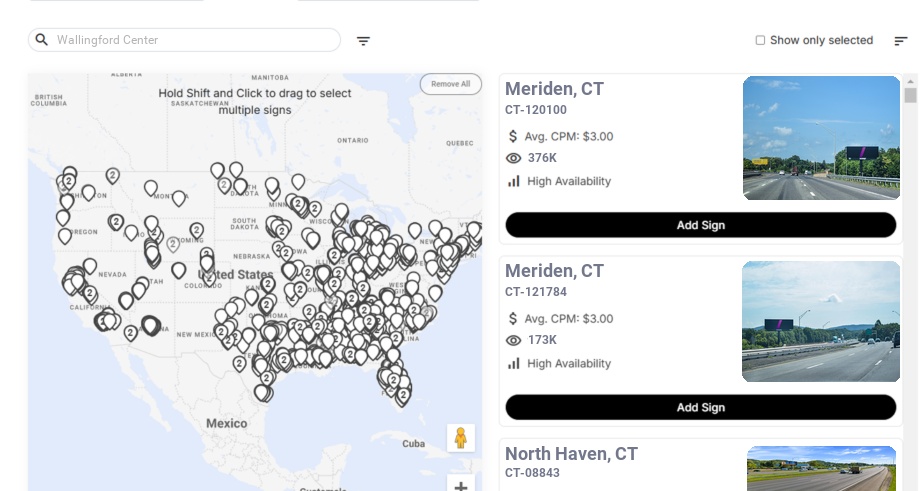
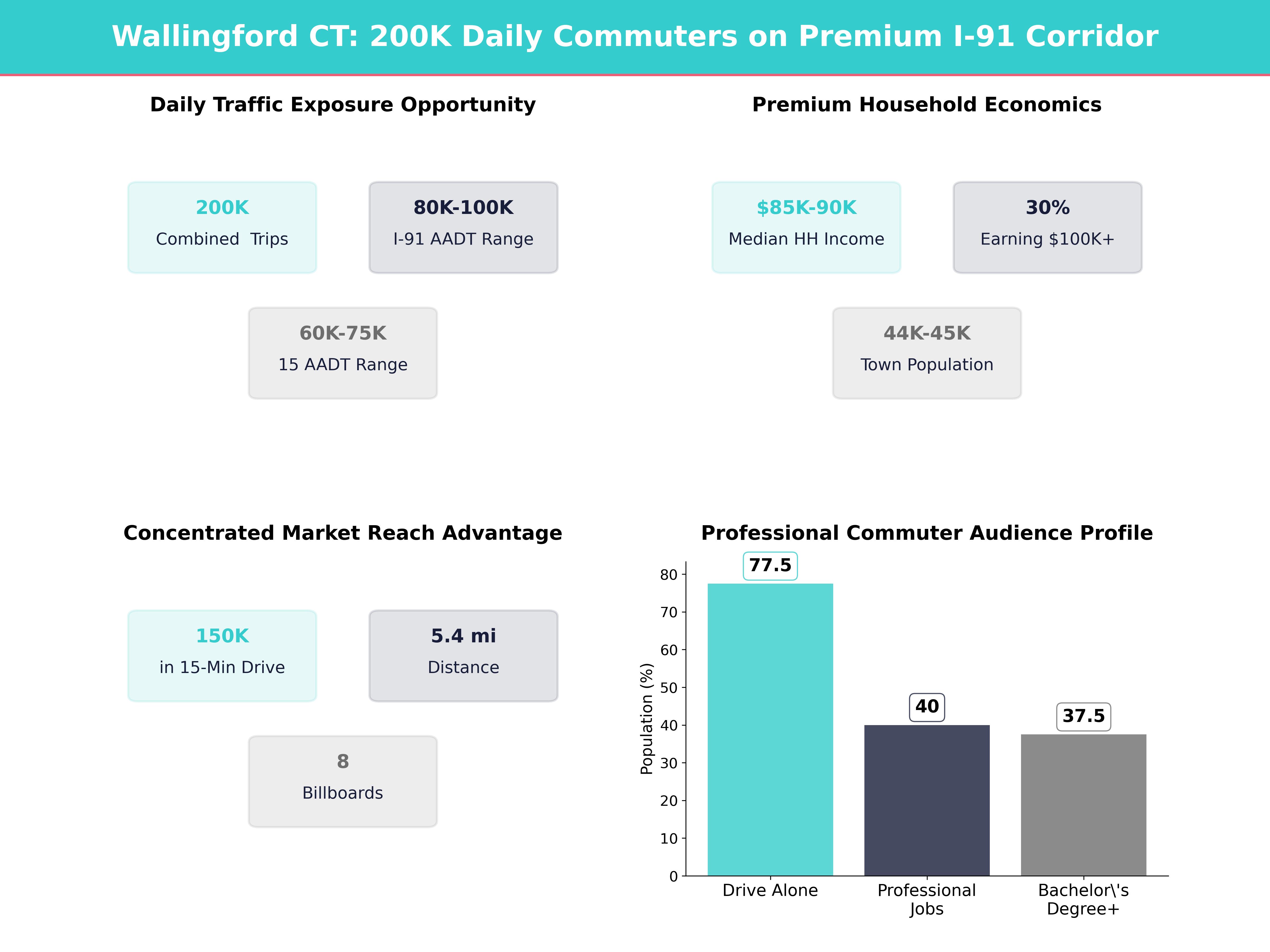
Wallingford Center sits at the heart of a powerful commuter and family market in south‑central Connecticut. With quick access to I‑91 and the Wilbur Cross Parkway, and rail connections to both New Haven Hartford, the Wallingford Center area gives advertisers a chance to speak to tens of thousands of daily travelers. With 8 digital billboards serving the Wallingford Center area from nearby North Haven and Meriden, we can help you turn that regional movement into measurable awareness and sales through flexible billboard advertising near Wallingford Center.
Understanding the Wallingford Center Area Market
The Town of Wallingford as a whole has roughly 44,000–45,000 residents, and the Wallingford Center section contains a dense mix of historic neighborhoods, small businesses, and regional destinations like the Toyota Oakdale Theatre and Choate Rosemary Hall. The town’s median household income is in the mid‑$80,000s to around $90,000, higher than both the national and Connecticut averages, indicating substantial discretionary spending power. Recent town profiles report that more than 30% of households earn $100,000+ annually, giving local advertisers a strong base of middle‑ to upper‑income consumers who are frequently exposed to Wallingford Center billboards along their daily routes.
Key characteristics that matter for billboard advertisers near Wallingford Center:
-
Population & density
- Town of Wallingford population: about 44,000–45,000 residents, with a land area of roughly 39 square miles, yielding a density of around 1,100–1,200 residents per square mile.
- New Haven County population: roughly 860,000–865,000, putting Wallingford Center in a major regional corridor between New Haven (pop. ~134,000) and the greater Hartford area (Hartford metro pop. ~1.2 million).
- Within a 15‑minute drive of Wallingford Center, the total population climbs above 150,000, drawing from Meriden, North Haven, and adjacent towns that regularly see billboards near Wallingford Center on their commutes.
-
Age & household profile
- Median age in Wallingford is around 43–44 years, skewing slightly older than the U.S. median, with a solid mix of young families and established homeowners.
- About 60–65% of households are owner‑occupied, and roughly 65–70% are family households, making family‑oriented messaging and home‑service offers especially effective.
- Approximately 18–20% of residents are under age 18, and 17–20% are age 65+, supporting campaigns that target both youth activities and senior services.
-
Income & education
- Median household income in Wallingford is approximately $85,000–90,000, well above the U.S. median (around the high‑$70,000s).
- Roughly 35–40% of adults hold at least a bachelor’s degree, supported by the presence of Choate and proximity to Quinnipiac University and the New Haven university cluster.
- Professional, management, education, and healthcare roles account for well over 40% of locally employed residents, driving demand for higher‑end retail, dining, and services that can be promoted efficiently with billboard advertising near Wallingford Center.
-
Commuting patterns
- Typical commute times run around 24–27 minutes, reflecting heavy regional travel on I‑91 and Route 15 between Meriden, Wallingford, North Haven, and New Haven.
- Around 75–80% of workers drive alone to work, with an additional 8–10% carpooling. Transit, walking, and biking combined make up a smaller share, under 10%—which means most working‑age residents are regular drivers.
- The CTrail Hartford Line station in Wallingford links residents north to Hartford/Springfield and south to New Haven, adding a rail‑commuter audience that still spends significant time in cars to and from stations and park‑and‑ride lots.
For advertisers, this means campaigns near Wallingford Center can reach a mix of higher‑income households, white‑collar commuters, healthcare professionals, educators, and students—all of whom are repeatedly exposed to the same road network day after day, and therefore to well‑placed billboards near Wallingford Center.
Where Our Digital Billboards Reach Drivers Near Wallingford Center
Our 8 digital billboards serving the Wallingford Center area are located in North Haven (about 5.4 miles south) and Meriden (about 6.6 miles north), keeping your message along the primary travel routes locals use every day. Within a 10‑mile radius of Wallingford Center, daily traffic counts on the main corridors easily exceed 200,000 combined vehicle trips, according to Connecticut DOT
Key corridors and traffic volumes in the Wallingford–North Haven–Meriden band:
-
I‑91 (primary north–south spine)
- Average Annual Daily Traffic (AADT) between North Haven and Meriden is commonly in the 80,000–100,000 vehicles per day range, according to Connecticut DOT
- Peak hours (roughly 7–9 a.m. and 4–6 p.m.) can see hourly flows of 4,000–5,000 vehicles per direction, maximizing billboard impressions during commuter windows.
- This corridor carries commuters between New Haven, Wallingford, Meriden, Hartford, and beyond—ideal for regional B2B and consumer campaigns that rely on billboard advertising near Wallingford Center.
-
Wilbur Cross Parkway / Route 15
- AADT on Route 15 near North Haven and Wallingford typically ranges from 60,000–75,000 vehicles per day.
- Because trucks are restricted, Route 15 skews toward passenger vehicles and commuters, making it strong for retail, entertainment, education, and lifestyle brands targeting households.
- With average travel speeds in the 45–55 mph range, drivers typically have 3–6 seconds of clear viewing time for a well‑designed digital face.
-
U.S. Route 5 and local connectors
- Route 5 (North Colony/Colony Rd) often sees 20,000–30,000 vehicles per day through the Wallingford–North Haven corridor, much of it local shopping and service traffic.
- Routes 68 and 150 connect Wallingford Center with I‑91 and local industrial parks, feeding traffic to our Meriden and North Haven boards and adding thousands more daily trips.
- Together, these secondary roads contribute an additional 40,000–60,000 vehicle trips per day in the immediate trade area, all within easy reach of billboard rental near Wallingford Center.
By selecting Blip billboards in North Haven and Meriden, you effectively “bracket” Wallingford Center—catching drivers heading both north and south. Residents who leave home via I‑91 or Route 15 are likely to pass at least one of these signs every workday, creating 20+ potential weekly exposures per regular commuter for campaigns using billboards near Wallingford Center.
Who You Can Reach: Key Audience Segments in the Wallingford Center Area
Because Wallingford Center sits between two major employment hubs (New Haven to the south and Middletown/Hartford to the north), the local audience is diverse but predictable. Regional employment data show New Haven County supports well over 400,000 jobs, with particularly strong concentrations in healthcare, education, manufacturing, and logistics. When planning creative and timing for Wallingford Center billboards, consider:
-
Commuter professionals
- Thousands of residents commute to jobs in healthcare, education, finance, and government in New Haven and Hartford, with an estimated 40–50% of Wallingford workers employed outside the town limits.
- Major nearby employers include Yale New Haven Health, Quinnipiac University, the Town of Wallingford, Gaylord Specialty Healthcare in Wallingford, and large distribution centers in North Haven and Wallingford’s industrial zones.
- These drivers consistently use I‑91 and Route 15, giving advertisers steady weekday reach and repeat frequency that can easily exceed 60–80 impressions per month per frequent commuter when using billboard advertising near Wallingford Center.
-
Healthcare workers and patients
- Meriden’s MidState Medical Center 10–20 mile radius.
- Gaylord Specialty Healthcare attracts patients and staff from across New England, with specialty programs that support long‑term stays and repeated family visits.
- Healthcare is one of the largest employment sectors in New Haven County, with well over 60,000–70,000 workers when including hospitals, outpatient care, and medical offices—many of whom commute through the Wallingford corridor daily and are prime candidates to see billboards near Wallingford Center.
-
Families and suburban shoppers
- Wallingford’s homeownership rate of roughly 60–65% and the high share of family households make it a classic suburban market.
- Nearby retail corridors—Meriden’s shopping centers, North Haven’s big‑box cluster on Universal Drive, and Wallingford’s Route 5 corridor—draw shoppers from a 10–15 mile radius. Regional mall data suggest weekend foot traffic can spike 20–30% above weekday baselines.
- These drivers are highly responsive to dining, retail, home services, and family entertainment offers, especially when paired with clear value (e.g., 10–20% discounts or limited‑time promotions) advertised on Wallingford Center billboards they pass each week.
-
Students and education communities
- Choate Rosemary Hall brings in 800–900 students plus faculty, staff, and visiting families throughout the academic year.
- Quinnipiac University (undergrad enrollment ~7,000, total enrollment 9,000+) and other New Haven colleges add thousands of student drivers, especially on weekends and evenings.
- Education‑related services (tutoring, test prep, student housing, local restaurants) can use Blip to target these patterns, especially during the August–May school year and May–June graduation periods, taking advantage of flexible billboard rental near Wallingford Center.
-
Industrial and logistics workforce
- The I‑91 corridor hosts numerous warehouses and light‑industrial facilities, including major distribution centers near North Haven and Wallingford, where individual facilities can employ 200–1,000+ workers.
- Manufacturing, transportation, and warehousing account for roughly 10–15% of jobs in the broader region.
- These jobs operate across multiple shifts, creating morning, afternoon, and overnight drive times that advertisers can selectively target with Blip’s scheduling tools to avoid paying for low‑value hours.
Timing Your Campaign With Local Traffic and Seasonality
Using Blip, we can place your message on screen exactly when the Wallingford Center area is most active for your audience. Traffic counts from Connecticut DOT show pronounced weekday peaks and strong weekend activity near shopping and entertainment hubs. Consider these patterns when choosing dayparts and dates for billboard advertising near Wallingford Center:
-
Weekday commute peaks
- Morning: 6:30–9:00 a.m. on I‑91 and Route 15 as residents head toward New Haven, Wallingford, and Meriden. In this window, some segments of I‑91 see 20–30% of their entire daily volume.
- Evening: 3:30–6:30 p.m. as commuters return home or stop at shopping centers and restaurants.
- If you’re promoting coffee, quick service restaurants, or commuter‑oriented services, concentrate your bids in these windows to capture the highest impression density per dollar.
-
Midday traffic
- From 11:00 a.m.–2:00 p.m., you’ll see a mix of lunch‑break travel, local jobsite movement, and healthcare appointments, often representing 25–30% of daily corridor volume.
- Healthcare providers, auto services, and B2B advertisers can benefit from these steadier, less congested times when drivers have slightly more attention and less stop‑and‑go stress.
-
Evenings and weekends
- Events at the Toyota Oakdale Theatre frequently draw 2,000–4,500 attendees, many arriving via I‑91 and Route 15. On major show nights, local traffic can rise 10–20% above typical weekday evening flows.
- Friday evening and Saturday midday traffic intensifies around retail and dining hubs in Meriden, North Haven, and along Route 5, with some shopping districts reporting weekend sales volumes 1.3–1.5x weekday averages.
- Entertainment, restaurants, and local attractions can schedule heavier evening and weekend presence around published event calendars on sites like CTvisit, Visit New Haven Wallingford town calendar
-
Seasonal trends
- Fall: Apple‑picking and foliage trips to nearby destinations such as Lyman Orchards in Middlefield and events at local farms spur weekend traffic spikes of 15–25% on key routes.
- Holiday season (Nov–Dec): Shopping traffic intensifies along I‑91, Route 15, and local malls—ideal for retailers and e‑commerce brands offering local pickup. Many stores see 25–40% of annual sales in this period.
- Spring & early summer: Graduation season at Choate, Quinnipiac, and New Haven‑area colleges increases family travel; home improvement and landscaping brands often report 20–30% higher inquiry volume from March through June.
- Winter: Shorter daylight hours make illuminated digital billboards especially noticeable during evening commutes, and weather‑driven services (HVAC, auto repair, snow removal) see demand spikes around each storm event.
With Blip, we can align dayparting and date ranges precisely to these patterns, rather than paying for every hour of the day, making billboard rental near Wallingford Center more efficient and results‑driven.
Crafting High‑Impact Creative for the Wallingford Center Area
Drivers near Wallingford Center typically see your message for 3–6 seconds, so clarity beats complexity. Studies across digital out‑of‑home campaigns frequently show that simple creatives can boost recall by 20–40% compared with crowded designs. For this particular geography, several creative principles stand out:
-
Lean into local geography
- Use references like “off Exit X on I‑91,” “minutes from Wallingford Center,” or “between Meriden and North Haven” so drivers can quickly place you.
- Mention recognizable magnets: “Near Oakdale Theatre,” “close to Choate,” or “just south of the Wallingford line.”
- Adding a clear exit number or distance (e.g., “Exit 13 – 2 minutes ahead”) can increase immediate navigation responses and make your message feel like a natural part of billboards near Wallingford Center.
-
Use concise, value‑focused copy
- Limit to 7–10 words maximum; research across outdoor campaigns shows optimal legibility when lines stay under 3 short phrases.
-
Examples:
- “Wallingford area HVAC: $0 diagnostic this week”
- “Meriden auto repair – 10 min from Wallingford Center”
- “North Haven dining: Kids eat free Tuesdays”
-
Design for mixed light and weather
- The region experiences wide seasonal variation—from bright snowy days to foggy mornings and early nightfall in winter, with more than 100 days per year of measurable precipitation.
-
Use:
- High contrast (light text on dark backgrounds or vice versa)
- Large fonts (minimum 18–24 inches of letter height in real‑world terms; your designer can convert this to pixel size based on sign specs)
- Bold, saturated colors that stand up to sun, rain, and road glare.
- Avoid fine detail or thin fonts that become illegible at typical viewing distances of 500–1,000 feet.
-
Feature clear directional cues
- Phrases like “Next Exit,” “2 Exits Ahead,” or “Right on Route 5” help turn impressions into immediate visits.
- If you’re within a 5–10 minute drive of a major exit or intersection used by Wallingford Center residents, highlight that to reduce perceived distance and increase visit intent.
-
Match visuals to the Wallingford lifestyle
- Showcase suburban families, professionals, and students, rather than purely urban imagery.
- For attractions and restaurants, show inviting interiors, recognizable food, or seasonal activities (apple‑picking, fall foliage, outdoor patios) that reflect local habits.
- Campaigns that use locally resonant imagery and references can improve ad recognition by 10–20% compared with generic visuals.
-
Rotate multiple creatives
-
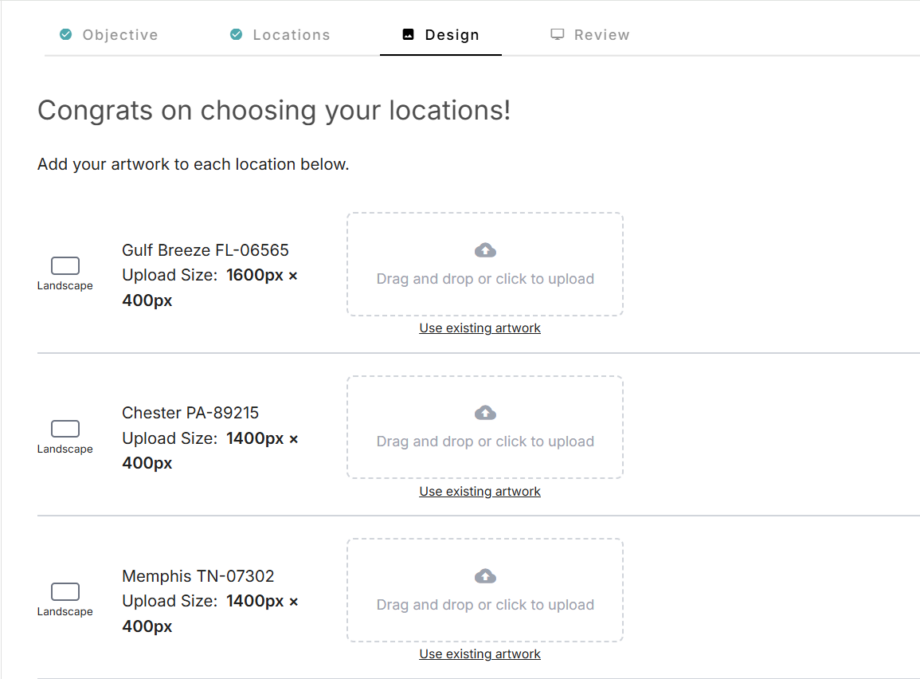
With Blip, you can upload several versions and let them rotate. For example:
- Creative A: Morning commute offer (e.g., breakfast specials, coffee)
- Creative B: Evening message (e.g., dinner, entertainment)
- Creative C: Weekend‑only promotion (e.g., family outings, home services)
- Rotating 3–5 creatives tied to time of day or day of week can improve engagement without diluting message consistency.
-
With Blip, you can upload several versions and let them rotate. For example:
Using Blip Tools Strategically Near Wallingford Center
Blip’s flexibility is especially powerful in the Wallingford Center area, where drivers often repeat the same routes every weekday. Many local commuters use the same corridor 200+ days per year, creating a strong opportunity to build familiarity. We can tailor your campaign to maximize impact per dollar and make the most of billboard rental near Wallingford Center:
-
Board selection to “wrap” Wallingford Center
- Choose North Haven billboards to reach Wallingford Center residents heading toward New Haven and the coast, tapping into a daily New Haven commute market of well over 50,000 regional trips.
- Choose Meriden billboards to capture trips toward Hartford, Middletown, and the northern half of New Haven County.
- Combine both to reach the full commuter loop around Wallingford Center and build multi‑directional frequency with coordinated Wallingford Center billboards.
-
Smart budgeting
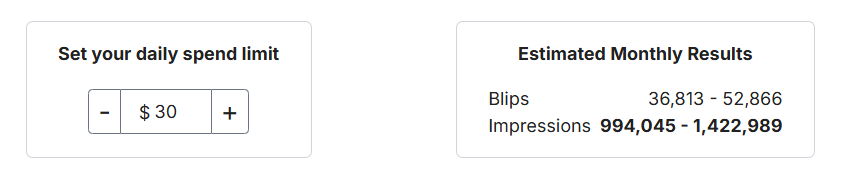
- Instead of buying a static billboard for weeks at a high fixed cost, you can start with as little as a few dollars per day on Blip, adjusting spend as performance data comes in.
- Use higher bids during your most valuable hours (e.g., 7–9 a.m. and 4–6 p.m.) and lower or zero bids during off‑hours you don’t need.
- Many advertisers find that concentrating 60–80% of their budget into top‑performing dayparts produces better ROI than evenly spreading spend across all hours.
-
Dayparting and calendar control
-
Schedule only during:
- Business hours for B2B campaigns targeting industrial parks and offices.
- Evenings and weekends for restaurants, entertainment, and retail.
- Event dates, such as Oakdale Theatre shows or local festivals promoted on Wallingford’s town calendar New Haven Register
- Turning your ads off during low‑value periods can easily reduce wasted impressions by 20–30%.
-
Schedule only during:
-
Message testing
- Run A/B tests by rotating two or more creatives and aligning each with a specific promotion code or landing page.
- Track which message drives more calls, online orders, or in‑store visits, then shift budget toward the winner.
- Even small improvements—like a 5–10% better response rate—compound significantly over thousands of daily impressions.
-
Geo‑coordinated campaigns
- Pair North Haven and Meriden billboards with digital ads targeted to the same ZIP codes (Wallingford 06492, North Haven 06473, Meriden 06450/06451) to create a surround‑sound effect.
- Mention consistent phrases (e.g., “Wallingford area families save 20%”) across your billboards, social media, and local news ads (like on the New Haven Register MyRecordJournal
- Cross‑channel consistency can lift brand recall by 20–30% and improve conversion rates as prospects see the same message in multiple contexts.
Sample Campaign Approaches for Common Advertisers Near Wallingford Center
To make it more concrete, here are practical ways different businesses can use Blip’s North Haven and Meriden boards to reach the Wallingford Center area and maximize the impact of billboard advertising near Wallingford Center:
Local Restaurants and Breweries
- Focus on evening and weekend dayparts near high‑traffic dining times (roughly 5–8 p.m. weekdays and noon–8 p.m. weekends).
-
Use enticing food photography and simple offers such as:
- “Wallingford area date night – 2 entrées, $35”
- “Exit 13, North Haven – craft beer + live music”
- Increase frequency on performance or game nights, coordinating with schedules from local venues and college sports calendars. Many restaurants see revenue jumps of 10–25% on well‑promoted event nights when featured on prominent Wallingford Center billboards.
Home Services (HVAC, Plumbing, Roofing, Landscaping)
- Aim at morning and late‑afternoon commutes Sunday–Thursday, when homeowners are most likely planning service calls.
-
Include:
- Clear service area (“Serving Wallingford, Meriden, North Haven”)
- Fast benefits (“Same‑day service,” “24/7 emergency”)
- Phone and short URL or keyword.
-
Emphasize seasonal urgency:
- Spring: clean‑ups, HVAC tune‑ups
- Summer: air‑conditioning installs
- Fall: heating checks, roof inspections
- Winter: emergency plumbing, snow removal
- Many service providers report that weather‑driven campaigns can boost inbound calls by 20–40% in the days immediately after a storm or heat wave, especially when reinforced with billboards near Wallingford Center that customers see on their way to and from work.
Healthcare and Dental Practices
- Target middle‑of‑the‑day and early evening when appointments are common (10 a.m.–1 p.m. and 4–7 p.m.).
-
Message examples:
- “New patients: Wallingford area dental, no‑insurance discounts”
- “Meriden urgent care – open until 8 p.m.”
- Leverage location proximity to I‑91 or Route 5 to highlight easy access and parking.
- Given that healthcare visits per person in the U.S. typically exceed 3–4 per year, sustained visibility in this category using Wallingford Center billboards can build long‑term patient pipelines.
Schools, Camps, and Training Programs
-
Run heavy presence 6–8 weeks before key enrollment dates for:
- Private schools, SAT/ACT prep, driving schools, trade programs, and summer camps.
- Aim at commuter windows and Saturday midday when parents are driving children to activities.
-
Use parent‑focused language:
- “Wallingford area STEM camp – grades 3–8”
- “Career training in Meriden – classes nights & weekends”
- Enrollment‑focused campaigns that add billboards to existing digital efforts commonly see inquiry increases of 10–20%, especially when deadlines are clearly highlighted and repeated on billboards near Wallingford Center.
Auto Dealers and Service Centers
-
Spend more during:
- End‑of‑month sales periods
- New model releases
- Tax refund season (Feb–Apr), when auto purchases traditionally spike.
-
Highlight:
- Distance from Wallingford Center (“10 minutes north on I‑91”)
- Limited‑time incentives (“$0 down,” “0.9% APR”)
- Coordinate messages with online inventory pages and local news ads on outlets like MyRecordJournal
- Many dealers find that combining out‑of‑home with digital and print can lift showroom traffic by 15–30% compared with using a single channel alone, particularly when their regional presence is anchored by billboards near Wallingford Center.
By combining what we know about Wallingford Center’s commuter flows, income levels, and regional role with Blip’s flexible digital billboard platform, we can build campaigns that reach the right people at the right times—without overpaying for wasted impressions. Whether you’re drawing customers from Meriden, North Haven, or the neighborhoods surrounding Wallingford Center, our 8 digital billboards in the area give you a powerful, data‑driven way to stay visible where it matters most with targeted billboard advertising near Wallingford Center.