Small businesses win by dominating their immediate geography, not chasing customers across entire metro areas.
William Shakespeare wrote: “You are not for all markets.” He would’ve been a great marketer.
Successful local companies don’t compete by reaching everyone everywhere. They succeed by becoming unavoidable within their service radius.
Since placing billions in advertising across markets, Cedric Bernard, CEO of Blip and Adkom, knows how small businesses win. A geographic concentration strategy used to require enterprise level budgets in the millions. Now, it’s accessible to businesses that only have a few hundred to spend each month.
Key Takeaways:
- Geographic concentration beats broad digital reach. Five exposures in one neighborhood drive more sales than one exposure across five neighborhoods. Local businesses win by dominating customers’ specific daily routes.
- Physical presence creates legitimacy that digital can’t match. Customers see billboards in their community and assume you’re established enough to maintain that visibility.
- Location-based advertising builds a defendable competitive advantage. Digital competitors won’t be competing for local billboard space, making physical location a marketing moat small businesses can actually protect.
Reaching Too Far Kills Your Budget
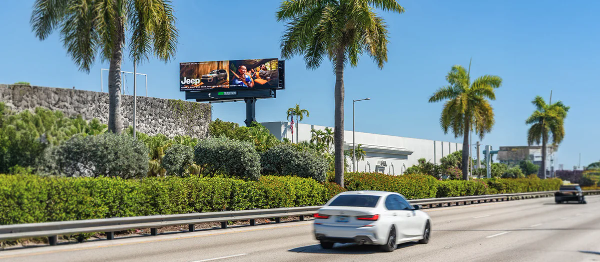
A common tactic: Spend your whole monthly budget on Google Ads trying to reach customers across the entire metro area.
The common result: Visibility to thousands who will never visit your location.
Following that scattershot playbook is a race to the bottom.
“If you’re a brand wanting to communicate nationwide, you will need to buy East Coast, West Coast, and everything in between—and that’s going to be very pricey,” Cedric explains.
Many small businesses try to copy this national approach on a miniature scale. That’s the danger zone.
Digital platforms trained businesses to obsess over reach metrics: more impressions, bigger audiences, wider targeting. But reach without frequency just burns cash. Customers who see your ad once while scrolling forget you before they finish their coffee.
“You used to go to the butcher, you used to go to the baker,” Cedric points out. Those businesses thrived through concentration, not expansion. They owned their block, serving their community and building unshakeable customer loyalty.
Your opportunity lies in becoming the only business in your niche that customers see repeatedly in their daily routine.
The business that captures attention within a five-mile radius wins thirty-year customer relationships. While others scatter budgets across the internet hoping to catch random customers, smart local companies make themselves unavoidable in specific neighborhoods.
The Corridor Domination Strategy
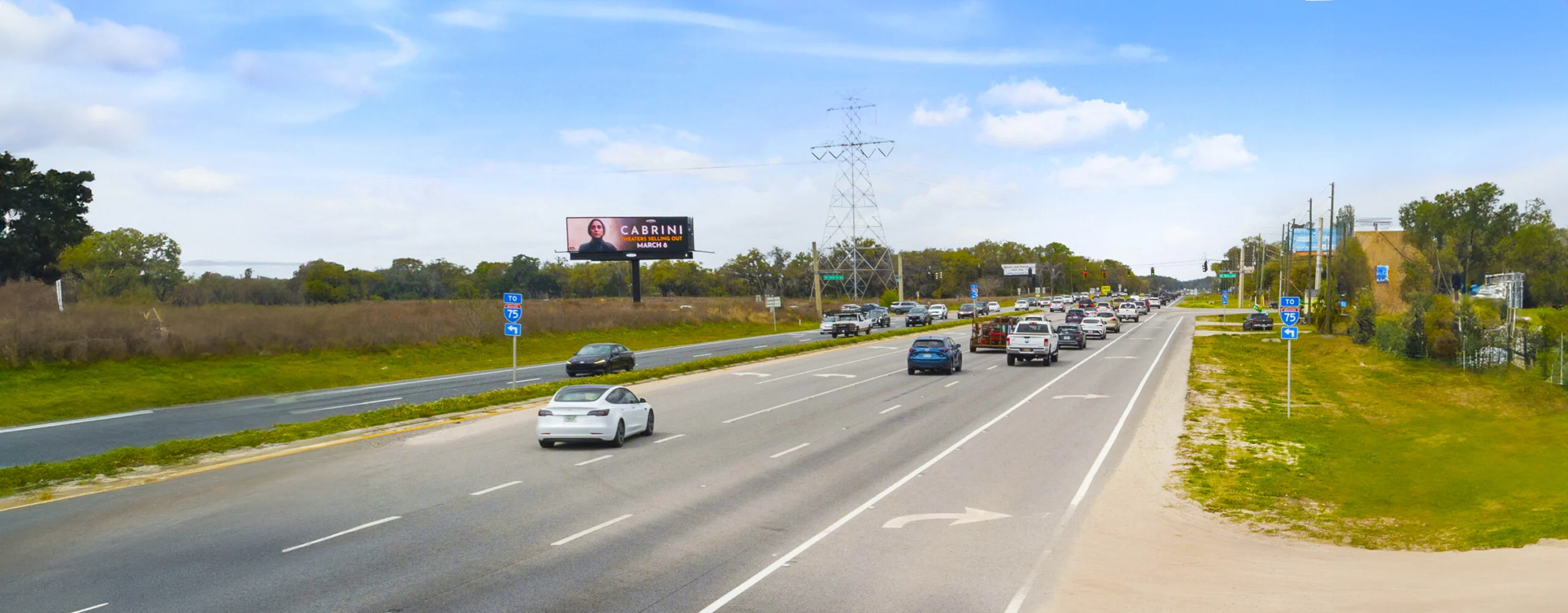
Small businesses need to stop thinking about markets and start thinking about routes. Customers follow predictable patterns between home, work, and shopping. Those corridors represent your actual addressable market.
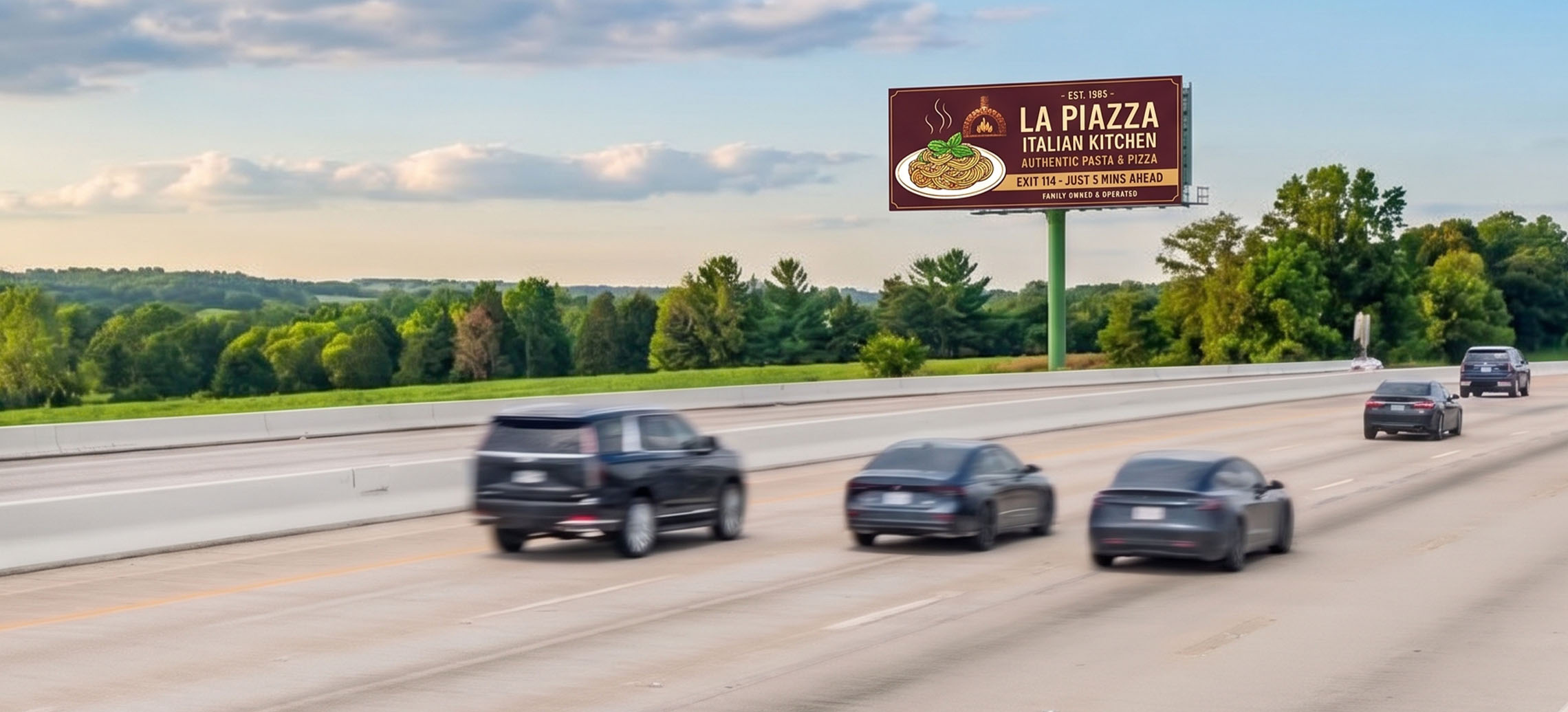
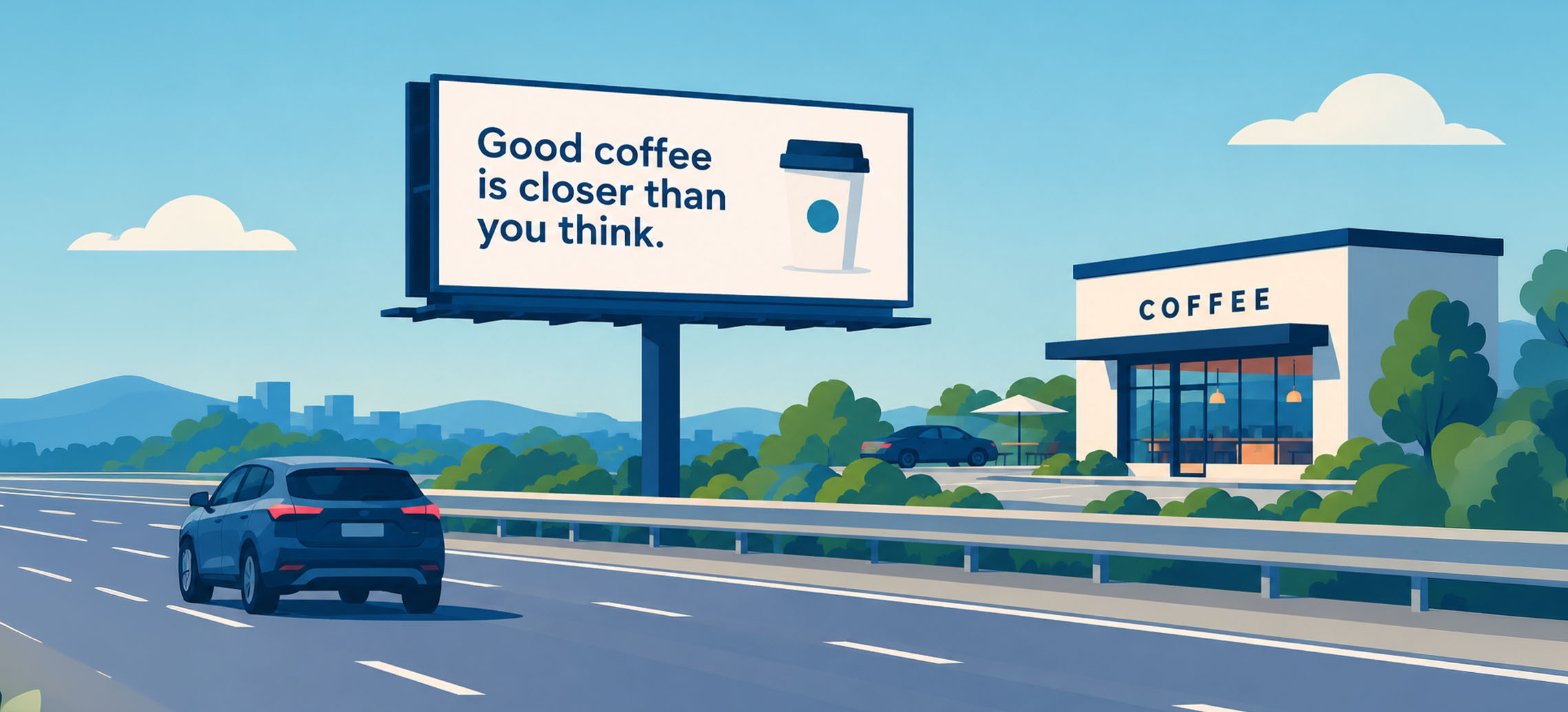
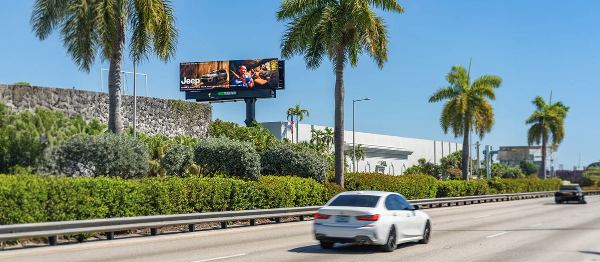
“When you buy a billboard, you buy a location, you buy a space, you buy an audience,” says Cedric.
That audience isn’t random. It encompasses the specific individuals who drive past that intersection twice daily, five times a week.
Three billboards along one commuter route deliver more value than 30 Facebook ads that reach citywide. The frequency formula is simple: repeated exposure in concentrated areas beats single exposures across broad geography.
“If you’re seeing a specific ad five times on your way to the supermarket, chances are you’re gonna buy that product when you get there,” Cedric explains.
Digital advertising promises precise targeting but delivers a scattered presence. You might reach your ideal customer only once. Billboard advertising in your service area guarantees reaching viable customers repeatedly. That repetition builds the familiarity that drives purchase decisions.
Let’s say you own a local gym, and you’ve purchased a few neighborhood billboards. “Out of the 100 people that might drive by the billboard for your gym, maybe 5 of them will be actual gym-goers,” Cedric notes. But those five gym-goers seeing you daily is worth more than 500 random online impressions. They’re local, they’re in your market, they pass your location constantly.
Size matters, but not in the conventional sense of square mile coverage. The goal is maximizing presence within the miles that matter.
Location As Competition
Digital competitors can replicate your targeting, outbid you for keywords, copy your creative. Despite all that, they can’t buy your local billboard presence.
Physical location is the last defendable advantage in marketing. When you dominate billboards along customer routes, you control real estate that competitors can’t access. Even if they match your digital spend, they can’t displace your physical visibility.
Customers inherently trust what they see in their community. They assume a business maintaining billboard presence must be established, successful, permanent. Compare that to random Instagram ads from companies that might disappear tomorrow.
Trust compounds over time. The longer you maintain geographic concentration, the more entrenched you become in local consciousness.
Modern billboard platforms enable this concentration at accessible price points. You can:
→ Target specific intersections your customers actually travel
→ Concentrate budget in your highest-value service area
→ Adjust presence based on local events and seasons
The businesses winning local markets spend smarter on their geography.
Own the Routes, Own the Customer
Your customers drive the same routes every day. They pass the same intersections on their morning commutes, their grocery runs, their evening drives home. When you own visibility along those corridors, your business becomes inescapable.
Digital competitors can try, but they can’t displace you from the physical locations where your customers already spend their time.
Geographic concentration is how you build the foundation for everything that comes next.
Start with your corridors. Dominate your routes. Win your neighborhood before you worry about winning your city.
Frequently Asked Questions
Don’t I need to reach more people to grow my business?
You need to reach the right people repeatedly, not large, random audiences once. Five exposures to local customers who can actually visit your location drive more revenue than fifty impressions across people who’ll never become customers.
How do I know which locations to target with my billboard strategy?
Start with the routes your current customers travel. Where do they live? Where do they work? What’s the path between those locations and your business? Concentrate presence along those corridors before expanding elsewhere.
Won’t competitors just copy my billboard strategy?
No, because physical billboards in your service area represent finite inventory. Once you establish a presence on key routes, competitors can’t easily displace you. Geographic concentration creates a defendable moat digital advertising never provides.