Billboards near Belvedere Park, GA
No Minimum Spend. No Long-Term Contracts. Just Results.
Trusted by Leading Brands


Billboard advertising
near Belvedere Park has never been easier
How much is a billboard near Belvedere Park?
Why Choose Blip for Billboard Advertising near Belvedere Park
Blip lets you launch fast near Belvedere Park on I-285, I-20, and Memorial Drive—perfect for catching east Atlanta commuters without a long setup.
Set a flexible budget for Belvedere Park and reach local families, students, and Clarkston’s diverse audience without locking into a contract.
Daypart your Blip ads for Belvedere Park rush hours, school runs, and weekend Stone Mountain Park traffic when roads are busiest.
Track Belvedere Park billboard performance in real time and shift spend toward Decatur, Glenwood Road, or I-285 as results come in.
Use Blip’s creative tools to build bold, easy-to-read ads for Belvedere Park’s fast-moving drivers on Memorial Drive and US 78.
Frequently Asked Questions About Billboard Advertising near Belvedere Park
How much does a billboard cost near Belvedere Park, Georgia with Blip?
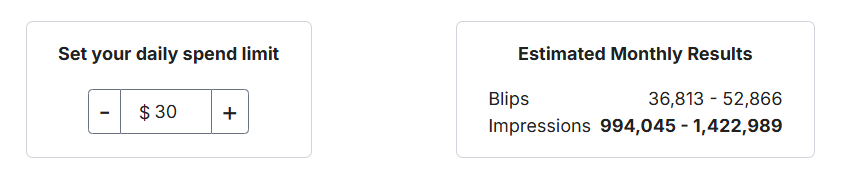
With Blip, you control exactly what you spend on Belvedere Park billboards by setting your own daily budget, and Blip automatically keeps your campaign within that amount. Each ad plays as a brief “blip” on rotating digital billboards near Belvedere Park, Georgia, and you only pay for the blips you receive. Costs vary based on the time of day, the locations you select in the Belvedere Park area, and overall advertiser demand.
Where can I advertise with Blip near Belvedere Park, Georgia?
We have 39 digital billboards serving the Belvedere Park area from nearby Decatur, Clarkston, and Atlanta, all within roughly 10 miles. Collectively, these boards can deliver millions of weekly impressions, with individual high-traffic faces routinely generating 100,000–200,000+ daily impressions based on location and rotation. This footprint effectively functions as an on-demand billboard rental near Belvedere Park that can flex with your budget and seasonality.
What kind of audience do Belvedere Park, Georgia billboards reach?
The Belvedere Park area is part of inner-east DeKalb County, one of the most diverse and densely populated parts of metro Atlanta. Many tracts in and around Belvedere Park are 70–80% Black residents, with a mix of long-term homeowners and multigenerational households. Median household incomes in the immediate Belvedere Park area are generally in the $45,000–$60,000 range, while the median age hovers in the mid-30s.
What traffic patterns make Blip billboards around Belvedere Park, Georgia effective?
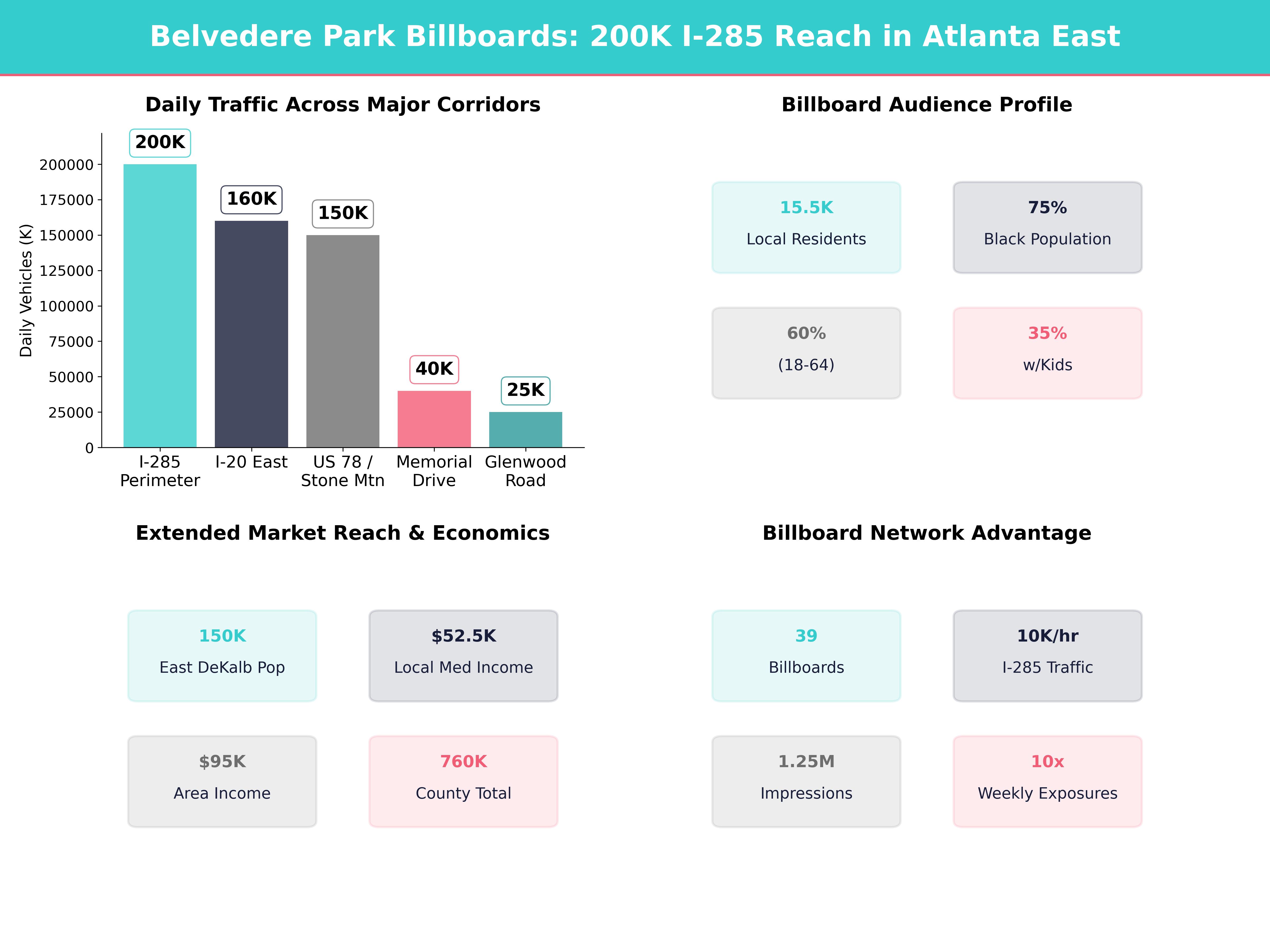
I-285 East just south of Belvedere Park carries roughly 190,000–210,000 vehicles per day on average, and I-20 East typically carries 150,000–170,000 vehicles per day through the east metro. US 78 / Stone Mountain Freeway sees around 140,000–160,000 vehicles per day, while Memorial Drive frequently posts 35,000–45,000 vehicles per day near key intersections. In DeKalb County, more than 75% of workers drive alone or carpool, meaning commuters are exposed to roadside media for nearly an hour each workday.
When is the best time to run a billboard campaign in Belvedere Park, Georgia with Blip?
Weekday vehicle volumes on major corridors can be 30–40% higher during peak commute periods compared with mid-morning or late evening, and weekend shopping districts often see 20–30% higher noon-afternoon volumes than weekday mid-afternoons. The strongest windows are morning commute from 6–9 a.m., midday from 11 a.m.–2 p.m., and evening peak from 3–7 p.m. Saturday and Sunday are especially strong for shopping, parks, churches, and events.
Do I need a contract to advertise with Blip near Belvedere Park?
No, Blip has no long-term contracts or minimum commitments. You can start, pause, or stop your campaign at any time.
How fast can I launch a billboard campaign with Blip near Belvedere Park?
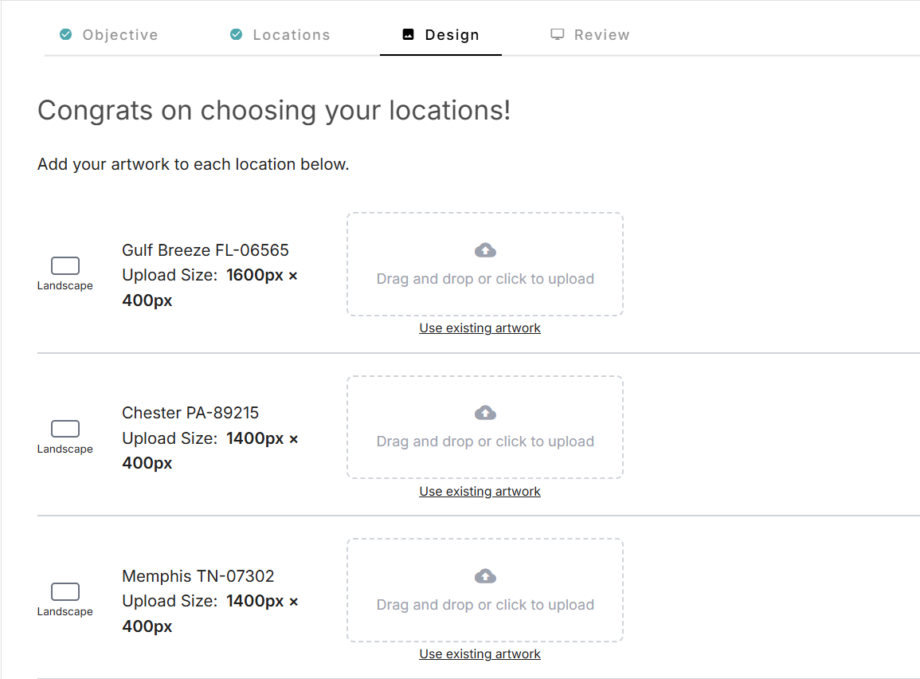
You can have your campaign live in minutes. Create a free account, select your locations, set your budget, upload your design, and start running once approved.
Where can I advertise with Blip near Belvedere Park?
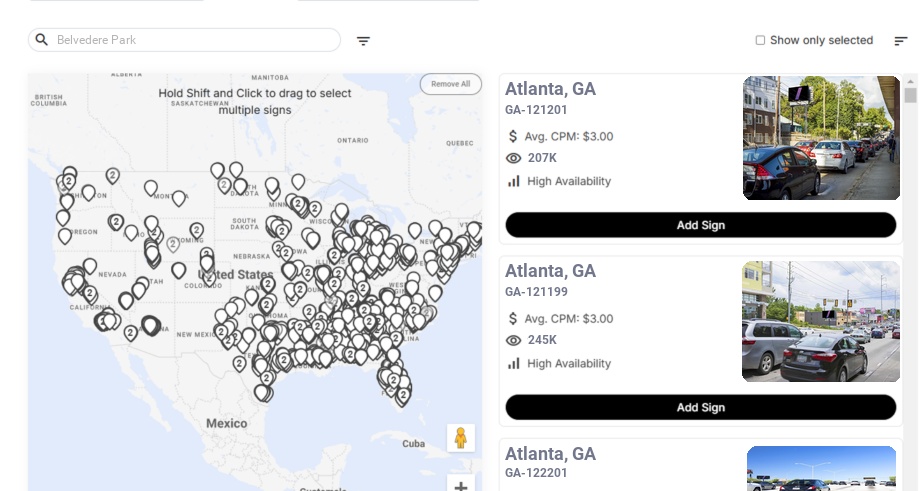
Blip has digital billboards near Belvedere Park. You can browse available locations on a map, choose the ones that fit your audience, and start advertising right away.
Still have questions? Launch a campaign in minutes — no contracts, no commitments.
Start Your CampaignBelvedere Park Billboard Advertising Guide
Belvedere Park sits just east of Atlanta in DeKalb County and is tightly connected to nearby hubs like Decatur and Clarkston. With 39 digital billboards serving the Belvedere Park area from these surrounding cities, we can tap into dense commuter corridors, neighborhood retail trips, and Atlanta-bound traffic to efficiently reach this highly local, highly mobile audience. For advertisers searching for billboards near Belvedere Park, this coverage provides both neighborhood saturation and regional reach in a single, flexible network.
Understanding the Belvedere Park Area Market
The Belvedere Park area is part of inner-east DeKalb County, one of the most diverse and densely populated parts of metro Atlanta. According to recent county and regional planning estimates and local community profiles:
- The Belvedere Park area itself holds roughly 15,000–16,000 residents (the Belvedere Park CDP was just over 15,000 residents in 2020) within about 4–5 square miles, yielding neighborhood-style density of around 3,000–3,500 residents per square mile—an ideal environment for frequently viewed Belvedere Park billboards.
- Broader East DeKalb (including surrounding unincorporated areas, Decatur, and Clarkston) reaches well over 150,000 residents within a 5–7 mile drive, giving advertisers reach into multiple school clusters, shopping districts, and employment centers.
- DeKalb County as a whole has about 760,000 residents and more than 300,000 housing units, making it Georgia’s 4th most populous county. You can see broader county information at the official DeKalb County Government website and visitor resources through Discover DeKalb
Demographic highlights that influence message strategy:
- The Belvedere Park area and nearby east DeKalb neighborhoods are majority Black. Many tracts in and around Belvedere Park are 70–80% Black residents, with a mix of long-term homeowners and multigenerational households.
- Nearby Clarkston is nationally known for its diversity, with city data indicating 50–60% foreign-born residents and more than 40 languages spoken in the community; local information is available at clarkstonga.gov.
- Median household incomes in the immediate Belvedere Park area are generally in the $45,000–$60,000 range, while DeKalb County overall sits closer to the mid–$60,000s. Within a 7–10 mile radius (especially near Decatur, Druid Hills, and inside the Perimeter), pockets of higher-income households with medians above $90,000–$100,000 are common.
- Median age in the Belvedere Park area hovers in the mid-30s, with a large share of working-age adults; in many nearby tracts, over 60% of residents are between 18 and 64.
- Household composition skews toward families and shared housing: in parts of east DeKalb, 30–40% of households have children under 18, and average household size is often 2.7–3.0 people.
What this implies for billboard campaigns near the Belvedere Park area:
- Essentials, value, and convenience messaging performs well for residents focused on affordability and proximity, especially for groceries, discount retail, healthcare, and auto services that can benefit from highly visible Belvedere Park billboards.
- Family-oriented and service-based businesses (healthcare, schools, childcare, auto repair, groceries, quick-service restaurants, faith-based services) are especially relevant given the above-average share of households with children.
- Because higher-income clusters are nearby in Decatur and along I-20 and I-285, campaigns can blend in premium offers (home improvement, financial services, elective healthcare, higher-end dining) for commuters passing through.
- The combination of a relatively young median age and strong diversity supports messaging for education, workforce training, and tech-enabled services (online banks, telehealth, app-based delivery) using billboard advertising near Belvedere Park to drive both awareness and response.
For additional context on neighborhood character and local initiatives, advertisers can review resources from the City of Decatur City of Clarkston, and DeKalb County Planning & Sustainability.
Key Commuter & Traffic Patterns Around Belvedere Park
The Belvedere Park area is framed by several major corridors that are critical for billboard visibility. Georgia Department of Transportation (GDOT)
- I-285 East (Perimeter) just south of Belvedere Park carries roughly 190,000–210,000 vehicles per day (AADT) on average, with peak-hour flows often exceeding 10,000 vehicles per hour in each direction.
- I-20 East, running a few miles south of Belvedere Park toward Downtown Atlanta and Augusta, typically carries 150,000–170,000 vehicles per day through the east metro.
- US 78 / Stone Mountain Freeway, which connects east DeKalb and Stone Mountain to Atlanta, sees around 140,000–160,000 vehicles per day, serving heavy commuter and visitor traffic to Stone Mountain Park.
- Memorial Drive, running just south of the Belvedere Park area, frequently posts 35,000–45,000 vehicles per day near key intersections, especially between I-285 and Candler Road.
- Glenwood Road, a major east–west artery through nearby neighborhoods, sees 20,000–30,000 vehicles per day depending on the segment, capturing school, church, and neighborhood retail trips.
- The Decatur area (3.3 miles away) is a dense node for both car and pedestrian traffic, especially around Downtown Decatur, the Decatur MARTA station, and campuses like Agnes Scott College. Learn more about the city’s activity centers at decaturga.com
- Clarkston (3.7 miles away), one of the most diverse communities in the country, has a strong student and immigrant population anchored by Georgia State University’s Perimeter College – Clarkston Campus; the Perimeter College system enrolls tens of thousands of students across its locations. Campus details are available at perimeter.gsu.edu.
Additionally:
- Many residents commute into the City of Atlanta 500,000 city residents and a daytime population exceeding 1 million when commuters are included; explore city information at atlantaga.gov
- Transit usage is significant. MARTA operates multiple bus routes through east DeKalb and rail stations in Decatur, East Lake, and Avondale; systemwide, MARTA averages 300,000+ weekday passenger trips across bus and rail. See network details at itsmarta.com.
- In DeKalb County, local planning data indicates that more than 75% of workers drive alone or carpool, about 10–12% use transit, and the average one-way commute is around 30 minutes, meaning commuters are exposed to roadside and transit-adjacent media for nearly an hour each workday.
Implications for billboard strategy:
- Rush-hour–focused campaigns can capture tens of thousands of daily impressions on commuters heading between east DeKalb and Atlanta. A single busy freeway board can easily exceed 1–1.5 million weekly vehicle impressions when you factor in both directions, making billboards near Belvedere Park a strong foundation for commuter-focused campaigns.
- Local retail and service businesses can reach “errand traffic” on Memorial Drive, Glenwood Road, and Decatur area surface streets, which support steady midday and weekend volumes to nearby shopping centers and grocery-anchored plazas.
- Creative that resonates with both drivers and transit riders—strong, simple visuals readable at a glance—is especially important near MARTA-connected corridors and high-pedestrian areas like Downtown Decatur, Clarkston’s town center, and neighborhood shopping nodes.
- Because eastside routes carry substantial weekend traffic to destinations such as Stone Mountain Park, East Lake Park weekend-weighted schedules.
How Our 39 Digital Billboards Cover the Belvedere Park Area
We have 39 digital billboards serving the Belvedere Park area from nearby Decatur, Clarkston, and Atlanta, all within roughly 10 miles. Collectively, these boards can deliver millions of weekly impressions, with individual high-traffic faces routinely generating 100,000–200,000+ daily impressions based on location and rotation. This footprint effectively functions as an on-demand billboard rental near Belvedere Park that can flex with your budget and seasonality.
-
Decatur (3.3 miles) – Boards here are ideal for:
- Reaching affluent in-town residents, professionals, and students at Emory University (over 15,000 students and 30,000+ employees, including the health system) and Agnes Scott College (around 1,000 students on a walkable campus).
- Connecting with Downtown Decatur visitors; local tourism sources note that Decatur’s festivals and downtown events can draw tens of thousands of attendees each year. Discover more via visitdecaturgeorgia.com.
- Targeting people who live or work near Belvedere Park but shop or dine in Decatur’s restaurant and retail core.
-
Clarkston (3.7 miles) – Boards near Clarkston are perfect for:
- Connecting with a uniquely international audience; city data show more than 50% of Clarkston residents are foreign-born and a significant share speak a language other than English at home.
- Targeting students, faculty, and staff around the dense GSU Perimeter College campus, which enrolls several thousand students at the Clarkston location alone.
- Reaching residents who frequently use MARTA bus routes and shared rides, making simple, bold creative especially valuable.
-
Atlanta (7.4 miles) – Boards in Atlanta serving the Belvedere Park area reach:
- Daily commuters traveling into Downtown, Midtown, and the Atlanta BeltLine area; see more about activity centers at beltline.org. The BeltLine’s Eastside and Westside trails see millions of visits per year, with some segments averaging 10,000+ users on peak weekends.
- Visitors and regional shoppers drawn to major attractions and employment centers like Mercedes-Benz Stadium, State Farm Arena, and Downtown convention facilities; the metro Atlanta region welcomes 50–60 million visitors annually, many of whom travel via I-20 and I-285 east.
Practical targeting approaches:
- Hyperlocal awareness: Concentrate impressions on Decatur- and Clarkston-area boards within a 5-mile radius of Belvedere Park to saturate everyday neighborhood trips, school commutes, and grocery runs. For many residents, a 5-mile drive represents 10–15 minutes or less, making “minutes away” messaging credible and allowing Belvedere Park billboards to drive quick, local visits.
- Commuter capture: Layer in boards along I-20, I-285, and key Atlanta surface routes to reach Belvedere Park area residents entering and exiting the city each day. With typical weekday traffic, a single commuter will pass the same board 10 times weekly (twice daily), supporting frequency and recall.
- Regional reach: For brands drawing from across the metro (health systems, schools, large attractions), use all 39 boards to build frequency across east metro and in-town corridors. Even at modest rotation levels, this network can deliver hundreds of thousands of impressions per day across the core coverage area, making billboard advertising near Belvedere Park a viable component of a broader metro strategy.
For a sense of where people live, work, and shop around these boards, advertisers can reference neighborhood and corridor studies from DeKalb County Economic Development Atlanta Regional Commission
Creative Strategies Tailored to the Belvedere Park Area
Because digital billboards are viewed for just a few seconds at a time, design discipline matters. For the Belvedere Park area, specific local dynamics should guide creative choices.
1. Lead with community and convenience
This is a neighborhood-anchored market where more than half of workers commute under 35 minutes, and a large share of weekly miles are within the eastside corridor. Highlight:
- “Minutes from Memorial Drive / Glenwood Road / Candler Road”
- “5 minutes from the Belvedere Park area” or “Near East DeKalb”
- Local references like “Eastside,” “inside the Perimeter (I-285),” or “near Decatur” that orient drivers quickly.
- Landmarks and destinations with high name recognition: “by South DeKalb Mall,” “near Downtown Decatur,” or “off I-285 at Memorial Drive.”
These kinds of cues help audiences connect your offer directly to the billboards near Belvedere Park that they see every day.
2. Reflect the area’s diversity
With highly diverse populations in Belvedere Park, Clarkston, and East Decatur:
- Use inclusive imagery and straightforward, culturally neutral language that can resonate across Black, immigrant, and multi-ethnic audiences.
- Consider bilingual or simplified English messages if you serve multilingual audiences (e.g., international grocery, money transfer, ESL programs). In some nearby tracts, 30–40% of residents speak a language other than English at home.
- Avoid overly niche cultural references unless you know your target segment well; the same board may serve dozens of linguistic and cultural communities each day.
3. Emphasize value and urgency
With many working families and budget-conscious consumers:
- Highlight clear offers: “$0 enrollment,” “Under $20,” “Free estimate,” “Same-day service,” “Kids eat free,” or “No credit needed.”
- Use short urgency phrases: “This week only,” “Enroll by Friday,” “Tonight at 7 PM,” or “Ends Sunday,” which align with typical paycheck and weekend shopping cycles.
- Pair with directional cues: “Exit at Memorial Dr,” “Next right on Candler Rd,” or “2 lights ahead on Glenwood Rd,” helping convert impressions into immediate visits while people are within 5–10 minutes of your location.
4. Design rules that work on east metro roads
Given traffic speeds on I-20, I-285, and Stone Mountain Freeway (often 55–65 mph, with average visibility of just 5–8 seconds):
- Keep messages to 7 words or fewer and 1 main idea per frame; readability studies show significant recall drop-off beyond about 6–8 words.
- Use 1–2 main colors with high contrast (e.g., white on dark blue, yellow on black) to stand out in all weather and at dawn/dusk.
- Make fonts bold and sans-serif; keep logo simple and large enough to be recognized at 500–800 feet.
- Avoid small URLs; instead, use memorable brand names or short phrases (e.g., “Call ABC HVAC” or “Visit EastsideDental.com”).
- For digital boards, consider rotating creative (e.g., alternating between brand and offer frames) to maintain interest among frequent commuters who may see your ad twice daily over several weeks.
Timing and Dayparting Recommendations
Digital campaigns in the Belvedere Park area can be precisely timed around local behavior. Using Blip’s scheduling and budgeting controls, we can align your ads with when your audience is actually on the road.
Local traffic and retail data for the Atlanta–DeKalb area show that weekday vehicle volumes on major corridors can be 30–40% higher during peak commute periods compared with mid-morning or late evening, and weekend shopping districts often see 20–30% higher noon–afternoon volumes than weekday mid-afternoons.
Weekday patterns
-
Morning commute (6–9 a.m.)
- Strong volumes on I-285, I-20, Memorial Drive, Glenwood Road, and routes into Decatur and Atlanta. On some freeway segments, half of daily vehicles pass between 6–10 a.m. and 3–7 p.m. combined.
-
Use this window for:
- Coffee, breakfast, QSR, childcare, school messaging.
- Service businesses targeting workers before they’re at their desks: auto repair, health clinics, home services, and job recruitment.
-
Midday (11 a.m.–2 p.m.)
- Ideal for lunch, retail, healthcare, and errands; major grocery centers and shopping plazas often see peak parking occupancy in this band.
- A good window to reach stay-at-home parents, retirees, and shift workers who may not be captured efficiently in commuter-only dayparts.
-
Evening peak (3–7 p.m.)
- Typically the highest traffic volume on eastside corridors; some arterials see 20–25% of daily traffic in this window alone.
- Best for family activities, restaurants, grocery, and “stop on the way home” promotions, as well as after-school programs and youth activities.
Weekend patterns
-
Saturdays and Sundays in the Belvedere Park area and nearby Decatur/Atlanta corridors:
- See increased trips to shopping centers, parks, churches, and events, with some big-box and grocery centers reporting Saturday sales 15–25% above weekday averages.
-
Events and entertainment-focused campaigns (festivals, concerts, sports bars, church services, local markets) should weight impressions toward:
- Friday evening + Saturday day, when many households plan weekend activities and shopping.
- Saturday evening for nightlife, dining, and live events, as Downtown Decatur, the BeltLine, and in-town districts draw heavy evening foot and vehicle traffic.
Because Blip allows us to choose specific hours and days, we can:
- Run “commute-only” campaigns to maximize impressions among full-time workers who collectively account for the majority of weekday corridor traffic.
- Create weekend bursts for special events, with heavier frequency 48 hours before and day-of, when intent and search activity typically spike.
- Scale down during low-relevance windows (e.g., late night for family-oriented brands) to keep your cost per effective impression low while still leveraging 24/7 board availability when needed (e.g., late-night dining, healthcare, or emergency services).
Leveraging Local Events and Seasonality
The east metro Atlanta calendar is busy, and we can use that to sharpen your timing and messaging.
Key local drivers:
-
School calendar – DeKalb County School District serves more than 92,000 students across 130+ schools and centers; see schedules at dekalbschoolsga.org.
- Back-to-school (late July–August) and exam seasons (December, May) are strong times for tutoring, after-school programs, healthcare, clothing, and school supplies.
- Traffic increases noticeably on school days along routes like Memorial Drive, Glenwood Road, and Candler Road due to bus and parent pickup/drop-off activity.
- Decatur festivals and events – Events such as the Decatur Arts Festival, Decatur Book Festival (when held), and seasonal music and food festivals draw thousands to tens of thousands of visitors per event into the downtown area. Check listings at visitdecaturgeorgia.com.
- Atlanta citywide events – Sports, conventions, and festivals in Atlanta (e.g., at State Farm Arena, Mercedes-Benz Stadium, and downtown convention centers) create surges in traffic across I-20 and I-285; some major events attract 50,000–70,000+ attendees in a single day. Visitor information is at discoveratlanta.com
- Parks and recreation – Regional destinations like Stone Mountain Park and closer in-town parks (East Lake, Glenlake, and others) help drive strong seasonal weekend traffic, particularly in spring and fall when weather is mild.
- Religious and cultural gatherings – The Belvedere Park area and Clarkston host numerous churches, mosques, temples, and cultural centers. Weekends around major religious holidays (Easter, Ramadan, Christmas, Diwali, etc.) see elevated local travel, with many places of worship drawing hundreds to thousands of attendees each service.
How to capitalize:
- Run countdown creatives (“3 days left”, “This Saturday”, “Tonight”) on boards serving the Belvedere Park area and inbound Atlanta traffic to tap into pre-event decision windows.
- Use geo-relevant calls-to-action: “10 minutes from this sign on Memorial Dr,” “Just off I-285 at Glenwood Rd,” or “2 miles ahead in Downtown Decatur.”
- Switch artwork mid-campaign (easy with digital) to move from awareness (“Festival coming to Decatur”) to urgency (“Happening today – Park in Downtown Decatur”).
- For annual events with known dates, schedule recurring Blip flights each year, gradually building year-over-year recognition as “the place people see your event” on trusted Belvedere Park billboards and nearby corridors.
Using Blip’s Tools to Reach the Belvedere Park Area Efficiently
Blip’s platform is built for flexibility, which is especially useful in a mixed urban–suburban market like the Belvedere Park area.
We can help you:
-
Start small with test budgets
- Buy just a few “blips” per hour on multiple boards to see where you get the best response. Even at $5–$10 per day, you can collect early directional data.
- Shift more budget to specific Decatur, Clarkston, or Atlanta boards that serve the Belvedere Park area once performance emerges (e.g., boards closest to your top ZIP codes or locations with higher store traffic during campaigns).
-
Target by geography and route
- Prioritize boards near Memorial Drive, Glenwood Road, I-20, and I-285 east to focus on local and commuter traffic linked to Belvedere Park.
- Choose boards closest to your storefront(s) and set a tight radius for hyperlocal campaigns, especially if 70–80% of your customers come from within a 5–7 mile drive.
-
Daypart aggressively
- Limit your budget to peak impact hours instead of running 24/7—many local advertisers see better efficiency by concentrating on 6–9 a.m., 11 a.m.–2 p.m., and 3–7 p.m..
- Create different artwork for morning vs. evening (e.g., breakfast vs. dinner offers, “Call today” vs. “Walk in tonight until 8 PM”).
Because you only pay when your ad actually displays, we can be surgical:
- Run short, high-intensity flights (e.g., 7–14 days) around grand openings, sales events, or enrollment deadlines, using higher frequency to hit the same commuters multiple times per day.
- Maintain a low but steady always-on presence for brand awareness—with a small daily budget, you can still appear on multiple boards each day—then scale up at key times of year (tax season, back-to-school, holiday shopping, or open enrollment). This approach turns flexible billboard rental near Belvedere Park into an always-available lever for demand generation.
Measuring and Refining Campaign Performance
While billboards don’t provide click-through data, we can still tie results to your digital and in-store performance using simple frameworks. National OOH studies indicate that around 40–50% of adults notice a typical roadside billboard in a given month, and nearly half of those are prompted to search, visit a website, or visit a store afterward—these benchmarks can guide expectations.
Suggested measurement tactics:
-
Promo codes or landing pages
- Use vanity URLs or unique offer codes only shown on billboard creative (e.g., “Use code EASTSIDE10” or “Visit MyBrand.com/Belvedere”).
- Track how many redemptions, online orders, or visits come from these signals, and compare them to baseline periods without billboard support.
-
Time-based attribution
- Compare web traffic, call volume, or walk-ins during your campaign window vs. the prior period. A 10–20% lift in key metrics during active billboard weeks is common when creative and targeting are aligned.
- If your Blip campaign is tightly dayparted (e.g., 6–9 a.m. and 3–7 p.m.), look for spikes in inquiries in those hours, and note whether lead quality or ticket size changes.
-
Location-based comparison
- If you have multiple locations, run board-heavy campaigns around the Belvedere Park area and compare sales changes vs. locations outside the coverage area, adjusting for seasonality.
- For multi-location retailers, even a 5–10% relative lift at locations nearest your boards can justify sustained OOH investment.
-
Media mix testing
- Coordinate with other local marketing (social, local news, or sponsorships). For example, run synchronized billboard and social campaigns during a 2–4 week window, then pause one channel to see relative impact.
- For local media context and to sync messaging, check regional coverage through outlets like the Atlanta Journal-Constitution at ajc.com and Decatur-focused news at Decaturish. These outlets regularly report on traffic issues, new developments, and community events that can inform your targeting and help you refine billboard advertising near Belvedere Park over time.
Over time, we can:
- Identify which of the 39 boards consistently correlate with better response and concentrate there, dropping low-performing placements and reinvesting in top corridors.
- Refine creative based on what offers and calls-to-action generate the most measurable activity (e.g., whether “$0 enrollment” outperforms “First month free”).
- Adjust dayparts as we observe when your audience is most responsive—potentially shifting budget from late evening to commute and weekend mid-day, where many Belvedere Park–area residents are most active on the roads.
By combining rich local knowledge of the Belvedere Park area with the flexibility of digital billboards, we can design campaigns that reach residents where they actually drive, shop, commute, and live. With 39 nearby boards in Decatur, Clarkston, and Atlanta serving the Belvedere Park area—and the ability to control budget, timing, and messaging in real time—we are well-positioned to help you turn this dense, diverse inner-east Atlanta market into a consistent growth engine for your business using smart, data-informed billboard advertising near Belvedere Park.