Billboards near Georgetown, GA
No Minimum Spend. No Long-Term Contracts. Just Results.
Trusted by Leading Brands


Billboard advertising
near Georgetown has never been easier

How much is a billboard near Georgetown?
Why Choose Blip for Billboard Advertising near Georgetown
Blip lets Georgetown advertisers launch fast on GA-204 and Veterans Parkway, reaching commuters in minutes without traditional buying friction.
Set flexible budgets in Georgetown to hit I-95, I-16, and Pooler retail traffic—ideal for testing what drives local shoppers and visitors.
Use dayparting in Georgetown to focus on morning commutes, after-school runs, or late-night port traffic along Garden City corridors.
No contracts means Georgetown brands can scale around tourism peaks, port shifts, and weekend retail surges without long commitments.
Blip’s real-time analytics help Georgetown campaigns track response, then shift spend toward the Savannah, Pooler, or Garden City routes that perform best.
Build sharper Georgetown creative with Blip’s tools—tailor messages for families, commuters, and logistics workers on coastal tourism routes.
Frequently Asked Questions About Billboard Advertising near Georgetown
How much does a billboard cost near Georgetown, Georgia with Blip?
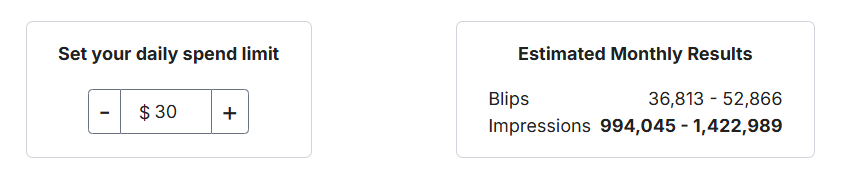
With Blip, you control exactly how much you spend on Georgetown billboards by setting a daily budget that can be adjusted anytime, so you only pay for the digital ad displays you receive. Each blip is a quick 7.5–10 second spot on rotating digital billboards serving the Georgetown area, and the cost of each one depends on when and where your ad runs and current advertiser demand. That means billboards near Georgetown, Georgia can fit almost any budget, whether you want to test a small campaign or scale up over time.
Where can I advertise with Blip in Georgetown, Georgia?
Our 15 digital billboards serving the Georgetown area are strategically positioned in nearby corridors where Georgetown residents and visitors regularly travel. They reach people in Savannah, Pooler, and Garden City, including routes like GA-204, I-95, I-16, I-516, US-17, and US-80. This network helps you tap into steady local traffic, daily commuters, and regional visitors with precision scheduling and targeted creative.
Who do Georgetown, Georgia billboards reach?
The Georgetown area combines suburban neighborhoods, industrial corridors, and coastal tourism routes, making it a powerful market for digital billboard advertisers. Local residents are often suburban families, homeowners, commuters, and shift workers, while visitors and transients also travel through the same corridors. That mix means Georgetown billboards can support retail, healthcare, workforce recruiting, tourism, and other local campaigns.
When is the best time to run Blip billboards near Georgetown, Georgia?
Because Blip allows dayparting and flexible scheduling, campaigns near Georgetown can focus on the times that matter most. Weekday mornings from 6:30–9:00 a.m. are ideal for commuters, while 3:00–7:00 p.m. works well for parents, shoppers, and after-work traffic. Evenings and weekends are especially strong for retail, dining, entertainment, and community events.
Why are Georgetown, Georgia billboards valuable for local advertisers?
Georgetown is an unincorporated community on the southwest side of Savannah with access to a wider metro area of over 400,000 people. Tourism and logistics make the local population even more valuable, with 15–17 million visitors per year and major traffic flow tied to the Port of Savannah and Savannah/Hilton Head International Airport. This creates reliable daily impression volume for well-placed billboards near Georgetown.
Do I need a contract to advertise with Blip near Georgetown?
No, Blip has no long-term contracts or minimum commitments. You can start, pause, or stop your campaign at any time.
How fast can I launch a billboard campaign with Blip near Georgetown?
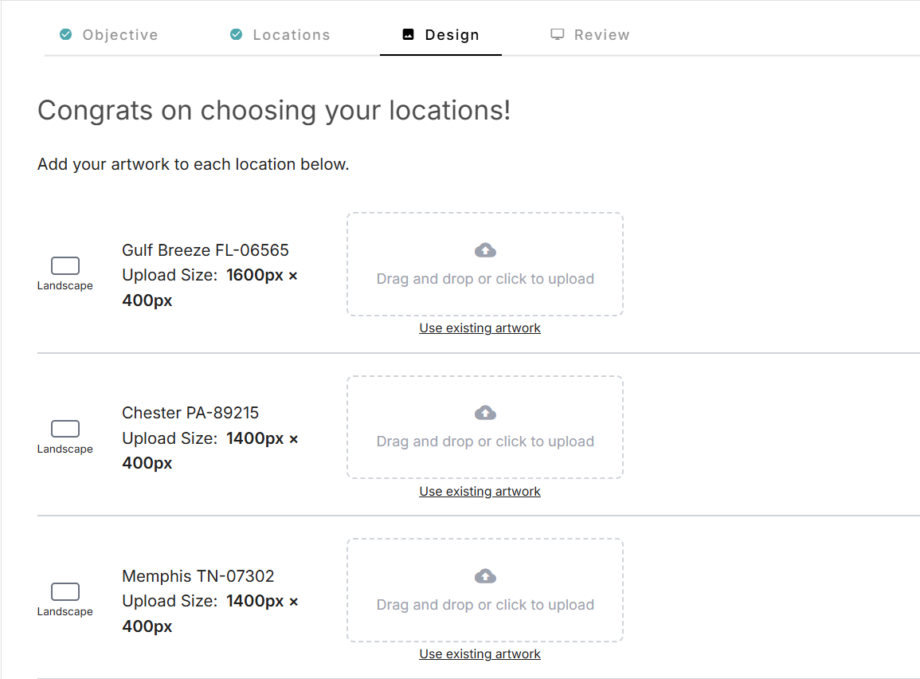
You can have your campaign live in minutes. Create a free account, select your locations, set your budget, upload your design, and start running once approved.
Where can I advertise with Blip near Georgetown?
Blip has digital billboards near Georgetown. You can browse available locations on a map, choose the ones that fit your audience, and start advertising right away.
Still have questions? Launch a campaign in minutes — no contracts, no commitments.
Start Your CampaignGeorgetown Billboard Advertising Guide
The Georgetown area combines suburban neighborhoods, industrial corridors, and coastal tourism routes, making it a powerful—but often overlooked—market for digital billboard advertisers. With 15 digital billboards serving the Georgetown area from nearby Savannah, Pooler, and Garden City, we can help you tap into steady local traffic, daily commuters, and regional visitors with precision scheduling and targeted creative. For brands specifically looking for billboards near Georgetown, this network provides flexible, always-on coverage where local residents are already driving.

Understanding the Georgetown Area Market
Georgetown is an unincorporated community in Chatham County on the southwest side of Savannah, connected to the city by Veterans Parkway and GA‑204 (Abercorn Street). The Georgetown area has grown into a major residential hub, with more than 11,000 residents in the immediate community and access to a wider Savannah metropolitan area of over 400,000 people, according to regional economic and tourism sources like Visit Savannah Savannah Area Chamber of Commerce City of Savannah alone is home to roughly 150,000 people, according to local government and planning agencies such as Chatham County Government and the City of Savannah.
Tourism and logistics make this local population even more valuable. Tourism reports from Visit Savannah 15–17 million visitors per year, generating over $4.4 billion in annual visitor spending and supporting 28,000+ tourism-related jobs. This visitor volume moves along the same corridors Georgetown residents use for daily life, magnifying your potential reach and increasing the value of well-placed Georgetown billboards.
Key local context for advertisers:
-
Bedroom community dynamics:
- Georgetown-area neighborhoods are largely owner-occupied, single-family homes and townhomes. In southwest Chatham County, homeownership rates exceed 60%, and many subdivisions report average household sizes of 2.6–3.0 people, signaling a strong family presence.
- Local labor profiles from Chatham County Government and regional workforce boards show that a large share of residents commute into Savannah’s core, the Southside retail/medical hub around Abercorn Street, or the industrial/logistics zones near Garden City Pooler 75% of workers commute by car, with average commute times in the 22–27 minute range—prime exposure windows for roadside media and digital billboard advertising near Georgetown.
-
Regional connectivity:
- The Georgetown area connects quickly to Savannah via Veterans Parkway and to Pooler and Garden City via GA‑204 and I‑95. These are the same routes that carry shoppers to major retail centers and tourists traveling in and out of the city.
- Traffic counts published by the Georgia Department of Transportation (GDOT) show that key Savannah-area arterials routinely carry 40,000–60,000+ vehicles per day, while nearby interstates often exceed 90,000 vehicles per day, giving billboard campaigns reliable daily impression volume.
-
Economic engines nearby:
- The Port of Savannah in Garden City, operated by the Georgia Ports Authority 5.4 million TEUs in FY 2023, with over 1,000 vessel calls and supporting 90,000+ port-related jobs statewide. Truck and worker flows to and from the port pass through Garden City and adjacent corridors all day and night.
- Savannah/Hilton Head International Airport 3.5 million passengers in 2023, according to the airport authority, more than double its passenger volume a decade earlier. The airport also supports over 7,000 on-airport and visitor-related jobs and contributes hundreds of millions of dollars in annual economic impact.
- Regional business and logistics growth tracked by the Savannah Economic Development Authority
Digital billboards near Savannah, Pooler, and Garden City give us broad reach into these flows while still focusing on Georgetown-area residents making daily trips for work, school, shopping, and recreation. For advertisers exploring billboard rental near Georgetown, this structure means you can buy into regional volume without sacrificing hyperlocal relevance. Industry research from the Out of Home Advertising Association (OAAA) indicates that over 80% of U.S. adults notice OOH ads each week, and digital billboards can deliver hundreds of thousands of impressions per board per month in corridors with traffic levels similar to GA‑204 and I‑95.
Where Our Billboards Reach People in the Georgetown Area
Our 15 digital billboards serving the Georgetown area are strategically positioned in nearby corridors where Georgetown residents and visitors regularly travel, ensuring that billboards near Georgetown consistently intersect with everyday driving patterns:
-
Savannah (about 4.7 miles from Georgetown):
- Arterials like GA‑204 (Abercorn Street), I‑516, and the Truman Parkway carry tens of thousands of vehicles per day.
- According to the Georgia Department of Transportation, segments of GA‑204 inside Savannah see 45,000–60,000 vehicles per day, and some interchanges near major retail centers can exceed 65,000 average daily traffic (ADT).
- I‑516, which connects the Southside and Garden City, typically carries 50,000–70,000 vehicles per day, mixing commuters, port-related traffic, and local shoppers.
- These boards are ideal for mass awareness campaigns aimed at Georgetown-area shoppers and commuters heading toward Savannah’s Southside and downtown.
-
Pooler (about 7.7 miles from Georgetown):
- I‑95 near Pooler frequently carries 90,000–110,000 vehicles per day, combining long-distance travelers, airport traffic, and local residents.
- I‑16, which connects Savannah to Macon and Atlanta and intersects I‑95 near Pooler, carries 60,000–80,000 vehicles per day near the metro area, capturing both tourists and freight.
- The Pooler Parkway retail area—with big-box stores, outlets, and restaurants—is a major draw for Georgetown-area households on weekends and evenings. Pooler’s population has more than doubled in the past 15 years to over 27,000 residents, according to the City of Pooler
- Retail centers in Pooler report weekend peaks when parking lots reach 80–90% capacity, translating into especially dense OOH impression opportunities Friday through Sunday.
-
Garden City (about 8.7 miles from Georgetown):
- The industrial corridor around the Port of Savannah supports thousands of logistics and manufacturing jobs. Local sources including Garden City 9,000 direct jobs in Chatham County, many concentrated around Garden City and adjacent areas.
- Traffic on I‑516 and US‑17/US‑80 through Garden City can exceed 50,000 vehicles per day, much of it employees and truck traffic linked directly or indirectly to port activity.
- Because many port operations run 24/7, these corridors maintain meaningful nighttime and early-morning traffic volumes, making off-peak impressions particularly valuable for employers and 24-hour services.
By selecting boards across these three cities, we can build a coverage pattern that intercepts:
- Georgetown-area residents commuting to Savannah’s Southside, downtown, or the port.
- Families heading to Pooler for shopping, entertainment, and the airport.
- Contractors, tradespeople, and logistics workers moving between residential neighborhoods and industrial job sites.
When we factor in average vehicle occupancy (roughly 1.5–1.7 people per vehicle for commuter corridors), a single, well-placed board on GA‑204 or I‑95 can easily generate 1–2 million viewer impressions per month, depending on budget and share of voice. This makes Georgetown billboards a cost-effective way to repeatedly reach the same core households throughout the week.
Audience Insights: Who You Reach Near Georgetown
To build effective creative, we need to understand who lives, works, and drives near the Georgetown area and how they encounter billboard advertising near Georgetown on their typical routes:
-
Suburban families and homeowners
- Georgetown is dominated by single-family homes and townhome communities, with a significant share of households having children. In nearby zip codes on Savannah’s Southside and southwest Chatham, school enrollment data from the Savannah-Chatham County Public School System show tens of thousands of K–12 students, underscoring the family-oriented nature of the area.
- Chatham County median household income exceeds $60,000, with large segments in southwest Chatham (including Georgetown-area zip codes) falling into the $60,000–$100,000 range, according to county economic and planning reports from Chatham County Government. About 30–40% of households in several Southside and Georgetown-adjacent tracts fall in this mid-income band, a sweet spot for retail, healthcare, and financial services marketing.
- Car ownership rates are high; regional transportation studies from local planning agencies indicate that over 90% of households in many suburban Chatham neighborhoods have access to at least one vehicle, and more than 60% have two or more, highlighting the importance of roadside media.
- These households frequently travel to Savannah’s Southside and Pooler for retail, healthcare, and extracurricular activities, generating repeated weekly exposures—often 10+ trips per week past key corridors.
-
Commuters and shift workers
-
Thousands of residents commute daily to jobs:
- In Savannah’s healthcare sector (major hospitals and medical centers such as Memorial Health and St. Joseph’s/Candler).
- In hospitality and tourism downtown and on Tybee Island.
- In logistics and manufacturing around Garden City and Pooler, including port terminals, warehouses, and industrial parks.
- Employment data from regional economic agencies show that Chatham County supports more than 185,000 non-farm jobs, with roughly 15–20% in manufacturing, logistics, and trade, and about 15% in leisure and hospitality.
-
This creates regular peak flows:
- Morning: 6:30–9:00 a.m. (first shifts, office workers, school drop-offs).
- Afternoon: 3:30–6:30 p.m. (school pickups, end of first shift, start of second shifts).
- Night shifts: 9:00–11:00 p.m. for port and warehouse operations, when port-related truck traffic remains strong on I‑516, US‑17, and nearby routes.
- For many outbound Georgetown commuters, GA‑204 and Veterans Parkway are unavoidable chokepoints—meaning repeated exposures 5 days per week when campaigns are timed to commutes.
-
Thousands of residents commute daily to jobs:
-
Tourists and transients
- The Savannah metro welcomes millions of visitors per year; tourism groups like Visit Savannah $4 billion annually in recent years, with overnight visitor counts topping 8–9 million and additional millions of day-trippers.
- Local tourism data show that roughly 60–65% of visitors arrive by car, which concentrates visitor traffic on I‑95, I‑16, GA‑204, and Savannah’s primary arterials.
- Many visitors stay or shop in Pooler and drive past our boards on I‑95, I‑16, and GA‑204 while also passing routes Georgetown-area residents use. Hotels in Pooler and near Savannah/Hilton Head International Airport regularly report 70–80% average annual occupancy, peaking above 85–90% during spring and early summer seasons.
- Vacationers often search for experiences and services last-minute—perfect for impulse-driven billboard messaging. Research from national OOH studies shows that up to 35–40% of travelers who notice a billboard have visited a business they saw advertised, underscoring the channel’s influence on spur-of-the-moment decisions.
-
Students and young professionals
- Institutions such as Savannah State University SCAD Savannah campus Savannah Technical College Georgia Southern University – Armstrong Campus attract thousands of younger residents and commuters.
- Combined enrollments at these institutions reach 20,000+ students in the Savannah area, many of whom live, work, or socialize along Savannah’s Southside and Pooler corridors.
- Students and young professionals are heavy users of mobile devices; OOH research indicates that over 40% of 18–34-year-olds have searched online for a business or product after seeing an OOH ad, making short URLs and search-friendly brand names particularly effective on digital billboards.
For advertisers, this mix means we can support everything from family-focused retail and healthcare to workforce recruiting, tourism, and higher education campaigns, while aligning messaging with each segment’s driving patterns and daily routines. When paired with strategic billboard rental near Georgetown, these insights help ensure your message meets each audience at the right place and time.
Timing Your Campaign: When Impressions Are Most Valuable
Because Blip allows dayparting and flexible scheduling, we can zero in on the times that matter most near the Georgetown area:
-
Weekday morning commute (6:30–9:00 a.m.):
- Capture Georgetown-area residents headed into Savannah, Garden City, or Pooler. Regional traffic data show that morning peaks can reach 120–140% of mid-day traffic levels on GA‑204 and I‑516.
-
Ideal for:
- Coffee shops and quick-service restaurants.
- Childcare and private schools.
- Employers recruiting for first-shift positions.
- Use concise, action-oriented messaging: “Exit 104 – Breakfast in 3 Minutes” or “Now Hiring – $20/hr + Benefits.”
- National OOH studies suggest that commuters exposed to digital billboards during their daily drive can see the same message 20+ times per month, significantly improving recall.
-
School and after-work window (3:00–7:00 p.m.):
- Parents picking kids up from school and residents heading to shopping centers. Local schools in the Savannah-Chatham County Public School System typically dismiss between 2:30–3:30 p.m., which aligns with rising corridor volumes.
-
Great for:
- After-school programs, sports, and tutoring.
- Grocery, retail, and healthcare clinics.
- Local service providers (HVAC, home repair, auto service).
- Promotions like “Same-Day Appointments,” “Tonight Only,” or “After-Work Happy Hour” work especially well. Research shows that evening and late-afternoon OOH viewers are more likely to act immediately, especially for food, retail, and entertainment.
-
Evenings and weekends (5:00–10:00 p.m., Friday–Sunday):
- Traffic increases to entertainment, dining, and retail hubs in Savannah and Pooler. Shopping center traffic counters often show Friday and Saturday evening peaks 25–40% above weekday averages.
-
Strong for:
- Restaurants, bars, movie theaters, family entertainment centers.
- Churches and community events in the Georgetown area and beyond.
- Regional attractions and festivals promoted by organizations like Visit Savannah City of Savannah’s Special Events Office.
- Highlight deals and experiences: “Kids Eat Free Sunday,” “Live Music Tonight,” “Festival This Weekend.”
- National OOH effectiveness data report that over half of viewers have visited a restaurant or entertainment venue after seeing it advertised on a billboard, making these dayparts particularly high-value.
-
Late night (10:00 p.m.–2:00 a.m.):
- Lower overall volume but a high concentration of shift workers, hospitality staff, and truck drivers serving the port.
-
Best for:
- 24-hour services (ERs, urgent care, pharmacies) such as those offered by major health systems like Memorial Health and St. Joseph’s/Candler.
- Truck stops, overnight lodging, quick-service chains.
- Workforce recruiting for third-shift roles.
- Port operations and some logistics hubs operate 24/7, meaning a meaningful share—often 15–20% of daily truck trips—occurs in off-peak hours when your message faces less ad clutter.
By allocating higher budgets to morning and late-afternoon dayparts on commuter routes and emphasizing evenings/weekends on boards nearest retail and entertainment hubs, we can stretch every dollar and align impressions with actual consumer behavior.
Geographic Strategy: Which Boards to Prioritize
Our 15 digital billboards serving the Georgetown area can be grouped into three functional zones. We typically recommend a mix, weighted according to your goals, so your billboard advertising near Georgetown reaches the exact blend of commuters, families, tourists, and workers you care about most:
-
Southwest & suburban approach to Savannah
- Boards along GA‑204/Abercorn and connecting routes toward Veterans Parkway.
- GDOT counts show GA‑204 in this area carrying 45,000–60,000 vehicles per day, with speeds typically in the 35–55 mph range—ideal conditions for high-visibility digital boards.
-
Best for:
- Businesses located in or near the Georgetown area and Savannah’s Southside.
- Local healthcare practices, schools, gyms, and churches.
- Real estate developments targeting Georgetown-area homebuyers, a segment that has seen new subdivision permits grow by double digits in some recent years in southwest Chatham.
- Objective: Build high-frequency exposure among core Georgetown-area residents; many commuters will pass these boards 10–20 times per week, driving repetition and message retention.
-
I‑95 / I‑16 & Pooler retail zone
- Boards intercepting interstate traffic and Pooler Parkway shoppers.
- I‑95 and I‑16 together carry well over 150,000 combined vehicles per day through the western side of the metro, mixing long-distance traffic with local drivers.
-
Best for:
- Brands that serve a broader regional audience, including tourists and pass-through traffic.
- Destination retail, outlet malls, car dealerships, and big-box stores.
- Airport parking, hotels, and travel-related services serving passengers at Savannah/Hilton Head International Airport
- Objective: Combine Georgetown-area reach with regional visibility and tourist impressions. In busy seasons, a single interstate-facing digital board can generate 1.5–3 million impressions per month depending on share of ad rotations and traffic levels.
-
Garden City & port-industrial corridor
- Boards near I‑516, US‑17, and US‑80 feeding into the port and industrial areas.
- Port-adjacent corridors frequently see 50,000+ vehicles per day, including a high share of heavy trucks and employees.
-
Best for:
- Industrial and logistics employers hiring port, warehouse, or driving staff.
- B2B services: equipment rental, safety training, trucking, and staffing firms.
- Truck stops, fuel stations, and quick-service restaurants catering to port workers and truck drivers.
- Objective: Target working-age adults in heavy logistics and manufacturing sectors, many of whom live in the southwest Savannah/Georgetown area. Port workforce studies show that a significant portion—often 20–30%—of port-related employees reside in Chatham County’s suburban neighborhoods.
We can start by concentrating impressions near Savannah and GA‑204 to saturate the Georgetown corridor, then selectively add Pooler and Garden City boards to grow reach without diluting your message. Over time, we can rebalance the mix as we see which zones most strongly correlate with web traffic, calls, or in-store visits.
Creative Strategy: What Works on Billboards Near the Georgetown Area
Drivers moving between Georgetown and nearby hubs have limited time to absorb messages. Strong creative can dramatically increase recall and response, especially when you’re investing in billboards near Georgetown that are seen repeatedly by the same commuters.
Core best practices for this area:
-
Prioritize simple, bold messaging
- Aim for 7 words or fewer on the main message line; OOH research finds that simple creatives can improve recall by up to 30% versus cluttered designs.
- Use large, high-contrast fonts—white or yellow on darker backgrounds works well for the tree-lined and often sun-bright GA‑204 corridor.
- Avoid thin fonts and overly detailed images; heavy traffic and higher speeds reduce reading time to 3–6 seconds for many viewers.
-
Localize your message to the Georgetown area
-
Use directional and proximity cues:
- “5 Miles Past Georgetown Exit”
- “Serving the Georgetown Area Since 2008”
- “Georgetown Area Home Services – Call Today”
-
Reference known landmarks or corridors:
- “Just off Abercorn near the Mall”
- “Minutes from Veterans Parkway”
- Local references can enhance perceived relevance; national OOH surveys suggest that over 60% of viewers feel more positive about brands that reference local communities or landmarks.
-
Use directional and proximity cues:
-
Show people like your customers
- Feature diverse families, workers, and students that reflect Chatham County’s demographic makeup, which includes significant Black, White, and Hispanic communities and a wide age spread from students to retirees.
- For workforce recruiting, show actual employees in realistic environments (port, warehouses, clinics, schools). Employer branding research indicates that ads showing real employees can increase application rates by 10–20% versus generic stock imagery.
-
Use time-sensitive and seasonal hooks
-
Align creatives with key local rhythms:
- Back-to-school periods for K‑12 and higher education.
- Hurricane/storm season (typically June–November) for insurance, roofing, and home repair.
- Holiday shopping for retail and events, including downtown Savannah festivals often promoted by the City of Savannah and covered by local media like WTOC 11 and WSAV
-
Example messages:
- “Storm Season Is Here – Free Roof Inspections”
- “Georgetown Area Back-to-School Checkups – Book Now”
- “Holiday Lights & Events – Downtown Savannah This Weekend”
- Seasonal alignment helps relevance; industry data show that campaigns tied to specific events or seasons can generate 20–40% higher response rates than generic messaging.
-
Align creatives with key local rhythms:
-
Include clear calls-to-action
-
Focus on actions people can remember easily:
- Simple URLs (e.g., “GeorgetownDentist.com”).
- Short phone numbers or keywords (e.g., “Text JOBS to 12345”).
- “Exit Now,” “Turn at Abercorn,” or “Book Today” for immediate direction.
- OOH studies indicate that around 40% of viewers have visited a website or searched online after seeing an OOH ad; short, search-friendly brand names harness this behavior.
-
Focus on actions people can remember easily:
Because digital billboards allow us to rotate multiple creatives, we can A/B test different messages—one focusing on price, another on speed, another on local credibility—to see which drives more website searches or in-store foot traffic during the campaign period. Even modest tests (e.g., alternating two creatives by daypart) can reveal 10–30% performance differences that we can exploit in future flights.
Using Blip’s Flexibility to Match Local Conditions
Blip’s pay-per-“blip” and scheduling tools are particularly powerful in the Georgetown area because traffic patterns and demand vary by time and corridor. This lets you treat Georgetown billboards less like a rigid, year-long commitment and more like a flexible tool you can dial up or down as needed.
Here are ways we can tailor a campaign:
-
Scale up around local news and events
- When major events are covered by outlets like WTOC 11, WSAV Savannah Morning News—festivals, storms, port expansions—we can temporarily increase impressions or run relevant creatives that tie into those conversations.
- For example, when the Georgia Ports Authority
- Example: A tree removal service increasing impressions after a major storm forecast reported by local news; OOH performance data show that “moment marketing” tied to breaking news can produce short-term response lifts of 20%+.
-
Day-of-week optimization
- Focus spending Friday–Sunday around Pooler and Savannah retail boards for restaurants, entertainment, and shopping. Retail analytics commonly show 25–35% higher sales volumes on weekends for many consumer categories.
- Concentrate Monday–Thursday on commuter boards along GA‑204 and routes serving industrial zones for B2B and recruiting messages, when most industrial and office workers maintain standard schedules.
- For churches and community organizations, heavy Thursday–Saturday flights can build awareness for Sunday services and events, particularly in family-oriented areas like Georgetown and Savannah’s Southside.
-
Weather-responsive creatives
- On hot summer days (highs frequently above 90°F and heat indices topping 100°F in Savannah, as reported by the National Weather Service – Charleston Office), run creatives for HVAC repair, cold beverages, or indoor attractions.
- During heavy rain or storm periods, emphasize urgent services (roofing, insurance, auto repair) or indoor entertainment.
- Weather-triggered campaigns have been shown in national OOH case studies to increase engagement by 10–25%, especially for categories like QSR, home services, and retail.
-
Layered objectives over time
- Phase 1 (2–4 weeks): Heavy frequency in the Georgetown–Savannah corridor to build baseline awareness. Aim for 15–30 average weekly impressions per regular commuter by concentrating on GA‑204 boards.
- Phase 2 (4–8 weeks): Add Pooler boards to capture airport and tourist traffic and retarget Georgetown-area residents who shop there. This can expand unique reach by 30–50% while still maintaining strong frequency on core routes.
- Phase 3 (ongoing): Maintain always-on low-level presence, then spike impressions around promotions, hiring pushes, or seasonal events. Always-on OOH has been associated with improved brand recall and can reduce the cost per incremental customer when combined with digital media.
This flexibility lets you treat billboard advertising near the Georgetown area less like a static buy and more like a responsive, data-informed channel that can move in sync with local demand and news cycles.
Industry-Specific Tips for the Georgetown Area
Different sectors can take unique advantage of how people move and behave around Georgetown, Savannah, Pooler, and Garden City.
Local services & home improvement
- Target Georgetown-area neighborhoods that rely on personal vehicles for nearly all errands. Household vehicle access is above 90% in much of southwest Chatham, according to local transportation studies.
-
Run higher frequency during:
- Early evenings (4:00–7:00 p.m.) when residents head home; traffic counts on GA‑204 and Veterans Parkway typically spike 30–40% compared to mid-day.
- Seasonal peaks (spring for landscaping, summer for HVAC, fall for roofing and insurance), aligning with local climate patterns tracked by the National Weather Service – Charleston Office.
- Use strong “near you” language to compete with larger Savannah-based brands, and test urgency-driven CTAs like “Same-Day Service” or “Call Before 6 p.m.” which have been shown in service categories to improve call volume by 10–15%.
Healthcare and dental
-
Emphasize convenience for Georgetown-area families:
- “Same-Day Appointments – 10 Minutes from Georgetown”
- “Walk-In Urgent Care on Abercorn – Open Late”
- Concentrate on weekday daytime and early evening slots when families are most likely to schedule or visit. Health providers in the Savannah area often report that 60–70% of visits occur between 9:00 a.m. and 6:00 p.m.
-
Consider aligning campaigns with:
- Back-to-school physicals (July–September).
- Flu season (October–February).
- Allergy season (spring), when urgent-care and walk-in clinic visits typically rise.
- National OOH healthcare case studies indicate that combining digital billboards with search ads can lift appointment requests by 20–30% versus search alone.
Retail, food, and entertainment
- Pair Savannah Southside boards (near malls and shopping centers) with Pooler boards (near outlets and cinema) to dominate weekend and evening leisure trips. Area malls and outlet centers often see Friday–Sunday traffic volumes that are 30–50% higher than weekdays.
-
Run time-bound offers:
- “Lunch Specials 11–2”
- “Kids Bowl Free Today”
- “Georgetown Area Family Night – Fri/Sat”
- Tourism and local event calendars from Visit Savannah City of Savannah can help you time campaigns around major festivals, concerts, and holiday weekends, when visitor counts can spike by 20–40%.
- OOH studies show that over 50% of viewers have visited a store or restaurant because of an OOH ad, making clear, location-based offers especially powerful.
Education, training, and recruiting
-
Reach workers commuting through Garden City and Pooler with training or degree completion messages:
- “Upgrade Skills – Evening Classes in Savannah”
- “CDL Training – Start in 2 Weeks”
- Target potential students for local institutions such as Savannah Technical College Savannah State University Georgia Southern – Armstrong Campus along their common commuting routes.
- For K‑12 and private schools serving the Georgetown area, advertise open houses and enrollment periods with clear deadlines and directions. School marketing data often show that awareness campaigns 60–90 days before enrollment deadlines drive the most inquiries.
- Workforce and training campaigns along port and industrial corridors have been shown in regional case studies to increase web inquiries by 15–25% when paired with simple URLs and “Apply Now” CTAs.
Measuring and Improving Campaign Performance
While billboards near the Georgetown area are inherently a top-of-funnel medium, we can still infer performance and optimize over time by:
-
Tracking branded search and website traffic
- Watch for spikes in direct and branded search during and after periods of higher impression volume, especially around promotions.
- Many advertisers see 5–20% lifts in branded search during strong OOH flights, especially when creatives prominently feature brand names and URLs.
-
Using simple, trackable CTAs
- Unique URLs or QR codes on certain creatives.
- Dedicated phone numbers for recruiting or appointment lines.
- Short promo codes like “GEORGETOWN10” for locals.
- Tracking tools (e.g., call tracking or basic web analytics) can help tie daypart and corridor exposure to inquiry patterns, even if attribution isn’t perfect.
-
Rotating creatives by corridor
- Use more price- and promotion-heavy creatives on Pooler retail boards, where comparison shopping and tourist impulse buys are common.
- Use trust and convenience messaging (“20 Years Serving the Georgetown Area”) on GA‑204 commuter boards, where repetition and familiarity matter more.
- In A/B tests, advertisers commonly see 10–30% performance differences between creative concepts; by aligning copy to corridor behavior, we can move budget toward the highest-performing messages.
-
Adjusting bids by time and board
- Move budget toward the boards and dayparts that correlate most strongly with online inquiries, call volume, or in-store visits.
- For example, if we see that 70% of calls arrive between 3:00 and 7:00 p.m. on weekdays, we can push a greater share of blips into that window on GA‑204 and Southside boards.
- Over time, we can rebalance delivery—for instance, shifting impressions from late-night boards with low response to evening or weekend slots that show higher engagement.
Over a campaign cycle of 8–12 weeks, we can refine your mix of boards, scheduling, and creatives to steadily improve cost per desired action. Many advertisers find that OOH’s contribution to overall marketing efficiency becomes clear after two or three optimized flights, especially when they’re able to compare results across multiple Georgetown billboards and corridors.
Putting It All Together
The Georgetown area sits at the crossroads of suburban living, industrial employment, and coastal tourism. With 15 digital billboards serving the Georgetown area from nearby Savannah, Pooler, and Garden City, we can:
- Saturate daily commuter routes that Georgetown-area residents rely on, where key corridors like GA‑204 and I‑516 carry tens of thousands of vehicles per day.
- Extend your reach to high-value retail, airport, and port corridors, tapping into millions of annual visitors and hundreds of thousands of local jobs anchored by entities like the Georgia Ports Authority Savannah/Hilton Head International Airport
- Match your spend to the specific times and places where your audience is most active, using Blip’s flexible scheduling to emphasize the morning and afternoon peaks that drive the majority of daily traffic.
By combining data-informed scheduling, locally tailored creative, and a clear understanding of how people move through the Georgetown area, we can help you run a digital billboard campaign that feels as targeted and flexible as online advertising—while harnessing the unmatched visibility of roadside media across Savannah, Pooler, Garden City, and the Georgetown community. Whether you’re exploring your first billboard rental near Georgetown or scaling an established presence, this market offers an efficient, high-impact platform for reaching local residents and visitors alike.