Billboards near Union City, GA
No Minimum Spend. No Long-Term Contracts. Just Results.
Trusted by Leading Brands


Billboard advertising
near Union City has never been easier
How much is a billboard near Union City?
Why Choose Blip for Billboard Advertising near Union City
Blip lets you launch fast on Union City corridors like I-85 and I-285, reaching commuters, airport workers, and logistics crews without a sales rep.
Set flexible budgets for Union City and scale with traffic spikes on SR 138 and Old National Highway, where shoppers and shift workers pass daily.
Use dayparting in Union City to hit 5:30–9:30 a.m. commutes, evening rush, or late-night airport shifts when your audience is on the road.
No contracts with Blip means Union City advertisers can test around Juneteenth, football weekends, or holiday shipping peaks and pause anytime.
Track real-time results in Union City and tweak fast for airport travelers, warehouse hiring, or family shoppers moving through south Fulton.
Blip's creative tools help Union City ads stay bold and clear for fast-moving drivers on I-85, with QR codes and simple CTAs built in.
Frequently Asked Questions About Billboard Advertising near Union City
How much does a billboard cost near Union City, Georgia with Blip?
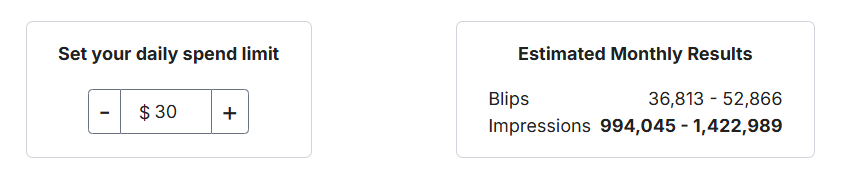
With Blip, you control exactly how much you spend on Union City billboards by setting a daily budget that Blip automatically follows. Because each “blip” is a 7.5–10 second ad on rotating digital billboards near Union City, Georgia, you only pay for the individual blips you receive, and you can adjust your budget at any time. Pricing is flexible, with the cost per blip changing based on when you run your ads, where they appear serving the Union City area, and current advertiser demand.
Where can I advertise with Blip near Union City, Georgia?
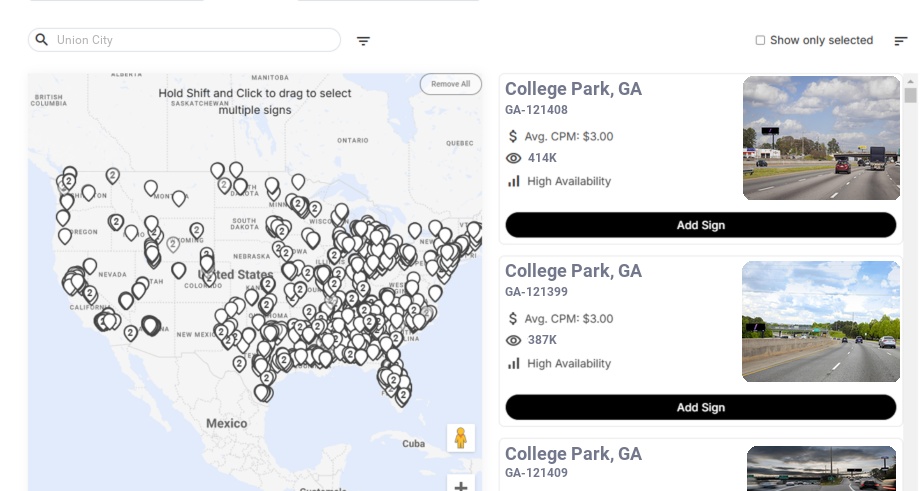
We have 11 digital billboards serving the Union City area, concentrated in nearby cities that share the same commuting and shopping patterns. These placements act as an extended network of billboards near Union City, catching residents as they move around the south metro. The main nearby markets listed are College Park, Hapeville, and Forest Park.
What kind of traffic do Blip billboards near Union City, Georgia reach?
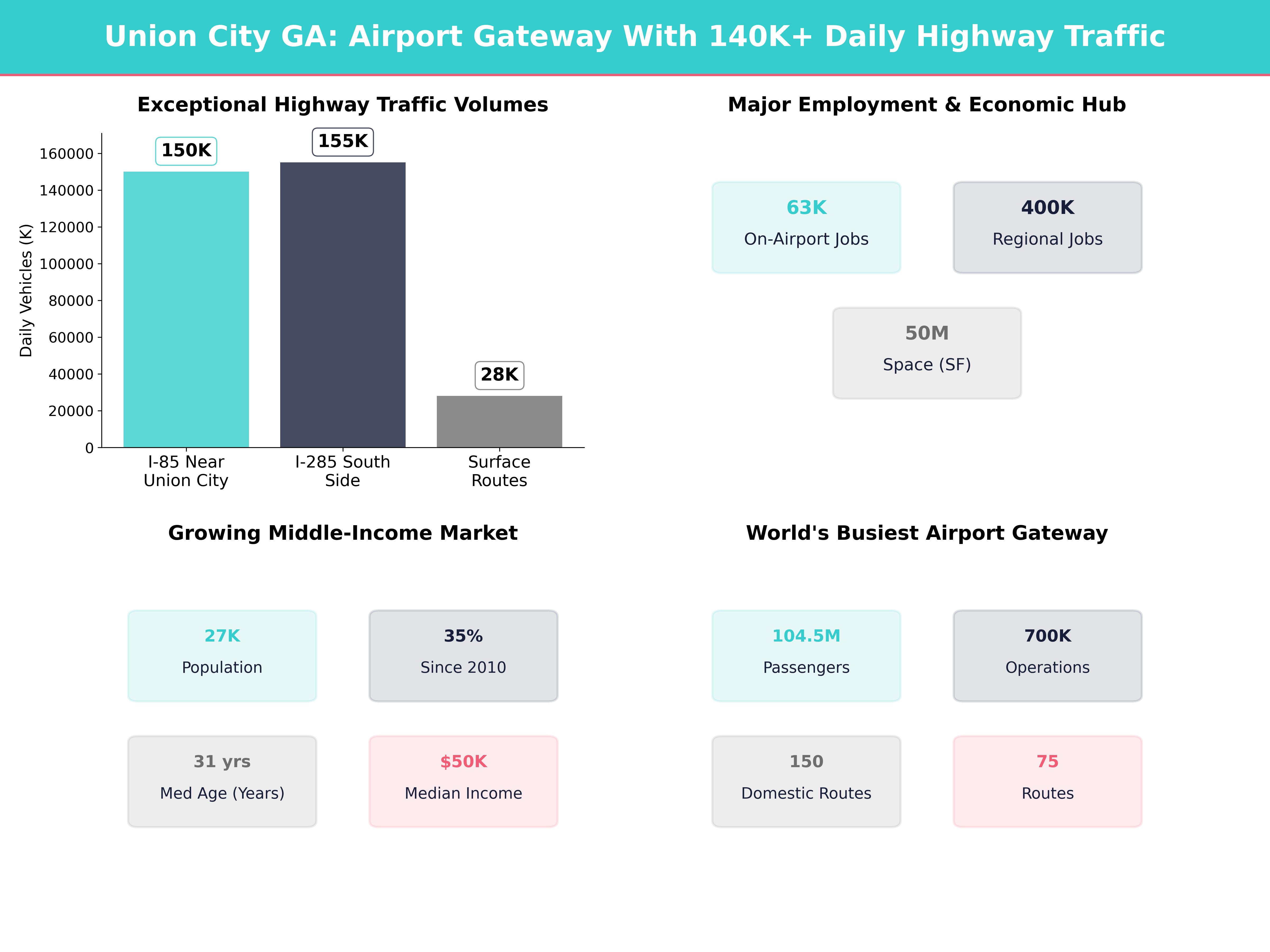
According to the Georgia Department of Transportation, average annual daily traffic on I‑85 near the Union City area frequently exceeds 140,000–160,000 vehicles per day, with some segments closer to Atlanta pushing above 170,000. I‑285 on the south side typically sees 130,000–180,000 vehicles per day, depending on the segment, with truck percentages often in the 15–20% range. Key surface routes like SR 138/Jonesboro Road and Old National Highway commonly register 20,000–35,000 vehicles per day on busier stretches.
When is the best time to run billboard ads in Union City, Georgia with Blip?
Using Blip’s scheduling tools, campaigns can be aligned with the daily and weekly rhythms of the Union City area. Morning commute runs from 5:30–9:30 a.m., midday runs from 10:00 a.m.–3:00 p.m., and evening rush runs from 3:30–7:30 p.m. Weekends also matter, with Saturdays often the single busiest traffic day in many Atlanta-area retail zones.
Who can I reach with billboards near Union City, Georgia?
The Union City area is predominantly Black/African American, often estimated at 75–85% of residents in many neighborhoods, with growing Hispanic/Latino and multicultural communities nearby. The area also has a large working-age population, with roughly 60–65% of residents between ages 18–64 and a strong young adult presence in the 20s and 30s. These patterns make billboard advertising near Union City a good fit for value-focused offers, training programs, restaurants, and commuting-related services.
Do I need a contract to advertise with Blip near Union City?
No, Blip has no long-term contracts or minimum commitments. You can start, pause, or stop your campaign at any time.
How fast can I launch a billboard campaign with Blip near Union City?
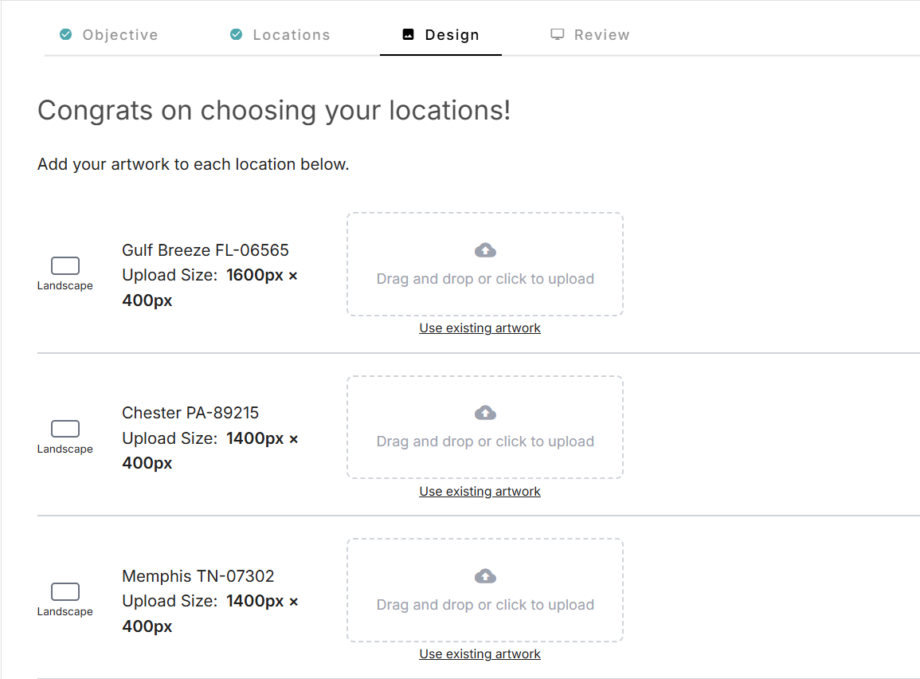
You can have your campaign live in minutes. Create a free account, select your locations, set your budget, upload your design, and start running once approved.
Where can I advertise with Blip near Union City?
Blip has digital billboards near Union City. You can browse available locations on a map, choose the ones that fit your audience, and start advertising right away.
Still have questions? Launch a campaign in minutes — no contracts, no commitments.
Start Your CampaignUnion City Billboard Advertising Guide
The Union City, Georgia area sits at a powerful crossroads of logistics, commuting, and air travel. With strong population growth, proximity to Hartsfield–Jackson Atlanta International Airport
Understanding the Union City Area Market
Union City is part of rapidly growing south Fulton County, just southwest of downtown Atlanta.
- The Union City area has a population of roughly 27,000 residents, up from about 19,500 in 2010—an increase of more than 35% over a decade, according to growth trends reported by Union City and Fulton County. The city’s planning documents project the population to approach 30,000–32,000 by the early 2030s if current growth continues, increasing the long-term value of billboard advertising near Union City.
- Fulton County as a whole has more than 1.1 million residents and has grown about 15–20% since 2010, making it one of Georgia’s most dynamic counties and accounting for roughly 10% of the state’s total population.
- The median age in the Union City area is about 31 years, younger than both the Georgia (around 37 years) and U.S. (around 39 years) averages, indicating a strong base of working-age adults and young families.
- Median household income in the broader south Fulton corridor is in the $45,000–55,000 range, with pockets in nearby communities climbing into the $60,000–70,000 range. Around 55–60% of households fall into the $25,000–75,000 band, underscoring the importance of value-focused offers, while a substantial group of higher‑income airport and office workers has discretionary spending power.
- Educational attainment is steadily improving: roughly 85–90% of adults have at least a high school diploma, and 20–25% hold an associate’s degree or higher, creating a receptive audience for training, career, and professional services messaging supported by well-placed billboards near Union City.
The Union City area economy is powered by:
- Logistics and distribution (concentrated along I‑85 and the former Shannon Mall site), supported by more than 50 million square feet of warehouse and industrial space across the broader airport–south Fulton corridor.
- Airport-related services connected to Hartsfield–Jackson Atlanta International Airport 63,000+ on‑airport jobs and well over 400,000 direct and indirect jobs regionally.
- Retail and services along State Route 138/Jonesboro Road and Old National Highway, where major centers routinely draw tens of thousands of shopper visits each week.
- Film and TV production at nearby studios such as Atlanta Metro Studios $4–6 billion in direct spending in strong recent years.
This blend of blue-collar, white-collar, and creative workers means billboard campaigns near Union City can be tailored to very different audience segments depending on time of day, location, and creative, making digital Union City billboards a versatile channel for local and regional brands.
For broader economic context and project pipelines affecting consumer and commuter flows, advertisers can monitor local updates from Union City, Fulton County, and nearby jurisdictions such as Clayton County
Where Blip Billboards Reach the Union City Area
We have 11 digital billboards serving the Union City area, concentrated in nearby cities that share the same commuting and shopping patterns. These placements act as an extended network of billboards near Union City, catching residents as they move around the south metro.
- College Park (about 6 miles from Union City) – home to roughly 14,000–15,000 residents and a daytime population that swells dramatically with airport, hotel, and office workers. Learn more via the City of College Park.
- Hapeville (about 9.5 miles from Union City) – a compact city of around 6,000–7,000 residents, with strong arts, dining, and hotel activity. See local info from Hapeville.
- Forest Park (about 9.7 miles from Union City) – a larger suburb of roughly 20,000–21,000 residents in Clayton County and a major logistics and warehouse hub. Details are available from Forest Park.
These locations sit along major southside corridors:
- I‑85 south of Atlanta
- I‑285 on the south loop
- Feeder roads connecting to Hartsfield–Jackson and the airport hotel/parking cluster
- Key commuter routes serving employers and retail centers in College Park, Hapeville, Forest Park, and the Union City area
According to the Georgia Department of Transportation, average annual daily traffic (AADT) on:
- I‑85 near the Union City area frequently exceeds 140,000–160,000 vehicles per day, with some segments closer to Atlanta pushing above 170,000.
- I‑285 on the south side typically sees 130,000–180,000 vehicles per day, depending on the segment, with truck percentages often in the 15–20% range—valuable for B2B, logistics, and industrial services advertisers.
- Key surface routes (like SR 138/Jonesboro Road and Old National Highway) commonly register 20,000–35,000 vehicles per day on busier stretches, with weekend volumes that can be 10–20% higher near major shopping centers.
Placing digital creatives on Blip billboards near College Park, Hapeville, and Forest Park puts your brand directly in this traffic stream, while still targeting people who live, work, and shop in the Union City area. For advertisers exploring billboard rental near Union City, this cluster of signs provides broad coverage with efficient reach.
Who You’re Reaching: Demographics & Lifestyles
The Union City area and surrounding south Fulton/south Clayton communities show consistent patterns:
-
Age
- Large working-age population: roughly 60–65% of residents between ages 18–64.
- Strong young adult presence (20s–30s), often accounting for 28–32% of the population—ideal for campaigns involving apartments, quick-service restaurants, nightlife, rideshare, and streaming/tech brands.
- Children under 18 typically make up around 24–26% of local residents, supporting family- and youth‑oriented messaging.
-
Race & Ethnicity
- The Union City area is predominantly Black/African American, often estimated at 75–85% of residents in many neighborhoods.
- Growing Hispanic/Latino and multicultural communities in nearby Clayton and Fulton sections, with Hispanic/Latino residents approaching 10% or more in some adjoining ZIP codes.
- White, Asian, and multiracial residents collectively account for roughly 10–20% of the population, depending on the specific corridor.
-
Household Type
- Higher percentage of single-adult and single-parent households than the national average; in some southside communities, 35–40% of households are single-person.
- Many renters in multi-family housing, particularly along major corridors and near transit; renter share in several Union City and south Fulton tracts can exceed 60–70%, compared with a national average closer to 35%.
- Average household size tends to run slightly higher than the national figure, around 2.6–2.8 persons per household, reflecting multi‑generational and family households.
-
Commuting & Mobility
- A high share of residents work in logistics, hospitality, airport operations, and service-sector roles, which in some nearby jurisdictions can represent 30–40% of all jobs.
- Mean commute times often fall in the 30–35 minute range, with many commuters traveling on I‑85 toward Atlanta, or eastward to I‑285 and Clayton County employment centers.
- The MARTA network and local bus routes support a sizable transit-riding population, especially around College Park and the airport, where the College Park and Airport rail stations handle thousands of boardings per weekday.
- Car ownership remains common, but a higher-than‑average share of households rely on transit, carpooling, or rideshare compared with many suburbs—helpful context for mobility, auto, and insurance messaging.
These factors imply several best practices for billboard messaging near the Union City area:
- Keep messages clear and bold, readable by drivers moving at highway speeds; drivers typically have 6–8 seconds to process a billboard at 65–70 mph.
- Speak to a diverse, majority-Black audience in a culturally informed way, using imagery and language that match Atlanta’s southside experience.
- Emphasize value, convenience, and time savings for busy, often shift-based workers—more than 50% of regional workers have non‑traditional schedules in some service-heavy industries.
- For renters and young adults, lean into aspiration, mobility, and upgrading (new apartments, training programs, cars, and experiences) to get the most impact from billboard advertising near Union City.
Traffic Patterns and When to Run Your Ads
Using Blip’s scheduling tools, we can align your impressions with the daily and weekly rhythms of the Union City area.
Weekday Patterns
-
Morning Commute (5:30–9:30 a.m.)
- Heavy flows northbound on I‑85 toward Atlanta and the airport; in many metro corridors, peak morning hours can represent 30–35% of weekday daily volume.
- Many service and logistics workers start early; airport shifts often begin before 7:00 a.m., with some operations at Hartsfield–Jackson running 24/7.
- Ideal for: coffee and breakfast QSRs, convenience stores, fuel, morning radio/streaming, transit parking, educational programs, staffing agencies.
-
Midday (10:00 a.m.–3:00 p.m.)
- Steady but less congested—workers on split shifts, delivery traffic, retirees, and parents on errands. This block often captures 25–30% of weekday traffic volumes.
- Ideal for: retail, grocery, medical/dental offices, auto service, banks/credit unions, and government/public service messaging from entities such as Fulton County or Clayton County
-
Evening Rush (3:30–7:30 p.m.)
- Southbound and westbound flows as workers return to the Union City area and neighboring communities. Evening peaks can account for another 30–35% of weekday traffic.
- Ideal for: restaurants and fast-casual dining, entertainment, gyms, car dealers, home services, and family-oriented offers.
-
Late Evening/Night (8:00 p.m.–12:00 a.m. and later)
- Important segment given airport operations run late and many logistics jobs have evening or overnight shifts; in logistics-heavy corridors, 15–20% of daily truck movements can occur in off‑peak night periods.
- Ideal for: nightlife, late-night dining, delivery apps, streaming, and recruiting ads for warehouses/transport.
With Blip, you can bid higher and show more frequently in the time windows that matter most to your audience, and scale back or pause during slower periods, making programmatic billboard rental near Union City both flexible and efficient.
Weekend Patterns
- Fridays: Strong commuter and leisure mix; traffic volumes on some retail corridors can climb 10–20% above typical weekdays in the afternoon and early evening. Strategic for weekend promotions, events, and limited-time sales.
- Saturdays: Heavy retail and errands traffic along SR 138, Old National Highway, and around big-box shopping nodes. In many Atlanta-area retail zones, Saturdays are the single busiest traffic day, capturing up to 18–20% of the week’s total vehicle trips.
- Sundays: Church traffic is significant, especially in the Union City area and south Fulton, which hosts numerous large congregations. Morning and early afternoon can be excellent for restaurant, family entertainment, and inspirational or community-focused campaigns.
Leveraging the Airport & Regional Reach
Hartsfield–Jackson Atlanta International Airport, about 10–15 minutes from the Union City area, is one of the busiest airports in the world. According to airport statistics
- Over 100 million passengers in 2023 (approximately 104–105 million total passengers).
- More than 700,000 aircraft operations annually, averaging nearly 1,900–2,000 takeoffs and landings per day.
The airport also supports:
- Nonstop service to more than 150 domestic and 75 international destinations in peak seasons.
- Tens of thousands of hotel room nights per week across College Park, Hapeville, and surrounding areas.
While our billboards are outside the terminal itself, units in College Park, Hapeville, and Forest Park capture:
- Residents and visitors driving to and from the airport
- Hotel guests along Airport Boulevard, Virginia Avenue, and Old National Highway
- Rideshare, shuttle, and rental car traffic connecting ATL to the southside
This means campaigns near the Union City area can reach:
- Local residents headed to the airport
- Inbound visitors staying in nearby hotels who may then travel to the Union City area for business, film production, or events at venues promoted by Discover Atlanta
- Business travelers, an audience with above-average income and spending power—frequent business travelers often report individual annual travel-related spend in the $3,000–5,000+ range.
Advertisers can use Blip to design dual-purpose campaigns: one creative for local, everyday shoppers and another for airport-related audiences, each targeted to specific boards and time windows. When combined, this approach turns Union City billboards into both a neighborhood touchpoint and a regional awareness tool.
Crafting High-Impact Creative for the Union City Area
For digital billboards near Union City and the southern I‑85 corridor, strong creative is non‑negotiable. We recommend:
1. Simple, Bold Messaging
- Limit copy to 7–10 words or fewer; research on outdoor readability shows recall drops sharply as copy exceeds 10–12 words.
- Use large, high-contrast fonts; white or bright text on dark backgrounds works well for night visibility and rainy conditions.
- Avoid script or thin fonts that disappear at 65–75 mph.
Example:
- “UNION CITY AREA’S FASTEST OIL CHANGE – EXIT 64”
- “ORDER AHEAD. SKIP THE LINE. JONESBORO RD.”
2. Clear Calls to Action
Locals in the Union City area are often focused on getting to work, home, or the airport. Make your ask crystal clear:
- “APPLY TODAY – START THIS WEEK”
- “15% OFF WITH CODE UNION15”
- “OPEN 24 HOURS – NEXT RIGHT”
If your location is close to a particular exit or shopping node, reference it:
- “OLD NATIONAL HWY – 2 MILES AHEAD”
- “NEAR UNION CITY CITY HALL – JONESBORO RD”
Adding clear geographic cues like “billboards near Union City” or “just off I‑85” in your creative can help drivers immediately connect the message with your nearby location.
3. Visuals that Reflect the Community
Given the majority-Black, diverse population:
- Feature diverse models and families, including Black professionals, workers, and students.
- Reflect local lifestyle touchpoints—church-going families, logistics/warehouse workers, airport staff, young creatives, and film crews at studios like Atlanta Metro Studios Discover Atlanta
- Use color palettes and imagery that feel at home in Atlanta’s southside culture—vibrant but clean, urban yet accessible.
4. Mobile and Web Synergy
Union City area residents have high smartphone usage and are accustomed to app-driven services; in metro Atlanta, smartphone penetration is widely estimated above 85–90% of adults.
- Include short URLs, recognizable app logos, or QR codes (large and high-contrast) for use at slower intersections or surface roads.
- Sync billboard flights with social campaigns targeting south Fulton, College Park, and Clayton ZIP codes to reinforce recall; cross‑channel campaigns have been shown in many studies to boost ad recall by 20–30% versus single‑channel efforts.
- Align your geo-targeting so mobile ads reach people who have recently passed billboards near Union City, keeping your brand top-of-mind.
Local Use Cases: Who Wins with Union City Area Billboards
Here are some categories that can particularly benefit from Blip campaigns serving the Union City area:
Local Retail & Restaurants
- QSRs and fast-casual locations along SR 138, Old National Highway, and near I‑85 interchanges.
- Grocery and discount retailers serving value-focused households, such as the big-box clusters documented in local economic reports from Union City and Clayton County
Strategy:
- Run heavier schedules during Friday–Sunday and evening commute, when many stores see 30–40% of their weekly foot traffic.
- Promote limited-time offers, meal deals, or curbside pickup that resonate with busy households and shift workers.
- Use Union City billboards to remind shoppers about nearby locations just before they reach key exits and shopping nodes.
Auto Dealers & Service Centers
- Car dealers and used-car lots in the south metro area.
- Tire, brake, and quick lube shops serving commuters on I‑85 and I‑285.
Strategy:
- Highlight affordable payment terms and same-day service; auto repair and purchase decisions are often made within 24–72 hours of first consideration.
- Target morning commute and weekend blocks, when test drives and service appointments are most common.
- Use directional messaging: “5 MIN FROM UNION CITY EXIT 64.” This kind of billboard advertising near Union City captures prospects when they are already thinking about their vehicles.
Logistics, Warehouse, and Airport Employers
The Union City area is surrounded by warehouses, distribution centers, and airport-related employers constantly hiring. The broader airport region hosts tens of thousands of logistics and fulfillment jobs, with seasonal peaks boosting staffing needs by 10–30%.
Strategy:
- Run recruiting campaigns focusing on pay, benefits, location, and schedules (e.g., “START AT $18/HR – UNION CITY AREA WAREHOUSE”).
- Heavy presence on boards near College Park/Forest Park during early morning and late-night shifts when workers are commuting.
- Rotate creatives: entry-level roles, CDL drivers, supervisors, and seasonal hiring, aligning with peak shipping periods highlighted by regional business groups such as the Airport Area Chamber.
Education & Training
- Local community colleges, trade schools, CDL academies, and healthcare training centers serving south Fulton and Clayton County residents.
- Workforce and adult education initiatives promoted by Fulton County and Clayton County
Strategy:
- Emphasize career mobility, “start in weeks, not years,” and aid availability; many short‑term programs run 8–24 weeks, a compelling timeframe to feature.
- Direct prospects to simple, memorable URLs or text codes to track responses.
- Daypart to align with commutes and evenings when prospects are planning their next step, using billboards near Union City to speak directly to local upskilling needs.
Healthcare, Clinics, and Public Services
- Federally qualified health centers, urgent care, dental clinics, and mental health providers serving Union City, College Park, and surrounding communities.
- Public health campaigns run by Fulton County or local nonprofits, including vaccination, screening, and wellness initiatives.
Strategy:
- Run steady, always-on awareness with slight pulses during health observance months (e.g., heart health, diabetes awareness). Preventive screenings often increase 10–20% during targeted campaigns.
- Focus on access, affordability, and proximity to the Union City area (“near Union City City Hall,” “5 minutes from I‑85”).
- Highlight extended hours and walk‑in availability to appeal to shift workers who frequently pass Union City billboards on their way to and from work.
Aligning with Local Events and Seasonality
Union City and the south metro region host a range of community and regional events highlighted by Union City’s calendar, the City of Atlanta Discover Atlanta
- City festivals, Juneteenth celebrations, and holiday parades, which can draw thousands of attendees over a weekend.
- High school sports seasons (football in the fall, basketball in the winter) at local schools served by Fulton and Clayton districts; Friday night games can spike nearby traffic by 10–15% before and after events.
- Film production cycles when area studios are active, bringing in crews who spend heavily on hotels, dining, and services.
- Airport and logistics seasonal peaks, such as the holiday shipping rush, when parcel volumes and related staffing can surge 20–40% above off‑peak levels.
With Blip, we can:
- Spin up short, intense campaigns just for event weeks, with daily budgets that ramp up 2–3x during key days.
- Change creatives mid-season—e.g., from “Back-to-School Savings” in August to “Holiday Deals” in November.
- Highlight sponsorships or participation in Union City area events: “Proud Sponsor of [Event Name],” matching messaging to events listed on Union City or Discover Atlanta
Using Blip’s Flexibility to Optimize
Digital billboards serving the Union City area through Blip are purchased a “blip” at a time, giving you granular control:
- Set your own budget: Start with a modest daily spend (for example, $10–$20 per day) and scale as you see results; many advertisers ramp up to 2–4x their initial budget during high-performing periods.
- Target by board and daypart: Prioritize screens closer to your storefronts or hiring locations, and run heavier when your audience is on the road. Concentrating spend in top‑performing dayparts can improve effective CPM by 20–30%.
-
Rotate multiple creatives:
- A value-focused message for budget-conscious shoppers.
- A premium or lifestyle message for airport travelers and business audiences.
- A hiring or community-support message for credibility and brand goodwill.
To measure effectiveness, combine:
- Website and app analytics before and after campaign windows (tracking changes in sessions, conversions, and location-based traffic; lifts of 10–25% during active flights are common for well‑targeted local campaigns).
- Promo codes or landing pages unique to billboard efforts.
- Store traffic patterns (footfall, POS data) aligned with your flight dates.
Local media like the Atlanta Journal-Constitution, south Fulton community outlets, and business organizations such as the South Fulton Chamber of Commerce and Airport Area Chamber are useful for tracking broader economic and development trends that might influence your targeting and timing, and help you refine ongoing billboard advertising near Union City.
Putting It All Together
The Union City area offers a rare combination of:
- Fast-growing residential communities, with population up more than 35% since 2010
- Constant commuter and logistics traffic, including hundreds of thousands of daily vehicle trips on nearby interstates and arterials
- Immediate proximity to one of the world’s busiest airports, serving 100+ million passengers annually
By using Blip’s 11 digital billboards in nearby College Park, Hapeville, and Forest Park, advertisers can craft campaigns that:
- Reach Union City area residents on their daily routes
- Tap into high-value airport and regional travelers
- Adjust quickly to events, seasons, and hiring or sales needs
With clear, locally tuned creative and smart use of Blip’s scheduling and budget controls, digital billboards near the Union City area can become a high-impact, highly flexible part of your marketing mix, grounded in real traffic, demographic, and economic data from the communities you want to reach. For organizations seeking cost-effective billboard rental near Union City, this strategy provides a scalable way to build awareness, drive response, and stay visible in a growing, highly mobile market.