Billboards near Melrose, MA
No Minimum Spend. No Long-Term Contracts. Just Results.
Trusted by Leading Brands


Billboard advertising
near Melrose has never been easier
How much is a billboard near Melrose?
Why Choose Blip for Billboard Advertising near Melrose
Blip lets you launch Melrose billboards fast, reaching Boston-bound commuters on I-93, Route 1, and the Orange Line corridors.
Set a flexible budget for Melrose and scale up for school events, holiday shopping, or spring home-improvement demand.
Use Blip dayparting in Melrose to hit rush hour on Chelsea and Everett routes, or weekends near Peabody retail trips.
No contracts means Melrose businesses can test billboard ads near Boston, then shift spend based on what drives results.
Track real-time Melrose performance and optimize by corridor—Route 99, Tobin Bridge access, or Route 128/95 traffic.
Blip's creative tools help Melrose brands build bold, fast-read ads for affluent families and commuters on the go.
Frequently Asked Questions About Billboard Advertising near Melrose
How much does a billboard cost near Melrose, Massachusetts with Blip?
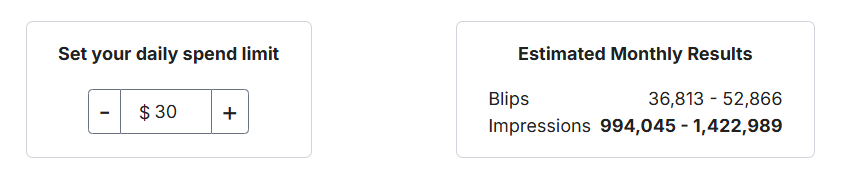
With Blip, you control exactly what you spend on Melrose billboards by setting a daily budget that can be adjusted any time, so you only pay for the digital billboard advertising you actually receive. Each “blip” is a brief 7.5–10 second ad display, and costs vary based on when and where you choose to appear and on advertiser demand. That means promoting your business on billboards near Melrose, Massachusetts can work on almost any budget, from cautious tests to more aggressive local exposure.
Where can I advertise with Blip near Melrose, Massachusetts?
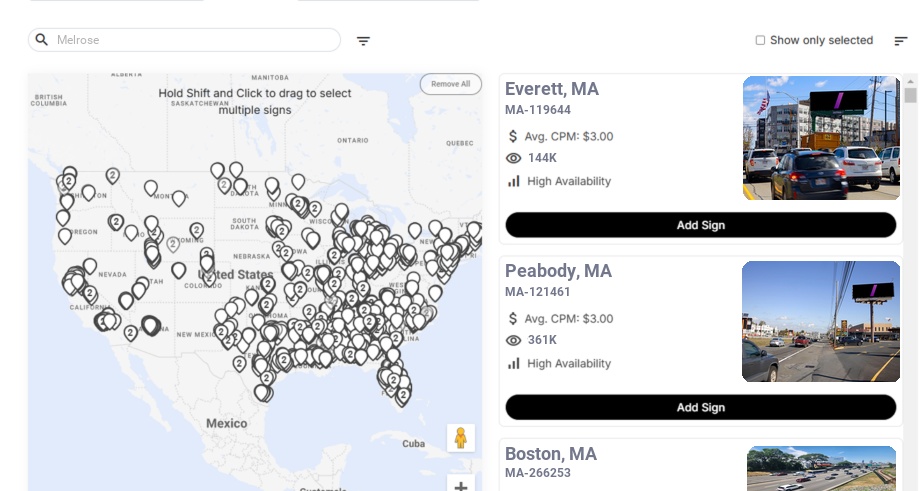
We have 19 digital billboards serving the Melrose area, located in Everett, Chelsea, Peabody, and Boston—each capturing different slices of traffic and behavior. If you’re looking for billboards near Melrose without paying downtown Boston rates, these surrounding corridors deliver Melrose billboards level coverage with highly efficient reach. This flexible approach lets you prioritize the exact roadways your best customers use most.
What kind of audience will see Melrose billboards?
Melrose, Massachusetts offers advertisers a rare mix of affluent homebuyers, engaged families, and Boston-bound professionals—all concentrated in a compact, commuter-heavy corridor north of the city. The city is dense, walkable, and highly educated, with many residents commuting into Boston, Cambridge, and surrounding employment hubs. That creates a large audience for professional services, B2B brands, and career-related education.
When is the best time to run Blip ads for Melrose area commuters?
Morning (6:30–9:30 a.m.) is a strong window to target southbound and city-bound commuters on boards near Everett, Chelsea, and Boston. Evening (3:30–7:00 p.m.) is also valuable for return commuters, when congestion in and around Boston, Everett, and Chelsea often slows average speeds and lengthens billboard viewing time. Midday and weekends can work well for retail, medical appointments, and family entertainment campaigns.
What billboard locations around Melrose get the most traffic?
Route 1 through nearby Chelsea and Peabody can carry 100,000–130,000 vehicles per day on certain segments, while I-95/Route 128 near Peabody typically sees 150,000–180,000 vehicles daily on key segments. Urban arterials in Everett and Chelsea often carry 30,000–60,000 vehicles per day per segment. These corridors help intercept Melrose residents multiple times per week across commuting, errands, recreation, and events.
Do I need a contract to advertise with Blip near Melrose?
No, Blip has no long-term contracts or minimum commitments. You can start, pause, or stop your campaign at any time.
How fast can I launch a billboard campaign with Blip near Melrose?
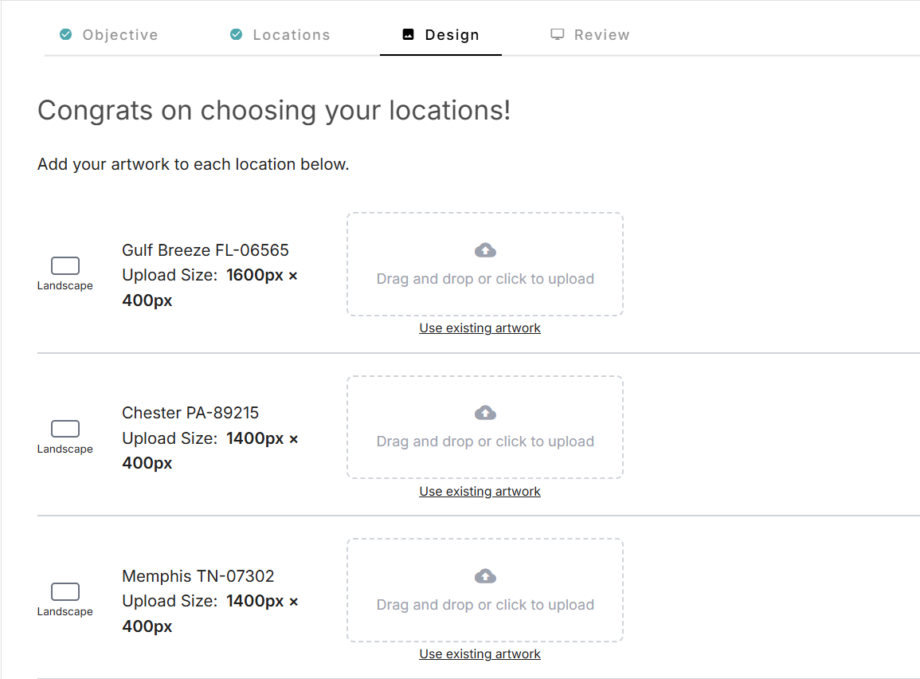
You can have your campaign live in minutes. Create a free account, select your locations, set your budget, upload your design, and start running once approved.
Where can I advertise with Blip near Melrose?
Blip has digital billboards near Melrose. You can browse available locations on a map, choose the ones that fit your audience, and start advertising right away.
Still have questions? Launch a campaign in minutes — no contracts, no commitments.
Start Your CampaignMelrose Billboard Advertising Guide
Melrose, Massachusetts offers advertisers a rare mix of affluent homebuyers, engaged families, and Boston-bound professionals—all concentrated in a compact, commuter-heavy corridor north of the city. With 19 digital billboards serving the Melrose area from nearby City of Everett City of Chelsea, City of Peabody, and City of Boston, we can help you put your message in front of residents where they actually drive, shop, and commute every day. If you’re looking for billboards near Melrose without paying downtown Boston rates, these surrounding corridors deliver Melrose billboards level coverage with highly efficient reach.

Understanding the Melrose Area Market
Melrose is a dense, walkable suburb just 7 miles north of downtown Boston. According to recent local and regional planning estimates, the city has roughly 30,000 residents packed into about 4.8 square miles, giving it a population density of around 6,200–6,400 people per square mile—among the denser communities on Boston’s North Shore. That density means each household is likely to pass the same key corridors frequently, making consistent exposure via nearby billboards powerful for billboard advertising near Melrose.
The city’s official website, City of Melrose, and regional planning materials indicate that Melrose has approximately 12,000–13,000 housing units, with a homeownership rate in the mid‑60% range and renter households around one‑third of the market. Median home values are commonly reported in the $650,000–$750,000 range, which keeps the buyer pool relatively affluent and often highly motivated to invest in home services and local businesses.
Key demographic points that shape your billboard strategy:
- Affluent households: Median household income in Melrose is in the $115,000–$125,000 range, roughly 35–45% higher than the Massachusetts state median and 70–80% higher than the U.S. median. A significant share of households earn above $150,000, supporting campaigns for higher-end retail, home services, healthcare, and financial services. Local real estate reports routinely show Melrose in the top tier of North Shore communities for both median income and spending power.
- Family-focused community: Roughly 30–35% of households have children under 18, and the local school district is a strong community anchor. Melrose Public Schools serve around 3,800–4,000 students across elementary, middle, and high schools, and school events, sports, and activities generate thousands of weekly trips across the city. Youth participation in community and school athletics is high, with local leagues often registering hundreds of players per sport season, which translates to steady evening and weekend traffic that passes billboards near Melrose multiple times per week.
- Highly educated professionals: A strong majority of adults hold a bachelor’s degree or higher; in recent survey data, roughly two-thirds of Melrose adults have at least a four-year degree, and a substantial share hold graduate or professional degrees. Many commute into Boston, Cambridge, and surrounding employment hubs for roles in healthcare, education, technology, finance, and government. In Greater Boston, more than 45% of workers are in professional and management occupations, and Melrose mirrors or exceeds that profile, creating a large audience for professional services, B2B brands, and career-related education.
- Civically engaged population: The City of Melrose maintains active communication channels and community programs via cityofmelrose.org, where city departments regularly share updates on public meetings, neighborhood initiatives, and recreation programs. Local news outlets like Wicked Local Melrose Melrose Weekly News, and regional broadcasters such as WBUR and local Boston TV stations keep residents plugged into local happenings; regional media surveys show that well over 70% of Greater Boston adults consume local news at least weekly. This environment favors brands that present themselves as community-oriented and trustworthy, and it supports Melrose billboards that reinforce your presence as a familiar local name.
When you build a campaign for the Melrose area, you’re talking to informed, commuting, family-focused consumers with substantial purchasing power and a strong habit of following local information channels.
How People Move Around the Melrose Area
To reach Melrose residents effectively, it’s crucial to understand how they travel through the region and how that movement overlaps with billboard advertising near Melrose.
According to journey-to-work data used by regional planners, roughly three-quarters of Melrose workers commute by car, with most of the remainder using transit. Average one-way travel times for Melrose residents are commonly reported in the 30–35 minute range, longer than the national average, meaning commuters spend a lot of time on the road or on trains—prime time for billboard exposure.
Primary commuting patterns:
- To Boston and inner suburbs: Many residents commute south toward Boston via I‑93, Route 1, Route 99, and the MBTA Orange Line and Commuter Rail (Haverhill Line). According to the MBTA, the Orange Line alone handled well over 200,000 weekday trips pre‑pandemic, and systemwide rail ridership in 2024 has rebounded to roughly 60–70% of pre‑2020 levels, with some lines exceeding that on peak days. Even partial return-to-office policies—common in major Boston employers, where 3‑day in-office schedules are now typical—mean steady weekday flows through key corridors serving Melrose.
-
Regional driving corridors:
- Route 1 (through nearby Chelsea and Peabody): According to MassDOT traffic counts, certain segments of Route 1 north of Boston carry 100,000–130,000 vehicles per day, with pronounced weekday peaks tied to work commutes and weekend peaks tied to shopping and dining.
- I‑95/Route 128 (near Peabody): This critical beltway typically sees 150,000–180,000 vehicles daily on key segments near Peabody and Danvers, making it one of the busiest suburban corridors in Massachusetts and a key connector for North Shore commuters and shoppers.
- Urban arterials in Everett and Chelsea: Routes 16, 99, and approaches to the Tobin Bridge, monitored by MassDOT and local traffic studies, often carry 30,000–60,000 vehicles per day per segment, feeding steady flows between Boston and the north suburbs.
Local patterns:
- Residents frequently travel to big-box retail, malls, and entertainment clusters in nearby communities such as Peaboy ( Northshore Mall Everett Gateway Center Encore Boston Harbor
- Youth sports tournaments, school events, and regional healthcare trips (for example, visits to major medical centers in Boston and the Longwood Medical and Academic Area) add weekend and off-peak trips that still pass our nearby boards. Large Boston hospitals attract tens of thousands of staff and patient visits daily to the city, many of whom travel via the same highways Melrose residents use.
- Many north-shore residents also pass through Logan International Airport corridors for business and leisure travel, further increasing exposure opportunities along key access routes.
Because Melrose is small but well-connected, a campaign that uses billboards near Everett, Chelsea, Peabody, and Boston can intercept residents multiple times per week across different trip types—commuting, errands, recreation, and events. Industry research on out-of-home media shows that over 80% of U.S. adults notice roadside billboards, and commuters who pass the same signs multiple times per week have significantly higher ad recall and message retention.
Strategic Billboard Locations Serving the Melrose Area
We have 19 digital billboards serving the Melrose area, located in Everett, Chelsea, Peabody, and Boston—each capturing different slices of traffic and behavior. Digital out-of-home units can rotate several advertisers in quick succession; depending on location and time of day, a single board can generate tens of thousands of impressions per day. For advertisers seeking billboard rental near Melrose, this regional mix provides flexible options to match both budget and audience.
Everett (about 3.3 miles from Melrose)
Everett
- Arterials like Route 99 and Route 16 with significant commuter and retail traffic. MassDOT counts on these roads typically show 30,000–50,000 vehicles per day on key segments.
- A growing entertainment and retail cluster—including the Gateway Center Encore Boston Harbor
Boards near Everett are ideal for:
- Daily commuter impressions: Target professionals heading to and from Boston or inner suburbs. Many Melrose commuters use Everett’s corridors as feeder routes, resulting in 10+ weekly exposures for frequent drivers and making these units effective billboards near Melrose for everyday visibility.
- Retail and QSR (quick-service restaurant) promotions: Catch shoppers en route to Everett’s retail centers, where big-box anchors and national chains pull in thousands of visits per weekend.
- Event-based campaigns: Reach Melrose-area residents going out for evening entertainment; casino and nightlife destinations in Everett report high late-afternoon and evening peaks, aligning well with digital billboard prime times.
Chelsea (about 4.0 miles from Melrose)
Chelsea sits at a critical choke point for traffic heading into Boston from the north:
- Proximity to the Tobin Bridge and Route 1 funnels big volumes of vehicles. Segments of Route 1 in and around Chelsea commonly carry 100,000+ vehicles per day, according to MassDOT.
- Mixed residential and industrial zones produce steady all-day traffic, with commercial vehicle and delivery traffic adding to private commuter volumes. The City of Chelsea highlights its role as a key transportation hub, with rapid access to Logan Airport and downtown Boston.
Boards near Chelsea work well for:
- Brand visibility for Boston-bound commuters from Melrose and surrounding towns. With many drivers passing through this bottleneck at 10–30 mph during peak congestion, digital billboard messages have longer viewing times than on free-flow highway segments, which is especially valuable when you’re using billboard advertising near Melrose to drive recall.
- Service businesses (insurance, home improvement, legal, dental) that want to appear “everywhere” on a commuter’s route; local surveys indicate that Greater Boston commuters often pass 5–10 outdoor ads on a single daily trip.
- Recruitment campaigns, particularly for employers in Boston and the inner suburbs seeking workers in healthcare, education, logistics, and hospitality. The combination of residential neighborhoods and industrial corridors makes Chelsea especially suited for labor-focused messages.
Peabody (about 6.7 miles from Melrose)
Peabody is a major retail and highway hub for the North Shore:
- Junction of I‑95, Route 128, and Route 114, with traffic counts routinely exceeding 150,000 vehicles per day on some segments, per MassDOT data.
- Northshore Mall
Boards near Peabody are particularly strong for:
- Regional retail and e‑commerce brands wanting to convert Melrose-area shoppers who already travel to Peabody for shopping; North Shore consumer surveys show that a majority of residents visit regional malls multiple times per quarter. These faces function as high-impact Melrose billboards for residents who regularly shop and dine in the corridor.
- Automotive, furniture, and appliance dealers with showrooms on or near Route 1 or Route 114. Auto dealers in this corridor see both destination shoppers and impulse test-drive traffic, and outdoor ads are a proven driver; industry benchmarks show that nearly one in four consumers say billboards have influenced a dealership visit.
- Healthcare and education providers serving the broader North Shore region. Medical offices and satellite campuses clustered around Route 114 and Route 1 benefit from directional and awareness messaging, especially for high-consideration services like imaging, specialty care, and adult education.
Boston (about 8.3 miles from Melrose)
Boston’s boards give you prestige and reach:
- Capture Melrose residents as they drive into or through the city for work, sports, culture, and healthcare. Boston hosts dozens of major sports, concert, and cultural events each month, drawing tens of thousands of attendees on event days.
- Reach millions of annual visitors; Meet Boston reports that Greater Boston draws over 20 million visitors annually in a typical year, including both domestic and international travelers. Many of these visitors travel via the same corridors used by Melrose commuters or arrive through gateways like Logan International Airport, accessible via Route 1 and the Ted Williams and Sumner Tunnels.
Boards near Boston are ideal when you:
- Want to elevate your brand perception by appearing in the “big city” context. Research on out-of-home advertising shows that brands advertised in major urban centers are often perceived as more established and trustworthy.
- Serve both Melrose-area residents and broader Greater Boston audiences (e.g., colleges, medical providers, banks, regional chains). Many regional institutions report that their service areas encompass dozens of surrounding suburbs, with Melrose commonly included.
- Time campaigns with major events and sports seasons that draw Melrose families into the city. Boston’s professional sports teams and concert venues can see crowds of 18,000–40,000 people per event, creating spikes in impressions for boards on key approach routes.
Crafting Billboard Creative for Melrose-Area Viewers
The character of the Melrose area—family-oriented, well-educated, and commuter-heavy—suggests specific creative approaches. National out-of-home studies show that ads with 7 words or fewer have significantly higher recall, and designs optimized for 3–5 second viewing windows are most effective on highways.
- Speak to busy, thoughtful decision-makers
Melrose-area adults often juggle demanding jobs in Boston with active family lives. Effective creative:
- Uses short, benefit-focused headlines (ideally 6–8 words) like “Save on Melrose Home Projects This Week” or “Faster Orthodontics for Busy Melrose Families.” Research indicates that messages in this word range can boost recall by up to 20–30% versus longer copy.
- Uses clear calls to action such as “Exit at Route 1 Peabody,” “Book Today,” or “Call for Same-Day Service.” Out-of-home industry benchmarks show that including a strong call to action can increase response rates by 15–25%.
- Emphasizes trust and quality: “Locally Trusted Since 1998,” “Rated 4.9★ by North Shore Families.” In affluent communities like Melrose, reviews and longevity are key purchase drivers, especially in categories like healthcare, home services, and education.
- Lean into local identity
Residents identify strongly with Melrose and the North Shore. Consider:
- Featuring “Melrose area” or referencing local landmarks, schools, or seasonal traditions, such as Melrose’s Victorian neighborhoods, local parks, and school mascots, so viewers immediately recognize that these are Melrose billboards speaking directly to them.
- Using visuals that feel authentically New England—Victorian homes, fall foliage, youth sports, or commuter rail imagery connecting to the MBTA corridors used by local residents.
- Aligning with local causes and events publicized by the City of Melrose and community organizations like the Melrose Chamber of Commerce. Sponsorships and cause marketing are particularly effective in New England, where regional surveys suggest more than 60% of consumers prefer to buy from brands that support local initiatives.
- Design for fast-moving traffic
On highways like Route 1 and I‑95/128, drivers may only have 3–7 seconds to process your message:
- Large, high-contrast text (minimum 12–18 inch letter height in final art) is recommended; out-of-home best practices suggest that letters around 18 inches are readable from 500–700 feet.
- One dominant image or icon; avoid clutter. Creative audits show that billboards with a single strong image and one short line of copy can achieve up to 2x higher recall than complex layouts.
- One primary message and one easy-to-remember URL, short URL, or QR code (for slower urban approaches, not high-speed segments. In recent campaigns, brands using unique URLs or QR codes on digital billboards have seen measurable traffic lifts of 5–15% in associated web sessions.
- Support omnichannel campaigns
Many Melrose residents consume local news from outlets like Wicked Local Melrose The Boston Globe, WBUR). Use billboards to:
- Reinforce the same slogan or visuals used in your digital and social ads. Studies of integrated campaigns show that combining digital and out-of-home can increase overall reach and frequency by up to 30–40% compared with digital alone.
- Direct people to a branded landing page that matches the billboard design, improving conversion rates by providing a consistent experience.
- Promote limited-time offers also seen in email or social campaigns; synchronized promotions often see double-digit increases in redemption rates compared with single-channel efforts.
Timing Your Campaign with Local Rhythms
With Blip, you can choose specific days and times to run your ads, down to targeted “blips” throughout the day. For Melrose-area campaigns, timing is critical.
Transportation and mobility data for Greater Boston show that rush-hour volumes can be 30–60% higher than mid-day volumes on major corridors, and weekend patterns shift significantly toward shopping, dining, and entertainment. Smart timing lets billboard rental near Melrose work harder without requiring a larger budget.
Weekday commuting peaks
- Morning (6:30–9:30 a.m.): Target southbound and city-bound commuters on boards near Everett, Chelsea, and Boston. This window captures a large share of office workers; in Boston’s core job centers, well over half of employees start work between 7:30 and 9:30 a.m. Good for coffee, breakfast, transit apps, financial services, and brand awareness.
- Evening (3:30–7:00 p.m.): Target return commuters when they are receptive to home services, groceries, healthcare reminders, and family activities. Congestion in and around Boston, Everett, and Chelsea during this window often slows average speeds, lengthening billboard viewing time.
Midday and early afternoon
- Capture flexible workers, retirees, and parents running errands. The rise of hybrid work in Greater Boston—where a significant portion of the workforce now works from home 1–2 days per week—has increased mid-day traffic compared with past norms.
- Ideal windows for campaigns promoting retail in Peabody, medical appointments, or same-day services such as urgent care, dental visits, and home repair.
Weekends
-
Use Saturday and Sunday for:
- Retail and dining promotions in Everett, Peabody, and Boston, where malls and restaurant districts can experience 20–40% higher traffic than weekdays.
- Family entertainment: museums, events, sports, and seasonal attractions. Greater Boston’s major museums and attractions routinely log hundreds of thousands of visitors per month in peak seasons, many arriving via the same highways you’ll be targeting.
- Local service businesses pitching projects (landscaping, painting, remodeling), particularly in spring and early summer when home improvement spending spikes nationwide.
Seasonal patterns
- Back-to-school (August–September): Focus on tutoring, healthcare, after-school programs, and retailers for clothing and supplies. School calendars published by Melrose Public Schools show intensive activity periods in late August and early September, creating predictable surges in family-oriented trips.
- Holiday season (November–December): Heavy traffic to malls and shopping centers; boards near Peabody are especially valuable as retail analysts report that 20–30% of annual retail sales can occur in the November–December window.
- Spring home improvement boom (March–June): Reach Melrose-area homeowners with landscaping, roofing, solar, and contractor campaigns. Home improvement chains often see double-digit sales increases during this period compared with winter months.
- Summer travel: Many residents take trips north toward the New Hampshire and Maine coasts, often via Route 1 and I‑95. Boards along these paths can frame your brand as part of their summer lifestyle. Tourism data for coastal New England show that millions of trips are taken to beaches and vacation towns each summer, significantly increasing northbound and southbound weekend volumes.
Aligning your blip schedule with these rhythms helps maximize impressions and effective frequency from the same budget and ensures your billboard advertising near Melrose reaches people when they are most receptive.
Using Blip Tools to Target the Melrose Area Efficiently
Blip’s platform is built to give you precise control in markets like the Melrose area, where commuters use multiple corridors and nearby cities.
- Geo-target boards that match your customers’ routes
You can pick and choose from the 19 digital billboards serving the Melrose area:
- Focus on Everett and Chelsea boards to saturate daily commuter routes feeding Boston and nearby job centers. With typical commuters making 400+ work trips per year, repeated exposures on these corridors build strong brand memory.
- Add Peabody for regional retail or professional services drawing from multiple towns, tapping into one of the densest clusters of shopping and services in the North Shore.
- Layer in Boston for brand elevation, recruitment, or city-based services that need to be visible both to Melrose residents and to the broader regional audience.
This flexible approach to billboard rental near Melrose lets you prioritize the exact roadways your best customers use most.
- Use dayparting to match your audience’s schedule
- Run ads only during commute peaks if you’re targeting professionals, optimizing bids for the hours when traffic counts and impression potential are highest.
- Emphasize weekends and midday for retail and leisure-focused campaigns, when consumer intent to shop, dine, and explore is strongest.
- Turn up spend during key seasonal windows (back-to-school, holidays, home improvement seasons) when category demand is statistically higher; across many verticals, advertisers see 15–40% sales uplifts during these targeted peaks with well-timed campaigns.
- Test multiple creatives
Melrose-area viewers are sophisticated, and message testing can reveal what resonates:
- Run two or more variations (e.g., price-focused vs. quality-focused) at the same locations and times.
- Track digital metrics (web traffic, form fills, calls) alongside your billboard schedule to identify winning messages. Many advertisers observe that a top-performing creative can deliver 20–50% more conversions than the average.
- Use winner creatives more heavily while continuing to experiment, rotating in new concepts around major seasons or promotions.
- Start with any budget and scale
Because Blip sells digital billboard space one “blip” at a time and lets you set a maximum daily budget:
- Local businesses can start campaigns for tens of dollars per day, rather than committing to multi-thousand-dollar monthly contracts.
- You can increase bids or budgets only on the highest-value boards (for example, near Route 1 in Chelsea or Peabody) to win more impressions during peak times. Boards on high-volume corridors can deliver tens of thousands of weekly impressions even at modest spend levels.
- Scale up when you see clear impact on search volume, website visits, walk-ins, or phone calls, gradually building toward always-on presence on key routes and a consistent layer of billboards near Melrose in your media mix.
Example Campaign Strategies for Key Melrose-Area Industries
Here are some practical ways advertisers commonly leverage digital billboards near the Melrose area.
Local Home Services (Contractors, Roofers, HVAC, Landscapers)
- Who you’re targeting: Homeowners with above-average incomes and older housing stock in and around Melrose. Many local homes were built pre‑1970, which increases demand for repairs, upgrades, and efficiency improvements.
- Recommended boards: High-frequency boards in Everett, Peabody, and Boston approaches used by commuters who live in Melrose and nearby towns. These routes can give a typical commuter dozens of exposures per month to your message.
-
Strategy:
- Run during morning and evening commutes Monday–Friday, when homeowners are thinking about to‑do lists and upcoming projects.
- Use headlines like “Melrose Area Roof Repairs in 24 Hours” or “Upgrade Your Backyard Before Summer” so your billboard advertising near Melrose speaks directly to local needs.
- Increase frequency in spring and fall, when project inquiries spike; industry data commonly show 20–30% more leads for home services in these seasons compared with winter.
Healthcare Practices (Dentists, Orthodontists, Primary Care, Specialists)
- Who you’re targeting: Families and professionals managing busy schedules. Melrose’s high insured rate and above-average income support strong utilization of dental, vision, and specialty care.
- Recommended boards: Local commuter paths (Everett, Chelsea) plus Boston boards if you’re a hospital or specialist practice drawing patients to major medical campuses.
-
Strategy:
- Daypart around commutes and midday, aligning with times when people are likely to call offices or schedule appointments online.
- Emphasize convenience: “Evening & Saturday Appointments,” “Telehealth Available.” Healthcare providers offering extended hours typically report higher appointment fill rates and improved patient retention.
- Reference recognizably local geography: “Serving Melrose Area Families Since 2005” or “Minutes from Melrose off Route 1.” Including travel time (“10 Minutes from Melrose”) can reduce perceived friction and increase response.
Retail & Dining (Melrose Shops, Peabody and Everett Retailers, Boston Destinations)
- Who you’re targeting: Shoppers traveling to or from regional retail centers, plus residents seeking dining and entertainment. Greater Boston consumer spending studies show that households with incomes similar to Melrose’s spend above the national average on dining out, apparel, and experiences.
- Recommended boards: Peabody for malls and big-box, Everett and Boston for dining and entertainment; also consider boards that line up with routes to downtown Melrose for hyper-local retailers.
-
Strategy:
- Heavier weekend and evening presence, when foot traffic and discretionary spending are highest.
- Use simple directional or urgency-based calls to action: “Next Exit – Route 114 Peabody,” “Tonight Only: Kids Eat Free,” or “Happy Hour 4–6 p.m.”
- Intensify campaigns during holidays, school vacations, and long weekends publicized by local tourism and events calendars. Event-driven retail promotions often see lift in same-store sales when paired with out-of-home campaigns near major corridors.
Education & Youth Programs
- Who you’re targeting: Parents of school-age children and motivated students in a community where roughly one-third of households include kids under 18 and educational attainment is high.
- Recommended boards: Corridors used for school and activity drop-offs, mainly commuter routes near Everett and Peabody, and boards along common paths to regional tutoring centers, music schools, and athletic facilities.
-
Strategy:
- Flight campaigns before enrollment deadlines and major sign-up periods (late winter/early spring for summer camps, late summer for fall programs). Many programs see a large majority of registrations in a 4–6 week window, making timing critical.
- Emphasize results and proximity: “Top SAT Scores for Melrose Area Teens,” “STEM Camps – 10 Minutes from Melrose,” or “Now Enrolling – Limited Spots.”
- Coordinate creatives with any coverage or announcements in local news outlets or school newsletters, such as updates from Melrose Public Schools or features in Wicked Local Melrose
Measuring and Improving Your Campaign
To make the most of digital billboards serving the Melrose area, we recommend pairing creative strategy with simple measurement tactics. Nationally, advertisers investing in out-of-home often report incremental lifts in search and direct traffic during active flight periods.
- Watch web and search trends: Track branded search volume and direct traffic to your site before, during, and after your campaign. Many businesses see 5–20% increases in these metrics during strong billboard flights.
- Use unique URLs or promo codes: For example, “/melrose,” “Route1,” or “MELROSE15” to identify responses from billboard viewers. Tracking codes used exclusively in out-of-home media make it easier to assign value to billboard impressions.
- Coordinate with local media coverage: If your business is mentioned by Wicked Local Melrose City of Melrose, run coordinated billboard bursts to capitalize on increased awareness. Cross-channel spikes in visibility can produce compounding effects, where audiences see your name in multiple trusted places within a short time window.
- Adjust board mix and timing: Shift budget toward the boards, days, and dayparts that correlate with higher response. Over several weeks, you can refine your campaign to focus on locations like Everett, Chelsea, Peabody, or Boston where your unique data show the best performance and where billboards near Melrose consistently drive measurable action.
By combining an understanding of how Melrose-area residents live and move with the flexibility of Blip’s digital billboard platform, we can build campaigns that reach the right people at the right times along the corridors they actually use—Everett, Chelsea, Peabody, and Boston—while keeping your brand front and center in the daily lives of the Melrose area community through targeted billboard advertising near Melrose.