Billboards near Quincy, MA
No Minimum Spend. No Long-Term Contracts. Just Results.
Trusted by Leading Brands


Billboard advertising
near Quincy has never been easier
How much is a billboard near Quincy?
Why Choose Blip for Billboard Advertising near Quincy
Blip lets Quincy advertisers launch fast on I-93, Route 1, and Route 3 commuter corridors—no long setup, just self-serve reach.
Use Blip to daypart Quincy campaigns for the 6:30-9:30 a.m. and 3:30-7:30 p.m. peaks, when Boston-bound traffic slows and eyes stay on board.
No contracts means Quincy brands can test Marina Bay, Wollaston Beach, and North Quincy messages, then pause or pivot anytime.
Track Quincy-area results in real time and shift spend toward the corridors that drive more commuters, shoppers, and South Shore visitors.
Blip's creative tools make it easy to build bold Quincy ads, including short bilingual lines for the city's large Chinese and Vietnamese audiences.
Frequently Asked Questions About Billboard Advertising near Quincy
How much does a billboard cost near Quincy, Massachusetts with Blip?
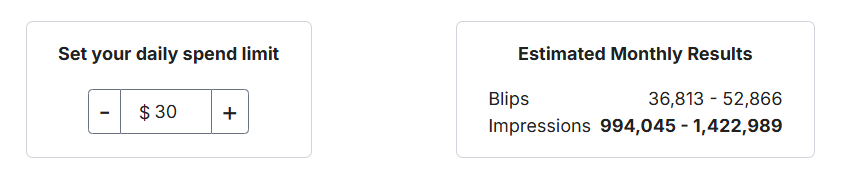
With Blip, you can advertise on Quincy billboards on any budget, because you set a daily amount that Blip will automatically follow while your ad plays in short 7.5–10 second “blips.” You only pay for the blips you receive, making it easy to run flexible, pay-per-blip campaigns on billboards near Quincy, Massachusetts that can be adjusted or paused whenever you need. Your actual cost per blip changes based on when you want to run your ads, where the boards serving the Quincy area are located, and real-time advertiser demand.
Where can I advertise with Blip near Quincy, Massachusetts?
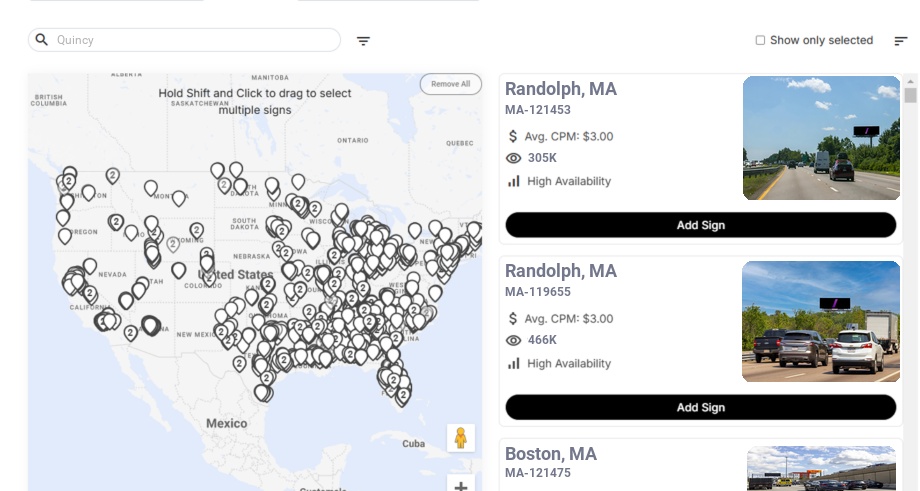
There are 14 digital billboards serving the Quincy area, positioned for reach along key commuter and shopping routes. The boards serve Quincy from nearby Randolph, Weymouth, Boston, Canton, and Stoughton, giving advertisers multiple options for billboard rental near Quincy that match different budgets and audiences. Although the digital billboards are in nearby communities, the road network makes them highly visible to people who live, work, and shop in the Quincy area.
Who do Quincy billboards reach in the Quincy, Massachusetts area?
Quincy is a dense, diverse, and economically strong city, which translates into high purchasing power and varied audience segments for advertisers. Well-planned Quincy billboards can tap into this mix of commuters, families, and professionals. The city also has roughly 101,000–103,000 residents across just over 26 square miles, with more than 95% living in urbanized areas.
When is the best time to run Blip ads on Quincy billboards?
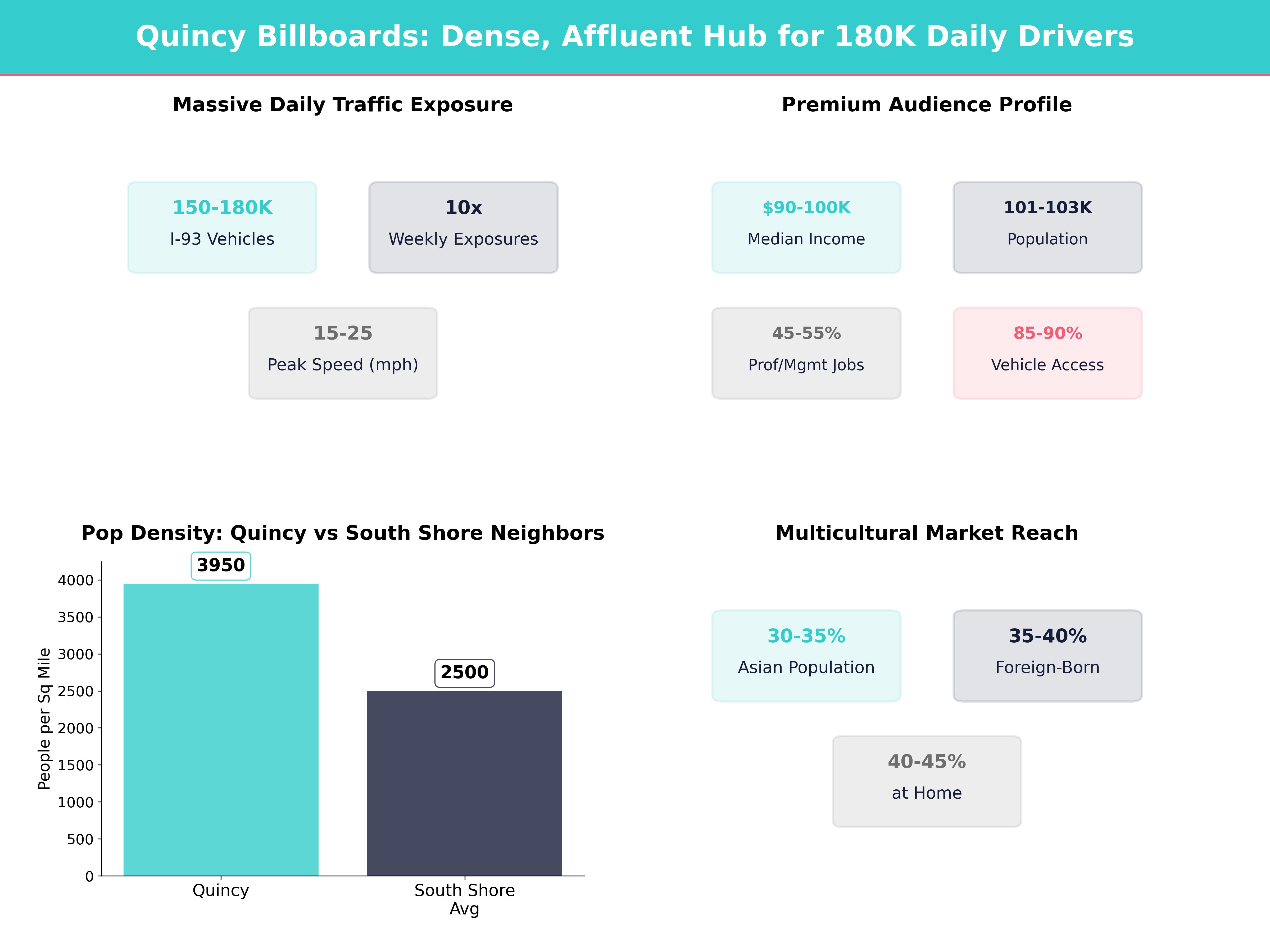
The Quincy area is built on commuting, so using flexible scheduling lets you align impressions with the times and days when your target audience is most likely to be on the road. Typical high-traffic windows along I-93, Route 3, and main Quincy-area corridors are about 6:30–9:30 a.m. and 3:30–7:30 p.m. In these windows, speeds on the Southeast Expressway can drop to 15–25 mph, extending driver exposure to billboard messages.
Can Quincy, Massachusetts billboards reach Chinese-speaking audiences?
Yes. Quincy is one of the most diverse cities in Massachusetts outside Boston, and around 40–45% of households speak a language other than English at home. Chinese dialects, especially Mandarin and Cantonese, are especially prominent in North Quincy, Wollaston, and Quincy Center, so billboard creative can include simple bilingual lines for relevant brands.
Do I need a contract to advertise with Blip near Quincy?
No, Blip has no long-term contracts or minimum commitments. You can start, pause, or stop your campaign at any time.
How fast can I launch a billboard campaign with Blip near Quincy?
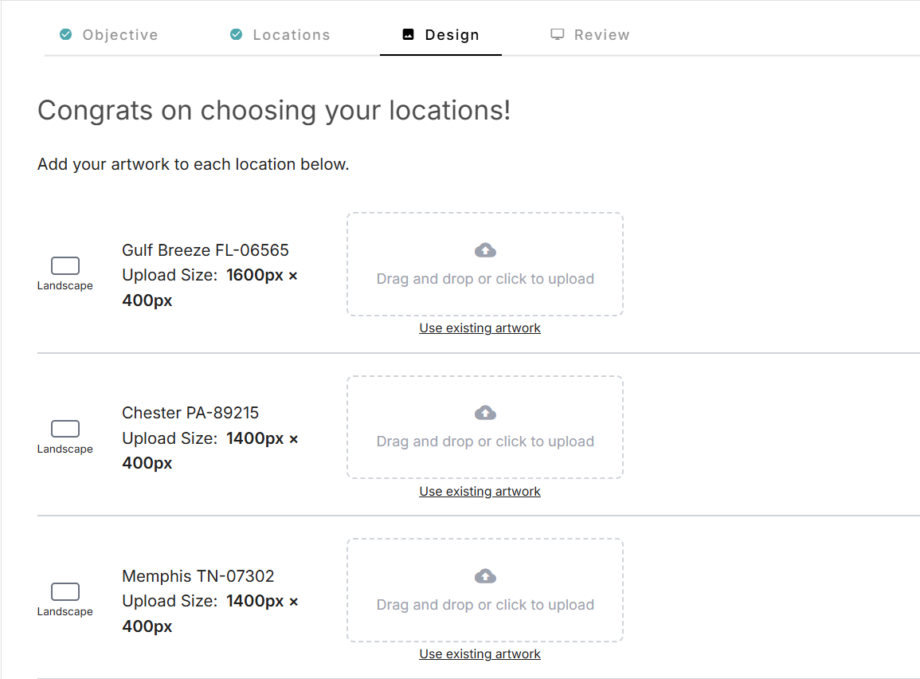
You can have your campaign live in minutes. Create a free account, select your locations, set your budget, upload your design, and start running once approved.
Where can I advertise with Blip near Quincy?
Blip has digital billboards near Quincy. You can browse available locations on a map, choose the ones that fit your audience, and start advertising right away.
Still have questions? Launch a campaign in minutes — no contracts, no commitments.
Start Your CampaignQuincy Billboard Advertising Guide
Understanding the Quincy Area Audience
Quincy is a dense, diverse, and economically strong city, which translates into high purchasing power and varied audience segments for advertisers. Well-planned Quincy billboards can tap into this mix of commuters, families, and professionals.
-
Population & density
- The city of Quincy has roughly 101,000–103,000 residents across just over 26 square miles, giving a density of about 3,900–4,000 people per square mile—more than double the density of many South Shore neighbors like Weymouth and Randolph, which are closer to 2,000–3,000 people per square mile.
- More than 95% of residents live in urbanized areas, and about 45–50% of households are in multi-unit buildings, which concentrates audiences along main corridors and transit-accessible neighborhoods.
- This density is higher than many surrounding South Shore communities, so campaigns serving the Quincy area can effectively reach large numbers of people with relatively few impressions through strategic billboard advertising near Quincy.
-
Income & spending power
- Median household income in the Quincy area is around $90,000–100,000 per year, compared with a U.S. median closer to the mid‑$70,000s and a Massachusetts median in the low‑$90,000s.
- Roughly 45–55% of workers are in management, professional, and related occupations (finance, tech, healthcare, and professional services), many commuting to Boston or Cambridge.
- Approximately 35–40% of adults hold a bachelor’s degree or higher, which typically correlates with higher discretionary spending on travel, dining, and financial products.
-
Household expenditures in Boston-area suburbs like Quincy skew toward:
- Financial services and insurance (mortgages, investment accounts, life and auto insurance)
- Real estate, home improvement, and furnishings—supported by a homeownership rate around 45–50% and high condo activity
- Automotive sales and services—over 85–90% of households have access to at least one vehicle
- Dining, retail, and entertainment, with per‑capita restaurant spending significantly above national averages in Greater Boston
-
Diversity & language
- Quincy is one of the most diverse cities in Massachusetts outside Boston.
- Roughly 30–35% of residents identify as Asian (with large Chinese and Vietnamese communities), about 50–55% as White, and the balance as Black, Hispanic/Latino, and multi-ethnic populations.
- Around 35–40% of residents are foreign‑born, and about 40–45% of households speak a language other than English at home. Chinese dialects (Mandarin and Cantonese) are especially prominent in North Quincy, Wollaston, and Quincy Center.
-
For billboard creative serving the Quincy area, this opens options such as:
- Including simple bilingual lines (English + Chinese) for certain brands
- Featuring inclusive imagery that reflects Asian and multicultural families and professionals
- Highlighting community ties, festivals, and local events celebrated by these communities, such as Lunar New Year celebrations often covered by local outlets like The Patriot Ledger and the Quincy Sun
-
Commuter patterns
- Quincy sits directly on the I‑93 / U.S. Route 1 / Route 3 corridor into Boston, known locally as the Southeast Expressway—one of the most congested stretches of highway in New England. Certain segments between Braintree, Quincy, and Boston routinely see 150,000–180,000 vehicles per day, according to MassDOT
- The MBTA Red Line serves four Quincy stations (North Quincy, Wollaston, Quincy Center, and Quincy Adams), with Quincy-area stations collectively handling tens of thousands of entries and exits on a typical weekday, based on MBTA ridership reports.
- Thousands of Quincy-area residents commute daily to Boston’s financial district, the Seaport, and the Longwood Medical Area. Average one‑way commute times for Quincy residents are typically in the 30–35 minute range, with many commuters passing the same billboards 10 times per week (twice daily, five days a week).
- Many others travel between Quincy and towns like Randolph, Stoughton, and Canton for work, school, or shopping.
- This heavy commuting makes our billboards serving the Quincy area highly effective for reaching both local residents and a broader South Shore audience.
For a deeper understanding of the community, advertisers can explore the official City of Quincy website, local tourism hub Discover Quincy, and the Quincy Chamber of Commerce. These resources can help you align Quincy billboards with neighborhood-level preferences and events.
Key Corridors & Where Billboards Serve the Quincy Area
Although our digital billboards are in nearby communities, the road network makes them highly visible to people who live, work, and shop in the Quincy area. There are 14 digital billboards serving the Quincy area, positioned for reach along key commuter and shopping routes, giving you multiple options for billboard rental near Quincy that match your budget and audience.
You can supplement this guide with municipal and planning resources from neighboring communities such as Randolph, Weymouth Boston, Canton, and Stoughton
Randolph (about 5.8 miles from Quincy)
Randolph sits on major arteries that many Quincy-area drivers use to reach other South Shore destinations:
- Route 24 and nearby connections to I‑93 carry high volumes of traffic between the South Shore and Boston; certain Route 24 segments see roughly 90,000–110,000 vehicles per day, according to MassDOT
- Randolph (population roughly 34,000) has a diverse, commuter-heavy workforce, with many residents traveling toward Quincy, Braintree, and Boston-area job centers.
-
Many Quincy residents travel through or near Randolph to reach:
- Regional shopping (big-box stores, auto dealerships, furniture, and appliance retailers)
- Warehouses and logistics centers for work
- Dining and nightlife outside the core Quincy area
Billboards serving the Quincy area from Randolph are ideal for:
- Retailers drawing customers from across the South Shore
- Automotive sales, service, and insurance
- Trades and home services willing to travel house-to-house (HVAC, roofing, landscaping, contractors)
For context on local development and business hubs that influence traffic, you can reference town resources at randolph-ma.gov. This is also useful when deciding which billboards near Quincy and Randolph will align best with your target customer paths.
Weymouth (about 6.5 miles from Quincy)
Weymouth is directly south of Quincy and closely tied to it economically and socially:
- With a population near 58,000–60,000, Weymouth is one of the state’s older suburban communities and generates steady two‑way traffic with Quincy and Braintree.
- Major routes like Route 3 (which carries roughly 100,000–120,000 vehicles per day between Weymouth and Braintree) and secondary roads between Weymouth and the Quincy area see sustained daily flows of commuters and shoppers.
- Weymouth has significant healthcare and retail clusters—such as South Shore Hospital and nearby medical offices—that draw Quincy residents.
-
Billboard placements serving the Quincy area from Weymouth can influence:
- Residents heading to and from Quincy Center, Marina Bay
- South Shore drivers traveling toward Boston for work or events
- Families shopping or using healthcare and professional services in both Weymouth and Quincy
This is a strong zone for:
- Healthcare providers, dentists, urgent care, and specialists
- Family-oriented retail and services
- Fitness centers, youth activities, and local restaurants
For information on local zoning, business districts, and community events that affect traffic, see the Town of Weymouth
Boston (about 6.7 miles from Quincy)
Boston’s proximity to the Quincy area dramatically increases the value of billboards positioned along inbound and outbound routes:
- The Southeast Expressway carries well over 150,000 vehicles per day in segments between Braintree, Quincy, and Boston, making it one of the Commonwealth’s most heavily traveled roadways, per MassDOT
- Greater Boston attracts more than 19 million domestic and international visitors annually, according to regional tourism agencies like Meet Boston, many of whom use I‑93 and Route 3 corridors that pass close to Quincy.
- Many Quincy-area commuters travel daily into Boston’s downtown and Seaport, then return in predictable morning and evening waves that align closely with billboard peak scheduling.
- Visitors staying in Boston also travel south for coastal attractions like Marina Bay, Wollaston Beach, and the Boston Harbor Islands via Quincy.
Billboards serving the Quincy area from Boston placements are especially powerful for:
- Regional brands with locations in both the Quincy area and Boston
- Higher education, hospital systems, and large employers recruiting from the South Shore
- Entertainment, events, sports, and nightlife targeting commuters
Local news outlets like the Boston Globe and The Patriot Ledger can give you additional context on commuting, development, and transit trends that shape traffic flows. For citywide planning and transportation projects that may influence routes and congestion, check boston.gov. These insights are valuable when planning premium billboard advertising near Quincy that touches both city and South Shore audiences.
Canton (about 7.4 miles) and Stoughton (about 7.7 miles)
Canton and Stoughton extend your reach into the southwestern South Shore:
- Canton (population around 24,000) and Stoughton (around 29,000–30,000 residents) are integrated via I‑95, Route 138, and feeder roads to Route 24 and I‑93. Segments of I‑95 in this area often see 130,000–150,000 vehicles per day.
- Many workers who live in the Quincy area travel through or near Canton and Stoughton to reach jobs in office parks, industrial zones, and corporate campuses such as the Canton Corporate Center and industrial areas near Stoughton’s Route 24 access points.
- Residents of Canton and Stoughton also travel toward the Quincy area for waterfront recreation, shopping, and dining, particularly during summer months and weekends.
Boards serving the Quincy area from these locations are well-suited for:
- B2B and professional services (IT, consulting, logistics, staffing)
- Industrial suppliers and trades
- Regional healthcare and education campaigns
For road and traffic data, consult MassDOT town.canton.ma.us and stoughton-ma.gov
Timing Your Campaign Around Quincy Area Traffic Patterns
The Quincy area is built on commuting. Using flexible scheduling, we can align impressions with the times and days when your target audience is most likely to be on the road.
Traffic data from MassDOT Mass511 and local news channels like WBZ-TV and WCVB consistently show pronounced peaks on I‑93, Route 3, and key arterials around Quincy. For billboard rental near Quincy, smart timing can often matter just as much as which boards you choose.
Weekday commuter peaks
Typical high-traffic windows along I‑93, Route 3, and main Quincy-area corridors:
- Morning commute: ~6:30–9:30 a.m.
- Evening commute: ~3:30–7:30 p.m.
In these windows, speeds on the Southeast Expressway can drop to 15–25 mph, extending driver exposure to billboard messages. These windows are prime for:
- Employers recruiting staff from the South Shore
- Financial services, insurance, and banking
- Coffee shops, quick-service restaurants, and grab-and-go concepts
- Gyms and fitness studios promoting “before/after work” routines
Midday & daytime
From 10:00 a.m.–3:00 p.m., traffic is more balanced between:
- Parents and caregivers doing school and activity runs—the Quincy Public Schools
- Retirees and flexible workers, a group that is growing as residents aged 55+ now account for roughly 25–30% of the local population
- Service businesses and tradespeople moving between jobs
- Shoppers visiting big-box centers in Randolph, Hanover, Braintree, and Weymouth
These hours are especially valuable if you’re promoting:
- Healthcare, dental, and wellness appointments
- Retail sales, furniture, appliances, and home improvement
- Local attractions, museums, and daytime events
Evenings & weekends
Evening and weekend impressions are essential in the Quincy area, where residents flock to:
- Marina Bay for waterfront dining and nightlife, with multiple restaurants, bars, and a large boardwalk drawing both locals and visitors
- Wollaston Beach, Squantum, and Houghs Neck for recreation; Wollaston Beach
- Shopping destinations and movie theaters across the South Shore, such as South Shore Plaza Braintree
Targeting nights and weekends is smart for:
- Restaurants, bars, and breweries
- Entertainment venues, festivals, and concerts
- Sports bars tied to Red Sox, Celtics, Bruins, and Patriots games—Greater Boston’s major teams collectively draw millions of in‑person attendees and far more TV viewers each year
- Tourism-related offers (Boston Harbor Islands, whale watches, harbor cruises)
You can cross-reference your schedules with MBTA and traffic updates from MBTA.com and MassDOT advisories
Crafting Creative That Resonates in the Quincy Area
Once you’ve targeted the right corridors and times, the next edge is creative tailored to the Quincy-area audience.
Keep it bold, simple, and commuter-friendly
Highway speeds around the Quincy area mean viewers have only 5–7 seconds to absorb your message:
- Limit text to 7 words or fewer whenever possible.
- Use one clear call-to-action (e.g., “Exit 6 – Next Right,” “Order Online Today,” “Visit Marina Bay Location”).
- Choose high-contrast color combinations (dark text on light background or vice versa) to cut through glare, fog, and snow—important for New England weather, where Boston-area roads can see 20–30 snow-impacted days in a typical winter.
Reflect local identity
Quincy has a strong local pride rooted in its coastal setting and history:
- The city is known as the “City of Presidents” due to John Adams and John Quincy Adams; subtle nods to history can resonate with locals and visitors who learn about the Adams National Historical Park through nps.gov and Discover Quincy.
- Waterfront neighborhoods and harbor views are part of the area’s identity. Including imagery of harbors, boats, or shoreline scenes can create instant familiarity.
- Features like Wollaston Beach, Marina Bay, and proximity to the Boston Harbor Islands National & State Park (see bostonharborislands.org) provide compelling visual hooks.
Consider:
- Headlines that reference “South Shore,” “Harbor,” or “Quincy-area” community life
- Creative variants for boards serving the Quincy area from different directions (e.g., “On your way home to Quincy?” vs. “Headed into Boston?”)
Embrace multicultural messaging
With an estimated 30–35% of residents of Asian descent, and many households speaking Chinese or Vietnamese at home:
- Test creatives that incorporate a short bilingual line (English plus Chinese characters) for relevant products such as banking, telecom, healthcare, or education.
- Use inclusive imagery representing multi-ethnic families and professionals.
- Time culturally relevant creative around Lunar New Year, Mid-Autumn Festival, and other key holidays celebrated in the Quincy area. These events often draw hundreds to thousands of attendees at community centers, churches, and local business districts.
Make directions and proximity obvious
Drivers in the Quincy area navigate a web of exits and local routes:
-
Use clear directional language:
- “5 minutes from Quincy Center”
- “Off Exit X on Route 3”
- “Near North Quincy Station” (for transit-linked offers)
- If your business is in or near major landmarks—Quincy Center, Marina Bay, North Quincy Station, or by the MBTA Red Line—call that out in large, legible text.
Maps and parking information on the City of Quincy and Discover Quincy websites can help you fine-tune how you describe your location and how your Quincy billboards should reference nearby streets or exits.
Reaching Specific Audiences in the Quincy Area
Because the Quincy area is tightly tied to both Boston and the broader South Shore, billboards serving this market can efficiently reach several distinct segments. When planning billboard advertising near Quincy, it helps to think in terms of these specific audience groups and tailor your creative accordingly.
Local retail, dining, and services
With around 100,000+ residents and strong daily inflows from neighboring towns, the Quincy area is fertile ground for:
- Restaurants, cafes, and bars (especially Marina Bay and Quincy Center)
- Grocery stores, specialty food, and ethnic markets—reflecting the city’s multicultural population
- Salons, spas, and personal care services
- Auto dealers, repair shops, and car washes
In many Greater Boston suburbs, retail capture analyses show that 60–70% of sales come from a combination of local residents and nearby commuters, not long-distance visitors—making geotargeted billboard placements particularly efficient.
Tactics:
- Use radius-based messaging (“Within 10 minutes of your commute home”) on boards along I‑93/Route 3 serving the Quincy area.
- Promote time-limited offers around paydays, weekends, or holiday seasons; December and back‑to‑school months typically show 20–40% higher retail sales than off‑season months.
- Run multiple creatives to test different offers (e.g., weekday lunch special vs. weekend brunch, oil change discount vs. free inspection).
Higher education and training
The Quincy area hosts and neighbors multiple colleges and training institutions:
- Quincy College serves thousands of students and adult learners each term and emphasizes workforce-ready programs in healthcare, business, and technology.
- Eastern Nazarene College in nearby Wollaston draws residential and commuter students to its liberal arts and graduate programs.
- Nearby, UMass Boston and other Boston institutions tap heavily into South Shore commuters; total enrollment at UMass Boston alone is in the tens of thousands.
For schools and training programs:
- Focus billboards serving the Quincy area from Boston and Randolph to hit commuters who live on the South Shore but work or study in the city.
- Highlight flexible programs (online, evening, weekend) and career outcomes; many adult learners in Greater Boston balance work and study, with typical ages 25–44 for continuing education cohorts.
- Align campaigns with enrollment seasons (January–February, May–August), when inquiries and applications can spike 30–50% above off‑cycle periods.
Healthcare and wellness
The Quincy area’s aging population segments and growing families generate strong demand for:
- Hospitals, urgent care, and specialty clinics
- Dental practices, orthodontists, and pediatric care
- Physical therapy, chiropractic, and mental health services
Across Massachusetts, healthcare comprises roughly 12–15% of employment, and Greater Boston is one of the nation’s largest healthcare hubs—many Quincy residents work in, or frequently travel to, nearby hospital districts.
Use:
- “Near Quincy Center / Near North Quincy / Near MBTA Red Line” to signal easy access.
-
Dayparting to rotate messages emphasizing:
- Same-day appointments in the morning
- After-work hours in the evening
- Weekend urgent care availability on Fridays/Saturdays
You can monitor local health system expansions and clinic openings through coverage in the Boston Globe, The Patriot Ledger, and city notices at quincyma.gov. Tying these openings to well-placed Quincy billboards helps new practices establish visibility quickly.
B2B and industrial
The South Shore’s industrial parks and office corridors in Randolph, Canton, Stoughton, and beyond are home to:
- Logistics and distribution centers
- Manufacturing facilities
- Professional service firms and corporate offices
These sectors account for thousands of jobs in the I‑93/Route 24/I‑95 triangle south of Boston.
Billboards serving the Quincy area from these towns help reach:
- Fleet operators, logistics managers, and tradespeople on the road throughout the day
- Decision-makers commuting between the Quincy area and business parks
Messaging angles:
- “Stop losing time to [problem]—call us before your next job.”
- “IT support for South Shore businesses—serving companies from Quincy to Stoughton.”
- “Commercial HVAC / Roofing / Security for warehouses and industrial facilities.”
Town and regional economic development offices—such as those in Randolph, Canton, and Stoughton
Seasonal Opportunities in the Quincy Area
Seasonality has a major impact on how people move around the Quincy area and what they’re interested in buying.
Tourism and events data from Discover Quincy, the City of Quincy, and regional tourism agencies show clear peaks in waterfront activity, festivals, and visitor traffic from late spring through early fall.
Spring (March–May)
- Rising temperatures drive foot traffic to Quincy Center, local parks, and waterfront areas. Average spring highs move from the low‑40s in March to the mid‑60s by May, increasing outdoor activity.
- Home improvement and landscaping spend typically spikes; national and regional data show home and garden categories can see 20–30% seasonal sales lifts in spring. New England homeowners ramp up repairs after winter.
Campaign ideas:
- Home services, contractors, landscapers, and garden centers
- Fitness and outdoor recreation (gyms, sports leagues, bike shops)
- Spring events, festivals, and open houses
Summer (June–August)
- Wollaston Beach, Marina Bay, and other coastal spots draw locals and tourists; beach visitation and harbor ferry usage often peak in July and August.
- Families travel more frequently around the region for outings and day trips; statewide highway volumes often rise 5–10% above winter levels in summer months.
Leverage:
- Boards serving the Quincy area from Weymouth and Boston to reach visitors driving to beaches and harbor attractions.
- Tourism campaigns promoting the Boston Harbor Islands and coastal experiences via Quincy (see bostonharborislands.org and Discover Quincy).
- Restaurants and entertainment venues with patios, waterfront seating, or summer menus.
Fall (September–November)
- Back-to-school traffic returns, and commuter volumes stabilize; MBTA ridership and highway counts often climb again after August vacations.
- Colleges and professional programs recruit for fall and spring terms, with application and inquiry surges in late summer and fall.
- Patriots, Bruins, and Celtics seasons energize sports-related spending; Greater Boston’s pro teams collectively drive millions of annual game-day trips to Boston and regional sports bars.
Good fits:
- Education and career training
- Retail (back-to-school, fall fashion, electronics)
- Sports bars, betting apps (where legal), and fan experiences
Winter (December–February)
- Holiday shopping peaks at malls and big-box corridors accessed via Randolph, Canton, and Stoughton. In many regions, November–December can account for 20–25% of annual retail sales.
- New Year’s resolutions kick off surges in interest in gyms, wellness, and financial planning—fitness and weight‑loss searches and sign‑ups often swell by 30–50% in January.
Consider:
- Holiday promotions and gift card campaigns
- Fitness clubs, weight-loss programs, and wellness offerings
- Tax preparers, financial advisors, and accountants starting in January
Local event calendars and coverage from Discover Quincy, the City of Quincy events listings, and local news outlets like The Patriot Ledger can guide timing around parades, fairs, and community celebrations, helping you schedule Quincy billboards for maximum seasonal impact.
Using Blip Strategically for the Quincy Area
To make the most of digital billboards serving the Quincy area, we can combine geographic precision with flexible scheduling and creative variation. This approach is especially useful for advertisers who want efficient billboard rental near Quincy without committing to long, inflexible contracts.
Focus on directional relevance
- Select boards in Randolph, Weymouth, Boston, Canton, and Stoughton that align with where your customers live and the direction they’re traveling relative to your location in the Quincy area.
-
Create two or more ad variants tailored to direction:
- Inbound to Boston: “Stop on your way home to the Quincy area.”
- Outbound from Boston: “Dinner tonight in Marina Bay?” or “Get it done before you’re home in Quincy.”
Using traffic tools like Mass511 and local city alerts, you can also identify regular bottlenecks where slower speeds mean more seconds of billboard exposure.
Align budgets with peak value
Instead of spreading budget thinly across 24 hours:
- Concentrate spend during the 6:30–9:30 a.m. and 3:30–7:30 p.m. peaks to capture high-value commuter impressions. On some corridors, these four daily windows can represent 40–50% of total weekday traffic.
-
Allocate additional budget on:
- Friday evenings and weekends for entertainment and dining
- Tax season for financial and tax services
- Enrollment windows for schools and training centers
Test and refine creative
Because digital billboards can rotate multiple creatives:
-
Run A/B tests on:
- Short vs. longer headlines
- Brand-focused vs. offer-focused messages
- English-only vs. English + Chinese lines for specific demographics
-
Compare performance by tracking:
- Web traffic lifts from the Quincy area
- Coupon code redemption by time or week
- New customer sign-ups correlated with campaign timing
Quincy-area businesses often see that even modest lifts—such as a 5–10% increase in website sessions or walk‑ins during a flight—translate into substantial incremental revenue when campaigns are sustained over several weeks. This is where flexible, short-burst billboard advertising near Quincy can outperform other static channels.
Integrate with local and regional media
Amplify your campaign by tying billboard flights to:
- Local PR and articles in the Boston Globe or The Patriot Ledger
- Sponsorships of Quincy-area festivals, sports leagues, or community events highlighted on Discover Quincy
- Digital and social targeting focused on the Quincy and South Shore ZIP codes
By aligning your messaging, locations, and timing with how people actually move through and engage with the Quincy area, digital billboards can become a powerful, flexible backbone for your regional advertising strategy. Thoughtful use of billboards near Quincy, backed by data and local knowledge, allows you to reach commuters, visitors, and residents with campaigns that feel both relevant and timely.