Billboards in Hartsville, SC
No Minimum Spend. No Long-Term Contracts. Just Results.
Trusted by Leading Brands


Billboard advertising
in Hartsville has never been easier
How much is a billboard in Hartsville?
Why Choose Blip for Billboard Advertising in Hartsville
-
Blip's self-serve launch fits Hartsville's SC 151 and US 15/401 commuter traffic — start fast without rep delays.
-
Use Blip to daypart Hartsville ads for 6-9 a.m. and 4-7 p.m., when 90% of Darlington County workers are driving.
-
Blip-optimized campaigns can weigh Hartsville, Darlington, and Florence routes for your goals and budget.
-
No contracts or minimums make Hartsville easy to test for race-week demand near Darlington Raceway and local shoppers.
-
Track Hartsville performance in real time, then shift spend if SC 151 or Carolina Pines traffic is converting best.
-
Blip's creative tools help your Hartsville billboard stand out with clear, local copy for students, patients, and plant workers.
Frequently Asked Questions About Billboard Advertising in Hartsville
How much does a billboard cost in Hartsville with Blip?
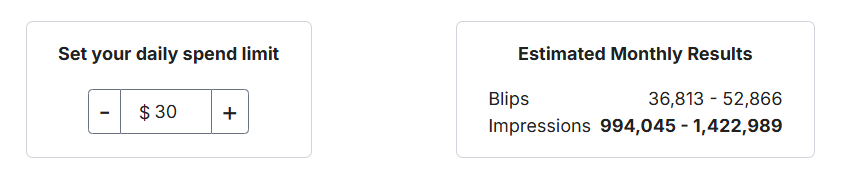
With Blip, billboard advertising in Hartsville can fit a wide range of budgets because you only pay when your ad actually appears. Pricing starts at just $0.01 per display. Set a daily budget, and Blip’s algorithm uses it to bid for open ad slots, adjusting to factors like time of day, location, and advertiser demand to help stretch your spend.
Where can I advertise with Blip in Hartsville?
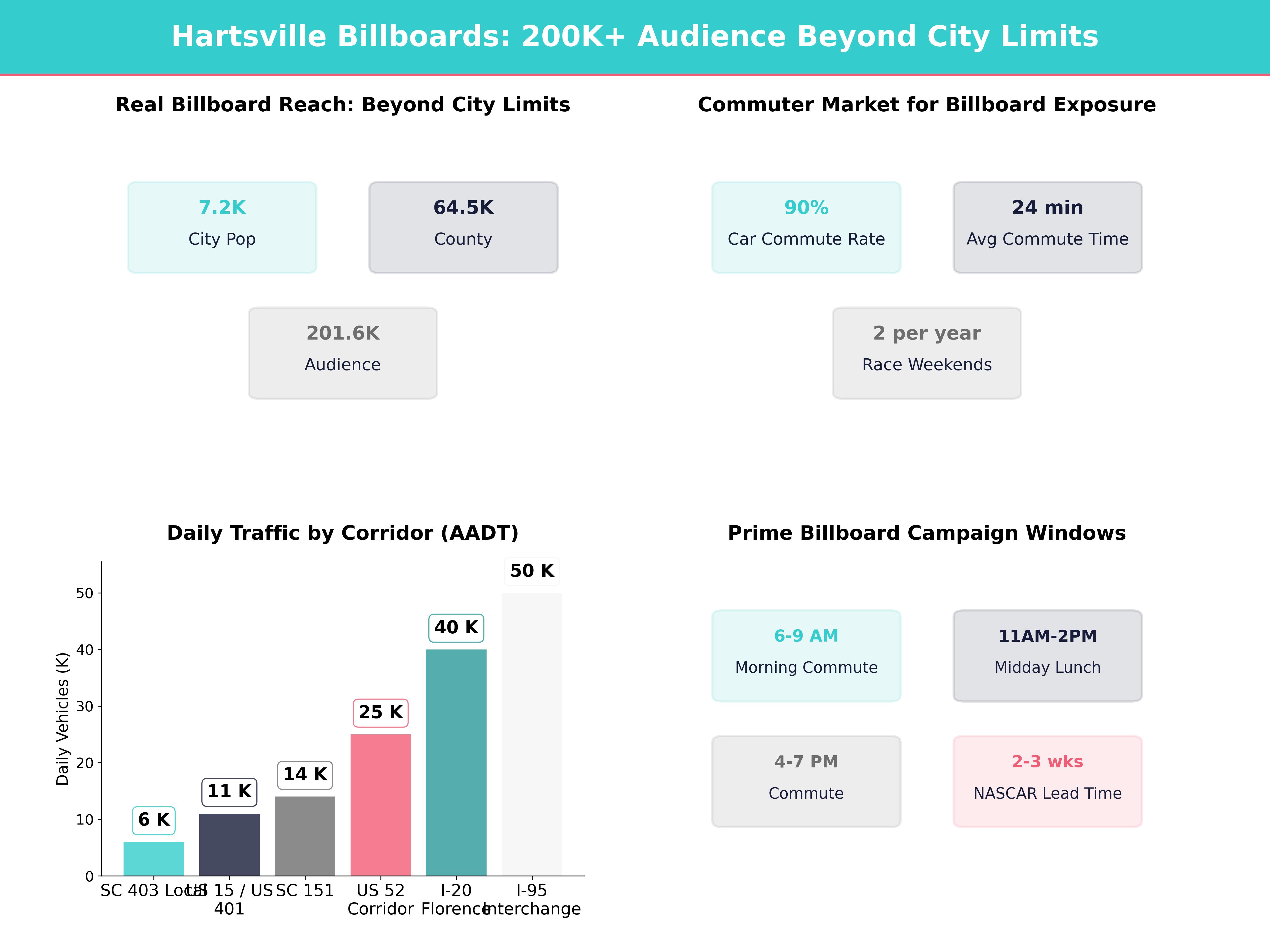
SC 151 is Hartsville’s most important advertising spine, with traffic count segments in and around the city commonly running in the 10,000 to 18,000 vehicles per day range. US 15 and US 401 are core Hartsville routes with typical local segments in roughly the 8,000 to 14,000 AADT range. SC 403 and connected local routes generally carry lower traffic, often around 4,000 to 8,000 vehicles per day depending on the segment.
Who does billboard advertising in Hartsville reach?
Hartsville is a strong billboard market because we can combine small-city frequency with regional reach. When we combine Darlington County’s 64,531 residents with Florence County’s 137,059 residents, we get a two-county base of 201,590 people. Hartsville also reaches plant workers, office staff, students, parents, patients, race fans, and regional visitors in the same week.
What are the best times to run Blip billboard ads in Hartsville?
Spring is one of the best windows for Hartsville billboards, and we usually want to start race-related campaigns 2 to 3 weeks before major race weekends. Summer is also useful for water, food, entertainment, healthcare, and local outing messages, with the best timing often from 11 a.m. to 7 p.m. Morning windows of 6 to 9 a.m., lunch windows of 11 a.m. to 2 p.m., and afternoon commute windows of 4 to 7 p.m. often line up well with how residents actually travel.
Is Hartsville a good market for Blip billboard ads?
Hartsville is not a huge metro, but that is part of its advertising advantage. In a city of 7,214 residents, smaller markets usually win with repetition, local relevance, and route selection, rather than with sheer scale alone. A more stable market means travel habits are established, favorite routes repeat daily, and message frequency tends to build familiarity efficiently.
Do I need a contract to advertise with Blip in Hartsville?
No, Blip has no long-term contracts or minimum commitments. You can start, pause, or stop your campaign at any time.
How fast can I launch a billboard campaign with Blip in Hartsville?
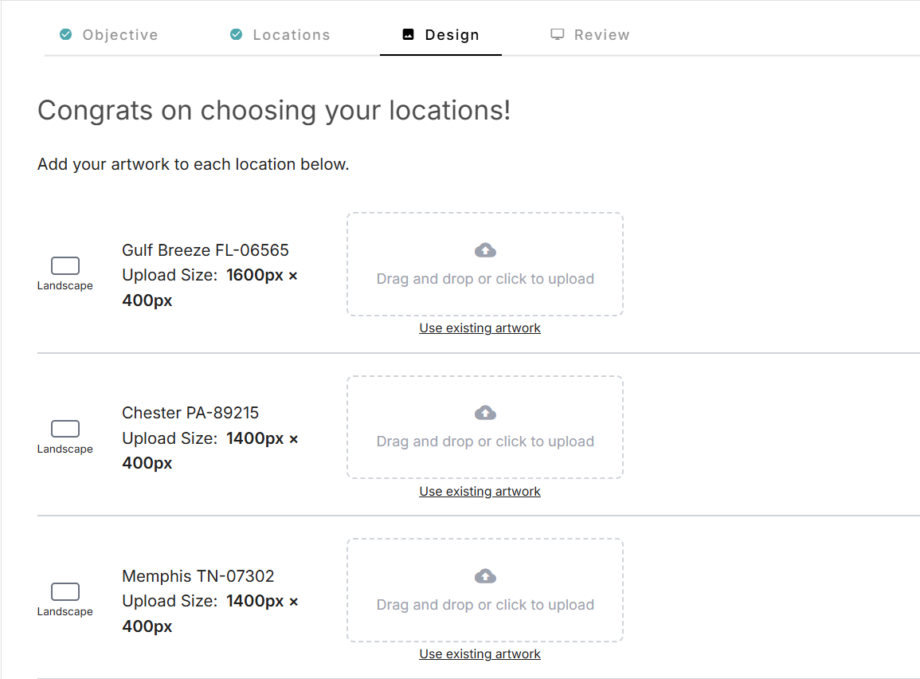
You can have your campaign live in minutes. Create a free account, select your locations, set your budget, upload your design, and start running once approved.
Where can I advertise with Blip in Hartsville?
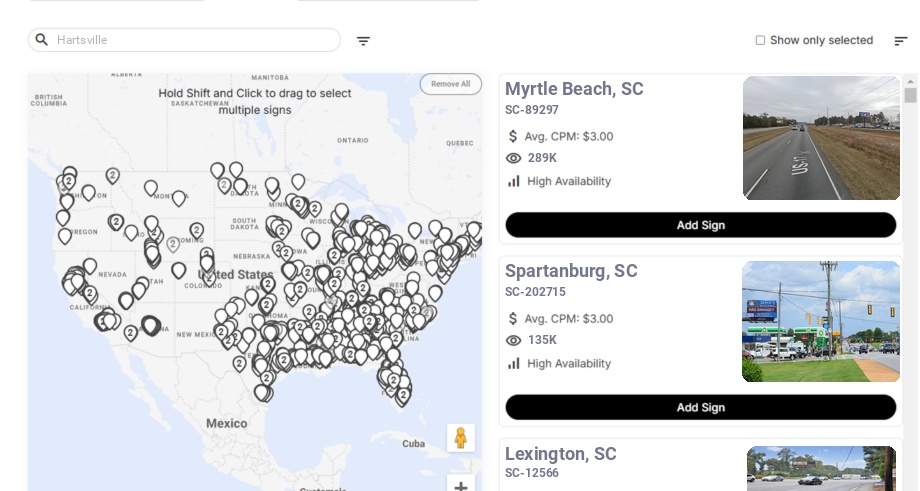
Blip has digital billboards in Hartsville. You can browse available locations on a map, choose the ones that fit your audience, and start advertising right away.
Still have questions? Launch a campaign in minutes — no contracts, no commitments.
Start Your CampaignHartsville Billboard Advertising Guide
Hartsville, South Carolina, is a strong billboard market because we can combine small-city frequency with regional reach. The 2020 Census counted 7,214 residents in Hartsville and 64,531 in Darlington County, and when we add neighboring Florence County’s 137,059 residents, the practical two-county audience climbs above 200,000 people.
Hartsville Market Overview for Billboard Advertisers
Hartsville is not a huge metro, but that is part of its advertising advantage. In a city of 7,214 residents, smaller markets usually win with repetition, local relevance, and route selection, rather than with sheer scale alone.
Hartsville’s local size and regional pull
Hartsville sits roughly 15 miles from Darlington, about 25 miles from Florence, and around 70 miles from Columbia
The city’s population is modest at 7,214, but the trade area is not. When we combine Darlington County’s 64,531 residents with Florence County’s 137,059 residents, we get a two-county base of 201,590 people. For many advertisers, especially healthcare, automotive, education, home services, restaurants, and retail, that is the real opportunity.
Local population growth has been modest, with Hartsville holding at 7,214 residents in the 2020 Census, which actually helps outdoor advertising. A more stable market means travel habits are established, favorite routes repeat daily, and message frequency tends to build familiarity efficiently.
What Hartsville’s economy means for outdoor campaigns
Hartsville has an unusually strong set of anchor institutions for a city its size. Sonoco has been headquartered in Hartsville since 1899, Coker University has been part of the city since 1908, and Darlington Raceway 1950. Carolina Pines Regional Medical Center adds a year-round healthcare audience with 116 beds, and the South Carolina Governor’s School for Science & Mathematics brings a statewide academic presence through its 2-year residential high school program.
This is not a market that depends on one audience. We can reach plant workers, office staff, students, parents, patients, race fans, and regional visitors in the same week.
Hartsville is also a car-first place. Recent American Community Survey estimates show that roughly 9 in 10 workers in Darlington County commute by car, either alone or in carpools, and average commute time is about 24 minutes. Pee Dee Regional Transportation Authority provides transit options in the wider region, but everyday visibility still belongs overwhelmingly to roads and highways.
For billboard advertisers, that means three things are especially valuable in Hartsville:
- We should prioritize boards on habitual commuter routes because repeated exposure compounds quickly in a stable market.
- We should treat Hartsville as both a local market and a feeder market for Florence, Darlington, and race-week travel.
- We should tailor creative to local context because community recognition matters more here than in a larger anonymous metro.
Key Traffic Corridors for Hartsville Billboard Campaigns
South Carolina Department of Transportation traffic count maps make it clear that a few roads do most of the work in and around Hartsville. AADT varies by segment and year, but the patterns are consistent enough to guide smart billboard selection.
SC 151 in Hartsville
SC 151 is Hartsville’s most important advertising spine. Traffic count segments in and around the city commonly run in the 10,000 to 18,000 vehicles per day range, making it one of the best corridors for broad local reach.
This route matters because it connects Hartsville’s retail, medical, and residential activity, while also linking travelers toward Darlington and the broader Florence area. If we want everyday frequency, this is usually where we start.
Advertisers that fit SC 151 especially well include the following:
- Restaurants, convenience stores, and quick-service brands perform well here because they can intercept drivers making immediate stop decisions.
- Healthcare providers perform well here because patients and caregivers often make repeat trips along familiar routes.
- Retailers, banks, and wireless providers perform well here because SC 151 captures both errands and commute traffic.
US 15 and US 401 through Hartsville
US 15 and US 401 are core Hartsville routes with typical local segments in roughly the 8,000 to 14,000 AADT range. These highways connect downtown Hartsville, residential neighborhoods, and surrounding rural communities, which makes them valuable for advertisers that want a broad local footprint without relying only on the bypass.
These roads are especially useful when our audience is community based rather than purely regional. A hometown bank, a local auto dealer, a home-services company, or a college enrollment campaign can benefit from the trust that comes from being seen on roads residents already associate with daily life.
Because many drivers on these routes are moving at moderate local speeds, we can often use slightly more directional or place-based copy than we would on a faster interstate corridor.
SC 403 and other local Hartsville connectors
SC 403 and connected local routes generally carry lower traffic, often around 4,000 to 8,000 vehicles per day depending on the segment. That does not make them secondary for every advertiser. It makes them targeted.
These routes are useful when we care less about pure volume and more about local fit. Service businesses, churches, schools, contractors, and civic organizations often benefit from this kind of placement because the audience is highly local and often more attentive to community messages.
For smaller budgets, corridors like these can also help us build strong frequency among nearby residents without paying for broader regional exposure we may not need.
Regional feeder corridors serving Hartsville
Hartsville campaigns do not have to stop at city limits. Regional routes near Darlington and Florence can expand scale substantially.
Key regional volumes are much higher:
- Segments of US 52 in the Florence-Darlington corridor commonly run in the 20,000 to 30,000-plus AADT range.
- Major Florence-area stretches of I-20 commonly exceed 40,000 AADT.
- I-95 near the I-20 interchange often tops 50,000 AADT.
Those corridors matter when we are advertising destination businesses, including race-week lodging, legal services, regional healthcare, colleges, furniture, automotive, attractions, and event venues such as the Florence Center. If our goal is to pull people into Hartsville from outside the city, a layered strategy that combines local Hartsville boards with Florence-area regional boards can work especially well.
Audience Segments We Can Reach in Hartsville
Hartsville’s audience is more diverse than its city population alone suggests. That is why audience planning matters more here than broad demographic stereotypes.
Hartsville commuters, shift workers, and local shoppers
The core Hartsville audience is made up of everyday drivers. With roughly 90% of workers commuting by car and average commute times around 24 minutes, road-based media has a natural advantage. These are repeat travelers who often pass the same locations multiple times per week.
For this audience, message consistency matters. We should think about banks, dentists, urgent care, grocery, QSR, auto repair, insurance, and local retail categories that benefit from seeing the same offer again and again.
Hartsville’s city size also means our ad can feel familiar quickly. In a place with 7,214 city residents, repeated exposure can build recognition faster than it would in a much larger market.
Students, parents, and educators in Hartsville
Education is one of Hartsville’s defining audience drivers. Coker University has been part of the city since 1908, and the South Carolina Governor’s School for Science & Mathematics adds a statewide student presence through its 2-year residential model.
That gives us several distinct education audiences:
- We can reach traditional college students and campus staff during the fall and spring semesters.
- We can reach parents during move-in, graduation, performance, and athletic weekends.
- We can reach academically focused families from across South Carolina who know Hartsville because of SCGSSM.
Kalmia Gardens 35 acres, which reinforces that Hartsville is not just a pass-through market. It is a destination for events, tours, and family visits.
Healthcare, industry, and professional audiences in Hartsville
Carolina Pines Regional Medical Center is a major local draw with 116 beds, and healthcare trips tend to be recurring. That makes medical-adjacent billboards especially useful for specialists, pharmacies, imaging providers, urgent care, rehab, home health, and related services.
The business audience is important too. Sonoco gives Hartsville a corporate identity that is unusual for a city of this size, and the city’s manufacturing base supports recruiting, staffing, B2B services, uniforms, equipment, safety training, and financial services.
For this audience, we often do best with clear value propositions and local credibility markers. A message that references Hartsville directly, uses a local 843 phone number, or emphasizes short drive times often feels more trustworthy than generic regional copy.
Race fans and regional visitors around Hartsville
Few places Hartsville’s size have a tourism lever as strong as Darlington Raceway 1950, runs on a distinctive 1.366-mile oval, and typically anchors 2 major NASCAR weekends each year, including the spring race and the Southern 500
That creates a visitor audience with very different needs from daily commuters. Race fans respond to hotels, restaurants, bars, convenience stores, attractions, branded merchandise, and short-term promotions.
Family and leisure traffic matters as well. Neptune Island Waterpark, The Center Theater, and Discover South Carolina tourism promotion all support the idea that Hartsville can attract visitors for more than one reason.
Seasonal and Timing Opportunities in Hartsville
Hartsville works best when we align campaigns with local rhythms rather than running the same schedule all year.
Spring and race-season opportunities in Hartsville
Spring is one of the best windows for Hartsville billboards. Race activity at Darlington Raceway
We usually want to start race-related campaigns 2 to 3 weeks before major race weekends, not only during the event itself. That lead time helps us reach planners, hotel bookers, and local residents deciding where to eat, shop, or entertain guests.
Spring is also strong for:
- Outdoor recreation and garden-related brands.
- Home improvement and contractor services.
- Graduation, enrollment, and family-event advertising.
Summer family traffic in Hartsville
Hartsville’s summers are hot, school is out, and family schedules shift. That makes summer ideal for water, food, entertainment, healthcare, and local outing messages.
Attractions such as Neptune Island Waterpark give us a strong family audience from late spring through summer. We often see the best timing for these campaigns from 11 a.m. to 7 p.m., when families are already planning same-day activities, meals, or shopping stops.
Summer is also useful for beverage, convenience, HVAC, pest control, urgent care, and youth program advertisers because those decisions are often immediate and weather influenced.
Back-to-school and campus timing in Hartsville
Back-to-school is a major local reset. We should think about August and early September as prime windows for college messaging, school services, apartments, internet providers, banks, wireless brands, tutoring, and quick dining.
A second education pulse often appears in January, when the spring term begins. Then another important moment comes in May, when graduations, family visits, and summer planning all overlap.
Because local routines become very consistent during the school year, dayparting can be especially effective in Hartsville. Morning windows of 6 to 9 a.m., lunch windows of 11 a.m. to 2 p.m., and afternoon commute windows of 4 to 7 p.m. often line up well with how residents actually travel.
Holiday and year-end spending in Hartsville
From November through December, Hartsville behaves like a relationship-driven retail market. Local shoppers care about familiarity, convenience, and trusted community names. That favors furniture, jewelry, apparel, grocery, restaurants, healthcare gifting, and service reminders.
Early-year timing also matters. January through April can be productive for tax services, financial planning, employment, gyms, and healthcare scheduling. In a smaller market, these practical categories often perform well because they solve immediate needs for repeat local drivers.
Billboard Design Tips for the Hartsville Market
Good Hartsville creative should feel local, direct, and easy to absorb at a glance. We should not design for a giant urban freeway if the board is really speaking to a community route.
Creative that feels right for Hartsville
Many Hartsville approaches are posted between 35 and 55 mph, which gives us a bit more reading time than a fast interstate, but we still need disciplined design. In most cases, 6 to 8 words of primary copy is a smart target.
Local specificity helps a lot here. We should consider using phrases such as “Downtown Hartsville,” “On 151,” “Near Carolina Pines,” or “Race Weekend Specials” when they fit the campaign. Those cues make the ad feel relevant immediately.
Design choices that often fit Hartsville well include the following:
- Clean, high-contrast layouts work because tree-lined roads and changing light can reduce readability.
- Warm community imagery, brick-downtown tones, and regional greens or blues often feel more authentic than generic stock visuals.
- Racing-oriented campaigns can use black, red, yellow, and checkered accents because the Darlington connection is widely understood.
We should also avoid misplaced coastal imagery unless the product truly relates to the beach. Hartsville is inland, and creative that looks like Myrtle Beach often feels out of place.
Messaging approaches by Hartsville audience
Different Hartsville audiences respond to different cues.
For families and local services, we usually do best with trust, convenience, and proximity. A local phone number with the 843 area code can help signal that we are nearby.
For race fans and short-term visitors, urgency works better. Limited-time offers, directional language, and category cues such as food, gas, lodging, and entertainment are often more effective than brand-only copy.
For healthcare and education, clarity matters most. We should emphasize the service, the outcome, and the location, rather than trying to be overly clever.
For workforce recruiting, Hartsville creative can be more practical than aspirational. Shift-based audiences often respond well to straightforward messages about openings, schedules, and where to apply.
Regional Strategies Around Hartsville
A strong Hartsville strategy usually balances the city itself with the routes feeding it. We can think in layers.
Downtown Hartsville and the central city
Central Hartsville is where we build familiarity and community legitimacy. This area matters for brands that want to look established, including healthcare providers, law firms, banks, colleges, local retailers, restaurants, and cultural institutions tied to The Center Theater, Coker University, and the Greater Hartsville Chamber of Commerce.
In the central city, frequency is often more important than reach alone. We are speaking to residents who will likely see the same board again later in the week.
The Hartsville-to-Darlington and Hartsville-to-Florence routes
These routes are ideal when our customer does not live strictly inside Hartsville. If we need shoppers, patients, or event attendees from the wider area, the roads toward Darlington and Florence are crucial.
This is where regional healthcare, dealerships, event venues, furniture, hospitality, and race-week advertisers should spend more of their effort. A Hartsville board can create local credibility, while a Florence- or Darlington-area board can add scale and intercept travelers earlier in their trip.
For many brands, the best answer is not Hartsville or Florence. It is Hartsville plus Florence.
Rural Darlington County and surrounding communities
Hartsville also pulls from rural communities where trips are longer, options are fewer, and brand familiarity matters a lot. In these areas, simpler offers usually win. We should emphasize distance, service area, or direct response, rather than abstract branding.
This approach works particularly well for:
- Home-services companies serving multiple ZIP codes.
- Farm, hardware, and equipment-related businesses.
- Regional clinics, dental groups, and pharmacies.
- Churches, schools, and civic events with local attendance goals.
Using Blip Tools to Execute in Hartsville
Hartsville is the kind of market where smart platform use can create a real advantage. Because the geography is compact, we can be precise without making the campaign complicated.
When manual selection works best in Hartsville
Manual selection is especially useful when we know exactly which audience we want. If our goal is local restaurant traffic, we can focus on Hartsville boards along SC 151 and other high-frequency local routes. If our goal is healthcare, we can prioritize boards near Carolina Pines Regional Medical Center. If our goal is race-week demand, we can add feeder routes from Darlington and Florence.
Dayparting is one of the most practical tools in this market. We can concentrate budget around 6 to 9 a.m., 11 a.m. to 2 p.m., and 4 to 7 p.m., or shift heavily into Thursday through Sunday before major Darlington Raceway
When Blip-optimized campaigns make sense for Hartsville
Blip-optimized campaigns are useful when our audience is broader than one route. If we want reach across Hartsville, Darlington, and Florence, optimization can help distribute spend toward the best-performing combination of local and regional boards.
That is especially helpful for campaigns with mixed goals, such as these:
- A college trying to build general awareness across several surrounding counties.
- A healthcare provider trying to attract both local repeat patients and new regional patients.
- A tourism or event advertiser trying to catch residents, weekend visitors, and race fans at different points in the trip.
Real-time analytics also matter in a market like Hartsville because we can compare whether a Hartsville-only strategy is enough or whether our results improve when we add higher-volume Florence-area inventory.
Getting Started With Billboard Rental in Hartsville
Renting a billboard in Hartsville is usually easier when we begin with audience behavior, not with the board itself. We should decide where the customer is coming from, why they are traveling, and how quickly they need to act.
How we should evaluate Hartsville billboard locations
A practical Hartsville billboard shortlist should answer four questions.
- Is the board close enough to influence action? For local foot traffic or appointments, boards within 3 to 5 miles of the destination are often strongest.
- Is the route habitual or occasional? Habitual commuter routes are best for awareness, while event routes are best for time-sensitive promotions.
- What speed is the audience traveling? At 35 to 45 mph, we may be able to use slightly more detail. At 55 to 70 mph, we should keep the message extremely short.
- Do we need city-only reach or regional scale? Hartsville-only placements can work well for local businesses, but Hartsville plus Florence often works better for destination advertisers.
In a smaller market, we should also think about duration. A steady 2- to 4-week run often beats a very short burst because repetition is one of Hartsville’s biggest advantages.
What to expect from the Hartsville rental process
Traditional billboard buying in smaller markets can still be package based, rep led, and slow to change. That is frustrating when we want to test one route, swap creative for a race weekend, or pause after a seasonal push.
Blip simplifies that process by letting us launch, adjust, and evaluate campaigns without getting locked into the old style of local outdoor buying. We can test Hartsville inventory, compare it with nearby Florence or Darlington options, and refine the campaign as we learn which routes and time windows fit our goals best.
For most advertisers, the smartest first step is simple. We should pick one core audience, choose the road that audience uses most, launch with creative that feels unmistakably local, and then expand outward once we see what Hartsville responds to.