Billboards in Wando, SC
No Minimum Spend. No Long-Term Contracts. Just Results.
Trusted by Leading Brands


Billboard advertising
in Wando has never been easier
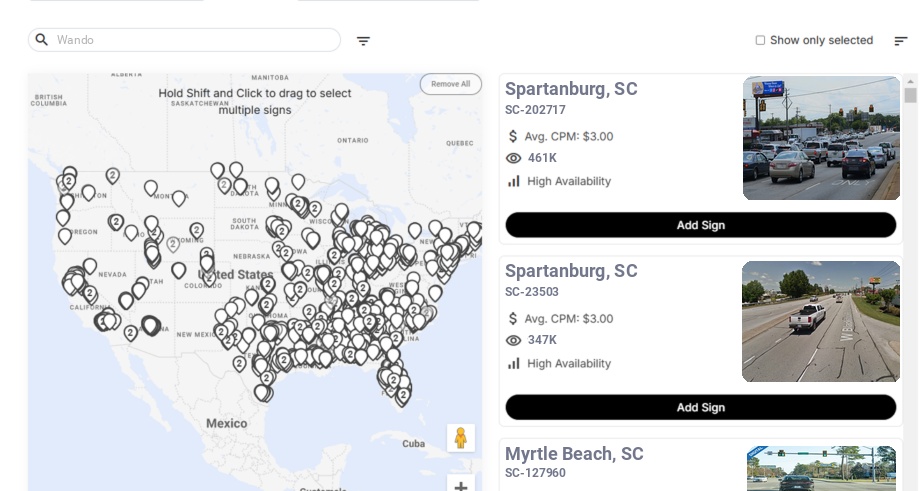
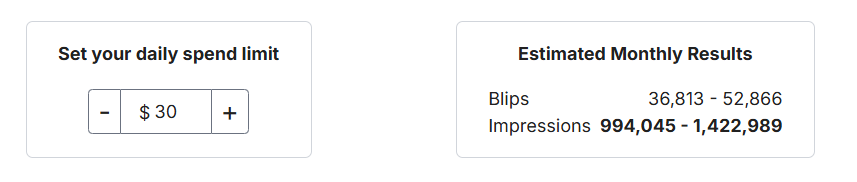
How much is a billboard in Wando?
Why Choose Blip for Billboard Advertising in Wando
-
Blip self-serve lets Wando advertisers launch fast on I-526 and US 17, reaching East Cooper commuters without the usual back-and-forth.
-
Let Blip optimize your Wando campaign budget across port, airport, and beach-bound traffic for the best reach on every play.
-
No contracts in Wando mean you can target spring events like Spoleto or the Bridge Run, then pause or pivot as traffic shifts.
-
Use Blip dayparting in Wando to hit school runs, weekday commutes, or Thursday-to-Sunday beach traffic on the right schedule.
-
Track Wando results in real time and adjust for Clements Ferry growth, Mount Pleasant retail, or I-526 commuter peaks.
-
Blip’s creative tools help Wando ads stand out with clear, coastal visuals built for sun glare, bridge speeds, and quick reads.
Frequently Asked Questions About Billboard Advertising in Wando
How much does a billboard cost in Wando with Blip?
Blip’s pay-per-play model only charges you when your ad actually appears as a 7.5-to-10-second “blip” on a rotating digital billboard, starting at just $0.01 per display. Pricing can vary based on time of day, location, and advertiser demand, but Blip’s algorithm works to get the most reach from every dollar you spend. There are no minimums or contracts, so you can start small, adjust your budget, or pause anytime.
Where can I advertise with Blip in Wando for the most traffic?
The I-526 loop is the backbone of a Wando billboard strategy, with recent counts commonly falling in the 95,000 to 110,000 AADT range around the Don Holt Bridge, Daniel Island, and the Wando River approaches. US 17 through Mount Pleasant is another important route, with key segments often landing in the 50,000 to 65,000 AADT range. Clements Ferry Road and SC 41 are also strong growth corridors for reaching residents, job-site traffic, and repeated local trips.
Why is Wando a strong place to run digital billboards with Blip?
Wando sits at a strategic edge of the Charleston region, where East Cooper housing growth, port logistics, and beach-bound travel all converge. Roughly 85% to 90% of work trips in the area still are made by car, and the nearby Charleston County and Berkeley County trade area totals roughly 677,000 residents. That combination gives digital billboards near Wando repeat exposure that is hard to match with many local media channels.
What kinds of people will see my billboard in Wando?
Wando’s local audience includes affluent suburban households in East Cooper, working families traveling between Goose Creek, Hanahan, and Mount Pleasant, and industrial workers tied to the port and airport economy. The area also reaches students and young professionals, plus visitors, eventgoers, and airport travelers moving through the Charleston market. That makes it a strong Lowcountry launch point for brands that need to reach commuters, families, logistics workers, students, and visitors in one plan.
When is the best time to advertise in Wando with Blip?
Spring is one of the best advertising windows in the Charleston market because events like SEWE, Charleston Wine + Food, the Cooper River Bridge Run, the Credit One Charleston Open, and Spoleto Festival USA all bring traffic and attention. Summer brings beach travel and weekend demand, while back-to-school and fall routines create steady frequency across school and college traffic. Hurricane season and holiday periods also reward flexibility because local behavior can change quickly.
Do I need a contract to advertise with Blip in Wando?
No, Blip has no long-term contracts or minimum commitments. You can start, pause, or stop your campaign at any time.
How fast can I launch a billboard campaign with Blip in Wando?
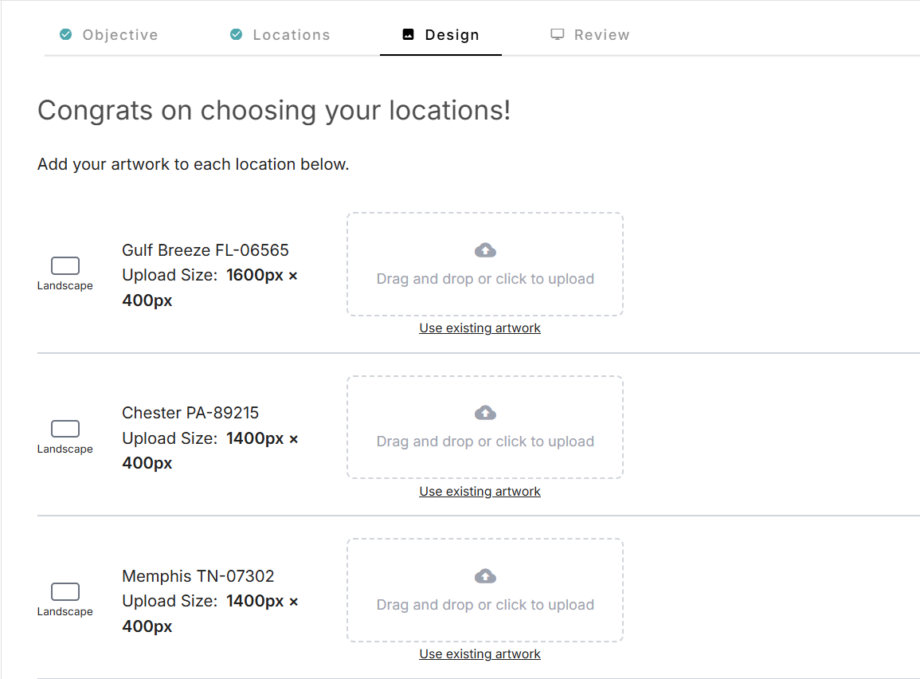
You can have your campaign live in minutes. Create a free account, select your locations, set your budget, upload your design, and start running once approved.
Where can I advertise with Blip in Wando?
Blip has digital billboards in Wando. You can browse available locations on a map, choose the ones that fit your audience, and start advertising right away.
Still have questions? Launch a campaign in minutes — no contracts, no commitments.
Start Your CampaignWando Billboard Advertising Guide
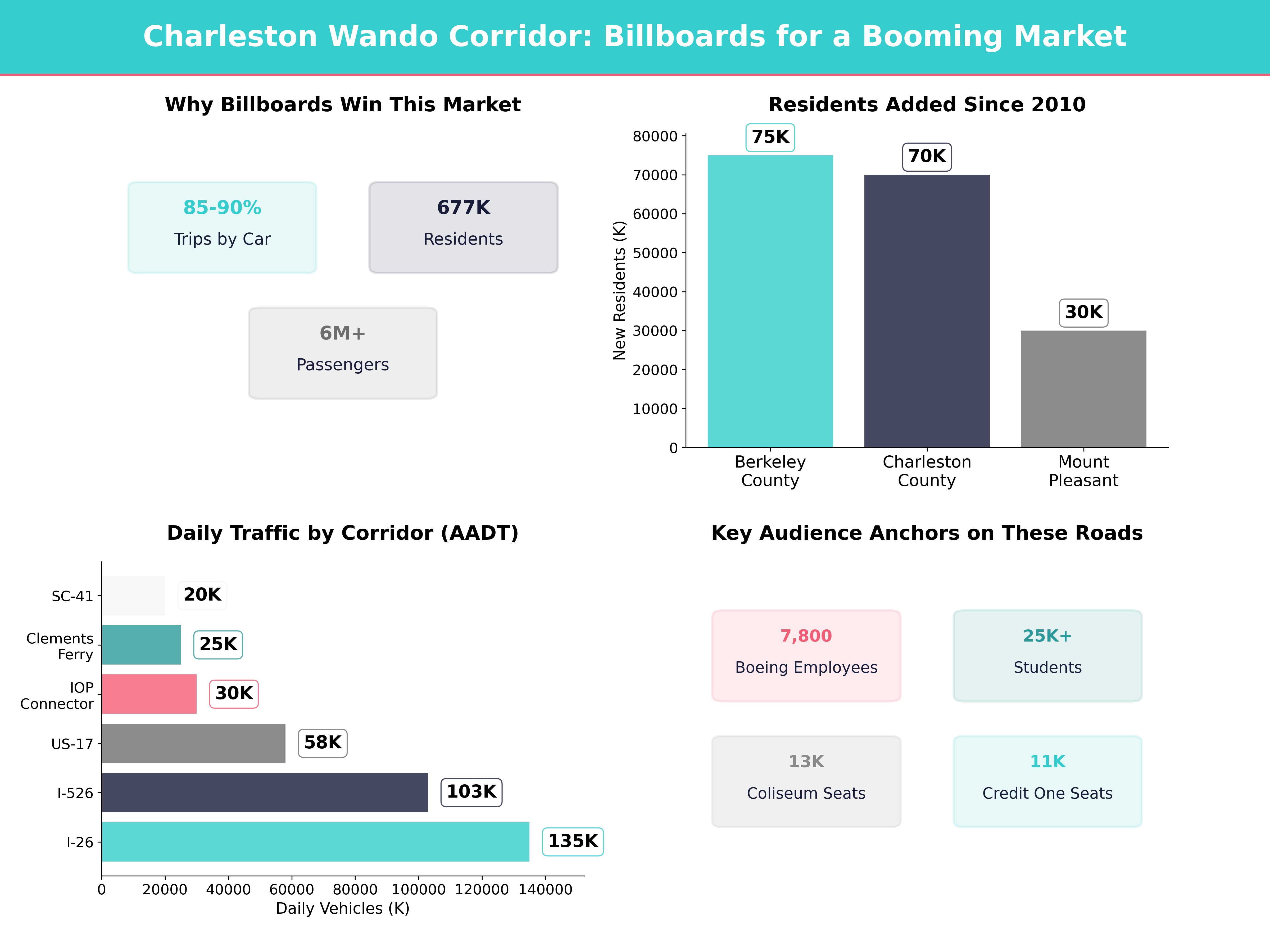
Wando sits at a strategic edge of the Charleston region 85% to 90% of work trips in the area still made by car. The nearby two-county trade area of Charleston County and Berkeley County 677,000 residents based on recent estimates from the South Carolina Revenue and Fiscal Affairs Office, and most of those residents still move through the market by car. That combination of population scale, daily bridge-and-highway dependence, and year-round visitor flow gives digital billboards near Wando repeat exposure that is hard to match with many local media channels. For brands that need to reach commuters, families, logistics workers, students, and visitors in one plan, Wando is a strong Lowcountry launch point.
Wando Market Overview
Wando is part of a much larger East Cooper and Charleston trade area
When we plan billboard advertising in Wando, we should think beyond the community name and look at the broader movement system around Mount Pleasant Daniel Island, North Charleston, and Charleston Charleston County at roughly 424,000 residents and Berkeley County 253,000 residents, which gives us that combined nearby base of about 677,000 people. Within easy driving distance, Mount Pleasant 95,000 residents, Charleston 155,000, and North Charleston is around 121,000.
Growth has been a major advantage for outdoor advertisers. Since 2010, Berkeley County 75,000 residents, Charleston County has added roughly 70,000, and Mount Pleasant 30,000. That is roughly 40% to 43% growth in Berkeley County and Mount Pleasant and about 20% to 21% growth in Charleston County. That kind of expansion creates steady demand for healthcare, home services, apartments, schools, banking, dining, and retail. It also means more drivers are using the same corridors repeatedly, which is exactly the pattern digital billboards benefit from.
Wando’s local audience is also more diverse than the area’s coastal image sometimes suggests. We can reach affluent suburban households in East Cooper, working families traveling between Goose Creek, Hanahan East Cooper Chamber of Commerce Charleston Metro Chamber of Commerce spans construction, real estate, healthcare, logistics, hospitality, professional services, and retail.
Economic activity and car dependence make Wando especially billboard-friendly
The economic case for Wando starts with movement. South Carolina Ports operates the Wando Welch Terminal, which spans 1,259 acres, and the Port of Charleston benefits from a harbor depth of 52 feet. That keeps trucks, employees, vendors, and business travelers moving through the area on a daily basis. Nearby, Boeing South Carolina 7,800 teammates, which adds another large working population to the broader corridor.
Air travel adds another layer of visibility. Charleston International Airport handled more than 6 million passengers in 2023, and many of those trips rely on the same road network that serves Wando, Mount Pleasant, Daniel Island, and North Charleston. Event and convention traffic also matters because the Charleston Area Convention Center
Most important, this is still a road-led metro. Regional planning by the Berkeley-Charleston-Dorchester Council of Governments 85% to 90% of work trips across the area are made by car when we combine solo drivers and carpools. CARTA
Key Traffic Corridors Around Wando
Wando’s travel patterns are concentrated on a handful of major routes. Recent count maps from the South Carolina Department of Transportation show that advertisers who understand these corridors can match the right message to the right travel purpose.
I-526, the Mark Clark Expressway, for regional commuter reach
The I-526 loop is the backbone of a Wando billboard strategy. Around the Don Holt Bridge, Daniel Island, and the Wando River approaches, recent SCDOT counts commonly fall in the 95,000 to 110,000 AADT range. That gives us one of the best regional-reach corridors in the Charleston market because it ties together North Charleston, Daniel Island Mount Pleasant
This corridor works especially well for several advertiser types.
- Regional healthcare, legal, and financial brands benefit because professionals moving between job centers and East Cooper neighborhoods see the same message repeatedly.
- Event venues and attractions benefit because I-526 captures drivers heading toward the airport district, Daniel Island concerts, and weekend recreation.
- Recruiting campaigns benefit because the route reaches both white-collar commuters and industrial workers moving across county lines.
US 17 through Mount Pleasant for East Cooper frequency
US 17, including the Johnnie Dodds Boulevard and Mount Pleasant retail corridor, is one of the most important consumer routes near Wando. Recent SCDOT counts on key Mount Pleasant segments often land in the 50,000 to 65,000 AADT range. That is strong volume for a corridor dominated by shopping, dining, healthcare, school traffic, and neighborhood errands.
This route is ideal when we want local intent, not just broad exposure.
- Retail, dining, and entertainment brands perform well because the corridor is packed with discretionary trips and same-day decision-making.
- Healthcare, dental, and urgent care advertisers benefit because East Cooper residents are already used to solving needs along US 17.
- Home services, real estate, and banking brands benefit because US 17 reaches established neighborhoods, newer master-planned communities, and affluent households.
Clements Ferry Road and SC 41 for growth corridors and new rooftops
If we want to reach fast-changing development patterns, we should not ignore Clements Ferry Road and SC 41. Recent SCDOT counts often place Clements Ferry Road in the 20,000 to 30,000 AADT range near major junctions, while SC 41 commonly falls in the 15,000 to 25,000 AADT range on heavily traveled segments. Those totals are lower than I-526 or US 17, but the audience is highly relevant because so much of it is made up of residents in growth areas, job-site traffic, and repeated local trips.
This corridor is a strong fit for:
- Apartment, homebuilder, and self-storage brands because new households are still forming in and around the corridor.
- Childcare, schools, healthcare, and family services because these routes carry daily household routines rather than occasional tourism trips.
- Trades, staffing, and truck-related services because the area sits close to industrial and port-connected movement.
I-26 and the airport-convention approach for broad metro scale
For brands that want scale beyond East Cooper, I-26 is the next logical extension. Around Charleston International Airport, North Charleston, and major interchanges, recent SCDOT counts commonly reach the 120,000 to 150,000 AADT range. That makes I-26 one of the biggest volume plays in the region.
We should use I-26 when our target is wider than Wando alone.
- Hotels, attractions, and convention-related businesses benefit because airport and regional visitors rely on this corridor.
- Colleges, trade schools, and recruiting campaigns benefit because the route touches a large cross-section of local and regional travelers.
- Consumer services with metro-wide service areas benefit because I-26 adds reach into Summerville Goose Creek, North Charleston, and downtown Charleston approaches.
The Isle of Palms Connector and beach routes for leisure traffic
The leisure side of the Wando market shows up most clearly on the Isle of Palms Connector and connecting stretches of US 17. Recent SCDOT counts on the connector often fall in the 25,000 to 35,000 AADT range, with heavier peaks during beach season and weekend travel. Those drivers include tourists, short-stay renters, local families, and residents making high-intent dining and entertainment decisions.
This corridor is especially valuable for:
- Restaurants, bars, and attractions because beach travelers are often deciding where to stop before or after their destination.
- Convenience, grocery, and last-minute retail because leisure trips create immediate purchase opportunities.
- Hospitality and event brands because the route reaches visitors headed toward Isle of Palms and nearby coastal destinations.
Audience Segments We Can Reach in Wando
East Cooper commuters and family households
One of Wando’s strongest audiences is the family-and-routine segment that moves through East Cooper every day. Charleston County School District serves more than 50,000 students, and schools such as Wando High School Berkeley County School District serves more than 38,000 students, which adds more family-driven trips across the region.
That matters because family households are constant repeat travelers. They commute, shop, attend practices, visit healthcare providers, and make weekend retail trips on predictable routes. For advertisers selling orthodontics, childcare, after-school programs, quick-service food, home improvement, insurance, or local events, Wando’s household audience is large and highly routinized.
Port, industrial, and logistics workers
Wando is unusually strong for B2B and recruiting because it sits close to the region’s logistics engine. The Wando Welch Terminal alone spans 1,259 acres, and South Carolina Ports keeps freight and port-related employment moving through the corridor. The broader industrial economy includes Boeing South Carolina 7,800 teammates, plus warehouse, trucking, construction, and service contractors throughout Berkeley and Charleston counties.
This segment responds well to direct, practical billboard messaging. We can use boards near I-526, Clements Ferry Road, and I-26 for CDL recruiting, shift hiring, equipment services, fuel cards, parts suppliers, and occupational healthcare. In this market, industrial workers are not niche traffic. They are a major share of the weekday audience.
Students and young professionals
The Charleston area also gives us a meaningful higher-education audience. College of Charleston enrolls about 10,000 students, Charleston Southern University enrolls roughly 3,900, and Trident Technical College serves more than 12,000 curriculum students. That is a combined higher-ed audience of 25,000-plus before we even count The Citadel and graduate programs across the region.
This audience matters for more than back-to-school. Young adults drive apartment demand, entertainment spending, food delivery usage, banking choices, and early-career recruiting. Because many students also work part-time and travel across the metro, they are often exposed to the same boards on repeated weekly patterns.
Visitors, eventgoers, and airport travelers
Wando is not downtown Charleston, but it still benefits from Charleston’s tourism machine. Charleston International Airport surpassed 6 million passengers in 2023. The Charleston Area Convention Center 77,000-square-foot exhibit hall, a 40,000-square-foot ballroom, and 23 meeting rooms. On the entertainment side, Credit One Stadium 11,000, and the North Charleston Coliseum can seat up to 13,000.
We can use that visitor flow for hospitality, attractions, dining, entertainment, and event-driven campaigns. Travelers moving between the airport, Daniel Island, downtown, Patriots Point Naval & Maritime Museum, the South Carolina Aquarium
Seasonal and Timing Opportunities in Wando
Spring in Wando is packed with event-driven traffic
Spring is one of the best advertising windows in the Charleston market. SEWE 3-day February surge. The Charleston Wine + Food Cooper River Bridge Run is a 10K that shifts traffic and attention across the harbor each April. The Credit One Charleston Open 9 days, and Spoleto Festival USA 17 days from late May into early June.
For us, that means spring campaigns should start before the crowd arrives. Restaurants, hotels, medical providers, attractions, and event-adjacent retailers all benefit from early positioning on commuter and visitor corridors.
Summer in Wando means beaches, family trips, and weekend demand
From Memorial Day through Labor Day, leisure traffic becomes much more important. Routes feeding Isle of Palms, Sullivan’s Island
Summer timing also pairs well with weather-responsive creative. If we are advertising beach gear, cold beverages, urgent care, HVAC, pest control, or storm-readiness offers, Wando’s digital format lets us rotate messages quickly as conditions change.
Back-to-school and fall routines create steady frequency
Late summer and fall are ideal when our goal is repeated local exposure. Charleston County School District, Berkeley County School District, College of Charleston, Trident Technical College, and Charleston Southern University all restart traffic patterns in August. School-year routines help healthcare providers, tutoring services, family dining brands, youth programs, and retailers that want consistency rather than just event spikes.
Fall also tends to support recruiting campaigns. Construction, logistics, healthcare, and trades advertisers can use weekday morning and afternoon windows to stay in front of active workers during normal work rhythms.
Hurricane season and holiday periods reward flexibility
Coastal timing matters. Atlantic hurricane season runs from June 1 to November 30, and even when major storms do not make landfall, tropical weather can change local behavior quickly. That makes Wando a good market for flexible campaigns covering storm prep, generators, roofing, insurance, cleanup services, and urgent household needs.
Holiday retail is another strong window. As shopping clusters around Black Friday, December events, and end-of-year dining, we can shift spend toward US 17, Mount Pleasant retail routes, and airport-adjacent corridors where both locals and visitors are highly active.
Billboard Design Tips for the Wando Market
Use Lowcountry visual cues that feel local, not generic
Creative in Wando should look like the Lowcountry people actually experience, not a stock version of the South. Marsh greens, harbor blues, sunset oranges, palmetto silhouettes, docks, and water views can work well because they instantly signal place. For East Cooper audiences, polished coastal imagery often feels more natural than loud discount aesthetics.
At the same time, we should match the tone to the category. An upscale medical practice in Mount Pleasant
Use neighborhood and route language people recognize immediately
Wando audiences respond well to place-based shorthand. Copy that references “Clements Ferry,” “Mount Pleasant,” “Daniel Island,” “before the beach,” “next exit,” or “off US 17” often lands better than citywide messaging with no directional context. In a road-led market, local cues reduce mental effort and make the billboard feel actionable.
Messages such as “Now Leasing Off Clements Ferry,” “Skip the Bridge for Dinner Tonight,” or “Hiring Near the Port” feel grounded in real travel behavior. That is especially useful in Wando because many trips are destination-specific and time-sensitive.
Tailor copy to the three biggest mindsets in the market
We generally see three high-value mindsets around Wando. The first is the commuter mindset, where people are trying to get to work, school, or home efficiently. The second is the family errand mindset, where people are making practical decisions about food, healthcare, and shopping. The third is the leisure mindset, where people are heading to events, beaches, or dinner.
Our creative should reflect those contexts. For commuters and industrial workers, bold numbers, clear offers, and short hiring messages often work best. For families, reassurance, convenience, and location clarity matter. For visitor and leisure traffic, mood, experience, and immediate calls to action usually outperform dense information.
Design for bright sun, summer haze, and sudden rain
Wando’s coastal light conditions can be challenging. Strong sun glare, humid haze, and heavy summer showers all make contrast more important than subtlety. Thick fonts, dark text on light backgrounds, or light text on dark backgrounds tend to hold up better than low-contrast palettes.
We should also keep copy tight. Drivers are often moving at bridge, highway, or arterial speeds, and many are making lane changes around merges and exit decisions. In this market, fewer words and bigger type usually outperform clever but crowded creative.
Regional Strategies for Wando and East Cooper
Use Wando and Clements Ferry for growth, recruiting, and daily services
If our business depends on new residents, workforce growth, or industrial traffic, the Wando-Clements Ferry corridor deserves priority. This is where we can speak to renters, home shoppers, port-adjacent workers, and families settling into new routines. Apartments, healthcare, childcare, storage, staffing, and trades often fit naturally here.
Because this submarket is still developing, a board here can feel especially relevant when our product solves an immediate need. The audience is not just passing through. Many drivers are still choosing where to live, shop, and establish habits.
Use Mount Pleasant and US 17 for retail, healthcare, and affluent households
If our goal is to reach established East Cooper spending power, US 17 through Mount Pleasant
For many Wando advertisers, Mount Pleasant is where local awareness turns into action. We should use cleaner creative, strong location references, and offers that feel premium rather than bargain-bin.
Use Daniel Island and I-526 bridge approaches for regional professionals
Daniel Island Credit One Stadium
These boards are also useful when we need to bridge multiple audience types at once. A campaign can reach office workers in the morning, eventgoers in the evening, and weekend leisure traffic with the same general placement strategy.
Use North Charleston, the airport, and the convention district for visitors and broad reach
When our campaign needs hotel guests, fly-in visitors, convention attendees, or metro-wide recruiting reach, the North Charleston and airport district is often the right extension beyond Wando. Charleston International Airport, the Charleston Area Convention Center North Charleston Coliseum create a steady stream of transient audiences who are not confined to one neighborhood.
This area works well for attractions, dining, hospitality, colleges, staffing agencies, and any business that wants to introduce itself to people who are new to the market.
Use beach-bound routes for hospitality, dining, and impulse spending
If our product performs best when people are relaxed and ready to spend, we should include beach-bound inventory. Traffic heading toward Isle of Palms and Sullivan’s Island
Beach-route boards are usually less about long explanations and more about irresistible reminders. In Wando, that can be a strong complement to weekday commuter boards.
Using Blip Tools for Wando Campaigns
Let Blip distribute across Wando’s fragmented travel patterns
Wando is not a one-corridor market, so Blip’s optimized approach is especially useful here. When we want coverage across I-526, US 17, Clements Ferry Road, and the airport side without manually micromanaging every board, Blip can spread budget where traffic and opportunity are strongest. That is helpful in a region where audience movement changes by season, event calendar, and time of day.
Use manual board selection when the audience is highly specific
Some Wando campaigns need surgical placement. If we are recruiting port workers, promoting a Mount Pleasant clinic, or pushing beach-weekend restaurant traffic, manual board selection can be the better move. We can choose the exact digital billboards that line up with our audience’s route instead of buying broad regional exposure we do not need.
Daypart around real local behavior
Dayparting is one of the simplest ways to make a Wando campaign smarter. Morning and afternoon commute windows are strong for healthcare, recruiting, finance, and everyday consumer services. Midday can work for dining, retail, and same-day appointments. Thursday-through-Sunday timing is often a good fit for beach traffic, events, entertainment, and hospitality.
Because local behavior changes so much by season, we should also adjust schedules around Spoleto Festival USA Credit One Charleston Open
Use analytics and fast creative swaps to refine local fit
Wando is a market where small adjustments can matter. We should compare how commuter boards perform against leisure routes, how one headline works in Mount Pleasant versus Clements Ferry, and how weekday timing compares with weekend timing. Blip’s reporting and easy creative updates make it practical to test several local angles instead of locking into one message for an entire flight.
That flexibility is especially valuable for seasonal businesses, recruiting campaigns, and promotions tied to weather, concerts, festivals, or school-year rhythms.
Getting Started with Billboard Rental in Wando
Start with one clear Wando objective
Before we choose boards, we should decide what success means in this market. In Wando, the most common objectives are usually local awareness, foot traffic, recruiting, lead generation, event attendance, or regional brand lift. A recruiting campaign near the port should be planned differently from a brunch campaign aimed at Mount Pleasant families.
That first decision keeps the rest of the process simple. Once we know the goal, the right corridors and time windows become much easier to identify.
Evaluate Wando locations by trip purpose, not just map proximity
The best billboard near Wando is not always the one physically closest to the business. We should evaluate locations based on why people are on that road. Are they commuting to work, running errands, heading to the beach, traveling to a concert, or driving to the airport? The answer tells us far more about likely response than raw distance alone.
In practical terms, that means we should compare boards across I-526, US 17, Clements Ferry Road, SC 41, and the I-26 airport approach based on audience intent. A medical practice may benefit most from repeat commuter visibility, while a restaurant may benefit more from evening and weekend leisure routes.
Expect a simpler process than traditional billboard buying
Traditional billboard rentals in a market like Charleston often involve sales calls, limited packages, fixed terms, and slower creative changes. Blip simplifies that process. We can launch without long-term contracts, control budget directly, select boards ourselves or let the platform optimize, and update artwork as conditions change.
That matters in Wando because the market is dynamic. Growth corridors, event traffic, school patterns, and weather can all shift quickly, so a rigid buying process is rarely ideal.
Launch, learn, and expand from what actually works in Wando
The smartest way to enter Wando is usually to start with a focused hypothesis. We can begin with the corridor that best matches our audience, watch performance, test a second nearby route, and then expand once we see where our message fits naturally. In many cases, a combination of one commuter corridor and one leisure or retail corridor gives us a more complete read on the market than a single-location approach.
As we scale, we should keep asking the same question: where does our audience already drive with regularity and intent? In Wando, that is the core billboard rental strategy. When we align our placements with real movement across East Cooper and the wider Charleston area, digital out-of-home becomes both efficient and highly local.