Billboards in Marion, SC
No Minimum Spend. No Long-Term Contracts. Just Results.
Trusted by Leading Brands


Billboard advertising
in Marion has never been easier
How much is a billboard in Marion?
Why Choose Blip for Billboard Advertising in Marion
-
Blip makes Marion billboard buying self-serve, so you can launch fast on U.S. 501 or U.S. 76 and reach local drivers without sales delays.
-
Use Blip-optimized campaigns in Marion to auto-shift spend toward U.S. 501 beach traffic or U.S. 76 commuter flow based on your goals and budget.
-
No contracts or minimums let you test Marion's 8,000-18,000 AADT corridors, then pause or scale for summer Myrtle Beach travel or fall school season.
-
Blip's real-time analytics show what works in Marion, South Carolina, so you can adjust creative and timing as traffic moves between Florence and Myrtle Beach.
-
Daypart your Marion ads for 6-9 a.m. commutes or Friday beach departures, keeping your message on the road when travelers are most likely to act.
Frequently Asked Questions About Billboard Advertising in Marion
How much does a billboard cost in Marion, South Carolina with Blip?
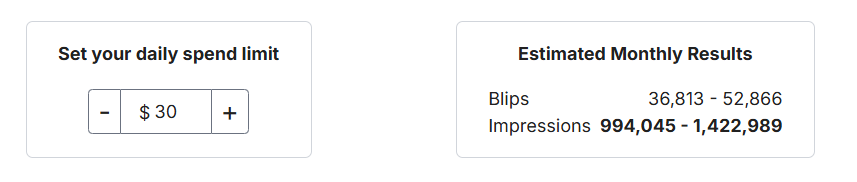
With Blip, billboard advertising in Marion is designed to fit a wide range of budgets. Costs start at just $0.01 per display, and there are no minimums or contracts, so you can start small, adjust your budget anytime, or pause when needed. Your total cost is simply the sum of your individual blips.
Where can I advertise with Blip in Marion, South Carolina?
Marion, South Carolina gives us a strong billboard market because it combines a tight local trade area with steady regional drive traffic on major corridors that often run in the 8,000 to 18,000 AADT range. U.S. 501 is Marion’s signature regional advertising corridor, and U.S. 76 gives us dependable local and inter-county reach. S.C. 41 and county connectors help us cover smaller communities efficiently.
Why is billboard advertising in Marion, South Carolina a good fit for Blip?
Marion is a drive market, and that is excellent for out-of-home advertising. State and local commuting data consistently show that well over 80% of workers in Marion County commute by car, truck, or van. In practical terms, we should assume that most residents and most visitors encounter local businesses through windshields.
What kind of audience can Blip reach in Marion, South Carolina?
The practical advertising audience is larger because so many trips move between Florence, Conway, Marion, and Myrtle Beach. We can reach locals with high frequency, and we can also intercept visitors, job seekers, students, and patients whose trips connect Marion to larger regional destinations. We can also reach families, outdoor visitors, and heritage travelers.
When is the best time to run billboard ads in Marion, South Carolina?
Summer creates Marion’s biggest tourism-adjacent opportunity. From Memorial Day to Labor Day, or roughly 14 weeks, traffic on the inland-to-coast corridor becomes especially valuable. Spring, back-to-school season, and holiday periods are also strong times to tailor creative and budget.
Do I need a contract to advertise with Blip in Marion?
No, Blip has no long-term contracts or minimum commitments. You can start, pause, or stop your campaign at any time.
How fast can I launch a billboard campaign with Blip in Marion?
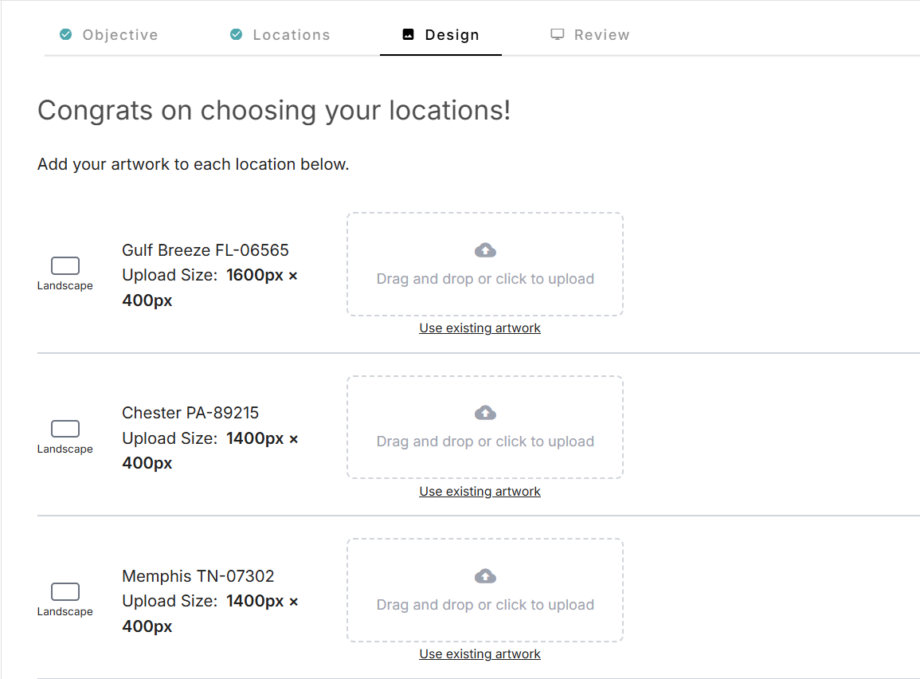
You can have your campaign live in minutes. Create a free account, select your locations, set your budget, upload your design, and start running once approved.
Where can I advertise with Blip in Marion?
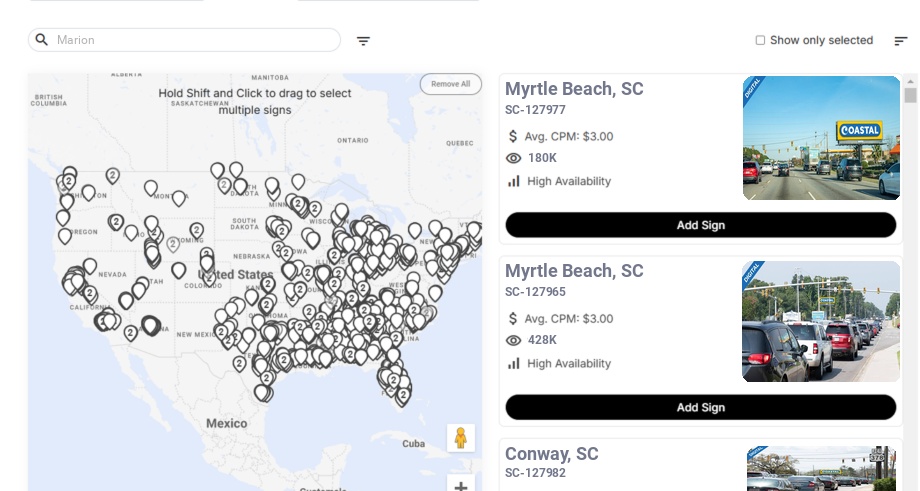
Blip has digital billboards in Marion. You can browse available locations on a map, choose the ones that fit your audience, and start advertising right away.
Still have questions? Launch a campaign in minutes — no contracts, no commitments.
Start Your CampaignMarion Billboard Advertising Guide
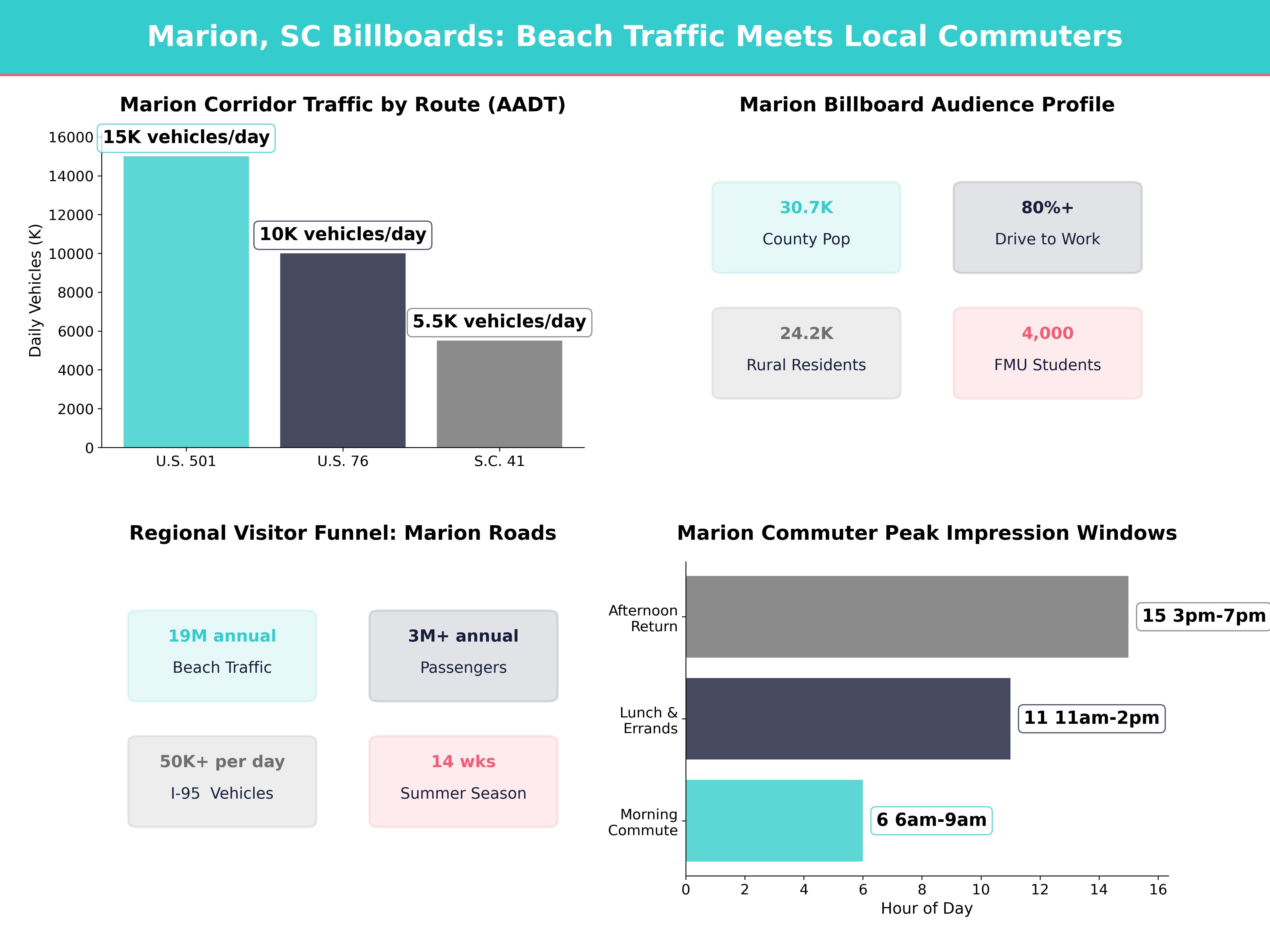
Marion, South Carolina gives us a strong billboard market because it combines a tight local trade area with steady regional drive traffic on major corridors that often run in the 8,000 to 18,000 AADT range. The City of Marion 6,448 residents in 2020, and Marion County had 30,657, but the practical advertising audience is larger because so many trips move between Florence, Conway, Marion, and Myrtle Beach. This is a car-first market, and that matters because billboards perform best where daily routines happen on the road, with well over 80% of workers commuting by car, truck, or van. We can use Marion placements to build frequency with locals, while also tapping into the beach, healthcare, education, and event traffic that moves through the Pee Dee and toward the Grand Strand.
Marion, South Carolina Market Overview
Marion’s local size is modest, but its trade area is broader than the city limits.
Marion works best when we think beyond the city population alone. With 6,448 residents in the city and 30,657 in the county, the county is nearly 5 times larger than the city by population, and about 24,209 county residents live outside Marion’s city limits, which means daily life is spread across a wider rural network rather than concentrated in one dense downtown. That dispersed settlement pattern makes roadside visibility especially valuable because people repeatedly use the same corridors for work, shopping, healthcare, school, and church.
Marion also sits inside the broader Pee Dee economy. The county is tied to nearby Florence County, to the retail and tourism pull of Horry County, and to the long-established flow of traffic on U.S. 501, U.S. 76, and other state routes. For billboard advertisers, that means Marion is not just a “small town” play. It is a corridor play.
Marion is a drive market, and that is excellent for out-of-home advertising.
State and local commuting data consistently show that well over 80% of workers in Marion County commute by car, truck, or van. The Pee Dee Regional Transportation Authority provides important regional service, but Marion is still overwhelmingly driven by personal vehicles. In practical terms, we should assume that most residents and most visitors encounter local businesses through windshields.
That vehicle dependence shapes how we plan campaigns. We should expect repeated exposures on familiar routes, strong response to directional copy, and meaningful value from time-of-day scheduling. A breakfast offer, an urgent care message, a farm supply promotion, or a beach-trip stop can all work if we place them where the trip is already happening.
The regional economy supports multiple advertiser categories.
Marion’s economy is rooted in agriculture, manufacturing, logistics, healthcare, education, and service businesses. MUSC Health Marion Medical Center 124-bed hospital, which makes healthcare one of the county’s most visible anchor sectors. Nearby Francis Marion University enrolls about 4,000 students, and Florence-Darlington Technical College adds another strong education audience in the surrounding trade area.
Tourism matters too, even though Marion is inland. Visit Myrtle Beach 19 million visitors a year, and Myrtle Beach International Airport 3 million passengers annually. A large share of the Grand Strand’s visitor economy still arrives by road, and Marion benefits from that through-route behavior.
For advertisers, the takeaway is simple. We can reach locals with high frequency, and we can also intercept visitors, job seekers, students, and patients whose trips connect Marion to larger regional destinations.
Key Traffic Corridors for Marion, South Carolina Billboards
U.S. 501 is Marion’s signature regional advertising corridor.
According to published maps from the South Carolina Department of Transportation, traffic counts on U.S. 501 vary by segment and year, but many Marion County segments commonly fall in the 12,000 to 18,000 AADT range. That is meaningful volume for a rural market, especially because the road carries both local daily trips and long-distance leisure travel toward Conway and Myrtle Beach.
U.S. 501 works especially well when we want to reach travelers in motion with a clear next step. We often see strong fit here for the following categories: Restaurants, convenience stores, and travel stops perform well because drivers are already making quick stop decisions on the route; Healthcare, legal, and financial services perform well because repeated commuter exposure helps build familiarity and trust; Tourism, attractions, and lodging perform well because the corridor carries beach-bound traffic for much of the warm season; and Auto services, tire shops, and repair businesses perform well because the message aligns with immediate roadside needs.
U.S. 76 gives us dependable local and inter-county reach.
U.S. 76 connects Marion with nearby communities and with the larger Florence trade area. On busier Marion-area segments, SCDOT counts often land around 8,000 to 12,000 AADT. That makes U.S. 76 a strong choice when our goal is consistent local frequency rather than purely destination traffic.
This corridor is useful for campaigns that depend on repeat impressions over several days or weeks. We should favor U.S. 76 when we want to promote: Local retail and grocery offers that depend on frequent exposure close to home; Medical, dental, and urgent care services that benefit from repeated trust-building impressions; Schools, colleges, and workforce programs that need to stay visible during enrollment cycles; and Community events, churches, and civic initiatives that speak to nearby households.
S.C. 41 and county connectors help us cover smaller communities efficiently.
S.C. 41 is not as large as U.S. 501, but it matters because it links communities across Marion County and connects to coastal travel patterns. Depending on the exact count station, key sections often run roughly 4,000 to 7,000 AADT. That is enough traffic to matter in a county where local name recognition and repeated exposure are critical.
These secondary routes are valuable when we want a message to feel local rather than regional. We should think about them for insurance agencies, banks, agricultural suppliers, family restaurants, hardware stores, and home-service brands that depend on trust and proximity more than mass reach.
Florence and I-95 extend Marion campaigns into a bigger feeder market.
If we want Marion-area customers but need broader regional exposure, we should also look west. Around Florence, the I-95 gateway regularly carries 50,000-plus vehicles per day on busier segments, and it acts as the inland handoff point for travelers moving toward U.S. 76 and U.S. 501. That makes the Florence gateway especially useful for beach-related businesses, regional employers, colleges, major healthcare providers, and event venues.
A smart Marion strategy often combines local boards with at least one westbound or feeder-market presence. That lets us capture both county residents and the out-of-county traffic that eventually spends in Marion or passes through it.
Audience Segments We Can Reach in Marion, South Carolina
We can reach local commuters and town-to-town shoppers with high frequency.
Because more than 24,000 county residents live outside Marion’s city limits, a large share of the audience is naturally mobile. Many households travel between Marion, surrounding communities, Mullins Florence, and coastal destinations for work and errands. That pattern favors billboard advertising because local routes are reused again and again.
For these audiences, our best messages usually emphasize convenience, value, trust, and location. A strong Marion commuter campaign often includes a directional cue, a recognizable local business name, and one reason to act now.
We can reach beach-bound travelers and return traffic without buying on the coast.
The Myrtle Beach area’s roughly 19 million annual visitors create a much larger regional audience than Marion’s population alone suggests. Many of those trips are still made by car, and inland routes remain highly relevant before drivers ever reach the Grand Strand. That is why Marion billboards can work for hotels, roadside services, restaurants, attractions, convenience retail, and even healthcare providers that want to reach vacation traffic before or after the beach stay.
Return traffic matters too. Drivers coming home are often more open to impulse stops, meal purchases, fuel, pharmacy visits, and service reminders. We should not treat all tourism traffic as one-way demand.
We can reach students, patients, and eventgoers moving through the Pee Dee.
The Marion market overlaps with major regional institutions. Francis Marion University brings about 4,000 students into the area, MUSC Health Marion Medical Center 124 beds, and the Florence Center gives the region a 10,000-seat venue for concerts, trade shows, conventions, and sporting events. Each of those institutions creates predictable movement patterns that billboard campaigns can capture.
This segment is especially valuable for the following categories: Healthcare providers can reach patients and caregivers traveling to appointments; Colleges, technical programs, and workforce recruiters can stay visible during application and enrollment periods; Restaurants and retailers can target event nights and student-heavy calendars; and Professional services can build long-term awareness with adults making recurring regional trips.
We can also reach families, outdoor visitors, and heritage travelers.
Little Pee Dee State Park is a family-friendly recreation asset built around a 54-acre lake, and local heritage sites such as the Marion County Museum and the South Carolina Tobacco Museum
This audience responds well to messages that feel rooted in the community. When we advertise to families in Marion, we should sound helpful, familiar, and easy to act on.
Seasonal and Timing Opportunities in Marion, South Carolina
Spring in Marion is ideal for tax-season, home-service, and outdoor campaigns.
From February through April, many consumers are more responsive to tax preparation, refund-driven retail, vehicle purchases, furniture, and home-improvement offers. In Marion, spring is also a natural fit for lawn care, farm supply, pest control, roofing, and HVAC campaigns because the weather improves and project planning accelerates.
We should also remember that spring is a regional travel warm-up. Families begin planning for graduation, beach season, and weekend recreation well before summer arrives. That makes late spring a strong time to start tourism and hospitality messaging, not just peak summer.
Summer creates Marion’s biggest tourism-adjacent opportunity.
From Memorial Day to Labor Day, or roughly 14 weeks, traffic on the inland-to-coast corridor becomes especially valuable. Eastbound messages can target beach preparation, fuel, food, lodging, tire checks, and last-minute trip needs. Westbound messages can target return travelers with meal stops, pharmacy reminders, healthcare services, and back-home errands.
We generally see the best timing opportunities around these windows: Friday afternoon through early evening works well for departure traffic; Saturday morning through early afternoon works well for weekend travelers; Sunday afternoon through evening works well for return traffic; and Holiday weekends deserve heavier budget concentration because demand rises quickly.
Back-to-school season and fall community rhythms are important in Marion.
The Marion County School District typically returns in August, and the school year generally runs until late May. That makes August through November a prime period for school-related retail, youth sports messaging, tutoring, clinics, family restaurants, and community events. It is also a useful season for colleges and training programs, especially with nearby institutions such as Francis Marion University and Florence-Darlington Technical College.
Fall is also when local identity shows up most clearly. Football, harvest activity, church calendars, and county routines all create stronger community attention. Messages that feel local and practical often outperform abstract brand campaigns during this period.
Holiday and winter campaigns should emphasize needs, not just gifts.
From mid-November through December 31, Marion campaigns can lean into holiday retail, dining, events, and service gifting. After that, January and February are often strong for healthcare, tax services, gyms, legal help, and financial planning.
Weather also matters in the coastal plain. Hurricane season runs from June 1 through November 30, which means late summer and early fall campaigns can benefit from preparedness messaging, generator sales, roofing, insurance, and home-repair promotions. In Marion, seasonal timing is not only about tourism. It is also about practical local needs.
Marion, South Carolina Billboard Design Tips
We should design for rural speeds and longer sightlines.
Many Marion-area approaches operate at 55 to 65 mph, so our creative needs to be readable almost instantly. In this market, we should usually keep headline copy to about 6 to 8 words, focus on one clear benefit, and use one strong visual rather than several smaller elements.
High-contrast color palettes work especially well on these roads. Dark blue and white feel trustworthy for healthcare and finance. Green and white can feel natural for agriculture, outdoor brands, and home services. Warm reds, oranges, and yellows can help food, convenience, and emergency-service messages stand out.
We should use local cues that feel authentic to Marion.
Marion audiences tend to respond to practical, credible messaging. We should emphasize value, reliability, family ownership, hometown service, and convenience. References to the Pee Dee, community pride, and local traditions can help when they are used naturally.
Imagery can also do more work here than in a dense urban market. We can borrow from local visual language, including brick storefronts, agricultural landscapes, pine-lined highways, school spirit, healthcare professionalism, and summer travel cues tied to the beach corridor. Mentions of institutions such as MUSC Health Marion Medical Center Little Pee Dee State Park, or nearby Downtown Florence can make a message feel geographically grounded.
We should make direction and distance part of the creative strategy.
In Marion, directional copy is unusually important because many decisions happen on the road itself. Phrases like “Next right,” “2 miles ahead,” “In Marion today,” or “On U.S. 501” can be more persuasive than abstract branding. Drivers in a rural market often need confirmation that the business is close, easy, and worth the stop.
This is especially true for eastbound travel. A beach-trip audience may not stop for a vague message, but it may respond to a clear offer with a clear distance marker.
We should rotate seasonal creative instead of running one message all year.
Digital inventory lets us align the message with the moment. We should run tax messaging in spring, beach-ready or travel-stop creative in summer, school and sports creative in fall, and holiday or year-end needs in winter. Even simple swaps can matter, especially when the underlying route stays the same.
Regional Strategies Across Marion, South Carolina
Downtown Marion and the city approaches should focus on frequency and familiarity.
Closer to Marion’s core, our goal is usually repetition. These placements are best for local restaurants, healthcare, legal services, banks, churches, community events, and retail businesses that want to stay top of mind. In these zones, we should favor offers that can convert quickly, such as same-day care, lunch specials, weekend events, or service appointments.
Westbound toward Mullins, Florence, and I-95 should emphasize regional draw.
The westbound strategy is different. As traffic moves toward Florence, Greater Florence Chamber of Commerce businesses, Francis Marion University, the Florence Center, and the I-95 gateway, we are reaching a broader audience with more destination choices. This is a strong zone for recruiting, higher education, specialty healthcare, event promotion, and retail that pulls from multiple counties.
If we want Marion-area awareness but larger-market reinforcement, this is often the first expansion area we should test.
Eastbound toward Conway and Myrtle Beach should be treated as a tourism corridor.
Eastbound campaigns should feel timely, direct, and travel-aware. We should prioritize convenience, food, fuel, tire service, entertainment, lodging, and vacation-adjacent messaging. Visit Myrtle Beach
Summer deserves the largest push here, but shoulder seasons matter too. Spring break, early summer weekends, and fall beach travel can all produce useful demand.
Countywide coverage should respect small-town behavior.
Across Marion County, we should remember that local buying habits are relationship-driven. A countywide strategy often works best when we pair broader corridor boards with a few placements that feel closer to home. That helps our campaign feel both credible and visible.
In smaller-community coverage, “trusted,” “local,” “family,” “same day,” and “easy to find” are often stronger than polished national-brand language. Marion rewards usefulness.
Using Blip Tools in Marion, South Carolina
We should match the buying approach to the local goal.
When we know exactly which corridor we want, a manual campaign makes sense because we can choose the specific Marion-area boards that align with commuter, city-core, or beach-bound traffic. When our goal is broader reach across the region, Blip’s optimized approach can help us spread budget across Marion, feeder routes, and nearby demand pockets without overmanaging every placement.
We should use timing controls around actual Marion travel behavior.
Marion is a strong dayparting market. We can concentrate spend during 6 a.m. to 9 a.m. for work trips, 11 a.m. to 2 p.m. for lunch and errand traffic, and 3 p.m. to 7 p.m. for school pickups, after-work stops, and return commutes. In summer, we can also bias budgets toward Friday departures and Sunday returns on the beach corridor.
That kind of timing matters because traffic volume is not the whole story. Intent changes by hour.
We should compare corridors and adjust quickly.
Real-time performance visibility is especially useful in a market like Marion because our routes serve different trip purposes. We may find that one U.S. 501 board is stronger for tourism, while a U.S. 76 board is stronger for local services. We may also see that westbound traffic outperforms eastbound traffic for a healthcare or recruiting message.
Blip makes that kind of testing practical. We can start with a modest budget, sometimes with plays beginning at $0.01 each, and shift spend as we learn which sub-areas respond best.
We should localize creative without rebuilding the entire campaign.
Marion campaigns benefit from small message changes. We can keep the same brand design and rotate copy by route, season, or audience. One version can mention Marion directly, another can speak to beach traffic, and a third can target families heading toward Florence events or appointments. Blip’s artwork tools make those quick variations easier to execute.
Getting Started with Billboard Rental in Marion, South Carolina
We should start with one clear success metric.
Before we rent anything, we should decide what success means. In Marion, the most common goals are store visits, phone calls, appointment bookings, event attendance, recruiting leads, and broad awareness. A clear goal makes board selection much easier.
We should choose locations by trip intent, not just by geography.
The best Marion billboard is not always the one closest to the business. We should evaluate each board by the type of trip it serves.
- If we want local frequency, we should favor boards near Marion’s core and the most repeated everyday routes.
- If we want beach or visitor traffic, we should prioritize eastbound and westbound U.S. 501 exposure.
- If we want regional recruitment or specialty services, we should consider the Florence gateway and I-95 feeder traffic.
- If we want rural household reach, we should add boards on secondary county routes that reinforce trust close to home.
We should expect the process to be simpler than traditional billboard buying.
Traditional billboard rentals often require long sales cycles, fixed packages, and more upfront commitment than a Marion campaign really needs. Blip simplifies that. We can launch quickly, adjust budgets without contracts, swap creative when the season changes, and pause or expand based on actual performance.
That flexibility is especially valuable in Marion because the market shifts by corridor, by season, and by trip purpose. A summer beach-support campaign should not be bought the same way as a fall school-season campaign or a year-round healthcare message.
We should launch, measure, and refine in stages.
A practical Marion rollout usually follows a simple pattern. We start with the routes that best match our goal, run long enough to gather useful signal, review performance, and then expand only where the results justify it. In many cases, that means beginning with one corridor strategy and one city-core strategy, then layering in seasonal timing and alternate creative.
When we approach Marion this way, billboard rental becomes much less about guessing and much more about matching the right message to the right road at the right time. That is where this market shines.