Billboards in Sumter, SC
No Minimum Spend. No Long-Term Contracts. Just Results.
Trusted by Leading Brands


Billboard advertising
in Sumter has never been easier
How much is a billboard in Sumter?
Why Choose Blip for Billboard Advertising in Sumter
-
Blip makes Sumter billboard buys self-serve, so you can launch fast on Broad Street or the Shaw corridor without waiting on traditional approvals.
-
Use Blip-optimized campaigns in Sumter to auto-shift spend across Broad, U.S. 521, and U.S. 378 for your goals and budget.
-
Sumter’s 91% car commuters make dayparting powerful; Blip lets you hit rush hour, lunch, or school pickup when drivers are on the road.
-
No contracts or minimums means you can test Sumter around Iris Festival season or summer beach-traffic flow, then pause or scale anytime.
-
Track real-time results in Sumter and tweak creative fast for military families, retail shoppers, or college traffic near Shaw and downtown.
Frequently Asked Questions About Billboard Advertising in Sumter
How much does a billboard cost in Sumter, South Carolina with Blip?
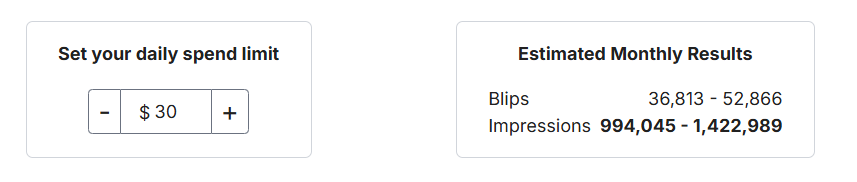
With Blip, billboard advertising in Sumter can fit a range of budgets because you only pay when your ad actually runs. Each “blip” is a 7.5-to-10-second display on a rotating digital billboard, with pricing starting at $0.01 per display. Your daily budget helps Blip’s algorithm bid for open ad slots, and the cost per blip can change based on time of day, location, and advertiser demand.
Where can I advertise with Blip in Sumter, South Carolina?
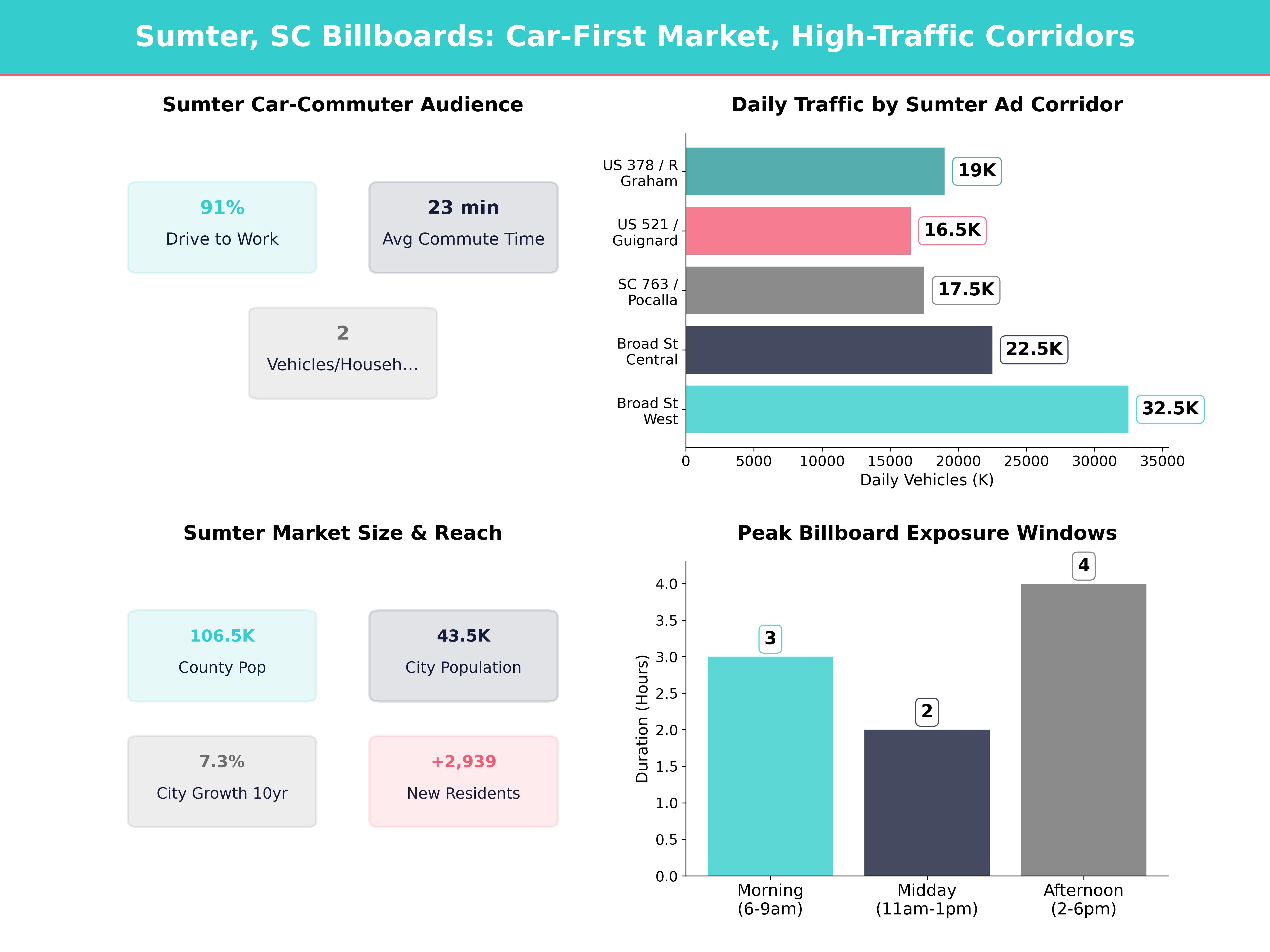
Broad Street is Sumter’s signature high-volume corridor, with busy west-side commercial stretches generally in the 30,000 to 35,000 AADT range. S.C. 763 and adjoining Pocalla Road connect to Shaw Air Force Base and commonly run in the 15,000 to 20,000 AADT range. U.S. 521 and the Guignard corridor are also valuable commuter and local-access routes, often landing around 15,000 to 18,000 AADT.
Why is Sumter, South Carolina a good billboard market for Blip?
Sumter gives advertisers a dependable local audience and a meaningful regional one at the same time. The City of Sumter counted 43,463 residents in 2020, and Sumter County had 106,512, which is enough population to support steady frequency. The market is highly auto-oriented, with roughly 91% of workers commuting by car, making digital billboards especially relevant.
What kinds of businesses work well on billboards in Sumter, South Carolina?
Broad Street is especially effective for retail and restaurants, healthcare, dental, and vision brands, as well as auto service, insurance, banks, and home services. The east-side Shaw corridor is ideal for apartments, telecom, childcare, financial services, furniture, gyms, quick-service food, vehicle sales, and local recruiting. In Sumter, billboards can also work well for healthcare, education, and tourism.
When is the best time to run billboard ads in Sumter, South Carolina with Blip?
Spring is one of Sumter’s best advertising windows, especially around the Iris Festival in May and increased visits to Swan Lake-Iris Gardens. Summer is also a smart time for heat-driven offers and travel capture, while late July through September is strong for back-to-school and fall routines. Holiday campaigns in November and December can work across both retail and service categories.
Do I need a contract to advertise with Blip in Sumter?
No, Blip has no long-term contracts or minimum commitments. You can start, pause, or stop your campaign at any time.
How fast can I launch a billboard campaign with Blip in Sumter?
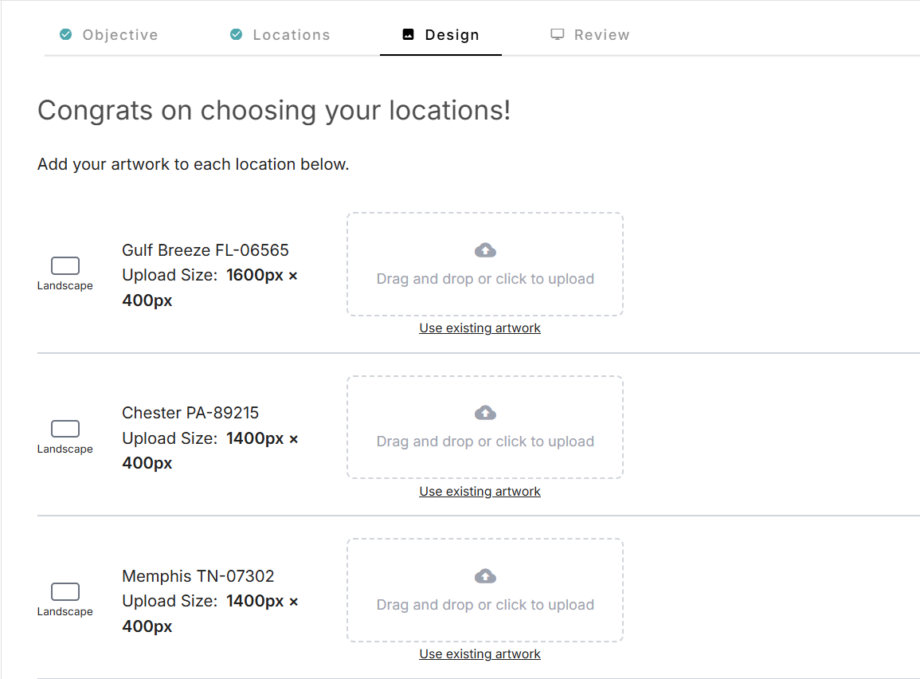
You can have your campaign live in minutes. Create a free account, select your locations, set your budget, upload your design, and start running once approved.
Where can I advertise with Blip in Sumter?
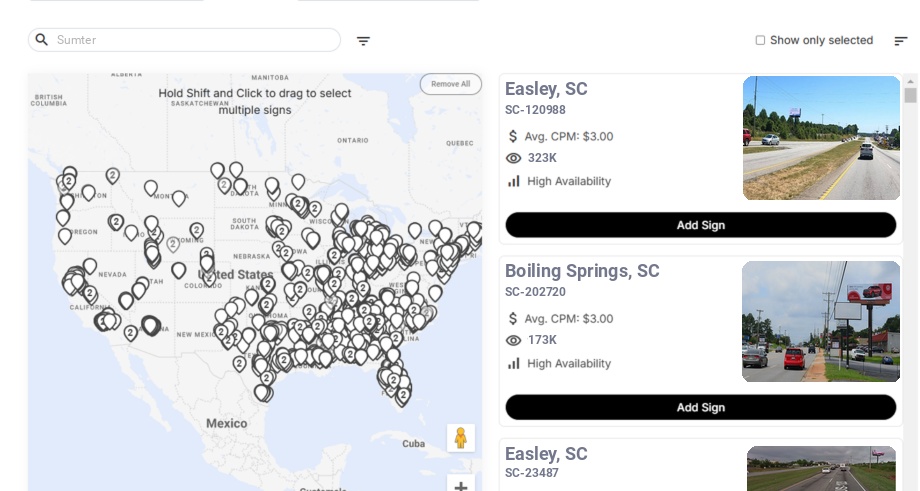
Blip has digital billboards in Sumter. You can browse available locations on a map, choose the ones that fit your audience, and start advertising right away.
Still have questions? Launch a campaign in minutes — no contracts, no commitments.
Start Your CampaignSumter Billboard Advertising Guide
Sumter is a strong billboard market because it gives us a dependable local audience and a meaningful regional one at the same time. The City of Sumter counted 43,463 residents in 2020, and Sumter County had 106,512, which is enough population to support steady frequency without the fragmentation of a much larger metro. The market is highly auto-oriented, with roughly 91% of workers commuting by car, and Sumter sits on the road network that ties central South Carolina to Columbia Florence, and the I-95 corridor. When we add Shaw Air Force Base, Broad Street retail traffic, and visitor draws like Swan Lake-Iris Gardens
Market Overview for Sumter
Sumter gives us a distinctive mix of city concentration and county-wide reach. According to the South Carolina Revenue and Fiscal Affairs Office, the City of Sumter grew from 40,524 residents in 2010 to 43,463 in 2020, which is about 7.3% growth over the decade and a gain of 2,939 residents. That gain matters for advertisers because it signals strengthening neighborhoods, additional rooftops, and more repeat local traffic through the city’s commercial core.
Sumter’s demographics and local scale
The county population of 106,512 means we are not advertising to just one dense downtown audience. We are also reaching households across suburban, small-town, and rural parts of the market that regularly drive into Sumter for work, healthcare, shopping, school, and services. Sumter is also only about 45 miles east of Columbia 40 miles west of Florence, so many brands can treat it as both a local market and a regional connector.
That hybrid role is useful for advertisers that need more than one audience segment. We can reach city residents, county families, Shaw-connected households, and pass-through travelers with a single coordinated campaign. We also benefit from the fact that Sumter is not dominated by one interstate alone, because repeated exposure across several arterial roads can build familiarity quickly.
Economy, mobility, and what they mean for billboard advertisers
Sumter’s economy is anchored by military activity, healthcare, education, government, retail, manufacturing, and logistics. The Greater Sumter Chamber of Commerce, local employers, and the steady presence of Shaw Air Force Base all support year-round consumer movement rather than purely seasonal spikes. The county labor force typically sits in the low-40,000s, and annual unemployment has recently been in the mid-4% to 5% range, according to the South Carolina Department of Employment and Workforce.
For billboard planning, the bigger story is mobility. Recent commuting estimates consistently show that roughly 91% of workers in Sumter County travel by personal vehicle, whether driving alone or carpooling. The average trip to work is roughly 23 minutes, and the typical household has about 2 vehicles, which reinforces how central driving is to daily life here. That level of car dependence makes out-of-home media especially relevant, because we can reach the same people on repeated weekly routines instead of hoping they happen to be on one app or one station at the right time.
Key Traffic Corridors for Sumter Billboards
Sumter’s travel patterns are shaped by a handful of arterial roads rather than a single dominant interstate loop. That is good news for advertisers, because it gives us flexibility to align placements with different audience intentions, including commuting, shopping, military-related travel, school trips, and regional movement.
Broad Street, U.S. 76, and U.S. 378
South Carolina Department of Transportation count maps regularly show Broad Street as Sumter’s signature high-volume corridor. On the busiest west-side commercial stretches, traffic is generally in the 30,000 to 35,000 AADT range, while central city segments often remain above 20,000 to 25,000 vehicles per day. This is the corridor we use when we want broad local reach.
Broad Street is especially effective for these categories:
- Retail and restaurants perform well here because Broad Street is the city’s primary errand corridor and shopping spine.
- Healthcare, dental, and vision brands benefit from repeated weekday exposure as residents travel to appointments and routine stops.
- Auto service, insurance, banks, and home services fit the corridor because drivers are often in task-oriented mode and ready to act locally.
Because Broad Street serves both destination traffic and routine traffic, it often works best for campaigns that need frequency and name recognition.
S.C. 763, Pocalla Road, and the Shaw corridor
The east-side route connecting Sumter to Shaw Air Force Base is one of the most strategically important roads in the market. Depending on segment, S.C. 763 and adjoining Pocalla Road commonly run in the 15,000 to 20,000 AADT range on SCDOT maps. That may be lower than Broad Street’s peak counts, but the audience quality is excellent.
This corridor is ideal when we want to reach military households, civilian employees, and service-oriented consumers. It is a natural fit for apartments, telecom, childcare, financial services, furniture, gyms, quick-service food, vehicle sales, and local recruiting. The audience also includes frequent movers and households setting up or resetting daily routines, which can make practical offers especially compelling.
U.S. 521 and the Guignard corridor
U.S. 521 through Sumter, including north-south sections around Guignard Drive, is another valuable commuter and local-access route. Traffic on these segments often lands around 15,000 to 18,000 AADT, depending on exact location. This road helps us reach neighborhoods that may not flow through every Broad Street segment every day.
We often like U.S. 521 for:
- Local service advertisers that need neighborhood-level credibility.
- Schools, churches, events, and community institutions that depend on awareness among nearby families.
- Medical, legal, and personal-care brands that benefit from repeated exposure along practical local routes.
This corridor is also useful when we want to layer frequency. A campaign that combines Broad Street with U.S. 521 can feel much bigger in-market than a single-board strategy.
U.S. 378 west, Robert Graham Freeway, and the I-95 connection
U.S. 378 west of Sumter, along with segments of Robert Graham Freeway, typically sits in the high-teens to low-20,000s AADT range near the city. That matters because the route links Sumter to Manning and the I-95 corridor, where daily traffic climbs above 40,000 vehicles in this part of South Carolina. For advertisers with regional goals, this is one of the most important feeder patterns in the market.
This corridor is especially useful for destination-based advertisers. Healthcare systems, colleges, legal services, attractions, hotels, and larger retailers can use it to intercept drivers headed to or from Sumter. In summer, it also helps us capture travelers moving toward beach routes, and in holiday periods it becomes more valuable for gift, dining, and stop-now messaging.
Audience Segments We Can Reach in Sumter
Sumter works best when we think in audience layers rather than in one generic “local consumer.” The market includes daily commuters, military households, students, families, and visitors, and each group responds to somewhat different routes and messages.
Commuters and everyday errand traffic in Sumter
Commuters are the foundation of most Sumter billboard campaigns. With roughly 91% of workers traveling by car and average commutes near 23 minutes, we can build strong weekly frequency on weekday routes. That is ideal for brands that need to stay top of mind, including healthcare, insurance, banks, restaurants, grocery, and home repair.
We should also remember that many Sumter trips are not long-distance commutes. They are school drop-offs, pharmacy visits, grocery runs, dining trips, and cross-town errands. That makes digital billboards useful not only for awareness, but also for practical local activation.
Military households and Shaw-connected consumers
Shaw Air Force Base gives Sumter a large and unusually stable military audience. Even without relying on a single official headcount, we know the installation supports thousands of active-duty members, civilian workers, and family residents in the market. That audience tends to generate demand for housing, vehicles, banks, childcare, fitness, telecom, furniture, healthcare, and quick-turn local services.
For billboard advertisers, the key is relevance. Messages that emphasize convenience, immediate availability, financing, family support, and local trust tend to fit this audience well. Boards along S.C. 763 and other east-side approaches are especially valuable when military households are a primary target.
Families, students, and education audiences in Sumter
Families are a major audience in Sumter, and the local education footprint proves it. Sumter School District serves more than 14,000 students, which creates recurring traffic tied to morning drop-off, afternoon pickup, sports, events, and family services. That makes billboards useful for pediatric care, orthodontics, tutoring, family restaurants, after-school programs, and community events.
Higher education adds another layer. Sumter has 3 notable higher-education institutions in or near its core, including University of South Carolina Sumter Central Carolina Technical College Morris College. Central Carolina Technical College serves a 4-county region, which gives us a broader commuting student and workforce-training audience than the city population alone might suggest. Recruitment, degree programs, apartment marketing, and affordable retail can all benefit from this student base.
Visitors, eventgoers, and regional travelers around Sumter
Tourism in Sumter is not as large as a beach market, but it is meaningful and highly targetable. Swan Lake-Iris Gardens 150 acres and is known as the only public park in the United States with all 8 swan species. The annual Iris Festival 3 days each May and gives the city a major spring visitation bump.
Sports and recreation extend that audience. The Palmetto Tennis Center has 24 courts and brings tournament traffic into the city, while nearby Poinsett State Park covers about 1,000 acres and supports outdoor visitation. Downtown draws from Sumter Opera House, Sumter County Museum, and local events covered by The Sumter Item
Seasonal and Timing Opportunities in Sumter
Timing matters in Sumter because travel volumes and audience needs shift with school schedules, military moves, weather, and event calendars. We usually get the best results when we match creative and dayparts to the local rhythm rather than running one static message all year.
Spring in Sumter brings festivals, blooms, and outdoor traffic
Spring is one of Sumter’s best advertising windows. The Iris Festival Swan Lake-Iris Gardens 4 to 6 weeks before major events so awareness is already building as visitors start planning.
This season is particularly strong for:
- Restaurants, boutiques, and downtown destinations, because people are more likely to add discretionary stops.
- Home improvement, lawn care, and garden-related services, because warmer weather changes household priorities.
- Events, arts, and attractions, because spring audiences are more receptive to outing-based messages.
Summer in Sumter favors heat-driven offers and travel capture
Sumter summers are hot and humid, with afternoon highs often above 90°F. That changes consumer behavior in predictable ways. Cold drinks, HVAC services, indoor family entertainment, pools, medical urgent care, and convenience-oriented retail all become more relevant.
Summer is also a smart time for military-focused messaging, because late spring and summer often bring relocations and household transitions around the base. U.S. 378 can also become more useful for travel-oriented brands as beach-bound traffic increases on regional routes. If we are advertising hotels, restaurants, attractions, legal services, or healthcare with a regional draw, summer often justifies broader corridor coverage.
Back-to-school and fall routines in Sumter
The Sumter School District calendar usually brings students back in early August, and local colleges restart in August and January. That makes late July through September a strong planning window for family services, back-to-school retail, healthcare, and enrollment marketing. It is also an excellent time for gyms, banks, insurance, and subscription businesses, because households are reestablishing routines.
Fall then extends that momentum. Football, cooler weather, arts programming, and community events increase evening and weekend mobility. Advertisers tied to food, entertainment, apparel, home services, and local events should not overlook September through November.
Holiday and year-end timing opportunities in Sumter
Holiday campaigns in Sumter can work across both retail and service categories. November and December are obvious for gift, dining, and event messaging, but they are also useful for tax preparation, healthcare enrollment, legal services, and “start January strong” offers. Because the market is smaller than a major metro, even a modest campaign can become highly visible when local competitors stay quiet.
Billboard Design Tips for the Sumter Market
The best Sumter creative usually feels practical, local, and easy to understand at driving speed. We do not need to overcomplicate it. We need creative that fits the city’s pace, respects the audience mix, and looks believable in a market where community familiarity still matters.
Creative cues that feel authentically Sumter
Generic urban luxury imagery is often less effective here than grounded local cues. Sumter audiences respond well to visuals that feel familiar, approachable, and relevant to daily life. A swan silhouette, an iris bloom, a tennis image, or a subtle nod to military life can communicate “this is for Sumter” much faster than stock skyline imagery.
We have also found that value and trust play well in markets like this. Messaging such as “Same-Day Service,” “Military Friendly,” “Locally Trusted,” “Family Care,” or “Now Open on Broad” tends to fit local expectations better than abstract branding alone.
Copy strategy for Sumter’s roads and traffic patterns
On Broad Street segments carrying 30,000+ vehicles per day, concise copy matters. On Shaw-adjacent routes and U.S. 521, relevance matters just as much. We usually want one idea, one offer, and one action.
Strong local copy patterns include:
- Directional messages like “Next Light on Broad” or “2 Miles Ahead on 521,” because many trips in Sumter are destination-driven.
- Practical benefit headlines like “AC Fixed Today” or “Braces for Busy Families,” because service utility is a major purchase trigger.
- Local identity cues like “Serving Sumter Since 19XX,” when that history is real and meaningful.
Colors, imagery, and calls to action that convert in Sumter
Bright contrast works well because many Sumter roads move quickly and include visual clutter from retail signage. Clear whites, deep blues, strong reds, and clean greens can all perform well if the message remains simple. We often avoid overcrowded layouts and script-heavy type, because they can get lost on faster arterials.
Calls to action should usually be realistic for a moving driver. “Visit Today,” “Exit on Broad,” “Now Leasing,” and “Book Online” are better than long explanations. If the campaign serves military households or regional visitors, we can also localize variants with slight creative changes rather than forcing one message to do every job.
Regional Strategies Across Sumter and Nearby Corridors
A smart Sumter campaign usually works best when we separate the market into functional zones. The city center, west-side retail spine, east-side military corridor, and county feeder routes all support different tactics.
Downtown Sumter and the Main Street core
Downtown Sumter is where we focus on dining, entertainment, events, legal services, and civic visibility. The presence of Sumter Opera House, Sumter County Museum, local government, and a growing downtown activity base means this area is good for brands that benefit from community association and evening traffic.
Creative here can lean slightly more lifestyle-oriented, especially when promoting restaurants, arts, and events. Timing can also shift later in the day than a pure commuter campaign.
West Sumter’s retail and medical corridor
West Sumter is the workhorse zone for broad consumer reach. This is where we prioritize high-traffic Broad Street placements for retail, food, healthcare, urgent care, furniture, auto service, and major seasonal promotions. If we need the most total local eyeballs, this is often our starting point.
This area is also ideal for campaigns that need frequency quickly. Repeated plays along the retail spine can make a brand feel established in a short period of time.
East Sumter, Shaw, and base-adjacent routes
East Sumter is where we go when military relevance matters. Housing, storage, moving, banking, wireless, schools, childcare, fitness, and convenient dining all fit naturally here. Messaging should respect the audience’s lifestyle by emphasizing speed, reliability, family utility, and local familiarity.
We also like this zone for recruitment and workforce messaging. Employers that need dependable applicants often perform better here than they do on a generic citywide plan.
County feeders and regional spokes beyond central Sumter
The outer spokes toward Manning, Camden Columbia Florence, and beach-bound routes are best for regional draw. We use them when the goal is to pull people into Sumter for shopping, healthcare, events, or higher education, or when a Sumter-based business also wants to reach surrounding counties.
This is also where tourism and destination messaging become more powerful. If we are promoting a museum event, sports tournament, hotel, or major sale, these approach routes help us capture intent before drivers finalize plans.
Using Blip Tools in Sumter
Sumter is a good market for both tightly controlled local campaigns and broader algorithm-assisted ones. The right choice depends on whether we care most about exact roads, exact times, or overall market coverage.
When manual billboard selection makes sense in Sumter
We usually prefer manual billboard selection when we know the specific route that matters. If our customer base lives on Broad Street, near downtown, or along the Shaw corridor, hand-picking those boards can give us better relevance than a broader scatter. This approach is especially helpful for restaurants, clinics, car dealers, schools, gyms, and local service businesses with one or two strong trade areas.
When Blip-optimized campaigns help us scale efficiently
When our goal is broader awareness across Sumter plus surrounding traffic patterns, a Blip-optimized campaign can be the smarter option. That is often true for healthcare systems, colleges, regional retailers, tourism campaigns, and recruiting efforts. We can set the market objective and let the platform distribute budget where it is likely to create the best coverage over time.
How we can use timing, analytics, and creative rotation locally
Dayparting is especially valuable in Sumter. We can emphasize 6 a.m. to 9 a.m. for commuting, 11 a.m. to 1 p.m. for lunch traffic, 2 p.m. to 6 p.m. for school and errand flow, and weekends for festival or shopping pushes. We can also rotate creative by audience, including one version for military households, one for family services, and one for regional visitors. If performance data shows Broad Street outperforming another route, we can shift budget quickly instead of waiting through a long traditional posting cycle.
Getting Started with Billboard Rental in Sumter
Getting started in Sumter is usually easier when we begin with the business objective, not the board itself. A strong campaign in this market comes from matching our message to the right route, the right time, and the right local audience behavior.
Define what the Sumter billboard needs to do
We should first decide whether the campaign is meant to drive immediate visits, build brand awareness, support a launch, recruit employees, or promote an event. A restaurant opening near Broad Street needs a different location strategy than a college recruiting from a 4-county service area. A clinic trying to reach military families needs a different plan than a downtown venue promoting a weekend show.
Evaluate Sumter locations by movement, not by map alone
In Sumter, the best board is not always the one closest to the business. We want to evaluate each option by direction of travel, traffic volume, speed, line of sight, nearby intersections, and whether the audience is in a decision-making moment. A board on a 30,000 to 35,000 AADT retail corridor can be excellent for awareness, while a lower-volume board near a key turn can be better for action.
We also want to think about audience fit. If our target customer is a parent with school-age children, a downtown nightlife board may not be ideal. If our audience is a Shaw-connected household, east-side coverage may outperform broader city exposure.
Launch small, learn fast, and expand what works in Sumter
This is where Blip simplifies the rental process compared with traditional billboard buying. Instead of locking ourselves into a rigid long-term package on limited inventory, we can start with a manageable test, compare corridors, evaluate timing, and refine creative as we learn. In a market like Sumter, that flexibility is powerful because a few well-chosen boards can reveal a lot about where our audience actually responds.
A practical Sumter rollout often looks like this. We start with a focused set of boards on Broad Street, U.S. 521, or the Shaw corridor. We run for a couple of weeks, monitor traffic patterns and business outcomes, and then add coverage where the message is proving itself. That approach helps us build a campaign that fits the real geography of Sumter rather than relying on assumptions.