Billboards in Jacksonboro, SC
No Minimum Spend. No Long-Term Contracts. Just Results.
Trusted by Leading Brands


Billboard advertising
in Jacksonboro has never been easier
How much is a billboard in Jacksonboro?
Why Choose Blip for Billboard Advertising in Jacksonboro
-
Blip lets you self-serve in Jacksonboro and launch fast on U.S. 17 or S.C. 64, reaching Lowcountry drivers without a sales rep.
-
In Jacksonboro, Blip-optimized campaigns can auto-shift spend toward I-95 near Walterboro or U.S. 17 based on your goals and budget.
-
No contracts means Jacksonboro advertisers can start small, pause anytime, and ride seasonal ACE Basin and Edisto Beach traffic.
-
Use Blip's dayparting in Jacksonboro to catch commuter mornings, beach weekends, and I-95 stopover traffic when it matters most.
-
Blip's real-time analytics help Jacksonboro brands see what's working across local, tourist, and traveler audiences, then adjust fast.
Frequently Asked Questions About Billboard Advertising in Jacksonboro
How much does a billboard cost in Jacksonboro with Blip?
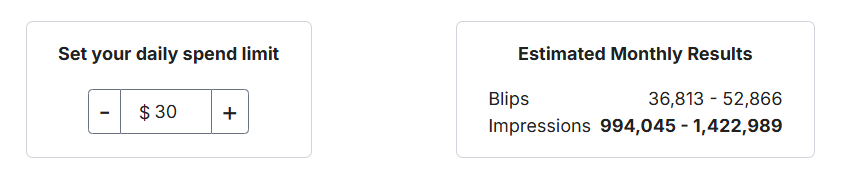
In Jacksonboro, billboard advertising with Blip is designed to fit your budget, because you only pay when your ad actually appears. Each “blip” is a 7.5-to-10-second display on a rotating digital billboard, and pricing starts at just $0.01 per display. You set a daily budget, and Blip’s algorithm uses it to bid for available ad space, with the cost per blip changing based on time of day, location, and advertiser demand.
Where can I advertise with Blip in Jacksonboro?
Jacksonboro’s billboard value comes from its position on U.S. 17 and its connection to S.C. 64, which links inland Colleton County with the coastal corridor. Nearby I-95 in Walterboro is also essential to the local advertising ecosystem, with exits 53, 57, 62, and 68 supporting fuel, lodging, food, pharmacies, and traveler services. If your goal is raw volume and traveler awareness, I-95 usually deserves a meaningful share of the plan.
What kind of traffic does Jacksonboro get for billboard ads with Blip?
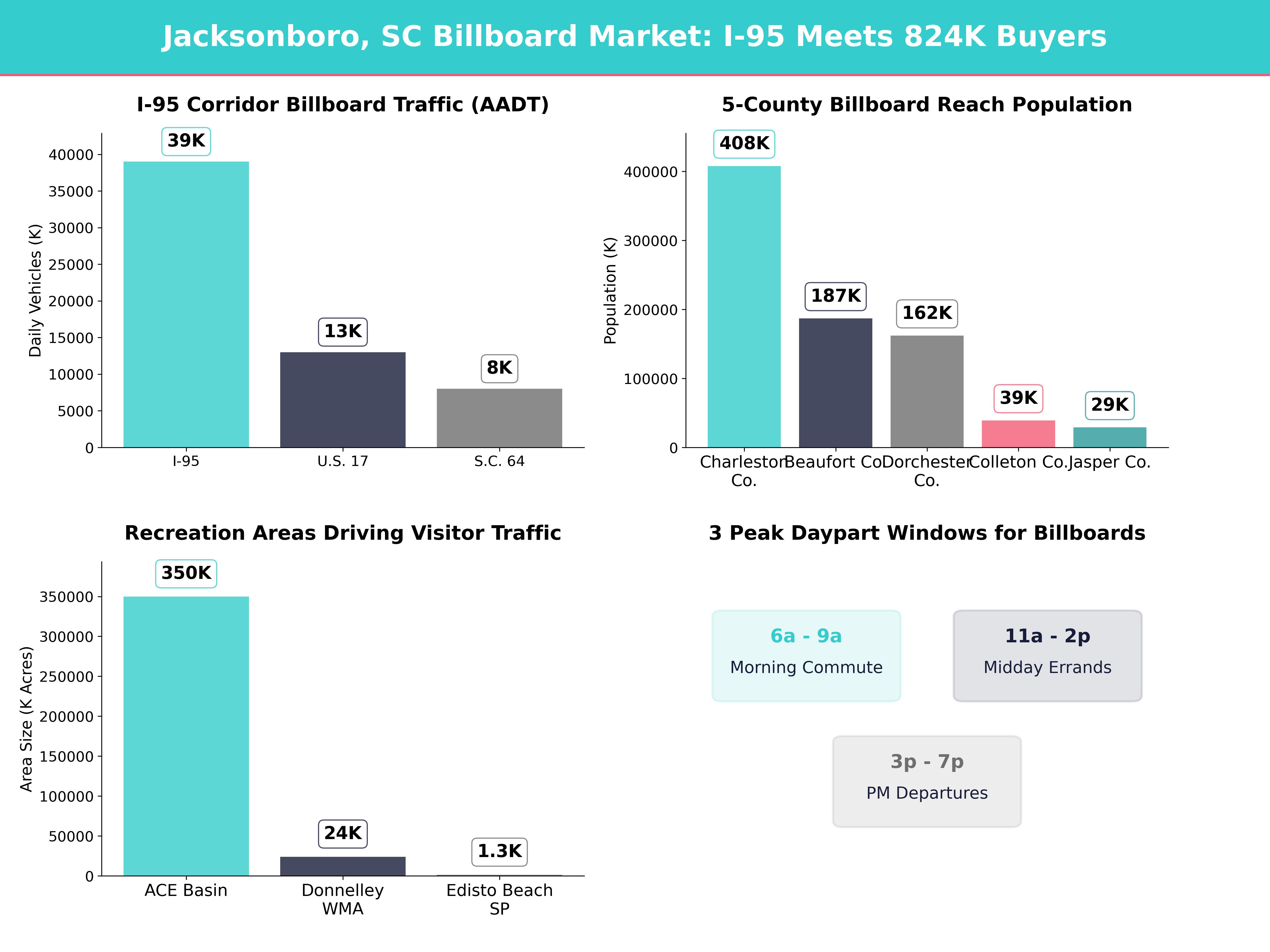
Nearby U.S. 17 segments around the Jacksonboro area generally show about 11,000 to 15,000 AADT, depending on the exact segment and count year. S.C. 64 near Jacksonboro commonly falls in the 6,000 to 10,000 AADT range, while nearby I-95 segments around Walterboro typically report traffic in the 34,000 to 43,000 AADT range. That gives digital billboards in and around Jacksonboro a useful mix of local frequency and passing reach.
When is the best time to run a billboard campaign in Jacksonboro?
Spring is one of the most attractive times for tourism and local events, and we especially like spring campaigns that run from March through May. From Memorial Day to Labor Day, leisure traffic becomes more important, and we recommend heavier delivery on Thursday afternoon through Sunday evening and during holiday weekends. Fall from September through November is also a smart time because outdoor traffic stays strong while some summer clutter drops off.
What businesses work best for Jacksonboro billboard advertising with Blip?
This area is especially relevant for healthcare, quick-service restaurants, convenience retail, legal services, home services, auto dealers, and tourism businesses. Jacksonboro also reaches family and education audiences, while healthcare advertisers benefit from the regional role of the 135-bed Colleton Medical Center. Outdoor, seafood, lodging, and traveler-focused campaigns can also perform well because the market sees both local and pass-through traffic.
Do I need a contract to advertise with Blip in Jacksonboro?
No, Blip has no long-term contracts or minimum commitments. You can start, pause, or stop your campaign at any time.
How fast can I launch a billboard campaign with Blip in Jacksonboro?
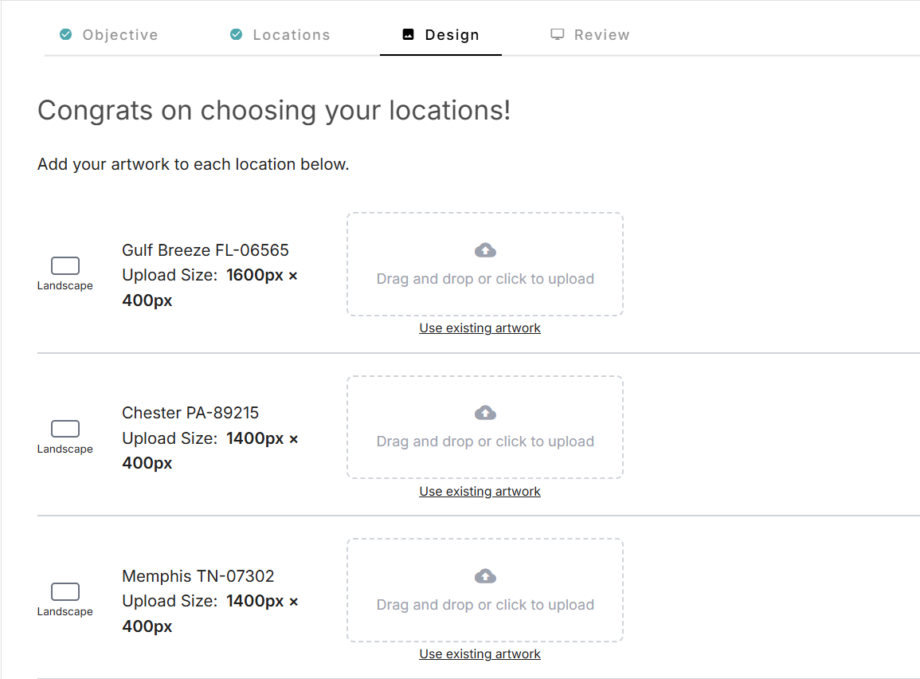
You can have your campaign live in minutes. Create a free account, select your locations, set your budget, upload your design, and start running once approved.
Where can I advertise with Blip in Jacksonboro?
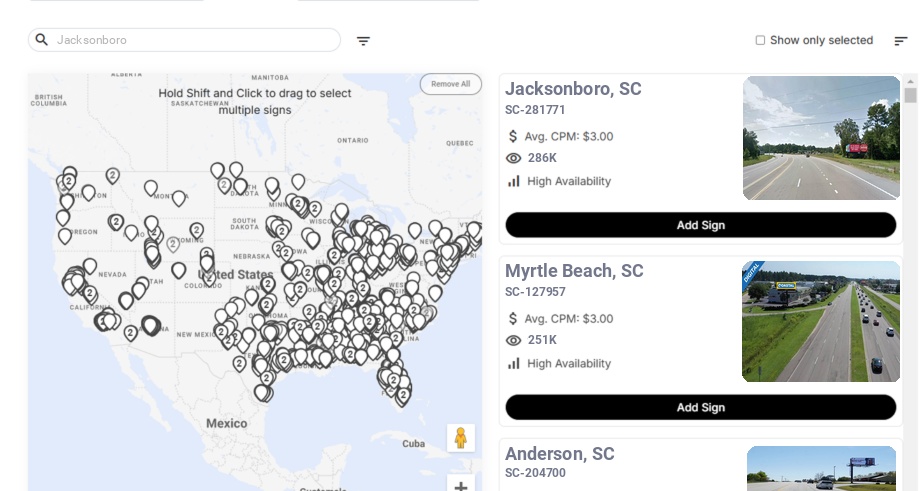
Blip has digital billboards in Jacksonboro. You can browse available locations on a map, choose the ones that fit your audience, and start advertising right away.
Still have questions? Launch a campaign in minutes — no contracts, no commitments.
Start Your CampaignJacksonboro Billboard Advertising Guide
Jacksonboro is a strong billboard market because it sits at a practical Lowcountry crossroads rather than relying on one dense downtown, with roughly 38,604 residents spread across about 1,056 square miles in Colleton County. We can reach local residents in Colleton County, beach and outdoor travelers heading through the ACE Basin, and regional drivers moving between Charleston Walterboro, Edisto Beach, Beaufort County, and Savannah South Carolina Revenue and Fiscal Affairs Office, Colleton County had 38,604 residents in the 2020 Census, and the county’s spread-out geography, at about 36.6 residents per square mile, makes car travel central to daily life. We also benefit from visitor traffic tied to the 350,000-acre ACE Basin and the broader South Carolina coast, with nearby corridors such as U.S. 17 and I-95 routinely carrying 11,000 to 15,000 AADT and 34,000 to 43,000 AADT respectively, which gives digital billboards in and around Jacksonboro a useful mix of local frequency and passing reach.
Jacksonboro Market Overview
Jacksonboro works best when we think of it as a gateway market. The community itself is small and unincorporated, but its billboard value comes from its position on U.S. 17 and its connection to S.C. 64, which links inland Colleton County with the coastal corridor.
Population, reach, and regional context around Jacksonboro
State demographic records from the South Carolina Revenue and Fiscal Affairs Office show that Colleton County had 38,604 residents in 2020. The same data series places nearby Charleston County at 408,235, Beaufort County at 187,117, Dorchester County 161,540, and Jasper County at 28,791. Together, those 5 counties total 824,287 residents, which matters because Jacksonboro intercepts movement between them even though its immediate population base is modest.
Colleton County covers roughly 1,056 square miles, which produces a population density of about 36.6 residents per square mile. That low density is important for out-of-home strategy because residents drive farther for work, healthcare, shopping, school, and recreation. In practical terms, we are not advertising to walkers or subway riders here. We are advertising to people in pickups, family SUVs, work vans, and tourist traffic.
Growth patterns and what they mean for advertisers
Jacksonboro also benefits from growth in surrounding counties. From 2010 to 2020, Charleston County grew 16.6%, Beaufort County grew 15.3%, Dorchester County 18.3%, and Jasper County grew 16.2%. During that same decade, Colleton County was essentially flat, declining about 0.7%.
For billboard advertisers, that mix is useful. We get the repetition and loyalty of a stable local market, and we also get access to expanding regional demand streams moving through the Lowcountry. That is especially relevant for categories such as healthcare, quick-service restaurants, convenience retail, legal services, home services, auto dealers, and tourism businesses.
Car dependence and local economic behavior
Jacksonboro is an auto-first market. In rural South Carolina counties like Colleton, well over 80% of workers commute by personal vehicle, and public transportation plays a much smaller role than it does in larger metros. That reality raises the value of roadside advertising because the road network is the medium.
We also have a service-hub economy centered on Walterboro, which is Colleton County’s county seat and largest city, with a population of 5,398. The county’s 4 municipalities are Walterboro, Edisto Beach, Cottageville, and Smoaks. Major local demand comes from healthcare, schools, government, logistics, agriculture, manufacturing, outdoor recreation, and visitor spending. Anchors such as the 135-bed Colleton Medical Center, the countywide Colleton County School District, and the 2-campus University of South Carolina Salkehatchie system give the area more year-round commercial activity than a casual map view might suggest.
Key Traffic Corridors for Jacksonboro Billboards
Jacksonboro’s travel patterns are dominated by a small number of roads, which is good news for billboard planning. When traffic concentrates onto a few routes, we can build strong reach with fewer well-chosen screens.
U.S. 17 through Jacksonboro
U.S. 17 is the defining route for Jacksonboro. It carries local residents, beach travelers, outdoor visitors, and regional drivers moving between the Charleston area and the southern Lowcountry. South Carolina Department of Transportation traffic count maps on nearby segments generally show about 11,000 to 15,000 AADT around the Jacksonboro area, depending on the exact segment and count year.
That volume is meaningful because the corridor is intent-rich. Drivers on U.S. 17 are often actively choosing destinations rather than just passing through at interstate speed. We like this corridor for:
- Restaurants, seafood, and convenience stops, because travelers are already thinking about the next stop.
- Outdoor brands, bait and tackle, boat dealers, and sporting goods, because the ACE Basin and coast shape trip purpose.
- Healthcare, legal, and home services, because local residents use U.S. 17 for regular life errands.
- Tourism, lodging, and attractions, because northbound and southbound traffic includes leisure travelers.
I-95 and the Walterboro access points
Even though Jacksonboro itself is not on Interstate 95, the interstate is essential to the local advertising ecosystem because Walterboro provides the county’s main I-95 service cluster. SCDOT count stations around Walterboro typically report traffic in roughly the 34,000 to 43,000 AADT range, again depending on the segment and year. That is the broadest-reach corridor in the local trade area.
The key Walterboro exits are 53, 57, 62, and 68. Those exits matter to billboard strategy because they support fuel, lodging, food, pharmacies, and traveler services. We see the strongest fit here for:
- Gas stations, c-stores, and quick-service chains.
- Hotels, RV parks, and family restaurants.
- Urgent care, hospitals, and pharmacies.
- Recruiting campaigns, especially for employers needing drivers, tradespeople, warehouse workers, or healthcare staff.
If our goal is raw volume and traveler awareness, I-95 usually deserves a meaningful share of the plan.
S.C. 64 between Walterboro and Jacksonboro
S.C. 64 is the bridge between inland Colleton County and Jacksonboro’s U.S. 17 junction. Nearby SCDOT counts commonly fall in the 6,000 to 10,000 AADT range as the road approaches Jacksonboro, with stronger volumes closer to Walterboro. This corridor is especially useful for campaigns that need repeated exposure to county residents.
We recommend S.C. 64 for advertisers that depend on local conversion rather than one-time tourist impressions. Good fits include:
- Medical and dental practices.
- Schools, workforce training, and community events.
- Grocery, hardware, and agricultural supply retailers.
- Banks, insurance agents, and legal offices.
Because S.C. 64 captures more routine local travel, it often performs well for advertisers that need familiarity and trust.
How corridor speed changes the strategy
Creative should match driving conditions. On I-95, where traffic commonly moves at 70 mph, we need shorter copy, bigger type, and a more immediate value proposition. On U.S. 17 and S.C. 64, where speeds are often lower and turns matter more, we can use directional cues, community names, and destination-oriented messages more effectively.
Audience Segments in Jacksonboro and the Lowcountry
The Jacksonboro market is not one audience. It is several overlapping groups with different trip purposes. The most effective campaigns build creative and timing around those differences.
Local commuters and household decision-makers
The first audience is everyday Colleton County traffic. With 38,604 county residents spread across 1,056 square miles, people routinely drive for school, shopping, work, healthcare, church, and recreation. Walterboro acts as the service center, while Jacksonboro serves as a route junction for many trips to and from the coast.
This audience is ideal for:
- Primary care, dental, and specialty healthcare.
- Local restaurants and retail.
- Home improvement, HVAC, plumbing, roofing, and auto repair.
- Financial, legal, and insurance services.
Because this segment sees the same roads repeatedly, frequency matters as much as reach.
Long-distance I-95 travelers
The second audience is interstate traffic using Walterboro as a stopover market. With nearby I-95 segments carrying roughly 34,000 to 43,000 vehicles per day, even a modest share of that traffic can create strong awareness for roadside businesses. Many of these travelers are families, retirees, snowbirds, truck drivers, and vacationers moving between the Northeast, Florida, Georgia, and the Carolinas.
This audience responds best to messages with immediate utility, such as fuel, food, lodging, healthcare, and clean rest stops. It also works well for attractions and tourism businesses that can persuade travelers to add a stop.
Outdoor visitors and eco-tourists
Jacksonboro is unusually strong for outdoor recreation advertising. The ACE Basin spans about 350,000 acres, making it one of the largest undeveloped estuaries on the East Coast. Nearby destinations include the roughly 24,000-acre Donnelley Wildlife Management Area, the 1,255-acre Edisto Beach State Park, the 35-acre Colleton State Park, and the approximately 600-acre Walterboro Wildlife Sanctuary.
That audience supports:
- Outdoor outfitters.
- Boat and marine services.
- Campgrounds, rentals, and lodging.
- Seafood restaurants and casual dining.
- Festivals, museums, and heritage tourism.
These visitors are especially valuable because they often travel in groups, spend across multiple categories, and rely heavily on roadside wayfinding.
Students, families, and healthcare users
Jacksonboro also reaches family and education audiences. The countywide Colleton County School District drives school-year traffic patterns, and USC Salkehatchie adds a college audience through its 2 campuses, including Walterboro. Healthcare advertisers benefit from the regional role of the 135-bed Colleton Medical Center, which serves a broad rural catchment area.
For these segments, billboard campaigns can promote enrollment, urgent care, wellness visits, sports physicals, continuing education, and family-oriented retail. The key is to emphasize convenience, trust, and location clarity.
Seasonal and Timing Opportunities in Jacksonboro
Seasonality matters in Jacksonboro because travel purpose changes sharply throughout the year. We can often improve efficiency by matching campaigns to seasonal behavior rather than running the same message every month.
Spring in Jacksonboro
Spring is one of the most attractive times for tourism and local events. The Colleton County Rice Festival is held each April in Walterboro, and spring weather also boosts boating, fishing, wildlife viewing, and day trips across the Lowcountry. This is a strong window for restaurants, outdoor recreation, attractions, nurseries, home improvement, and healthcare checkup messaging.
We especially like spring campaigns that run from March through May, because they catch both local renewal spending and early leisure travel.
Summer beach and family travel
From Memorial Day to Labor Day, leisure traffic becomes more important. Visitors head toward the coast, state parks, and vacation rentals, and weekend movement intensifies on U.S. 17 and connecting roads. Edisto Beach State Park and the broader Edisto Beach area help drive that seasonal pattern.
For summer, we recommend heavier delivery on:
- Thursday afternoon through Sunday evening.
- Late morning to early evening dayparts.
- Holiday weekends such as Memorial Day, Independence Day, and Labor Day.
This season is ideal for restaurants, convenience retail, grocery, lodging, beach gear, attractions, pest control, and emergency home services.
Fall hunting, heritage, and shoulder-season travel
Fall is a smart time to advertise in Jacksonboro because we keep outdoor traffic while shedding some summer clutter. From September through November, hunting, birding, fishing, football, and festival traffic support strong local movement. Creative can shift toward camo, blaze orange, comfort food, tailgate offers, and practical seasonal services.
This is also a strong season for home improvement, legal, medical screening, and recruiting campaigns, because local residents are back in more predictable routines.
Winter holiday and pass-through travel
Holiday traffic can be especially valuable near I-95. The stretch from Thanksgiving through New Year’s brings family travel, road trips, and service-stop spending. Restaurants, fuel, hotels, coffee, and convenience categories can perform well with simple, urgent creative.
We also watch weather and emergency timing closely. Hurricane season runs from June 1 through November 30, so advertisers in roofing, generators, insurance, pharmacies, grocery, and hardware can benefit from fast creative changes when conditions shift.
School and healthcare calendar timing
School calendars usually ramp in August and wind down in May or early June. That gives education, family retail, sports physicals, urgent care, and after-school businesses clear timing windows. Healthcare brands often benefit from back-to-school messaging in August, year-end deductible reminders in November and December, and wellness campaigns in January.
Billboard Design Tips for the Jacksonboro Market
Jacksonboro creative should feel like the Lowcountry, not like a generic national ad dropped onto a rural road. The audience notices authenticity.
Use Lowcountry visual language
We recommend creative that reflects what people actually see around Jacksonboro. Good local cues include marsh grass, tidal creeks, live oaks, shrimp boats, seafood platters, hunting gear, pickup trucks, docks, and coastal sunrises. Colors that often fit well here include marsh green, creek blue, sand beige, oyster-shell white, and sunrise orange.
For fall campaigns, blaze orange can work especially well for outdoor and hunting audiences. For summer, brighter aqua, coral, and sunlit blue tend to align better with beach traffic and vacation mood.
Keep the message tied to road intent
Road intent matters more than cleverness in this market. On I-95, we should lead with one clear promise, such as a hot meal, a clean room, a fuel stop, or an urgent service. On U.S. 17 and S.C. 64, we can be more place-specific by naming Jacksonboro, Walterboro, Edisto Beach, or the next turn.
We generally see stronger local performance when creative includes:
- 1 core message.
- 1 strong brand cue, such as a logo or product image.
- 1 clear action, such as “Next Right,” “Now Open,” or “Book Today.”
That structure is especially important at highway speed.
Match imagery to category and season
The most effective Jacksonboro designs feel relevant to why people are on the road. A seafood restaurant should not use a generic urban skyline when a shrimp plate or dockside scene will feel more native to the corridor. A hunting outfitter should not look like a suburban chain ad in October. A family clinic should feel clean, calm, and local rather than anonymous.
We also recommend swapping art seasonally. Summer creatives can emphasize beaches, cooling drinks, and family outings. Fall creatives can emphasize outdoor gear, comfort food, or local events. Holiday creatives can shift toward warmth, gifts, and travel convenience.
Regional Strategies Around Jacksonboro
The right Jacksonboro strategy depends on which sub-area we want to influence. We usually get better results by treating the market as several mini-zones rather than one uniform county.
Jacksonboro crossroads and U.S. 17 strategy
Jacksonboro itself is best for advertisers that benefit from destination choice. This includes restaurants, attractions, convenience retail, marine businesses, and local services that want visibility near decision points. Because U.S. 17 traffic is often purposeful and route-aware, directional copy and recognizable local landmarks matter more here than on the interstate.
This zone is especially effective when we want to capture:
- Northbound traffic toward Charleston County.
- Southbound coastal traffic toward Beaufort County and Savannah
- Local drivers connecting from inland Colleton County.
Walterboro and I-95 service economy strategy
If our priority is scale, we should lean harder into Walterboro and nearby I-95 inventory. This is the best sub-market for broad awareness, impulse stops, recruiting, and traveler services. Advertisers with multiple roadside categories, such as hotels, fuel, food, pharmacies, and convenience stores, often need this zone in the mix.
We also like Walterboro for countywide service brands because it functions as the area’s main commercial hub.
Edisto and ACE Basin leisure strategy
The corridor toward Edisto Beach, the ACE Basin, and Edisto Beach State Park should be approached as a leisure market. In that environment, our ads should feel helpful, scenic, and mood-aligned rather than purely transactional.
This strategy works well for:
- Vacation rentals.
- Casual and upscale dining.
- Outdoor retail.
- Fishing, boating, and ecotourism.
- Specialty food, beverages, and local experiences.
Charleston-bound and southbound regional strategy
We can also use Jacksonboro inventory to influence inter-county travel. Northbound creative should often speak to commuters, day-trippers, and service buyers heading toward the Charleston side of the Lowcountry. Southbound creative can lean more into tourism, stop planning, or coastal route messaging for travelers heading toward Beaufort and Savannah.
When we can customize by direction, the market becomes much more efficient.
Using Blip Effectively in Jacksonboro
Blip works well in Jacksonboro because the market has clear corridors, distinct travel intent, and strong seasonality. We can use that structure to make smarter buying decisions instead of spreading impressions too widely.
When manual selection makes the most sense in Jacksonboro
We like manual campaign setup when we know exactly which corridor matters. If we need U.S. 17 visibility near Jacksonboro, or if we want to focus on I-95 travelers near Walterboro, manual selection lets us stay close to that route logic. It is also useful when we want separate creative for northbound, southbound, local, and leisure traffic.
Manual selection is often best for:
- Grand openings.
- Route-specific retail.
- Healthcare with a defined patient draw area.
- Event and seasonal campaigns.
When Blip-optimized delivery fits better
Blip-optimized delivery makes more sense when our goal is broader regional awareness and we want the platform to find the most efficient mix across nearby inventory. In a market like Jacksonboro, that can be especially helpful for service brands, political campaigns, recruiting, healthcare, or tourism businesses that benefit from coverage across multiple road types.
We can let the platform balance local frequency and pass-through reach while we watch which corridors produce the strongest results.
Dayparting, testing, and budget pacing
Jacksonboro responds well to dayparting. We often recommend testing:
- 6 a.m. to 9 a.m. for local commuter and school traffic.
- 11 a.m. to 2 p.m. for restaurants, healthcare, and errand-driven trips.
- 3 p.m. to 7 p.m. for after-work traffic and weekend departures.
- Friday through Sunday for beach, outdoor, and leisure categories.
Because demand changes by season, we also like running 2 or 3 creative variants and comparing performance by route and timing. That approach is especially useful for advertisers deciding between a local-service message, a tourism message, and a traveler-stop message.
Getting Started With Billboard Rental in Jacksonboro
Renting a billboard around Jacksonboro is easier when we begin with movement, not municipal boundaries. The question is not just where Jacksonboro is on a map. The question is who is moving past the screen, why they are traveling, and what action we want next.
Start with the advertising objective
We recommend defining the goal first. In Jacksonboro, most campaigns fall into one of 4 buckets:
- Local awareness, for businesses serving Colleton County residents.
- Traveler capture, for food, fuel, lodging, and roadside services.
- Tourism demand, for attractions, rentals, dining, and outdoor recreation.
- Regional brand presence, for healthcare, recruiting, education, and legal services.
Once we know the goal, the right corridor usually becomes obvious.
Match billboard locations to route intent
We generally evaluate Jacksonboro-area screens in three steps.
First, we ask whether the best audience is local, pass-through, or leisure-driven. Second, we identify whether U.S. 17, S.C. 64, or I-95 best matches that audience. Third, we decide whether the campaign needs broad coverage or a small group of highly relevant screens.
As a simple rule:
- If we need county residents, we usually prioritize S.C. 64 and Walterboro-linked routes.
- If we need tourists and outdoor travelers, we usually prioritize U.S. 17 and coastal connectors.
- If we need maximum scale fast, we usually prioritize I-95 near Walterboro.
Expect a simpler process than traditional billboard buying
Traditional billboard buying often involves long lead times, fixed packages, and limited flexibility. Jacksonboro is a market where that old model can be especially inefficient, because timing matters so much. Beach weekends, spring festivals, hunting season, holiday travel, and school calendars do not all deserve the same spend pattern.
With Blip, we can start small, shift budget quickly, rotate seasonal creative, and compare corridor performance without locking ourselves into a rigid multi-week commitment. That makes it much easier to test whether our best result comes from U.S. 17 destination traffic, I-95 volume, or S.C. 64 local repetition.
Launch, learn, and refine
We usually recommend a test period of 2 to 4 weeks with clear local hypotheses. We can compare weekdays to weekends, Walterboro to Jacksonboro, or tourism creative to local-service creative. Once the early data shows which route and time windows are working, we can scale the stronger pattern and cut the weaker one.
That is the practical advantage of digital billboard rental in a place like Jacksonboro. We do not need to guess once and hope. We can use the local realities of 38,604 county residents, 11,000 to 15,000 daily vehicles on U.S. 17 near town, and 34,000 to 43,000 daily vehicles on I-95 near Walterboro to build a smarter, more responsive campaign.