Billboards in Haltom City, TX
No Minimum Spend. No Long-Term Contracts. Just Results.
Trusted by Leading Brands


Billboard advertising
in Haltom City has never been easier
How much is a billboard in Haltom City?
Why Choose Blip for Billboard Advertising in Haltom City
Use Blip in Haltom City to launch fast on Loop 820 and Denton Hwy commuter flow—no broker, just self-serve control.
Haltom City budgets stay flexible with Blip, so you can test ads on I-820 and SH 121 traffic without long contracts or minimums.
Daypart your Haltom City blips for 4:30-6 a.m. trades and 3-6:30 p.m. commuters heading to Fort Worth, Meacham, and I-35W.
Track Haltom City performance in real time and shift spend as weekday commute peaks beat weekend traffic on US 377 and Beach Street.
Blip's creative tools help you build bold, bilingual Haltom City ads for young families, renters, and Birdville ISD school traffic.
Frequently Asked Questions About Billboard Advertising in Haltom City
How much does a billboard cost near Haltom City, Texas with Blip?
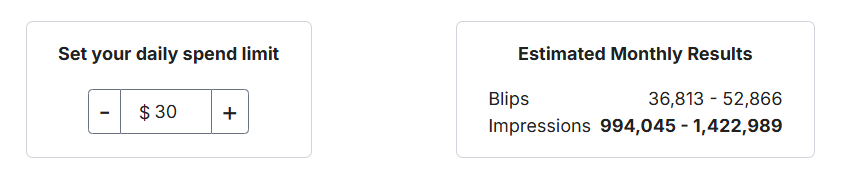
With Blip, you choose your own daily budget for Haltom City billboards, and our system automatically keeps your campaign within that amount, so you stay in control from day one. Each ad is a short 7.5 to 10-second "blip" on rotating digital billboards near Haltom City, Texas, and you only pay per blip, similar to pay-per-click online ads. Your total cost is simply the sum of all the individual blips you receive over time, and you can adjust your budget whenever you like.
Where can I advertise with Blip near Haltom City, Texas?
The Haltom City area sits at the heart of northeast Tarrant County’s growth corridor, sandwiched between downtown Fort Worth’s logistics hub and the Dallas–Fort Worth International Airport region. With two nearby digital billboards in Fort Worth serving the Haltom City area, advertisers can tap into dense commuter traffic, blue-collar and white-collar workers, and family neighborhoods. For brands specifically looking for billboards near Haltom City, this cluster offers a cost-efficient way to blanket the local market while still capturing regional traffic.
What kind of people do Haltom City billboards reach?
The Haltom City area is demographically diverse and economically mixed. Nearly 28–30% of residents are under 18, and roughly 55–60% are under 35, supporting messages appealing to young families, early-career tradespeople, and service workers. Haltom City and northeast Fort Worth have a strong Hispanic community alongside other multicultural populations, and in the city and nearby ZIP codes, Hispanic or Latino residents account for roughly 45–50% of the population.
What highways and traffic patterns make Haltom City a good market for billboard ads?
Drivers in the Haltom City area rely heavily on a few major corridors, many of which feed into or pass close to the Fort Worth billboards. I‑820 carries well over 100,000 vehicles per day on some segments, SH 121 / SH 183 can see 130,000–150,000 vehicles daily, and I‑35W carries 150,000+ vehicles per day through north Fort Worth. Because the digital billboards are in Fort Worth about 4 miles from Haltom City, they intercept commuters, airport workers, logistics traffic, and shoppers headed into regional retail clusters.
When is the best time to run Blip ads in the Haltom City area?
Timing is one of the biggest strategic levers when buying digital blips in the Haltom City area. Weekday AM and PM commute windows are especially strong for reaching workers, while Saturdays are strong for shopping, entertainment, auto dealerships, and events. Many households are on biweekly or weekly pay cycles, so concentrating impressions around Fridays and the 1st/15th of the month can also support retail and automotive conversions.
Do I need a contract to advertise with Blip in Haltom City?
No, Blip has no long-term contracts or minimum commitments. You can start, pause, or stop your campaign at any time.
How fast can I launch a billboard campaign with Blip in Haltom City?
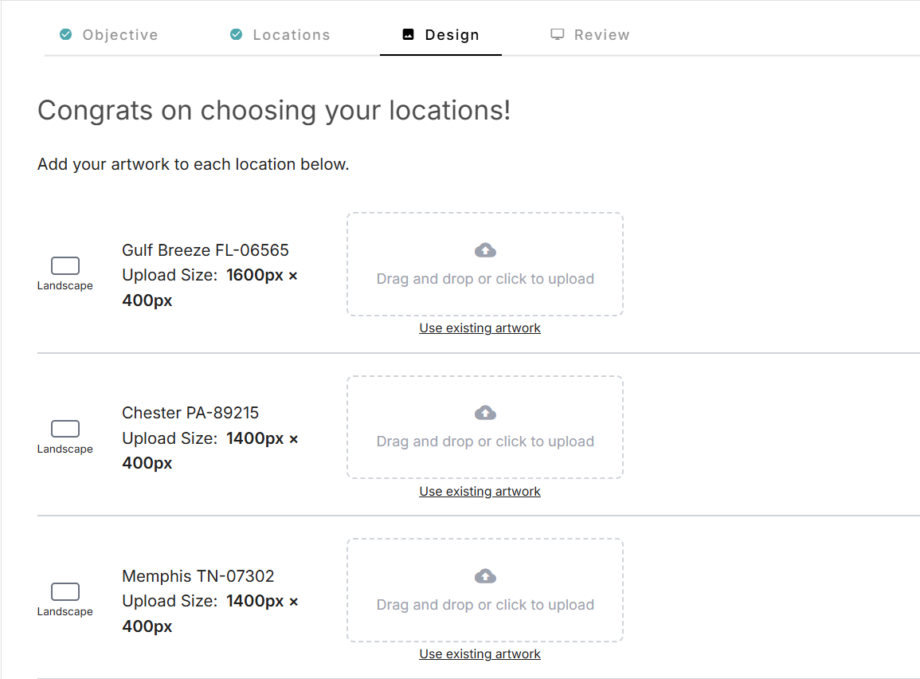
You can have your campaign live in minutes. Create a free account, select your locations, set your budget, upload your design, and start running once approved.
Where can I advertise with Blip in Haltom City?
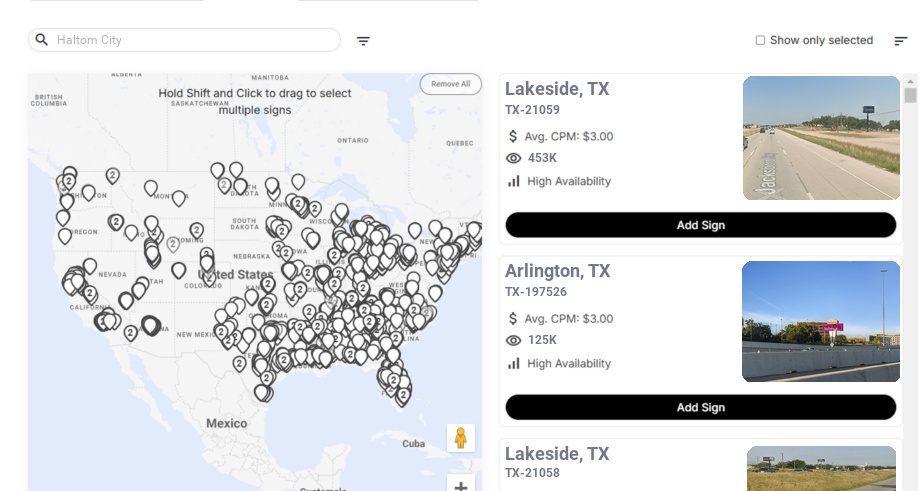
Blip has digital billboards in Haltom City. You can browse available locations on a map, choose the ones that fit your audience, and start advertising right away.
Still have questions? Launch a campaign in minutes — no contracts, no commitments.
Start Your CampaignHaltom City Billboard Advertising Guide
The Haltom City area sits at the heart of northeast Tarrant County’s growth corridor, sandwiched between downtown Fort Worth AllianceTexas logistics hub, and the Dallas–Fort Worth International Airport region. With two nearby digital billboards in Fort Worth serving the Haltom City area, advertisers can tap into dense commuter traffic, blue‑collar and white‑collar workers, and family neighborhoods—often at a fraction of the cost of larger metro cores. For brands specifically looking for billboards near Haltom City, this cluster offers a cost‑efficient way to blanket the local market while still capturing regional traffic.
Understanding the Haltom City Area Market
Haltom City is a compact but heavily traveled community in northeast Tarrant County. A few key numbers to frame your strategy when planning Haltom City billboards or broader campaigns that target the surrounding area:
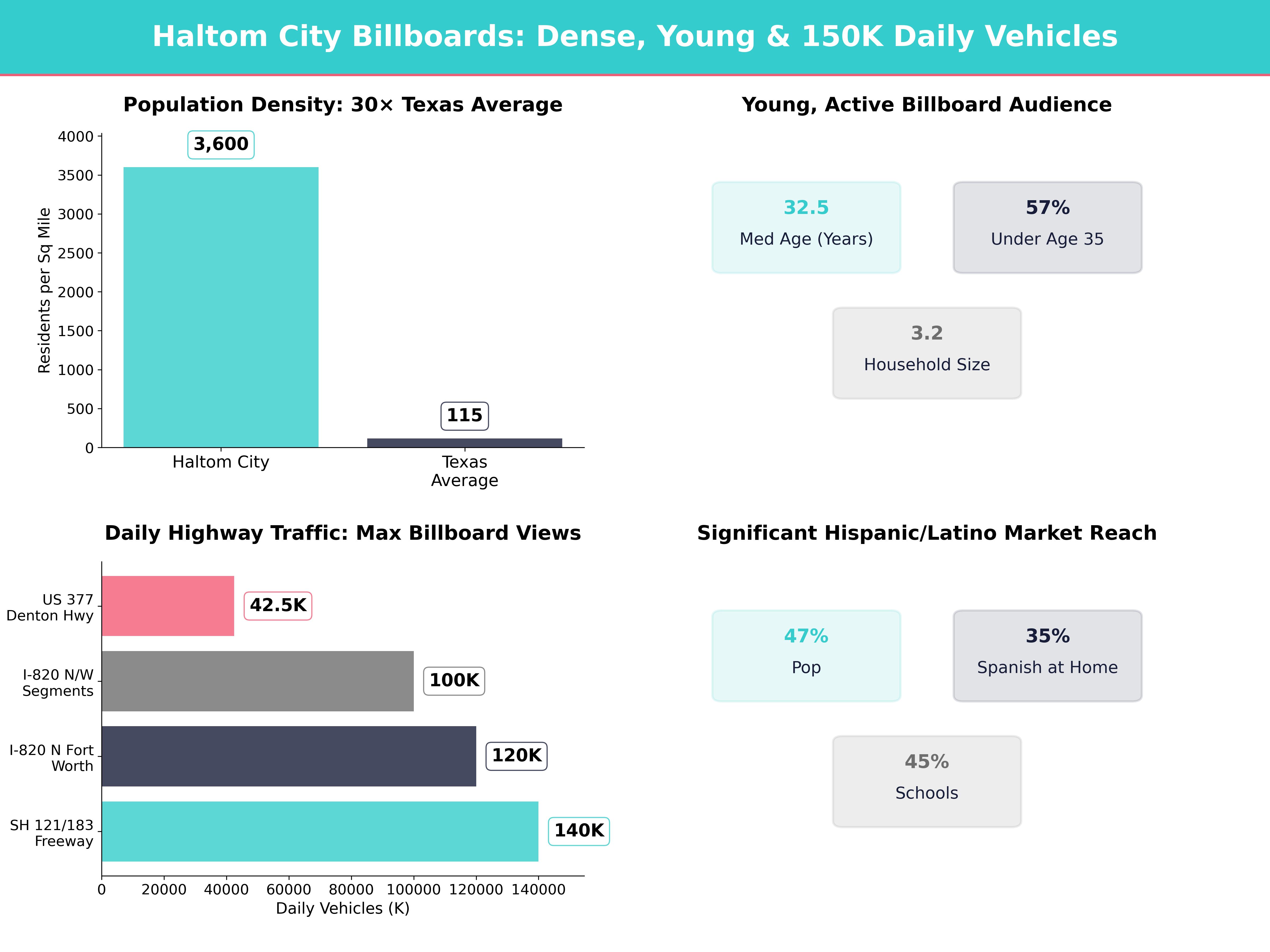
- Haltom City’s population is roughly 46,000–47,000 residents, packed into just 12.4 square miles—over 3,600 residents per square mile, compared with roughly 115 residents per square mile statewide. This makes the city more than 30 times denser than the Texas average, ideal for location‑based awareness.
- The broader Tarrant County region, of which Haltom City is a part, has surpassed 2.2 million residents, adding more than 300,000 people since 2010 and ranking among the top 10 fastest‑growing large counties in the U.S.
- The median age in the Haltom City area is around 32–33, compared with a U.S. median around 38–39. Nearly 28–30% of residents are under 18, and roughly 55–60% are under 35, supporting messages appealing to young families, early‑career tradespeople, and service workers.
- Median household income in Haltom City sits in the $60,000–$65,000 range, compared with roughly $76,000–$78,000 countywide. Around 40–45% of households earn under $50,000, while a meaningful share—about 20–25%—earns above $100,000, indicating both value‑driven and aspirational offers can perform well.
- Homeownership rates hover around 55–60%, with 40–45% of households renting. That renter share is several points higher than many nearby suburbs, which supports campaigns for apartments, rental furniture, and services that do not require long‑term commitments.
- Educational attainment is mixed: roughly 75–80% of adults have at least a high school diploma, and about 15–20% hold a bachelor’s degree or higher, compared with about 32–35% nationally, reinforcing the importance of clear, direct calls to action and price‑forward offers.
- The labor force is strongly tied to service, logistics, and trades: in the broader Fort Worth–Arlington area, over 22% of jobs are in trade, transportation, and utilities, about 13–15% in manufacturing and construction, and roughly 18–20% in education and healthcare.
Local resources that help define the area’s priorities and projects include the City of Haltom City Tarrant County, and community‑facing programs and recreation are detailed on the Haltom City Parks & Recreation
For advertisers, the real opportunity is not only Haltom City residents themselves, but also the tens of thousands of drivers passing between northeast Tarrant suburbs, downtown Fort Worth, and the airport/industrial zones each day. In the Dallas–Fort Worth metro, workers face an average commute of 28–29 minutes, and over 75% drive alone to work—creating sustained exposure windows on key highways. Our two nearby digital billboards in Fort Worth position your message squarely in that flow of daily life, acting as highly visible billboards near Haltom City that can support both local and regional campaign goals.
Key Corridors and Traffic Patterns Serving the Haltom City Area
Drivers in the Haltom City area rely heavily on a few major corridors, many of which feed into or pass close to our Fort Worth billboards:
- I‑820 (Loop 820) – This beltway is the backbone of local traffic, carrying well over 100,000 vehicles per day on some segments north and west of Haltom City; certain stretches in north Fort Worth routinely exceed 120,000 average daily vehicles. It connects the Haltom City area with North Richland Hills, Hurst, and western Fort Worth.
- SH 121 / SH 183 (Airport Freeway) – A critical east‑west spine for commuters traveling between Fort Worth and the Mid‑Cities toward DFW International Airport. Select segments see 130,000–150,000 vehicles daily, feeding airport workers, business travelers, and freight.
- US 377 (Denton Highway) – A major arterial for residents of Haltom City, Watauga 40,000–45,000 vehicles per day on key segments, with strong weekday peaks aligned to school and work schedules.
- Riverside Drive / Beach Street – Heavily used for local north‑south trips, shopping, and access to residential areas, often carrying 20,000–30,000 vehicles per day in combined directions.
- I‑35W (just west of Haltom City) – A major freight and commuter corridor carrying 150,000+ vehicles per day through north Fort Worth, linking the AllianceTexas logistics hub, the Meacham International Airport
Because our digital billboards are in Fort Worth about 4 miles from Haltom City, they intercept:
- Haltom City residents commuting into downtown Fort Worth and the Fort Worth Medical District 50,000–60,000 workers are concentrated across hospitals, offices, and public institutions.
- Workers traveling to logistics and industrial centers near Meacham International Airport and the I‑35W corridor, which together support tens of thousands of freight, warehouse, and aviation‑related jobs.
- Shoppers and diners headed to regional retail clusters in Fort Worth, including major centers along I‑35W, Loop 820, and near the Fort Worth Stockyards, which attract over 10 million visitors annually according to Visit Fort Worth.
To design a high‑impact campaign, we recommend cross‑referencing your store or service locations with these corridors and thinking about how your billboard advertising near Haltom City can intercept these flows. For example:
- If your business is north of Haltom City near Watauga or Keller, emphasize north‑south commuters and evening drive times; north Tarrant corridors see pronounced PM peaks, with hourly volumes often doubling compared with late morning.
- If you depend on customers from downtown Fort Worth and the Stockyards, focus on I‑35W and I‑820 flows and time your ads for inbound morning and outbound afternoon peaks, when combined traffic on those routes can exceed 10,000 vehicles per hour.
Traffic and mobility insights are frequently discussed in resources like Tarrant County’s transportation pages City of Fort Worth’s transportation and public works department, and the North Central Texas Council of Governments transportation site, which together provide context on ongoing road projects, traffic counts, and growth nodes.
Who You’re Reaching in the Haltom City Area
The Haltom City area is demographically diverse and economically mixed. When planning creative and targeting through Blip, consider these major audience segments that your Haltom City billboards are likely to reach:
-
Young Families and Renters
- Average household size in Haltom City is about 3.1–3.2 people, vs. around 2.6 nationally, with roughly 35–40% of households including children under 18.
- Renting remains common: approximately 40–45% of occupied housing units are renter‑occupied, a share that outpaces many nearby suburbs. This supports campaigns for apartments, rent‑to‑own furniture, family entertainment, QSR, and discount retail.
- Area schools in Birdville ISD serve more than 23,000 students, and school calendars and sports seasons drive predictable surges in family travel.
- Family‑centric calls to action (“Family meal under $20,” “Free kids’ admission,” “Back‑to‑school savings”) tend to perform well, especially when aligned with school start and release times.
-
Trades, Industrial, and Service Workers
- The Fort Worth–Arlington metro includes more than 160,000–170,000 workers in construction, manufacturing, transportation, and warehousing, with thousands commuting daily through northeast Tarrant corridors.
- Nearby employment hubs—the Alliance logistics area, Meacham International Airport, and the I‑35W industrial corridor—host large employers and distribution centers that operate on early morning and late‑afternoon shifts.
- These workers often commute through or near the Haltom City area as early as 4:30–6:00 a.m. and again around 3:00–6:30 p.m. Emphasize work‑related offers, such as hardware, safety gear, fleet services, industrial supplies, or paycheck‑timed promotions (e.g., “Friday payday specials”).
-
Bilingual and Multicultural Audiences
- Haltom City and northeast Fort Worth have a strong Hispanic community alongside other multicultural populations. In the city and nearby ZIP codes, Hispanic or Latino residents account for roughly 45–50% of the population.
- In some nearby neighborhoods, Spanish is spoken at home in 30–40% of households, and in certain school zones, bilingual enrollment rates approach 40–50%.
- Bilingual or Spanish‑forward creative can significantly boost relevance for healthcare, financial services, education, and retail. Rotating English/Spanish creatives allows you to test headline phrasing and offers with different segments.
-
Commuters to Downtown Fort Worth and the Medical District
- Downtown Fort Worth and the Medical District collectively support an estimated 80,000–100,000 jobs, with high concentrations in finance, government, legal, healthcare, and higher education.
- The City of Fort Worth regularly reports employment and development growth in these areas, supported by ongoing projects and public‑private investment.
- Campaigns for professional services, higher education, cultural events, and dining can be scheduled around standard office hours and hospital shift changes: 6–8 a.m., 11 a.m.–1 p.m., and 4–7 p.m.
By pairing these segments with Blip’s flexible scheduling, we can align creatives with when these audiences are most likely to be on the road and make sure your billboard advertising near Haltom City is seen at the right moments.
Crafting High‑Impact Creative for the Haltom City Area
Drivers near Haltom City spend much of their time on high‑speed corridors with complex interchanges. On stretches of I‑820 and I‑35W, posted speeds are 60–70 mph, and real‑world speeds often run higher in off‑peak hours, leaving just 6–8 seconds of viewing time for a digital billboard. That means:
- Simplicity wins. Aim for 6–8 words max, plus a clear logo and short URL or easy CTA. Industry data shows that boards with 7 words or fewer can see 30–40% higher recall than copy‑heavy designs.
- Big contrast and bold color blocks. Much of the environment is concrete, signage, and big‑box retail. High‑contrast palettes (dark background with bright text or vice versa) cut through visual clutter and can improve legibility by 20–25% at highway speeds.
- Local cues matter. Phrases like “Off Loop 820,” “Just south of Denton Hwy,” or “10 minutes from Haltom City” help drivers connect your message to an actionable route. Wayfinding‑style cues are especially powerful for businesses within 1–3 miles of major exits.
- Price and value forward. Given the area’s income mix, front‑and‑center offers such as “Oil Change $39.99,” “Payments from $199/mo,” or “No‑credit‑check financing” can lift response and are more likely to be remembered after a 20–30 minute commute.
- Bilingual options. For campaigns aimed at households in north and east Fort Worth, consider alternating English and Spanish creatives. With Blip, you can rotate multiple creatives on the same board and test language combinations quickly, tracking results with separate URLs or promo codes.
We also recommend leaning into community‑first positioning:
- Highlight support of local schools and sports in the Haltom City area (e.g., “Proud to support Haltom Buffs & local athletes”), leveraging the fact that high‑school events can draw 3,000–6,000 attendees on Friday nights.
- Reference community landmarks and nearby attractions, such as The Haltom Recreation Center, neighborhoods off Denton Highway, or regional draws promoted by Visit Fort Worth. Localized creative has been shown in many markets to increase ad relevance scores and brand favorability by 10–20%.
Timing Your Campaign with Blip’s Scheduling Tools
Because you’re buying digital “blips” instead of fixed monthly contracts, timing is one of your biggest strategic levers. In the Haltom City area, consider:
Weekday vs. Weekend
Traffic data for North Texas shows that Monday–Friday can see 30–40% more vehicle trips than weekend days on key commuter corridors:
-
Weekday AM (5:30–9:00 a.m.)
- Best for: coffee, breakfast, fuel, auto services, construction equipment, and B2B services.
- Target: commuters from Haltom City heading toward downtown Fort Worth, the Medical District, Meacham, and I‑35W logistics zones. Peak volumes often occur between 7:00–8:30 a.m.
-
Weekday PM (3:30–7:00 p.m.)
- Best for: family dining, retail, big‑box stores, grocery, after‑school programs, and healthcare clinics.
- Target: returning workers, caregivers picking up children, and shoppers detouring to run errands. PM peaks on Loop 820 and I‑35W can equal or exceed morning peaks, with some segments carrying 8,000–10,000 vehicles per hour.
-
Midday (10:00 a.m.–3:00 p.m.)
- Best for: older adults, stay‑at‑home parents, remote workers, and service appointments (dental, medical, banking).
- Traffic is lighter but less rushed, which can benefit awareness campaigns and message‑heavy creatives. This window often sees 20–30% lower congestion, improving dwell time and attention.
-
Weekends
- Saturdays are strong for shopping, entertainment, auto dealerships, and events, with major retail corridors seeing foot‑traffic jumps of 30–50% compared with weekdays.
- Sundays can be ideal for church promotions, restaurants, and family outings, particularly between 9:00 a.m.–2:00 p.m. and 4:00–8:00 p.m.
Payday and Event‑Driven Timing
- Many households in the Haltom City area are on biweekly or weekly pay cycles. Concentrating impressions around Fridays and the 1st/15th of the month supports retail and automotive conversions; numerous retailers report 10–20% higher sales on these key days.
-
Use Blip’s calendar tools to spike impressions before big local events, such as:
- High school football and sports seasons across Birdville ISD
- Festivals and parades promoted by the City of Haltom City events calendar
- Major attractions and events near downtown promoted by Visit Fort Worth, which include marquee happenings at the Fort Worth Stock Show & Rodeo, concerts, and cultural festivals that can draw tens of thousands of attendees.
Geographic Targeting Strategies Near Haltom City
With two digital boards in Fort Worth serving the Haltom City area, we can tailor campaigns based on where your customers originate and how you want your billboard rental near Haltom City to function in your broader media mix:
-
Haltom City–Centric Retailers and Services
- Focus on boards that catch north–south traffic heading to and from neighborhoods around Denton Highway, Haltom Road, and Belknap, which together serve tens of thousands of residents within a 5‑mile radius.
- Messaging: “Turn east at Loop 820,” “5 minutes from Denton Hwy & 820,” or “Near Belknap & Beach.” Adding distance markers like “2 lights ahead” or “Exit now” can improve response rates in proximity campaigns.
-
Fort Worth‑Facing Businesses
-
If your location is closer to downtown or the Near Northside, use creatives that speak both to Haltom City area residents and to downtown workers:
- “On your way to downtown Fort Worth”
- “Easy stop on your commute from Haltom City to downtown”
- Downtown Fort Worth draws more than 9 million annual visitors for work, dining, and events, according to Visit Fort Worth
-
If your location is closer to downtown or the Near Northside, use creatives that speak both to Haltom City area residents and to downtown workers:
-
Regional and Online Brands
-
For e‑commerce, regional healthcare, or recruiting campaigns, showcase benefits relevant across the Northeast Tarrant and Fort Worth region:
- “Now hiring in the Haltom City area & Fort Worth”
- “Free delivery across Tarrant County”
- Tarrant County’s workforce exceeds 1 million people, with more than 65–70% commuting within the county, so region‑wide offers can tap a very broad audience without needing hyper‑local specificity.
-
For e‑commerce, regional healthcare, or recruiting campaigns, showcase benefits relevant across the Northeast Tarrant and Fort Worth region:
Because Blip allows campaign‑level control, you can:
- Run test flights on specific boards to see which locations deliver stronger engagement or store traffic over a 2–4 week period.
- Allocate more budget to the top‑performing boards and dayparts after a 2–4 week learning period, a window that typically yields a statistically meaningful view of performance trends for small and mid‑size advertisers.
Measuring Success and Optimizing in the Haltom City Area
Digital billboard campaigns in the Haltom City area work best when tied to clear, trackable outcomes. We recommend:
-
Directional URLs or promo codes
- Example:
YourBrand.com/Haltomor codeHALTOM10to distinguish responses from this campaign. - Many advertisers see 10–30% of redemptions tied to such codes when they are clearly visible on creatives and used across both out‑of‑home and digital channels.
- Example:
-
Time‑bound offers
- “This weekend only,” “Ends Sunday,” or “Book by Friday” to motivate commuters who see your message multiple times in a week. Time‑limited language can increase conversion urgency by 15–25% in retail and service categories.
-
Geo‑focused digital support
- Pair your Blip campaign with geofenced social or search ads targeting the Haltom City and northeast Fort Worth ZIP codes (for example, 76117, 76118, 76137, 76148).
- Watch for lift in impressions, web traffic, and store visits around when your blips are scheduled. Many businesses observe 10–20% increases in branded search and website sessions during heavy out‑of‑home flights.
Local media such as the Fort Worth Star‑Telegram, NBC DFW, and WFAA often spotlight retail trends, development, and neighborhood shifts in northeast Tarrant County—use these sources to track which parts of the market are heating up and adjust your targeting accordingly for ongoing billboard advertising near Haltom City.
Creative Ideas by Industry for the Haltom City Area
Here are some tailored concepts, grounded in what we know about the Haltom City area:
-
Auto Repair & Tire Shops
- Message: “Stuck in traffic on Loop 820? Don’t risk that engine light. Exit at [Your Exit] – [Your Shop Name].”
- Timing: Morning and evening peak commute times, Monday–Friday, when daily vehicle counts can exceed 100,000 on key segments.
- Enhancement: Add “Walk‑ins in under 30 minutes” or “Open 7 a.m.–7 p.m.” to speak to commuters’ tight schedules.
-
Quick‑Service Restaurants & Local Eateries
- Message: “Family meals under $25 – 5 min from Haltom City off Denton Hwy & 820.”
- Add rotating slides for lunch specials vs. dinner bundles. Lunch spend can account for 30–35% of daily sales, while evening family meals can drive 40–50%.
- Highlight speed: “Order online – pickup in 10 minutes” to capture busy commuters.
-
Healthcare & Dental Clinics
- Message (bilingual): “New patient special / Especial para pacientes nuevos – Same‑day appointments near Haltom City.”
- Run heavily on weekdays 9:00 a.m.–4:00 p.m., when appointment availability is higher and traffic is less congested.
- Note that in Tarrant County, uninsured rates can hover around 18–20%, so emphasizing affordable visits, payment plans, or sliding scales can resonate.
-
Home Services (HVAC, Roofing, Plumbing)
- Message: “Serving homes across the Haltom City area – 24/7 emergency service.”
- Boost impressions during severe weather seasons and after storms, when local news alerts from outlets like NBC DFW drive concern. North Texas routinely experiences 30–60 thunderstorm days per year, and hail events can generate spikes in roofing and insurance inquiries of 200–300%.
-
Education & Training Programs
- Message: “Trade careers in 12 months – Classes near Fort Worth & the Haltom City area.”
- Align spends with high school graduation periods and back‑to‑school seasons, when interest in training programs can rise 20–40%.
- Consider partnerships or co‑mentions with regional institutions like Tarrant County College, which serves more than 40,000 credit students annually across its campuses.
Navigating Local Regulations and Community Expectations
While our digital billboards are located in Fort Worth, your messaging ultimately reflects on how residents in the Haltom City area perceive your brand. We suggest:
- Staying aware of local guidelines and community tone via the City of Haltom City City of Fort Worth websites. Both cities publish zoning, sign ordinances, and corridor plans that influence how residents think about growth and advertising near their neighborhoods.
- Monitoring public meetings and planning updates through resources like the Haltom City City Council agendas Fort Worth City Council pages
- Avoiding content that might clash with school‑oriented or family‑heavy corridors (e.g., overly edgy visuals near routes commonly used for school drop‑off). In Birdville ISD and surrounding districts, buses carry thousands of students daily on these same arterial roads.
- Highlighting community support—sponsorships, local hiring, donations, and partnerships—with clear, concise statements (“Hiring locally in the Haltom City area,” “Supporting local schools & youth sports”). Community‑support messaging has been shown in some studies to improve brand favorability by 10–15% among local residents.
Putting It All Together
To maximize your impact on digital billboards serving the Haltom City area, we recommend this step‑by‑step approach for any advertiser considering billboard rental near Haltom City:
- Define your core audience (families, commuters, tradespeople, bilingual households, etc.), using local data such as age, income, and language to sharpen who you’re speaking to.
- Choose priority corridors and times based on where and when they drive (e.g., Loop 820 commuters, Denton Highway shoppers, I‑35W industrial workers), matching your schedule to high‑volume periods that can exceed 8,000–10,000 vehicles per hour.
- Build 2–4 bold creatives with highly legible text, strong contrast, and clear offers—consider bilingual versions and test short, price‑forward headlines.
- Launch with a test phase across our two nearby Fort Worth boards, spanning different dayparts and weekdays vs. weekends for at least 2–4 weeks to gather directional performance data.
- Track performance with unique URLs, codes, or call tracking tied specifically to the Haltom City area. Watch for changes in web traffic, calls, form fills, or store visits during active flight periods.
- Optimize placements and schedules on Blip based on what you learn, concentrating budget where responses are strongest and adjusting messages to reflect seasonal patterns, local events, and pay cycles.
By aligning your creative, timing, and targeting with the real daily rhythms of the Haltom City area, you can use Blip’s flexible digital billboards near Haltom City to reach residents, workers, and shoppers at exactly the right moments—without needing a traditional, long‑term billboard contract.