Billboards near Fort Hood, TX
No Minimum Spend. No Long-Term Contracts. Just Results.
Trusted by Leading Brands


Billboard advertising
near Fort Hood has never been easier
How much is a billboard near Fort Hood?
Why Choose Blip for Billboard Advertising near Fort Hood
Blip lets you launch fast on Fort Hood area boards near I-14/US-190 and WS Young—perfect for reaching Killeen commuters without a sales rep.
Use flexible budgets in the Fort Hood area to test messages around payday spikes, PCS season, and weekend traffic near the Killeen Mall corridor.
No contracts mean you can run short bursts in the Fort Hood area for deployment returns, homecomings, or new-arrival offers near Clear Creek Road.
Track results in real time as your Fort Hood area campaign reaches soldiers, families, and contractors moving between the post and central Killeen.
Blip's creative tools make it easy to tailor Fort Hood area ads for TRICARE, military discounts, or quick-service offers that fit the 5-second drive-by.
Frequently Asked Questions About Billboard Advertising near Fort Hood
How much does a billboard cost near Fort Hood, Texas with Blip?
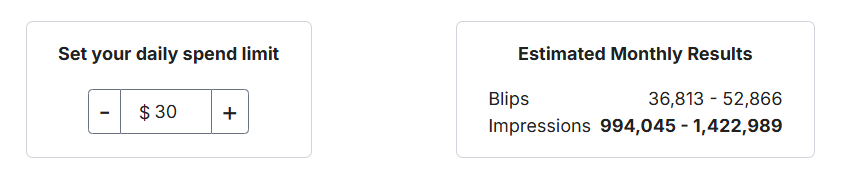
With Blip, Fort Hood billboards are surprisingly affordable because you only pay per “blip,” a 7.5–10 second ad display on digital billboards serving the Fort Hood area. You set your own daily budget, and Blip automatically keeps your campaign within that limit, so you stay in control no matter how big or small your budget is. The cost of billboards near Fort Hood, Texas varies based on when and where your ads run, as well as advertiser demand, and you can adjust your budget any time to increase or decrease your presence.
Where can I advertise with Blip near Fort Hood, Texas?
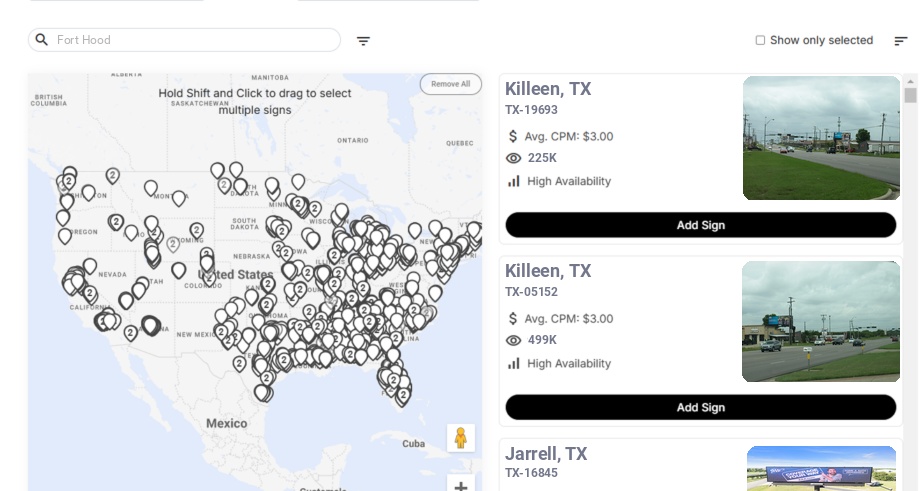
Our two digital billboards serving the Fort Hood area are located in Killeen, about 3.4 miles from the installation. This puts your message along routes that soldiers, families, commuters, and local residents use daily to connect between the post, housing areas, and retail corridors. Major Fort Cavazos access and commuting routes such as Clear Creek Road, Rancier Avenue, WS Young Drive, and SH‑195 each carry tens of thousands of vehicles daily.
Who does Blip reach with Fort Hood billboard advertising in Fort Hood, Texas?
The Fort Hood area is a diverse, young, and economically active community with a median age in Killeen of about 28–30 years. A large share of households are either military or military-adjacent, and many military families relocate every 2–4 years. This constantly brings in new residents who are actively looking for local businesses, churches, schools, and things to do.
When is the best time to run Blip billboards near Fort Hood, Texas?
Military schedules near Fort Hood create more structured traffic patterns than many purely civilian markets. Morning commute traffic starts early, midday brings lunch surges, and evening commute traffic flows from the post toward residential areas in Killeen and beyond. Friday evenings and Saturdays also see strong spikes in shopping and entertainment trips, while Sunday mornings and afternoons can be prime for churches, community events, and last-chance weekend offers.
Why are Fort Hood, Texas billboards useful for new residents and military families?
Families frequently relocate, and an estimated 30–35% of households in the Fort Hood area may turn over in a 3–4-year period due to PCS moves. This constant churn means “new to town” messaging, welcome offers, and discovery-focused campaigns are especially effective. New arrivals are highly receptive to billboard advertising near Fort Hood that helps them navigate local options.
Do I need a contract to advertise with Blip near Fort Hood?
No, Blip has no long-term contracts or minimum commitments. You can start, pause, or stop your campaign at any time.
How fast can I launch a billboard campaign with Blip near Fort Hood?
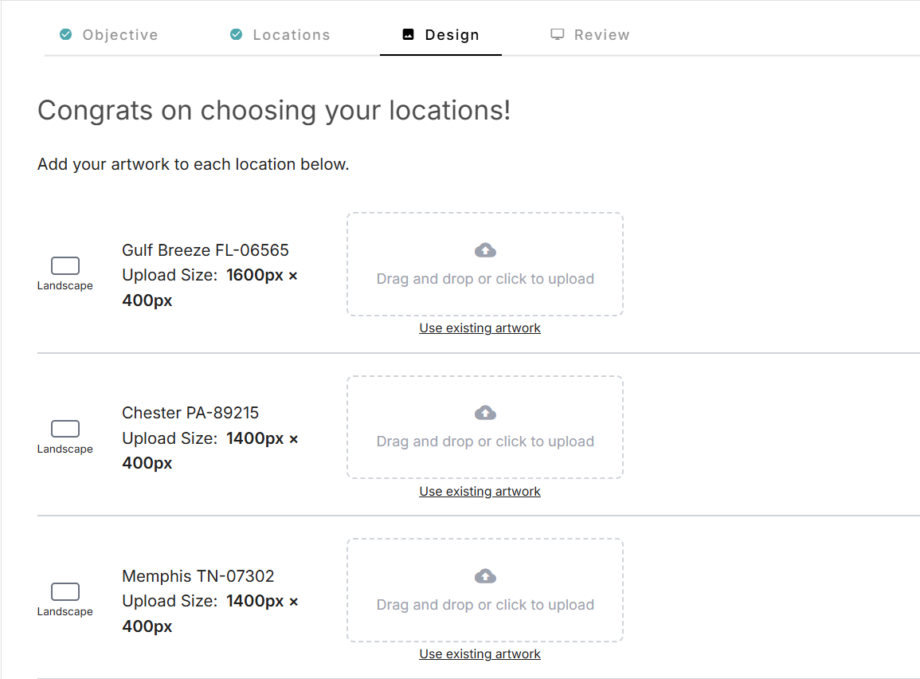
You can have your campaign live in minutes. Create a free account, select your locations, set your budget, upload your design, and start running once approved.
Where can I advertise with Blip near Fort Hood?
Blip has digital billboards near Fort Hood. You can browse available locations on a map, choose the ones that fit your audience, and start advertising right away.
Still have questions? Launch a campaign in minutes — no contracts, no commitments.
Start Your CampaignFort Hood Billboard Advertising Guide
The Fort Hood area—officially Fort Cavazos Killeen
Understanding the Fort Hood (Fort Cavazos) Area Market
The Fort Hood area sits at the heart of the rapidly growing Killeen–Temple–Fort Cavazos region of Central Texas:
- The City of Killeen
- The broader Killeen–Temple metropolitan area is commonly cited at more than 500,000 people, with local planning agencies such as the Killeen‑Temple Metropolitan Planning Organization
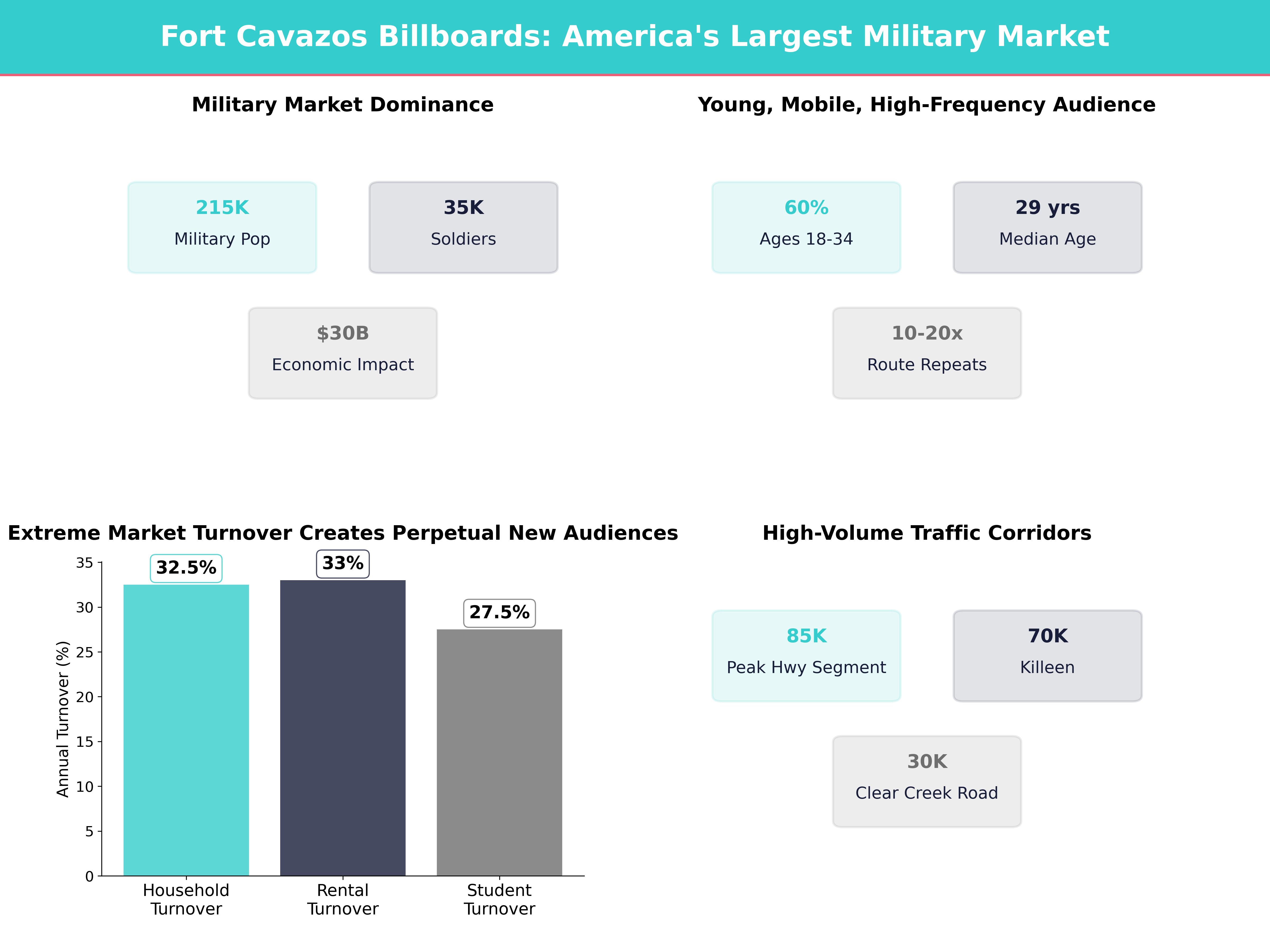
- Fort Cavazos itself is one of the largest U.S. Army installations, with roughly 34,500–36,000 active‑duty soldiers at any given time. When dependents, civilian employees, contractors, and retirees are included, local officials frequently cite a total Fort Cavazos–connected population of 210,000–220,000 people and an annual regional economic impact of more than $30 billion.
These figures translate to a market where:
- The median age in Killeen is about 28–30 years—roughly 7–9 years younger than the U.S. median—so well over half of residents are under age 35. That means a high concentration of millennials and Gen Z adults in the workforce, on the roads, and making daily purchase decisions, which makes regularly visible Fort Hood billboards especially powerful.
- Household formation is rapid: Killeen’s average household size is around 2.7–2.9 people, with a significant share of young families and dual‑income households. Local school districts such as Killeen ISD serve more than 44,000 students, underscoring strong demand for family‑oriented services.
- A large share of households are either military or military‑adjacent. In some nearby ZIP codes, local studies and chamber profiles show more than 40% of occupied housing units are tied to military families or defense‑related workers, supporting strong demand for auto sales, quick‑service restaurants, fitness, education, real estate, payday alternatives, healthcare, and child‑related services.
- Turnover is high: many military families relocate every 2–4 years. It’s common for 25–30% of students in some Killeen ISD schools to change from one year to the next, and local housing data suggests roughly one‑third of rental units may turn over annually. This constantly brings in new residents who are actively looking for local businesses, churches, schools, and things to do—exactly the kind of audience that frequent billboard advertising near Fort Hood is designed to reach.
Local economic and community information is regularly published by the City of Killeen Greater Killeen Chamber of Commerce, the Fort Cavazos garrison Bell County, and tourism partners like Visit Killeen. We can leverage this data to time our campaigns around key events, training cycles, and community initiatives.
Where Our Billboards Reach People Near Fort Hood
Our two digital billboards serving the Fort Hood area are located in Killeen, about 3.4 miles from the installation. This puts your message along routes that soldiers, families, commuters, and local residents use daily to connect between the post, housing areas, and retail corridors, ensuring your billboard advertising near Fort Hood is seen consistently by core audiences.
Key transportation and traffic insights:
- I‑14 / US‑190 through Killeen carries more than 70,000 vehicles per day on several segments, according to the Texas Department of Transportation. On the busiest stretches near the Killeen Mall and WS Young Drive, weekday averages can climb into the 80,000–90,000 vehicles‑per‑day range.
- Major Fort Cavazos access and commuting routes—such as Clear Creek Road, Rancier Avenue, WS Young Drive, and SH‑195—each carry tens of thousands of vehicles daily. On some sections of Clear Creek Road, local traffic counts often exceed 30,000 vehicles per day, channeling traffic between the post, central Killeen, and outlying communities.
- The City of Killeen
Because our boards are close to the post’s primary trade areas, we can position campaigns to:
- Capture daily commuting traffic near Fort Hood area gates, where tens of thousands of IDs are scanned on a typical weekday using these routes, making them ideal for billboards near Fort Hood aimed at both on‑post and off‑post audiences.
- Reach families and soldiers shopping, dining, and running errands in Killeen—local retail trade data from the Greater Killeen Chamber of Commerce shows annual taxable retail sales in the city well into the billions of dollars.
- Reinforce brand awareness for businesses that want visibility along the main east–west corridor across the city, where many residents drive the same route 10–20 times per week.
Who You Reach Near Fort Hood: Audience Profiles
The Fort Hood area is not just a “military town”; it’s a diverse, young, and economically active community. When we plan billboard campaigns near Fort Hood, we typically think in terms of the following audience segments:
1. Active‑Duty Soldiers and Single Service Members
- Tens of thousands live or work on post, often traveling off‑post multiple times per week for dining, entertainment, shopping, and services. It’s common for single soldiers to leave post 3–5 times per week, creating dozens of potential weekly exposures to your message on Fort Hood billboards.
- Many are in the 18–34 age range—well over 60% of the active‑duty population— with strong interest in quick‑service restaurants, gyms, gaming, nightlife, fast‑casual dining, and mobile‑first brands.
- Deployment cycles and training events affect schedules and spending; paydays on the 1st and 15th of each month routinely produce measurable bumps in local sales for food, retail, and auto categories reported by local businesses and covered by outlets such as the Killeen Daily Herald
2. Military Families
- Spouses and children often live in housing areas near or just outside the post and rely heavily on nearby communities like Killeen for schools, childcare, grocery stores, healthcare, and recreational activities. Killeen ISD alone operates more than 50 campuses, and the district reports that a majority of students are military‑connected at several schools closest to Fort Cavazos.
- Families frequently relocate; an estimated 30–35% of households in the Fort Hood area may turn over in a 3–4‑year period due to PCS (Permanent Change of Station) moves. Local school and housing officials routinely note that several thousand new students and families can move in or out of the area in a single year.
- This constant churn means “new to town” messaging (“New to the Fort Hood area? Here’s your…”), welcome offers, and discovery‑focused campaigns are especially effective, because there is a recurring influx of first‑time visitors to local grocery stores, healthcare providers, banks, and churches every month who are highly receptive to billboard advertising near Fort Hood that helps them navigate local options.
3. Civilian Workforce and Contractors
- Defense‑related jobs, medical workers from regional hospitals, education professionals, and service‑industry staff all contribute to morning and evening commute spikes. Large employers such as Central Texas College Killeen ISD, and regional health systems like Baylor Scott & White Medical Center – Temple Temple support tens of thousands of civilian jobs.
- Many live in surrounding communities such as Harker Heights Nolanville, Copperas Cove, and Temple but drive through Killeen daily, increasing repeated exposure to your message. Commuter surveys in the region often show average one‑way commute times of 20–30 minutes, much of it along I‑14/US‑190, where strategically placed Fort Hood billboards keep brands top of mind.
4. Local Residents and Students
- Central Texas College and nearby campuses contribute a student population of more than 10,000 learners, many of whom are part‑time, active‑duty, or veteran students. This group tends to skew tech‑savvy and price‑sensitive, responding well to simple value messaging and mobile‑friendly calls‑to‑action.
- Killeen’s residents come from diverse backgrounds, with strong Hispanic, Black, and veteran communities. Local school and community profiles often show that no single racial or ethnic group holds a majority, and in some schools more than 20–30 different home languages are represented. For many categories—food, retail, financial services—bilingual or culturally inclusive messaging can significantly improve performance.
Local media outlets like the Killeen Daily Herald KWTX News 10 frequently share demographic and community trend stories that we can use to fine‑tune campaign targeting and creative.
Best Times of Day and Week for Billboard Exposure Near Fort Hood
Military schedules near Fort Hood create more structured traffic patterns than many purely civilian markets. When we plan day‑parting for campaigns, we consider:
Weekday patterns
-
Morning commute (5:30–8:30 a.m.)
- Many soldiers report early, so traffic toward the post starts earlier than in typical 9‑to‑5 cities. Gate counts often show heavy inbound flows starting before 6:00 a.m., with peaks around 6:30–7:30 a.m.
- This is ideal for quick‑service breakfast offers, coffee, gas stations, and reminders for appointments.
-
Midday (11:00 a.m.–1:30 p.m.)
- Lunchtime traffic surges as personnel and workers leave the installation or nearby offices for food and errands. Some local quick‑service restaurants report their lunch hour accounting for 35–45% of weekday transactions.
- Perfect for restaurants, fast‑casual chains, banking, and small‑ticket retail.
-
Evening commute (3:30–6:30 p.m.)
- End‑of‑day release times create traffic waves flowing from the post toward residential areas in Killeen and beyond. Traffic volumes on I‑14 and major arterials can spike 30–40% higher than mid‑day off‑peak levels.
- Best for family‑oriented messaging, grocery, auto service, healthcare, and “stop on your way home” offers.
Weekend patterns
- Friday evenings and Saturdays see strong spikes in shopping and entertainment trips, particularly around major retail corridors in Killeen. Parking counts and local sales tax data indicate that some large centers do 30–40% of their weekly foot traffic between Friday afternoon and Sunday.
- Sunday mornings and afternoons can be prime for churches, community events, and last‑chance weekend offers; Killeen’s many congregations collectively attract tens of thousands of worshippers across multiple services each Sunday, creating predictable travel patterns.
Using flexible scheduling on our digital boards, we can weight your impressions heavily toward these peak windows near Fort Hood to maximize relevance and visibility.
Creative Strategies That Resonate in the Fort Hood Area
High‑impact creative is vital on any billboard, but the Fort Hood area offers special opportunities to connect through military‑aware, community‑minded messaging.
1. Speak to the military experience—carefully and authentically
-
Use language that acknowledges service without over‑promising:
- “Proudly serving those who serve the Fort Hood area”
- “Military‑friendly. Ask about our Fort Cavazos discounts.”
- If you offer a military discount, spell it out: “10% Military Discount” or “Military & Families Save 15%” typically outperforms vague “special pricing,” and even a clearly advertised 5% discount can meaningfully shift choice when seen repeatedly on a high‑traffic route.
- Avoid using unit logos or trademarks without proper permissions, but colors and themes inspired by service (subtle camouflage textures, flags, or “welcome home” themes) can be effective.
2. Emphasize convenience and proximity
Military families and shift workers often value speed and simplicity:
- Highlight 1–2 decisive benefits: “5 Minutes from the Main Gate,” “Open 24/7,” “Drive‑Thru Pharmacy,” “Same‑Day Appointments.” Even if your location is only 2–3 miles away, framing that in minutes or exits makes the benefit more concrete.
- Include a simple landmark or exit cue instead of a full address: “Off I‑14 at WS Young,” “Near Killeen Mall,” “Across from Central Texas College,” or “Next to [well‑known local anchor].”
3. Design for quick readability
Vehicles on I‑14 or major arterials are often moving at 45–65 mph:
- Stick to 7 words or fewer whenever possible. Field tests in similar markets show that reducing copy from ~12 words to 7 or less can increase message recall by 20–40%.
- Use large, high‑contrast fonts; white or bright text on a deep, simple background works best.
- Use one bold image: a product shot, your logo, or a clear visual of the service (e.g., smiling medical staff, clean vehicles for auto detailers).
- Make phone numbers optional; in the Fort Hood area, a short URL, strong brand name, or “Search: ‘[Brand] Killeen’” is often more effective than a 10‑digit number, especially considering that drivers have only 5–7 seconds of viewing time at highway speeds.
4. Tailor copy to Fort Hood–specific moments
Tie campaigns to the rhythms of military life and community events:
-
PCS seasons (spring and late summer)
- Messages like “New to the Fort Hood area? We’ve got you covered for…” work well for banks, dentists, churches, schools, storage, movers, and real estate. Local relocation data shows that several thousand soldiers and families may arrive or depart in these windows, generating concentrated demand that well‑timed billboards near Fort Hood can capture.
-
Homecoming and deployment cycles
- Restaurants and gift shops can run “Welcome Home” creative, while counseling, legal services, and financial planners can stress stability and planning. Even short 2–3 week bursts aligned with known return dates can coincide with spikes in celebration and “treat yourself” spending.
-
Community events
- Events like local festivals, sports tournaments, or city‑sponsored celebrations advertised by the City of Killeen Visit Killeen offer built‑in themes and timeframes for relevant campaigns. Major events can draw thousands of visitors in a single weekend, many of whom travel along the same corridors our boards serve.
Category‑Specific Opportunities Near Fort Hood
Different industries can leverage the Fort Hood area’s characteristics in unique ways and get extra value from billboard rental near Fort Hood:
Automotive
- Frequent relocations and long commutes create steady demand for used vehicles, maintenance, and accessories. Local registration and dealer data often show a consistently high share of late‑model used vehicles and trucks, reflecting both commuting and recreational use.
-
Emphasize fast approvals, military‑friendly financing, and proximity:
- “0 Down for Qualified Military”
- “Oil Change in 30 Minutes — 3 Miles from Fort Hood Area Housing”
- Use paydays (1st and 15th of the month for many soldiers) as peaks for more aggressive scheduling; many dealers report 15–25% higher weekend traffic immediately following these dates.
Food & Beverage
- Quick‑service and fast‑casual brands can target lunch and late‑night windows tied to shift changes and training schedules. Some locations near the installation see lunch queues increase 20–30% compared with non‑military markets of similar size.
- Highlight military specials and group‑friendly options: “Feed a Squad for $25,” “Show Your Military ID & Save,” “Kids Eat Free on PCS Weekends.”
- Limited‑time offers timed to long weekends (Memorial Day, Labor Day, federal holidays) can perform especially well, as travel, barbecues, and family gatherings drive higher per‑ticket spending.
Healthcare and Dental
- New arrivals often need new providers quickly. Local clinics and practices frequently see inquiry spikes of 10–20% in the 30–60 days after major PCS windows.
- Focus copy on “Accepting New Patients,” “TRICARE Accepted,” and “Same‑Week Appointments.” Many military families prioritize providers explicitly stating TRICARE acceptance, and seeing this message repeatedly in the first weeks after arrival can strongly influence selection.
- Tie scheduling to PCS cycles and back‑to‑school vaccinations, when pediatric, dental, and optometry appointments surge.
Education & Training
-
Local colleges, trade schools, and online education brands can connect with transitioning service members:
- “Finish Your Degree While Stationed Near Fort Hood”
- “Use Your GI Bill Benefits Here in the Killeen Area.”
- Institutions such as Central Texas College Fort Cavazos
Financial Services & Insurance
- High mobility and unique military pay situations make financial literacy and flexible products especially attractive. Local banks and credit unions often report that 30–40% of their customer base is military‑connected.
- Highlight military‑specific offerings: “VA Loan Experts,” “No‑Fee Accounts for Military,” or “PCS‑Ready Renters Insurance.”
- Consider coordinating campaigns with tax season (January–April), when refunds and bonuses often fuel car purchases, debt consolidation, and new account openings.
Using Flexibility to Your Advantage with Digital Boards
Because our billboards serving the Fort Hood area are fully digital, we can adapt campaigns much more dynamically than with traditional static boards. That flexibility is especially valuable in a market where:
- Schedules change frequently with training rotations, temporary duty assignments, and deployments, sometimes shifting unit routines by several hours or more with only a few weeks’ notice.
- Weather can shift quickly, with hot summers regularly exceeding 95°F for 60–80 days per year and occasional severe weather events. Heat index values above 100°F are common in July and August, which drives more demand for indoor and cooling‑related services.
- Community calendars include frequent events, family days, and local festivals that can attract anywhere from a few hundred to several thousand attendees per event.
Ways to use this flexibility strategically:
-
Day‑part by audience
- Target soldiers and commuters during early mornings and late afternoons.
- Aim family‑focused or entertainment messages at evenings and weekends, when household decision‑makers are more likely to be together in the car.
-
Adjust for weather or season
- Promote indoor activities and cooling products heavily on extreme heat days, when outdoor plans are often canceled and families look for air‑conditioned alternatives.
- Rotate creative to emphasize A/C service, hydration, and summer safety themes in July–August, when temperatures and heat indexes are highest, and switch to heating or weatherization messages during the colder snaps that periodically drop nighttime lows near or below freezing in winter.
-
Test and iterate
- Run two or three variations of a creative (e.g., “10% Off” vs. “Military Eat Free on Sundays”) and monitor which one aligns best with traffic and in‑store patterns. Even small improvements in response—5–10% more redemptions—can compound significantly over multi‑month flights and improve the ROI of billboard advertising near Fort Hood.
Seasonal and Event‑Driven Planning Near Fort Hood
Annual rhythms in the Fort Hood area are closely tied to both the military calendar and the broader Central Texas community.
Key seasonal windows
-
Spring (March–May)
- PCS moves increase; new families arrive in the Fort Hood area, hunting for housing, schools, churches, and local services. In some years, several thousand service members and dependents may change duty stations during this window.
- Great for real estate, storage, movers, education, healthcare, and banks using targeted Fort Hood billboards to welcome new arrivals.
-
Summer (June–August)
- Peak heat and school break; families look for activities, travel options, and indoor entertainment. Local attractions and recreation providers promoted by Visit Killeen often ramp up their marketing in this period.
- Advertisers can focus on waterparks, gyms, theaters, tutoring, and family‑friendly restaurants.
-
Fall (September–November)
- Back‑to‑school, football, and cooler weather encourage local sports, shopping, and home improvement. Retailers frequently see back‑to‑school and pre‑holiday sales spikes of 10–25% over summer baselines.
- Campaigns can emphasize fall sales, seasonal maintenance, and “settling in” services for newly arrived families.
-
Winter (December–February)
- Holiday travel, gift‑buying, and year‑end financial planning drive activity. Holiday “block leave” can see large numbers of soldiers traveling or returning in concentrated windows of just a few days.
- Brands can align offers with these leave periods, emphasizing gift cards, last‑minute shopping, and post‑holiday “reset” services like fitness, financial planning, and home organization.
Staying informed through local calendars from the City of Killeen Greater Killeen Chamber of Commerce, tourism organizations like Visit Killeen, and local outlets such as the Killeen Daily Herald
Measuring and Optimizing Campaign Impact
Even though billboard advertising near Fort Hood is inherently upper‑funnel, we can still be disciplined and data‑driven about performance.
Practical ways advertisers in the Fort Hood area commonly track results:
- Unique URLs and QR codes specific to the billboard creative. In markets like Killeen, scan‑through rates of 0.1–0.3% of exposed audiences are realistic when the offer is strong and the QR code is legible.
- Promo codes such as “HOOD10” or “CAVAZOS15” used only on out‑of‑home campaigns, making it easy to attribute redemptions from Fort Hood billboards versus other channels.
- Geo‑based lifts by comparing store traffic or website sessions from ZIP codes around Killeen and Fort Cavazos before and after a campaign. Even a 3–5% lift in visits from these ZIPs can signal a strong OOH contribution when other media activity is stable.
- First‑touch attribution questions at checkout or on intake forms (“How did you hear about us?” with a “Billboard near Fort Hood area” option). Many local businesses find that 10–20% of new customers mention seeing them on “the billboard by the mall” or “the sign on I‑14” when asked.
Because the population in the Fort Hood area turns over quickly, it’s important to think about campaigns not only in terms of short‑term sales, but also persistent awareness. Consistent presence on our Killeen boards allows brands to:
- Become the “default choice” for new arrivals seeking essential services within their first 30–60 days in town.
- Maintain mindshare with existing residents and military families who routinely travel the same routes 5–10 times per week.
- Support and amplify digital and social media campaigns by reinforcing the same messages in the physical environment people navigate every day.
By combining rich local data, an understanding of military community dynamics, and the flexible scheduling power of digital billboards, we can design campaigns that reach the right people near Fort Hood at the right times—with concise, relevant messages that reflect how this unique Central Texas market truly works and make the most of billboard advertising near Fort Hood.