Billboards in New Braunfels, TX
No Minimum Spend. No Long-Term Contracts. Just Results.
Trusted by Leading Brands


Billboard advertising
in New Braunfels has never been easier
How much is a billboard in New Braunfels?
Why Choose Blip for Billboard Advertising in New Braunfels
Blip lets you launch fast in New Braunfels and reach I-35 commuters without contracts or minimums.
Set a flexible daily budget in New Braunfels and stretch it across summer river traffic, Wurstfest crowds, or weekday drive-time.
Use Blip's dayparting in New Braunfels to target morning I-35 commuters, Friday leisure traffic, or Sunday return drivers.
Track real-time results in New Braunfels and shift spend between I-35, Loop 337, and SH 46 as traffic changes.
Create and swap billboard art fast with Blip in New Braunfels, from Gruene and Canyon Lake weekends to local hiring pushes.
Frequently Asked Questions About Billboard Advertising in New Braunfels
How much does a billboard cost in New Braunfels with Blip?
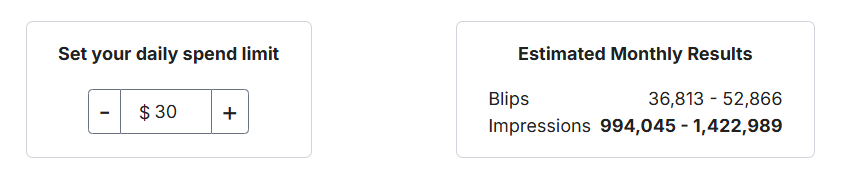
Blip’s billboard advertising in New Braunfels is designed to fit real budgets, big or small. You set a daily budget, and Blip’s algorithm uses it to bid for open ad slots on rotating digital billboards. You only pay when your ad actually displays, with each “blip” starting at just $0.01 per display.
Where can I advertise with Blip in New Braunfels?
New Braunfels is a strong billboard market because it reaches fast-growing local households, daily I-35 commuters, and year-round visitors in the same geography. I-35 through New Braunfels is the core artery, with multiple segments above 100,000 vehicles per day. SH 46, Loop 337, I-10, and routes feeding Gruene and Canyon Lake also create valuable placement options.
Why is New Braunfels good for billboard advertising with Blip?
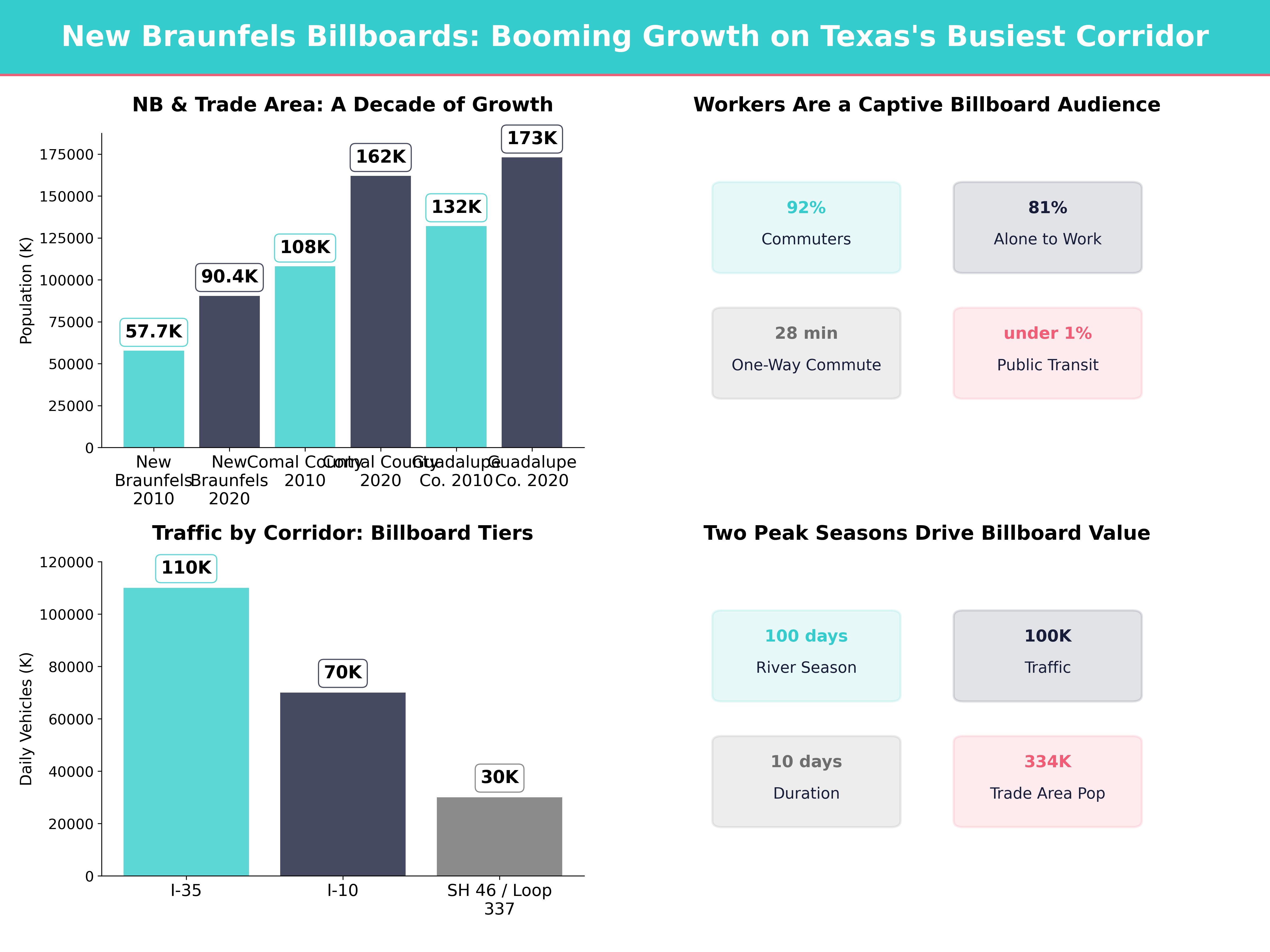
New Braunfels grew from 57,740 residents in 2010 to 90,403 in 2020, a 56.6% increase. It sits between San Antonio and Austin on an interstate corridor that carries 100,000-plus vehicles per day on major segments. That combination of rapid growth and constant travel makes it a strong market for digital billboards.
What kind of traffic patterns should I expect for New Braunfels billboards?
New Braunfels is a driving market first, with drive-alone commuting at about 81% of workers and vehicle-based commuting at roughly 92% or more when carpooling is included. The average one-way commute is roughly 28 minutes, which creates repeated exposure on the same corridors. Weekend and seasonal traffic also rises around river season, festivals, concerts, and lake travel.
Which New Braunfels billboard locations work best for Blip if I want local customers?
If you need local visits, Loop 337 and SH 46 are often more targetable because they capture local intent and everyday circulation. These roads commonly fall in the 20,000 to 40,000 AADT range, which is lower than I-35 but often more relevant for neighborhood shopping and services. Loop 337 is especially useful when you want to connect with people circulating around the city instead of simply passing through it.
Do I need a contract to advertise with Blip in New Braunfels?
No, Blip has no long-term contracts or minimum commitments. You can start, pause, or stop your campaign at any time.
How fast can I launch a billboard campaign with Blip in New Braunfels?
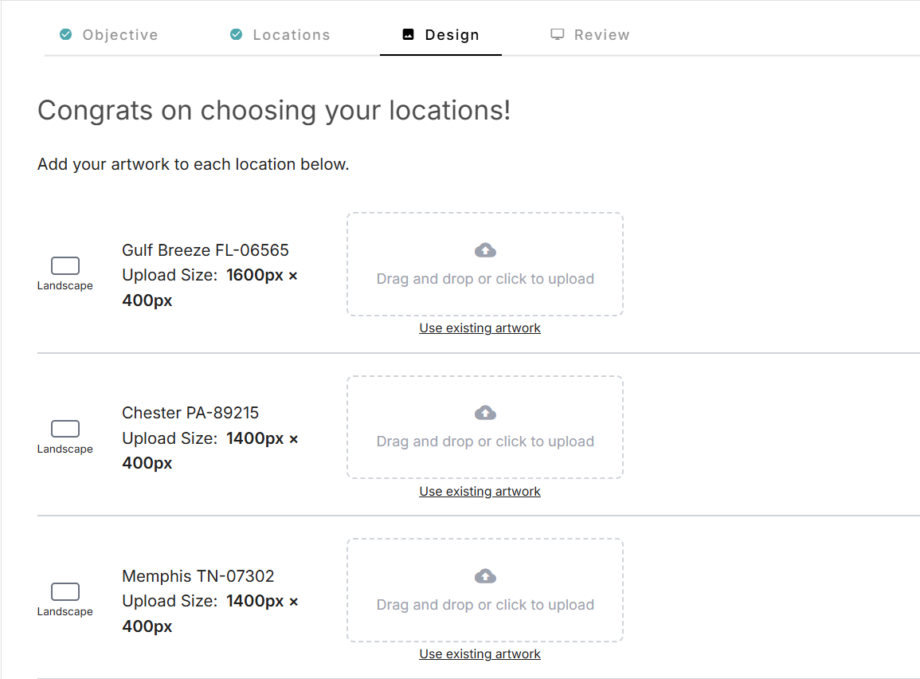
You can have your campaign live in minutes. Create a free account, select your locations, set your budget, upload your design, and start running once approved.
Where can I advertise with Blip in New Braunfels?
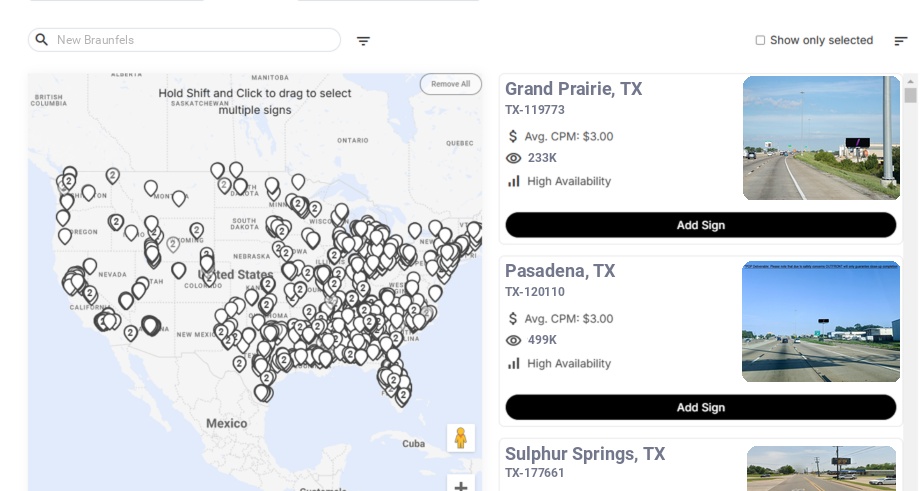
Blip has digital billboards in New Braunfels. You can browse available locations on a map, choose the ones that fit your audience, and start advertising right away.
Still have questions? Launch a campaign in minutes — no contracts, no commitments.
Start Your CampaignNew Braunfels Billboard Advertising Guide
New Braunfels 90,403 residents in 2020, up from 57,740 in 2010, which means New Braunfels added 32,663 people in just one decade, or 56.6% growth. It also sits about 32 miles northeast of San Antonio, and about 48 miles southwest of Austin, so regional travel is constant on an interstate corridor that carries 100,000-plus vehicles per day on major New Braunfels segments. When we add summer river traffic, Schlitterbahn New Braunfels, Gruene Hall Wurstfest demand, New Braunfels becomes a place where digital billboards can deliver both frequency and timing.
New Braunfels Market Overview
New Braunfels sits in a rare position for out-of-home advertising. We are not working with an isolated small city. We are working with a fast-growing community in the middle of one of Texas’ busiest regional corridors, with meaningful reach into both Comal County, and Guadalupe County.
Population growth and trade area strength in New Braunfels
The headline number is simple. New Braunfels grew from 57,740 residents in 2010 to 90,403 in 2020, which is a 56.6% increase. That pace matters because billboard advertising performs best where new rooftops, new shopping patterns, and new service demand are all appearing at once.
The surrounding counties add even more scale. Comal County reached 161,501 residents in 2020, up from 108,472 in 2010, which is 48.9% growth. Guadalupe County reached 172,706 residents in 2020, up from 131,533 in 2010, which is 31.3% growth. Together, those two counties totaled 334,207 residents in 2020, and they added 94,202 residents during the 2010s.
For advertisers, that means we are not limited to one city line. We can use New Braunfels boards to influence households from local neighborhoods, nearby unincorporated growth areas, Canyon Lake, Seguin
Mobility and what it means for billboard advertising in New Braunfels
New Braunfels is a driving market first. Recent community survey estimates have put drive-alone commuting at about 81% of workers, and vehicle-based commuting at roughly 92% or more when we add carpooling. Public transit plays only a very small role locally, usually accounting for well under 1% of commuters, so roadside visibility matters more here than in transit-dependent urban cores.
Commute time also supports billboard effectiveness. The average one-way commute is roughly 28 minutes, which gives us repeated, habitual exposure on the same corridors. That repetition is especially valuable for:
- Retail and restaurants, because repeated pass-by exposure builds mental availability before a consumer decides where to stop.
- Home services, because HVAC, roofing, plumbing, pest control, and remodeling brands often win by staying top of mind until the need appears.
- Healthcare and professional services, because appointment-based businesses benefit from consistent awareness among local households.
- Employers, because applicants often notice job offers on their regular drive long before they begin an active search.
Economic context for New Braunfels advertisers
New Braunfels has an economy that blends tourism, residential growth, logistics, construction, healthcare, and small business. That mix gives us multiple reasons to advertise, not just one seasonal spike. Organizations like the Chamber in New Braunfels, New Braunfels Utilities, and the City of New Braunfels
The city’s heritage also strengthens local resonance. New Braunfels was founded in 1845, and its German-Texan identity still shapes downtown branding, festivals, dining, and tourism. That combination of long history and rapid modern growth gives advertisers room to speak both to established residents and to newcomers who are still forming local loyalties.
Key Traffic Corridors for New Braunfels Billboards
New Braunfels travel patterns are concentrated on a handful of high-value roads. When we understand how people move between neighborhoods, job centers, rivers, and regional metros, we can choose billboard placements that match real decision points.
I-35 through New Braunfels
I-35 is the core artery for New Braunfels advertising. Recent TxDOT traffic count maps show multiple New Braunfels segments of I-35 above 100,000 vehicles per day, with the busiest stretches near major interchanges in the 120,000-plus range. That kind of volume gives us broad regional reach and strong local frequency at the same time.
This corridor is especially effective for:
- Restaurants, convenience stores, and fuel brands, because travelers often decide on stops only a few exits in advance.
- Retail, entertainment, and attractions, because northbound and southbound drivers include both local shoppers and leisure traffic.
- Hospitals, urgent care providers, and dental groups, because the interstate connects residential areas to employment centers and regional medical trips.
- Apartment communities, homebuilders, and real estate groups, because New Braunfels draws in-movers who are already traveling the corridor to evaluate neighborhoods.
Direction matters on I-35. Northbound boards can be strong for weekend travel toward San Marcos Austin. Southbound boards can be strong for commuters and day-trippers moving toward San Antonio.
SH 46, Loop 337, and New Braunfels local circulation
Beyond the interstate, State Highway 46, and Loop 337 are critical because they capture local intent. Recent TxDOT count maps commonly place major urban segments of these roads in the 20,000 to 40,000 AADT range. Those numbers are smaller than I-35, but they often produce better local relevance because drivers on these routes are already moving between neighborhoods, retail clusters, schools, and recreation zones.
We typically like these roads for:
- Local retail and grocery-adjacent businesses, because drivers are already in shopping mode.
- Family services, because parents use these corridors for school, errands, and after-school activities.
- Auto dealers, tire shops, and collision centers, because these roads carry heavy local repeat traffic.
- Healthcare clinics and specialists, because proximity and convenience matter when people choose care close to home.
Loop 337 is particularly useful when we want to connect with people circulating around the city instead of simply passing through it. That makes it valuable for businesses that need store visits, not just general awareness.
I-10 and the eastern industrial approach from New Braunfels
I-10 extends New Braunfels advertising value eastward toward Seguin 60,000 to 80,000 vehicles per day, according to recent TxDOT maps. That corridor carries commuters, freight, industrial traffic, and long-distance travelers.
This route tends to work well for:
- Industrial employers and staffing firms, because it reaches shift workers and skilled trades audiences.
- Truck services, equipment vendors, and B2B suppliers, because the corridor carries freight-oriented traffic.
- Travel centers, hotels, and roadside services, because east-west travelers are often making quick stop decisions.
- Regional healthcare systems and colleges, because east-side commuters may not identify as New Braunfels residents, but they still spend time in the local trade area.
FM 306, Gruene, and Canyon Lake access routes
The west and northwest side of the market functions differently. Roads feeding Gruene Hall Canyon Lake, and Whitewater Amphitheater carry lower daily counts than I-35, but they can become high-intent routes during tourism periods and event weekends.
That is where we can win with context. A board near a river route, a concert approach, or a lakebound turn has outsized value for:
- Restaurants, bars, and breweries, because people are actively deciding where to gather.
- Short-term lodging and vacation rentals, because late-stage travelers still need places to stay.
- Attractions and outfitters, because travelers are already in leisure mode.
- Boutiques and local makers, because these audiences are primed for destination spending.
New Braunfels Audience Segments We Can Reach
A strong market is not just about traffic counts. It is also about who is in those vehicles. New Braunfels gives us access to several distinct audiences, and each one responds to different offers, creative, and timing.
New Braunfels commuters and regional workers
Commuters are the most dependable audience in the market. Because drive-alone commuting is about 81%, and car-based commuting is roughly 92%+, we can count on consistent weekday repetition. Many residents work within New Braunfels, while many others travel south toward San Antonio, or north toward San Marcos Austin.
This audience is ideal for:
- Quick-service restaurants, because breakfast and dinner decisions happen in motion.
- Financial services, because repeated exposure helps with trust-building.
- Healthcare providers, because commuters often choose providers near home or along their route.
- Recruiters and employers, because job-switching often starts with passive awareness.
Tourists, day-trippers, and weekend visitors in New Braunfels
Tourism broadens the audience far beyond resident counts. Schlitterbahn New Braunfels has been a regional draw since 1979, and Wurstfest runs for 10 days each fall and attracts about 100,000 visitors. The Gruene Historic District Gruene Hall 1878, which reinforces the market’s historic appeal.
The outdoor audience is just as important. Canyon Lake covers about 8,230 surface acres and offers roughly 80 miles of shoreline, which supports boating, camping, and lake travel. Nearby attractions like Natural Bridge Caverns, Natural Bridge Wildlife Ranch, and McKenna Children’s Museum broaden the family leisure base even further.
This visitor audience is a strong fit for:
- Hotels, resorts, and vacation rentals, because occupancy decisions are often made close to arrival.
- Restaurants and nightlife, because visitors frequently need immediate dining options.
- Attractions and ticketed events, because same-day or next-day consideration is common.
- Retail and souvenirs, because destination shoppers are open to impulse purchases.
Students and young adults near New Braunfels
New Braunfels is not a classic college town, but it sits close enough to a major university market to matter. Texas State University in San Marcos reported 40,678 students in fall 2023, and San Marcos is only about 20 miles north of New Braunfels. That creates meaningful overlap for entertainment, food, apartments, healthcare, mobile services, and part-time employment.
We can also reach young professionals who live in New Braunfels for quality of life, but move between regional job centers. That audience often responds to convenience, affordability, and lifestyle messaging.
Families, homeowners, and local household decision-makers in New Braunfels
Population growth tells us that New Braunfels is gaining families and homeowners at scale. The city’s 32,663-person population increase in one decade drives demand for schools, pediatric care, orthodontics, home improvement, landscaping, insurance, and grocery-adjacent retail.
The school calendar matters because both Comal ISD, and New Braunfels ISD influence daily travel patterns. Parents are especially reachable on weekday morning and afternoon routes, on Loop 337 retail runs, and on weekend errands near major shopping clusters.
Seasonal and Timing Opportunities in New Braunfels
New Braunfels is a market where timing can significantly improve performance. We do not need the same message in every month, because the audience mix changes with weather, tourism, school schedules, and events.
Summer river season in New Braunfels
Summer is the most obvious seasonal opportunity. From Memorial Day to Labor Day, we are working with roughly 100 days of elevated river, waterpark, and vacation traffic. Creative tied to tubing, family fun, hydration, sunscreen, urgent care, hotels, and casual dining can perform especially well during this stretch.
This is also when local service advertisers can stay visible without feeling out of place. HVAC, pool builders, pest control, and vehicle maintenance brands benefit from the season’s heat and travel volume. We often like to separate weekday commuter campaigns from Friday-through-Sunday visitor campaigns during summer because the audience mix changes quickly.
Fall festivals, concerts, and football around New Braunfels
Fall combines local routine with event-driven traffic. Wurstfest is the standout, with its 10-day run and about 100,000 attendees, but it is not the only draw. Whitewater Amphitheater extends entertainment traffic through much of the year, and the Comal County Fair adds another strong seasonal pulse.
This is a great period for:
- Event-adjacent dining and bars, because audiences are already planning outings.
- Retail and apparel, because cooler-weather shopping picks up.
- Healthcare and family services, because school-year routines are back.
- Political, nonprofit, and civic campaigns, because community attention is high.
Holiday and early-year timing in New Braunfels
Holiday shopping, downtown events, and visiting family create another useful campaign window. Downtown New Braunfels Play in New Braunfels promote seasonal experiences that keep local traffic active beyond peak summer.
January through March can also be smart for categories that need lower-noise conditions. We often like this period for:
- Fitness and wellness, because resolution season increases consideration.
- Tax, legal, and financial services, because consumers have near-term deadlines.
- Homebuilders, real estate, and remodelers, because spring planning begins early.
- Spring break hospitality, because travelers start booking and routing trips before school breaks arrive.
School-year dayparts in New Braunfels
Timing matters within the day, not just within the year. New Braunfels is especially receptive to:
- Morning commute windows, because routine weekday travel is predictable.
- Afternoon and early evening windows, because errands and dinner decisions stack onto the drive home.
- Friday afternoon and Saturday windows, because weekend leisure traffic ramps up quickly.
- Sunday return traffic, because regional visitors and weekenders head back toward larger metros.
Billboard Design Tips for the New Braunfels Market
Creative that works in New Braunfels usually feels local, clear, and timely. We do not need to overcomplicate the message. We need to show that we understand why people are on the road in the first place.
Use New Braunfels visual cues that match the market
New Braunfels responds well to imagery tied to rivers, limestone, cypress trees, patios, live music, and Hill Country leisure. Blue, aqua, and green often feel natural for tourism, recreation, healthcare, and family brands. Earth tones and warm neutrals can work well for real estate, home services, and heritage-driven retail.
If we are speaking to local pride, references to Downtown New Braunfels 1845 heritage can add authenticity. If we are speaking to visitors, we often do better with action-oriented cues like river, concert, lake, stay, eat, or exit-now language.
Keep New Braunfels messages short enough for fast roads
Many drivers in this market are moving at 70 to 75 mph on regional highways, so we should design for fast reads. We usually want one clear offer, one brand name, and one action. Interstate creative in New Braunfels generally works best when the message can be understood in a glance.
Location cues also matter here more than in some markets. Phrases like “next exit,” “minutes away,” “off Loop 337,” or “near Gruene” fit the way people navigate locally. That is especially useful for restaurants, attractions, churches, urgent care, and event venues.
Match the creative to the audience segment in New Braunfels
The same city needs different visual language depending on the route.
- For commuters, we should use direct benefit statements, such as hiring, healthcare access, financing, or dinner convenience.
- For tourists, we should use high-energy imagery, local landmarks, and immediate calls to action.
- For families, we should show people, not abstractions, and emphasize trust, convenience, and value.
- For industrial or trade recruiting, we should foreground pay, location, shifts, certifications, or benefits, because specificity wins attention.
Bilingual testing can also be worth exploring on corridors that draw heavily from the greater San Antonio area. We do not need every campaign to be bilingual, but selective testing can improve relevance for some categories.
Regional Strategies Across New Braunfels
The best New Braunfels campaigns usually divide the market into sub-areas instead of treating every board the same. Different roads serve different motivations.
New Braunfels urban core and I-35 retail strategy
The I-35 core is where we go for scale. Boards near major retail nodes, healthcare destinations, and central interchanges help us reach both residents and pass-through traffic. This is usually the right starting point for regional brands, broad-reach awareness campaigns, and businesses that serve the whole city.
We especially like the core for:
- Healthcare systems, because access and visibility matter across a wide trade area.
- Large retailers and auto dealers, because shoppers often compare options across the region.
- Citywide service brands, because broad repetition matters more than neighborhood precision.
Gruene, downtown, and river strategy in New Braunfels
The historic and tourism-oriented parts of the market call for a more lifestyle-driven approach. Downtown New Braunfels
We usually recommend this submarket for:
- Hospitality, because visitors need hotels, rentals, and evening plans.
- Restaurants and bars, because diners often choose on the way.
- Boutiques and attractions, because these audiences are open to destination discovery.
West side and Canyon Lake strategy from New Braunfels
The west side behaves more like a recreation corridor. Ads here can be more seasonal, more visual, and more event-specific. Canyon Lake, and Whitewater Amphitheater traffic create strong opportunities for concert promotions, lake-day businesses, and outdoor retail.
This area tends to reward weekend scheduling, weather-aware messaging, and creative tied to experiences rather than everyday errands.
East side, Seguin, and I-10 strategy near New Braunfels
The eastern approach gives us a different audience mix. Toward Seguin
If our main goal is recruiting, this submarket can outperform more tourism-heavy placements, even when total traffic is lower than prime I-35 locations.
Using Blip Tools in New Braunfels
Blip’s tools fit New Braunfels especially well because this market changes by corridor, by direction, and by season. We do not need to buy the whole city the same way.
Dayparting and budget control for New Braunfels traffic patterns
In New Braunfels, we can align campaigns to actual road behavior. Morning and late-afternoon dayparts usually make sense for commuter categories. Friday afternoon through Sunday often makes more sense for river traffic, concerts, and hospitality. Festival periods like Wurstfest deserve their own flighting because demand spikes fast.
Because Blip lets us adjust budgets without long commitments, we can raise intensity when summer traffic or event traffic is strongest, and pull back when our category does not need peak-season pricing.
Creative rotation for New Braunfels audience shifts
New Braunfels is a good market for rotating multiple creatives. We might run one message for local families on weekdays, and a different message for weekend visitors on the same board set. We might also separate northbound and southbound creative if the destination logic changes by direction.
That flexibility matters because a 7.5-to-10-second digital billboard spot has to work hard. A tighter, more relevant message often beats a one-size-fits-all campaign.
Analytics and testing for New Braunfels billboard performance
Blip’s reporting helps us compare corridors instead of guessing. We can test I-35 against Loop 337, or tourism routes against commuter routes, and then shift spend based on actual response patterns. Even a modest test matters because pay-per-play delivery can start at $0.01 per display, which lowers the cost of learning.
We also like using Blip’s artwork tools to localize creative quickly. That is useful when we want to swap in summer visuals, event-driven headlines, or a hiring message during a short recruiting push.
Getting Started With Billboard Rental in New Braunfels
Renting a billboard in New Braunfels is easiest when we begin with one goal, not five goals. We should decide first whether we want commuter reach, tourist reach, local store visits, hiring visibility, or regional brand awareness. That decision will usually tell us whether to prioritize I-35, local circulation routes, or tourism feeders.
What to expect when we rent a billboard in New Braunfels
The first practical step is matching location to intent. If we need broad awareness, we should start with I-35 boards where traffic exceeds 100,000 vehicles per day on major segments. If we need local visits, we should look harder at Loop 337, and SH 46, where 20,000 to 40,000 AADT traffic is often more targetable. If we need tourist demand, we should emphasize summer weekends, river routes, and event windows. If we need applicants, we should consider I-10, industrial approaches, and commuter-heavy dayparts.
We should also think about direction of travel. A board that works well for a southbound dinner decision may not be the right board for a northbound weekend traveler.
How Blip simplifies New Braunfels billboard rental
Traditional billboard buying often involves back-and-forth sales calls, fixed packages, and slower change cycles. Blip simplifies that process by letting us review locations on a map, choose when we want to run, upload creative, and refine the campaign as we learn. That makes a real difference in a market like New Braunfels, where summer, festivals, school calendars, and regional traffic all change the value of a placement.
We can start small, prove which corridor works, and then expand. That is a smart approach in New Braunfels because the city offers several strong audience types, and the right answer depends on our specific business objective.
How we evaluate the best New Braunfels billboard locations
When we evaluate locations, we should ask four practical questions. Who is in the vehicle? We should identify whether the board reaches locals, commuters, visitors, or workers. Why are they on that road? We should match the route to shopping, commuting, leisure, or job travel. What can they do next? We should favor placements that support a clear next action, such as stopping, searching, calling, or visiting. When is the audience strongest? We should schedule around the hours, days, and seasons when our ideal customer is most present.
If we follow that framework, New Braunfels becomes one of the more versatile digital billboard markets in Texas. We can use it for everyday frequency, for weekend tourism surges, for regional commuter reach, and for sharply timed local campaigns that feel built for the city instead of merely placed in it.