Billboards in Bryan, TX
No Minimum Spend. No Long-Term Contracts. Just Results.
Trusted by Leading Brands


Billboard advertising
in Bryan has never been easier
How much is a billboard in Bryan?
Why Choose Blip for Billboard Advertising in Bryan
Blip lets you launch Bryan billboards in minutes and reach SH 6 commuters, Texas A&M traffic, and Brazos Valley drivers without a sales cycle.
Set a flexible budget for Bryan, then scale up for home football weekends, graduations, or First Friday crowds downtown.
Daypart your Bryan ads for 7–9 a.m. and 4–6 p.m. traffic on FM 2818, Texas Avenue, and Villa Maria.
No contracts means Bryan businesses can test campus, family, or recruitment messages and adjust fast as results come in.
Track Bryan campaigns in real time and shift spend to the boards that perform best near SH 6, downtown, or Texas A&M routes.
Use Blip's creative tools to make bold Bryan ads for students, families, and visitors moving through College Station and the Brazos Valley.
Frequently Asked Questions About Billboard Advertising in Bryan
How much does a billboard cost in Bryan, Texas with Blip?
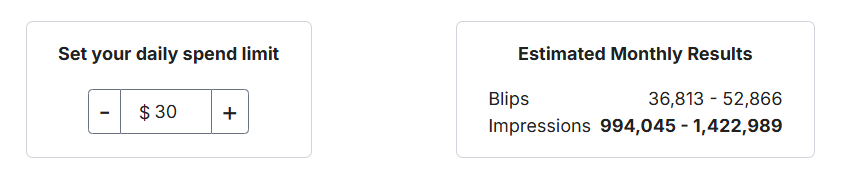
With Blip, you control exactly what you spend on Bryan billboards by setting a daily budget that can be changed anytime, so your campaign always stays within your comfort zone. Each “blip” is a brief 7.5–10 second ad on rotating digital billboards in Bryan, Texas, and you only pay for the blips you receive—similar to pay-per-click ads online. Pricing per blip varies based on when and where you run your message and current advertiser demand, so you can choose the times and locations that match your goals and budget.
Where can I advertise with Blip in Bryan, Texas?
Key roadways to consider include SH 6 / Earl Rudder Freeway, FM 2818 (Harvey Mitchell Parkway), Texas Avenue / Business SH 6, and Villa Maria Road, Briarcrest Drive, and University Drive corridors. These routes connect Bryan to College Station, shopping centers, medical facilities, schools, neighborhoods, and campus traffic. Within Blip, you can select specific signs that face inbound commuters, sit near key destinations, or align with your business location for nearby-now messaging.
When is the best time to run billboards in Bryan, Texas with Blip?
Bryan’s advertising calendar is heavily influenced by Texas A&M and major local events, so timing matters. Fall and spring semesters bring tens of thousands of students back into the area, while late August–September, January, and early May–mid-June are especially strong windows. Texas A&M home football games can add 100,000+ visitors to the area on a single weekend, so it often makes sense to increase your Blip budget for concentrated bursts.
Who will see my Blip billboard in Bryan, Texas?
Bryan gives advertisers the rare combination of small-city authenticity and big-market reach, with a growing population and a powerful connection to Texas A&M University. The area includes a stable base of year-round residents, a large rotating student and young professional population, and heavy visitor inflows on game days, graduation weekends, and major events. Together, these factors make Bryan billboard advertising a practical way to reach both permanent residents and short-term visitors within the same campaigns.
Which Bryan, Texas roads get the most traffic for billboard advertising?
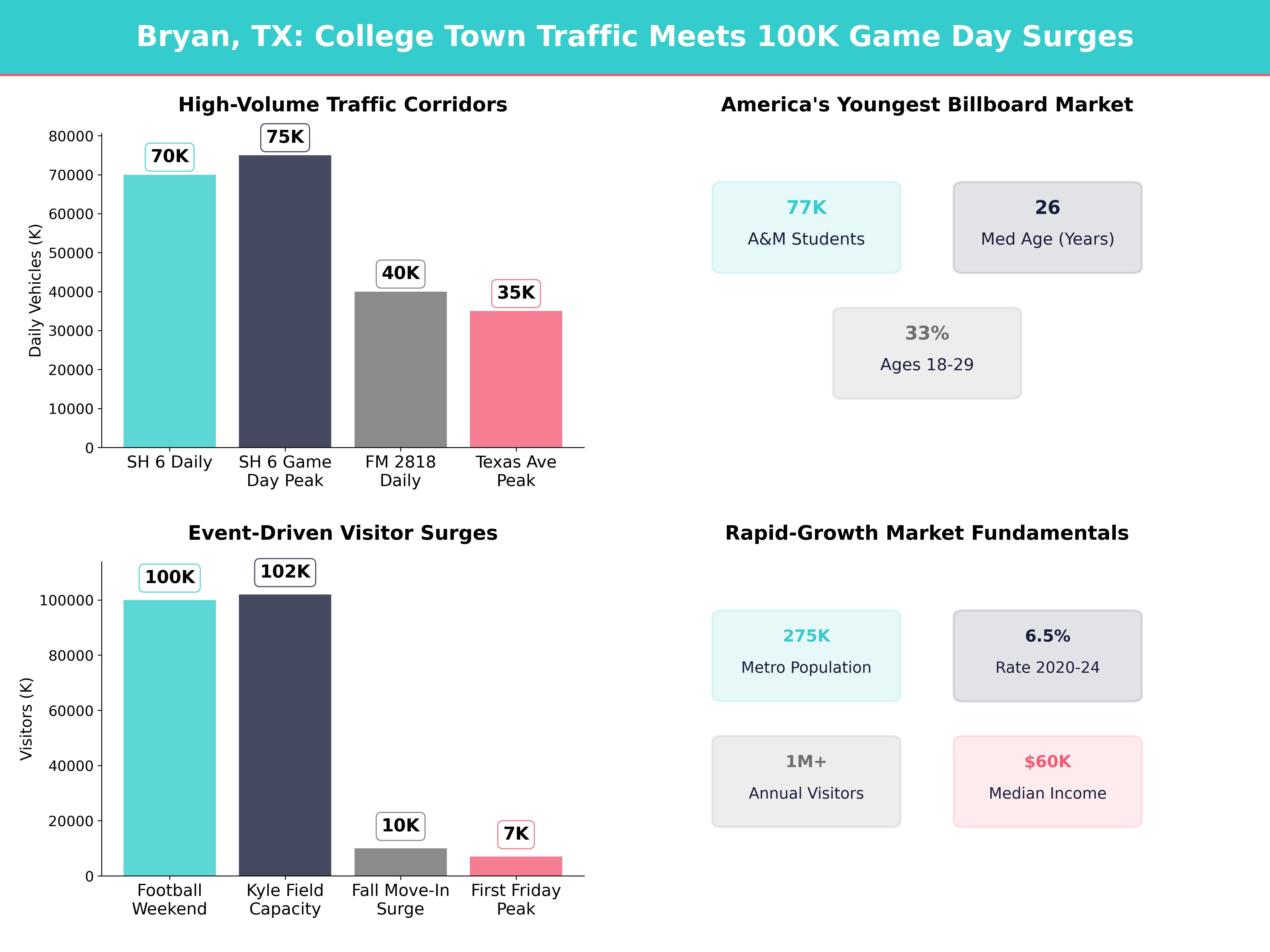
SH 6 near Bryan carries 60,000–70,000 vehicles per day, with peak sections approaching 75,000 VPD during Texas A&M home football weekends. FM 2818 routinely sees 30,000–40,000 VPD, while Texas Avenue commonly falls in the 20,000–30,000 VPD range and some intersections reach 35,000+ VPD. Villa Maria Road, Briarcrest Drive, and University Drive typically range from 15,000–30,000 VPD depending on the segment.
Do I need a contract to advertise with Blip in Bryan?
No, Blip has no long-term contracts or minimum commitments. You can start, pause, or stop your campaign at any time.
How fast can I launch a billboard campaign with Blip in Bryan?
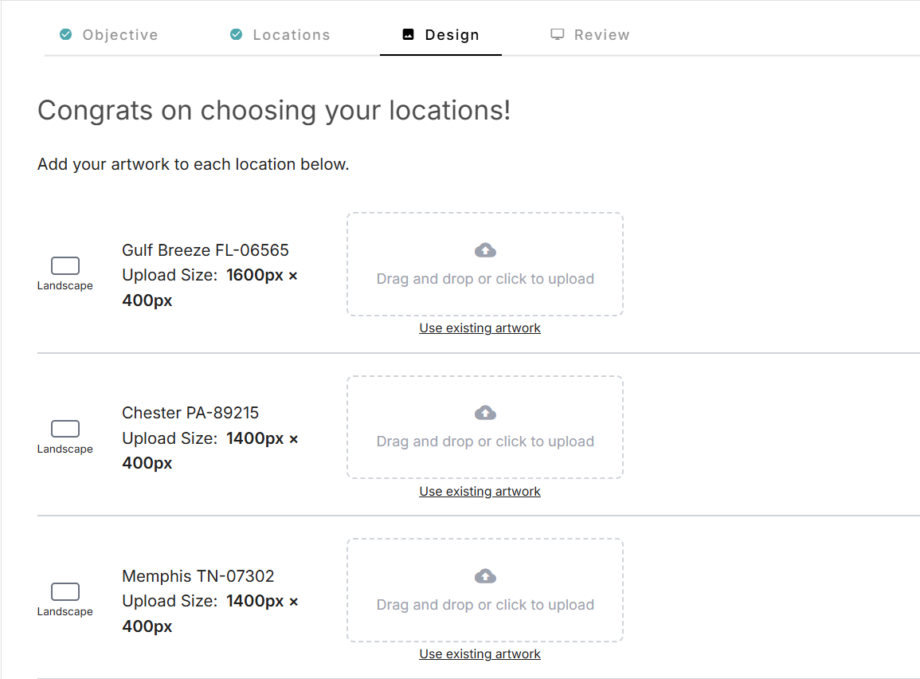
You can have your campaign live in minutes. Create a free account, select your locations, set your budget, upload your design, and start running once approved.
Where can I advertise with Blip in Bryan?
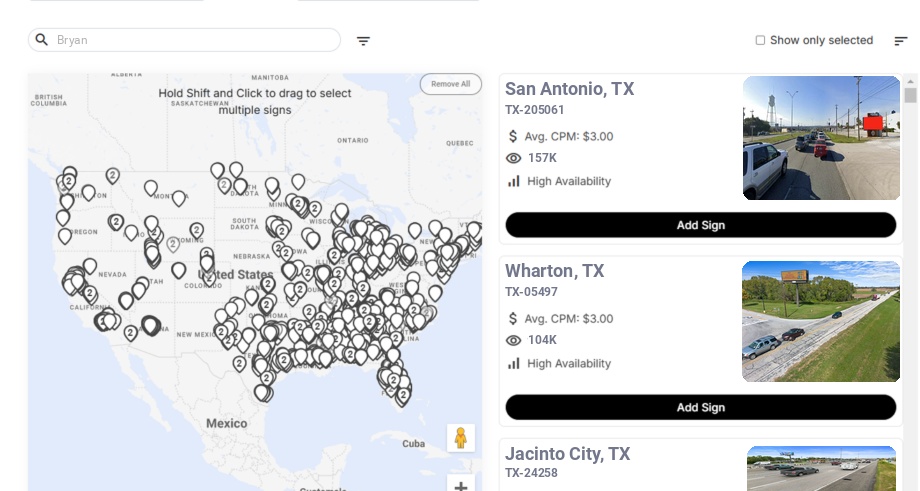
Blip has digital billboards in Bryan. You can browse available locations on a map, choose the ones that fit your audience, and start advertising right away.
Still have questions? Launch a campaign in minutes — no contracts, no commitments.
Start Your CampaignBryan Billboard Advertising Guide
Bryan, Texas, gives advertisers the rare combination of small-city authenticity and big-market reach. With a growing population, a powerful connection to Texas A&M University, and steady traffic along key corridors, digital billboards in Bryan can efficiently reach both locals and visitors moving through the Brazos Valley
Understanding the Bryan Market
Bryan is part of the Bryan–College Station metropolitan area, one of the fastest‑growing college metros in Texas.
- The City of Bryan reports a population that has climbed from about 84,000 in 2020 to an estimated 89,000+ residents by 2024, a growth rate of roughly 6–7% over four years. City planning documents forecast the city crossing 95,000 residents by the late 2020s if current building permits and subdivision activity continue at recent levels.
- The broader Bryan–College Station metro has grown to roughly 275,000 residents, adding 20,000+ people over the past decade, driven by Texas A&M University and steady in‑migration from larger Texas metros like Houston and Austin.
- Texas A&M University in neighboring College Station enrolls more than 77,000 students on the main campus as of Fall 2023, plus over 11,000 faculty and staff, according to Texas A&M University fact books. This dramatically lowers the median age in the area (around 25–27 years metro‑wide) and brings in a constant flow of new residents and visitors every year.
- The City of Bryan’s own economic development summaries note more than 38,000 jobs based in the city limits, with unemployment generally tracking below 4% in recent years, indicating a stable labor market and consistent local spending power.
Key local institutions and resources:
- City of Bryan
- City of Bryan Economic Development
- Brazos County
- Tourism (Bryan–College Station): Experience Bryan College Station
- Downtown promotions and events: Destination Bryan
- Local news: The Eagle KBTX‑TV
From an advertising standpoint, this means:
- A stable base of year‑round residents (families, blue‑collar workers, healthcare and education professionals). City data show that owner‑occupied homes account for roughly 50–55% of housing units, with thousands of long‑term homeowners deeply tied to local service providers.
- A large, rotating student and young professional population, with Texas A&M reporting 10,000+ new freshmen annually and Blinn College District 18,000 students across locations, including the Blinn College–Bryan Campus
- Heavy visitor inflows on game days, graduation weekends, and major events. Tourism figures from Experience Bryan College Station 1 million visitors per year, generating hundreds of millions of dollars in direct visitor spending that flows into hotels, restaurants, and retail.
Together, these factors make Bryan billboard advertising a practical way to reach both permanent residents and short‑term visitors within the same campaigns. Our billboard initiatives should speak to both long‑term community values and short‑term, event‑driven opportunities.
Traffic Patterns and High‑Value Corridors
To maximize impressions, we want to focus on where vehicles actually move. Bryan sits along a key regional artery and is tightly intertwined with College Station, making local traffic counts surprisingly strong for a city of its size.
The Bryan–College Station metropolitan planning organization, the Brazos County MPO traffic growth of 10–20% since 2015.
Key roadways to consider:
-
SH 6 / Earl Rudder Freeway
- A major north–south corridor connecting Bryan to College Station, Navasota, and Waco.
- Texas Department of Transportation (TxDOT) traffic counts show segments of SH 6 near Bryan carrying 60,000–70,000 vehicles per day (VPD), with peak sections approaching 75,000 VPD during Texas A&M home football weekends.
- Ideal for reaching commuters, regional travelers, and game‑day traffic with high‑impact Bryan billboards.
-
FM 2818 (Harvey Mitchell Parkway)
- Western loop connecting Bryan and College Station, with access to Texas A&M and multiple residential areas.
- Segments routinely see 30,000–40,000 VPD, with directional splits (northbound vs. southbound) that favor inbound commuter traffic during morning rush hours and outbound traffic after 4 p.m.
- Strong exposure to students and staff as more than 50% of Texas A&M commuters rely on personal vehicles to reach campus.
-
Texas Avenue / Business SH 6
- Historic commercial spine connecting downtown Bryan and College Station.
- Mix of retail, dining, and services; VPD varies by segment but commonly falls in the 20,000–30,000 VPD range, with some intersections (near major shopping centers) reaching 35,000+ VPD.
- Strategic for capturing shoppers headed to big‑box retail, grocery stores, and everyday errands.
-
Villa Maria Road, Briarcrest Drive, and University Drive corridors
- Critical east–west connectors to shopping centers, medical facilities, schools, and neighborhoods.
- Traffic typically ranges from 15,000–30,000 VPD, depending on the segment, with school‑adjacent segments seeing noticeable spikes during 7–9 a.m. and 3–5 p.m. school travel windows.
- Ideal for time‑sensitive promotions (lunch specials, after‑school activities, urgent care).
We can cross‑reference these corridors with TxDOT’s traffic maps (txdot.gov) and regional plans from the Brazos County MPO
- Face inbound commuters in the morning or outbound in the afternoon.
- Sit near key destinations (hospitals, college, industrial parks, shopping centers).
- Align with our business location for “nearby now” messaging and geo‑relevant Bryan billboard advertising.
Seasonality: When Bryan’s Audience Peaks
Bryan’s advertising calendar is heavily influenced by Texas A&M and major local events. Understanding the rhythm of the year helps us time our Blip campaigns for maximum exposure.
Academic calendar impact
Texas A&M’s fall and spring semesters drive population surges:
- Fall semester (late August–December) and spring semester (January–early May) bring tens of thousands of students back into the area, pushing weekday population in the metro to well over 250,000 people.
- Summer months see a drop in student population—Texas A&M summer enrollment is typically 30–40% lower than fall—but an uptick in family travel, youth sports, and local leisure activity as K–12 schools are out of session.
We can reference Texas A&M’s academic calendar at tamu.edu and Blinn College’s academic calendar
- Late August–September: Great window for “New in town?” or “Back to school” creative for banks, apartments, phone providers, gyms, and restaurants. Thousands of new freshmen and transfer students—often 10,000+—arrive in a span of just a few weeks.
- January: Second wave of opportunity as students return from winter break; ideal for refreshing creative and targeting new habits (fitness, tutoring, meal plans).
- Early May–mid‑June: Graduation and move‑out periods, when tens of thousands of family members visit for ceremonies, and many students are deciding on housing, employment, and services for the next academic year.
This cadence makes flexible billboards in Bryan especially useful for time‑sensitive offers that align with each wave of student and family activity.
Football and sports weekends
Texas A&M home football games can add 100,000+ visitors to the area on a single weekend, between Kyle Field (capacity around 102,000 per Texas A&M Athletics) and spillover visitors. These weekends spike hotel occupancy, restaurant traffic, and retail sales—local tourism officials often report near‑sold‑out hotel occupancy rates exceeding 90% on major game weekends.
We can:
- Run heavier Blip schedules Thursday–Sunday on home game weeks. Experience Bryan College Station 2–3 nights around marquee games.
- Focus on boards along SH 6, FM 2818, and Texas Avenue that capture inbound and hotel‑area traffic.
- Use football‑themed creative: “Pre‑game here,” “Post‑game specials,” or “Beat the rush – order ahead.”
Beyond football, the region hosts:
- Graduations (December and May) – Texas A&M and Blinn College graduations together bring in tens of thousands of guests per ceremony cycle, big for hotels, dining, and gift retailers.
- Texas A&M baseball, basketball, and other sports – across all sports, Texas A&M Athletics reports hundreds of thousands of annual ticketed attendances, creating steady inflows to area businesses.
- Local festivals and downtown Bryan events promoted by Destination Bryan, including First Friday events that regularly draw 3,000–7,000+ visitors into Historic Downtown Bryan
When these events occur, it often makes sense to increase our Blip budget for concentrated bursts (24–72 hours) rather than running at the same level every day, turning Bryan billboard advertising into a lever we can dial up during peak tourism and event periods.
Who We’re Talking To: Audience Profiles
We get more from our billboards when we design creative for specific audience segments that are especially prominent in Bryan.
Students and young adults (18–29)
- Texas A&M plus Blinn College (in Bryan) create a large 18–24 and 25–29 population segment; metro demographic profiles show that roughly one in three residents is between 18 and 29.
- Many are away from home, forming new brand loyalties in banking, dining, fitness, and entertainment. Surveys cited by Experience Bryan College Station hundreds of millions of dollars annually in the local economy, with strong per‑capita spending on dining and nightlife.
Messaging tips:
- Emphasize value, convenience, and digital call‑to‑actions (QR codes, short URLs, social handles). Studies of out‑of‑home (OOH) media by national industry groups show that over 40% of younger drivers report using a mobile device to search for a business they saw on a billboard.
- Use bold colors and simple phrasing: “Late‑night tacos 5 min ahead,” “Student discounts today.”
- Promote app‑based offers or online ordering they can use immediately from their phone.
Families and long‑time residents
Bryan’s neighborhoods – especially north and east of downtown and around newer subdivisions – contain thousands of family households and long‑term residents employed in:
- Healthcare (St. Joseph Health, CHI St. Joseph, and nearby Baylor Scott & White Medical Center – College Station
- Education (Bryan ISD, Texas A&M employees living in Bryan). Bryan ISD educates more than 16,000 students across 25+ campuses, with roughly 2,000 employees.
- Manufacturing, construction, and service industries, highlighted by the Brazos Valley Economic Development Corporation
Household data for the metro indicate that around 60–65% of households are family households, and median household incomes commonly fall in the $55,000–$65,000 range, creating demand for a wide spectrum of local services.
Messaging tips:
- Focus on trust, community, and long‑term value: “Serving Bryan families since 1995,” “Local, affordable, dependable.”
- Emphasize location clarity: “On Briarcrest next to H‑E‑B,” “Just off SH 6 at [Exit X].”
- Promote big-ticket purchases (auto, home services, healthcare, financial services) with consistent exposure on key Bryan billboards.
Blue‑collar and industrial workforce
Bryan has a notable base of manufacturing, logistics, and trades. The Brazos Valley Economic Development Corporation tens of thousands. Average advertised wages for skilled trades (welders, CDL drivers, industrial technicians) commonly range from $20–$30 per hour, giving recruiters room to promote compelling compensation on billboards.
Messaging tips:
- Recruitment boards: “Welders starting at $25/hr – Apply at Exit X,” “Now hiring CDL drivers – home nightly.”
- Emphasize clear pay, benefits, and schedule; avoid small print.
- Use commuter corridors near industrial parks during morning and afternoon rush hours.
Visitors and tourists
Experience Bryan–College Station
- Sports events (Texas A&M, youth tournaments), which can draw hundreds to tens of thousands of participants and spectators per event.
- Heritage tourism in Historic Downtown Bryan Destination Bryan.
- Conferences, meetings, and academic events hosted at Texas A&M and local venues, bringing in a steady flow of business travelers.
Local tourism sources estimate that visitor spending in the Bryan–College Station region reaches hundreds of millions of dollars per year, supporting thousands of local jobs in hospitality and retail.
Messaging tips:
- Assume limited local knowledge: give clear directions (“2 miles ahead on Texas Ave,” “Next right at Villa Maria”).
- Emphasize fast decisions: “Tonight only,” “Game day parking,” “Walkable from downtown Bryan.”
- Use images of recognizable local icons (downtown murals, Kyle Field, local skyline).
Creative Strategies That Work in Bryan
Digital billboards give us flexibility, but impact still depends on great creative tailored to how people actually travel and think in Bryan.
Keep it hyper‑local
Bryan residents respond well to messages that feel rooted in the community:
- Mention neighborhoods, schools, or familiar landmarks: “North Bryan’s trusted HVAC team,” “Near Rudder Tower on campus.”
- Reference local events or teams: “Gig ’em, Aggies – Celebrate here after the game.”
Just ensure we follow Blip’s and local regulations on trademarked team names/logos; generic football or maroon‑and‑white themes can convey the same spirit legally.
Use distance and direction cues
Because many people cross between Bryan and College Station multiple times a day—regional travel surveys indicate that a large share of local workers commute 10–20 minutes between home and job sites:
- Phrases like “5 minutes ahead,” “Next 2 exits,” or “Across from Walmart on Briarcrest” can dramatically increase response.
- For out‑of‑town visitors on SH 6, mention city names: “Bryan exit – Next right for barbecue.”
Match visuals to the environment
Bryan’s environment includes daytime sunlight, night lighting along highways, and some rural‑to‑urban transitions. For readability:
- Use high contrast (light text on dark background or vice versa); avoid maroon text on black at night.
- Keep total words under 7–10; drivers at 60–70 mph only see a design for 4–6 seconds.
- Use one dominant image or icon – a plate of food, a house, a logo – not complex collages.
Rotate messages by time of day
With Blip, we can schedule different creatives for different times:
- Morning: Coffee, breakfast, convenience stores, radio stations, recruitment messages.
- Midday: Lunch specials, medical clinics, errands, car services.
- Evening: Restaurants, entertainment, bars, event reminders.
- Late night: Delivery, 24‑hour services, emergency care.
For example, a single restaurant campaign might run:
- 6–10 a.m.: “Breakfast tacos on Villa Maria – Exit now.”
- 11 a.m.–2 p.m.: “Lunch combo under $10 – 3 minutes ahead.”
- 5–10 p.m.: “Game on tonight – Wings & beer in Bryan.”
This type of rotation makes Bryan billboard advertising feel timely and relevant throughout the day.
Using Blip’s Tools to Target Bryan More Precisely
Blip allows us to buy digital billboard time one “blip” at a time, so we only pay for the exposures we want. In Bryan, that flexibility is especially powerful.
Dayparting based on real behavior
We can align spending with peak local traffic, using patterns documented in TxDOT and Brazos County MPO
-
Commuter windows:
- 7–9 a.m. and 4–6 p.m. on SH 6, FM 2818, and Texas Avenue, when many segments carry 50–60% more vehicles than late‑night baselines.
- Perfect for employment, quick‑service food, banking, and radio/streaming promotions.
-
Student peaks:
- Late morning to early afternoon (class changes) and evening 6–10 p.m. around academic terms, especially on University Drive, FM 2818, and Texas Avenue near campus.
-
Weekend spikes:
- Saturdays during football season, festival weekends, and holiday shopping periods, when mall‑adjacent corridors can see weekend traffic counts rise 20–30% over typical weekdays.
By concentrating our budget into these windows, the same daily spend can generate more impactful impressions.
Location targeting for specific goals
Within Blip’s interface, we can choose individual boards instead of buying the entire market. In Bryan, that might mean:
- Brand awareness: Split impressions across SH 6 and FM 2818 to broadly cover metro traffic and reach drivers who traverse 10–20 miles of roadway daily.
- Drive‑to‑store: Choose boards within 2–3 miles of our business location and use directional creative; local OOH studies often show that proximity messaging can improve response rates by 20–30%.
- Campus‑focused: Target boards on primary routes between Bryan and Texas A&M (University Drive, Texas Avenue, FM 2818 corridors).
- Downtown events: Prioritize signs feeding into Historic Downtown Bryan when promoting nightlife, art walks, and festivals supported by Destination Bryan.
This kind of precision makes billboards in Bryan behave more like a targeted digital channel rather than a one‑size‑fits‑all placement.
Budgeting and pacing
Because we can set daily or campaign‑level budgets:
- New advertisers might start as low as $10–$20 per day to test creative and identify top‑performing boards. Even at this level, frequency can reach dozens to hundreds of blips per day depending on competition and time of day.
- For event‑driven pushes (e.g., a single Texas A&M home game weekend), we might temporarily increase to 3–5x the normal daily budget for 2–3 days, then drop back down.
- Long‑term branding campaigns for banks, hospitals, or utilities might run steadily at a moderate level for 3–6 months, adjusting creative for seasons and events. Local advertising case studies frequently show that sustained OOH presence over 3+ months boosts brand recall significantly compared with short bursts alone.
This approach effectively turns billboard rental in Bryan into a controllable, testable line item in the broader marketing budget rather than a fixed, inflexible expense.
Industry‑Specific Opportunities in Bryan
Certain types of businesses are especially well‑positioned to win with billboards in Bryan.
Restaurants, bars, and nightlife
- Game days and First Friday events create huge surges downtown and along Texas Avenue, with some restaurants reporting sales increases of 30–50% on major event days compared with typical weekends.
- Visitors often decide where to eat within minutes of exit points; OOH industry research indicates that over 30% of drivers have decided to visit a restaurant based on a billboard they saw recently.
Tactics:
- Use countdown‑style copy: “Exit now for Bryan’s best barbecue,” “2 miles to craft beer & live music.”
- Run heavier rotations Thursday–Sunday and on known event days from Destination Bryan.
- Include “Open late” or “Family‑friendly” callouts as quick decision filters.
Real estate and apartments
With thousands of students and staff arriving each year:
- Pre‑lease and move‑in seasons (July–September, December–January) are key. In some years, Texas A&M has reported 10,000+ new on‑campus residents, with many more living off‑campus in Bryan and College Station.
- Many prospects drive the city before contacting a leasing office; national housing surveys suggest over 40% of renters explore neighborhoods by car when choosing where to live.
Tactics:
- Use clean visuals: property photo, starting price (“From $XXX”), and clear direction (“On [Street], Behind [Landmark]”).
- Focus on boards near Texas A&M routes and high‑growth residential areas highlighted by the City of Bryan Planning & Development Services.
- For new subdivisions, target SH 6 and FM 2818 to reach commuters considering a move, using Bryan billboards to keep your listings top of mind.
Healthcare and medical services
Bryan serves as a regional medical hub with facilities like St. Joseph Health thousands of healthcare workers and serving patients from across the Brazos Valley.
Tactics:
- Highlight differentiation: “Same‑day appointments,” “ER wait times under X minutes,” “Pediatric specialists in Bryan.”
- Run steady, year‑round awareness with occasional bursts for service line campaigns (orthopedics, urgent care, imaging).
- Emphasize location clarity: “Villa Maria across from [Landmark],” or “Just off SH 6.”
Recruitment and workforce
Large employers in manufacturing, logistics, construction, and healthcare often struggle with hiring. Local job postings regularly list hundreds of openings across Brazos County at any given time, with hourly pay for in‑demand positions (CDL drivers, skilled trades, nurses) commonly starting between $18 and $30+ per hour.
Tactics:
- Place boards along commuter corridors leading to industrial parks and medical centers.
- Use concrete offers: “Up to $28/hr,” “4‑day weeks,” “Full benefits from day 1.”
- Focus on morning and late afternoon Blips when workers are commuting to/from jobs.
Retail and local services
From auto dealers to HVAC companies and local banks, Bryan’s residents still rely heavily on local providers. Local banking and retail usage surveys in similar Texas markets show that 60–70% of consumers prefer a branch or storefront within 5–10 miles of home.
Tactics:
- Combine a clear brand message (“Bryan’s hometown dealer since 1980”) with a simple promo (“0.9% APR this month”).
- Align heavier schedules with paydays (1st and 15th of the month) and major shopping periods (back‑to‑school, holiday season).
- Use always‑on branding near your primary trade area, then layer short, high‑frequency bursts around sales events to get more from your Bryan billboard advertising investment.
Tying It All Together: Testing, Measuring, Optimizing
Even without individual impression‑level analytics, we can make our Bryan campaigns smarter over time.
Use simple tracking mechanisms
- Promote a short vanity URL or unique landing page on billboards (e.g., “yourbrand.com/Bryan”).
- Use QR codes sized large enough to be scanned in slow‑moving traffic near stoplights or surface streets (not for high‑speed highways).
- Offer billboard‑only codes (“Mention ‘Bryan6’ for 10% off”) and track redemptions. Case studies in similar markets often show that unique billboard codes can account for 5–15% of total promo redemptions when promoted consistently.
Compare by time and place
- Shift more of our budget to boards that are closer to our highest‑performing locations or that correlate with noticeable traffic lifts, such as 5–10% increases in walk‑in or call volume during active weeks.
- Test different dayparts: for instance, run a 2‑week morning‑heavy campaign, then a 2‑week evening‑heavy campaign, and compare in‑store or online results.
A/B test creative
- Run two different designs at the same time on the same or similar boards and measure which one drives more calls, site visits, or redemptions. National OOH benchmarks often show that stronger creative can outperform weaker versions by 20–50% in measurable response.
-
Test elements like:
- Headline style (price‑driven vs. benefit‑driven).
- Use of people vs. product images.
- “Distance/direction” language vs. pure brand.
Over a few cycles of testing and refinement, we can turn Bryan’s digital billboards into a predictable, high‑return channel that works in harmony with our other media — from social and search to local radio and sponsorships with organizations like Bryan ISD, Destination Bryan, and community events promoted by the City of Bryan. Effective billboard rental in Bryan becomes not just a visibility play, but a measurable driver of leads and sales.
By grounding our campaigns in Bryan’s real traffic patterns, academic and event calendar, and community demographics, we can use Blip’s flexible digital billboards to punch above our weight. Whether we’re a local startup or a regional brand, Bryan offers a concentrated, engaged audience that rewards creative, well‑timed, and locally resonant billboard advertising, making Bryan billboards a smart cornerstone of a broader Brazos Valley marketing strategy.