Billboards near Clemmons, NC
No Minimum Spend. No Long-Term Contracts. Just Results.
Trusted by Leading Brands


Billboard advertising
near Clemmons has never been easier
How much is a billboard near Clemmons?
Why Choose Blip for Billboard Advertising near Clemmons
-
Blip's self-serve launch helps you reach Clemmons commuters on I-40 and NC 150 without billboard hassle.
-
Use flexible budgets in Clemmons to tap weekday flow between west Winston-Salem, Davie County, and local errands.
-
Daypart your Clemmons ads for 6-9 a.m. school runs or 4-7 p.m. return traffic to match repeat car trips.
-
No contracts let you test Clemmons billboards for Tanglewood Park, Hanes Mall, or holiday traffic, then pause anytime.
-
Real-time analytics show what works in Clemmons, so you can shift spend as seasonal demand moves from summer events to school-year commuting.
-
Blip's creative tools make it easy to tailor a Clemmons message for families, shoppers, and healthcare travelers.
Frequently Asked Questions About Billboard Advertising near Clemmons
How much does a billboard cost in Clemmons with Blip?
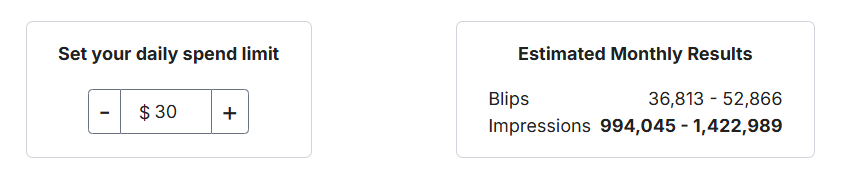
Blip makes billboard advertising in the Clemmons area flexible and accessible because you only pay when your ad actually appears. Each “blip” is a 7.5-to-10-second display on a rotating digital billboard serving the Clemmons area, with pricing that starts at $0.01 per display. Your daily budget is used to bid for open ad slots, and the cost per blip changes based on time of day, location, and demand so Blip can stretch your spend as far as possible.
Where can I advertise near Clemmons with Blip?
Our 2 digital billboards in nearby Winston-Salem are only 9.9 miles from Clemmons, which gives advertisers a practical way to reach people serving the Clemmons area during everyday trips rather than waiting for them to seek a business out. The most important billboard corridors serving the Clemmons area are I-40, U.S. 421, NC 150, Lewisville-Clemmons Road, and Stratford Road. Those are the kind of volumes that give digital billboards near Clemmons repeated daily visibility among commuters, shoppers, and appointment-driven travelers.
Why is Clemmons a strong billboard market for Blip?
Clemmons is a strong billboard market because it sits at the edge of a busy suburban-to-urban travel pattern, where households, shoppers, students, and workers move back and forth between the Village of Clemmons, west Winston-Salem, and nearby Davie County. Clemmons also benefits from its position inside the larger Piedmont Triad, a region of roughly 1.7 million residents, where people regularly cross city and county lines for work, school, healthcare, and shopping. That makes the Clemmons area especially useful for advertisers in categories such as home services, restaurants, medical practices, legal services, real estate, auto sales, financial services, and family entertainment.
When is the best time to run billboard ads in Clemmons?
We often recommend commute-focused creative for weekday windows such as 6:00 to 9:00 a.m. and 4:00 to 7:00 p.m., because those dayparts align with the most repeatable traffic behavior. Spring is a strong season for service and lifestyle advertising near Clemmons, and fall is one of the best billboard seasons serving the Clemmons area. Holiday advertising becomes especially compelling from late November through early January because of shopping traffic and seasonal outings.
What kinds of businesses work best for billboard advertising in Clemmons?
For these consumers, the strongest billboard categories tend to be healthcare and dental practices, home improvement and repair, legal and financial services, restaurants and quick-service food, fitness and wellness, and auto dealers or repair shops. The Clemmons area also has a strong family profile, which creates excellent conditions for advertisers targeting household decision-makers. We also see strong performance from tourism and lifestyle categories including restaurants and breweries, family attractions and events, retail promotions, seasonal recreation, specialty healthcare, and real estate.
Do I need a contract to advertise with Blip near Clemmons?
No, Blip has no long-term contracts or minimum commitments. You can start, pause, or stop your campaign at any time.
How fast can I launch a billboard campaign with Blip near Clemmons?
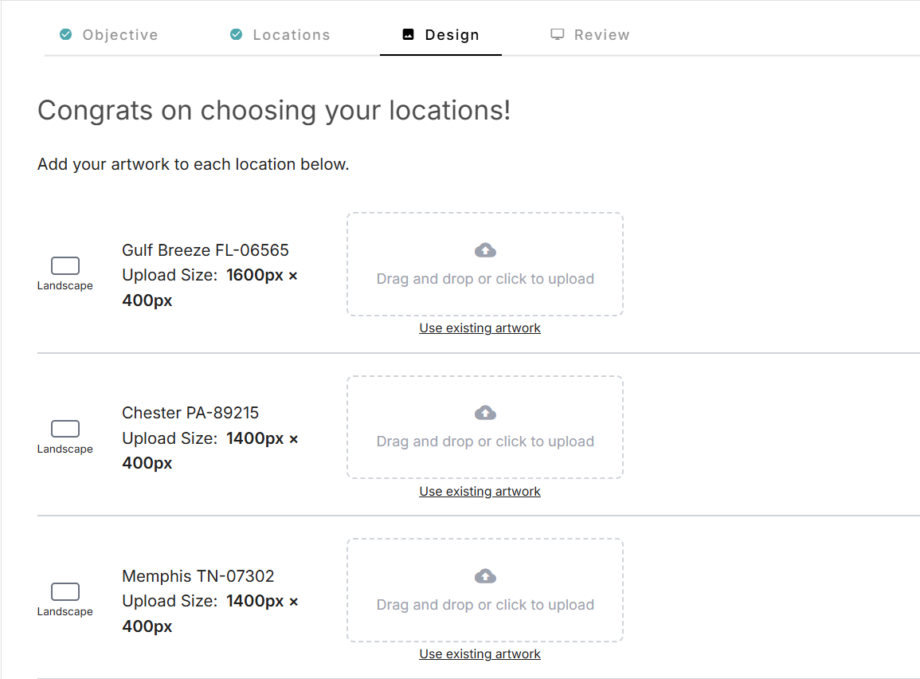
You can have your campaign live in minutes. Create a free account, select your locations, set your budget, upload your design, and start running once approved.
Where can I advertise with Blip near Clemmons?
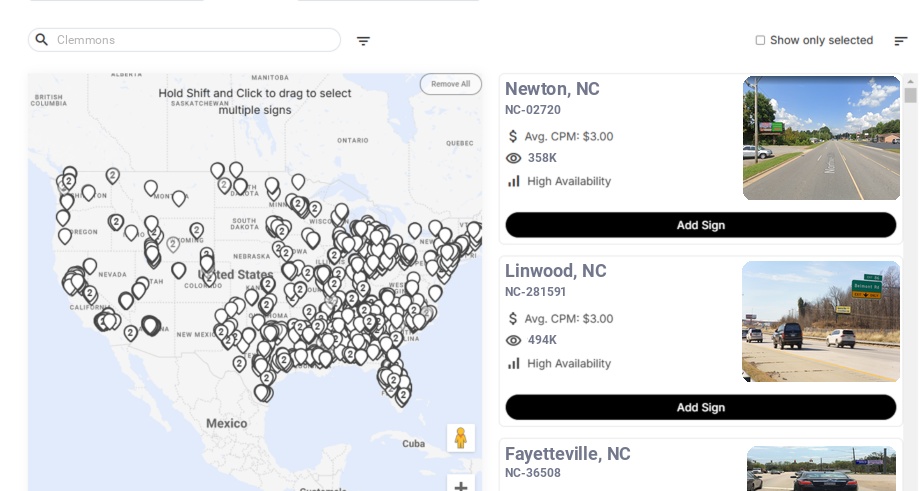
Blip has digital billboards near Clemmons. You can browse available locations on a map, choose the ones that fit your audience, and start advertising right away.
Still have questions? Launch a campaign in minutes — no contracts, no commitments.
Start Your CampaignClemmons Billboard Advertising Guide
Clemmons is a strong billboard market because it sits at the edge of a busy suburban-to-urban travel pattern, where households, shoppers, students, and workers move back and forth between the Village of Clemmons Winston-Salem, and nearby Davie County 2 digital billboards in nearby Winston-Salem are only 9.9 miles from Clemmons, which gives advertisers a practical way to reach people serving the Clemmons area during everyday trips rather than waiting for them to seek a business out. That matters here because the market is heavily car-oriented, with strong commuter flow on major highways and arterial roads. It also matters because Clemmons blends high-frequency local routines with regional draw from healthcare, education, retail, recreation, and events across the western side of Forsyth County.
Clemmons area market overview
Population scale and regional draw near Clemmons
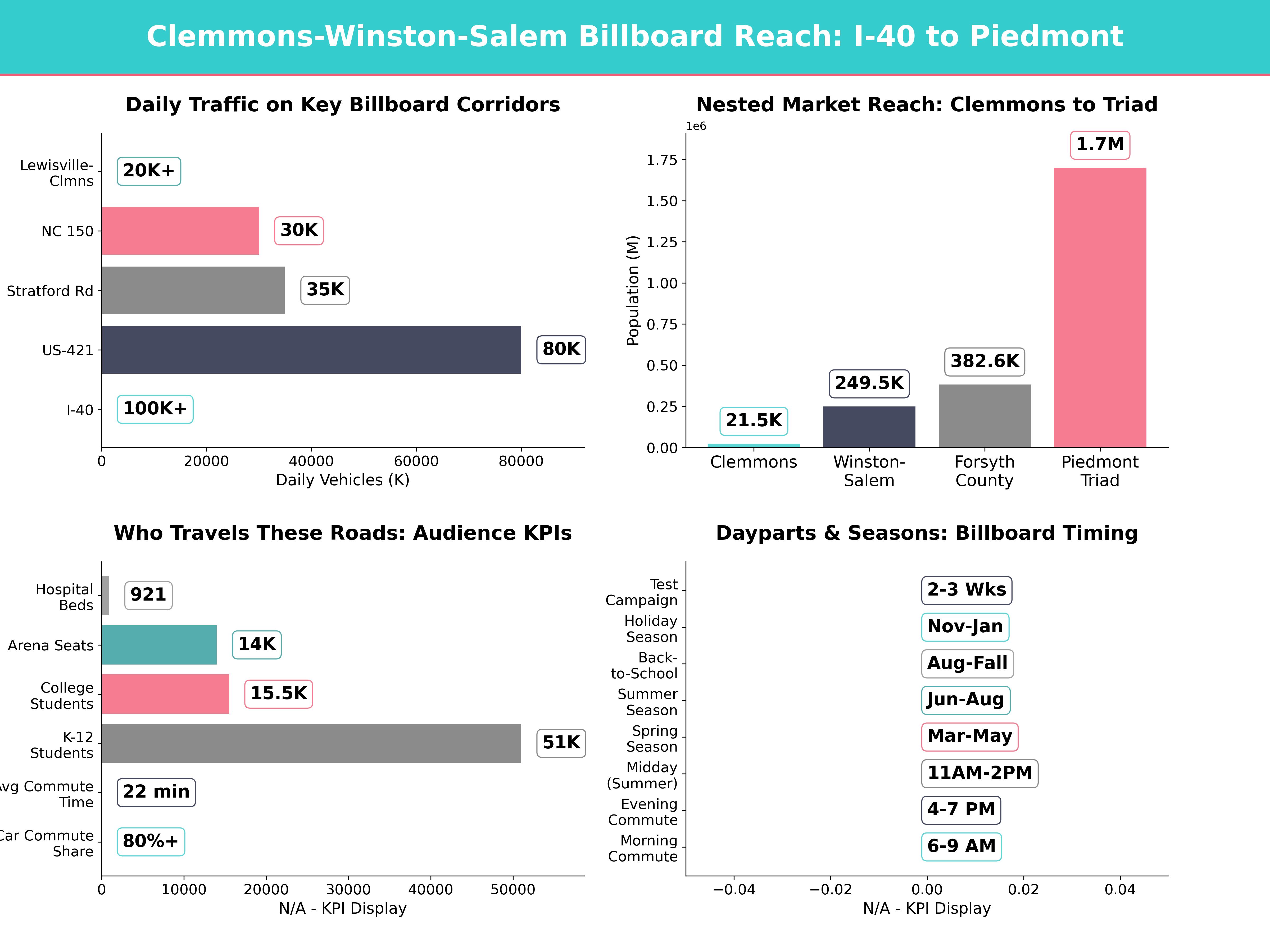
The Clemmons area gives us a suburban customer base with meaningful regional spillover. The 2020 Census counted 21,517 residents in Clemmons, while nearby Winston-Salem had 249,545 residents, and Forsyth County had 382,590 residents overall. Those three figures tell us something important for billboard planning near Clemmons: local businesses are not reaching only one village, because they are participating in a broader west-Forsyth consumer market connected by everyday driving patterns.
Clemmons also benefits from its position inside the larger Piedmont Triad, a region of roughly 1.7 million residents, where people regularly cross city and county lines for work, school, healthcare, and shopping. That makes the Clemmons area especially useful for advertisers in categories such as home services, restaurants, medical practices, legal services, real estate, auto sales, financial services, and family entertainment. We see this as a market where suburban stability meets regional mobility.
Economically, the surrounding area is anchored by major institutions and employment centers, including Atrium Health Wake Forest Baptist, Novant Health, Wake Forest University Winston-Salem State University, University of North Carolina School of the Arts, and Winston-Salem/Forsyth County Schools. The presence of these employers supports a steady flow of professionals, students, parents, and service workers throughout the week. For advertisers, that means the Clemmons area is not dependent on a single industry or a single daily rhythm.
Driving behavior and consumer movement serving the Clemmons area
Clemmons is a classic drive-first suburb. In the Clemmons area and the broader Forsyth County market, well over 80% of workers commute by car, whether driving alone or carpooling, and average commute times are around 22 minutes. That combination is ideal for digital billboard exposure because people return to the same roads repeatedly, often at the same times each week.
We also like the market because most trips are not purely long-haul interstate trips. Many are practical, repeatable local trips for school drop-off, after-work errands, appointments, and shopping around corridors tied to west Winston-Salem, Hanes Mall, healthcare campuses, and community destinations such as Tanglewood Park. For billboard advertisers serving the Clemmons area, repetition matters as much as raw traffic volume.
Another advantage is household composition. Clemmons is widely recognized by the Lewisville-Clemmons Chamber of Commerce and surrounding business community as a family-oriented suburb with strong ties to nearby schools, youth activities, churches, and neighborhood retail. That tends to favor clear, service-oriented billboard messaging over abstract brand campaigns. When we advertise near Clemmons, practical value usually wins.
Key traffic corridors serving the Clemmons area
Interstate and highway routes near Clemmons
The most important billboard corridors serving the Clemmons area are the highways that connect Clemmons to west Winston-Salem and the rest of Forsyth County. According to the North Carolina Department of Transportation Traffic Monitoring Program
- 100,000+ vehicles per day on major stretches of I-40 in west Winston-Salem.
- Roughly 70,000 to 90,000 vehicles per day on U.S. 421 approaching the I-40 junction and west-side Winston-Salem corridor.
- About 25,000 to 35,000 vehicles per day on NC 150, which is one of the main local connectors for Clemmons-area movement.
- More than 20,000 vehicles per day on parts of Lewisville-Clemmons Road, which supports local circulation between neighborhoods, schools, and retail.
- Around 30,000 to 40,000 vehicles per day on sections of Stratford Road and nearby commercial approaches around the Hanes Mall area.
Those are not minor neighborhood counts. They are the kind of volumes that give digital billboards near Clemmons repeated daily visibility among commuters, shoppers, and appointment-driven travelers.
I-40 is especially important because it functions as the market’s east-west spine. Anyone commuting from Clemmons toward downtown Winston-Salem, major hospitals, university campuses, or west-side retail is likely to touch I-40, U.S. 421, or the commercial roads feeding into them. That is exactly why nearby Winston-Salem billboard locations can perform well for advertisers targeting Clemmons-area consumers.
Commercial and lifestyle corridors near Clemmons
The Clemmons area is not only about interstate traffic. It is also shaped by a cluster of commercial corridors that convert impressions into action. NC 150, Lewisville-Clemmons Road, and the retail routes connecting to Hanes Mall and Stratford Road capture people who are already in an errands, dining, or purchase mindset. That distinction matters.
For example, Hanes Mall offers about 1.5 million square feet of retail space, making the west Winston-Salem commercial district a major shopping node for households serving the Clemmons area. When we pair high-traffic commuter exposure with proximity to retail and service destinations, billboard campaigns can support both awareness and near-term response.
The same is true for healthcare travel. The west side of Winston-Salem includes major medical destinations such as Novant Health Forsyth Medical Center, which has 921 beds, and nearby specialty practices tied to Atrium Health Wake Forest Baptist. These destinations pull regular patient, visitor, and employee traffic from the Clemmons area on weekdays and weekends.
Audience segments near Clemmons
Commuters and working adults serving the Clemmons area
The first major audience near Clemmons is the commuter base. These are residents who live in or near Clemmons and drive toward Winston-Salem for office work, healthcare jobs, education, retail employment, and professional services. Because this movement is habitual, it supports message frequency very efficiently.
For these consumers, the strongest billboard categories tend to be: Healthcare and dental practices; Home improvement and repair; Legal and financial services; Restaurants, coffee, and quick-service food; Fitness, wellness, and personal care; Auto dealers, repair shops, and insurance.
We often recommend commute-focused creative for weekday windows such as 6:00 to 9:00 a.m. and 4:00 to 7:00 p.m., because those dayparts align with the most repeatable traffic behavior. In a market like Clemmons, where people often make decisions around convenience, route familiarity, and trust, repeated exposure near the same roads can be especially effective.
Families, parents, and students near Clemmons
The Clemmons area has a strong family profile, and that creates excellent conditions for advertisers targeting household decision-makers. Winston-Salem/Forsyth County Schools serves about 51,000 students, which means the broader school-year calendar shapes traffic, spending, and service demand across the market.
The higher education footprint nearby also expands the audience mix. Within the Winston-Salem market that serves Clemmons, we can reach people tied to: Wake Forest University 9,000 students; Winston-Salem State University, with roughly 5,200 students; University of North Carolina School of the Arts, with about 1,300 students; and Forsyth Technical Community College, which adds a large commuter-student and workforce-training audience.
This mix matters even for advertisers that are not directly targeting students. Parents visit campuses. Alumni attend games and events. Faculty and staff commute. Local businesses benefit from the restaurant, retail, housing, and service demand these institutions generate.
Visitors, shoppers, and leisure travelers near Clemmons
The Clemmons area also draws leisure traffic, especially because it sits close to both outdoor recreation and Winston-Salem entertainment. Tanglewood Park is a major example. At 1,100 acres, it is one of the region’s signature parks, bringing people out for golf, festivals, seasonal events, and family recreation.
Nearby Winston-Salem adds even more audience variety through destinations such as Old Salem Museums & Gardens, Lawrence Joel Veterans Memorial Coliseum, which seats roughly 14,000 for many events, Winston-Salem Dash, and the district around Hanes Mall. If your business serves diners, shoppers, eventgoers, or weekend travelers, billboard exposure near Clemmons can help you reach people before they settle on where to spend time and money.
This is why local tourism and lifestyle categories often perform well, including: Restaurants and breweries; Family attractions and events; Retail promotions; Seasonal recreation; Specialty healthcare and elective services; Real estate and new-home communities.
Seasonal and timing opportunities near Clemmons
Spring and summer campaigns serving the Clemmons area
Spring is a strong season for service and lifestyle advertising near Clemmons. From March through May, people in the Clemmons area become more active with home projects, outdoor recreation, landscaping, sports, weddings, and local event attendance. This is a good time for roofers, HVAC companies, lawn and garden brands, outdoor living companies, family entertainment venues, and home organizers.
Summer brings a different rhythm. From June through August, schools are out, families shift to camps and activities, and weekend travel increases. That is useful for attractions, medical specialists, restaurants, youth programs, and retail. It is also a good time to run lunch and afternoon creative in windows like 11:00 a.m. to 2:00 p.m. and early evening for dining and impulse stops.
The recreational draw around Tanglewood and west Winston-Salem makes summer creative work best when it feels active and local. We generally recommend ads that emphasize convenience, family value, seasonal offers, and immediate action rather than corporate positioning alone.
Fall and holiday timing near Clemmons
Fall is one of the best billboard seasons serving the Clemmons area. School routines resume in August, college activity ramps back up, and cooler weather brings heavier attendance at local events. The Carolina Classic Fair
Holiday advertising becomes especially compelling from late November through early January because of shopping traffic and seasonal outings. Tanglewood Park is well known for holiday activity, and the west side of Winston-Salem picks up retail, dining, gifting, and healthcare demand as the year closes. For many advertisers near Clemmons, this is the period when urgency-based messaging performs best.
Some of the strongest Q4 categories include: Retail and gift promotions; Restaurants and catering; Urgent care, wellness, and elective healthcare; Family entertainment; Holiday events and ticketed experiences; Real estate, especially year-end and early-year planning.
We also like January for “reset” campaigns. Fitness brands, clinics, accountants, financial advisors, and home organization businesses often benefit from messaging tied to fresh starts, appointments, and goals.
Billboard design tips for the Clemmons area
Creative approaches that fit the Clemmons market
The Clemmons area responds best to billboard creative that is practical, legible, and locally aware. Because drivers are often moving quickly between suburban neighborhoods and west Winston-Salem commercial zones, we recommend simple messages that can be understood in 7.5 to 10 seconds.
A few design principles tend to work especially well near Clemmons: Keep the headline to 6 words or fewer whenever possible; Use high-contrast colors that stand out against summer greenery and gray winter skies; Lead with the offer, the benefit, or the destination, rather than a long brand story; Use recognizable local references such as “Near Hanes Mall,” “Off I-40,” “West Side,” or “Minutes from Clemmons” when that claim is accurate; Favor clean typography and bold numerals for prices, dates, and phone-free calls to action.
We also see strong performance from visual themes that fit the geography. Family imagery, home and lifestyle visuals, healthcare trust cues, and polished suburban aesthetics typically feel more native to the Clemmons audience than edgy urban design. This does not mean the creative has to be bland. It means it should feel relevant to a market built on households, routines, and dependable service.
Messaging ideas that resonate near Clemmons
The best calls to action serving the Clemmons area are usually immediate and useful. Examples include: “Book Today,” “Now Open,” “This Week Only,” “Free Estimate,” “Exit Now,” and “Schedule Online.”
Directional language can also work well here because the nearby billboard inventory is in Winston-Salem, where many viewers are already in transit toward the Clemmons area or back from it. If your business location makes sense geographically, phrases such as “Next Exit,” “Ahead on I-40,” or “Minutes from Clemmons” can connect the message to the route the driver is already taking.
Regional strategies serving the Clemmons area
West Winston-Salem strategy for Clemmons-area commuters
Because our Clemmons-serving billboards are in nearby Winston-Salem, one of the smartest strategies is to treat west Winston-Salem as the market’s commuter gateway. This is ideal for businesses that want to reach drivers moving between Clemmons and major employment, retail, and medical destinations.
This approach works especially well for: Healthcare providers; Financial and legal services; Restaurants and coffee brands; Auto service businesses; Retail promotions; Home service companies.
When we target weekday morning and evening commute windows, we are effectively meeting the Clemmons audience during the part of the day when route familiarity and convenience matter most.
Suburban lifestyle strategy near Clemmons
A second strategy is to focus on suburban lifestyle demand rather than pure commuter demand. In this case, we think about the places Clemmons-area households go after work and on weekends, including Tanglewood Park, the Town of Lewisville, the Town of Bermuda Run
This strategy is especially useful for: Family attractions; Restaurants; Real estate communities; Grocery-adjacent or errands-based retail; Pediatric, dental, and wellness services; Churches, schools, and local events.
For these advertisers, we usually recommend broader daypart coverage than a strict commuter-only campaign. Midday, late afternoon, and weekend runs can all matter because the goal is to align with household activity, not only work travel.
Cross-county strategy from Clemmons toward Davie County and beyond
Clemmons also functions as a bridge market between Forsyth County and Davie County. Drivers moving toward Mocksville Bermuda Run
We recommend this cross-county strategy for advertisers with broader service areas, including hospital systems, regional law firms, colleges, dealerships, homebuilders, and destination retail. Instead of thinking only about municipal boundaries, we can think about the practical consumer geography created by I-40, U.S. 421, NC 150, and west-side Winston-Salem commercial routes.
Using Blip tools for the Clemmons area
How we can match Blip features to Clemmons-area strategy
Blip works well for this market because Clemmons is highly route-driven, and route-driven markets benefit from flexibility. With only 2 digital billboards serving the Clemmons area from nearby Winston-Salem, we can focus budget where timing matters most instead of spreading impressions too thinly.
For example, we can prioritize weekdays for commuter categories; add weekends for restaurants, events, and family entertainment; increase presence during back-to-school, holiday shopping, or major local events; swap creative by season without restarting an entire campaign; and test multiple offers and let real-time results guide the next move.
This is also a market where dayparting can make a meaningful difference. A breakfast brand may care most about 6:00 to 9:00 a.m., while a healthcare provider may want broader business-hour coverage, and a restaurant may prefer 4:00 to 7:00 p.m. and weekends. Because Blip is self-serve and flexible, we can adjust to those patterns quickly.
Budgeting and optimization near Clemmons
Blip’s pay-per-play model is useful for Clemmons-area advertisers because it lowers the barrier to testing. Campaigns start at $0.01 per display, and we only pay when the ad actually runs. That makes it easier to build a smart local plan around a specific audience, season, or corridor.
We generally recommend starting with a focused test, then optimizing based on what the data shows. In a market like Clemmons, even small adjustments can matter: a better-performing morning schedule; a clearer call to action; a seasonal image swap; a stronger price point or promotional number; more budget on heavier-demand days.
Because the market is driven by repeated travel behavior, optimization often comes from improving fit rather than simply increasing spend.
Getting started with billboard rental near Clemmons
What to expect when renting a billboard serving the Clemmons area
The first step is to define what success looks like. Are we trying to drive store visits, appointment bookings, event attendance, brand awareness, or calls from households near Clemmons? Once that is clear, choosing nearby billboard locations becomes much easier.
Traditional billboard buying often requires long sales cycles, fixed packages, and limited flexibility. By contrast, Blip lets us choose digital billboards on a map, upload creative, set daily budgets, and adjust timing without getting locked into a long contract. That is especially helpful in a market like Clemmons, where the right message may change between school season, holiday season, and summer.
A simple launch plan often looks like this: 1. Choose the primary audience in the Clemmons area. 2. Select the nearby Winston-Salem billboard locations that best match that audience’s route. 3. Build 1 to 3 simple ad versions. 4. Start with a 2- to 3-week test. 5. Review performance and refine timing, creative, or budget.
How to evaluate the right nearby billboard for Clemmons goals
When we evaluate billboard rental near Clemmons, we focus less on municipal boundaries and more on route relevance. The right billboard is the one that intercepts the customer before the purchase decision is made.
We usually ask these questions: Does the location align with Clemmons-area commuter flow? Does it sit near a retail or medical decision zone? Is the audience likely to act the same day? Does the creative match the speed and purpose of the road? Are we building frequency with the same audience over time?
For example, a law firm, clinic, or financial advisor may benefit most from repeated weekday commuter exposure. A restaurant, seasonal attraction, or retailer may prefer broader weekly coverage that includes afternoons and weekends. A home service brand may want to stay visible for several weeks so the message is there when the need appears unexpectedly.
The biggest advantage of renting a billboard near Clemmons through Blip is control. We can start small, learn quickly, and scale only what works. In a suburban market with dependable traffic patterns, strong household spending activity, and major nearby destinations, that flexibility gives advertisers a practical way to build reach serving the Clemmons area without committing to the slower, more rigid process that often comes with traditional billboard companies.