Billboards in Lincoln Park, MI
No Minimum Spend. No Long-Term Contracts. Just Results.
Trusted by Leading Brands


Billboard advertising
in Lincoln Park has never been easier
How much is a billboard in Lincoln Park?
Why Choose Blip for Billboard Advertising in Lincoln Park
Blip lets Lincoln Park advertisers launch fast on I-75, I-94, and M-39 commuter traffic with self-serve control and no contracts.
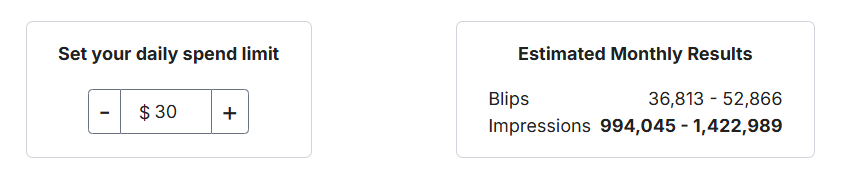
In Lincoln Park, set a daily budget that fits your business and pay only for the blips you use—ideal for value-focused local shoppers and families.
Use Blip dayparting to hit Lincoln Park rush hours, shift changes, and weekend retail peaks near Allen Park and Fort Street.
Track Lincoln Park campaign results in real time and shift spend toward the Detroit and Romulus corridors when airport or game-day traffic spikes.
Blip's creative tools help Lincoln Park ads stay bold and clear for busy drivers, workers, and Downriver commuters in seconds.
Frequently Asked Questions About Billboard Advertising in Lincoln Park
How much does a billboard cost near Lincoln Park, Michigan with Blip?
With Blip, you control exactly what you spend on Lincoln Park billboards by setting a daily budget that fits your business, large or small. Each ad display, or “blip,” is a 7.5–10 second spot on digital billboards near Lincoln Park, Michigan, and you only pay for the blips you receive. Prices for each blip adjust based on the time of day, location, and advertiser demand, so you can tailor your schedule to match your goals and budget in the Lincoln Park area.
Where can I advertise with Blip near Lincoln Park, Michigan?
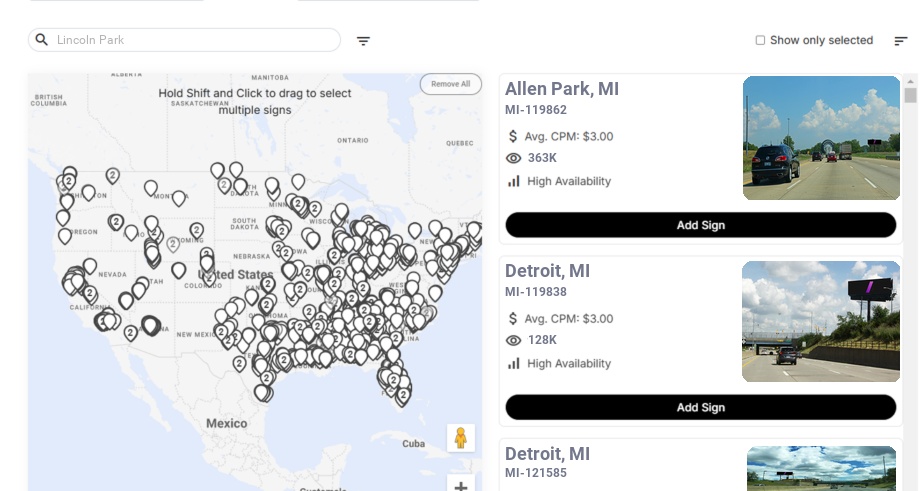
There are 22 digital billboards serving the Lincoln Park area within about 10 miles, in locations that function as de facto Lincoln Park billboards for daily drivers. Nearby placements include Allen Park, Detroit, and Romulus. These boards help reach residents, commuters, and visitors moving through the Downriver hub every day.
What kind of people live in the Lincoln Park, Michigan area for billboard advertising?
Lincoln Park is a dense, working-class city in Wayne County, just south of Detroit, and central to the Downriver communities. The city has around 14,500–15,000 households, with an average household size just over 2.5 people. Roughly one quarter of residents are under age 18 and about 13–15% are over 65, creating strong opportunities for family, youth, and senior-focused messaging.
When is the best time to run Lincoln Park, Michigan billboards for commuters?
Weekday 6:00–9:00 a.m. is a powerful window for outbound commuters, when traffic volumes can reach 2–3 times off-peak baselines on key freeways. Weekday 3:00–7:00 p.m. is often the single heaviest daily window on I‑75 and I‑94. Midday and early evening traffic remains significant due to shift work at industrial plants, warehouses, and the airport.
What roads get the most billboard exposure near Lincoln Park, Michigan?
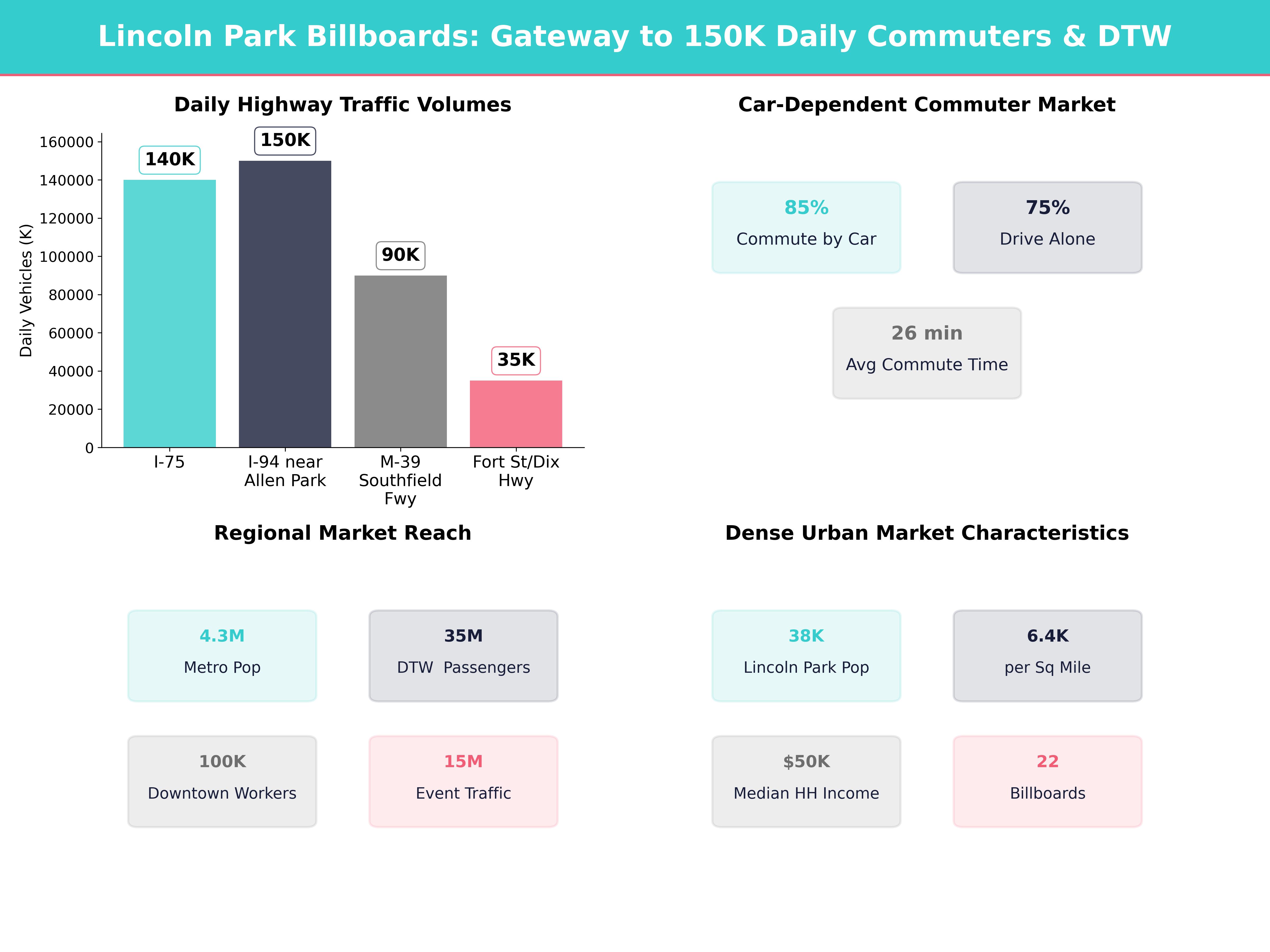
I‑75 is the main north–south interstate through the Downriver region, and MDOT reports portions of I‑75 in Wayne County carrying 100,000–140,000 vehicles per day. I‑94 near Allen Park can exceed 120,000–150,000 vehicles daily, and M‑39 often sees 70,000–90,000 vehicles per day, especially during rush hours. Fort Street (M‑85) and Dix Highway also carry steady all-day traffic, offering longer dwell times at signals and intersections.
Do I need a contract to advertise with Blip in Lincoln Park?
No, Blip has no long-term contracts or minimum commitments. You can start, pause, or stop your campaign at any time.
How fast can I launch a billboard campaign with Blip in Lincoln Park?
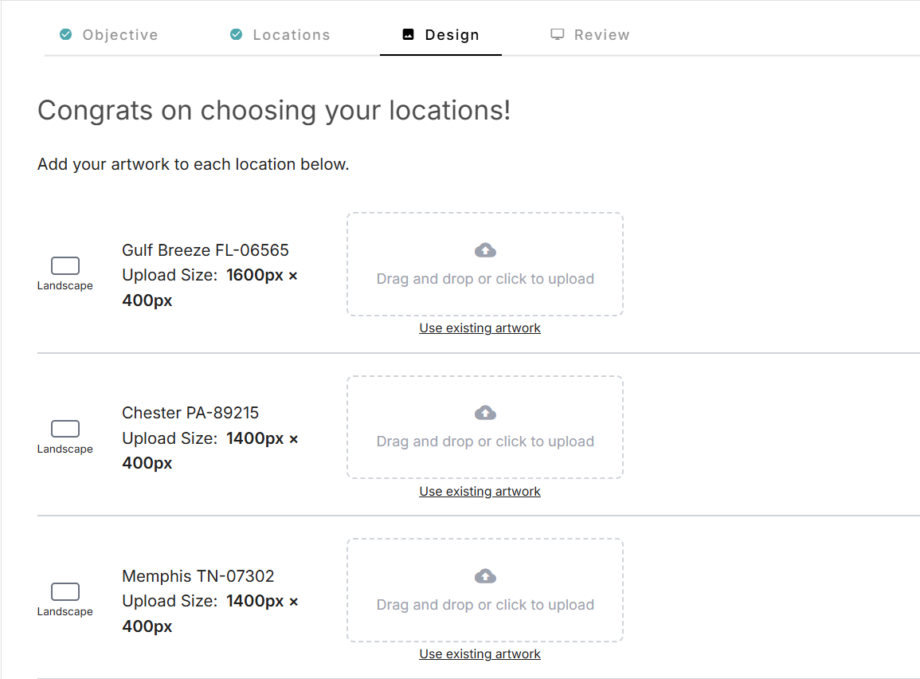
You can have your campaign live in minutes. Create a free account, select your locations, set your budget, upload your design, and start running once approved.
Where can I advertise with Blip in Lincoln Park?
Blip has digital billboards in Lincoln Park. You can browse available locations on a map, choose the ones that fit your audience, and start advertising right away.
Still have questions? Launch a campaign in minutes — no contracts, no commitments.
Start Your CampaignLincoln Park Billboard Advertising Guide
The Lincoln Park, Michigan area sits at a powerful junction of neighborhood life, industrial activity, and regional travel. With 22 digital billboards serving the Lincoln Park area from nearby Allen Park, Romulus, and Detroit, we can use precision scheduling and hyper-local creative to reach residents, commuters, and visitors moving through this Downriver hub every day. For brands specifically searching for billboards near Lincoln Park or flexible billboard rental near Lincoln Park, these nearby placements function like an extended network of Lincoln Park billboards.
Understanding the Lincoln Park Area Market
Lincoln Park is a dense, working-class city in Wayne County, just south of Detroit, and central to the Downriver communities. This makes billboard advertising near Lincoln Park particularly effective at blending neighborhood reach with regional visibility.
- Population & density: Lincoln Park has roughly 38,000 residents packed into about 5.9 square miles—over 6,400 people per square mile, making it one of the more densely populated communities in the region. Neighboring Downriver cities like Southgate (~29,000 residents) and Allen Park (~28,000 residents) sit at similar or slightly lower densities, reinforcing how “close-in” and neighborhood-focused this market is.
- Households & demographics: The city has around 14,500–15,000 households, with an average household size just over 2.5 people. Roughly one quarter of residents are under age 18 and about 13–15% are over 65, creating strong opportunities for family, youth, and senior-focused messaging.
- Income profile: Median household income in Lincoln Park is in the mid–$50,000s, compared with roughly low–$60,000s for Michigan overall and mid–$50,000s for Wayne County. Around 18–22% of residents live below the poverty line, which makes price sensitivity and value messaging especially important.
- Commuting & car usage: More than 80–85% of working residents commute by car, and over three-quarters drive alone to work. Average commute times are around 23–26 minutes, with many residents traveling daily toward Dearborn, Detroit, and the airport/Downriver industrial corridors. Over half of households have two or more vehicles, underscoring how heavily this audience relies on local roadways.
- Regional context: Wayne County is home to about 1.7 million people, with nearby Detroit at about 630,000 residents and growing downtown and Midtown cores. The broader Detroit metro area has over 4.3 million residents, giving Lincoln Park advertisers reach into one of the Midwest’s largest urban regions.
- Local government & services: The city’s activities, events, and services are coordinated through the City of Lincoln Park and Wayne County, with neighboring governments like Allen Park, Romulus, and the City of Detroit shaping regional transportation, economic development, and recreation.
What this means for advertisers:
- You’re talking to a highly local, neighborhood-oriented audience—families, blue-collar workers, service employees, and small business owners—living in one of the region’s more tightly packed communities.
- Most residents spend a lot of time driving short distances—to nearby shops, industrial employers, schools, and freeways. With over 80% of workers commuting by car and typical round-trip travel times around 45–50 minutes, roadside media and billboards near Lincoln Park have frequent daily touchpoints.
- Income and cost-of-living dynamics mean that messaging emphasizing value, convenience, and community ties tends to outperform luxury or purely aspirational branding.
Where Our Boards Are and How They Serve the Lincoln Park Area
While our digital billboards are not physically inside city limits, we have 22 digital billboards serving the Lincoln Park area within about 10 miles, in locations that function as de facto Lincoln Park billboards for daily drivers:
- Allen Park (about 1.5 miles from Lincoln Park):
Critical for catching daily traffic along I-94, Southfield Freeway (M-39), and local retail corridors anchored by big-box stores and restaurants. Allen Park and adjacent shopping areas draw residents from multiple Downriver cities; regional studies estimate key retail corridors here attract tens of thousands of shopping trips per week, especially Thursday–Sunday. For local businesses, this makes Allen Park boards an ideal choice for billboard rental near Lincoln Park with strong retail adjacency. - Detroit (about 8.4 miles from Lincoln Park):
Strategic placements reach commuters heading to and from downtown, Corktown, and industrial zones to the north and east of the Lincoln Park area. Downtown Detroit supports over 100,000 daytime workers and hosts more than 15 million annual visitors for sports, concerts, and conventions, amplifying the visibility of Detroit-facing boards.
Learn more about visitor and downtown activity from Visit Detroit and the City of Detroit. - Romulus (about 7.6 miles from Lincoln Park):
Home to Detroit Metropolitan Wayne County Airport (DTW), which handled over 35 million passengers in 2023, plus tens of thousands of airport workers and logistics employees daily. The Wayne County Airport Authority
These boards collectively allow us to:
- Reach Lincoln Park residents heading to work in Detroit, Dearborn, Romulus, and other Downriver cities, tapping into a commuter base of several hundred thousand workers moving through the I‑75, I‑94, and M‑39 corridors each weekday.
- Capture regional shoppers and visitors who routinely pass near Lincoln Park via I‑75, I‑94, M‑39, and Fort Street (M‑85), including visitors drawn to retail, casinos, and entertainment venues promoted by Visit Detroit.
- Tap into airport and logistics traffic near Romulus, where tens of thousands of employees work across airline, cargo, warehousing, and ground support operations, ideal for travel-related, hiring, and B2B messaging.
Traffic Patterns and Commuter Insights
The Lincoln Park area’s roads connect local neighborhoods with some of Michigan’s most important transportation arteries. Understanding these patterns helps you decide where billboards near Lincoln Park will be most impactful for your message.
Key routes that drive billboard exposure:
- I‑75:
The main north–south interstate through the Downriver region, funnelling traffic between Monroe County, Downriver, and Detroit. MDOT reports portions of I‑75 in Wayne County carrying 100,000–140,000 vehicles per day, creating broad reach for boards in nearby Allen Park and Detroit.
Source: Michigan Department of Transportation - I‑94:
Connecting Detroit to the airport and western suburbs, I‑94 runs just north of Lincoln Park. Segments near Allen Park can exceed 120,000–150,000 vehicles daily, heavily used by commuters and airport traffic between Detroit, Dearborn, Romulus, and Downriver. - M‑39 (Southfield Freeway):
A dense commuter route that ties I‑94 to Downriver and western suburbs, serving many workers from the Lincoln Park area heading to Dearborn, Detroit, or Southfield. Key stretches in this area often see 70,000–90,000 vehicles per day, especially during rush hours. - Fort Street (M‑85) and Dix Highway:
Core surface roads that see steady all-day traffic from local residents, trucks, and service vehicles. Typical average daily traffic counts on major segments are in the 20,000–35,000 vehicles per day range, offering longer dwell times at signals and intersections compared with freeway boards.
What these patterns imply for your campaign:
-
Peak commute windows are powerful:
- Weekday 6:00–9:00 a.m. for outbound commuters, when traffic volumes can reach 2–3 times off-peak baselines on key freeways.
- Weekday 3:00–7:00 p.m. for return traffic, often the single heaviest daily window on I‑75 and I‑94.
- Midday and early evening traffic remains significant due to shift work at industrial plants, warehouses, and the airport. Many manufacturing and logistics employers operate 2nd and 3rd shifts, creating mini-peaks around 1:00–3:00 p.m. and 9:00–11:00 p.m.
- Weekend traffic skews toward shopping and leisure, particularly around retail corridors and entertainment destinations highlighted by sites like Discover Downriver
With Blip, we can concentrate your impressions in very specific dayparts along these high-traffic flows, making your budget work harder and ensuring your Lincoln Park billboards equivalents are seen when it matters most.
Local Economy: Who You’re Talking To
The Lincoln Park area sits in the orbit of major economic engines:
- Automotive & manufacturing: Nearby Dearborn (home to Ford’s world headquarters and major facilities), Detroit plants, and Downriver industrial facilities employ tens of thousands of workers. Wayne County overall supports more than 70,000 manufacturing jobs across automotive, steel, and related sectors, according to regional labor-market summaries.
- Logistics & warehousing:
The vicinity of DTW in Romulus and I‑94/I‑75 junctions has become a logistics hub, supporting tens of thousands of distribution, trucking, and transportation jobs. Multiple large distribution centers and e‑commerce facilities within a 15–20 mile radius operate 24/7, drawing workers from Lincoln Park and neighboring cities. - Retail & services:
Shopping centers in Allen Park, Southgate, and nearby corridors attract residents throughout the Downriver area. Regional retail reports for southeast Michigan estimate retail trade and food service sectors in Wayne County collectively employ over 90,000 workers, with weekend and evening peaks that are ideal for consumer-focused campaigns. - Healthcare & education:
Multiple hospitals, clinics, and school districts operate within a short drive, including major systems centered in Detroit and Downriver. Healthcare and social assistance alone account for well over 100,000 jobs in Wayne County, while K‑12 districts and higher education institutions add tens of thousands more.
Income levels in the Lincoln Park area skew middle to lower-middle-income, with strong sensitivity to:
- Price and value (e.g., discounts, bundles, and clear savings percentages)
- Job stability and local hiring (starting wages, benefits, and predictable schedules)
- Convenience (close-by, easy parking, simple hours)—important for households where multiple adults work shifts and juggle child care.
Ads that highlight fair pricing, job opportunities, and “support local” messaging often outperform purely aspirational creative for this market, especially when aligned with neighborhood pride in being part of the Downriver and greater Detroit communities.
Seasonal and Event-Driven Opportunities
The Lincoln Park area is closely tied to Detroit’s cultural and sports calendar, plus its own community events.
Key seasonal hooks:
-
Detroit sports:
- Detroit Tigers at Comerica Park draw average crowds around 20,000–25,000 fans per game across the season, driving spikes in downtown and corridor traffic before and after games.
- Detroit Lions at Ford Field frequently reach capacities near 65,000 during the NFL season, especially during divisional matchups and prime-time games.
- Red Wings and Pistons share Little Caesars Arena, drawing 17,000+ fans on major game nights.
Schedules and coverage from outlets like the Detroit Free Press and The Detroit News help us time campaigns around big games and playoff pushes, while team sites such as the Detroit Tigers, Detroit Lions, and Detroit Red Wings provide official calendars.
- Airport seasonality at DTW:
Detroit Metro Airport sees heavy leisure spikes during spring break, summer travel (June–August), and winter holidays. In peak months, DTW can handle 3–3.5 million passengers in a single month, meaning hundreds of thousands of extra impressions on airport-adjacent boards compared with shoulder seasons. - Local festivals and community events:
The City of Lincoln Park, City of Romulus, Allen Park, and local news like The News-Herald promote parades, car shows, concerts, and seasonal celebrations throughout the year. Events such as summer festivals, holiday parades, and local fairs can draw several thousand attendees each, many arriving via the same corridors where our boards run.
How to use this in your campaign:
- Retail & restaurants: Push special offers around big game days and paydays (1st/15th of the month, Fridays). Highlight “Game Day” bundles or “Show Your Ticket & Save” offers to tap into thousands of fans moving between Downriver and Detroit.
- Travel & hospitality: Concentrate impressions near Romulus ahead of peak travel weeks. Even shifting an additional 20–30% of your impressions into key holiday windows can significantly increase exposure to high-intent travelers.
- Community-focused brands: Align creative with local events and holidays—“Downriver Summer Deals,” “Back-to-School Savings for Lincoln Park Families,” etc.—and time heavier flights for weekends when community calendars, promoted by The News-Herald and Discover Downriver, show festivals or citywide celebrations.
Creative Strategy for the Lincoln Park Area
Strong billboard creative near Lincoln Park needs to be clear at a glance and tuned to local values. Whether you are using our Detroit or Allen Park inventory as your Lincoln Park billboards, the same creative principles apply.
Key design and messaging tips:
-
Lead with value and clarity
-
Use bold, single-focus headlines:
- “Oil Change – $29.99 – 5 Minutes from Lincoln Park”
- “Get Hired This Week – Apply Today in Allen Park”
- Avoid clutter—aim for 7 words or fewer in your main message. At 60–70 mph, drivers often have only 3–5 seconds of viewing time, so each additional word reduces comprehension.
-
Use bold, single-focus headlines:
-
Use local references
-
Mention landmarks and geography drivers recognize:
- “Just off I‑75 at Southfield”
- “Near Dix & Southfield in Allen Park”
- Refer to “Downriver,” “Lincoln Park families,” or “the Lincoln Park area” to create hometown relevance. Localized wording can increase recall and response rates by double-digit percentages in neighborhood-focused campaigns.
-
Mention landmarks and geography drivers recognize:
-
Contrast and legibility
- High-contrast color combinations (e.g., white or yellow type on dark backgrounds) perform best at freeway speeds and in varied weather.
- Keep text large and bold—as a rule of thumb, ensure key words could be read from 300–500 feet away. Simple fonts and strong contrast can improve legibility by 20–40% versus script or thin fonts.
-
Directional cues
- Simple arrows and distance markers (“Next Exit,” “2 Miles Ahead,” “On Your Right”) help drive immediate action if your business is nearby. Studies on out-of-home campaigns often show that including a clear directional cue can lift on-site visits by 10–20% compared with generic branding alone.
-
Rotating creatives with Blip
-
Run multiple creatives in rotation:
- One for price/value
- One for brand awareness
- One for limited-time promotions
- Blip’s flexibility lets us A/B test these and quickly pause underperformers. By shifting more impressions to top-performing creatives, campaigns frequently achieve 20–30% better engagement metrics (calls, clicks, or store mentions) for the same spend.
-
Run multiple creatives in rotation:
Smart Scheduling: When to Run Your Blips
Because Blip lets you buy individual ad displays (blips) rather than fixed blocks, we can dial in timing by hour and day, turning our boards into precisely timed Lincoln Park billboards for your audience even if they sit in adjacent cities.
Recommended patterns for the Lincoln Park area:
-
Commuter-heavy offers (auto repair, QSR, coffee, convenience):
- Focus: 6:00–9:00 a.m. and 3:00–7:00 p.m., Monday–Friday, when traffic on I‑75, I‑94, and M‑39 is at or near daily maximum levels.
- Emphasize speed and convenience:
“Brake Repair Today – Exit I‑75 at …”
-
Family and value shopping (groceries, retail, discount stores):
- Increase impressions: late afternoon and early evening (3:00–8:00 p.m.) and weekends, when household errands peak. Many grocers and big-box stores report their busiest windows as late Friday afternoon through Sunday evening, aligning with higher emotional readiness to purchase.
- Highlight savings and weekly deals using specific percentages or dollar amounts (“Save 20% This Weekend”).
-
Hiring and workforce campaigns (industrial, warehouse, healthcare):
-
Maintain a steady presence across all shifts:
- Early morning (5:00–7:00 a.m.)
- Midday shift change (1:00–3:00 p.m.)
- Late evening (9:00–11:00 p.m.)
- Include clear calls to action: “Text ‘JOBS’ to…”, “Apply at [URL].” Hiring campaigns that use direct CTAs often generate significantly higher response rates than branding-only messages.
-
Maintain a steady presence across all shifts:
-
Brand/awareness (schools, credit unions, healthcare systems, churches):
- Spread budget across all dayparts, focusing on Monday–Friday plus Sunday mornings, to reach varied household routines, including school commutes, work trips, and weekend worship or family activities.
With 22 boards serving the Lincoln Park area, we can also daypart by corridor—focusing more on airport-facing boards during holiday travel or I‑75 boards during peak commute, and shifting 10–20% of impressions as needed to follow changing patterns (e.g., weather, school calendars, sports schedules).
Geographic Targeting: Picking the Right Boards
To reach people who live or spend time near Lincoln Park, it helps to think in “zones.” Each zone offers slightly different strengths for billboard advertising near Lincoln Park:
-
Immediate Lincoln Park & Allen Park zone (1–3 miles)
-
Ideal for:
- Local restaurants, auto shops, salons
- Neighborhood retail and services
- Local events, churches, community organizations
- Strategy: Use nearby Allen Park boards to capture daily errands and short commutes. With local surface roads often carrying 20,000+ vehicles per day, even a modest number of blips can generate thousands of daily impressions among people who live and shop nearby, functioning much like true billboards near Lincoln Park for everyday residents.
-
Ideal for:
-
Regional commuter zone – I‑75, I‑94, M‑39 corridors
-
Ideal for:
- Regional employers
- Healthcare and education
- Larger retailers and car dealerships
- Strategy: Mix boards in Allen Park and Detroit to capture both inbound and outbound flows. A single heavily traveled freeway board can easily reach hundreds of thousands of weekly vehicle trips, making it ideal for brands seeking broader Downriver and metro Detroit visibility through Lincoln Park billboards that also reach neighboring communities.
-
Ideal for:
-
Airport & logistics zone – Romulus
-
Ideal for:
- Hotels, parking, food near DTW
- Logistics, trucking, warehouse hiring
- Tourism and attractions in the Detroit and Downriver area
- Strategy: Concentrate impressions around peak travel periods and shift changes. For example, increasing your airport-corridor share by 25–30% during summer and major holiday months lets you tap into the 3+ million monthly passengers moving through DTW, plus thousands of daily employees.
-
Ideal for:
With Blip’s campaign tools, we can prioritize specific boards and time slots that best match your audience’s travel paths and continuously re-balance impressions based on performance.
Industry-Specific Ideas for the Lincoln Park Area
Some verticals are especially well-suited to the Lincoln Park area’s demographics and traffic patterns, and can benefit most from targeted billboard advertising near Lincoln Park.
Auto Services & Dealerships
Given the region’s car-centric nature and the fact that over 80% of workers commute by car:
-
Promote simple, high-value offers:
- “Tires from $49 – Exit Now at …”
- “Free Brake Inspection – 10 Minutes from Lincoln Park”
- Use proximity language: “5 minutes from Dix & Southfield,” “Next Exit off I‑75.” Clear distance cues can increase conversion among in-market drivers by double-digit percentages.
- Increase frequency on Friday and Saturday, when many residents handle vehicle maintenance and when weekend traffic volumes on local arterials and retail corridors typically spike.
Restaurants & Quick-Service
For dine-in, takeout, or delivery:
-
Emphasize:
- “Kids Eat Free,” “$5 Lunch,” “Late Night Drive-Thru.” Specific prices and time windows tend to generate more response than generic “Great Food” messaging.
- Align creatives with paydays, game days, and weekends. Crowds of 20,000–65,000+ fans heading to Detroit sports venues translate into elevated traffic along Lincoln Park’s connecting corridors before and after games.
- Target boards near I‑75 and I‑94 to capture cross-town traffic heading home through the Lincoln Park area, especially 2–3 hours before and after major events or concerts promoted on Visit Detroit.
Healthcare, Dental, and Vision
Families in the Lincoln Park area value affordable, accessible care:
-
Highlight insurance acceptance, same-day appointments, and proximity:
- “Walk-In Clinic – 7 Minutes from Lincoln Park”
- “New Patients: $79 Exam & X‑Rays”
- Increase impressions during back-to-school (late July–September) and flu season (late fall and winter), when demand typically rises. Many practices report significant volume jumps—often 10–30%—in these windows.
- Use trust-building visuals: doctors, families, clear contact info, and references to local neighborhoods or hospitals to build credibility.
Education & Training
Community colleges, trade schools, and training centers can reach motivated workers:
-
Emphasize short programs, job placement, and affordability:
- “Become a Welder in 9 Months”
- “Truck Driving School – Classes Starting Monday”
- Target boards near industrial corridors and the airport zone, where prospective students work and where demand for skilled trades, CDL drivers, and technical roles is strong. Regional labor data shows that many in-demand credentials can lead to wages of $20–30+ per hour within 1–2 years of training.
Hiring & Workforce
With significant industrial, logistics, and service employment near the Lincoln Park area:
-
Use direct, bold hiring messages:
- “Now Hiring: $20/hr + Benefits – Apply Today”
- “Warehouse Jobs in Romulus – No Experience Needed”
- Include QR codes and short URLs to track engagement. Campaigns that make it possible to apply or learn more via mobile in under 30 seconds tend to see the highest completion rates.
- Maintain consistent presence over weeks; hiring decisions may not be immediate. Many employers see stronger results once billboard hiring campaigns have been visible for 3–6 weeks, as repeated exposure builds recognition and trust.
Measuring and Optimizing Your Campaign
To make the most of your Blip campaign serving the Lincoln Park area, we recommend:
-
Set clear goals
- Brand awareness (web traffic, direct searches, social mentions)
- Store visits (ask “How did you hear about us?” at checkout or intake)
- Hiring applications, calls, or form fills
-
Align online and offline
- Match billboard wording with website headlines and social posts, so people who saw your message while driving recognize it instantly online.
- Use unique URLs, phone numbers, QR codes, or promo codes (e.g., “LP20”) to identify billboard-driven responses. Even a small code redemption rate (1–3%) can represent a strong ROI when scaled to thousands of daily impressions.
-
Test and refine
- Run 2–3 creatives simultaneously and watch which correlates with better results (more calls, web visits, coupon redemptions).
- Adjust time-of-day, days of week, and board selection based on performance data and your own business metrics. Shifting even 15–20% of your spend from underperforming to high-performing slots can materially improve results.
-
Leverage local news and events
- Monitor outlets like The News-Herald, Detroit Free Press, and The Detroit News for event calendars, big game days, construction updates, and weather trends that may influence traffic and consumer behavior.
- When a major event is expected to draw tens of thousands of people to downtown or a nearby venue, temporarily increasing your impression share on the relevant corridors can create a measurable lift in brand exposure.
By combining rich local knowledge of the Lincoln Park area with Blip’s flexible, pay-per-display model, we can build campaigns that reach the right people at the right times along the right roads. Whether you’re a neighborhood shop seeking more local customers, a regional employer hiring across Downriver, or a brand looking to build visibility near Detroit, the 22 digital billboards serving the Lincoln Park area give us powerful tools to tell your story on the screens your audience passes every day. For any advertiser comparing options for billboard advertising near Lincoln Park, this network offers a scalable, data-driven way to secure effective billboard rental near Lincoln Park without long-term fixed contracts.