Billboards near Bridgetown, OH
No Minimum Spend. No Long-Term Contracts. Just Results.
Trusted by Leading Brands


Billboard advertising
near Bridgetown has never been easier
How much is a billboard near Bridgetown?
Why Choose Blip for Billboard Advertising near Bridgetown
Blip lets Bridgetown advertisers launch fast and self-serve, reaching commuters on Bridgetown Road and I-74/I-275 without buying through a long sales process.
Set flexible budgets for Bridgetown billboards and scale around rush hour, school drop-off, or Glenway Avenue shopping peaks—no contract required.
Use dayparting in Bridgetown to hit weekday commuters, Saturday youth-sports traffic, or Bengals game-day travel before and after downtown events.
Track Bridgetown campaign results in real time and shift spend toward the I-74, I-275, or Western Hills corridors that drive the best response.
Blip's creative tools make it easy to tailor Bridgetown ads for West Side families, Oak Hills parents, or homeowners heading home from downtown.
Frequently Asked Questions About Billboard Advertising near Bridgetown
How much does a billboard cost near Bridgetown, Ohio with Blip?
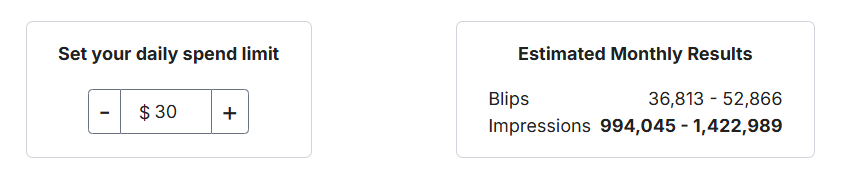
With Blip, you set your own daily budget for Bridgetown billboards, so you can start advertising in the Bridgetown area with whatever amount feels comfortable. Blip’s pay-per-blip model means you only pay each time your 7.5–10 second ad appears on digital billboards near Bridgetown, Ohio, and the price of each blip depends on the time, location, and local advertiser demand. Your total spend is simply the sum of all the blips you receive, and you can adjust your budget at any time to increase or decrease your presence.
Where can I advertise with Blip near Bridgetown, Ohio?
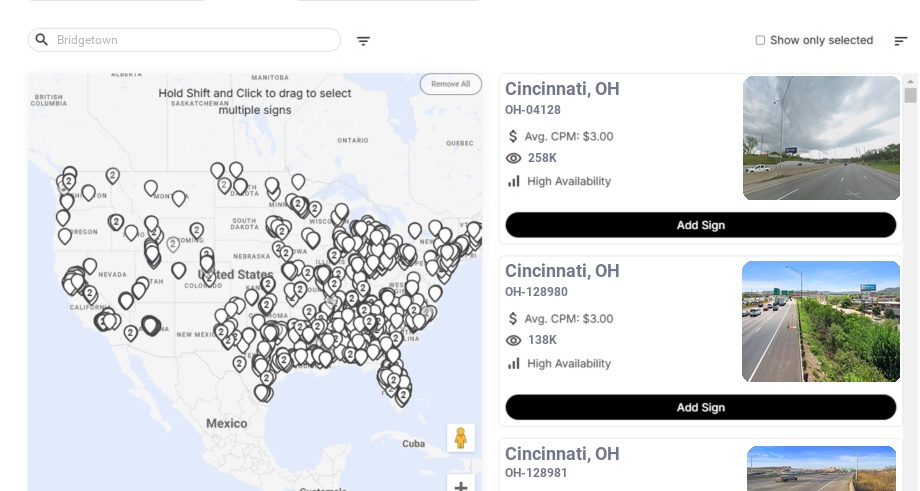
With 11 digital billboards near Bridgetown, primarily in Cincinnati about 7.2 miles away, advertisers can consistently reach local residents on their daily routes while they shop, commute, and attend school or church. The boards serve major corridors including Bridgetown Road, I-74 and I-275, and Glenway Avenue / Western Hills. These placements help capture both local households and regional visitors traveling through the West Side.
Who does Bridgetown, Ohio billboard advertising reach?
Bridgetown is a census-designated place in Green Township, part of Hamilton County’s west side suburban belt. It combines long-time West Side families with younger households moving out from Cincinnati’s core, making billboard advertising near Bridgetown a strong fit for reaching both established and newly arrived residents. West Side neighborhoods like Bridgetown and Green Township skew family- and homeowner-oriented, with many census tracts showing 65–75% of occupied housing units as owner-occupied.
When should I run Blip billboards in Bridgetown, Ohio for commuters and families?
Typical rush-hour windows are morning 6:30–9:00 a.m. and evening 3:30–6:30 p.m., and these periods are useful for service businesses, B2B, and professional services. The Bridgetown area also sees strong Saturday morning and afternoon traffic from youth sports, parish events, and school functions, plus Friday evening through Sunday afternoon retail and dining peaks. Blip’s flexible scheduling lets advertisers match impressions to these local rhythms.
What kinds of businesses work best on Bridgetown, Ohio billboards with Blip?
Certain categories are especially well-positioned to leverage digital billboards near Bridgetown, including local retailers and restaurants, healthcare and senior services, home services and contractors, and education, youth sports, and faith-based organizations. The area’s family-heavy, commuter-oriented market and higher household incomes support campaigns for dining, home improvement, auto, healthcare, and youth activities. Effective creatives should feel local and reflect the West Side community’s trust, family, and convenience.
Do I need a contract to advertise with Blip near Bridgetown?
No, Blip has no long-term contracts or minimum commitments. You can start, pause, or stop your campaign at any time.
How fast can I launch a billboard campaign with Blip near Bridgetown?
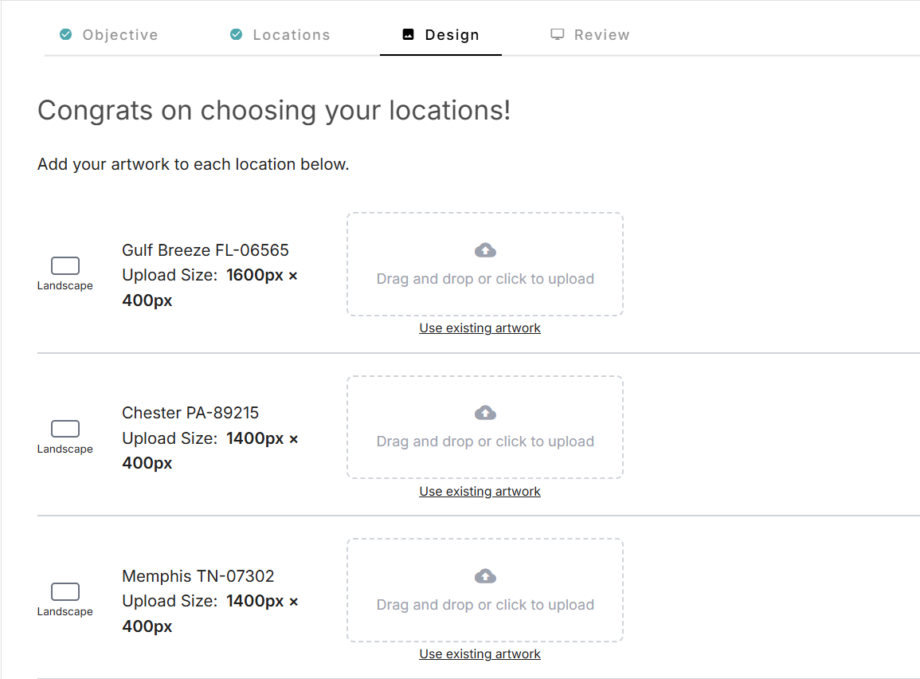
You can have your campaign live in minutes. Create a free account, select your locations, set your budget, upload your design, and start running once approved.
Where can I advertise with Blip near Bridgetown?
Blip has digital billboards near Bridgetown. You can browse available locations on a map, choose the ones that fit your audience, and start advertising right away.
Still have questions? Launch a campaign in minutes — no contracts, no commitments.
Start Your CampaignBridgetown Billboard Advertising Guide
The Bridgetown area sits at the heart of Cincinnati’s West Side: residential, commuter-heavy, and deeply rooted in community life. With 11 digital billboards near Bridgetown (primarily in Cincinnati about 7.2 miles away), we can consistently reach local residents on their daily routes while they shop, commute, and attend school or church. Below, we break down how to use those Bridgetown billboards most effectively for your campaign, backed by local and industry data.
Understanding the Bridgetown Area Audience
Bridgetown is a census-designated place in Green Township, part of Hamilton County’s west side suburban belt. It combines long-time West Side families with younger households moving out from Cincinnati’s core, making billboard advertising near Bridgetown a strong fit for reaching both established and newly arrived residents.
Key data points about the local market:
-
Population scale
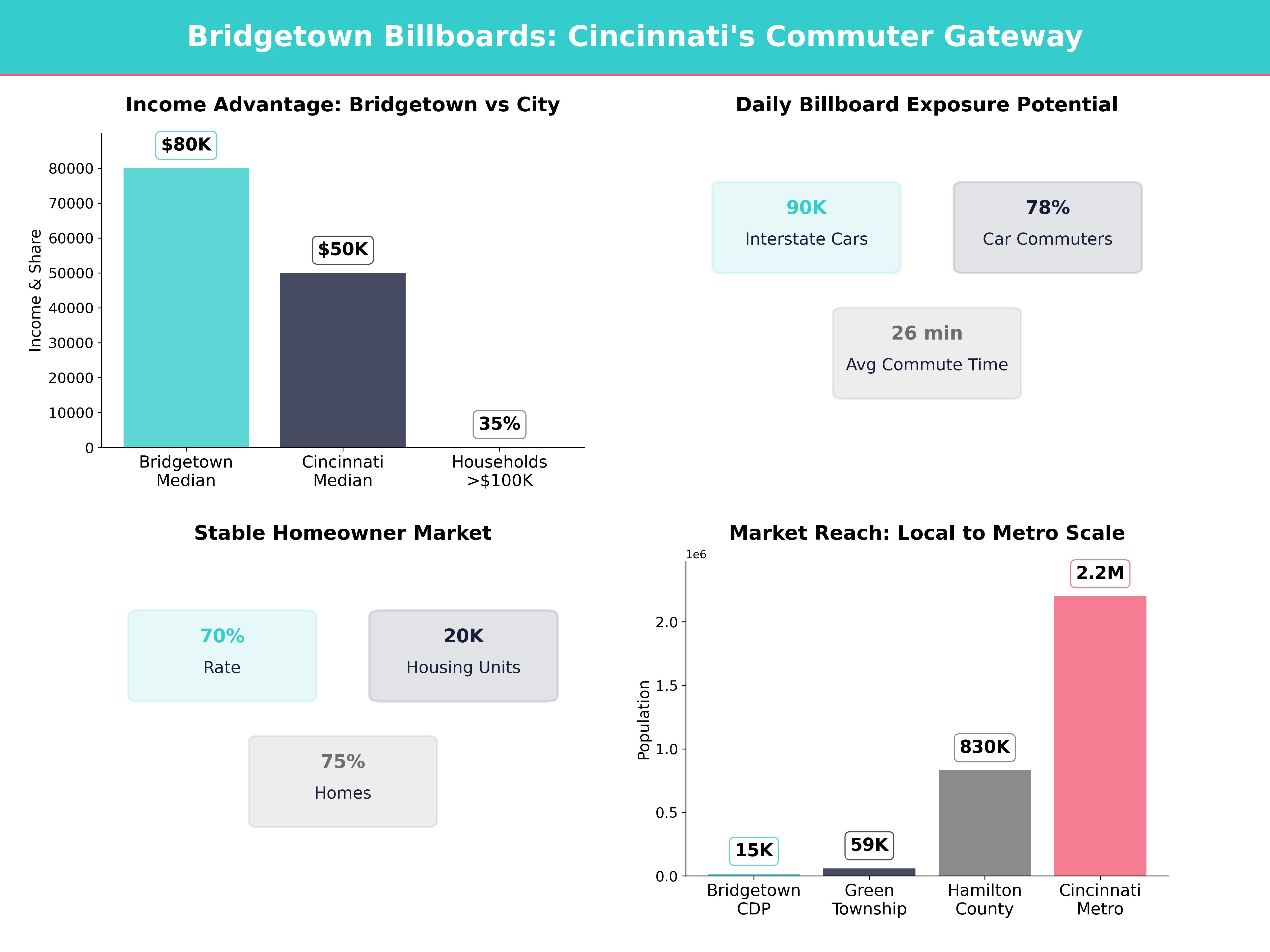
- Bridgetown CDP has roughly 14,000–15,000 residents (2020-era estimates), concentrated in just a few square miles of residential streets.
- Green Township 59,000 residents and is one of the largest townships in Ohio by population.
- Green Township lists more than 20,000 housing units and over 140 miles of township roads, indicating a heavily residential, drive‑oriented community that regularly encounters billboards near Bridgetown during everyday travel.
- Hamilton County overall has about 830,000 residents, and the broader Cincinnati metro tops 2.2 million people, giving you a regional halo around any local campaign.
-
Age and household structure
- West Side neighborhoods like Bridgetown and Green Township skew family- and homeowner-oriented, with many census tracts showing 65–75% of occupied housing units as owner‑occupied and median ages in the low‑to‑mid‑40s.
- Across Green Township, family households account for well over two‑thirds of all households, with a strong share of married‑couple families and multi‑child households—ideal for youth, education, and family-service marketing.
-
Income and spending power
- Median household incomes on Cincinnati’s West Side neighborhoods like Bridgetown and Green Township are commonly in the $70,000–$90,000 range, compared with the City of Cincinnati’s median around the $45,000–$55,000 range, signaling higher disposable income.
- In many Green Township tracts, 30–40% of households have incomes over $100,000, supporting discretionary spending on home improvement, auto, healthcare, travel, dining, and youth activities.
-
Commuting and work patterns
- A majority of workers in Hamilton County—typically 75–80%—commute by car, truck, or van, underscoring the importance of roadway-based media like Bridgetown billboards.
- Typical one‑way commute times in western suburbs average 23–28 minutes, long enough that commuters routinely pass the same billboard locations multiple times per week.
- Green Township is a net “bedroom community,” with tens of thousands of residents working in nearby job centers such as downtown Cincinnati, Northern Kentucky, and the I‑275 corridor.
Media habits on the West Side are strongly local. Residents rely on:
- Local news like the Cincinnati Enquirer and TV outlets such as WCPO 9 News, WLWT 5, and FOX19 NOW.
- Community and parish networks (West Side Catholic parishes, school systems, and sports leagues).
- Local government and township communications, including updates from Green Township and Hamilton County.
Industry research shows that out-of-home (OOH) ads reach over 90% of U.S. adults every month, and digital billboards can lift brand awareness by 20–30% compared with no OOH exposure. For advertisers, this means brand trust and “localness” matter: campaigns that feel rooted in the Bridgetown area tend to outperform generic corporate messaging, especially when combined with familiar local institutions and media. When your billboard advertising near Bridgetown reflects local culture and references familiar places, it tends to earn more attention and better recall.
Key Traffic Corridors Serving the Bridgetown Area
Our 11 digital billboards near Bridgetown are positioned in and around Cincinnati to catch residents as they drive between home, work, and major shopping districts. These placements ensure your Bridgetown billboards are visible on high-frequency routes for commuters and families alike.
Important roads and patterns to keep in mind:
-
Bridgetown Road / Ohio State Route 264
- Bridgetown’s main spine is Bridgetown Road (SR 264), running northeast–southwest and connecting to major retail areas like Western Hills and the Glenway Avenue corridor.
- Ohio Department of Transportation (ODOT) counts on comparable West Side primary arterials often show 15,000–25,000 vehicles per day (AADT), with peak 1‑hour volumes accounting for roughly 8–10% of daily traffic.
- With typical digital billboard spot rotations, a well-placed board on such a route can generate hundreds to thousands of impressions per hour during peak periods.
- For regional context, see ODOT traffic data via the Ohio Department of Transportation District 8
-
I-74 and I-275 Corridors
- Many Bridgetown area commuters access I‑74 and I‑275 to head into downtown Cincinnati or over to job centers in Northern Kentucky and other suburbs.
- In Hamilton County, interstate segments frequently carry 70,000–110,000 vehicles per day, especially closer to the I‑75 and downtown connections.
- These corridors also attract regional visitors heading to downtown events, stadiums, and the riverfront, which means your message reaches both local residents and out‑of‑town audiences.
- For regional traffic planning information, refer to the Ohio-Kentucky-Indiana Regional Council of Governments (OKI).
-
Glenway Avenue / Western Hills
- The Western Hills retail area and Glenway Avenue corridor host major retailers, grocery chains, and restaurants that draw heavily from the Bridgetown area.
- Key Glenway Avenue segments in Western Hills typically see 25,000–35,000 vehicles per day, channeling shoppers from surrounding neighborhoods.
- Traffic heading toward Western Hills (including around the Western Hills Viaduct) brings daily repeated impressions from shoppers and service-seekers, especially during lunchtime (11 a.m.–1 p.m.) and after‑work (4–7 p.m.) shopping peaks.
Because our billboards serving the Bridgetown area are concentrated in Cincinnati about 7.2 miles away, we can:
- Reach residents as they commute to downtown Cincinnati, Over-the-Rhine, and regional employment hubs such as the medical centers, corporate offices, and riverfront venues.
- Capture shoppers heading from the Bridgetown area toward large retail zones like Western Hills, Glenway Avenue, and downtown through well-placed billboard advertising near Bridgetown.
- Expose your brand to both local households and regional visitors who travel through the West Side to downtown or cross‑river destinations in Northern Kentucky.
Timing Your Campaign Around Local Life
Blip’s flexible scheduling lets us sync your billboard impressions with the rhythms of life in the Bridgetown area, so your Bridgetown billboards appear when local residents are most likely to notice and engage.
Weekday patterns
- Green Township reports a high proportion of commuters working outside the township; in comparable Hamilton County suburbs, 60–70% of employed residents work in a different municipality.
-
Typical rush-hour windows:
- Morning: 6:30–9:00 a.m. (often 35–40% of daily freeway traffic occurs in the combined a.m. and p.m. peak windows).
- Evening: 3:30–6:30 p.m.
-
Use these periods for:
- Service businesses (auto repair, home services, healthcare, insurance).
- B2B and professional services targeting white‑collar commuters.
- Cincinnati’s primary commute into downtown is heavily inbound on I‑74/I‑75 in the morning and outbound in the evening, so timing messages to match direction of travel can significantly improve relevance.
Weekend and off-peak behavior
-
The Bridgetown area leans strongly family-oriented:
- Youth sports, parish events, and school functions drive significant Saturday morning and afternoon traffic; in many communities, youth sports participation rates exceed 50% of school‑age children, filling local fields and facilities.
- Retail and dining traffic peaks Friday evening through Sunday afternoon, often accounting for 30–40% of weekly restaurant and retail sales.
- The City of Cincinnati and Visit Cincy event calendars show recurring weekend festivals, markets, and performances that draw West Side residents into downtown and the riverfront.
-
Use these periods for:
- Restaurants, entertainment, attractions, and local events.
- Retail promotions, sales weekends, and church- or school-related fundraisers.
Seasonality
-
School year (August–May)
- The Oak Hills Local School District serves much of the Bridgetown/Green Township area, enrolling roughly 7,000+ students across multiple schools.
- Public and parochial schools create predictable traffic bursts tied to drop-off and pick-up (roughly 7:15–8:30 a.m., 2:15–3:30 p.m.), when thousands of cars queue around campuses and on feeder roads.
- Ideal for youth activities, tutoring, sports leagues, and family-oriented healthcare.
-
Sports seasons
- Cincinnati’s professional teams—the Cincinnati Bengals, Cincinnati Reds, and FC Cincinnati—draw 20,000–67,000+ attendees per game depending on the sport and venue.
- On Bengals game days, traffic into downtown can spike by 10–20% above typical Sunday levels; Reds and FC Cincinnati games add concentrated evening peaks.
- Game days produce heavy flows from the Bridgetown area to downtown. Blip allows you to concentrate impressions in the hours before and after games to promote bars, restaurants, parking, rideshare codes, and events.
-
Holidays and festivals
-
Regional tourism and event calendars, including those from Visit Cincy, show consistent spikes around:
- Memorial Day and Fourth of July (parades, fireworks), when riverfront events alone can attract tens of thousands of attendees.
- Oktoberfest season downtown, with overall event attendance often cited around 500,000+ visitors over multiple days.
- Winter holiday lights, markets, and New Year’s activities, which drive strong evening and weekend visit patterns.
- Use date-based scheduling to intensify your presence during these peaks and to align with store hours, special menus, or ticketed events.
-
Regional tourism and event calendars, including those from Visit Cincy, show consistent spikes around:
Crafting Creative That Resonates With the Bridgetown Area
The West Side is known locally for its community pride and long‑time residents. Effective creatives should reflect that identity so your billboard advertising near Bridgetown feels authentic rather than generic.
Tone and messaging
-
Emphasize trust, family, and longevity:
- “Serving West Side families for 25+ years”
- “Trusted by Bridgetown area neighbors”
-
Localize your offer:
- Mention “near Western Hills,” “minutes from Bridgetown Road,” or “West Side location on Glenway Ave.”
- Reference familiar institutions or areas like Oak Hills schools, West Side parishes, or “just 10 minutes from downtown.”
-
Highlight convenience and time savings for commuters:
- “On your way home from downtown”
- “5 minutes off I‑74 / Glenway exit”
- Research from major OOH studies shows that 60–70% of drivers notice localized messages more than generic ones, and simple geographic cues (“2 miles ahead,” “next exit”) can increase recall by up to 20%.
Visual best practices
-
Use large, high‑contrast text. Aim for:
- 6–8 words max for a primary message.
- Font size equivalent to at least 14% of the board height to remain highly legible at highway speeds—industry standards often recommend 18–24 inch minimum letter height for freeway‑speed viewing.
- Choose bold colors that stand out against frequent Midwestern weather (gray skies, rain, low light in winter). Avoid thin serifs or complex scripts.
-
Include one clear call-to-action, such as:
- “Exit Glenway – Turn Right”
- “Text WESTSIDE to 55555”
- “Book at [yourURL].com”
- Studies from OOH industry groups indicate that creatives with a single, clear CTA can produce 30–50% higher response rates than cluttered messages with multiple asks.
Blip’s digital format also lets you rotate multiple creatives:
- Version A for weekday commuters, Version B for weekend shoppers.
- Different slides for families vs. seniors, or for multiple product lines.
- Seasonal variations without additional printing or installation costs.
- Many advertisers see 10–20% improvement in performance after testing and refining multiple creative versions over a few weeks.
Targeting Key Verticals in the Bridgetown Area
Certain categories are especially well-positioned to leverage digital billboards near Bridgetown. Whether you are exploring billboard rental near Bridgetown for the first time or scaling up an existing campaign, these verticals often see strong returns.
Local Retailers and Restaurants
- West Side residents often prefer shopping and dining on their side of town rather than crossing to the east side; local surveys and retail leakage studies frequently show 60–70% of everyday spending retained within nearby neighborhoods.
- The Western Hills and Glenway Avenue corridors combine big-box, grocery, specialty retail, and restaurants, capturing thousands of trips per day from Bridgetown and surrounding areas.
-
Promote:
- Grocery and big-box stores near Western Hills or Glenway Avenue.
- Locally owned restaurants and bars positioned between Bridgetown and downtown.
-
Strategy:
- Run heavier impressions Thursday–Sunday, when dining and shopping trips peak. Many restaurants generate 40–50% of their weekly revenue between Friday night and Sunday.
- Feature limited-time offers (“This Weekend Only – 20% Off”) knowing you can swap the creative instantly after the promotion.
- Tie campaigns to local events promoted by Visit Cincy or covered by outlets like WCPO 9 News to capture event‑driven traffic.
Healthcare and Senior Services
-
Healthcare is a core need in an aging but family-heavy community:
- In Hamilton County, adults 65+ now account for around 15–18% of the population, and that share is rising.
- Nearby health systems such as Mercy Health – Cincinnati TriHealth draw heavily from the Bridgetown area for primary care, specialty care, and hospital services.
-
Use billboards to:
- Promote new clinics, urgent cares, dentists, and specialists.
- Highlight wait times (“Same-day appointments available”) or differentiators (“Open evenings & Saturdays”).
- Direct viewers to online scheduling, which now accounts for 30–40% of new-patient bookings for many practices.
-
Aim schedule at:
- Midday and early afternoon slots when seniors and caregivers are more likely on the road.
- Early evenings for urgent care and after‑work appointments.
- Data from healthcare marketers shows that pairing OOH with search ads can increase healthcare appointment volume by 10–20% vs. search alone, by boosting brand familiarity.
Home Services and Contractors
With tens of thousands of single-family homes in Green Township and the broader West Side, demand is strong for:
- HVAC, roofing, plumbing, and electrical services.
- Lawn care, landscaping, tree services.
- Remodeling, flooring, and window companies.
Key data points:
- Owner‑occupied single-family homes often make up 70–80% of the housing stock in nearby tracts, and home improvement spend in comparable suburbs can average $3,000–6,000 per household per year.
- Spring and early summer are peak seasons: national data shows 30–40% of annual home-improvement spending occurs between March and July.
Best practices:
- Feature phone numbers with vanity words if possible (easier to recall at 45–60 mph). Short numbers and simple phrases can improve unaided recall by up to 50%.
-
Schedule heavier impressions:
- Spring and early summer for landscaping and exterior work.
- Late summer and fall for roofing, HVAC checkups, and interior projects heading into winter.
- Consider storm‑responsive campaigns: OOH advertisers often see 2–3x higher call volume in the week following major hail or wind events, common in the Cincinnati region during late spring and summer.
Education, Youth Sports, and Faith-Based Organizations
The Bridgetown area’s strong school and parish culture creates recurring marketing opportunities:
- Private and parochial schools recruiting students.
- Youth leagues, clubs, and camps.
- Churches promoting events, holiday services, or community outreach.
Local context:
- Oak Hills and nearby districts, plus West Side parochial schools, collectively serve tens of thousands of students, with annual enrollment cycles that peak in late spring and summer.
- In many faith-based schools, 70–80% of students come from within a short drive of campus, making localized billboards highly efficient.
- Youth sports participation rates often range from 50–70% of school-age children, creating a robust market for camps, training programs, and leagues.
Focus strategy:
-
Intensify impressions:
- July–August for school enrollment and fall sports registration.
- March–May for summer camps.
- November–December and Easter season for worship-related campaigns.
-
Tailor creative:
- Images of families, students, and local landmarks resonate strongly.
- Include simple next steps like “Visit Our Open House,” “Enroll Online,” or “Register by May 15.”
Using Blip Features Strategically Near Bridgetown
Blip’s platform is designed to let advertisers of any size buy flexible, targeted exposure through billboard rental near Bridgetown and across the greater West Side.
1. Location targeting
-
Choose from the 11 digital boards serving the Bridgetown area near Cincinnati to:
- Emphasize routes into downtown Cincinnati for commuter-focused campaigns.
- Highlight boards closer to Western Hills and major shopping areas for retail or dine-in traffic.
-
Pair boards strategically:
- Morning inbound traffic (toward Cincinnati).
- Evening outbound traffic (returning toward the Bridgetown area).
- By aligning locations with high‑volume segments (e.g., 25,000–70,000+ vehicles per day), you maximize impressions per dollar spent and ensure your billboards near Bridgetown are seen frequently.
2. Dayparting and day-of-week controls
-
Use Blip’s simple scheduling to:
- Run weekday AM and PM rush for B2B, services, and employment ads.
- Focus on evenings and weekends for dining and entertainment.
- Activate game-day windows when Bengals, Reds, or FC Cincinnati play, catching fans traveling from the Bridgetown area to downtown.
- Advertisers that use dayparting often report 15–30% lower cost per response, because they avoid low‑value time blocks and concentrate on high‑intent hours.
3. Budget flexibility
-
Because Blip sells exposures (“blips”) instead of traditional fixed monthly contracts:
- Start with small budgets—e.g., $10–$20 per day—to test creative and locations.
- Scale up to $50–100+ per day for short bursts around major promotions, events, or holidays.
- Increase budgets around specific promotions, paydays (commonly 1st and 15th or every other Friday), or weekends.
-
This is especially useful for local businesses competing with larger regional brands. You can:
- Dominate share-of-voice on certain days or hours.
- Maintain a “drip presence” with low daily spend in quieter periods.
- Industry benchmarks suggest that even modest digital OOH campaigns can deliver hundreds of thousands of impressions per month, depending on board selection and spend levels.
4. Creative rotation and testing
-
Rotate several creatives in one campaign to learn quickly:
- Offer A vs. Offer B.
- “Call now” vs. “Visit our Glenway location.”
- Brand-only message vs. promotion-specific message.
-
Track downstream metrics:
- Website visits, coupon redemptions, or call volume by time window.
- Store traffic around times when your ads are heaviest.
- Pause or replace underperforming creative in real time—no print cost, no delay.
- Advertisers that A/B test regularly often find 10–25% performance gains over the initial creative within the first month of optimization.
Sample Campaign Playbooks for the Bridgetown Area
To translate strategy into action, here are a few concrete approaches that show how to use billboard advertising near Bridgetown in practical ways.
1. West Side Restaurant Launch
- Goal: Fill seats for a new casual restaurant near Western Hills.
- Target audience: Bridgetown area families and commuters.
-
Tactics:
- Choose boards on major routes between the Bridgetown area and Western Hills/downtown, focusing on corridors with 25,000–35,000+ vehicles per day.
-
Run:
- Weekdays 4–8 p.m., when dinner decisions are made; this window can represent 40–50% of daily dine‑in traffic.
- Weekend 11 a.m.–9 p.m., covering brunch, lunch, and dinner peaks.
-
Creatives:
- “New on the West Side – Kids Eat Free Tuesday”
- “5 Minutes from Bridgetown Road – Exit Glenway”
- Add simple visuals of signature dishes—industry data shows food imagery can improve ad recall by 10–15%.
- Why it works: You catch residents as they consider dinner on their way home or plan weekend outings, and you leverage high‑traffic shopping and entertainment corridors they already frequent.
2. Home Services Lead Surge
- Goal: Book spring and early summer jobs for a roofing and exterior contractor.
- Target audience: Homeowners in the Bridgetown area and nearby suburbs.
-
Tactics:
- Concentrate impressions March–June, when home-improvement inquiries typically spike by 30–40% compared with winter.
- Increase spend in the 3–7 days after major storms, when call volumes often double for roofing and exterior repairs.
-
Focus on commuter-heavy boards with messaging like:
- “Bridgetown area Roof Inspections – Call 555‑ROOF”
- “Storm Damage? We Handle Insurance.”
- Run all day but especially 6–9 a.m. and 3–7 p.m., matching typical workday commute windows.
- Why it works: Homeowners see the message multiple times per week during daily routines, and storm‑triggered urgency combines with repeated exposure to drive inbound calls and quote requests.
3. Enrollment Campaign for Local School or Youth Program
- Goal: Increase enrollments for a parochial school or summer camp.
- Target audience: Parents in the Bridgetown area.
-
Tactics:
- Schedule May–August for fall school enrollment and camps, aligning with peak decision-making months.
-
Use friendly, community-focused creative:
- “Now Enrolling – Faith, Academics, Community”
- “Summer Camp Near Bridgetown – Register Today”
- Highlight key proof points that matter to parents: small class sizes, safety, extracurriculars, or faith-based values.
- Run heavier in early mornings (7–9 a.m.) and late afternoons (3–6 p.m.), aligning with school‑age family travel patterns.
- Why it works: Repetition during school routines cements awareness and drives inquiries. OOH combined with school open houses and parish bulletins can raise inquiries by 15–25% compared with relying on digital or print alone.
Measuring and Refining Your Campaign
To get the most impact from digital billboards serving the Bridgetown area, treat your campaign as an ongoing experiment:
-
Align with other local channels
- Coordinate billboard flights with print or digital ads appearing in outlets like the Cincinnati Enquirer or local TV and radio.
- Sync timing with social media pushes tied to events listed on Visit Cincy or covered by WCPO 9 News, WLWT 5, and FOX19 NOW.
-
Use trackable calls-to-action
- Dedicated URLs or landing pages (“/westside”), unique promo codes, or tracking phone numbers tied to the campaign dates and times.
- Many advertisers find that campaigns with trackable CTAs provide 20–40% clearer attribution compared with brand‑only messaging.
-
Review and adjust regularly
-
Check performance weekly:
- Which days and times correlated with spikes in leads or traffic?
- Did game-day or weekend boosts pay off?
- Which boards, messages, or offers produced the most calls, form fills, or store visits?
- Shift your budget toward the most productive time slots and boards.
- Use insights to refine targeting for future campaigns—over several months, continuous optimization can improve cost per response by 25–50%.
-
Check performance weekly:
By combining data-driven scheduling, clear creative, and a strong sense of the Bridgetown area’s identity, we can build billboard campaigns that feel local, look great, and perform measurably well. With 11 digital billboards near Bridgetown and flexible tools for timing, location, and budget, Blip gives advertisers—from small neighborhood businesses to growing regional brands—the ability to own the West Side moment by moment, reaching thousands of residents and visitors on the roads they rely on every day through precisely targeted billboard advertising near Bridgetown.