Billboards in Town of Schuyler, NY
No Minimum Spend. No Long-Term Contracts. Just Results.
Trusted by Leading Brands


Billboard advertising
in Town of Schuyler has never been easier
How much is a billboard in Town of Schuyler?
Why Choose Blip for Billboard Advertising in Town of Schuyler
Blip lets Town of Schuyler advertisers buy ads only on peak NY-5, NY-12, and I-90 commute hours—when Utica, Herkimer, and Rome drivers are most valuable.
No contracts in Town of Schuyler means you can test Blip on family, healthcare, or retail messages and shift fast as Mohawk Valley traffic changes.
Use Blip's dayparting in Town of Schuyler to hit 6:30-9 a.m. commuters and 3-6:30 p.m. return trips, not low-value overnight slots.
Track Town of Schuyler campaigns in real time and react to winter darkness, Boilermaker week, or Adirondacks-bound weekend traffic as it happens.
Blip's creative tools make it easy for Town of Schuyler brands to swap seasonal ads for snow tires, summer events, and Utica Exit 31 directions.
Frequently Asked Questions About Billboard Advertising in Town of Schuyler
How much does a billboard cost in Town of Schuyler, New York with Blip?
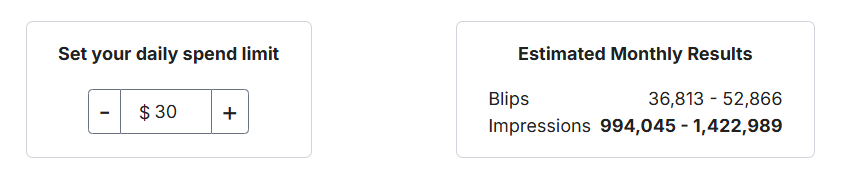
With Blip, you control exactly what you spend on Town of Schuyler billboards by setting a daily budget that can be as small or as large as you like, and Blip automatically keeps your campaign within that limit. Each “blip” is a 7.5–10 second ad on rotating digital billboards in Town of Schuyler, New York, and you only pay for the blips you receive, with prices varying based on time, location, and advertiser demand. The total cost is simply the sum of those individual blips over time, so you stay in charge of your spend.
Where can I advertise with Blip in Town of Schuyler, New York?
The Town of Schuyler sits in one of the most strategic corridors in Central New York, straddling key commuter routes between Utica, Herkimer, and the Mohawk Valley. Schuyler’s digital billboards let us speak not only to around 3,300 local residents, but to tens of thousands of daily drivers who live, work, shop, and play across the Utica–Rome region. Major routes influencing Schuyler boards include I‑90 / New York State Thruway near Exit 31, NY‑5, NY‑12 / 12B, and local connectors near the Mohawk River and Erie Canalway Trail.
Who do Town of Schuyler billboards reach around Blip ads?
Even though “Town of Schuyler” sounds hyper-local, the actual audience is regional. Our campaigns can credibly speak to daily commuters into Utica and beyond, regional shoppers and families, travelers and visitors, and students and young adults. Understanding these segments allows us to tailor creative and scheduling for each, even if they all pass the same board.
What are the best times to run Blip billboards in Town of Schuyler, New York?
The morning peak runs from 6:30–9:00 a.m., when commuters head toward Utica, Herkimer, and Rome, and the evening peak runs from 3:00–6:30 p.m. with a secondary bump around 7:00–8:00 p.m. Weekend shopping and leisure traffic is strongest Saturday 10:00 a.m.–4:00 p.m. and Sunday midday. Winter brings earlier darkness, which increases the visibility and impact of illuminated digital billboards.
What kind of businesses work best on Town of Schuyler billboards with Blip?
Restaurants, diners, and coffee shops can run morning ads for breakfast and coffee, while afternoon ads target commuters deciding where to eat. Home services like HVAC, roofing, landscaping, and snow removal benefit from seasonal urgency, and healthcare and dental advertisers can emphasize convenience and proximity. Auto dealers, service centers, tourism businesses, education and workforce training, and political or issue campaigns can also do well on Schuyler-area digital billboards.
Do I need a contract to advertise with Blip in Town of Schuyler?
No, Blip has no long-term contracts or minimum commitments. You can start, pause, or stop your campaign at any time.
How fast can I launch a billboard campaign with Blip in Town of Schuyler?
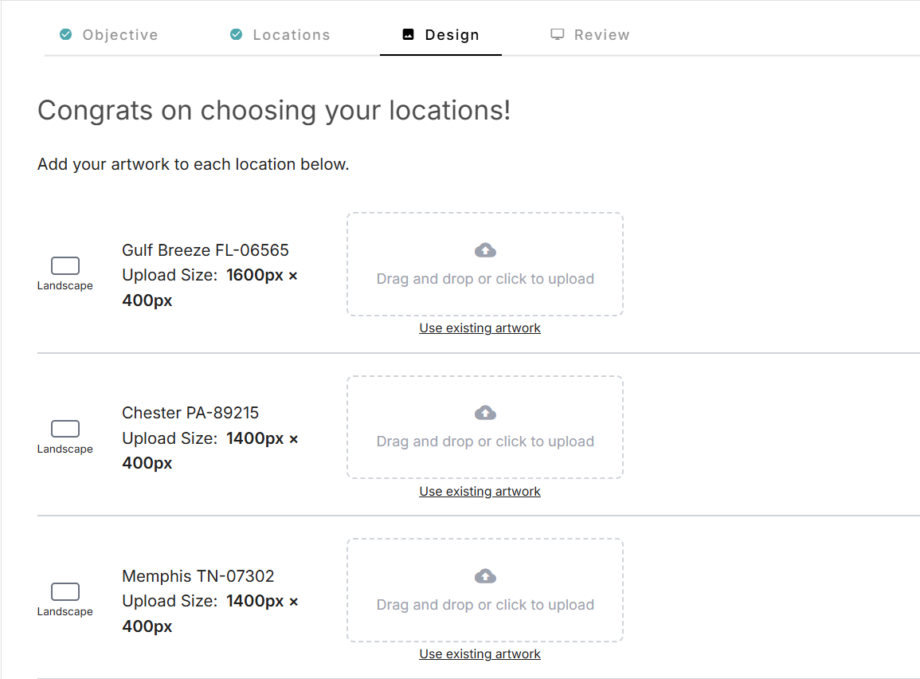
You can have your campaign live in minutes. Create a free account, select your locations, set your budget, upload your design, and start running once approved.
Where can I advertise with Blip in Town of Schuyler?
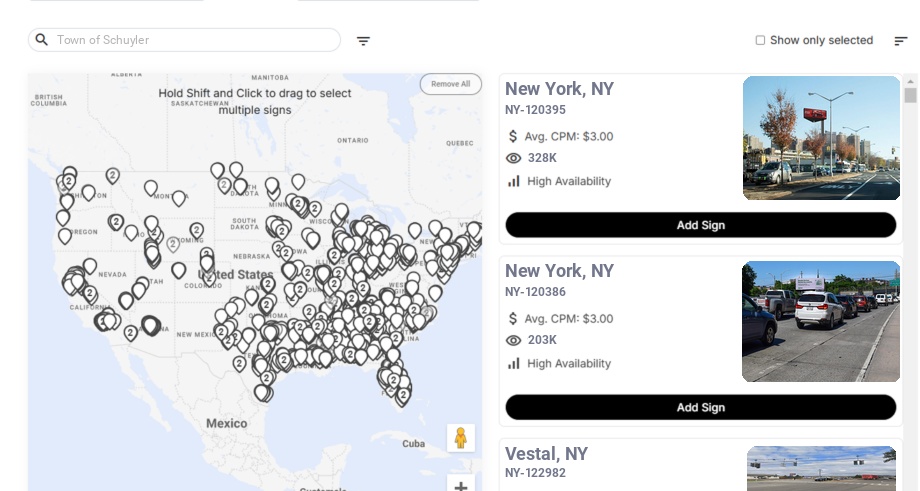
Blip has digital billboards in Town of Schuyler. You can browse available locations on a map, choose the ones that fit your audience, and start advertising right away.
Still have questions? Launch a campaign in minutes — no contracts, no commitments.
Start Your CampaignTown of Schuyler Billboard Advertising Guide
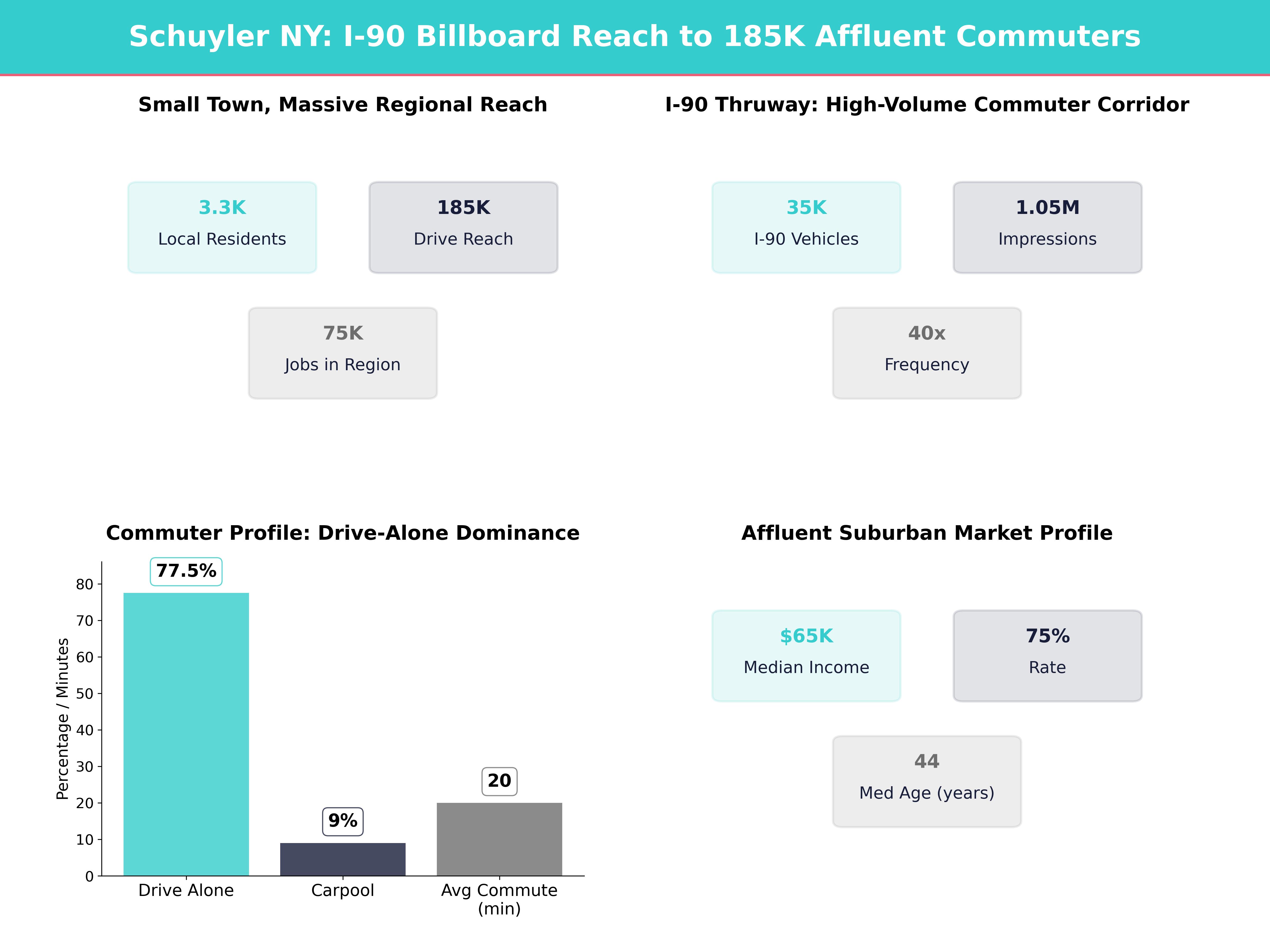
The Town of Schuyler may be small, but it sits in one of the most strategic corridors in Central New York. Straddling key commuter routes between Utica, Herkimer, and the Mohawk Valley, Schuyler’s digital billboards let us speak not only to around 3,300 local residents, but to tens of thousands of daily drivers who live, work, shop, and play across the Utica–Rome region. Within a 20‑minute drive of Schuyler, there are roughly 180,000–190,000 residents and more than 75,000 jobs, according to regional planning estimates. With Blip, we can time our messages by hour and day, rotate creatives seasonally, and focus our budgets on the exact moments this traffic is most valuable, making Town of Schuyler billboard advertising efficient and highly targeted.
Understanding the Town of Schuyler Market
The Town of Schuyler is a largely residential community in Herkimer County, just north of the Mohawk River and directly adjacent to Utica. Helpful context for shaping campaigns and deciding how to use Town of Schuyler billboards:
-
Population and households
- Town population is roughly 3,200–3,400 residents, living in about 1,300–1,400 housing units, with a homeownership rate typically above 75%—higher than many urban neighborhoods in nearby Utica.
- Herkimer County as a whole has about 60,000 residents, while neighboring Oneida County has around 230,000; together they anchor the Utica–Rome metro area of roughly 290,000 people.
- Within this metro, there are an estimated 115,000–120,000 households, which means any Schuyler-facing billboard also taps a much larger commuter and regional market, not just the town’s ~3,300 residents, making billboards in Town of Schuyler a smart way to reach the broader area.
-
Age and family structure
- Median age in Schuyler is in the low–mid 40s (roughly 43–45 years), skewing slightly older than the U.S. median (around 39–40 years).
- In similar Mohawk Valley towns, about 22–25% of residents are under 18, and 18–20% are 65+, creating a strong base of both families with children and retirees.
- Around 50–55% of households in the broader region are family households, and many have lived in the area 10+ years, reinforcing themes of loyalty and stability.
- Messaging with family, home, and stability themes, plus healthcare and retirement planning, resonates strongly with this age mix.
-
Income and occupations
- Estimated median household income is in the $60,000–$70,000 range, close to Herkimer County’s and slightly below Oneida County’s medians, but with a relatively low cost of living—housing costs in the Utica–Rome market are typically 35–45% lower than the national average.
-
In the Utica–Rome region, employment is distributed roughly as:
- 20–25% in education and health services.
- 12–15% in manufacturing.
- 10–12% in retail trade.
- 8–10% in leisure and hospitality.
- The rest across construction, logistics, finance, and public sector jobs.
- Many residents commute to nearby employers such as Mohawk Valley Health System (MVHS) in Utica (with more than 6,500 employees), area schools and colleges, and industrial parks around the New York State Thruway (I‑90).
-
Commuting patterns
- Most working adults travel daily toward Utica, Herkimer, Rome, or Frankfort/Ilion along NY‑5, NY‑12, and the New York State Thruway (I‑90).
- Regional transportation data show average commute times in the Utica–Rome area around 18–22 minutes; about 75–80% of workers drive alone, and 8–10% carpool.
- This means exposure to roadside media is regular and repeated—many commuters will pass the same billboard 10 times per week (2 trips per day, 5 days a week), and over 40 times per month, reinforcing the value of well-placed Town of Schuyler billboards along these routes.
For local background and community context, we can look to the official Town of Schuyler site and Herkimer County’s portal at herkimercounty.org, both of which highlight the town’s residential character, rural surroundings, and connection to the Mohawk River/Erie Canal corridor.
Traffic Patterns and Prime Billboard Opportunities
Because Schuyler sits just north of Utica and the Mohawk River, it benefits from steady commuter and through-traffic that makes Town of Schuyler billboard advertising a natural fit for regional brands:
-
Major routes influencing Schuyler boards
- I‑90 / New York State Thruway near Exit 31 (Utica) typically carries 30,000–40,000 vehicles per day in this stretch, according to New York State Department of Transportation count data. That yields roughly 900,000–1.2 million vehicle trips per month.
- NY‑5 (East–West Arterial / Whitesboro St.) around Utica and Schuyler sees on the order of 12,000–18,000 vehicles per day, or about 360,000–540,000 per month, depending on the specific segment.
- NY‑12 / 12B corridor north of Utica can reach 20,000+ vehicles per day closer to the city center, particularly near the interchanges with I‑790 and I‑90.
- Local connectors near the Mohawk River and Erie Canalway Trail 2,000–5,000 vehicles per day range—ideal for highly local, directional messages.
These numbers can be crosschecked against New York State Department of Transportation traffic data tools, but for day-to-day planning, we focus on the patterns that matter for Blip scheduling and for maximizing the impact of billboards in Town of Schuyler:
-
Weekday rush hours
- Morning peak: 6:30–9:00 a.m., when commuters head toward Utica, Herkimer, and Rome. In many NYSDOT counts, 35–40% of daily traffic on commuter routes occurs during morning and evening rush combined.
- Evening peak: 3:00–6:30 p.m., with a secondary bump around 7:00–8:00 p.m. for shift workers and late retail.
- Our most commuter-focused messaging—healthcare, education, automotive, employment, and political/issue ads—performs best during these windows, when a single frequent commuter can see the same message 20+ times per week.
-
Weekend shopping and leisure
- Traffic toward Utica’s retail hubs (like North Utica, New Hartford, and Consumer Square) is strongest Saturday 10:00 a.m.–4:00 p.m. and Sunday midday. Regional mall and big‑box areas often see 15–25% higher traffic on Saturdays compared with midweek.
- Tourism and recreation traffic heading toward the Adirondacks, Erie Canalway trails, and regional events also spikes on weekends; state park visitation across New York tends to be 50–60% higher on Saturdays and Sundays.
- Restaurant, entertainment, and tourism ads are prime candidates here, especially for families who make one or two major shopping trips per week.
-
Seasonal differences
- Winter (November–March) brings earlier darkness—sunset as early as 4:20 p.m. in December in the Utica area, according to National Weather Service Binghamton data. That means the entire evening rush happens after dark, increasing the visibility and impact of illuminated digital billboards. Snowfall in the Utica–Rome area can exceed 90–100 inches per season, driving strong demand for auto, home, and winter services, so winter-friendly creative and “beat the snow” offers perform well.
- Summer (June–August) sees more tourism and outdoor event traffic, including people coming through the area for the Boilermaker Road Race in Utica, which attracts 10,000–15,000 runners and tens of thousands of spectators, and regional festivals highlighted by Oneida County Tourism. Traffic volumes on key vacation weekends (Memorial Day, July 4, Labor Day) can spike 10–20% above typical weekends. This is the time to promote attractions, events, and hospitality.
By using Blip, we can selectively buy only the hours and days where these patterns align with our audience, instead of paying for a uniform 24/7 schedule. For example, concentrating 70–80% of impressions into the top 40–50 peak hours per week typically produces far more efficient reach among commuters than an evenly spread schedule, and keeps your billboard rental in Town of Schuyler focused on the highest-value moments.
Who We Reach From a Schuyler Billboard
Even though “Town of Schuyler” sounds hyper-local, the actual audience is regional. Our campaigns can credibly speak to:
-
Daily commuters into Utica and beyond
- Thousands of workers travel between Schuyler, Herkimer County communities, and Utica each weekday. In the Utica–Rome area, about 60–65% of employed residents work within the same county, while 35–40% cross municipal or county lines—exactly the kind of cross‑border commuting that passes Schuyler boards.
-
Many are employed at institutions like:
- MVHS and other healthcare systems in Utica.
- Educational institutions such as Utica University, Mohawk Valley Community College, and SUNY Polytechnic Institute.
- Manufacturing and distribution centers along I‑90 and in nearby business parks promoted by Oneida County Industrial Development Agency
- This audience responds well to clear, time-saving offers (auto service, quick‑care clinics, food on the way home, job openings, etc.), especially when messages highlight time savings (“5 minutes off Exit 31”) or cost savings (“Save 15% today”).
-
Regional shoppers and families
- Residents regularly visit Utica, New Hartford, and Herkimer for big‑box retail, grocery, and dining, plus local favorites featured in outlets like the Utica Observer‑Dispatch and WKTV.
- In many Mohawk Valley households, 60–70% of discretionary spending is done within a 15–20‑minute drive radius, which keeps much of that spend in the Utica–Rome–Herkimer corridor.
- Targeted weekend and early evening messaging can intercept these trips with “on your way” calls-to-action that convert even 1–2% of passersby into customers over a campaign’s life.
-
Travelers and visitors
-
Thruway and arterial traffic includes visitors heading to or from:
- The Adirondack Park, which draws over 12 million visitors per year across its six-million‑acre region.
- Turning Stone Resort Casino over 4.5 million guest visits annually.
- The Erie Canalway and Mohawk Valley heritage attractions promoted by Oneida County Tourism and the New York State Canal Corporation
- Hotel, restaurant, attraction, and event advertisers can use Schuyler boards as a pre-arrival influence point, capturing visitors in the last 10–30 minutes of their drive, when decision-making is highest.
-
Thruway and arterial traffic includes visitors heading to or from:
-
Students and young adults
- The greater Utica–Rome area is home to several thousand college students across Utica University, MVCC, SUNY Poly, and other schools; collectively, these institutions enroll roughly 15,000–20,000 students in a typical year.
- Young adults (18–29) are a high‑impact segment: they move more frequently, change jobs more often, and are heavy users of quick‑service restaurants and entertainment.
-
This audience is highly responsive to concise, visually bold creative for:
- Food and nightlife.
- Wireless/tech.
- Apartments and student housing.
- Entry-level job postings and training programs.
Understanding these segments allows us to tailor creative and scheduling for each, even if they all pass the same board, and to structure Town of Schuyler billboard advertising that feels relevant to every group.
Timing Your Blips for Maximum Impact
Blip’s advantage is precision scheduling. For a typical Schuyler-centric campaign, we can think in terms of three dayparts:
-
Morning drive (6:00–9:00 a.m.)
- In many commuter corridors, 20–25% of daily traffic occurs during this three‑hour window alone.
-
Best for:
- Coffee, breakfast, convenience retail (“grab this on your way in”).
- Healthcare (urgent care, clinics, dental) reminding people to schedule.
- Employment and training opportunities: “Start a new career in Utica.”
- Use short, positive, forward-looking messages that match the “starting the day” mindset; aim for 5–7 words and no more than 1–2 key visual elements.
-
Afternoon and evening (3:00–7:00 p.m.)
- The evening period often captures another 20–25% of daily traffic, with heavy volumes on Fridays as people head to shopping and dining.
-
Best for:
- Restaurants and groceries (“Dinner tonight: Exit at ___”).
- Auto repair and maintenance (“Hear a noise? Schedule after work.”).
- Family activities, sports, and entertainment.
- In winter months, it’s often dark by 5:00 p.m., making illuminated digital boards particularly eye-catching; studies of roadside visibility show illuminated copy can increase ad recall by 20–30% versus non‑lit messages in low light.
-
Weekends and event-based timing
- Saturday midday often shows 10–20% higher traffic than a weekday midday on key shopping roads.
-
Strong for:
- Shopping and local retail.
- Home services (landscaping, HVAC, contractors) when homeowners are most focused on home projects.
-
Tie schedules to major local events publicized by:
- City of Utica.
- Oneida County Tourism.
- Local news outlets like WKTV and UticaOD.
-
For regional draws such as Utica Comets games at the Adirondack Bank Center or the Boilermaker Road Race (boilermaker.com), we can:
- Increase frequency in the 3–5 days leading up to the event.
- Focus on pre- and post-event hours (e.g., 2–7 p.m. on game days).
- Use urgency (“Tonight Only”) or wayfinding (“Park Here – 2 Blocks from the Arena”).
Blip lets us purchase only these specific hours or days, so we’re not paying for overnight or low-value impressions unless our business truly benefits from them (e.g., late‑night diners, 24/7 services, emergency healthcare, or towing, where night traffic can still account for 10–15% of daily volume). This flexibility is what makes digital billboard rental in Town of Schuyler especially attractive for small and mid-sized advertisers.
Creative Strategies That Fit the Schuyler and Utica Area
Successful billboard creative in the Town of Schuyler and surrounding routes shares a few critical traits:
-
Ultra-simple messaging
- Aim for 7 words or fewer for the main message; traffic at 55–65 mph covers roughly 80–100 feet per second, meaning drivers have about 3–6 seconds to absorb the message.
- Roadway safety research suggests comprehension drops off sharply beyond 10–12 words, so brevity directly improves effectiveness.
- Example for a Schuyler-area contractor:
“Schuyler’s Trusted Roofer – Free Estimates”
-
Local cues and familiarity
-
Reference nearby landmarks and identifiers that locals instantly recognize, such as:
- “5 Minutes from Utica Exit 31”
- “On NY‑5 in North Utica”
- “Near the Erie Canal Trailhead”
- Local city and county branding (Utica, Herkimer, Mohawk Valley) builds instant trust with residents who follow regional news from UticaOD, WKTV, and county sites like Herkimer County and Oneida County.
-
Reference nearby landmarks and identifiers that locals instantly recognize, such as:
-
Seasonal visuals
- Winter: Snowy imagery, offers for plowing, heating, winter tires, and “stay warm” messaging. In heavy‑snow years, local plowing or HVAC businesses can see inbound call volumes rise 30–50% during major storms—perfect moments to amplify visibility.
- Spring: Home improvement, landscaping, tax and financial services; many contractors book 60–70% of their annual exterior work between April and June.
- Summer: Outdoor dining, attractions, festivals, tourism along the Canal and into the Adirondacks, including events highlighted by Oneida County Tourism.
- Fall: Leaf‑peeping drives, Halloween events, and pre‑winter maintenance; auto and home service providers often see a 15–25% uptick in “prep for winter” inquiries in September–October.
With Blip, we can upload multiple creatives and schedule them by season without reprinting or committing to a static design for months. Swapping creative even 3–4 times per year helps combat ad fatigue and can increase response rates by 10–20%.
-
Contrast and readability
- High-contrast color combinations (e.g., yellow on dark blue, white on black) work best, especially in snow glare or low-light winter conditions. Visibility studies show high‑contrast designs can be read from 15–20% farther away than low‑contrast ones.
- Use large fonts (letters at least 18–24 inches tall in physical size, which translates to bold, extra-large type in the digital file); for every 1 inch of letter height, legibility distance increases roughly 30–40 feet.
- Limit to one image or icon and one main idea per frame to avoid cognitive overload in those brief 3–6 seconds.
-
Simple, measurable calls-to-action
-
Instead of long URLs, use:
- Short vanity URLs.
- Easy-to-remember phone numbers.
- “Search: [Brand + Utica]”.
- Add geographic cues to distinguish from competitors:
“Utica’s Only 24/7 Vet – Exit 31” - Businesses that use unique billboard promo codes or landing pages often see 3–10% of monthly customers mention or redeem billboard‑specific offers, providing a concrete performance signal.
-
Instead of long URLs, use:
Because Blip allows multiple creatives in rotation, we can A/B test variations—different taglines, images, or offers—and use digital analytics to infer which messages are driving more web searches, calls, or redemptions. Even basic A/B tests can produce 15–30% improvements in response after a few iterations, helping refine what works best on Town of Schuyler billboards versus boards in neighboring communities.
Using Blip Targeting Across the Mohawk Valley
Our Schuyler-focused campaign doesn’t have to stay within the town limits. Blip’s platform lets us select individual boards across the broader Utica–Rome–Herkimer market and control where each message appears.
Consider this structure:
-
Core Schuyler/Utica boards
-
Use these for:
- Everyday branding.
- Local service businesses.
- Commuter messaging.
- Keep creative tightly focused on short-distance calls-to-action (“3 minutes ahead,” “Next light on the right”), ideal for converting the 30–40% of drivers who live or work within a few miles of the board.
-
Use these for:
-
Herkimer and Ilion boards
- Reach eastbound commuters and shoppers; daily traffic on NY‑5 and NY‑5S between Herkimer and Utica can reach 15,000–20,000 vehicles on busy segments.
- Great for businesses based in Schuyler or Utica that want customers from Herkimer County.
- Tailor creatives to mention Herkimer or Ilion specifically for added relevance (“Worth the 10‑Minute Drive from Herkimer”).
-
Rome, Whitesboro, and New Hartford boards
-
Ideal for broader-brand advertisers:
- Healthcare systems.
- Colleges.
- Financial institutions.
- Regional chains.
- Rome and New Hartford together add another 60,000+ residents to your practical reach.
- Use consistent brand creative, but customize directional messages (“15 minutes to our Schuyler office”) to acknowledge the 10–20‑minute travel time expectations of local drivers.
-
Ideal for broader-brand advertisers:
We can also:
-
Layer campaigns by board
-
For example:
- On boards closest to your storefront: “Turn Right at [Street] for [Business].”
- On boards 10–15 minutes out: Brand + core value (“Fast, Reliable HVAC for Utica Homes”).
- On boards 20–30 minutes out (Rome/Herkimer): Higher-funnel brand awareness (“Mohawk Valley’s Trusted HVAC Team Since 1998”).
- This funnel approach ensures that frequent local passersby see more direct calls‑to‑action, while occasional or long‑distance travelers see more brand‑building messages.
-
For example:
-
Control budgets by geography
- Allocate more budget to boards that over-index on your ideal audience. If 70% of your customers are from Utica and Schuyler, we might assign 60–80% of impressions to those boards and the remainder to surrounding towns.
- Over time, review where your customers are coming from—if a New Hartford or Rome board starts driving 10–15% of new leads, it may justify a higher share of spend there.
This kind of geographic control makes it easy to expand from a single Town of Schuyler billboard into a coordinated Mohawk Valley footprint without losing track of where your results are coming from.
Campaign Ideas by Business Type
Some concrete examples of how different advertisers can win with Schuyler-area digital billboards:
-
Restaurants, diners, and coffee shops
- Run morning ads (6–10 a.m.) for breakfast and coffee; national traffic studies suggest 40–50% of quick‑service restaurant visits happen during breakfast and lunch.
- Afternoon ads (3–7 p.m.) target commuters deciding where to eat.
- Sample copy: “Riggies Tonight? Exit 31 – 2 Miles Ahead”
- Rotate creative for daily specials or “Kids Eat Free” nights. Simple offers like a 10–15% discount for mentioning the board can provide an easy performance benchmark.
-
Home services (HVAC, roofing, landscaping, snow removal)
-
Use seasonal urgency:
- “Furnace Tune‑Up Before Winter – Call [###‑####]”
- “Driveway Plowing in Schuyler – Book Now”
- Concentrate impressions on weekends and late afternoons when homeowners are planning projects; home‑improvement research indicates 60–70% of planning activity happens outside standard work hours.
- In heavy snow seasons, snow removal or heating businesses can experience spikes of 2–3x normal call volume, so short, high‑impact campaigns tied to specific storms or cold snaps can be powerful.
-
Use seasonal urgency:
-
Healthcare and dental
-
Emphasize convenience and proximity to Utica and Schuyler neighborhoods:
- “Walk‑In Urgent Care – 7 Days a Week”
- “New Patients Welcome in North Utica”
- In many communities, 30–40% of urgent care visits occur during evenings and weekends—exactly when boards are most visible to families out shopping or returning home.
- Pulse campaigns before flu season, back‑to‑school, and winter, when vaccination, physicals, and cold/flu visits all rise.
-
Emphasize convenience and proximity to Utica and Schuyler neighborhoods:
-
Auto dealers, service centers, and tire shops
-
Tie messaging to weather and Thruway driving:
- “Snow Tires Installed Today – 5 Minutes Off Exit 31”
- Increase frequency in October–December for winter‑prep, then again in March–April for post‑winter repairs. Auto service shops often see 20–30% more tire and brake work in the 4–6 weeks before and after peak winter.
- Include simple prompts like “Exit Now” or “Next Right” to capture drivers who might otherwise put off service.
-
Tie messaging to weather and Thruway driving:
-
Tourism and attractions
-
Promote regional destinations:
- Canal cruises, museums, breweries, and festivals promoted by Oneida County Tourism.
- Seasonal attractions like Adirondack hiking or fall foliage, which draw millions of visitors statewide.
- Use “Next Exit” or “This Weekend Only” messaging to convert passers-through into visitors; even if only 1 in 500–1,000 vehicles diverts, that can translate into dozens or hundreds of extra visitors over a season.
- Time increased spend before major events (Boilermaker weekend, Saranac concerts, county fairs, Utica Comets playoff runs).
-
Promote regional destinations:
-
Education and workforce training
-
Community colleges and trade schools:
- “Train for a New Career in Utica – Apply Now”
- Focus on January and August/September spikes for enrollment, plus steady low-level presence year-round; many programs see 40–50% of annual applications concentrated in these windows.
- Highlight job placement rates or salary outcomes where possible (“Electrician Training – Local Jobs Paying $X+/year”).
-
Community colleges and trade schools:
-
Political and issue campaigns
- The Utica–Rome media market is compact, so a few well-placed digital boards can reach a large share of local voters; a handful of high‑traffic boards can deliver hundreds of thousands of impressions per week.
- Use short, value-based statements and name recognition. Voter research shows unaided name recognition can rise 5–10 percentage points after a focused, short‑term out‑of‑home blitz.
- Pulse impressions around local news cycles and debates reported by WKTV and UticaOD, and coordinate with key deadlines like voter registration cutoff and early voting periods highlighted by county Boards of Elections.
All of these concepts can be tailored to fit the unique reach and traffic patterns of billboards in Town of Schuyler, or scaled across additional boards in nearby communities.
Measuring and Optimizing Your Schuyler Campaign
To make our Schuyler-area campaigns progressively smarter and more efficient, we should put a basic measurement framework in place:
-
Use unique identifiers
- Dedicated URLs or landing pages (e.g.,
yourbrand.com/schuyler). - “Mention this billboard for 10% off” offers.
- Billboard-specific phone numbers or extensions.
- Track how many redemptions or calls reference the billboard; even if only 3–5% of customers mention it, that gives a concrete read on performance when compared to your total impressions.
- Dedicated URLs or landing pages (e.g.,
-
Watch geographic performance
-
In Google Analytics or similar tools, monitor:
- Increases in website traffic from the Utica–Rome–Herkimer area while your Blip campaign is active; a 10–20% local traffic lift during a campaign period is common when billboards are paired with search or social.
- Changes in branded search volume (“[Your Brand] Utica,” “[Your Brand] Schuyler”) using tools that show query trends; a rising share of local name searches is a strong indicator of billboard awareness.
- Match any spikes in store visits or calls from local ZIP codes with your Blip flight dates.
-
In Google Analytics or similar tools, monitor:
-
A/B test creatives
-
Rotate two or more creatives simultaneously:
- Different headlines (price vs. quality vs. location).
- Different images (product-focused vs. people-focused).
-
Compare results via:
- Coupon code usage by creative.
- Landing page visits tied to vanity URLs.
- Call volumes during specific flights.
- Advertisers who systematically test and refine outdoor creative can see cost‑per‑response improvements of 20–40% over their first few campaigns.
-
Rotate two or more creatives simultaneously:
-
Align with local calendars
-
Use local government and tourism sites to plan creative and scheduling:
- Town of Schuyler events and announcements.
- City of Utica event calendars.
- Oneida County Tourism for regional festivals, sports, and cultural events.
- County fair schedules and community days published by Herkimer County and Oneida County.
- Increase presence before and during high-traffic periods (holidays, school openings, big games, and races). Aligning flights with just 6–8 key weeks per year—like Boilermaker week, back‑to‑school, and the winter holidays—can generate outsized impact relative to the amount spent.
-
Use local government and tourism sites to plan creative and scheduling:
By combining the inherent reach of the Schuyler–Utica corridor with Blip’s flexible scheduling and creative rotation, we can craft campaigns that hit the right people, at the right times, with messages tailored to the rhythms of everyday life in Central New York—maximizing both visibility and measurable return on your digital billboard investment, and turning Town of Schuyler billboard advertising into a reliable pillar of your local marketing mix.