Billboards near Long Beach, NY
No Minimum Spend. No Long-Term Contracts. Just Results.
Trusted by Leading Brands


Billboard advertising
near Long Beach has never been easier
How much is a billboard near Long Beach?
Why Choose Blip for Billboard Advertising near Long Beach
Blip lets Long Beach brands launch fast on digital boards serving Hempstead corridors—perfect for commuters and beachbound traffic on Sunrise Hwy and Long Beach Rd.
Set a flexible budget in Long Beach, then scale up for summer weekends or dial back midweek—no contracts, just control when beach and boardwalk traffic spikes.
Daypart your Long Beach campaign for Friday rushes, Saturday mornings, or Sunday returns from the beach, hitting riders and drivers when attention is highest.
Track real-time results in Long Beach and shift spend as LIRR commuters, Nassau shoppers, and seasonal tourists move through the area.
Use Blip creative tools to build Long Beach ads that fit the moment—boardwalk, beach, or winter commuter messaging in seconds.
Frequently Asked Questions About Billboard Advertising near Long Beach
How much does a billboard cost near Long Beach, New York with Blip?
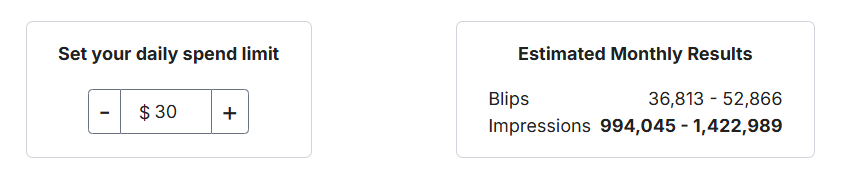
With Blip, you choose your own daily budget for Long Beach billboards, and the platform automatically keeps your campaign serving the Long Beach area within that amount. Each “blip” is a brief 7.5 to 10-second ad display, and you only pay for the blips you receive, so your total cost depends on when and where your ad runs and overall advertiser demand. Blip makes it easy to start with any budget and scale up or down whenever you like.
Where can I advertise with Blip in Long Beach, New York?
There are 8 nearby digital billboards near Long Beach serving the area from Hempstead, about 8.8 miles away. These boards can help reach beachgoers, residents, and commuters along some of Nassau County's busiest corridors. The boards are strategically positioned to influence behavior in the Long Beach area and function as some of the most visible billboards near Long Beach for drivers approaching the barrier island.
What makes Long Beach, New York a good market for billboard advertising with Blip?
The Long Beach area combines year-round neighborhood life with intense seasonal tourism and commuter traffic, making it an ideal market for digital billboard advertising. Long Beach is a dense, walkable barrier island city on the south shore of Nassau County, with roughly 35,000 residents packed into just over 2 square miles of land. The area also has a strong commuter presence and a seasonal tourism spike that brings large visitor surges in late spring and summer.
When is the best time to run Blip billboards in Long Beach, New York?
Summer is especially strong because South shore beaches—including Long Beach—draw heavy day-trip and weekend traffic, with peak summer attendance that can exceed 500,000 total visits over the core season. Friday afternoons and evenings, Saturday and Sunday mornings, and Sunday evenings are all highlighted as key travel windows. In winter, beach traffic drops sharply, but core residents and commuters become the dominant audience, and bright digital boards stand out more after dark.
What kind of people will see billboards near Long Beach, New York?
The Long Beach area includes year-round residents, commuters and workers, seasonal visitors and day-trippers, and a college and young adult market from nearby schools. The area has about 35,000 residents, a large share of whom are renters or professionals, and Nassau County also sends thousands of daily commuters through the area. Summer weekends and holidays bring visitors from elsewhere in Nassau, Queens, Brooklyn, and eastern Long Island.
Do I need a contract to advertise with Blip near Long Beach?
No, Blip has no long-term contracts or minimum commitments. You can start, pause, or stop your campaign at any time.
How fast can I launch a billboard campaign with Blip near Long Beach?
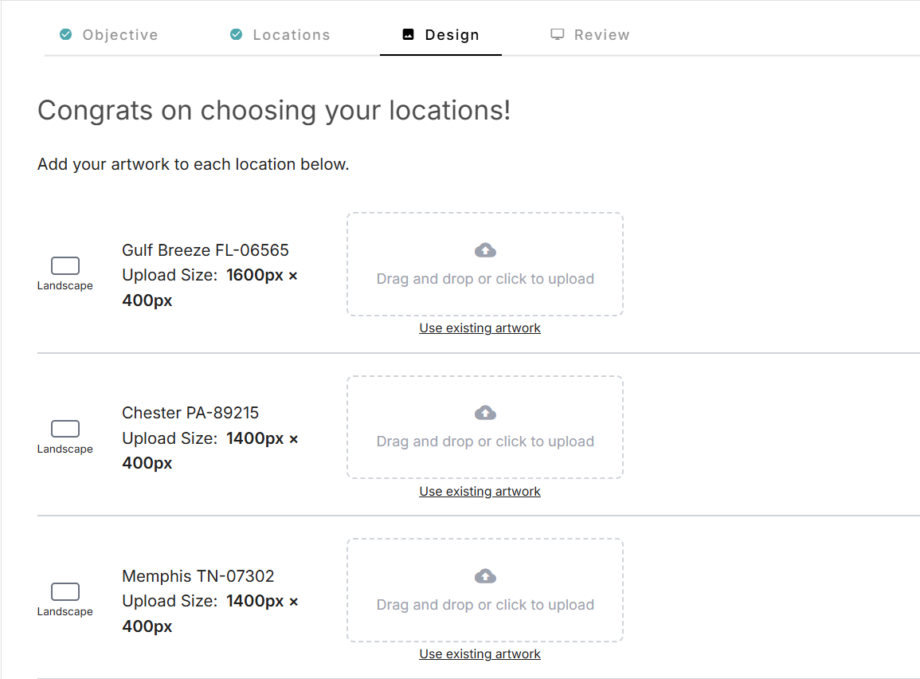
You can have your campaign live in minutes. Create a free account, select your locations, set your budget, upload your design, and start running once approved.
Where can I advertise with Blip near Long Beach?
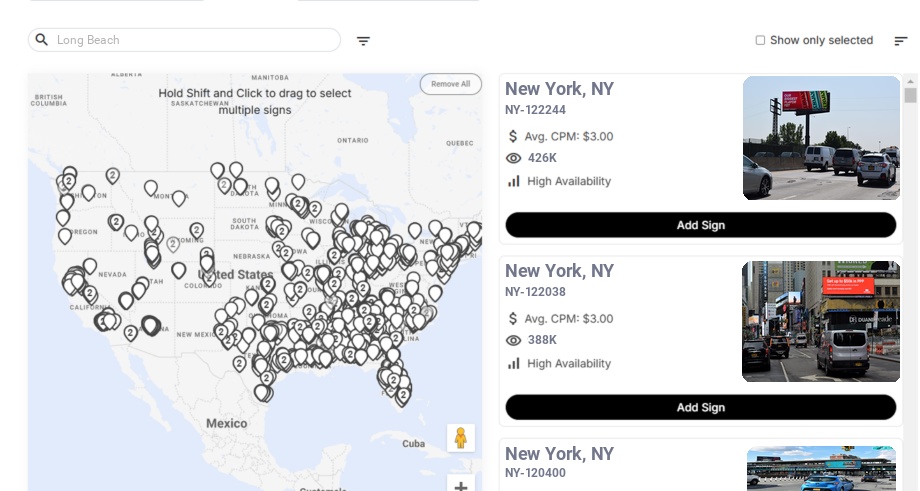
Blip has digital billboards near Long Beach. You can browse available locations on a map, choose the ones that fit your audience, and start advertising right away.
Still have questions? Launch a campaign in minutes — no contracts, no commitments.
Start Your CampaignLong Beach Billboard Advertising Guide
The Long Beach, New York area combines year‑round neighborhood life with intense seasonal tourism and commuter traffic, making it an ideal market for digital billboard advertising. With 8 nearby digital billboards near Long Beach serving the area from Hempstead (about 8.8 miles away), we can help brands reach beachgoers, residents, and commuters along some of Nassau County's busiest corridors with targeted billboard advertising near Long Beach.
Understanding the Long Beach Area Market
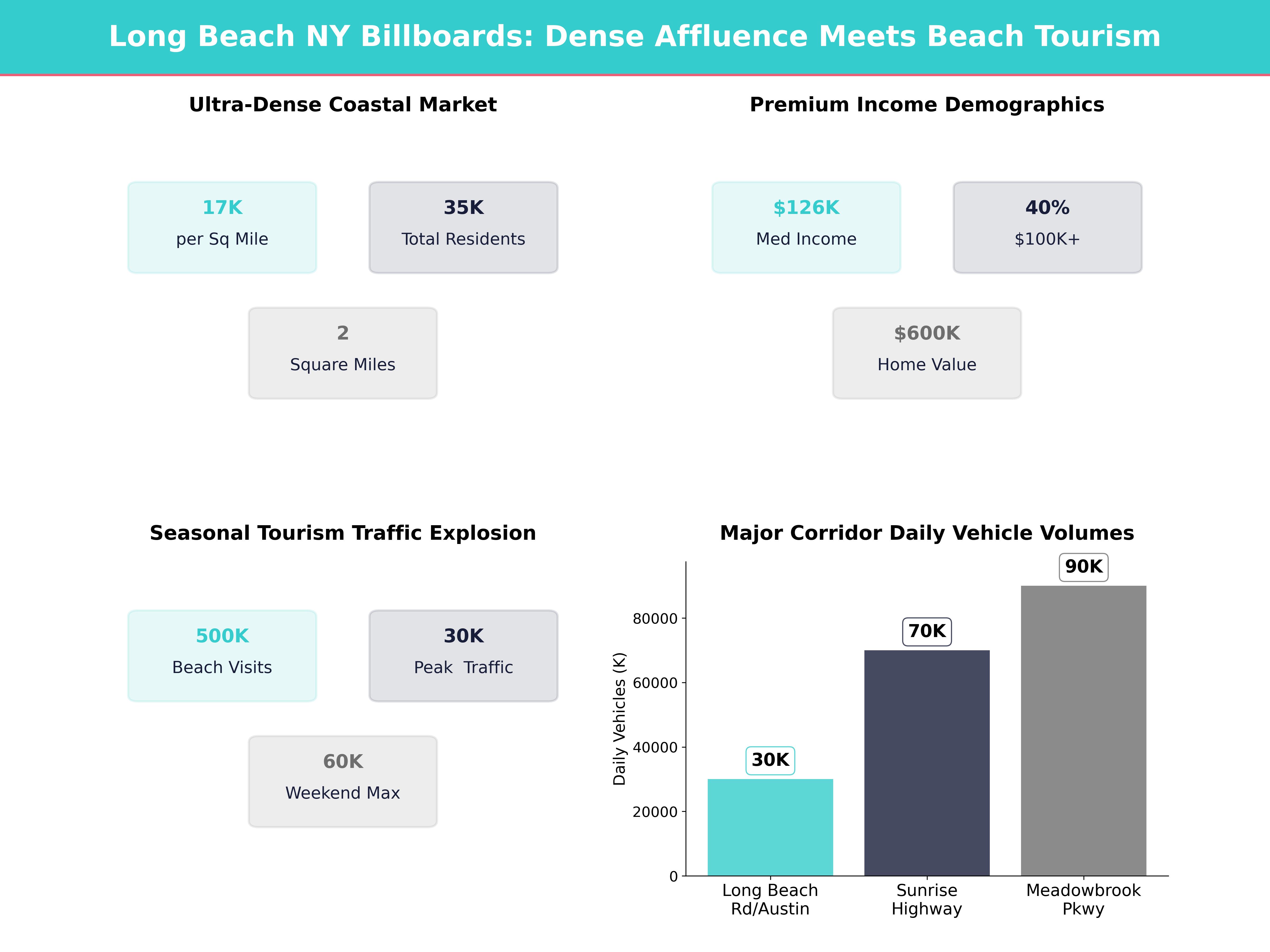
Long Beach is a dense, walkable barrier island city on the south shore of Nassau County. According to the City of Long Beach, roughly 35,000 residents live in the Long Beach area packed into just over 2 square miles of land, creating population densities above 17,000 people per square mile—higher than many large U.S. cities and significantly above Nassau County’s overall density of around 4,800 people per square mile.
Key market characteristics that matter for billboard advertisers:
- Affluent local base: Nassau County has a median household income of roughly $126,000, placing it among the top‑earning counties in New York State. In Long Beach specifically, owner‑occupied home values commonly exceed $600,000, and more than 40% of households earn $100,000 or more per year. This supports campaigns for higher‑end services, real estate, automotive, dining, and healthcare that use prominent Long Beach billboards to stand out.
- Year‑round activity + huge seasonal spikes: Long Beach’s 3.5‑mile boardwalk, beaches, and events bring large visitor surges in late spring and summer. Discover Long Island reports that Long Island’s tourism industry welcomed more than 9–10 million visitors annually in the years leading up to the pandemic, generating over $6 billion in visitor spending and supporting tens of thousands of local jobs. Long Beach has over 30 beach access points and roughly 2.2 miles of guarded oceanfront, and on peak summer weekends city officials have reported daily attendance well above 30,000 people on the beach and boardwalk combined.
- Strong commuter presence: The Long Beach Branch of the LIRR connects the Long Beach area to Manhattan in about 55 minutes. Systemwide, the LIRR carried close to 295,000 average weekday riders in 2019; by 2023, weekday ridership had rebounded to roughly 70–80% of those pre‑pandemic levels, or more than 200,000 riders per weekday. Many of these trips touch Long Beach, Island Park, Oceanside, and Rockville Centre, pulling thousands of daily vehicle trips to and from station areas that can be influenced by billboards near Long Beach.
- Regional pull from Nassau County: Nearby Hempstead is the largest township in New York State with roughly 800,000 residents, accounting for more than half of Nassau County’s population. Within the Town of Hempstead, there are over 20 distinct communities and multiple regional shopping hubs. Our 8 digital Long Beach billboards near Hempstead sit in the flow of this larger basin of shoppers and workers who regularly head toward the Long Beach area for recreation, dining, and services.
For advertisers, this means we can use digital billboards near Hempstead to reach:
- Year‑round Long Beach‑area residents
- Seasonal visitors on their way to the beach
- Nassau County consumers who frequent Long Beach businesses
- Commuters moving between the barrier island, Hempstead, and the rest of Long Island
How People Move Near Long Beach (And Why Hempstead Matters)
The Long Beach area is reachable mainly via a limited set of corridors, which is exactly where our Hempstead‑area boards shine as billboards near Long Beach that capture both local and regional traffic.
Important travel patterns:
-
Road access
- Long Beach Road and Austin Boulevard carry traffic from Long Beach Island north through Island Park and Oceanside toward Hempstead and the Sunrise Highway (NY‑27). Traffic counts on these north–south connectors often reach 20,000–30,000 vehicles per day on key segments, according to regional transportation data referenced by Nassau County.
- Sunrise Highway east–west is one of Nassau County’s major arteries, with many segments in the Hempstead/Oceanside/Baldwin area carrying roughly 50,000–70,000 vehicles per day.
- Meadowbrook Parkway and Loop Parkway funnel regional traffic from interior Nassau down toward the south shore beaches. Sections of Meadowbrook Parkway near the south shore routinely see more than 90,000 vehicles per day in summer months.
-
Rail access
- LIRR riders often drive or get dropped off at stations like Long Beach, Island Park, Oceanside, and Rockville Centre. The MTA reports that key south shore stations collectively handle tens of thousands of entries and exits on a typical weekday. Many of those feeder trips pass through Hempstead‑area thoroughfares.
- NICE Bus, operated by Nassau Inter‑County Express, moves an additional 80,000–90,000 riders on an average weekday across its system, with multiple routes intersecting Hempstead and connecting to Long Beach‑bound corridors.
-
Retail & service trips
- Major shopping, big‑box retail, and auto dealerships cluster closer to Hempstead and central Nassau more than on the barrier island itself. With over 75% of Nassau residents owning at least one vehicle, Long Beach residents and visitors regularly travel inland for larger purchases and services, generating thousands of weekly trips along these corridors that are ideal for billboard advertising near Long Beach.
By placing messages near Hempstead, we intercept:
- Long Beach‑bound weekend and holiday visitors
- Long Beach‑area residents driving inland for shopping or commuting
- Nassau County residents considering a trip or purchase in the Long Beach area
Using Blip, we can further refine delivery to peak times on these routes—such as Friday evenings, summer weekends, or weekday rush hours—when hourly traffic volumes can spike 30–40% above mid‑day baselines.
Seasonality: When to Turn Up (or Down) Your Blips
The Long Beach area behaves very differently in July than in January. With flexible scheduling, we can capitalize on these seasonal shifts.
Summer (Memorial Day–Labor Day)
- South shore beaches—including Long Beach—draw heavy day‑trip and weekend traffic. Seasonal beach pass sales and daily wristband data cited by the City of Long Beach show that peak summer attendance can exceed 500,000 total visits over the core season, with individual holiday weekends drawing 40,000–60,000 visitors.
- Many Long Beach‑area hotels and short‑term rentals approach occupancy rates in the 80–90% range on July and August weekends, compared to 50–60% mid‑week shoulder season levels reported by Discover Long Island for popular south shore destinations.
-
Expect heavy vehicle flow through Hempstead‑area arterials on:
- Friday afternoons/evenings (outbound trips), when beach‑bound volumes can run 20–30% above typical Fridays
- Saturday/Sunday mornings (beach‑bound)
- Sunday evenings (return trips)
- Best for: tourism, restaurants, entertainment, events, retail promotions, beachwear, beverages, and experiential brands using Long Beach billboards to capture last‑minute decisions.
Shoulder seasons (April–May, September–October)
- Spring and fall shoulder months account for a growing share of Long Island tourism—often 25–30% of total annual visitor trips—thanks to milder weather and events.
- In the Long Beach area, outdoor dining and boardwalk usage stay strong whenever temperatures climb above the mid‑60s. Businesses often see weekend sales spikes of 10–20% on warmer‑than‑average spring or fall days, a trend commonly highlighted by outlets like Newsday in seasonal business coverage.
-
Weather‑dependent, but often strong for:
- Outdoor dining
- Fitness and wellness
- Home improvement (spring refresh and pre‑winter prep)
- Back‑to‑school and early fall bring increased local shopping trips across Nassau County, fueled by more than 200,000 K–12 and college students countywide.
Winter (November–March)
- Visitor traffic to the beach drops sharply—boardwalk and beach usage can fall by 60–70% compared with July and August—but core Long Beach‑area residents and commuters become the dominant audience.
- Holiday retail and services—auto, home services, health, tax prep—can own share of voice with less seasonal clutter, as many tourism‑oriented advertisers cut back spend by 30–50%.
- Bad weather and early sunset increase drive times and visibility of bright digital boards. In December and January, sunset often occurs before 4:40 p.m., meaning evening peak‑hour traffic happens entirely after dark, when digital billboards stand out more sharply.
With Blip, advertisers can:
- Set higher budgets for summer weekends and holidays only.
- Pause or reduce spend midweek in off‑season months.
- Run short, high‑impact bursts around specific events (e.g., the Long Beach Polar Bear Splash or regional festivals highlighted by Newsday).
Audience Profiles in the Long Beach Area
To craft effective creative, it helps to think about the Long Beach area as a blend of several overlapping audiences:
-
Year‑Round Residents
- Roughly 35,000 people in the Long Beach area, many in apartment or condo buildings and walkable neighborhoods. About 55–60% of housing units are renter‑occupied, much higher than the Nassau County average, which supports multifamily and “urban beach town” lifestyles.
- Median age in Long Beach hovers in the low‑ to mid‑40s, with strong representation of professionals and families; roughly 30% of residents are 25–44, and another 25–30% are 45–64.
- A large share of residents are highly educated—roughly 40% or more hold a bachelor’s degree or higher—supporting demand for professional services, healthcare, and financial products.
- High participation in local civic life—schools, community events, and local government updates via outlets like the Long Beach Herald city website, and hyperlocal platforms like Long Beach Patch.
-
Best messaging angles:
- Convenience (“Just 10 minutes from the Long Beach boardwalk”)
- Reliability (healthcare, legal, home services)
- Family and lifestyle (gyms, activities, education, enrichment)
-
Commuters and Workers
- In Nassau County, more than 80% of employed residents drive or take transit to work, and a significant portion commute outside their home community. Thousands of Long Beach‑area residents commute to Manhattan or other parts of Nassau/Queens via the LIRR or by car.
- The Long Beach LIRR branch alone carries several thousand riders on a typical weekday, with Rockville Centre and nearby stations each handling 3,000–5,000 daily boardings according to MTA ridership summaries.
- Service workers also travel to the Long Beach area daily, from Hempstead and other parts of Nassau, particularly in hospitality, food service, and healthcare.
-
Best messaging angles:
- Time‑saving services (“Stop on your way home from the train”)
- Quick offers (“Today only”, “This week only” near payday or weekend)
- Recurring routines (coffee shops, car washes, quick‑service restaurants)
-
Seasonal Visitors and Day‑Trippers
- Drawn by the beach, boardwalk, festivals, and nightlife, especially events promoted by Discover Long Island and the City of Long Beach.
- Many come from elsewhere in Nassau, Queens, Brooklyn, and eastern Long Island. Long Island’s 9–10+ million annual visitors include millions of day‑trippers from within the region, and Long Beach is one of the most accessible oceanfront options thanks to direct train service.
- Summer weekends and holidays see visitor counts that may triple typical off‑season weekend foot traffic along key corridors.
-
Best messaging angles:
- Discovery (“Try this new spot before the beach”)
- Directional cues (“Exit at Long Beach Road – 15 minutes ahead”)
- Experience and FOMO (“The sunset drink spot everyone’s posting about”)
-
College & Young Adult Market
- Nearby institutions like Hofstra University and Nassau Community College—both near Hempstead—add tens of thousands of students to the area. Hofstra enrolls roughly 10,000–11,000 students, while Nassau Community College serves around 12,000–15,000, depending on the year.
- These students frequently travel through Hempstead corridors for nightlife and recreation, including trips to the Long Beach area, particularly on Thursday–Sunday evenings.
- With many in the 18–29 age range, this segment is highly responsive to social‑media‑driven experiences, limited‑time offers, and mobile‑friendly brands.
-
Best messaging angles:
- Affordable fun (bars, events, fast casual food)
- Seasonal jobs and recruitment
- Fitness, tutoring, and other student services
Crafting Effective Creative for the Long Beach Area
Given the traffic speeds and viewing distances near Hempstead, we recommend:
1. Hyper‑clear geography
Because your audience is often on the way to the coast or coming from Long Beach‑area neighborhoods, spell it out:
- “Just 15 minutes from the Long Beach boardwalk”
- “Serving the Long Beach area – Oceanside location”
- “Your Long Beach‑area urgent care (Exit at Long Beach Rd)”
Avoid vague statements like “Nearby!”—drivers know the geography well and respond better to precise cues. Keep in mind that at 40 mph, drivers have about 4–6 seconds to absorb a message, which usually means just one clear location cue and one offer.
2. Seasonal visual shifts
Align imagery with what’s happening locally:
- Summer: beach scenes, surfboards, bikes, cool tones with pops of bright color.
- Fall: boardwalk sunsets, outdoor dining with sweaters, sports themes tied to local high school or New York pro teams.
- Winter: cozy interiors, warmth, health and safety, storm preparedness; pair with copy that nods to coastal storms frequently covered by Newsday’s weather section.
- Spring: fresh colors, home improvement, fitness, and “get beach‑ready” themes.
We can rotate different Blip creatives automatically by date range so artwork always matches the season. Many advertisers see 10–30% higher response rates when rotating season‑specific creative versus running a single always‑on design.
3. Short, action‑driven copy
Traffic on Sunrise Highway and adjacent routes often moves 35–50 mph. Aim for:
- 6–8 words total, maximum (10 words is usually the upper limit before recall drops sharply).
- Strong verbs: “Book now”, “Call today”, “Exit at…”, “Join us”.
- One message per frame—no bullet lists or multiple offers on a single image.
Examples tailored to the Long Beach area:
- “Beach Day? Park & Dine in Long Beach”
- “Long Beach‑Area Roof Repair – Call Today”
- “Skip NYC. Weekend Stay by Long Beach”
4. Geo‑anchored credibility
Reference known local touchstones to build trust:
- “Across from Long Beach City Hall” (if relevant to your physical location)
- “Near the Long Beach LIRR station”
- “Trusted by Nassau County families since 1995”
This signals you truly serve the Long Beach area, not just greater Long Island in general. In surveys cited by local chambers and business groups, more than half of residents say they “prefer to buy local” when clearly given that option—so surface your Long Beach or south shore identity in the copy and pair it with visible billboards near Long Beach that reinforce your local presence.
Timing Strategy: When to Run Your Blips
Because Blip allows us to buy digital billboard time in small increments, we can match your spend to how people actually move near Long Beach.
Daypart suggestions:
-
Morning (6–10 a.m.)
- Targets commuters moving inland from the Long Beach area and workers heading toward the barrier island. On key stretches, 20–25% of daily vehicle volume occurs in this window.
- Best for: coffee, transit‑adjacent retail, healthcare reminders, service businesses emphasizing booking or calls.
-
Midday (10 a.m.–3 p.m.)
- Captures retirees, shift workers, parents, and tourists. Traffic volumes often level off but remain strong, and competition from other advertisers can be slightly lower.
- Strong for lunch specials, shopping, and appointment‑driven services.
-
Evening (3–8 p.m.)
- Heaviest outbound and inbound traffic for both residents and visitors, often accounting for another 30–40% of daily vehicle counts on commuter routes.
- Ideal for restaurants, nightlife, family activities, and same‑day or next‑day offers.
-
Late Night (8 p.m.–midnight)
- Lower overall impressions (sometimes 10–15% of daily traffic) but cheaper and with strong visibility due to bright screens and darker skies.
- Great for bars, delivery, entertainment, and brand awareness campaigns looking for efficient reach.
Day‑of‑week strategy:
- Friday–Sunday: Prime time for any business tied to beachgoing, dining, or entertainment in the Long Beach area. Many Long Beach waterfront and hospitality businesses report that weekends can make up 50% or more of weekly revenue during peak season.
- Monday–Thursday: Stronger for professional services, healthcare, education, B2B, and recruiting (especially near Hempstead, with its large working population and significant daytime employment base).
Using Blip’s scheduling tools, we can:
- Restrict your campaign to certain days and dayparts only.
- Run A/B tests (e.g., different weekend vs. weekday creatives).
- Increase bids on select high‑value slots like Friday 4–7 p.m. during the summer, when Long Beach‑bound traffic and discretionary spending are both at weekly highs.
Using Hempstead‑Area Boards to Drive Long Beach Results
Although the boards are near Hempstead, they are strategically positioned to influence behavior in the Long Beach area and function as some of the most visible billboards near Long Beach for drivers approaching the barrier island.
For example:
-
A Long Beach restaurant can:
- Target summer Fridays 2–8 p.m. with “Dinner by the Long Beach boardwalk – Exit Long Beach Rd.” During these hours, you can reach a high concentration of visitors already committed to a beach trip but still undecided on dining plans.
- Run different winter creatives promoting indoor specials or events, when locals make up 70–80% of customers.
-
A Long Beach‑area real estate agent can:
- Run year‑round messaging on weekend mornings: “Thinking of moving closer to the beach? Long Beach homes for sale – Call [Number].”
- Add seasonal urgency: “Buy before summer – Long Beach‑area listings available now,” timed to the February–May buying window when a large share of contracts for summer moves are signed.
-
A Long Beach‑area healthcare clinic can:
- Use weekday morning and evening slots: “Primary care serving the Long Beach area – Same‑day appointments.”
- Emphasize convenience for commuters passing through Hempstead, many of whom spend 45–60 minutes per day in their cars and respond strongly to “on your way home” or “before work” healthcare options.
Because we can adjust by budget, you might start with just a few dollars per day focused on rush hours, then expand once you see results. Many local advertisers begin with 2–4 week tests before scaling to multi‑month seasonal schedules, essentially treating Blip as flexible billboard rental near Long Beach without long‑term commitments.
Integrating Billboards With Local Media & Digital
To maximize effectiveness, we encourage pairing Blip campaigns with other local channels:
-
Local news & information
- The Long Beach Herald Newsday influence local conversation. Align billboard copy with themes appearing in these outlets—like storm preparedness, summer safety, or local events. Articles about coastal flooding or summer heat waves, for example, are ideal hooks for home services, insurance, and healthcare campaigns.
-
Tourism and events
- Coordinate around calendars from Discover Long Island and the City of Long Beach for festivals, surf competitions, parades, and boardwalk events. If an event is expected to draw 5,000–10,000 visitors in a day, a focused 7–14 day billboard campaign can dramatically increase awareness among drive‑in attendees.
-
Search & social
- Use the same offer and phrasing on your billboards and in your Google/Facebook/Instagram campaigns (“Long Beach‑area dentist, open evenings”) so people who later search recognize your brand. Studies of cross‑channel campaigns commonly show 20–40% lifts in click‑through and branded search volume when outdoor and digital messaging are aligned.
-
On‑property signage
- If your storefront or venue is “off the beaten path” in the Long Beach area, use billboards to provide explicit driving directions: “Turn at Long Beach Blvd, two blocks north of the boardwalk.” This is especially useful in a compact city like Long Beach, where a 0.5‑mile misdirection can mean missing the main foot‑traffic flow.
Sample Campaign Playbooks for the Long Beach Area
Here are a few ready‑to‑deploy strategies tailored to this market:
1. Seasonal Restaurant Near the Boardwalk
- Objective: Pack weekends June–August.
-
Targeting:
- Days: Fri–Sun
- Times: 11 a.m.–3 p.m. (lunch) and 4–8 p.m. (early dinner)
-
Creative rotation:
- “Beach Day? Lunch by the Long Beach boardwalk – [Restaurant Name]”
- “Happy Hour 4–7 p.m. – Just minutes from Long Beach beach parking”
-
Tactics:
- Start campaigns one month before Memorial Day to build awareness, catching the 4–6 week planning window many visitors use for early‑summer trips.
- Refresh screens mid‑summer with new photos and any press mentions (e.g., “Featured in Newsday” or “Voted Best Long Beach Happy Hour by Long Beach Herald
2. Long Beach‑Area Home Services Company (Roofing, HVAC, Plumbing)
- Objective: Generate calls and form fills year‑round.
-
Targeting:
- Days: Mon–Fri, with heavier spend during storm seasons.
- Times: 6–10 a.m. and 4–8 p.m.
-
Creative:
- “Serving the Long Beach area – 24/7 emergency [service] – Call [Number]”
- Seasonal versions: “Before hurricane season hits the Long Beach area, check your roof.”
-
Tactics:
- Tie messaging to storms and cold spells covered by local outlets like Newsday’s weather section. After major weather stories, demand for repairs can spike 30–50% within a week.
- Use call tracking numbers specific to the billboard campaign so you can quantify how many leads come from Hempstead‑area impressions.
3. Local Event or Festival in the Long Beach Area
- Objective: Maximize attendance for a one‑weekend event.
-
Targeting:
- Run a 2–3 week burst, heavier in the final week.
- Days: Every day, with top weighting Thu–Sun.
- Times: 7 a.m.–10 p.m.
-
Creative sequence:
- Early: “Coming Soon to the Long Beach area – [Event Name], [Dates].”
- Final week: “This Weekend! [Event Name] near the Long Beach boardwalk – Don’t Miss It.”
-
Tactics:
- Include a concise URL or QR code if possible (but do not rely solely on it; remember drivers have limited time to scan).
- Coordinate announcements with the City of Long Beach, Discover Long Island, and local news calendars so residents see the event repeatedly across channels.
Measuring and Optimizing Campaign Performance
While we cannot track exact individual drivers, we can measure real business impact using:
- Offer codes or phrases specific to the billboard (“Mention ‘Boardwalk10’ for 10% off”).
- Unique phone numbers or URLs tied to the campaign (even a simple “/longbeach” landing page).
- Google Analytics to watch for search spikes in brand or category terms from Long Beach‑area ZIP codes after your campaign launches. For many small businesses, even a 10–20% lift in branded search volume can translate into noticeable revenue.
- Customer surveys (“How did you hear about us?” with “Billboard near Hempstead” as an option).
Once we gather data, we can refine:
- Which times of day produce the most conversions.
- Which creative messages lead to more calls or visits.
- Whether seasonal shifts (e.g., adding summer imagery) improve response.
By iterating in cycles of 2–4 weeks, we can steadily improve your cost‑per‑result while keeping your brand visible along crucial routes serving the Long Beach area. Over a season, many advertisers are able to shift more spend into the top‑performing dayparts and creatives, improving efficiency by 20–30% without increasing total budget.
With 8 digital billboards near Hempstead serving the Long Beach area, we can flexibly reach residents, commuters, and visitors when they are already thinking about beaches, dining, shopping, and services. By aligning timing, creative, and geography with how people actually move between Hempstead and the Long Beach area, Blip campaigns offer an accessible form of billboard rental near Long Beach and can become a powerful, measurable driver of local business growth.