Billboards in Bronx, NY
No Minimum Spend. No Long-Term Contracts. Just Results.
Trusted by Leading Brands


Billboard advertising
in Bronx has never been easier
How much is a billboard in Bronx?
Why Choose Blip for Billboard Advertising in Bronx
Blip lets you launch Bronx billboards fast on I-95 and the Major Deegan, reaching commuters in the borough’s busiest traffic corridors.
Set flexible budgets in the Bronx and scale up for Yankee Stadium game days or Bronx Zoo weekends without overcommitting.
Daypart your Bronx ads for AM commutes and PM return trips, when Cross Bronx Expressway delays boost dwell time.
No contracts means you can test Bronx messaging for shoppers, families, and cross-borough travelers, then shift spend as needed.
Track Bronx campaign results in real time and optimize around I-87, I-95, and New York Botanical Garden seasonal traffic spikes.
Use Blip’s creative tools to build bold, bilingual Bronx ads that stand out for a diverse, high-intent audience.
Frequently Asked Questions About Billboard Advertising in Bronx
How much does a billboard cost near Bronx, New York with Blip?
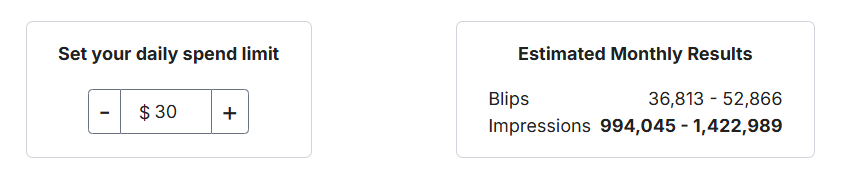
With Blip, you control exactly what you spend on Bronx billboards by setting a daily budget that can be adjusted anytime, so your campaign serving the Bronx area always stays within your comfort zone. Each “blip” is a brief 7.5 to 10-second ad on rotating digital billboards, and you only pay for the individual blips your message receives. The price of billboards near Bronx, New York varies based on when and where your ads appear and current advertiser demand, so you can start with a small daily amount and scale up as you see results.
Where can I advertise with Blip in the Bronx area?
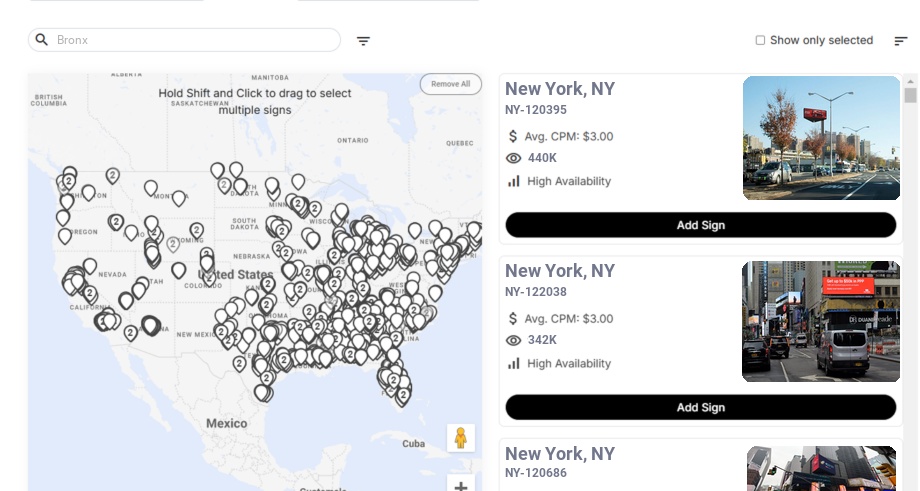
We have 152 digital billboards serving the Bronx area, clustered within roughly 10 miles in nearby cities and key approach routes. These include New York, NY, New Rochelle, NY, Yonkers, NY, Ridgefield, NJ, Bogota, NJ, and Hackensack, NJ. These boards sit along some of the region’s busiest thoroughfares and are ideal if you’re looking for billboard advertising near Bronx without being limited strictly to in-borough inventory.
What makes Bronx billboards a strong advertising choice?
The Bronx area is one of the most concentrated, diverse, and high-intent advertising markets in the country. The Bronx is home to roughly 1.47 million residents, making it the fourth most populous county in New York State and one of the most densely populated urban counties in the U.S. With dense residential neighborhoods, major highways, iconic attractions, and constant cross-borough travel, digital billboards near Bronx can reach both everyday residents and millions of visitors.
When should I run Blip ads on Bronx billboards?
Weekday morning (6–10 a.m.) and weekday evening (4–8 p.m.) are both recommended because they capture commuter peaks and after-work traffic. Midday can still represent 35–45% of total daily traffic on major routes, while late night is lower but steadier and often offers reduced media costs. Because digital boards can swap creatives instantly, spend can be shifted across these dayparts in real time.
Which Bronx areas and nearby corridors get the most traffic for billboard advertising?
The Cross Bronx Expressway (I‑95) carries roughly 180,000–200,000 vehicles per day on some segments, and the Major Deegan Expressway (I‑87) sees more than 150,000 vehicles daily through its busiest sections. Approaches to the George Washington Bridge handle an average of about 289,000 crossings per day, making them critical visibility points for New Jersey/Bronx flows. Boards on these corridors and nearby routes like Yonkers, New Rochelle, Ridgefield, Bogota, and Hackensack are especially valuable for reaching Bronx-area traffic.
Do I need a contract to advertise with Blip in Bronx?
No, Blip has no long-term contracts or minimum commitments. You can start, pause, or stop your campaign at any time.
How fast can I launch a billboard campaign with Blip in Bronx?
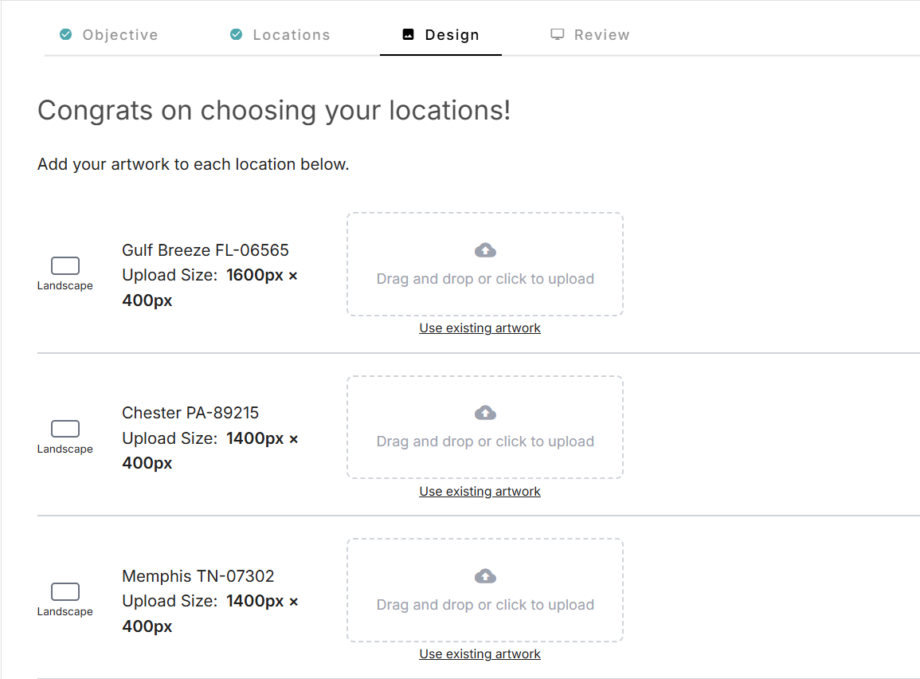
You can have your campaign live in minutes. Create a free account, select your locations, set your budget, upload your design, and start running once approved.
Where can I advertise with Blip in Bronx?
Blip has digital billboards in Bronx. You can browse available locations on a map, choose the ones that fit your audience, and start advertising right away.
Still have questions? Launch a campaign in minutes — no contracts, no commitments.
Start Your CampaignBronx Billboard Advertising Guide
The Bronx area is one of the most concentrated, diverse, and high-intent advertising markets in the country. With dense residential neighborhoods, major highways, iconic attractions, and constant cross-borough travel, digital billboards near Bronx give us powerful tools to reach both everyday residents and millions of visitors passing through New York City’s northern gateway. When used strategically, Bronx billboards and nearby placements can anchor a full-funnel local marketing program, from awareness to in-store or online conversion.
Understanding the Bronx Area Market
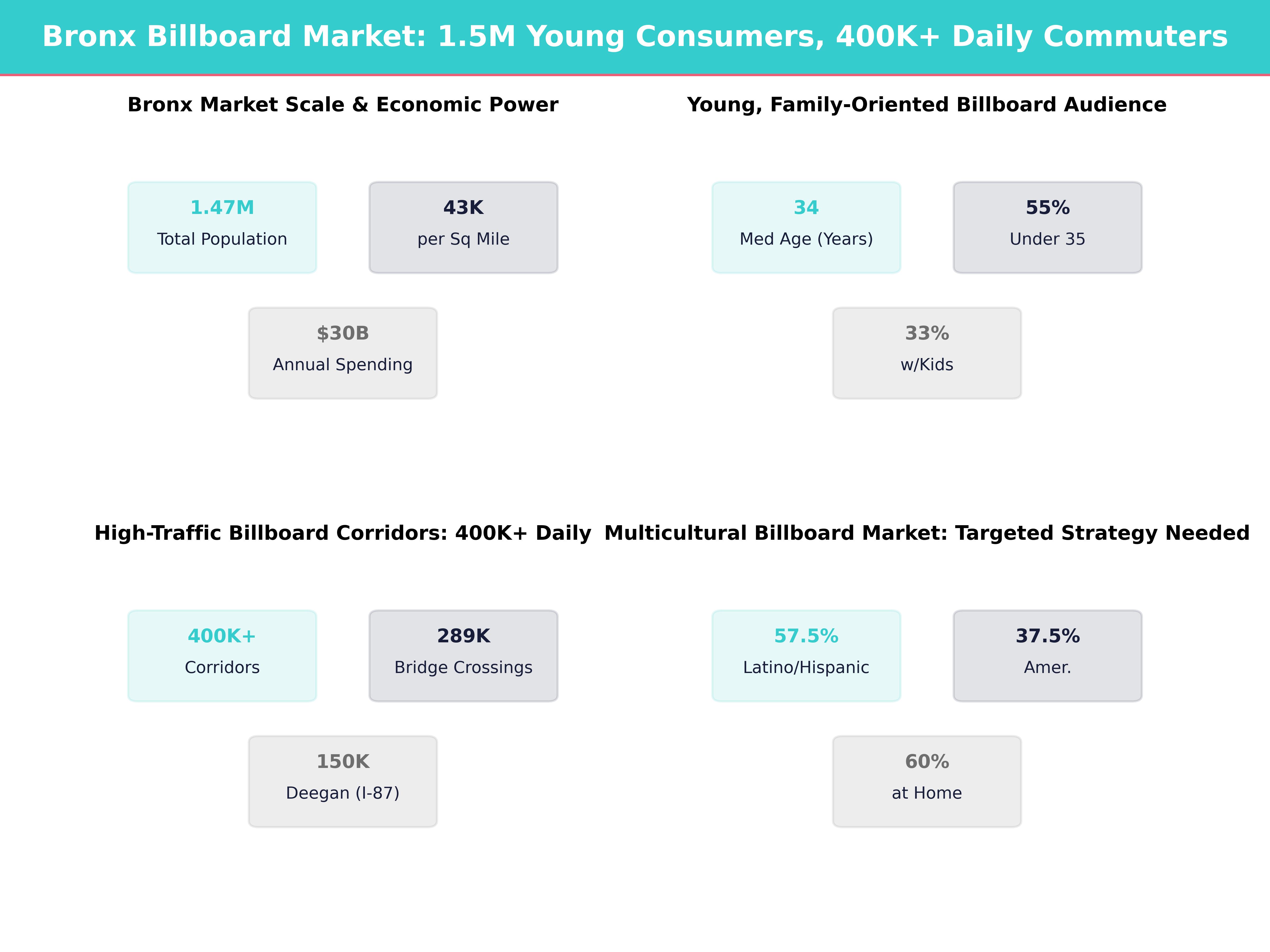
The Bronx is home to roughly 1.47 million residents, according to New York City’s own planning data, making it the fourth most populous county in New York State and one of the most densely populated urban counties in the U.S. ( NYC Department of City Planning
Some key market characteristics that shape billboard strategy for the Bronx area:
-
Population density & housing
- About 43,000+ people per square mile on average across the borough, compared with roughly 29,000 per square mile citywide, putting the Bronx in the top tier of dense urban counties in the U.S.
- The Bronx has approximately 540,000 housing units, with more than 80% of housing units in multi-unit buildings and a homeownership rate of only about 19–20%, meaning the majority of residents are renters who frequently move, shop, and commute along major corridors rather than in isolated subdivisions.
- Roughly 65–70% of Bronx households live within a short walk of a subway station or major bus route, reinforcing high exposure to roadside and corridor-based advertising.
-
Age & family structure
- The Bronx has one of NYC’s youngest profiles: the median age is about 34–35 years, versus about 38 years citywide, and more than 55% of residents are under 35.
- About 32–34% of households include children under 18, one of the highest shares among NYC boroughs, which supports strong demand for education, health, entertainment, childcare, and family-oriented services.
- School enrollment is significant: public schools in Bronx Districts under NYC Public Schools serve well over 200,000 K–12 students, plus tens of thousands of higher-ed students at institutions such as Lehman College, Fordham University’s Rose Hill campus Hostos Community College, and Monroe College
-
Income & spending power
- Median household income in the Bronx is in the mid‑$40,000s–$50,000s, lower than the NYC median (around the mid‑$70,000s), but aggregate spending is large due to population scale.
- Estimates from NYC economic and consumer expenditure profiles put total household consumer outlays by Bronx residents at over $30 billion annually, including more than $7–8 billion on housing-related costs, $3–4 billion on food at home, $1.5–2 billion on dining out, and billions more on transportation, healthcare, and personal services.
- Roughly 55–60% of employed Bronx residents work outside the borough—primarily in Manhattan, Queens, and Westchester—creating strong cross-borough economic ties and making visibility along outbound and inbound commute routes especially valuable.
-
Diversity
- The Bronx is majority Latino/Hispanic and Black: roughly 55–60% Latino/Hispanic and 35–40% Black/African American (alone or in combination), alongside substantial Caribbean, West African, South Asian, and Albanian communities.
- In many Bronx neighborhoods, over 60% of residents speak a language other than English at home, and in some community districts more than 45–50% of households are Spanish-speaking, so language and cultural relevance are central to creative strategy.
- Local media such as the Bronx Times, News 12 The Bronx, and community outlets like Norwood News
Local government and planning resources such as the Bronx Borough President’s Office (bronxboro.nyc), NYC Planning, and Bronx Community Boards Bronx Point waterfront development and Metro‑North station upgrades—that can shape where demand, and thus billboard effectiveness, is strongest. These types of resources are especially useful when planning billboard advertising near Bronx for long-term branding or neighborhood-specific campaigns.
Where Our Boards Are and How They Serve the Bronx Area
We have 152 digital billboards serving the Bronx area, clustered within roughly 10 miles in nearby cities and key approach routes. This inventory effectively functions as an outer ring of Bronx billboards, catching residents, commuters, and visitors as they move along the most heavily traveled corridors:
- New York, NY (Manhattan) – ~6.2 miles from the Bronx
- New Rochelle, NY – ~6.4 miles from the Bronx
- Yonkers, NY – ~7.9 miles from the Bronx
- Ridgefield, NJ – ~8.2 miles from the Bronx
- Bogota, NJ – ~8.3 miles from the Bronx
- Hackensack, NJ – ~9.5 miles from the Bronx
These boards sit along some of the region’s busiest thoroughfares and are ideal if you’re looking for billboard advertising near Bronx without being limited strictly to in-borough inventory:
-
Inbound and outbound commuter routes
- More than 1 million workers commute into Manhattan on a typical weekday, and tens of thousands originate in the Bronx. Boards located along I‑87, the Harlem River crossings, and key Manhattan entry points stay in front of these flows.
- Metro‑North’s Hudson and Harlem Lines carry over 300,000 weekday riders systemwide, with significant volumes traveling between the Bronx, Manhattan, and Westchester; roadside inventory near parkways and station approaches can reinforce transit messaging.
-
Regional highways
- The Cross Bronx Expressway (I‑95) carries roughly 180,000–200,000 vehicles per day on some segments, while the New England Thruway portion of I‑95 north of the Bronx handles over 150,000 vehicles daily, according to regional traffic counts from agencies like NYC DOT and NYSDOT.
- The Major Deegan Expressway (I‑87) sees more than 150,000 vehicles daily through its busiest sections, connecting the Bronx to Yonkers, southern Westchester, and Manhattan.
- Approaches to the George Washington Bridge, managed by the Port Authority of New York and New Jersey, handle an average of about 289,000 crossings per day, making it one of the world’s busiest bridges and a critical visibility point for New Jersey/Bronx flows.
-
Retail corridors and mall areas
- Major shopping centers such as Cross County Center and Ridge Hill in Yonkers, the New Roc City area in New Rochelle, and malls near Hackensack (including the broader Bergen County retail cluster) draw hundreds of thousands of visitors weekly.
- Local tourism and economic development data indicate that some of these centers see 10–15 million visits annually, a meaningful share coming from nearby Bronx ZIP codes looking for big-box and outlet retail.
Because digital boards can be bought by the “blip” (a single 7.5–10 second slot), we can:
- Concentrate impressions on specific boards most relevant to Bronx commuters, such as those on I‑87 and I‑95 approaches that see hundreds of thousands of daily vehicles.
- Daypart around morning/evening peaks that align with the roughly 70–75% of workers who travel during traditional commute windows.
- Layer budget to mirror where Bronx residents actually travel, rather than only where they live—capturing cross-borough shoppers, reverse commuters, and out-of-town visitors.
The net effect: advertisers can build a strong footprint near the Bronx without paying for low-relevance coverage far outside common commute and shopping patterns, while still reaching a potential audience of millions of unique drivers and passengers per month on these corridors. For brands exploring billboard rental near Bronx for the first time, this cluster strategy also keeps spend focused on the highest-value roadways.
Mobility, Traffic, and Timing: When to Run Your Blips
Understanding how people move around the Bronx area helps us time campaigns effectively.
Commuting and traffic flows
- According to multiple New York City and MTA sources, more than 55–60% of Bronx workers use public transit, walking, or biking, while about 35–40% commute by car, taxi, or rideshare. Transit-heavy commuting does not diminish roadside value because highways carry large volumes of through-traffic not captured in those resident-only figures.
- The Cross Bronx Expressway (I‑95) is consistently ranked among the most congested corridors in the country, with some segments operating at or above capacity for 10+ hours per weekday and carrying over 180,000–200,000 vehicles per day.
- The Major Deegan Expressway (I‑87), serving traffic between the Bronx, Manhattan, and Westchester, can see 150,000+ vehicles daily on key stretches, with average peak-period speeds often dropping below 20 mph, which actually improves billboard dwell time.
- Arterials such as the Bruckner Expressway, Grand Concourse, and Fordham Road move tens of thousands of vehicles and buses daily, feeding traffic to regional highways where many of our boards are sited.
Even though a large share of residents use transit, the volumes on highways and major arterials remain extremely high because of through-traffic heading to or from New England, New Jersey, and upstate New York. Boards near Yonkers, New Rochelle, Ridgefield, Bogota, and Hackensack tap into this constant flow, reaching not just Bronx residents but an extended regional audience that can easily top several million impressions per week across key placements. This is why businesses that depend on consistent visibility often prioritize billboard advertising near Bronx instead of relying solely on in-neighborhood media.
Optimal dayparts for the Bronx area
Using these patterns, we typically recommend:
-
Weekday morning (6–10 a.m.)
- About 40–45% of daily vehicle trips on many commuter corridors occur during the AM and PM peaks. Morning slots capture workers heading toward Manhattan and Westchester, parents doing school drop-offs, and service workers on early shifts.
- Focus on service businesses, professional services, healthcare, education, and quick-serve restaurants along Manhattan and Westchester-bound corridors.
- Target boards serving inbound flows toward Manhattan (New York, NY boards) or southbound I‑87, where average travel times can increase by 20–30%, extending drivers’ exposure to your creative.
-
Weekday evening (4–8 p.m.)
- PM peak periods are often slightly longer than AM, and in some corridors evening volumes match or exceed morning volumes by 5–10%.
- Emphasize retail, entertainment, events, and local restaurants that Bronx residents will visit after work.
- Prioritize boards serving outbound traffic north toward Yonkers and New Rochelle, and west toward New Jersey, when many commuters are thinking about errands, shopping, or dining.
-
Midday (10 a.m.–3 p.m.)
- Midday volumes on major routes can still represent 35–45% of total daily traffic, especially with delivery trucks, service vehicles, and flexible-schedule workers.
- Effective for retail promotions, senior services, medical appointments, and daytime tourism.
- Consider near-shopping boards (e.g., Yonkers and Hackensack retail zones) where Bronx residents may go for big-box and mall shopping, as well as boards visible to tour buses and family day-trippers.
-
Late night (8 p.m.–1 a.m.)
- Late-night traffic is lower but steadier, often 15–20% of total daily volume, and media costs are typically reduced, improving cost per thousand impressions.
- Lower CPMs often available, useful for awareness-building and nightlife, delivery, streaming, and app-based services.
- Great budget-stretching window for campaigns needing scale rather than strict appointment windows, especially for brands targeting younger, nightlife-oriented, or shift-work audiences.
With Blip-style flexibility, we can shift spend across these dayparts in real time, concentrating impressions in the windows where data and performance indicate the highest response.
Key Audience Segments in the Bronx Area
Because the Bronx area is so diverse, segmenting the audience helps sharpen creative and board selection.
1. Commuters working in Manhattan
- Tens of thousands of Bronx residents work in Manhattan’s core employment districts; some estimates put Bronx-to-Manhattan flows at 100,000+ commuters daily, spanning finance, healthcare, hospitality, and public sector jobs.
- They’re exposed to boards on approaches near New York, NY as they enter or exit Manhattan via the Harlem River bridges, Major Deegan, Bruckner, and Henry Hudson Parkway.
- Many of these commuters have household incomes above the borough median, reflecting Manhattan wage levels, making them a prime audience for financial and professional services.
-
High responsiveness to:
- Time-saving services (delivery apps, telehealth, car services).
- Financial services (banks, credit unions, tax preparers), especially in the January–April tax season when refund-related decision-making spikes.
- Career and education (professional courses, local colleges, certification programs) with evening or weekend schedules.
2. Cross-border shoppers and families
- Bronx residents frequently shop at major retail centers in Yonkers, New Rochelle, and Hackensack. Regional shopping studies and mall reports show annual visitor counts in the 8–12 million range for some of these clusters, including a sizable share from Bronx ZIP codes.
- Auto ownership among Bronx households is lower than the national average but still substantial—roughly 35–40% of households have at least one vehicle—so families regularly make short car trips for bulk shopping, outlets, and specialty retail.
- These shoppers often travel on I‑87, the Hutchinson River Parkway, or over the George Washington Bridge and into New Jersey.
-
Ideal verticals:
- Retail & outlet centers needing to capture the weekend surge, when many centers see 50%+ of their weekly foot traffic.
- Big-box and furniture stores promoting large-ticket purchases.
- Auto dealers and repair targeting families replacing or servicing vehicles.
- Family entertainment venues and attractions that can turn shopping trips into full-day outings.
3. Local small business and neighborhood services
- Neighborhood-based businesses—clinics, law offices, real estate agencies, restaurants—often draw from very tight radii of 1–3 miles, but their customers may pass boards 5–10 miles away on their daily commute.
- Over 60% of Bronx residents live in rental multifamily buildings, and churn rates are high, so consistent local branding helps maintain awareness as people move within the borough.
- While boards may be a few miles outside the Bronx, we can target routes heavily used by locals, such as I‑87 north toward Yonkers (for car shopping) or I‑95 toward New Rochelle (for education and services).
-
Good for:
- Neighborhood branding (“Your lawyer just up the Grand Concourse” type messaging).
- Directional ads (“Next exit for affordable dental in the Bronx area”), especially for businesses within 10–15 minutes’ drive of key exits.
4. Visitors and tourists entering the Bronx area
The Bronx is home to major attractions highlighted by NYC & Company’s Bronx guide
- Yankee Stadium – home of the New York Yankees; regular-season home attendance can exceed 3 million fans per year, with individual games drawing 40,000+ attendees. More information is available at Yankees.com.
- The Bronx Zoo – operated by the Wildlife Conservation Society, it welcomes around 2 million visitors annually, making it one of the largest metropolitan zoos in the U.S.
- New York Botanical Garden – the NYBG draws more than 1 million visitors each year, with major seasonal events (e.g., the Holiday Train Show, Orchid Show) that generate strong regional traffic.
- City Island and Pelham Bay Park – NYC Parks 2,700+ acres of green space, beaches, and trails attracting hundreds of thousands of visitors seasonally.
Tourism data from NYC & Company over 60 million visitors annually to New York City in recent years, with millions exploring boroughs beyond Manhattan. Several million unique visits per year are estimated for Bronx attractions alone, especially the Bronx Zoo, NYBG, and Yankee Stadium.
Boards on inbound routes from New Jersey and Westchester can influence:
- Which day-trips they plan (Bronx Zoo/NYBG/Yankee Stadium vs. Manhattan-only activities).
- Where they eat, shop, and stay near the Bronx area—such as along the Grand Concourse, Fordham Road, Arthur Avenue, and City Island.
- Which events or seasonal attractions they prioritize, especially when creatives highlight specific dates, limited-time exhibits, or ticket deals.
Crafting Creative That Works for the Bronx Area
Given fast-moving traffic and a saturated visual environment, Bronx-area creatives need to be ultra-clear and culturally tuned.
Keep it simple and bold
- Aim for 6–8 words or fewer of main copy; eye-tracking and OOH best-practice studies suggest comprehension drops sharply as copy exceeds 7–10 words at highway speeds.
- Use high-contrast color combinations (e.g., white/yellow on dark background); contrast ratios of 4.5:1 or higher significantly improve legibility.
- Stick to one main idea per creative (e.g., price promotion OR brand message, not both) to ensure a 1–2 second read at 40–60 mph.
Plan for highway viewing distances
- Use large, thick typefaces that remain legible at 300–500 feet; for many digital billboards, that translates to 18–24 inch+ letter height in the final layout.
- Place your primary message in the upper and central two-thirds of the frame, where drivers’ gaze most often lands.
- Avoid intricate detail or small legal disclaimers—drivers shouldn’t need to squint, and compliance messages should be simplified or moved to landing pages where possible.
Leverage cultural and linguistic relevance
With a large Hispanic and bilingual population, especially in many Bronx neighborhoods:
- Consider bilingual or Spanish-language creatives when targeting specific demographics. In districts where over 50% of residents speak Spanish at home, Spanish-first messaging can materially improve recall and response.
- Use references that feel authentic: local slang, well-known intersections (such as 149th & Grand Concourse, Fordham Road, or Gun Hill Road), or nods to Bronx icons (Yankees, local parks, or neighborhoods).
- If using imagery of people, reflect the real diversity of the Bronx area—Latino, Black, Caribbean, African, South Asian, and multiethnic families—to increase relatability and trust.
Use dynamic and seasonal messaging
Because digital boards can swap creatives instantly:
- Promote seasonal events (back-to-school, holiday shopping, tax season) that strongly influence Bronx consumer behavior. For example, retailers typically see 20–30% of annual sales during the November–December period, making timely OOH vital.
-
Timely tie-ins:
- Yankee home games → crowds of 40,000+ per game, plus spillover traffic, create strong spikes near and through the Bronx area on game days.
- Summer weekends → higher volumes of family trips to parks, beaches, zoo, and botanical garden; NYC Parks reports millions of summer visits across Bronx parks alone.
- School year → steady flows to after-school programs, tutoring, and youth sports; K‑12 enrollment and after-school participation can push thousands of additional daily trips across key corridors.
Strategic Use of Multiple Creatives
One of the most powerful aspects of digital campaigns serving the Bronx area is the ability to rotate multiple creatives:
-
Message sequencing
- Ad 1: Brand introduction (“Bronx area’s trusted…since 1995”).
- Ad 2: Offer (“$0 down, this week only”).
- Ad 3: Directional CTA (“Exit 4B – 5 minutes from the Bronx border”).
- Sequencing can increase brand recall by 10–20% compared with a single static message, according to OOH effectiveness studies.
-
A/B testing
- Test headline A vs. B or English vs. Spanish; it’s common to see 20–40% differences in click-through or search-lift proxies between top and bottom performers.
- Test price-focused vs. benefit-focused messaging.
- After 1–2 weeks (or 50,000–100,000 impressions per variant, depending on traffic), shift more budget to the top performers.
-
Audience micro-targeting
- Separate creatives for families vs. commuters without kids.
- Different designs for weekday vs. weekend rotations (e.g., errands vs. leisure).
- Use nighttime-friendly color palettes and offers (delivery, streaming, nightlife) for late-night rotations.
Because we can adjust which creative appears at which times and on which boards, we can fine-tune campaigns to different audience segments without needing separate media buys.
Geographic Strategy: Which Directions and Corridors to Emphasize
To maximize return when targeting the Bronx area, we look at how Bronx residents and visitors move across the region.
North–South corridors (Bronx ↔ Manhattan/Westchester)
- Major Deegan Expressway (I‑87) links the Bronx to Yonkers, southern Westchester, and Manhattan, with 150,000+ daily vehicles and heavily directional commuter flows.
-
Boards near Yonkers and New Rochelle are strong for:
- Bronx residents shopping in Westchester, where some malls and big-box clusters receive millions of visits per year.
- Commuters traveling to Westchester-based employers, including large hospitals, corporate campuses, and colleges.
- Visitors heading toward the Bronx from upstate destinations or Connecticut via the Thruway and parkways.
For many local businesses in the Bronx area—especially retailers, car dealers, and healthcare providers—appearing on these routes means being seen at both ends of the customer journey: when they leave home and when they approach your business. For that reason, many advertisers treat these placements as essential billboards near Bronx, even if the structures technically sit just beyond the borough line.
East–West corridors and cross-river flows
- I‑95/Cross Bronx Expressway and the George Washington Bridge approaches link the Bronx area with northern New Jersey. Combined, these corridors carry well over 400,000 vehicles daily, counting both bridge crossings and connecting segments.
-
Boards in Ridgefield, Bogota, and Hackensack tap into:
- Bronx residents heading to New Jersey malls and outlets, including extensive retail clusters in Bergen County.
- New Jersey residents visiting Bronx attractions or using Bronx roads to reach other boroughs.
- Long-haul drivers and regional travelers (for hotels, travel services, and QSRs) using I‑95 as a major interstate spine.
If your business is in or serving the Bronx area but also draws from New Jersey, a cross-river strategy is especially effective, extending your reach to an additional several hundred thousand potential daily impressions. This mix of New York and New Jersey coverage is one of the most efficient forms of billboard rental near Bronx for brands with a true bi-state trade area.
Industry-Specific Playbooks for the Bronx Area
Retail & eCommerce
- Use boards along Yonkers, New Rochelle, Hackensack routes to reach Bronx residents in a shopping mindset, particularly on Friday evenings and weekends, when mall traffic can be 50–60% higher than midweek.
-
Highlight:
- Specific promotions: “This weekend only: 30% off furniture,” especially during key retail seasons (holiday, back-to-school, Memorial Day/Labor Day).
- Travel time from major Bronx landmarks: “15 minutes from Yankee Stadium,” or “Just 2 exits from the Cross Bronx.”
- Easy transit or parking options, given that limited parking in the Bronx itself is a frequent local concern.
Tie billboards to online conversion by featuring simple vanity URLs or search prompts:
- “Search: ‘Bronx area mattress sale’”
- “Visit: BrandNameBronx.com” (short, memorable, mobile-friendly)
These tactics make it easier for people who see billboards near Bronx while driving to follow up later on their phones or laptops.
Automotive
- Many Bronx residents purchase and service vehicles at dealers in Westchester and New Jersey, where large auto rows cluster along highways. Regional auto registration data show tens of thousands of vehicles registered in Bronx ZIPs each year.
-
Use boards near:
- Highway exits that lead directly to dealership clusters (e.g., I‑87 exits for Yonkers dealers, I‑95 and local routes feeding New Rochelle and New Jersey).
- Weekend-heavy traffic windows for family car shopping, especially Saturday and Sunday mid-morning to early evening, when showrooms see peak footfall.
-
Creatives should emphasize:
- Credit approval, trade-in offers, and convenient access from the Bronx area (“Bronx buyers welcome – 10 minutes from the Cross Bronx”).
- Simple CTAs: “Take Exit 6 – 5 minutes to [Dealer Name].”
For auto groups comparing options, strategically placed Bronx billboards and nearby units often outperform more distant rural boards on cost per qualified shopper.
Healthcare and Clinics
The Bronx area has ongoing demand for urgent care, dental, pediatric, and specialty care:
- Major providers such as Montefiore Medical Center, NYC Health + Hospitals/Jacobi, and NYC Health + Hospitals/Lincoln collectively handle hundreds of thousands of patient visits annually, reflecting strong and sustained healthcare demand.
- Target residents who commute to Manhattan or Westchester but prefer care near home to reduce travel time.
-
Use:
- Morning and evening slots for appointment-based services (primary care, dental, specialty clinics).
- Weekends for urgent care and walk-in clinics, when ER and urgent-care visit volumes often spike.
-
Messaging:
- “Affordable family care near the Bronx area – same-day appointments.”
- “Medicaid and most insurances accepted.”
- “Open 7 days – walk in or book online.”
Healthcare organizations often see the best results when they combine billboard advertising near Bronx with search and social campaigns targeting the same ZIP codes.
Education and Training
From K‑12 support to adult programs and higher education:
- Promote colleges in New Rochelle/Yonkers/Manhattan to Bronx residents on their commute, including institutions like Iona University and Manhattan College, alongside Bronx-based Lehman College and Hostos Community College.
-
Emphasize:
- Transit proximity (“5-minute walk from Metro-North” or close to key bus/subway hubs).
- Financial aid availability; in NYC, a large share of undergraduates—often 50% or more at public institutions—receive need-based aid.
- Flexible schedules (nights/weekends), vital for the many Bronx residents working nontraditional hours.
- Consider Spanish-language or bilingual creatives for programs targeting first-generation students and adult learners, a significant share of enrollments in Bronx and nearby institutions.
Events, Attractions, and Sports
With Yankee Stadium, the Bronx Zoo, and New York Botanical Garden anchoring the area, event-oriented campaigns can:
- Target inbound New Jersey and Westchester traffic on weekend and game days; on event days, local traffic volumes on feeder routes can spike by 10–30% compared with non-event days.
-
Use countdown creatives:
- “Yankees vs. Red Sox – 2 days. Tickets from $X.”
- “Bronx Zoo Boo at the Zoo – Every weekend in October.”
- “NYBG Holiday Train Show – Now through January X.”
- Support smaller venues and cultural institutions such as The Bronx Museum of the Arts, Hostos Center for the Arts & Culture Bronx Tourism Council.
Align messaging with coverage from local outlets such as the Bronx Times and News 12 The Bronx to reinforce event awareness and capitalize on earned media.
Measurement, Optimization, and Local Insights
To keep campaigns serving the Bronx area efficient, we combine:
-
Board-level data
- Impressions estimates based on traffic counts (often tens of thousands of daily impressions per board on major interstates).
- Traffic patterns by time of day and day of week, including known congestion windows and event overlays.
-
Business-level data
- Web traffic spikes by hour and ZIP code; many advertisers see 10–30% lifts in site visits from target ZIPs during strong OOH campaigns.
- Call volume and online bookings, especially for service sectors like healthcare, legal, and home services.
- Store visits and POS data during billboard flight periods, with control vs. test ZIP comparisons.
Practical optimization steps:
-
Start with a hypothesis
- Example: “Bronx parents respond best weekday evenings and Saturday midday.”
- Anchor hypotheses in known patterns, like school schedules, pay cycles (biweekly), or game/event calendars.
-
Allocate test budget
-
Run 2–3 weeks with a mix of:
- Different creatives (family-focused vs. price-focused; English vs. Spanish).
- Different dayparts.
- Different corridors (toward Yonkers vs. toward New Jersey).
- Aim for at least 50,000–100,000 impressions on each major test variant to draw meaningful conclusions.
-
Run 2–3 weeks with a mix of:
-
Track directional lifts
- Compare sales or leads from Bronx and adjacent ZIP codes to a 4–8 week pre-campaign baseline.
- Look for spikes that match your heaviest billboard windows—e.g., 15–25% higher inquiries during evening-heavy flights vs. all-day runs.
-
Refine targeting
-
Shift blips to the highest-performing:
- Corridors (e.g., Yonkers vs. Hackensack).
- Dayparts (e.g., evenings vs. mornings).
- Creative concepts (e.g., Spanish vs. English; offer-led vs. brand-led).
- Continue iterative testing every 4–6 weeks to keep performance optimized as seasons, events, and traffic patterns change.
-
Shift blips to the highest-performing:
Over time, this iterative approach lets us treat your billboard presence near the Bronx much like a digital campaign—measurable, testable, and highly adjustable. It also helps validate which specific billboards near Bronx contribute the most to sales, calls, and site visits, so future campaigns can lean on proven locations.
Compliance, Community Standards, and Local Sensitivity
Advertising near the Bronx area means we share visual space with communities that have strong local identity and deep neighborhood pride. It’s important to:
-
Follow NYC and regional outdoor advertising regulations, including restrictions related to:
- Adult or sensitive content.
- Proximity to schools, houses of worship, and certain public facilities.
- Illumination standards and digital display timing (e.g., brightness limits at night).
-
Avoid imagery or copy that may be:
- Stereotypical or disrespectful to cultural groups represented in the Bronx.
- Insensitive to local issues (e.g., housing affordability, public health, safety, or recent local tragedies).
Checking updates from NYC government (nyc.gov), the Bronx Borough President’s Office (bronxboro.nyc), and local community boards helps ensure that messaging lines up with community expectations, zoning rules, and current initiatives. When in doubt, advertisers can also monitor local press and feedback via outlets like BronxNet and neighborhood associations to maintain goodwill.
Bringing It All Together for the Bronx Area
To build a highly effective campaign serving the Bronx area with our 152 nearby digital billboards, we typically recommend:
-
Define your primary Bronx audience
- Commuters, families, students, tourists, or cross-border shoppers.
- Use local data (ZIP code sales, customer surveys) to understand where 60–80% of your current customers travel from and to.
-
Choose the right corridors
- Manhattan approaches for work commuters and higher-income professionals.
- I‑87 and Hutchinson River routes for Westchester trips and regional shopping.
- George Washington Bridge and New Jersey boards for cross-river traffic and two-state trade areas.
-
Set smart dayparting
- Match messaging to when people are most likely to act (e.g., after-work shopping, weekend family outings, late-night delivery).
- Allocate heavier weight to the top 2–3 time windows most correlated with your sales or lead-generation peaks.
-
Develop 2–4 strong creatives
- Simple, bold, culturally relevant.
- Consider bilingual or Spanish-language versions where appropriate, especially for family, education, and healthcare offerings.
- Use at least one offer-led creative and one brand-led creative to learn which drives the best local response.
-
Launch, measure, optimize
- Start with a test period (2–4 weeks).
- Evaluate by ZIP code sales, web traffic, call volume, and lead volume relative to baseline.
- Reallocate budget to top-performing boards, times, and creatives, aiming for 10–30% improvements in key performance indicators over successive optimization cycles.
By pairing granular control over where and when your ads appear with a deep understanding of Bronx-area travel and behavior patterns, we can help you turn digital billboards near Bronx into a consistently high-performing, locally resonant channel for your brand. Whether you’re testing billboard advertising near Bronx for the first time or scaling an established program with additional billboard rental near Bronx, this framework keeps your media aligned with how real people move, shop, and live in the Bronx area.